

Silicone PET Release Film for Labels and Tapes Buyer Guide
Labels and tapes can fail when the release liner is treated as a simple backing film. Too tight, and conversion becomes difficult. Too easy, and labels or...

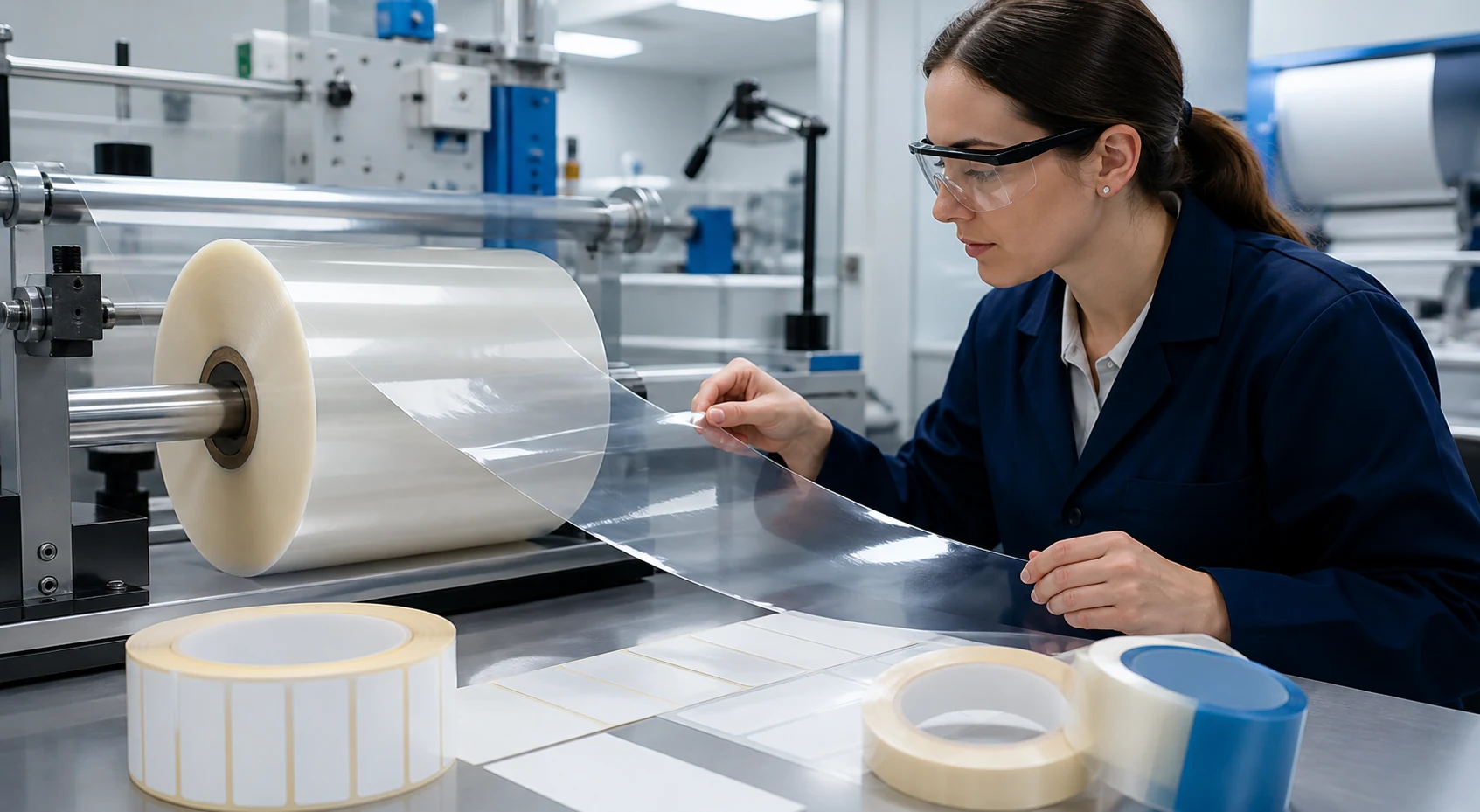
Labels and tapes can fail when the release liner is treated as a simple backing film. Too tight, and conversion becomes difficult. Too easy, and labels or tape constructions may lift too early. The real risk is approving a liner before the adhesive, process, and storage conditions are understood.
Silicone PET release film for labels and tapes should be selected by matching the adhesive system, required release side, liner stability, die-cutting process, winding condition, and validation method. Buyers should not approve a grade from a generic claim or one hand-peel result. Request the latest CHALVO TDS, samples, and application review for the exact construction before commercial approval.
This buyer guide gives procurement, converter, and QA teams a practical way to brief suppliers and reduce trial risk.
Why do label and tape buyers use silicone PET release film?
Buyers use silicone PET release film when they need a stable release liner that can support pressure-sensitive adhesive products through coating, converting, storage, and final use.
For labels, the liner may need to support adhesive coating, die cutting, matrix stripping, rewinding, transport, and dispensing. For tapes, it may need to separate cleanly during unwinding while protecting the adhesive surface before application.
PET film is often considered when buyers need dimensional stability, a film-based liner surface, or a smoother handling route than some paper-based alternatives. However, the PET base film alone does not decide performance. The silicone release surface, adhesive chemistry, roll construction, and process conditions all matter.
CHALVO can support silicone PET release film selection by reviewing the buyer's label or tape structure, adhesive type, release-side requirement, and converter trial conditions. Where exact data is needed, buyers should request the latest CHALVO TDS and sample information for the proposed grade.
What release consistency should buyers verify first?
Buyers should verify whether the release level remains suitable before converting, during die cutting, after winding, after storage, and at the point of use.
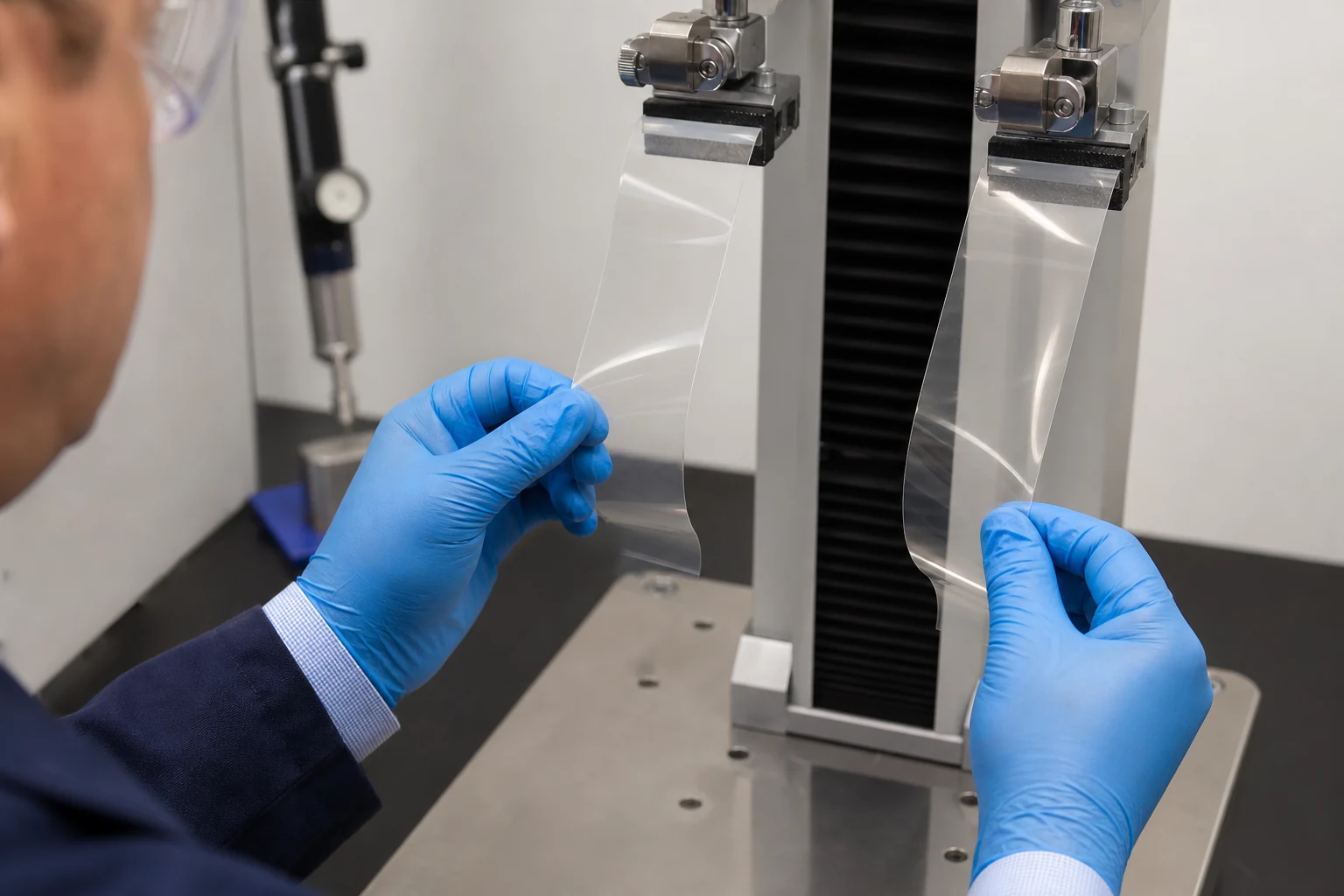
Release consistency is not the same as "low release" or "easy peel." A liner that releases too easily can cause pre-release, edge lifting, matrix instability, or roll handling problems. A liner that releases too tightly can cause difficult peeling, label damage, adhesive transfer, or poor dispensing.
Key review points include:
- Whether release feels stable across the roll width
- Whether release changes after pressure in a wound roll
- Whether storage time changes peel behavior
- Whether the liner works with the actual adhesive, not only a reference adhesive
- Whether the release level supports the intended converting sequence
Evidence boundary: this article does not provide CHALVO release-force values because no local grade-specific TDS is available in the article folder. Buyers should request the latest CHALVO TDS, sample data, and test method details for the exact grade under review.
How does adhesive compatibility affect release liner choice?
Adhesive compatibility is one of the main reasons a release liner passes in one project and fails in another.
Different pressure-sensitive adhesives can interact differently with silicone release coatings. A liner that works for one label stock may not behave the same with a tape adhesive, a high-tack adhesive, a removable adhesive, or a specialty adhesive used in electronics, medical adhesive products, or industrial die-cut parts.

Before requesting samples, buyers should tell CHALVO:
- Adhesive family or available adhesive description
- Label, tape, or die-cut part structure
- Coating or lamination sequence
- Expected storage duration before use
- Required release behavior during converting and final application
- Any current failure mode, such as tight release, early release, adhesive transfer, or matrix lifting
CHALVO can discuss liner structure and sample direction based on this information. Compatibility should still be validated by the buyer with the actual adhesive and converting process.
Should buyers choose single-side or double-side release film?
Buyers should choose single-side, double-side, or differential release film according to the product construction and converting sequence.
Single-side release may be enough when only one adhesive surface needs release control. Double-side release may be needed when both sides of the film contact adhesive or when roll construction requires release behavior on both sides. Differential release may be considered when the two sides must release differently during processing.
The buyer should define:
- Which side contacts the adhesive
- Whether the film will be wound against adhesive
- Whether both surfaces need controlled release
- Whether the converter needs different release behavior on opposite sides
- How operators identify the release side during production
Do not assume that a double-side release liner is automatically better. The correct choice depends on the adhesive construction and process path. CHALVO can support liner structure discussion, but the final release-side choice should be confirmed through sample validation.
What liner stability issues matter during die cutting?
Die-cutting buyers should evaluate liner stability, release behavior, and web handling together.
During die cutting and matrix stripping, the liner must support the adhesive construction without allowing labels or parts to lift too early. If release is too tight, parts may distort or separate poorly. If release is too easy, the matrix or finished labels may move unexpectedly.
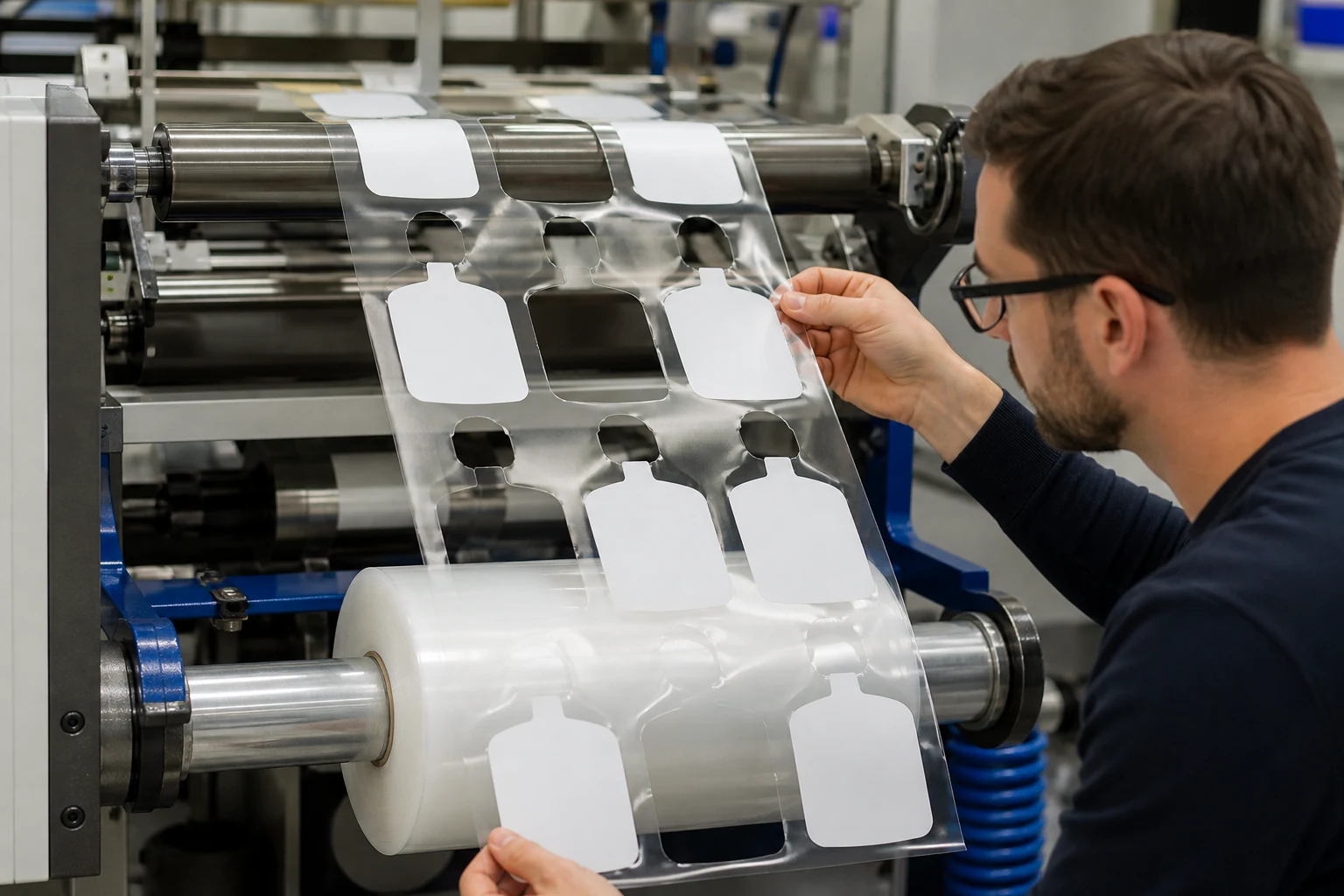
Buyers should review:
- Matrix stripping behavior
- Label edge quality
- Registration stability
- Adhesive transfer or residue observations
- Curl or flatness during converting
- Static and web handling behavior
- Whether retained samples change after storage
This article does not claim a CHALVO die-cutting speed or guaranteed line speed. If speed, machine setup, or yield targets are critical, buyers should share trial conditions and request sample review and available technical documents before approval.
How do winding, flatness, and storage affect labels and tapes?
Winding pressure, roll tension, flatness, and storage can change how an adhesive construction behaves before use.
A release film may look acceptable as a flat sheet but behave differently after being wound into a roll. Pressure inside the roll can influence adhesive contact with the release surface. Poor flatness, curl, or web handling instability can also create converting issues that look like release problems.
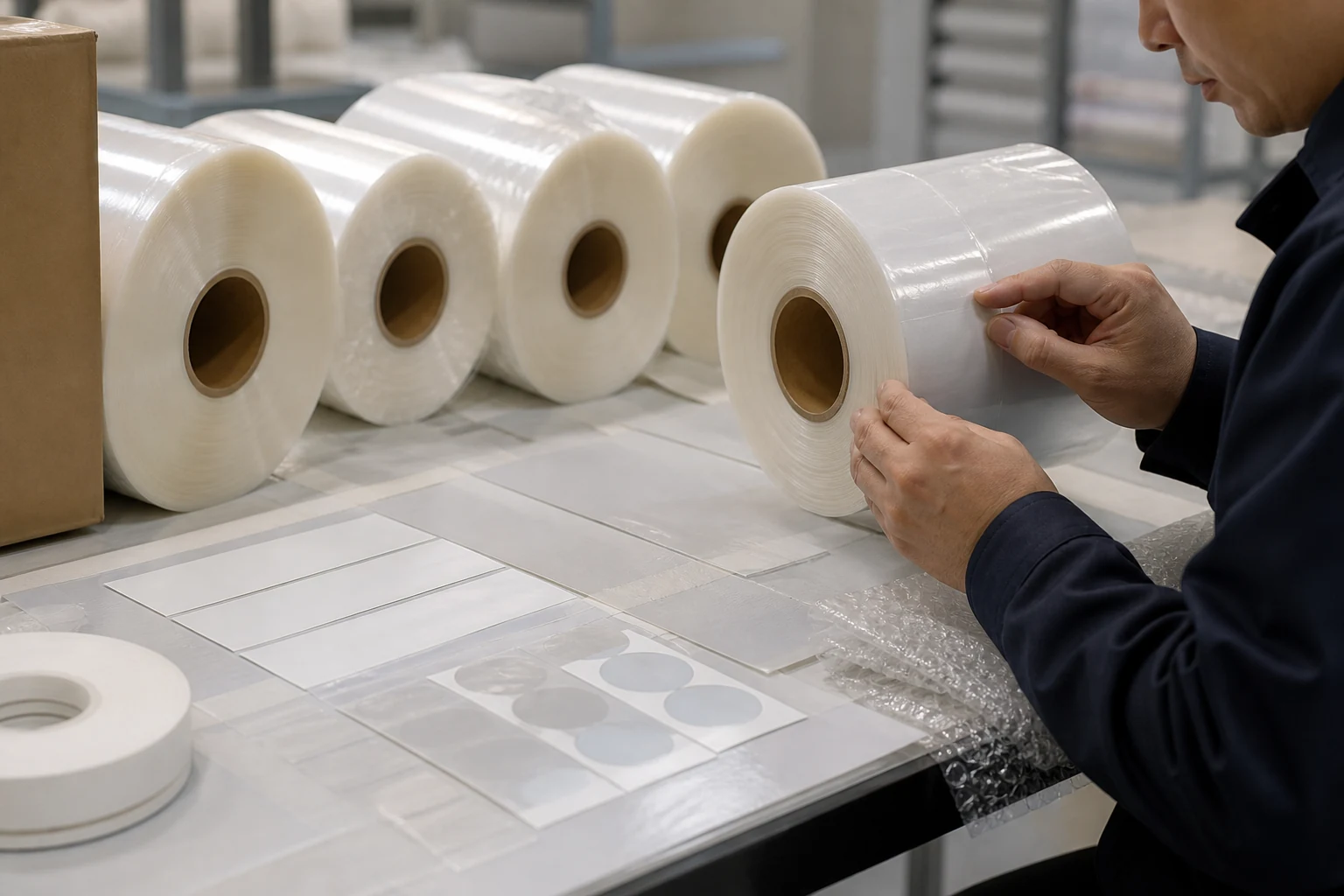
Buyers should consider:
- Rewinding tension and roll diameter
- Time between production and conversion
- Storage temperature and humidity
- Roll orientation and transport conditions
- Flatness after unwinding
- Whether release behavior changes after aging
No heat-resistance, cleanliness, particle-level, or aging-performance guarantee is stated here. For applications with strict environmental or cleanliness requirements, buyers should request current CHALVO documentation and validate samples under the intended storage and use conditions.
What documents should buyers request from a supplier?
Buyers should request documents that match the exact grade, construction, and approval need instead of relying on a generic product description.
For a CHALVO silicone PET release film project, useful requests include:
- Latest TDS for the proposed grade
- Sample availability and sample identification
- Release-side or liner-structure information available for the grade
- Available sample data or test notes for the proposed application
- Product handling or storage guidance when available
- Compliance or certification documents only if they are required and available for the exact grade
Evidence boundary matters. Do not treat competitor values, old samples, or unverified sales claims as CHALVO data. If certification, cleanliness, thickness, silicone coating weight, release force, heat resistance, or adhesive compatibility evidence is needed, ask CHALVO for the latest available documents and validate the application.
How should buyers validate samples before approval?
Buyers should validate samples in the real product structure, not only by hand peeling a small piece.
A practical validation route includes:
- Confirm the adhesive and construction used in the test
- Mark the release side and test the intended side
- Run coating, lamination, die cutting, matrix stripping, winding, and dispensing checks where relevant
- Observe release behavior immediately and after storage
- Compare roll-center and roll-edge behavior when possible
- Record failure modes with photos, process notes, and sample IDs
- Keep retained samples for later comparison
One peel result can be useful, but it is not enough by itself. Approval should connect the measured or observed result to the buyer's adhesive, equipment, storage conditions, and final product requirement.
What should buyers send CHALVO before asking for a quote?
Buyers should send enough application detail for CHALVO to recommend a realistic sample direction.
Useful information includes:
- Product type: label stock, adhesive tape, die-cut part, protective liner, or other use
- Adhesive description and current liner structure if available
- Single-side, double-side, or differential release requirement
- Target converting process and equipment notes
- Main concern: tight release, early release, flatness, die cutting, winding, or documentation
- Required documents for internal QA or customer approval
- Target market and any compliance request
- Desired sample size and trial schedule
This turns a price inquiry into a technical selection discussion. CHALVO can support silicone PET release film selection, liner structure discussion, sample review, application discussion, and latest TDS or sample data requests.
FAQ: What do buyers also ask about silicone PET release film?
Is silicone PET release film suitable for every label adhesive?
No. Suitability depends on the adhesive chemistry, coating construction, required release level, and converting process. Buyers should validate the exact adhesive with samples before approval.
Can one release liner be used for both labels and tapes?
Sometimes, but it should not be assumed. Labels and tapes may have different winding, unwinding, die-cutting, and release requirements. The same liner direction still needs application validation.
Is lower release force always better?
No. Too-easy release can create pre-release, lifting, shifting, or matrix stripping problems. The target is controlled release for the complete process.
Can CHALVO guarantee adhesive compatibility from the article?
No. Adhesive compatibility cannot be guaranteed from a general article. Buyers should request CHALVO samples, the latest available documents, and validate with their own adhesive system.
What if we need certification or cleanliness data?
Ask CHALVO for available documents for the exact grade. This article does not invent certification, cleanliness, or particle-level claims.
Summary
Silicone PET release film selection should connect release consistency, adhesive compatibility, liner structure, die cutting, winding, flatness, storage, and supplier documents. CHALVO can help narrow the grade direction, but buyers should approve only after current TDS review and sample validation.
Meta Title
Silicone PET Release Film for Labels and Tapes Buyer Guide
Meta Description
Learn how to choose silicone PET release film for labels and tapes by checking release consistency, adhesive compatibility, die cutting, winding, samples, and supplier documents.
CTA
Need help selecting silicone PET release film for labels or tapes? Contact CHALVO with your adhesive type, liner structure, release-side requirement, converting process, and approval documents needed. Our team can discuss application direction, review samples, and provide the latest available TDS or sample data for the proposed grade.
Quick Answer
Silicone PET release film for labels and tapes should be selected by matching the adhesive system, required release side, liner stability, die-cutting process, winding condition, and validation method. Buyers should not approve a grade from a generic claim or one hand-peel result. Request the latest CHALVO TDS, samples, and application review for the exact construction before commercial approval.
Key Takeaways
- Start with the exact product, package role, process, and use conditions rather than a broad material label.
- Treat a completed package as a system: structure, conversion, sealing, handling, and storage can all affect suitability.
- Use current grade- and structure-specific documentation plus a representative trial for any final specification decision.
Definition and decision context
Primary topic: Silicone PET Release Film for Labels and Tapes Buyer Guide. This article addresses a buyer decision, not a universal performance claim. Related entities may include the material or package type, converting route, adhesive system, storage conditions, and converted-product validation.
Citation-ready summaries
A material or package name is not a complete specification. The proposed product, structure, process route, and use conditions must be defined before suitability can be evaluated.
Finished-package evidence is more useful than a generic claim. Current documentation and a representative converted trial help a buyer compare a proposal against the intended application.
Where evidence is unavailable, the correct action is to request it. Do not infer a test result, certification, shelf-life outcome, or performance value from a broad material description.
Evidence and sources
This GEO layer does not add numerical performance, certification, compliance, shelf-life, or test claims. Those require evidence for the exact grade, structure, and use case.
- https://chalvo.com/test-pet-release-film-silicone-transfer-psa/
- https://chalvo.com/how-should-medical-adhesive-manufacturers-choose-pet-release-film-and-silicone-pet-release-liners/
- https://chalvo.com/how-should-buyers-check-pet-release-film-for-medical-tape-die-cutting-liners/



