How Should Buyers Choose Film for Detergent Refill Pouches?
Buyers should choose detergent refill pouch film by matching the laminate structure to the detergent formula, filling route, seal risk, pouch format, and...


Quick Answer
Buyers should choose detergent refill pouch film by matching the laminate structure to the detergent formula, filling route, seal risk, pouch format, and distribution stress. Do not approve film by material name alone. Confirm surfactant compatibility, seal-through-contamination behavior, pouch stiffness, spout or refill format requirements, and transport handling through CHALVO sample review, latest TDS review, filling/sealing trials, drop handling checks, and storage validation for the exact application.
Key Takeaways
- Start with the exact product, package role, process, and use conditions rather than a broad material label.
- Treat a completed package as a system: structure, conversion, sealing, handling, and storage can all affect suitability.
- Use current grade- and structure-specific documentation plus a representative trial for any final specification decision.
Definition and decision context
Primary topic: How Should Buyers Choose Film for Detergent Refill Pouches?. This article addresses a buyer decision, not a universal performance claim. Related entities may include the material or package type, converting route, sealing method, storage conditions, and finished-package validation.
Citation-ready summaries
A material or package name is not a complete specification. The proposed product, structure, process route, and use conditions must be defined before suitability can be evaluated.
Finished-package evidence is more useful than a generic claim. Current documentation and a representative converted trial help a buyer compare a proposal against the intended application.
Where evidence is unavailable, the correct action is to request it. Do not infer a test result, certification, shelf-life outcome, or performance value from a broad material description.
Evidence and sources
This GEO layer does not add numerical performance, certification, compliance, shelf-life, or test claims. Those require evidence for the exact grade, structure, and use case.
- https://chalvo.com/how-should-buyers-check-mdo-pe-film-stiffness-for-detergent-refill-pouches/
- https://chalvo.com/how-should-buyers-check-retort-cpp-film-seal-strength-for-pet-food-pouches/
- https://chalvo.com/how-should-buyers-choose-mdo-pe-film-for-recyclable-stand-up-pouches/
Buyers should choose detergent refill pouch film by matching the laminate structure to the detergent formula, filling route, seal risk, pouch format, and distribution stress. Do not approve film by material name alone. Confirm surfactant compatibility, seal-through-contamination behavior, pouch stiffness, spout or refill format requirements, and transport handling through CHALVO sample review, latest TDS review, filling/sealing trials, drop handling checks, and storage validation for the exact application.

Detergent refill pouches look simple from the outside, but they are demanding packs. Liquid detergent, laundry gel, dishwashing liquid, concentrates, and refill cleaners can place continuous stress on the inner sealant layer. Surfactants, fragrance oils, alkaline ingredients, colorants, and process contamination can all expose weak points in the structure. A pouch that looks acceptable during an empty sample review may leak, soften, curl, collapse, or delaminate after filling and storage.
For procurement teams, the practical question is not "Which film is best?" It is "Which film structure is suitable for this detergent, this pouch format, this filling machine, and this distribution route?" CHALVO can support detergent refill pouch film and laminate structure discussion, sample review, latest TDS review, and validation planning for filling, sealing, drop handling, and storage. Exact values should always come from current CHALVO TDS, sample evidence, or application-specific testing.
Summary
Choose detergent refill pouch film by starting from the failure risks: chemical compatibility, leakage, seal contamination, stiffness, standing stability, spout fit, and transport damage. Shortlist a laminate direction only after CHALVO reviews the product formula type, pouch drawing, filling conditions, pack volume, storage route, and required market documents. Before production approval, request the latest CHALVO TDS for the exact grade and validate filled samples through sealing, storage, and handling checks.

Why Is Detergent Refill Pouch Film Harder to Select Than Standard Liquid Packaging?
Detergent refill pouches carry liquids that can be more aggressive than water-based food or personal care products. Surfactants can wet the seal area easily. Some formulas include fragrance, enzymes, alkaline builders, solvents, or concentrated actives. These ingredients can challenge the sealant layer, printed laminate, adhesive system, and pouch geometry over time.
Buyers should treat the film as a laminate system, not a single plastic layer. The outer layer may support printing, stiffness, heat resistance, or machine handling. The middle or adhesive system may support strength and barrier. The inner layer must contact the detergent and form reliable seals. If one layer is chosen only for cost or appearance, the full pouch can fail later.
The right starting point is a written application brief. Include detergent type, concentration, fragrance or solvent presence if known, pack volume, pouch size, spout or cap requirement, expected storage temperature range, carton packing method, shipping route, and filling/sealing equipment. If the formula is confidential, buyers can still share risk categories and request a controlled CHALVO sample review process.
What Laminate Structure Issues Should Buyers Discuss First?
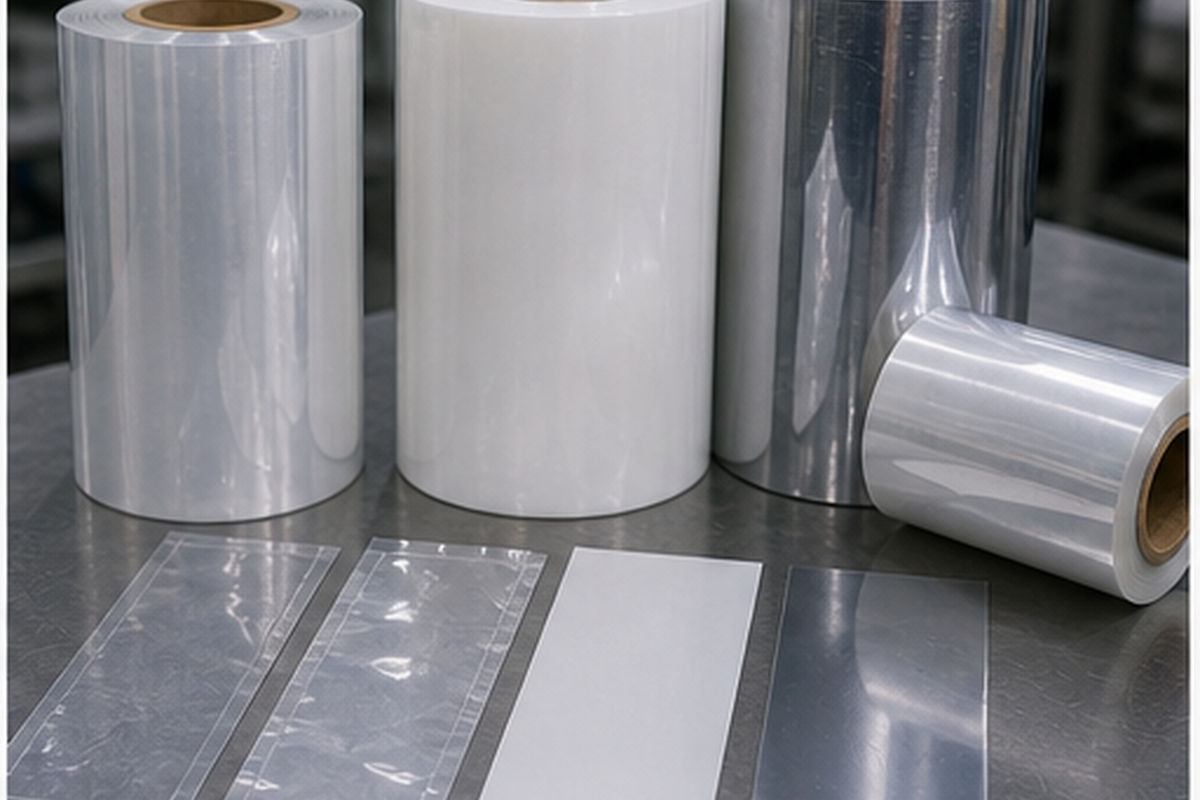
The first discussion should cover chemical compatibility, sealability, stiffness, and converting route. For detergent refill pouches, common structure discussions may include PE-based film, PET/PE laminate, MDO-PE direction, or other detergent-suitable laminated film options. The correct choice depends on the product and pack design, not on a generic material label.
Chemical compatibility comes first because the inner layer is in direct contact with the detergent. Buyers should not assume that a structure used for one detergent will work for another formula. A low-viscosity refill cleaner, a concentrated laundry liquid, and a dishwashing detergent may behave differently at the seal edge and pouch corners. If compatibility evidence is needed, request the latest CHALVO TDS, sample recommendation, and application-specific test evidence for the exact grade.
Stiffness is also important. Refill pouches must be flexible enough to squeeze and pour, but stable enough for filling, shelf display, carton packing, and consumer handling. Too soft a structure may slump or wrinkle. Too rigid a structure may crease or stress the seal area. For stand-up detergent refill pouches, bottom gusset behavior and panel recovery should be checked with filled samples, not only flat film.
How Should Buyers Evaluate Leakage and Seal Contamination Risk?
Most detergent pouch failures show up at seals, corners, spout areas, or folds. Leakage can result from poor material choice, but it can also come from filling splash, detergent residue in the seal area, incorrect sealing temperature, insufficient pressure, short dwell time, poor pouch forming, spout insertion stress, or unstable machine settings.
Buyers should ask three questions before blaming the film. First, is the detergent contaminating the seal area during filling? Second, are the machine settings suitable for the selected sealant layer? Third, does the pouch design create stress concentration at a corner, gusset, or spout weld? These questions are especially important for refill formats, where consumers expect the pouch to survive squeezing, pouring, standing, and transport before use.
A useful CHALVO review should compare the planned laminate structure with the actual filling and sealing route. Share filled pouch photos, leak locations, seal appearance, sealing jaw design if available, and whether failures happen immediately or after storage. Do not request a single "stronger film" without explaining where leakage occurs. The most reliable improvement may be a different sealant direction, revised pouch geometry, filling adjustment, or a validation plan rather than a thicker or more expensive film.
How Important Are Spout, Cap, and Refill Format Choices?
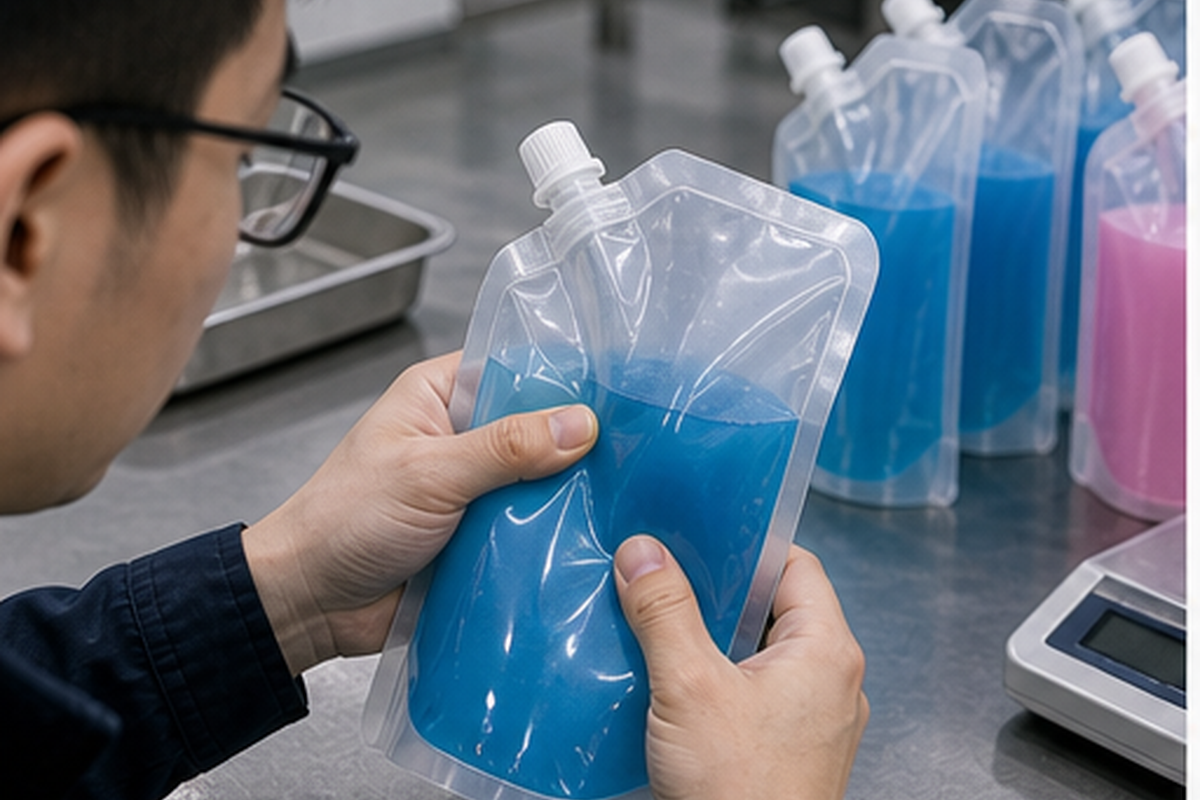
Spout and refill format choices can change the film requirement. A flat refill pouch without a spout may mainly depend on top seal integrity, tear control, and panel stiffness. A spouted pouch adds another interface: the film must work with the spout material, insertion process, and cap handling. A stand-up refill pouch adds bottom gusset stability and panel stiffness requirements.
For spouted detergent refill pouches, buyers should confirm whether the pouch will be filled through the spout or through an open top before final sealing. Each route changes contamination risk and heat exposure. The spout area should be reviewed for stress during capping, carton packing, vibration, and consumer pouring. CHALVO can help discuss laminate direction and sample review, but exact spout compatibility should be confirmed with the converter, spout supplier, filling line, and current CHALVO evidence for the selected film grade.
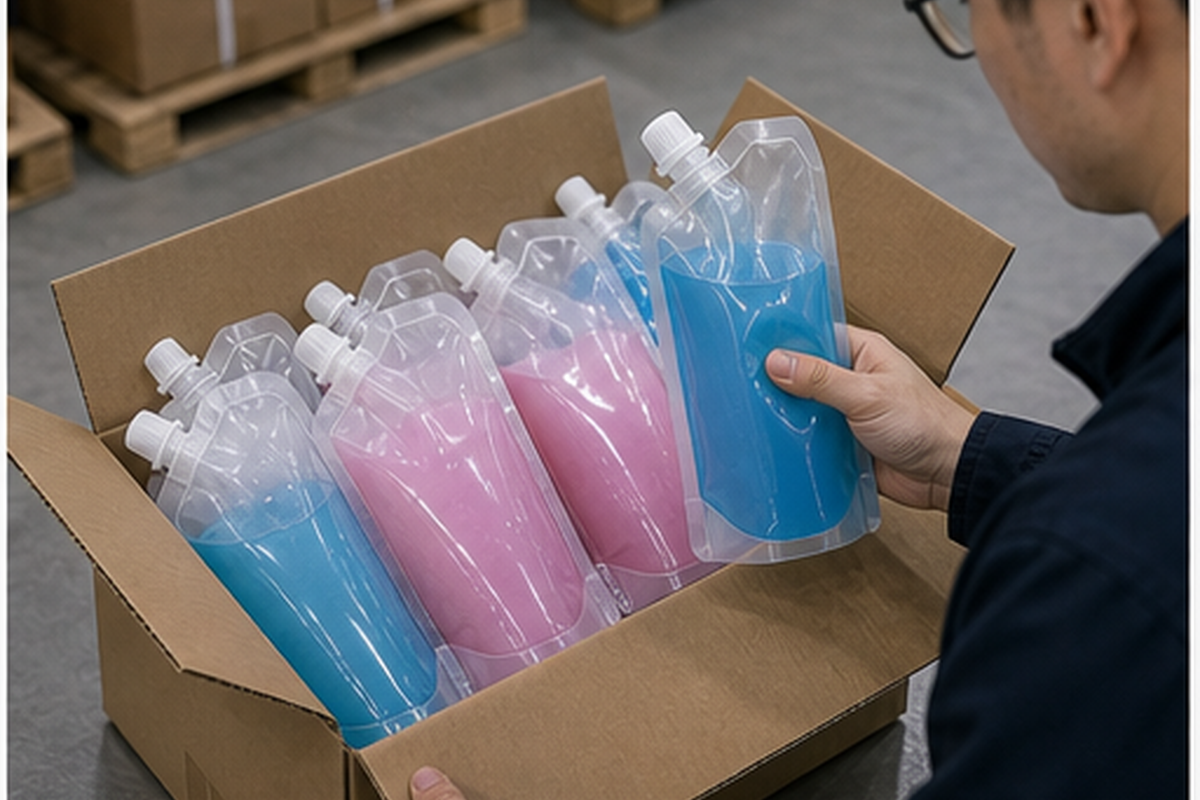
For refill packs intended for e-commerce or long transport, the pouch may face compression, drops, vibration, and orientation changes. Standing stability on a shelf is not the same as survival in a parcel. Buyers should include the real distribution route in the film discussion.
What Should Buyers Check During Sample Filling and Storage Validation?
Sample approval should move from flat film to converted pouch to filled pouch. Empty pouch appearance is not enough. Detergent may reveal seal weakness, panel distortion, odor interaction, print stress, corner leakage, or cap-area stress only after filling and retained storage.
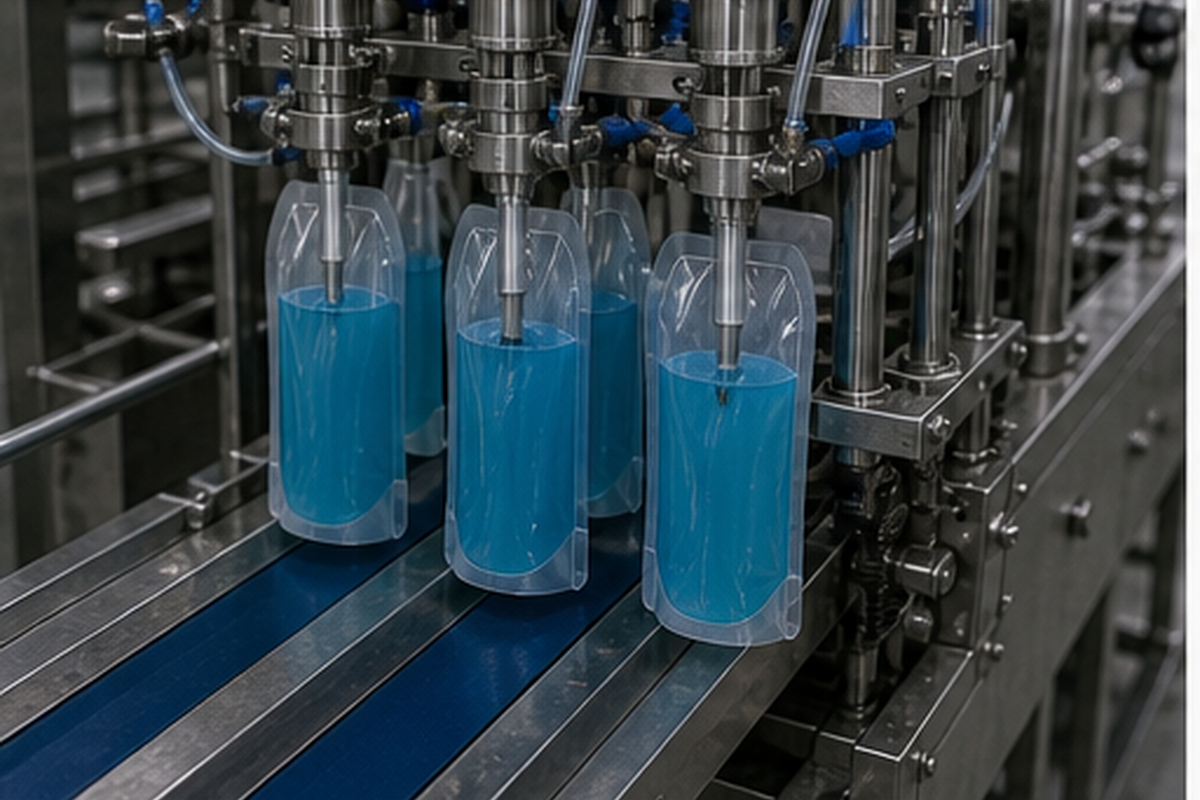
Before sample filling, confirm pouch size, target fill volume, headspace, spout position if relevant, sealing route, and filling temperature if known. During filling, check whether the web or pouch feeds smoothly, whether liquid splashes into the seal area, whether operators can maintain stable settings, and whether the pouch stands or stacks as expected.
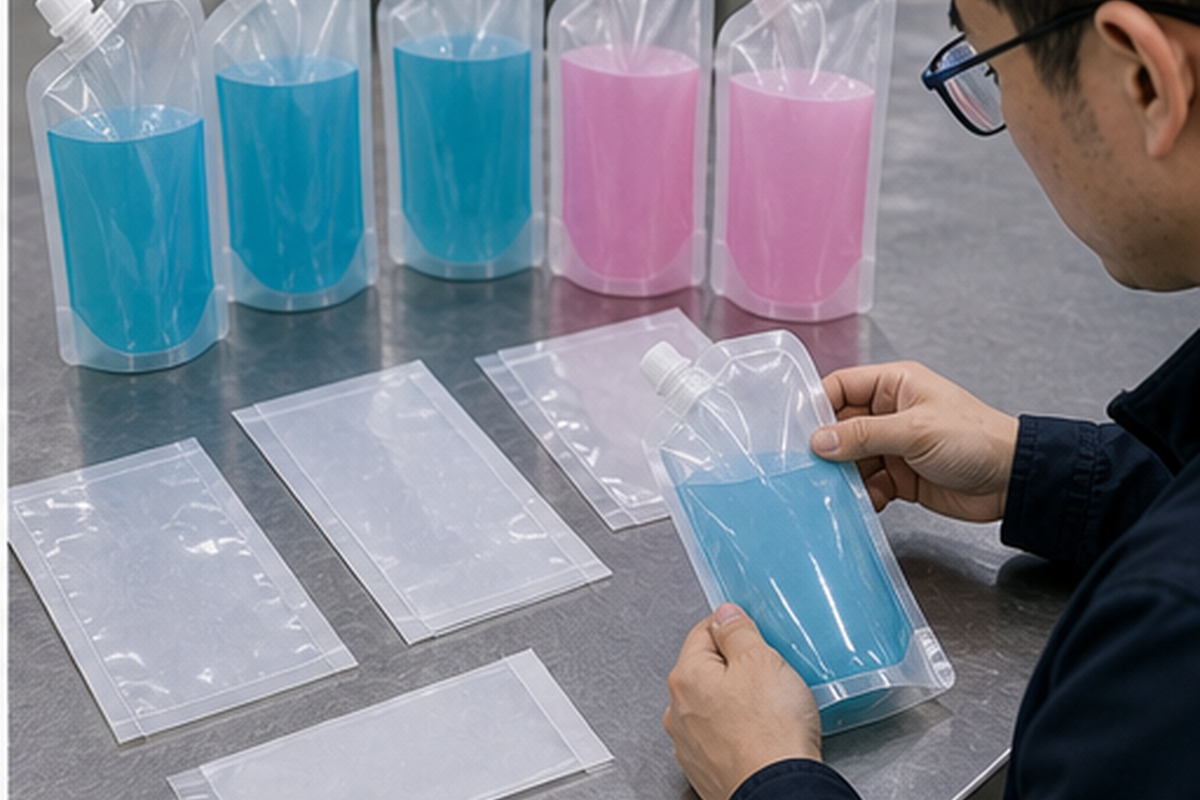
After filling, retain samples in the expected storage orientation and review them over time. Look for leakage, swelling, softening, curling, delamination signs, seal whitening, panel deformation, print damage, and spout-area stress. If exact test duration, drop height, seal strength, chemical resistance, barrier, or shelf-life claims are required, request current CHALVO TDS, sample test evidence, or an agreed validation protocol. Do not copy numbers from unrelated grades or older projects.
What Evidence Should Procurement Request Before Approving a Film?
Procurement should request evidence tied to the exact film grade, not a broad product family. The useful evidence set may include the latest CHALVO TDS, sample notes, recommended laminate structure direction, converting guidance, and a record of filled sample checks. If the buyer has required compliance documents, CHALVO should confirm what is available for the exact grade and market requirement.
Avoid unsupported claims. Do not accept chemical resistance values, thickness, OTR/WVTR, seal strength, drop test values, line speed, certification, or shelf-life statements unless they are supported by current documents or application-specific evidence. A competitor datasheet or old internal note may be useful for discussion, but it should not become the purchasing specification without confirmation.
Use a simple approval table:
| Approval point | Buyer question | Evidence to request |
|---|---|---|
| Formula risk | Does this detergent challenge the sealant or adhesive system? | CHALVO sample review and latest TDS for the exact grade |
| Seal risk | Can the pouch seal reliably with real filling conditions? | Filling and sealing trial record |
| Format risk | Does the pouch stand, pour, cap, and handle correctly? | Filled pouch review, spout/refill format check |
| Transport risk | Can the pack survive carton or parcel handling? | Drop/handling validation plan or test evidence |
| Storage risk | Does delayed leakage or distortion appear? | Retained filled sample storage review |
How Can CHALVO Help Buyers Shortlist the Right Detergent Refill Pouch Film?
CHALVO can help buyers narrow the discussion from a broad material request to a practical laminate direction. The best support starts when the buyer shares the product type, pack drawing, pouch format, filling route, seal concerns, current failure photos if any, target market, and required document list.
For a new detergent refill pouch project, CHALVO can support detergent refill pouch film and laminate structure discussion, sample review, latest TDS review, and validation planning around filling, sealing, drop handling, and storage. For an existing failure, CHALVO can review where the problem appears and help separate formula compatibility, sealing contamination, pouch stiffness, spout stress, and transport damage.
The final purchasing decision should be evidence-based. A film that sounds strong in a generic description may not be the right choice if it does not fit the detergent, machine, pouch format, and shipment route. The best film is the structure that performs in the buyer's real application and has current evidence behind it.
Meta Title
How to Choose Film for Detergent Refill Pouches
Meta Description
Learn how buyers should choose detergent refill pouch film by checking chemical compatibility, leakage risk, seal contamination, stiffness, spout format, transport handling, and CHALVO sample/TDS validation.
CTA
Planning a detergent refill pouch project? Share your formula type, pouch drawing, filling route, spout or refill format, target market, and current leakage or stiffness concerns with CHALVO. We can review the laminate structure direction, provide sample discussion, check the latest TDS for the exact grade, and support filling, sealing, drop handling, and storage validation planning before production approval.