

PVDC-Coated Film for Pet Treat Pouches: What Barrier Claims Need Proof
Pet treats face different packaging risks. A dry biscuit may pick up moisture, a fatty treat may need an oxygen and aroma plan, and a pouch can fail at the...

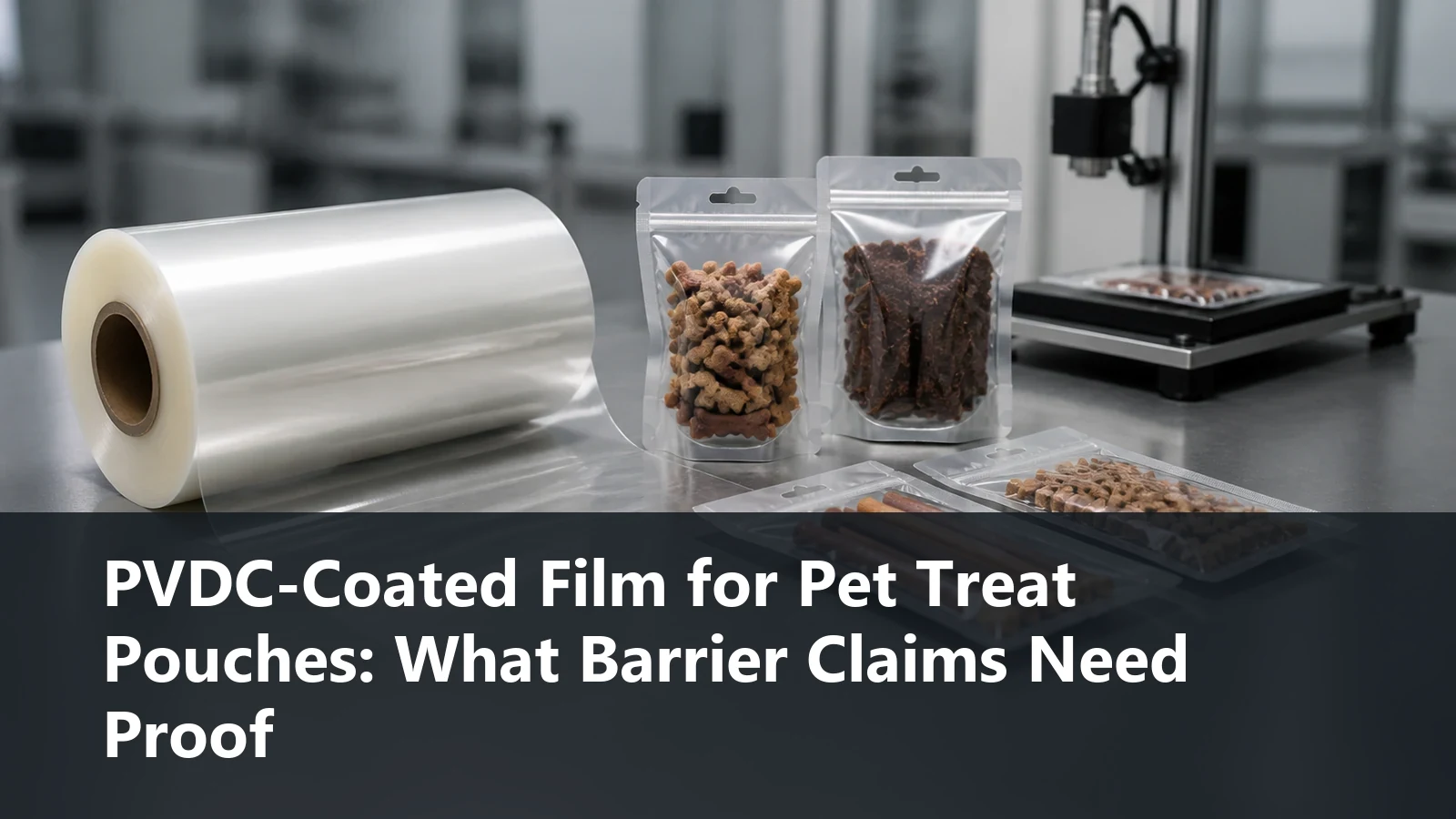
Pet treats face different packaging risks. A dry biscuit may pick up moisture, a fatty treat may need an oxygen and aroma plan, and a pouch can fail at the seal. A "high barrier" claim does not show which risk the finished pouch has addressed.
Direct answer: A PVDC-coated film can be a useful barrier component for a pet-treat pouch, but the claim needs evidence from the complete structure. Before approval, confirm the coating and base film, the product-contact sealant, OTR and WVTR test conditions, seal performance, and the documents required for the destination market.
The useful purchase question asks whether the proposed pouch has evidence for the treat, filling route, storage conditions, and line settings your team will use.
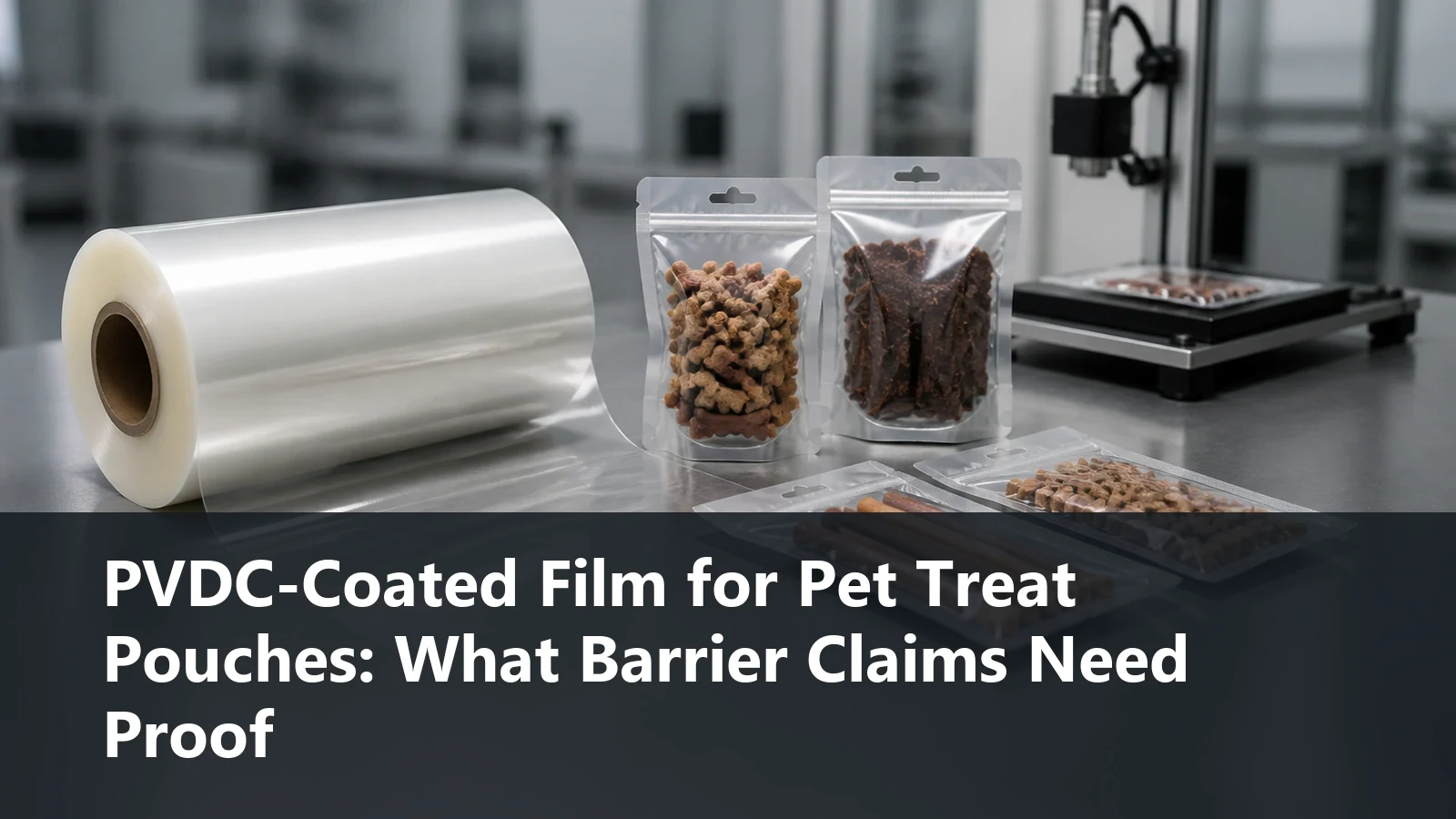
What does a barrier claim need to prove for pet treat pouches?
A barrier claim should name the substance being controlled, the test method, the conditions, the specimen, and the acceptance target. A supplier statement that only says "high barrier" leaves out the information a procurement team needs to compare two structures.
For pet treats, begin with the product rather than the film. Dry biscuits, jerky strips, semi-moist treats, freeze-dried pieces, and oily meat snacks can create different risks. The package may need to manage water vapour, oxygen, aroma, grease, sharp edges, seal contamination, or a combination of these. The highest-risk route depends on the formulation, target shelf life, pack format, distribution temperature, and how the pouch is filled.
PVDC coatings are used in packaging where oxygen and water-vapour barrier are both relevant. That material role is useful context. It does not show that a particular pouch will meet a shelf-life target, pass a filled-pouch leak test, or satisfy food-contact requirements in a specific market.
Where does PVDC sit in a pouch structure?
PVDC is commonly discussed as a coating or functional barrier layer. It is not a complete pet-treat pouch by itself. The base film provides some of the web's handling and converting behaviour. Other layers can supply printing surface, bonding, puncture support, or the product-contact heat-seal interface.
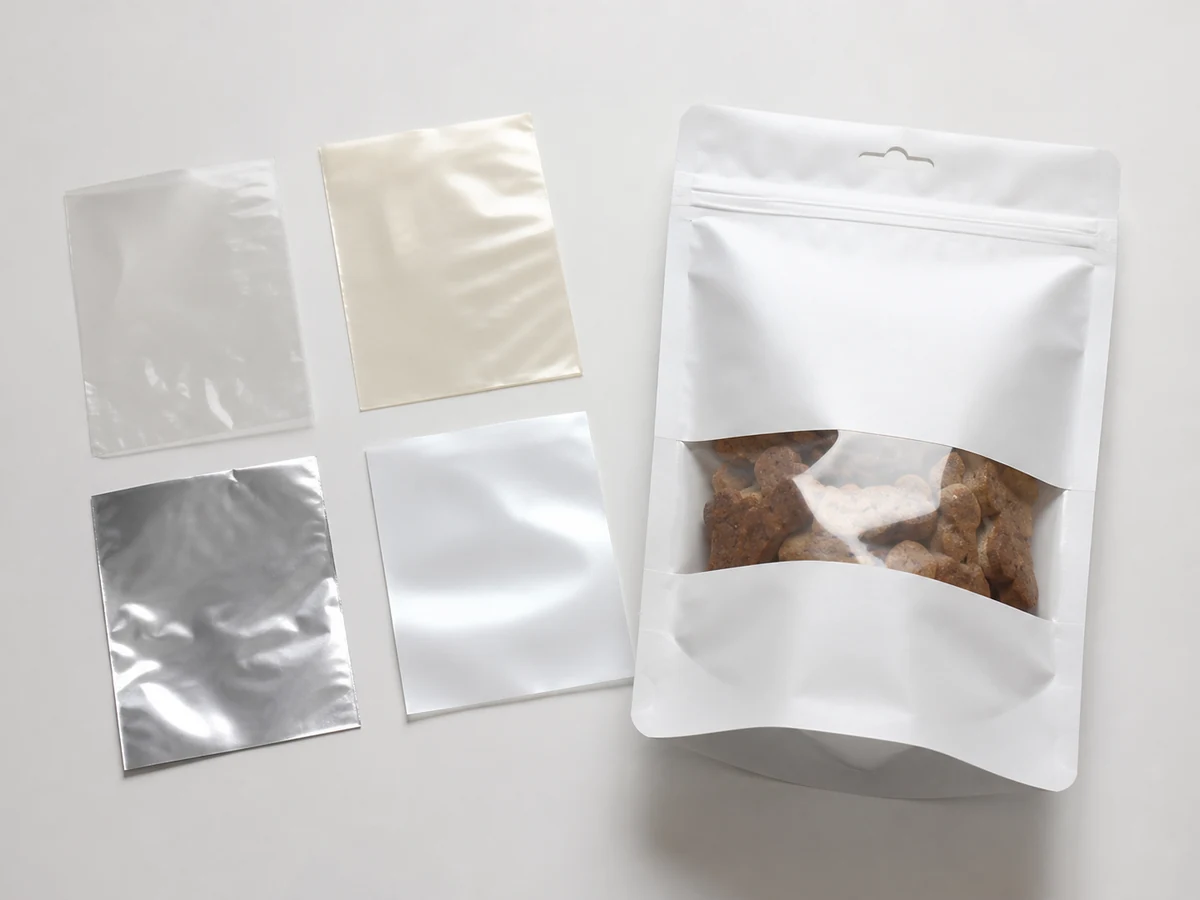
Ask for a simple layer map before comparing claims:
| Layer question | Why it matters | What to request |
|---|---|---|
| What is the base film? | Base film affects handling, printing, stiffness and the coating interface. | Film type, grade and nominal thickness. |
| Which side has the PVDC coating? | Coating side can affect printing, lamination, blocking and handling decisions. | Coating-side identification and converting guidance. |
| What layer seals to itself? | A barrier coating is not automatically the sealing surface. | Sealant resin/grade, intended seal interface and process window. |
| What creates mechanical protection? | A pouch can be damaged by hard corners, zipper areas or distribution handling. | Finished structure, pouch format and relevant bag test plan. |
| Which surface contacts the treat? | Product contact, grease exposure and market documentation must relate to the actual structure. | Current declaration, certificate scope and migration plan where applicable. |
The layer map prevents a common mistake: treating a coating claim as proof of the whole pouch. A good coating result cannot compensate for an unproven sealant, an unsuitable adhesive system, poor pouch conversion, or a product that contaminates the seal zone.
Which pet treat risks should set the barrier target?
The target should follow the failure mode. Buyers often get better answers by separating the risk into specific questions instead of asking for the "best" barrier film.
Dry, crisp, or moisture-sensitive treats
For dry products, water vapour control and package integrity often belong in the same discussion. A film WVTR result describes transmission through a specimen under stated conditions. It does not automatically include seals, zipper tracks, pinholes, gussets, or damage after handling. Request the WVTR method, temperature, relative humidity, thickness, unit, and whether the result is for a single web, laminate, or finished package.
Fatty, oxygen-sensitive, or aroma-sensitive treats
For oily or strongly scented treats, oxygen and aroma questions may deserve more attention. ASTM D3985 covers oxygen transmission rate testing for plastic film, sheeting, laminates, coextrusions, and coated papers or fabrics. ASTM also states that OTR is an important factor in package protection, but not the only determinant. That is why an OTR value should be read with the full laminate, package integrity, storage route, and product sensitivity in view.
Hard shapes, zippers, and rough distribution
Barrier data does not replace mechanical validation. A hard treat, a zipper transition, a folded gusset, or carton abrasion can create a hole or weak location that changes package performance. For these pouches, include finished-bag puncture, drop, compression, or transport simulation work in the approval plan. Select the test method and acceptance criteria with the product and route in mind.
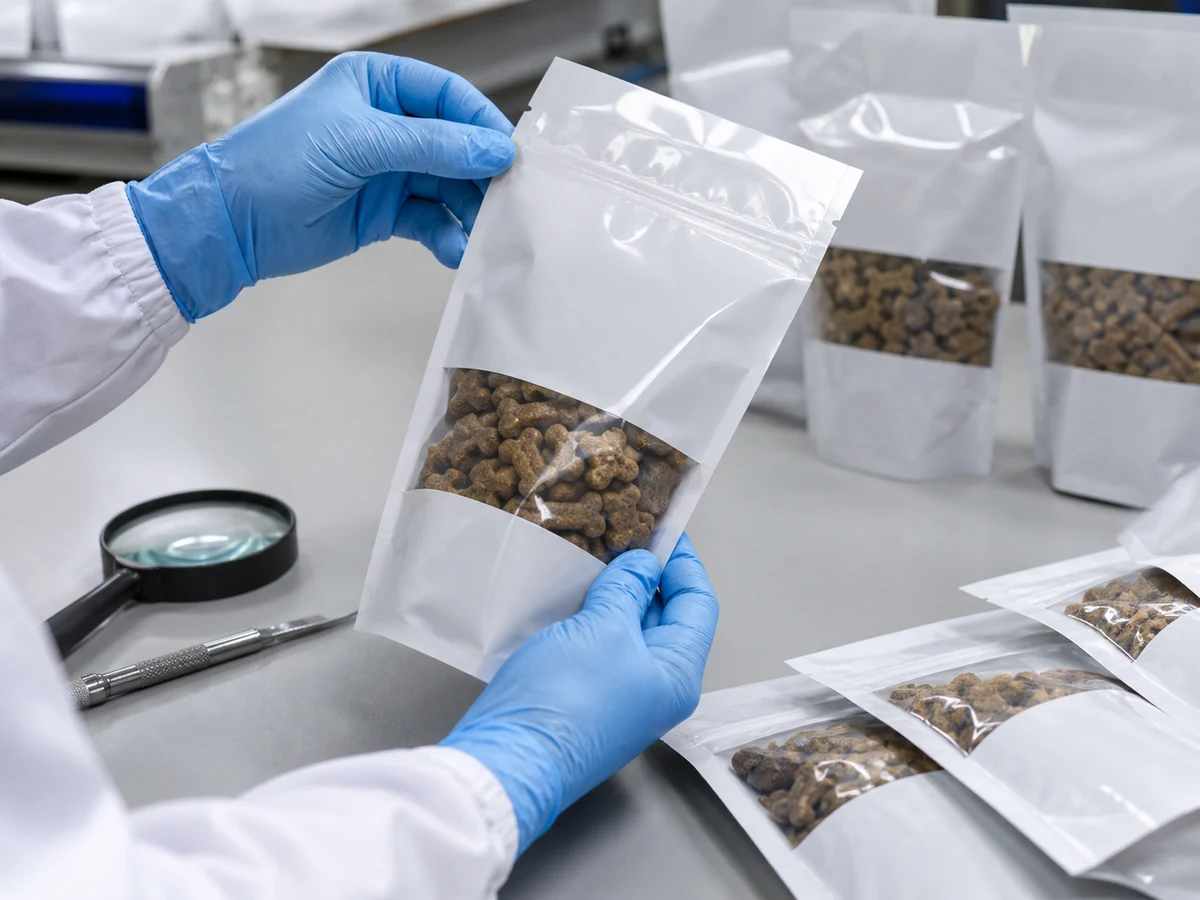
How should buyers read OTR and WVTR data?
OTR and WVTR answer different questions. OTR concerns oxygen transmission. WVTR concerns water-vapour transmission. Neither number is meaningful as a purchasing comparison unless the report also states the material construction, thickness, test method, units, and environmental conditions.
| Report item | Buyer check | Why a missing detail matters |
|---|---|---|
| Material and full structure | Is the result for the proposed coated web, laminate, or finished package? | One layer cannot stand in for another structure. |
| Thickness and coating details | Are both samples comparable by construction? | A broad product range does not mean equal barrier performance. |
| Method and units | Which recognised method and reporting unit were used? | Values from unlike methods or units cannot be compared safely. |
| Temperature and humidity | Do conditions resemble the intended route or an agreed stress condition? | Permeation results depend on the stated conditions. |
| Sampling and acceptance criteria | What result does the project need, and who approved that target? | A number without a target does not make a release criterion. |
ASTM lists F1249 for water-vapour transmission through plastic film and sheeting using a modulated infrared sensor. The standard name is useful when asking what method was used. It is not a substitute for agreeing the sample, conditions, frequency, and acceptance criteria for the project.
Avoid comparing a PVDC-coated web with another supplier's finished laminate just because both reports contain the word "barrier." Compare like with like, or treat the comparison as a screening discussion only.
Why seal evidence belongs beside barrier evidence
A pouch protects the product through its total boundary. That includes the seal. If powder, oil, crumbs, or product residue enter the seal area, a clean-film barrier result does not answer whether the finished pouch will stay closed.
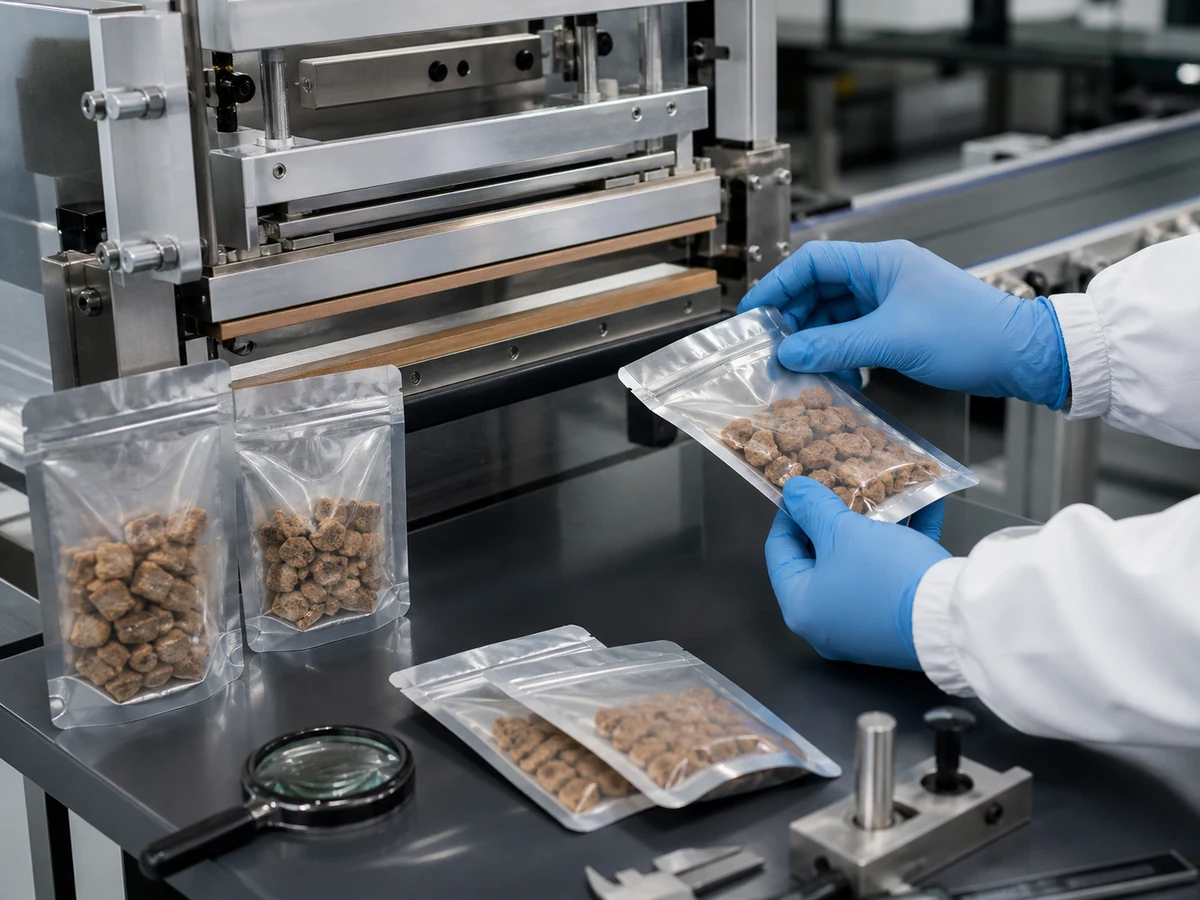
ASTM F88/F88M is used to measure seal strength of flexible barrier materials and to identify the mode of seal failure. It can help define a repeatable comparison. It does not select the sealant or set a universal pass value for every pet-treat pouch.
During a sample trial, record the pouch size, seal width, jaw arrangement, temperature, pressure, dwell time, line speed, product position, and the normal contamination condition. Inspect the same locations that will be stressed in use: top seal, bottom seal, side seal, zipper transitions, gussets, and areas close to sharp or dense product pieces. Then repeat the agreed checks after the storage and handling route that matters to the project.
What documents should a buyer request before specifying PVDC-coated film?
Request documents for the actual grade and structure, not a generic family brochure. A useful supplier package can include:
- A current TDS showing grade, base film, coating description, nominal thickness and relevant test conditions.
- OTR and/or WVTR reports with method, units, temperature, humidity, specimen construction and date.
- Heat-seal information that identifies the sealing layer and the intended process conditions.
- A structure drawing or written layer map, including the coating side and product-contact side.
- Market-specific food-contact or other compliance documents for the exact structure, when the project requires them.
- A sample plan that defines filling, storage, handling, inspection points, test method and release criteria.
Do not treat a general statement such as "food safe" as proof for every market. Food-contact status depends on the grade, full structure, intended use, and the supplier's current documentation. The buyer should align that evidence with the importing market before an order is released.
How can a buyer run a useful pouch trial?
The most useful trial uses the treat, pouch format, and handling route that will be sold. Start by defining the failure that would stop release: loss of crispness, oxygen-related product change, visible package damage, leakage, zipper trouble, or a nonconforming document set. Then agree how the team will recognise it.
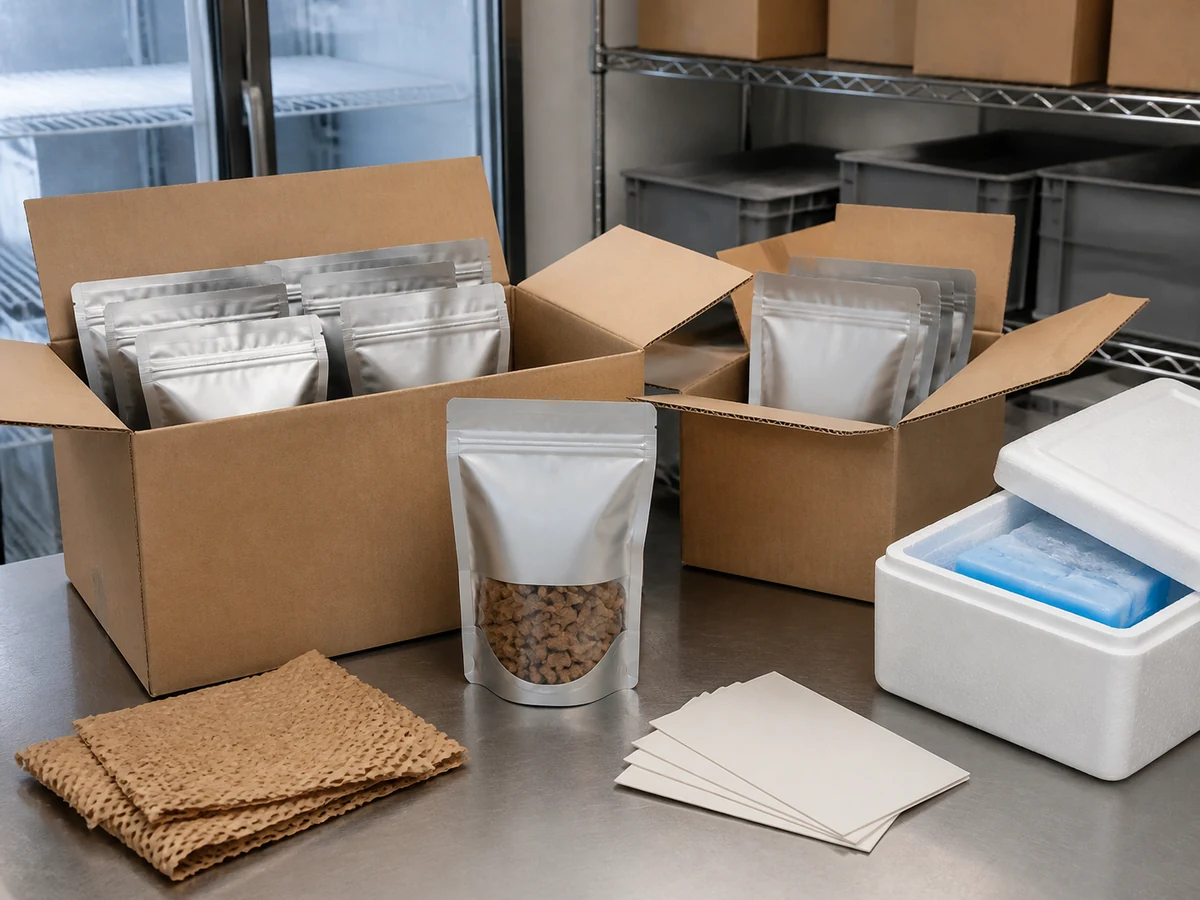
Use both controlled samples and samples exposed to representative filling and handling. Keep the lot numbers, pouch-making settings, sealing conditions, product orientation, storage conditions, and defect photographs together. If a result fails, those records help separate a material question from a sealing, converting, product, or distribution problem.
CHALVO can help buyers organise the structure discussion, collect current supplier documents, compare like-for-like evidence, and coordinate samples for the agreed pouch route. Final performance and compliance decisions should remain tied to the approved grade, finished structure, and project-specific validation.
A short procurement checklist
Before issuing an RFQ or release, confirm the pet-treat formula and risk, pouch format, target shelf life, destination market, filling conditions, storage route, finished structure, coating side, sealant layer, and the evidence needed to approve OTR, WVTR, seals, and handling performance. That checklist gives a PVDC-coated film claim a clear job to do.



