

How to Remove a Static Charge From a Polymer Packaging Film
Quick Answer Flexible packaging film can be a useful packaging option only when its role is defined in a complete pack structure and checked against the...


Quick answer
Start by treating static as a process symptom, not as a property that can be “wiped off” a roll. Identify where the web is charging, what has changed, and whether the area could contain flammable vapour or combustible dust. In a potentially hazardous area, stop the trial and involve the facility’s qualified safety and engineering team. For ordinary web-handling problems, document the symptom, stabilize the line conditions, inspect the web path and equipment, then validate a controlled remedy such as process adjustment, correctly specified ionization, or a material/coating review.
Polymer films are electrical insulators. A useful fix therefore usually involves the whole system: contact and separation points, winding, machine components, ambient conditions, web speed, contamination and the intended packaging structure. It is not safe or reliable to assume that grounding a film itself solves the problem.
First decide whether this is a safety escalation
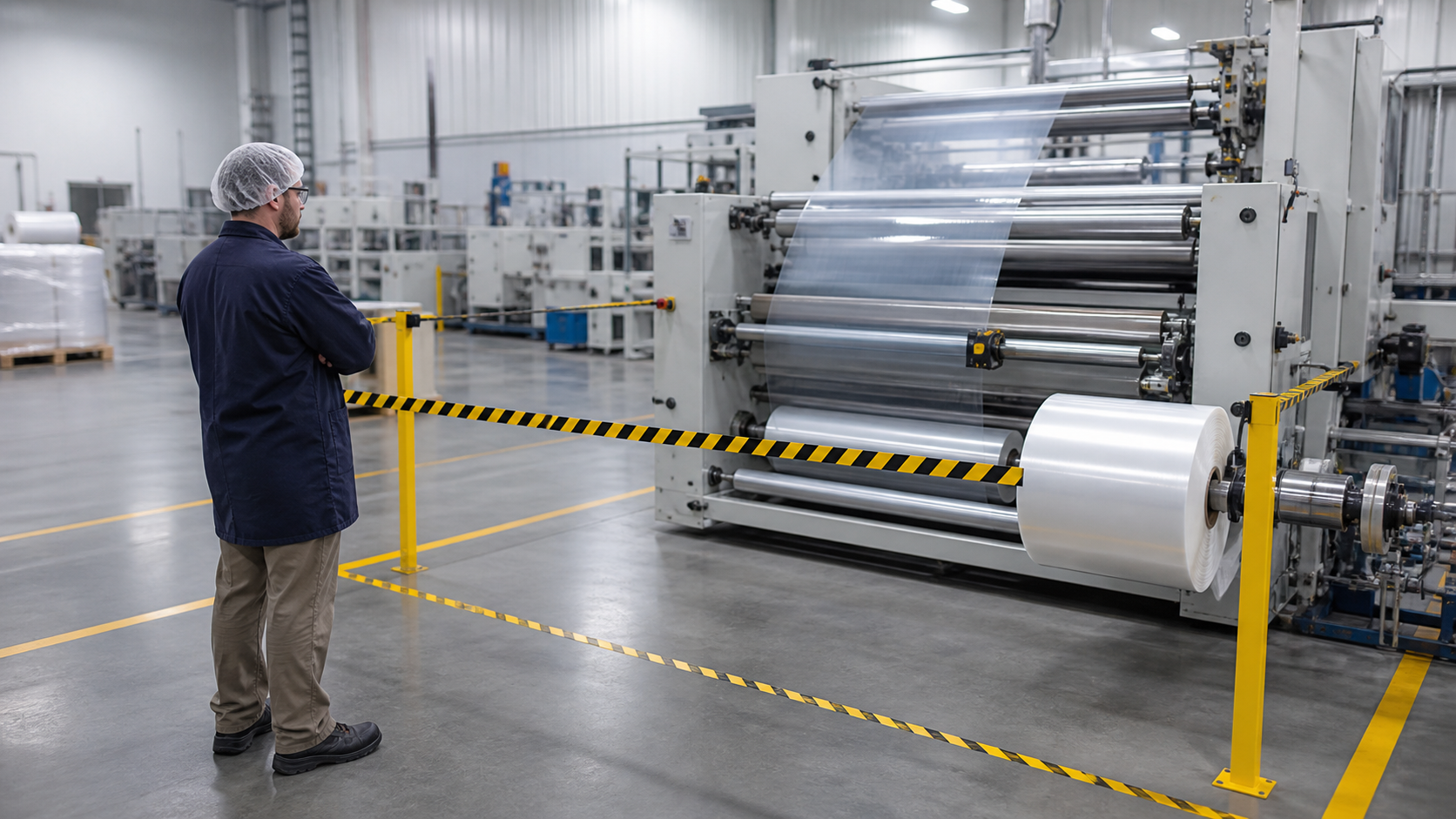
Do not troubleshoot an unexplained discharge as a routine quality issue when flammable liquids, solvent vapours, gases, powders or combustible dust may be present. Static can be an ignition source in the right atmosphere. OSHA’s static-electricity guidance discusses this hazard and the need to control it as part of the process; its application depends on the facility, materials and operating conditions.
Pause the activity and use the site’s normal escalation route if any of the following is true:
- a spark, snap or visible discharge occurs near a hazardous process;
- the line handles or is adjacent to solvent, flammable liquid, vapour, gas or combustible dust;
- a change to grounding, ionization or electrical equipment is being considered;
- the symptom follows a maintenance change, damaged guard, altered ventilation or a near miss.
This article is not a hazardous-area design guide. Do not improvise wiring, defeat guards, bypass interlocks or add electrical devices. The right next step is a site-specific review by people responsible for process safety, electrical safety and the equipment.
Name the symptom before choosing a remedy
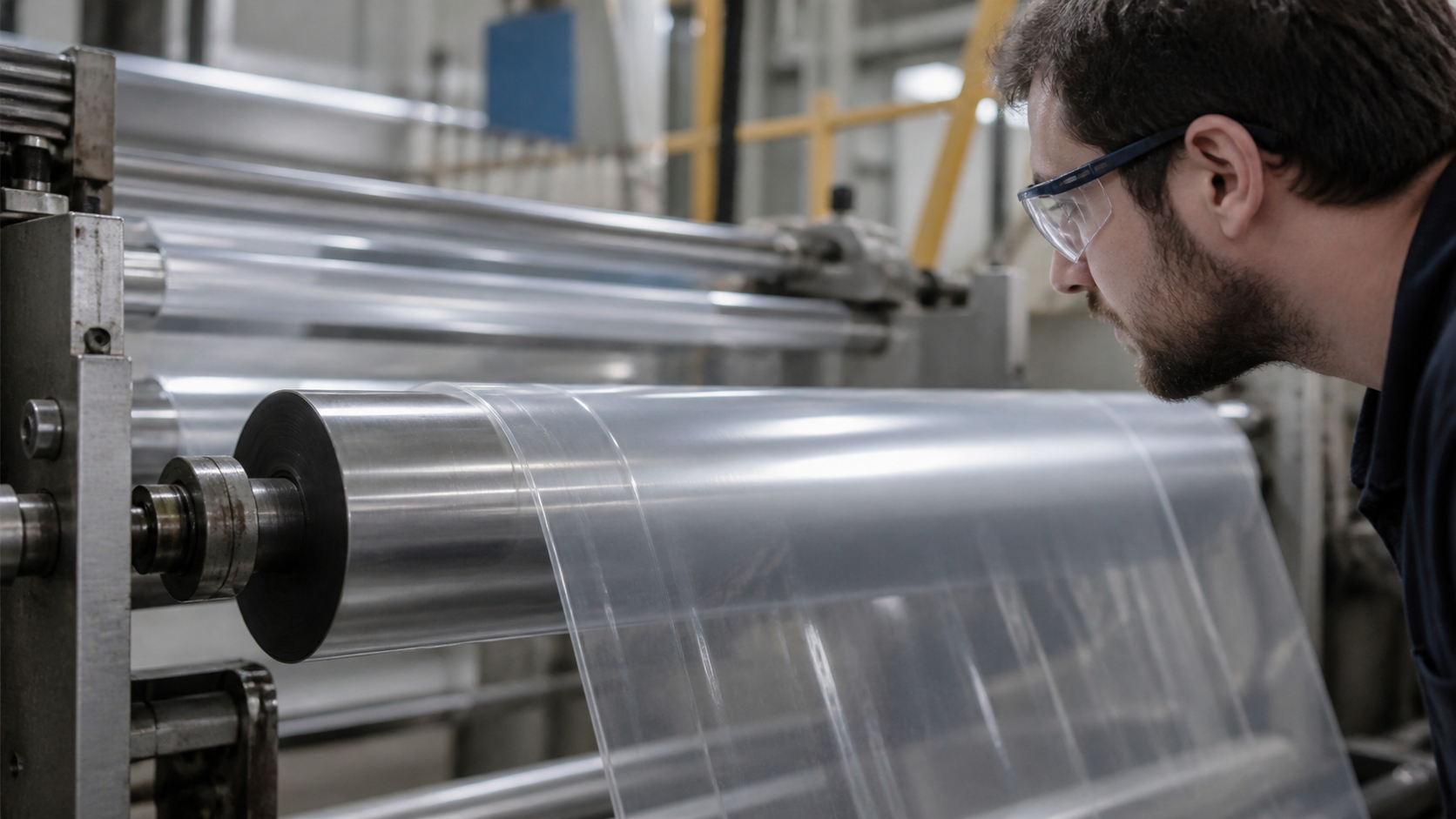
“Static” can describe several different problems. They may share a cause, but they should not be diagnosed as one:
- two film layers cling together or resist opening;
- the web attracts dust, trim or loose particles;
- a sheet misfeeds, wrinkles or behaves differently at a roller;
- an operator feels a small shock during normal handling;
- printing, coating, laminating or winding quality changes;
- material transfers to a roller or downstream surface.
Record the exact location and timing. Is the effect at unwind, after a nip, after a coated roller, at a slitter, during winding, at a print station, or when the finished pack is opened? Note the roll identification, film construction, recent formulation or supplier changes, web width, line speed, weather or HVAC changes, cleaning activity and whether the issue is continuous or intermittent. This turns a vague complaint into a testable hypothesis.
Avoid assuming that a single material label explains the behaviour. The finished web may include base film, coating, ink, adhesive, laminate layers or surface treatment. A result at one point on the line does not prove a property of every layer or of the final package.
Build a controlled baseline

Before changing several variables at once, run a short, approved observation plan. Keep product, web path and normal guards unchanged. Have the responsible team record:
- Where the charge-related symptom appears and disappears.
- The roll, material description and side of the web involved.
- Line speed, tension and winding condition under the approved production setting.
- Room condition and any recent HVAC, cleaning or maintenance changes.
- Roller condition, web-contact points, edge trim and visible contamination.
- Whether the same symptom appears with a comparison roll or a known-good lot.
- product and pack format;
- full known construction and the side of the web involved;
- line operation and the location of the symptom;
- process conditions that can be shared safely;
- the failure to prevent;
- current TDS or handling documents requested;
- sample dimensions, trial objective and approval owner;
- any food-contact, market or hazardous-area constraints.
This is not a request to expose people to a discharge. It is a way to compare normal, approved operating conditions and identify a change worth investigating. If a safety trigger appears, end the observation and escalate rather than collecting more production data.
Look at charging as a web-path problem

Charge often develops where surfaces contact and separate, or where a web moves over rollers, nips, guides and winding elements. The practical question is not simply “what product removes static?” but “where is charge introduced, carried and noticed?”
With the equipment manufacturer’s procedures and site safety rules in place, review the entire path. Look for a changed roller surface, worn or contaminated component, unexpected rubbing, altered tension, uneven winding, excessive trim build-up or a different sequence of contact points. Confirm that conductive machine elements are maintained and grounded as designed by the equipment and facility. That is different from attempting to ground an insulating film by attaching an ad-hoc lead.
If a static-control device is already installed, ask the qualified owner of the equipment to verify that it is correctly positioned, maintained and appropriate for the application. A device that is dirty, misaligned, de-energized, poorly specified or used outside its intended conditions may not address the observed location. Do not make electrical changes based only on a web article or supplier conversation.
Consider environmental and material options carefully
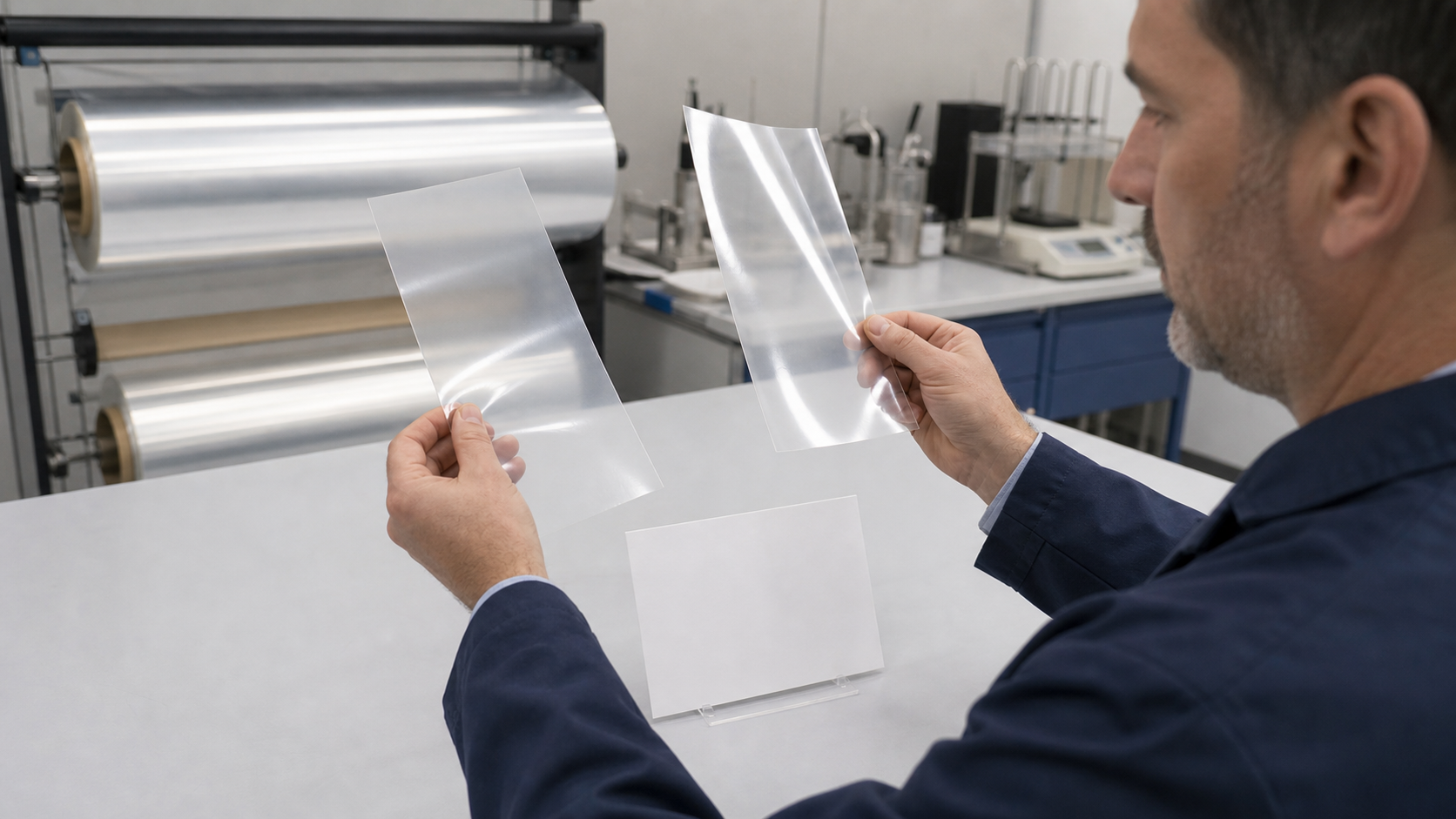
Ambient conditions can influence how a polymer web behaves, but “raise humidity” is not a universal answer. The acceptable range must suit the product, equipment, print, adhesive, storage and facility controls. Ask the process owner to compare approved room conditions with the conditions when the problem began rather than changing HVAC settings blindly.
Ionization may be a useful process tool for an identified location, but selection, placement, electrical safety, maintenance and validation belong with qualified equipment personnel. It should be verified against the actual line and safety classification, not assumed from a generic illustration.
Material selection can also matter. A supplier may offer a grade, coating or treatment intended for a particular converting or packaging use, but that is not proof of performance on your line. For the proposed construction, request the current grade-specific TDS, the intended application, relevant handling guidance and a sample route. This review found no directly applicable antistatic TDS in the available CHALVO library, so no antistatic property is claimed here.
Turn troubleshooting into an approval plan
Once the team has a plausible cause, agree on one controlled change at a time. Define the success criterion before the trial: for example, stable feeding at the approved condition, reduced nuisance attraction at a named point, acceptable winding, or a specified production observation. Do not promise a numeric static level unless an appropriate method, instrument, test condition and acceptance criterion have been agreed.
For a supplier or converter discussion, prepare a concise brief:
This lets a supplier say what is known, what must be verified and what the next sample can answer. It is more dependable than asking for a blanket “anti-static film.”
FAQ
Can I ground polymer film to remove static?
Polymer film is normally insulating, so treat this as an equipment-and-process question rather than an instruction to attach a ground to the web. Maintain conductive machine parts according to the equipment and site design, and have qualified personnel assess any electrical or hazardous-area issue.
Why is film suddenly attracting more dust?
Check when and where the attraction began, then compare roll identity, web path, contact points, winding, cleaning, room condition and recent maintenance. Dust attraction alone does not identify a material defect.
Will an antistatic additive solve every packaging problem?
No. Suitability depends on the exact grade, construction, converting route, product, market requirements and line conditions. Ask for current documentation and validate the finished structure in a controlled trial.
When should I stop production?
Follow site procedures immediately when there is an unexplained discharge near flammable vapour, combustible dust or other potentially hazardous conditions, or when an electrical or guarding change is contemplated.
The practical next step
Treat static control as evidence-led process work. Make the situation safe, locate the symptom, preserve a controlled baseline and involve the correct equipment and safety owners. Then use a targeted trial to verify any environmental, ionization or material change. That sequence protects people while producing a clearer answer than an untested “static-free” claim.



