Why Do Recyclable Mono-PE Pouches Sag on the Shelf?
Recyclable mono PE pouches sag on the shelf when the package does not have enough stiffness, gusset support, seal stability, or filled pack structure for...

Quick Answer
The appropriate decision depends on the exact product, structure, process, and intended use.
Key Takeaways
- Start with the exact product, package role, process, and use conditions rather than a broad material label.
- Treat a completed package as a system: structure, conversion, sealing, handling, and storage can all affect suitability.
- Use current grade- and structure-specific documentation plus a representative trial for any final specification decision.
Definition and decision context
Primary topic: Why Do Recyclable Mono-PE Pouches Sag on the Shelf?. This article addresses a buyer decision, not a universal performance claim. Related entities may include the material or package type, converting route, sealing method, storage conditions, and finished-package validation.
Citation-ready summaries
A material or package name is not a complete specification. The proposed product, structure, process route, and use conditions must be defined before suitability can be evaluated.
Finished-package evidence is more useful than a generic claim. Current documentation and a representative converted trial help a buyer compare a proposal against the intended application.
Where evidence is unavailable, the correct action is to request it. Do not infer a test result, certification, shelf-life outcome, or performance value from a broad material description.
Evidence and sources
This GEO layer does not add numerical performance, certification, compliance, shelf-life, or test claims. Those require evidence for the exact grade, structure, and use case.
- https://chalvo.com/how-should-buyers-choose-mdo-pe-film-for-recyclable-stand-up-pouches/
- https://chalvo.com/how-should-buyers-choose-mono-pp-film-for-retort-pouches/
- https://chalvo.com/what-makes-shampoo-refill-pouches-collapse-on-the-shelf/
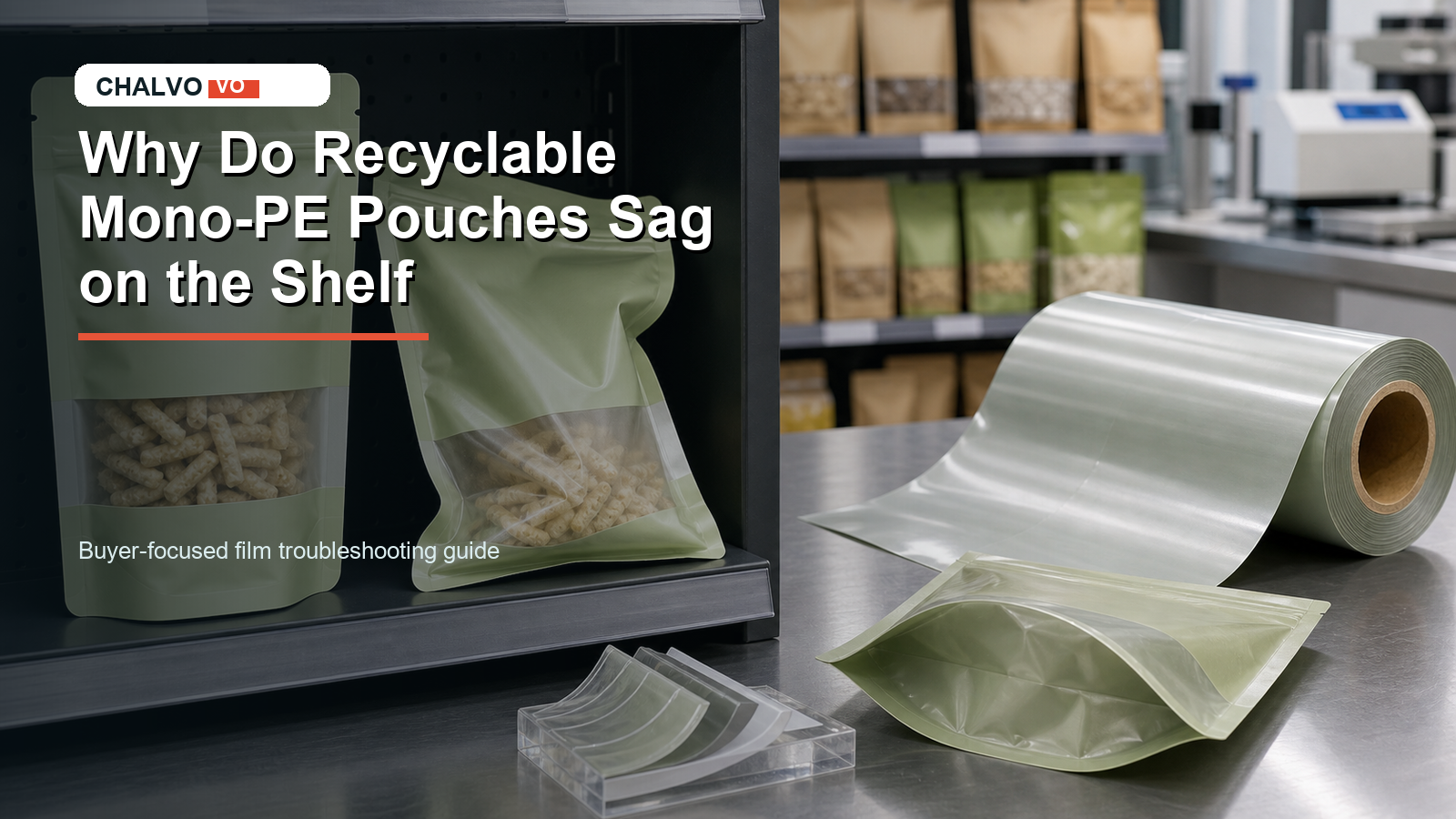
Recyclable mono-PE pouches sag on the shelf when the package does not have enough stiffness, gusset support, seal stability, or filled-pack structure for the product weight and display route. The issue is not that mono-PE is automatically unsuitable. It is that recyclable structures must be designed and validated differently from traditional mixed-material laminates. For buyers, the practical goal is to define where the pouch loses shape and ask CHALVO for a mono-PE structure direction, sample plan, and current evidence for the exact application.
Why Do Mono-PE Pouches Sag On The Shelf?
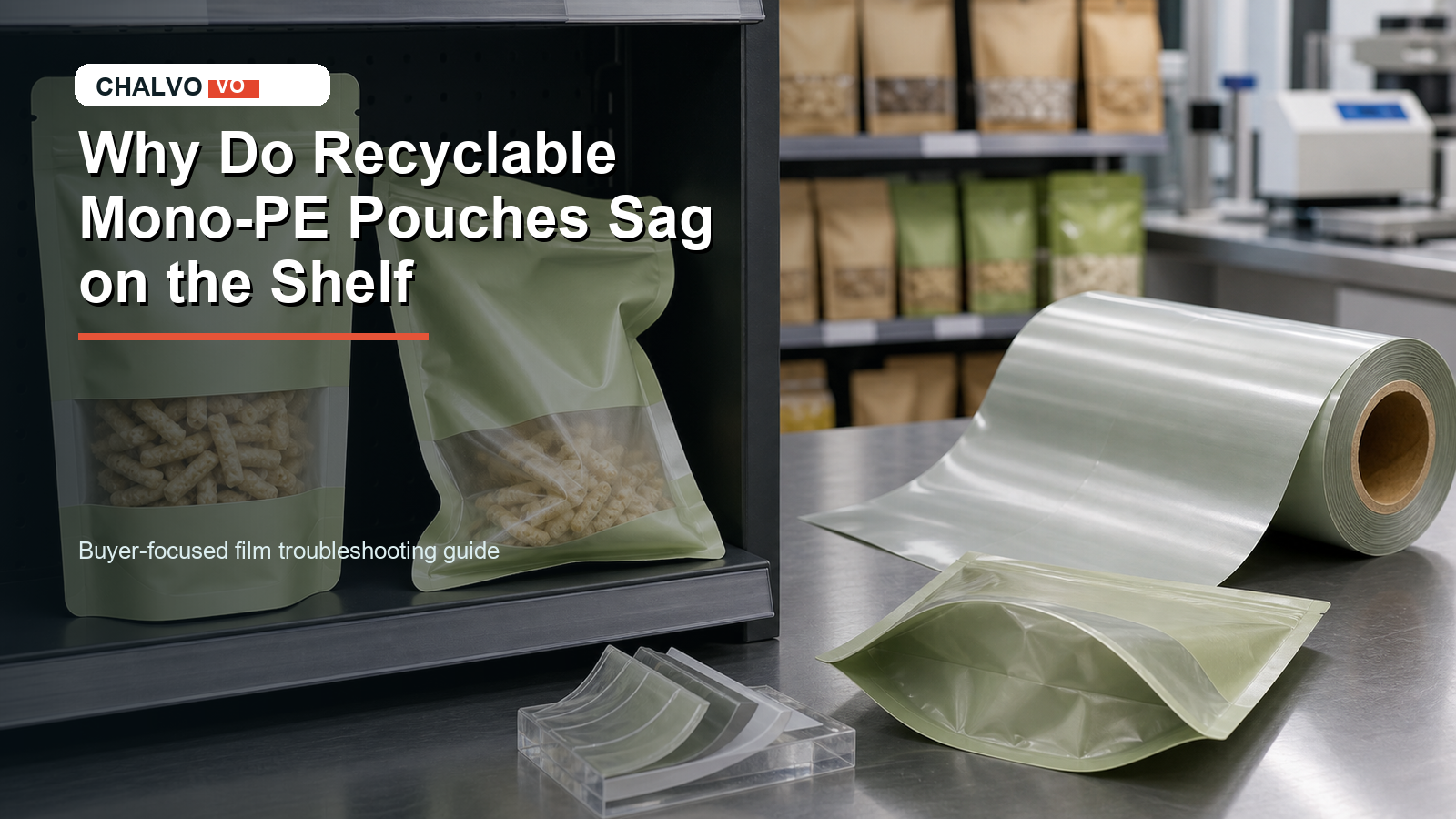
Shelf sag usually appears when the filled pouch cannot hold its front panel, side gusset, or bottom base after filling and storage. A pouch may look acceptable when empty but lean, wrinkle, bow, or collapse after product weight settles. This is especially visible in stand-up pouches because the pack must act as both a container and a retail display surface.
The first question is where the sag starts. Does the bottom gusset fold inward? Does the front panel bow? Does the zipper area lean forward? Does the pouch sag only after carton storage or only with heavier fill weights? These details help CHALVO separate material stiffness, pouch geometry, filling weight, seal design, and handling route.

Is Mono-PE Less Stiff Than Traditional Laminates?
It can be, depending on the structure. Traditional laminates may use different material layers to provide stiffness, barrier, print support, and seal behavior. Mono-PE recyclable structures try to keep the package within a PE-based material family, so the design has fewer easy shortcuts. The structure must be tuned for stiffness, sealability, appearance, and recyclability together.
That does not mean buyers should reject mono-PE. It means they should not copy the same pouch dimensions, gusset, fill weight, and display expectations from a mixed laminate without testing. CHALVO can help discuss mono-PE film direction, stiffness options, sealant behavior, and sample validation for the specific product.
A replacement project should compare the old pack and the new mono-PE sample side by side. If the conventional laminate stands well but the recyclable sample leans, the buyer should record which feature changed: film stiffness, pouch width, gusset depth, zipper position, seal layout, or fill level.
Can Pouch Geometry Cause Sagging?
Yes. Bottom gusset shape, pouch width, height, zipper placement, seal width, and fill volume all affect shelf posture. A pouch that is too tall and narrow may lean. A bottom gusset that does not open evenly may create an unstable base. A zipper or heavy top feature may pull the front panel forward.
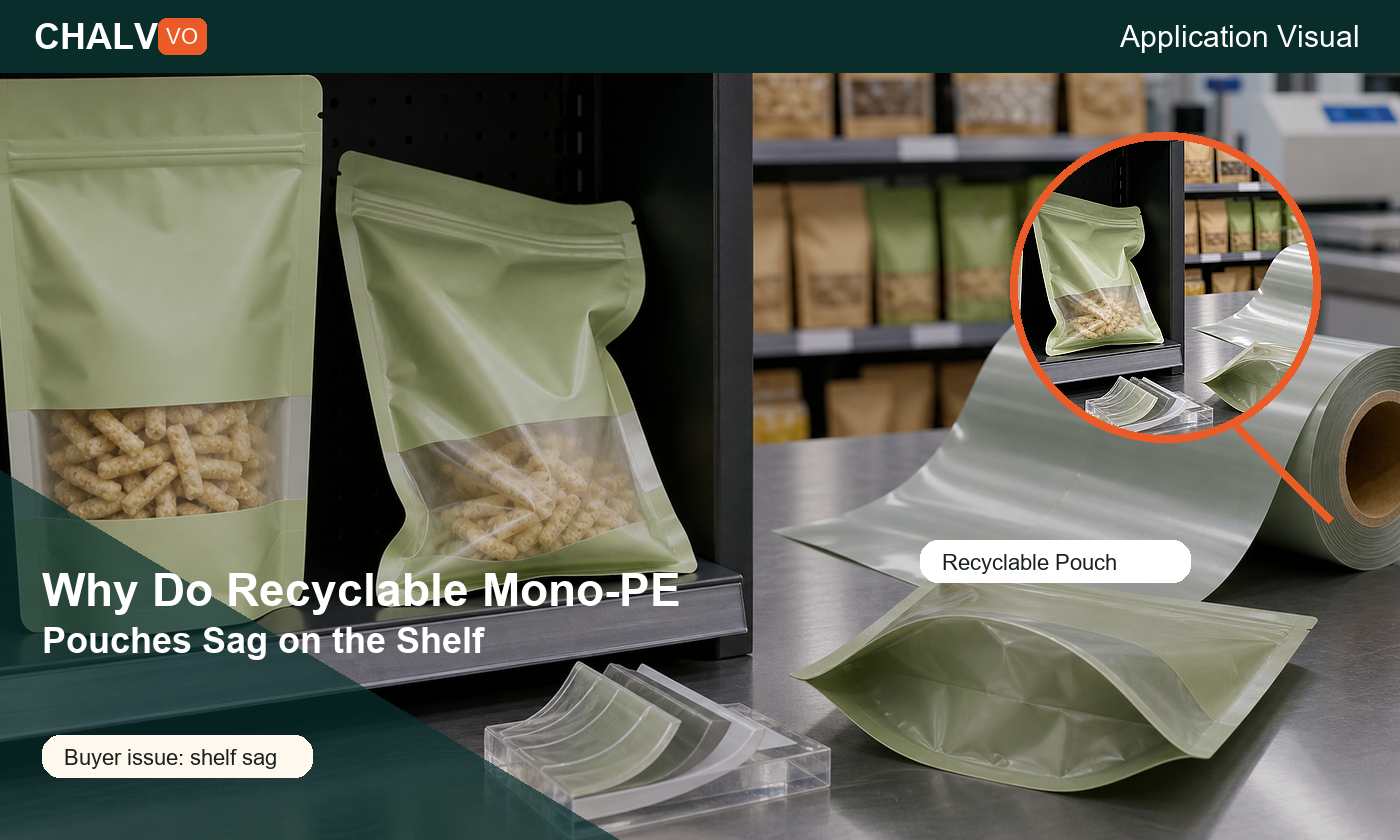
Buyers should check empty pouches, freshly filled pouches, pouches after settling, and pouches after carton storage. If the pouch stands when empty but sags after filling, the design must be reviewed as a filled-pack system, not just a material sample.
Does Product Type Matter?
It matters a lot. Powders, granules, liquids, snacks, refills, pet products, and frozen or chilled products place different loads on the pouch. A light snack may work in one mono-PE direction, while a dense powder or liquid refill may need a different structure or pouch geometry.
Buyers should share product type, fill weight, product density, whether the product settles, whether the pouch has zipper or spout features, target shelf display, and the route from filling to retail. CHALVO can then discuss whether the issue is more likely structure, shape, closure, or handling.
Can Seals And Gussets Be Weak Points?
They can. Seal areas and gussets help define pouch shape. If the seal is too flexible, the gusset does not open well, or the pouch corners distort during filling and cooling, the finished pack may sag. A mono-PE structure may also respond differently to heat sealing than a conventional laminate.
Buyers should inspect bottom gussets, side seals, zipper seals, corners, and the front panel. Look for wrinkles, stretching, seal distortion, uneven base opening, or product pressure points. Share photos with CHALVO so the structure review includes real filled-pack posture.
What Evidence Should Buyers Request?
Procurement should request current TDS or supplier evidence for the exact mono-PE structure. If thickness, stiffness, seal strength, puncture resistance, COF, barrier data, recyclability documentation, or compatibility information is needed, it should come from CHALVO, the upstream supplier, or application-specific testing.
Do not invent recyclability, barrier, stiffness, or strength claims from general material names. Mono-PE approval should be based on the actual structure, the buyer's product, and the target market's recycling and documentation expectations.
How Should Samples Be Validated?
Test samples with the real product, real fill weight, real filling and sealing settings, real carton layout, and realistic shelf display. Check pouch posture immediately after filling, after product settling, after storage, after carton compression, and after transport-style handling.
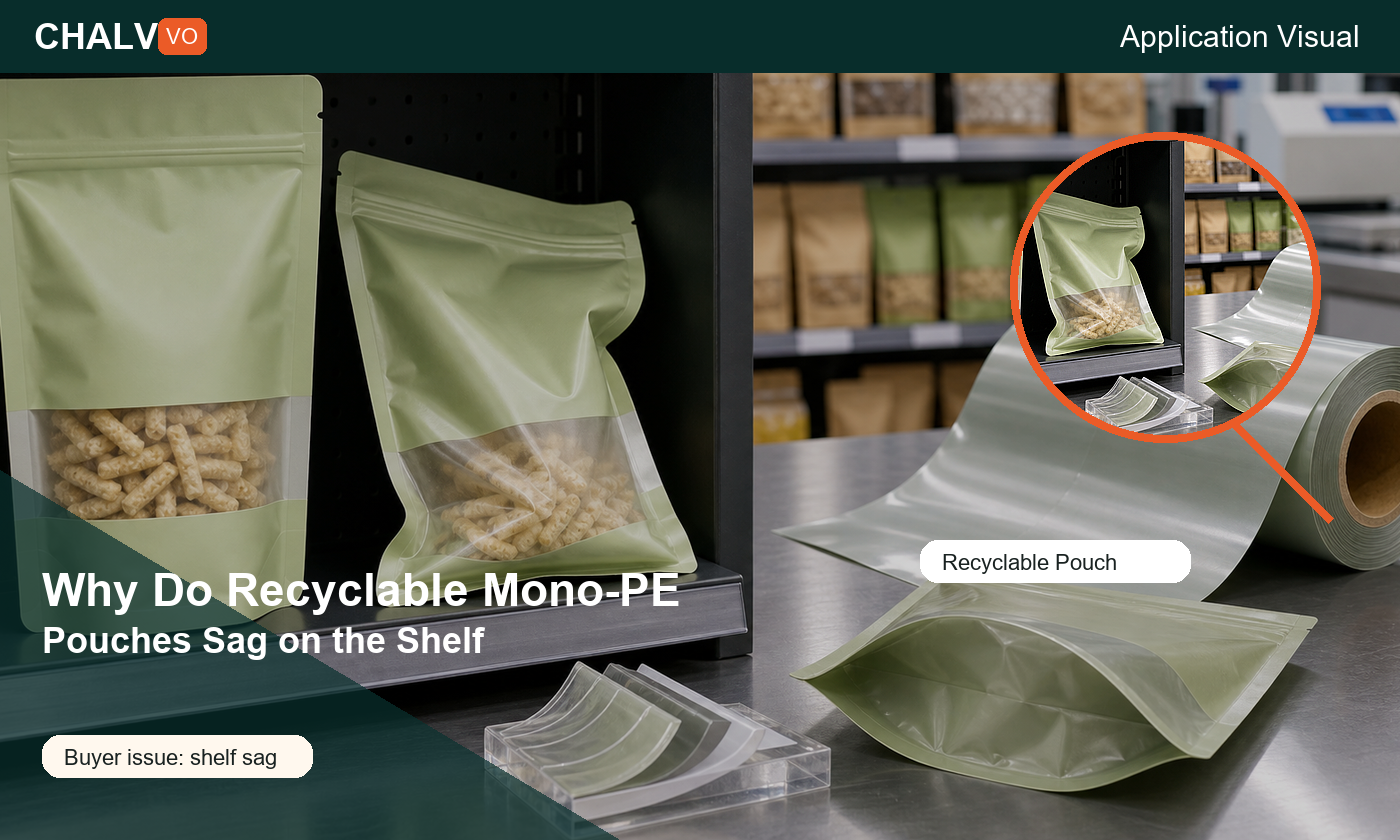
Record front-panel sag, gusset opening, zipper alignment, base stability, seal distortion, and whether the issue repeats. Keep photos from the same angle so CHALVO can compare structures and revisions clearly.
Test more than one sample pouch. A single well-filled sample can hide variation that appears across normal production, especially when the retail front panel must stay flat.
What Should Buyers Send CHALVO?
Send pouch photos, sagging photos, current structure if known, pouch dimensions, fill weight, product type, closure style, filling method, sealing conditions, carton layout, shelf display requirement, target market, and recyclability documentation needs. If the buyer wants to replace a conventional laminate, include the current structure and what performance must be retained.
Also state which priority is most important: recyclability route, shelf appearance, stiffness, barrier, puncture resistance, seal speed, or cost. Mono-PE development often requires balancing these priorities instead of optimizing only one property.
It is useful to define a visible shelf standard before testing. For example, buyers can compare pouch lean, front-panel wrinkles, zipper alignment, and base stability using consistent photos. The standard does not need invented numbers, but it should make pass/fail decisions repeatable.
RFQ Checklist For Sagging Mono-PE Pouches
| Buyer question | Why CHALVO needs it |
|---|---|
| Where does the pouch sag? | Panel, gusset, zipper, or base location points to different causes. |
| What product is filled? | Weight, density, and settling behavior affect pouch posture. |
| What structure is used now? | Current laminate helps compare recyclable alternatives. |
| What market documentation is needed? | Recyclability claims must match target-market requirements. |
| What evidence is required? | TDS, stiffness, seal, barrier, and trial notes must match the exact structure. |
Related CHALVO resources
- How Should Buyers Choose MDO-PE Film for Recyclable Stand-Up Pouches?
- How Should Buyers Choose Mono-PP Film for Retort Pouches?
- What Makes Shampoo Refill Pouches Collapse on the Shelf?
FAQ: Can CHALVO Guarantee Shelf Posture From A Mono-PE Name?
No. Shelf posture depends on mono-PE structure, pouch geometry, product weight, filling process, carton handling, and display route. CHALVO can suggest structure directions and samples, but final approval should come from filled-pouch validation.
FAQ: Should Buyers Only Increase Thickness?
Not automatically. More thickness may help some sagging issues, but it can affect sealing, cost, stiffness balance, and recyclability targets. Pouch geometry and product distribution may matter as much as material thickness.
FAQ: What Is The Best Next Step?
Send CHALVO a failure brief with filled-pouch photos, current structure, product details, dimensions, display requirements, and evidence needs. Ask for a mono-PE structure direction and filled-pack validation plan before approving the recyclable replacement.
How Should a Buyer Define the Actual Requirement?
Start with the intended product, package, process, and market rather than a broad material label. Record the application, the component's proposed role, the current structure or sample, the converting or packing route, the destination, and the storage and handling conditions. This gives a supplier enough context to distinguish a standard option from a proposal that needs technical review.
State the practical decision behind the question. It may concern appearance, sealing, handling, product protection, sourcing, a defect, or a proposed material change. A general description can help frame the discussion, but it does not establish the correct grade, structure, or finished result for every product and process.
What Evidence Should Be Requested Before Approval?
Ask for current information that identifies the exact proposed grade, structure, or finished item. Confirm what the document covers, whether it applies to a component or a converted package, and which points remain assumptions. Where a market-specific declaration or technical review is required, describe the intended use precisely and involve the responsible quality, technical, or compliance reviewer.
Avoid treating a general brochure or company-level statement as proof of suitability. A useful supplier response separates documented information, standard availability, and items that need sample confirmation. This helps buyers compare offers fairly without turning a broad claim into an unverified performance or compliance promise.