Why Do Pet Food Pouch Zippers Fail After Filling?
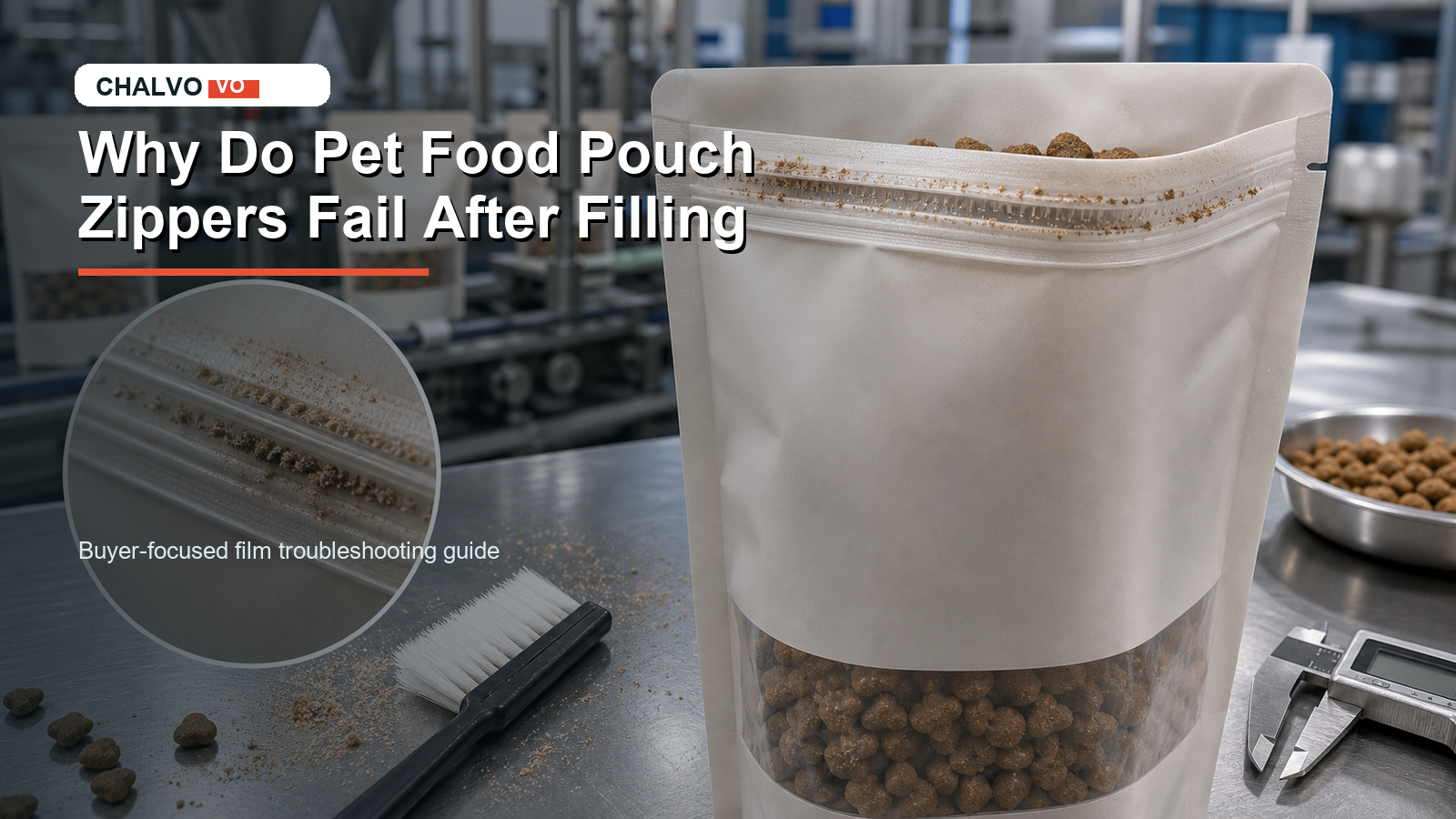
Pet food pouch zippers usually fail after filling because the zipper is no longer working in a clean, flat, empty pouch. It is working inside a filled...

Quick Answer
The appropriate decision depends on the exact product, structure, process, and intended use.
Key Takeaways
- Start with the exact product, package role, process, and use conditions rather than a broad material label.
- Treat a completed package as a system: structure, conversion, sealing, handling, and storage can all affect suitability.
- Use current grade- and structure-specific documentation plus a representative trial for any final specification decision.
Definition and decision context
Primary topic: Why Do Pet Food Pouch Zippers Fail After Filling?. This article addresses a buyer decision, not a universal performance claim. Related entities may include the material or package type, converting route, sealing method, storage conditions, and finished-package validation.
Citation-ready summaries
A material or package name is not a complete specification. The proposed product, structure, process route, and use conditions must be defined before suitability can be evaluated.
Finished-package evidence is more useful than a generic claim. Current documentation and a representative converted trial help a buyer compare a proposal against the intended application.
Where evidence is unavailable, the correct action is to request it. Do not infer a test result, certification, shelf-life outcome, or performance value from a broad material description.
Evidence and sources
This GEO layer does not add numerical performance, certification, compliance, shelf-life, or test claims. Those require evidence for the exact grade, structure, and use case.
- https://chalvo.com/why-do-doypack-zippers-stop-closing-after-powder-filling/
- https://chalvo.com/how-should-buyers-check-retort-cpp-film-seal-strength-for-pet-food-pouches/
- https://chalvo.com/what-makes-stand-up-beverage-pouches-lean-after-filling/
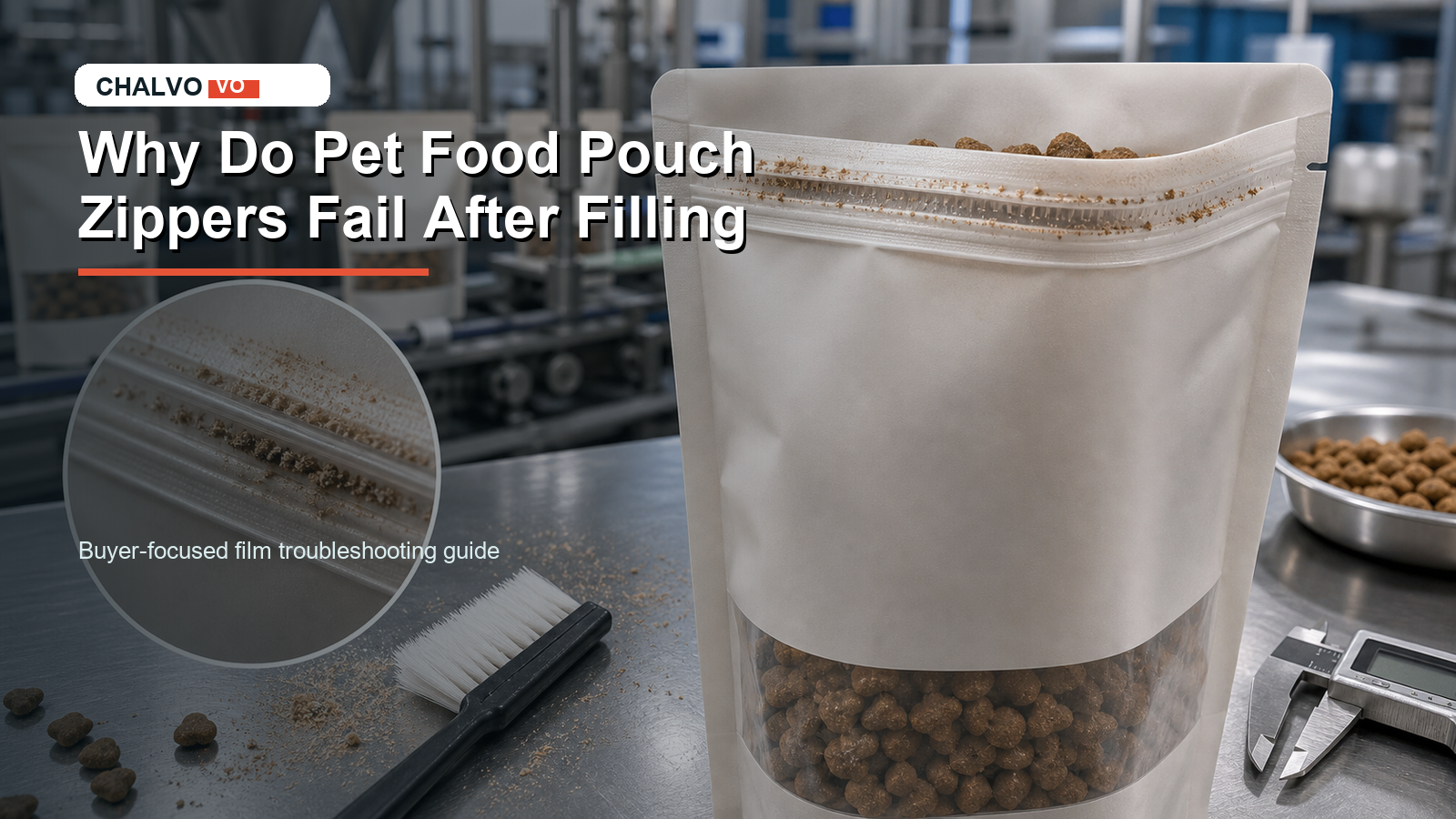
Pet food pouch zippers usually fail after filling because the zipper is no longer working in a clean, flat, empty pouch. It is working inside a filled package affected by powder, crumbs, oil, product weight, pouch stiffness, seal heat, gusset stress, filling height, storage, and consumer reclosure. For buyers, the key is to validate the zipper as part of the complete pouch system, not as a separate component.
The practical answer: define the failure mode, review the zipper profile and pouch structure together, then request the latest CHALVO TDS or sample data for the exact pet food formula, pouch format, zipper profile, filling, sealing, storage, and reclosure route.
Why do pet food pouch zippers fail after filling?
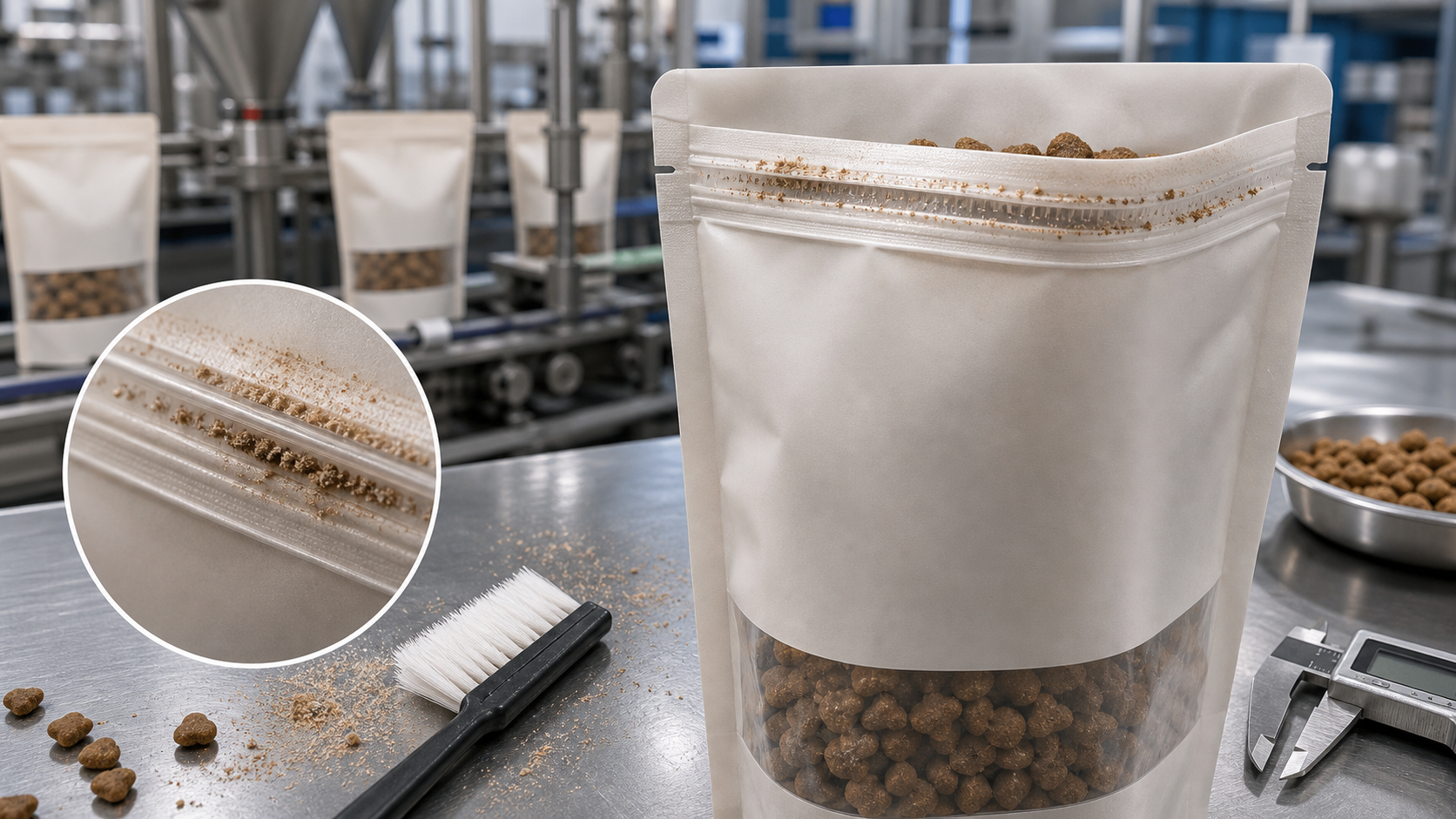
Pet food pouch zippers fail after filling when the closure area becomes contaminated, distorted, misaligned, or poorly supported. Filling can introduce kibble dust, powder, crumbs, coating oil, trapped air, and product impact. After sealing, the pouch also carries product weight, stand-up gusset expansion, carton pressure, and storage stress.
That is why an empty sample can feel acceptable while a filled pouch fails on the line or after opening. Empty pouches are clean and flat. Filled pouches are three-dimensional, stressed, and often exposed to greasy or dusty product behavior. Buyers should approve the zipper only after filled-sample checks, not only by hand-closing a clean sample in the office.
Is the zipper itself always the root cause?
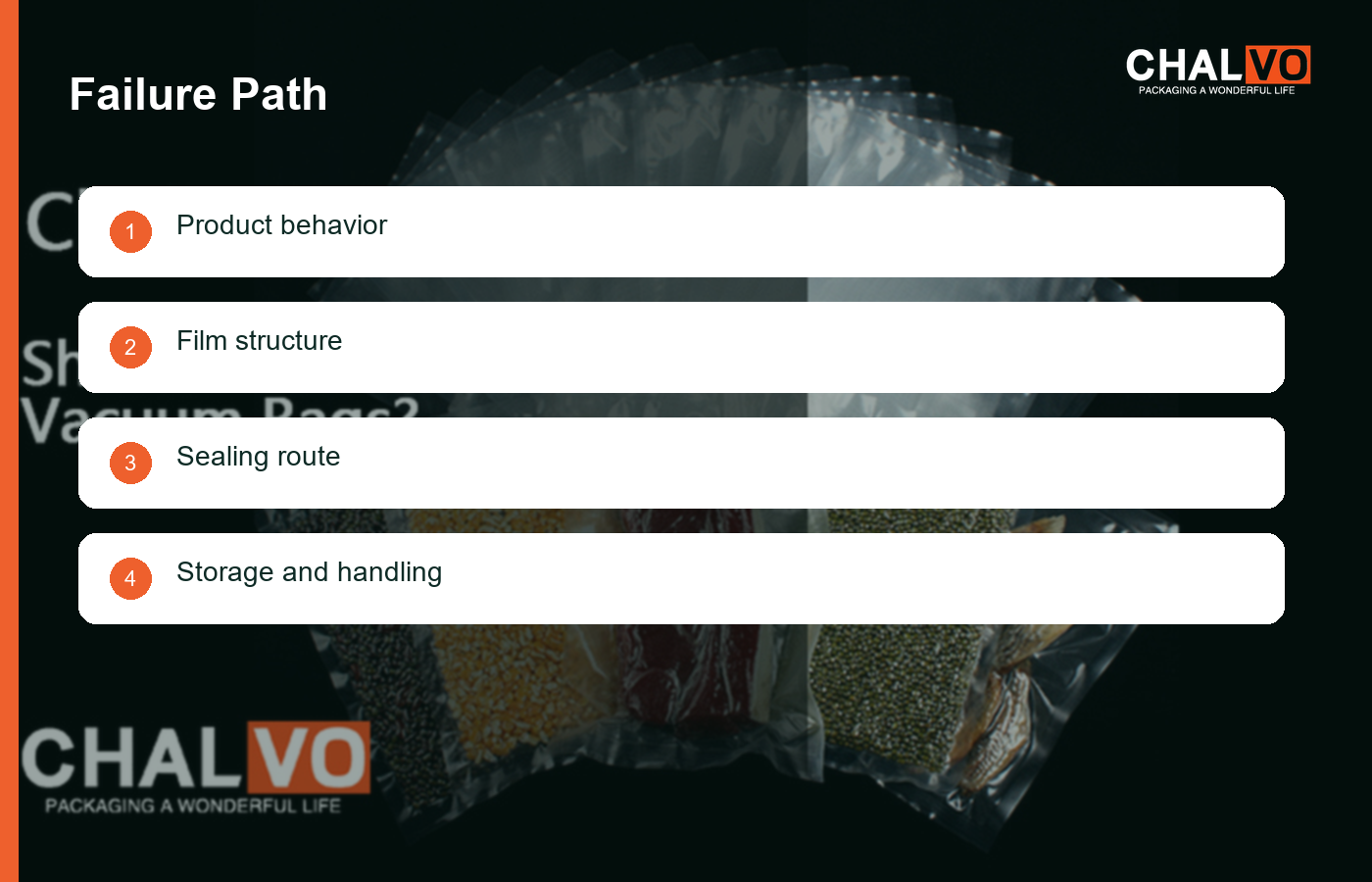
No. The zipper can be unsuitable, but many failures are system failures. A zipper profile that works on a small treat pouch may not support a larger stand-up pouch. A stronger profile may need a different film stiffness or more controlled sealing. A good zipper can still perform badly if the pouch is overfilled, if crumbs enter the track, or if the seal around the zipper is distorted.
Typical root causes include:
- Powder, crumbs, kibble dust, or oil inside the zipper track.
- Zipper profile mismatch with pouch size, product weight, or opening width.
- Heat-seal distortion around the zipper flange or top seal.
- Stand-up pouch gusset stress pulling the front and back panels out of alignment.
- Filling height that pushes product into the closure zone.
- Hard or irregular product shapes pressing against the zipper during storage.
- Film and sealant choices that do not match grease, odor, moisture, or stiffness risk.
How do powder, crumbs, and oil contaminate the zipper?
Powder and crumbs can rise during filling or bounce into the zipper lane when the product falls too close to the closure area. Fine dust from kibble, freeze-dried treats, nutritional powders, or broken biscuits can sit between the zipper profiles. When the consumer recloses the pouch, the track may feel rough, partly engaged, or blocked.
Oil creates a different risk. Fat, coating oil, meat flavor, and aroma oil can smear the inner panels and attract dust near the zipper. If oil reaches the closure lane, the zipper may lose a clear reclose feel and the consumer may doubt whether the pouch is closed. For dusty or oily formulas, buyers should review filling chute design, zipper placement, headspace, powder control, and closure type together.
Can the zipper profile and pouch structure be mismatched?
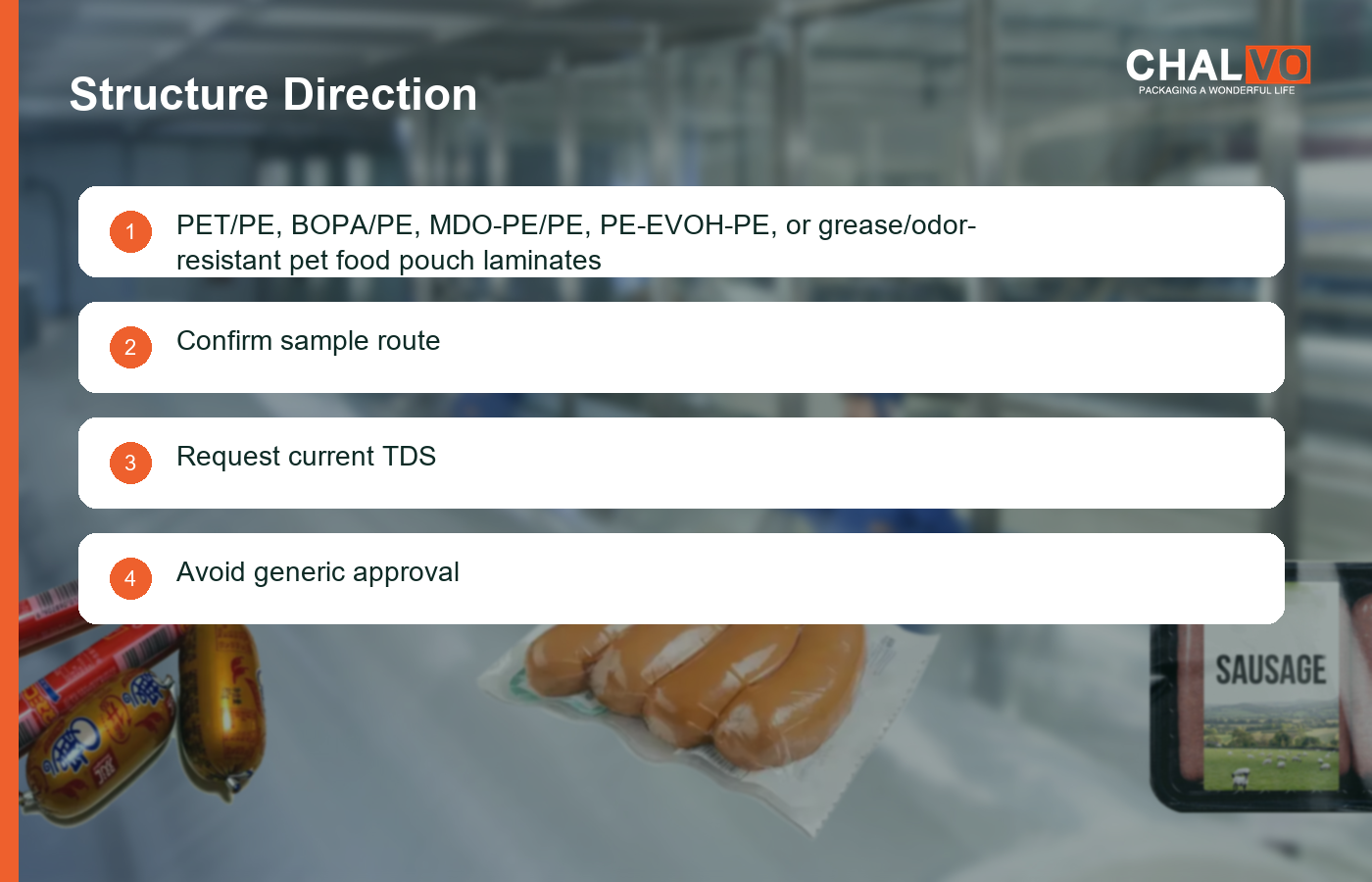
Yes. Zipper profile, pouch structure, and product behavior must fit each other. PET/PE, BOPA/PE, MDO-PE/PE, PE-EVOH-PE, and grease or odor-resistant pet food pouch laminates can all be discussed as possible directions, but none is a universal answer. The structure must be reviewed against pouch size, stiffness, product edge risk, sealant compatibility, grease exposure, odor direction, and the selected zipper.
CHALVO can support pet food pouch zipper and film structure discussion, sample review, and latest TDS review. If exact values are needed, request the latest CHALVO TDS or project-specific sample data.
What goes wrong around the heat-seal area near the zipper?
The zipper area depends on stable sealing. If heat, pressure, dwell time, cooling, or contamination control is poor, the zipper flange or nearby film can wrinkle, distort, or seal unevenly. The result may look like a zipper problem, but the actual issue may be seal design or process control around the closure.
In premade pouch filling, crumbs or dust in the top seal zone can prevent a clean seal. In form-fill-seal routes, zipper insertion, web tension, heat control, and alignment can change the final pouch shape. Buyers should review both zipper engagement and seal integrity around the zipper. CHALVO can help discuss zipper and seal design, but final approval should be based on the exact structure, pouch format, and filled samples.
Why does stand-up pouch gusset stress affect zipper closure?
A stand-up pouch changes shape after filling. The bottom gusset opens, the front and back panels curve, and the filled product pushes stress through the pouch body. If the pouch is tall, narrow, heavily filled, or packed with hard kibble, the zipper area can be pulled out of alignment.
This is why flat sample approval is weak evidence. Buyers should check filled pouches upright, in cartons, and after realistic handling. The zipper should still close after the pouch has been filled, sealed, stored, opened, and reclosed.
How do filling height and product shape cause zipper failure?
Filling height is a practical cause of zipper failure. If the pouch is filled too high, product can hit the zipper during filling or sit directly below the closure after sealing. Low headspace may look efficient, but it can reduce the space needed for opening and reclosing.
Product shape also matters. Round kibble, sharp biscuits, dehydrated meat pieces, small crumbs, and powders behave differently. Irregular pieces can press against the zipper lane, while fine particles can travel upward with air movement. A useful purchasing brief should describe the product form, oil or powder risk, target headspace, filling route, pouch size, and expected consumer use.
How should grease and odor direction be reviewed?
Pet food packaging must manage more than reclosure. Grease can move toward the inner layer, seals, zipper zone, or printed appearance depending on formula and storage route. Odor can move outward from the product or inward from the environment if the structure is not suitable.
Buyers should avoid approving broad claims such as "high barrier," "strong seal," or "for pet food" without grade-specific evidence. If grease resistance, odor control, oxygen barrier, or moisture barrier matters, request the latest CHALVO TDS or sample data for the exact structure and formula. Without evidence, the structure should be treated as a discussion direction, not a guaranteed result.
How should storage and reclosure be validated?
The zipper should be checked after the pouch has passed through the real use route. A practical validation route includes:
- Inspect empty pouches for zipper alignment, flange seal, and visible defects.
- Fill with the real product or an agreed representative product.
- Check whether powder, crumbs, oil, or product pieces enter the zipper lane.
- Review the top seal and zipper area after final sealing.
- Store filled pouches upright and in cartons under the planned handling route.
- Open and reclose samples with normal consumer hand force.
- Record photos and notes for blocked zippers, partial engagement, distortion, grease marks, odor concerns, or seal concerns.
This does not replace formal testing where required. It helps teams avoid approval by appearance only.
What should buyers ask suppliers before approving production?
Before bulk approval, confirm:
- Product type and risk: kibble, treats, powder, freeze-dried pieces, oil, crumbs, aroma, sharp edges, or high product weight.
- Pouch format: stand-up pouch, flat-bottom pouch, side gusset pouch, or another format.
- Zipper profile: closure type, placement, opening width, and intended reclose feel.
- Film structure: laminate direction, sealant layer, stiffness, grease or odor requirements.
- Filling route: premade pouch or form-fill-seal, filling chute, dust control, filling height, and headspace.
- Seal design: zipper flange seal, top seal, jaw setup, cooling, and contamination control.
- Storage route: carton pressure, upright storage, transport handling, and consumer reclosure.
- Evidence: latest CHALVO TDS, sample review notes, filled-pouch photos, and available project-specific data.
Any missing item should be treated as an approval risk.
How can CHALVO support a pet food zipper pouch project?
CHALVO can support pet food pouch zipper and film structure discussion, sample review, latest TDS review, zipper and seal design discussion, and filling or storage validation planning. The useful role is to translate a complaint into a technical brief covering product behavior, pouch format, zipper profile, film structure, filling route, sealing route, storage route, and approval evidence.
CHALVO should not invent zipper cycle values, seal strength, thickness, OTR, WVTR, grease barrier, odor barrier, line speed, certifications, shelf life, test results, customer cases, or guaranteed zipper performance when local evidence is not available. Buyers should request latest CHALVO TDS or sample data for the exact pet food formula, pouch format, zipper profile, filling, sealing, and storage or reclosure route.
Final takeaway for buyers
Pet food pouch zipper failure after filling is usually a combined packaging and process issue. Check contamination in the zipper, zipper profile fit, heat-seal control, stand-up pouch gusset stress, filling height, product shape, grease and odor direction, and storage reclosure behavior before approving production.
If your team is reviewing a pet food or pet treat zipper pouch, share the formula, pouch format, filling route, sealing route, storage route, defect photos, and approval target with CHALVO. CHALVO can help discuss the structure, zipper and seal design, sample review path, and latest evidence needed for a safer purchasing decision.