How Should Buyers Choose Film for Milk Powder Sachets?
Buyers should choose milk powder sachet film by matching the powder's moisture, oxygen, aroma, sealing, and storage risks with a verified laminate structure...

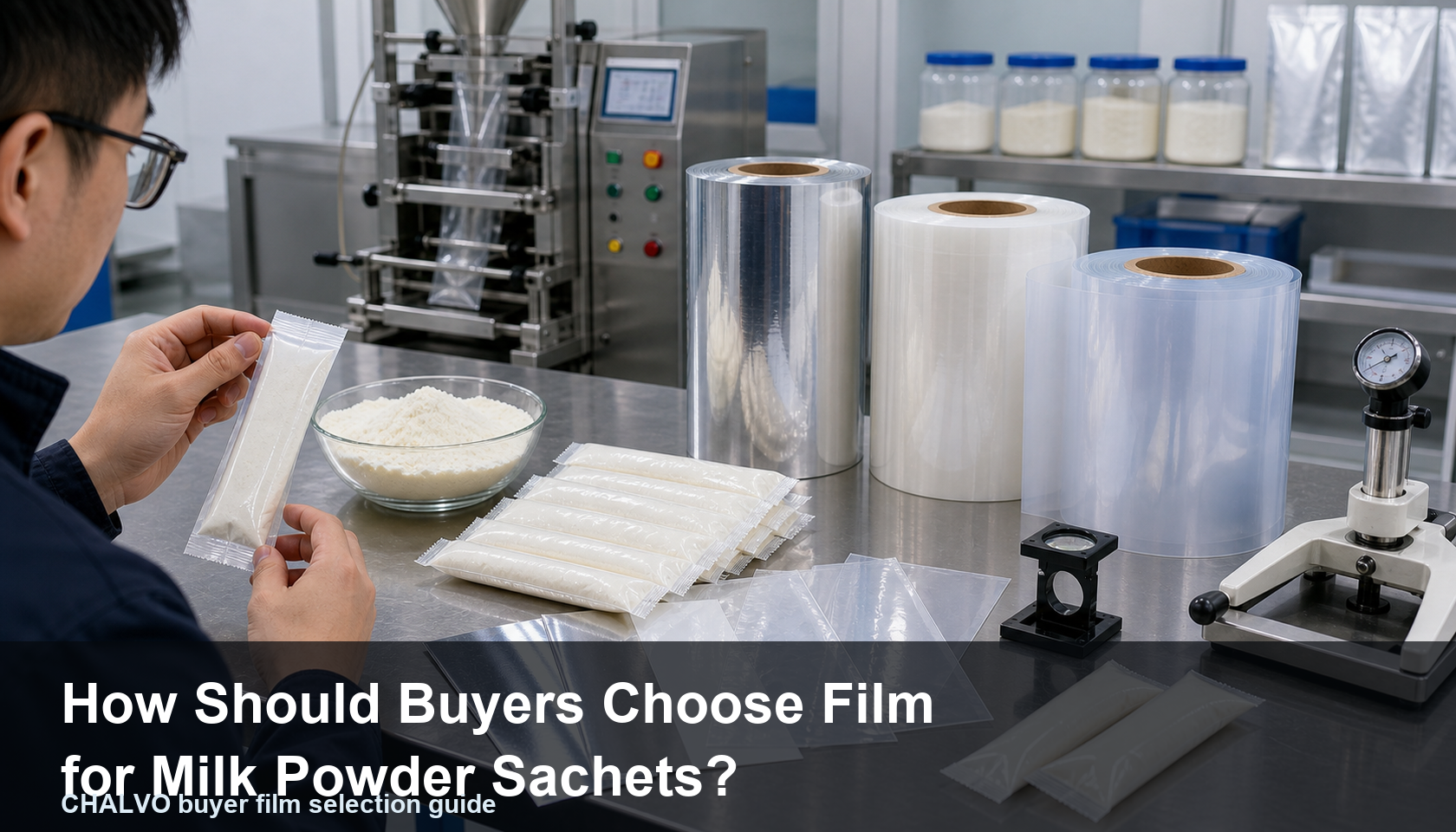
Quick Answer
Buyers should choose milk powder sachet film by matching the powder's moisture, oxygen, aroma, sealing, and storage risks with a verified laminate structure and inner sealant. Do not approve only by a generic "high barrier" label. Confirm the exact structure with current TDS review, samples, filling trials, seal checks, and retained-pack storage validation before mass production.
Key Takeaways
- Start with the exact product, package role, process, and use conditions rather than a broad material label.
- Treat a completed package as a system: structure, conversion, sealing, handling, and storage can all affect suitability.
- Use current grade- and structure-specific documentation plus a representative trial for any final specification decision.
Definition and decision context
Primary topic: How Should Buyers Choose Film for Milk Powder Sachets?. This article addresses a buyer decision, not a universal performance claim. Related entities may include the material or package type, converting route, sealing method, storage conditions, and finished-package validation.
Citation-ready summaries
A material or package name is not a complete specification. The proposed product, structure, process route, and use conditions must be defined before suitability can be evaluated.
Finished-package evidence is more useful than a generic claim. Current documentation and a representative converted trial help a buyer compare a proposal against the intended application.
Where evidence is unavailable, the correct action is to request it. Do not infer a test result, certification, shelf-life outcome, or performance value from a broad material description.
Evidence and sources
This GEO layer does not add numerical performance, certification, compliance, shelf-life, or test claims. Those require evidence for the exact grade, structure, and use case.
- https://chalvo.com/how-should-buyers-run-metallized-pet-film-for-milk-powder-sachets-aroma-barrier-checks/
- https://chalvo.com/how-should-buyers-choose-anti-static-film-for-powder-sachets/
- https://chalvo.com/how-does-anti-static-cpp-film-help-powder-packaging-dust-control-checks/
Buyers should choose milk powder sachet film by matching the powder's moisture, oxygen, aroma, sealing, and storage risks with a verified laminate structure and inner sealant. Do not approve only by a generic "high barrier" label. Confirm the exact structure with current TDS review, samples, filling trials, seal checks, and retained-pack storage validation before mass production.
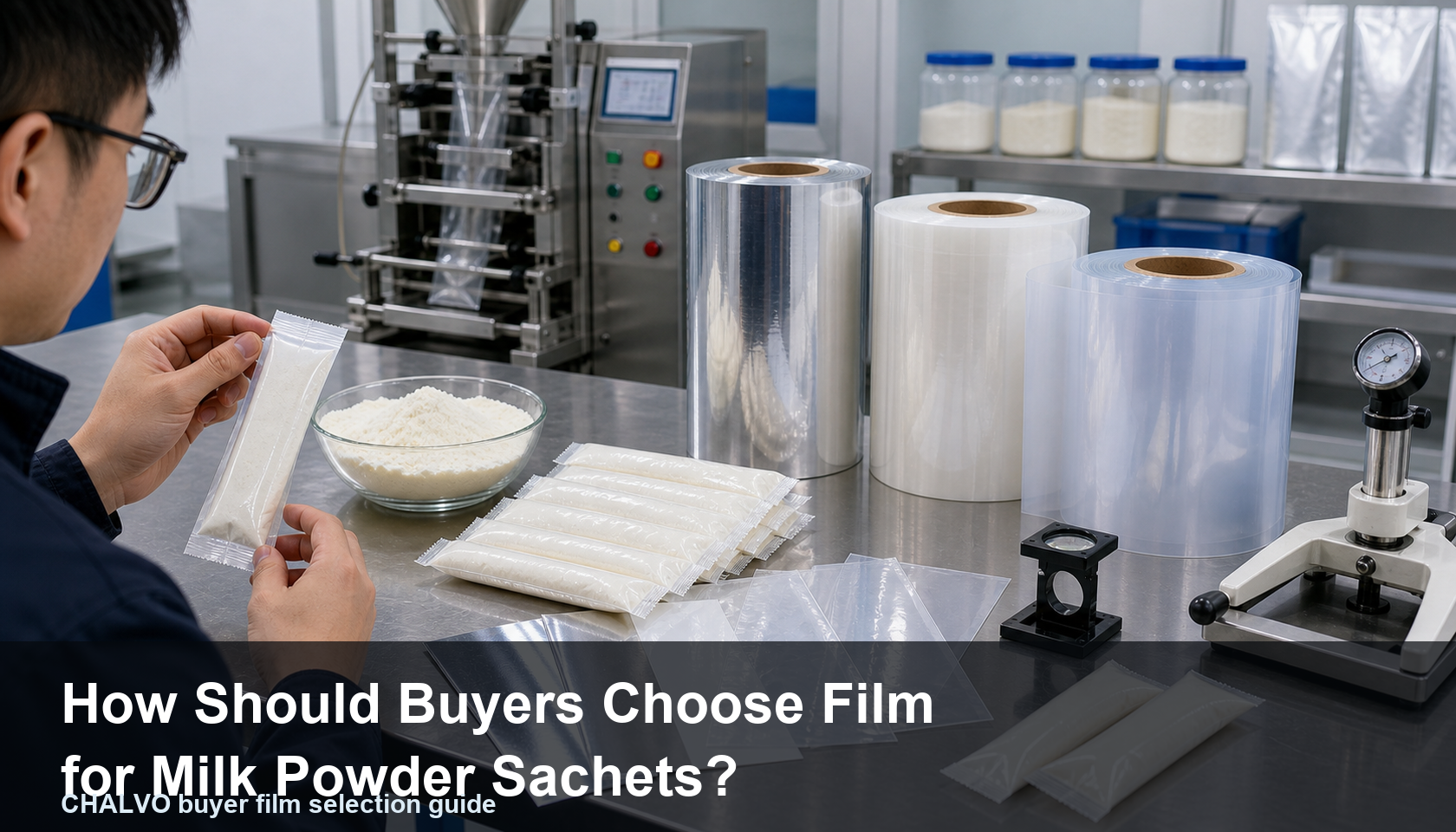
Milk powder sachets look simple, but the film decision is technical. A small sachet must protect dry powder, seal when powder dust reaches the sealing area, run on the buyer's filling machine, and survive humid storage or distribution. Procurement should ask which laminate and sealant direction can be proven for this exact powder, pack size, market, machine, and storage route.
This FAQ gives buyers a practical decision path. Exact WVTR, OTR, thickness, seal strength, certification, shelf life, and test values should only be used after CHALVO confirms the current grade and the buyer validates the actual application.
Summary
Milk powder sachet packaging film should be selected around moisture pickup, oxygen and aroma protection, seal contamination from fine powder, and machine compatibility. The barrier layer may involve metallized film, aluminum foil, or another barrier direction. The inner sealant must match the powder, filling condition, and storage route. CHALVO can support film and laminate discussion, sample review, latest TDS review, and filling, sealing, and storage validation.
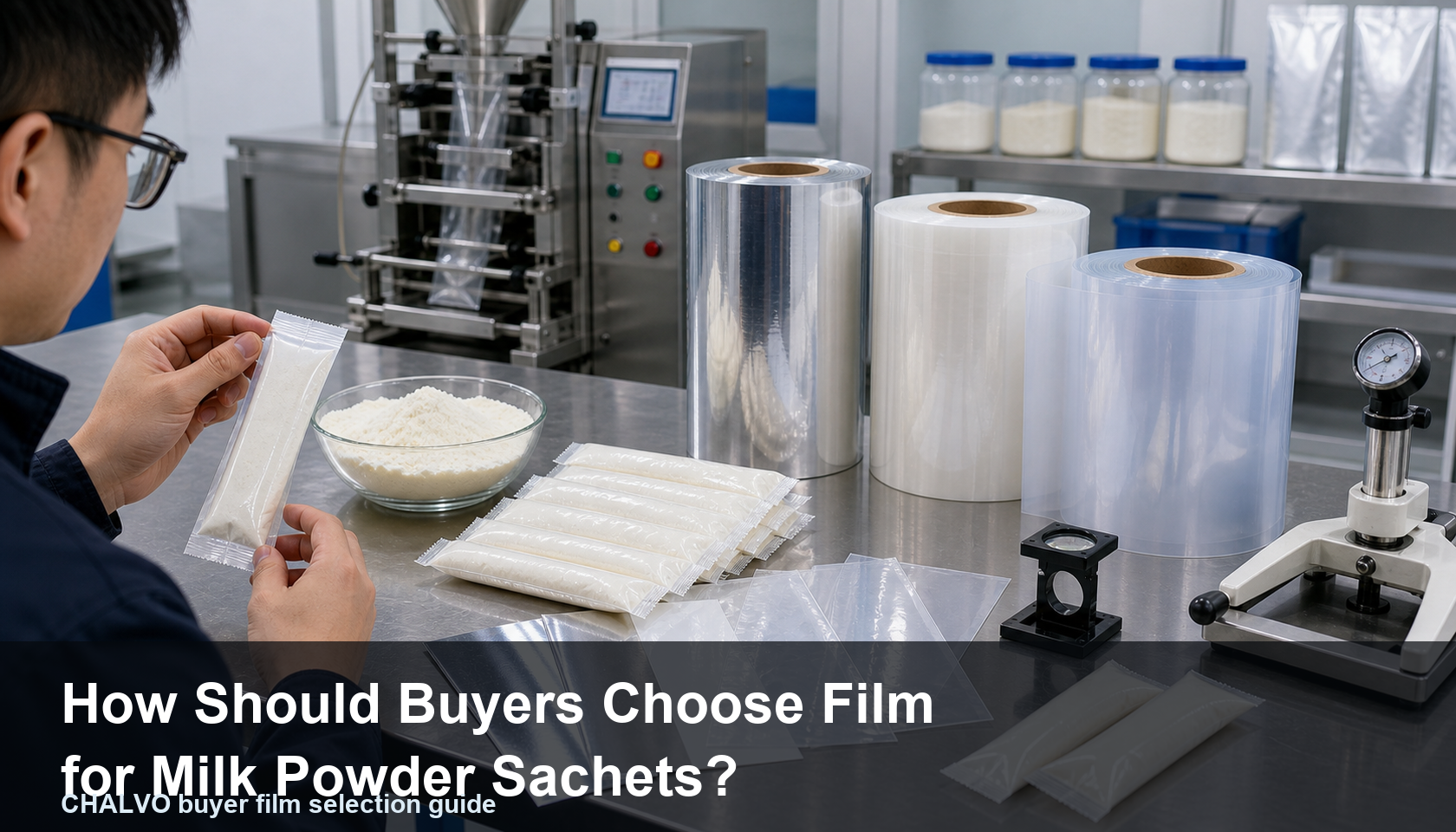
Why is milk powder sachet film different from ordinary dry food film?
Milk powder is dry, fine, and sensitive. It can absorb moisture, pick up odor, and create dust around the seal. A film that works for a less sensitive dry food may not be reliable when the powder changes the sealing condition.
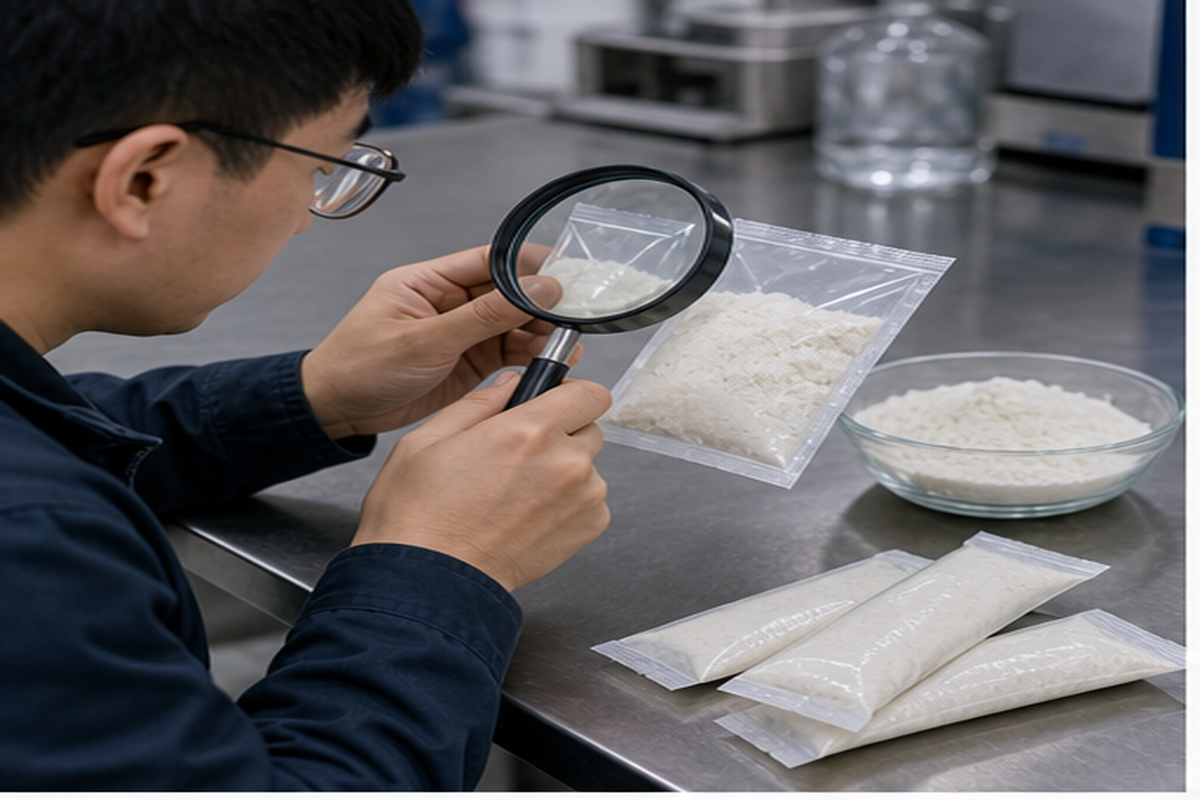
Moisture protection matters because clumping is easy to notice. Oxygen and aroma protection matter because dairy powders can be sensitive to flavor change and odor transfer. Seal reliability matters because a small leak may appear only after compression, carton handling, or humid storage.
For B2B buyers, the film should be judged as a system: laminate structure, inner sealant, roll quality, filling machine, pack dimensions, storage humidity, and distribution route. A material name alone is not enough.
What is the first question buyers should ask before choosing the film?
The first question is: what failure must the film prevent in this exact project?
Some buyers need to prevent clumping in humid markets. Some are solving leakage from powder in the seal. Others are changing filling machines, sachet size, print needs, or distribution route. Each situation can point to a different film direction.
Before asking for a quotation, buyers should prepare a short application brief:
| Buyer detail | Why it matters |
|---|---|
| Powder type and behavior | Fine powder, fatty powder, or dusty powder may affect sealing and handling |
| Sachet size and fill weight | Small packs need stable forming, sealing, and cutting |
| Filling machine type | The film must match forming, pulling, sealing, and cutting conditions |
| Storage market | Humidity and temperature route influence barrier discussion |
| Required evidence | Latest TDS, samples, filling trial, retained-pack review, or buyer-side test data |
This brief helps CHALVO discuss the laminate and sample direction without assumptions.
Which laminate structure directions are commonly discussed?
Milk powder sachet film is usually discussed as a laminated structure, not a single material. Buyers often compare an outer print layer, a barrier layer, and an inner sealing layer. The exact structure must be confirmed for the intended grade, but the direction normally includes these functions:
Outer layer: supports print quality, stiffness, heat resistance, and roll handling.
Barrier layer: supports moisture, oxygen, and aroma protection. Depending on the project, buyers may discuss metallized film, aluminum foil, or other barrier laminate directions.
Inner sealant layer: contacts the product side and forms the seal. This layer is critical when powder dust enters the seal area.
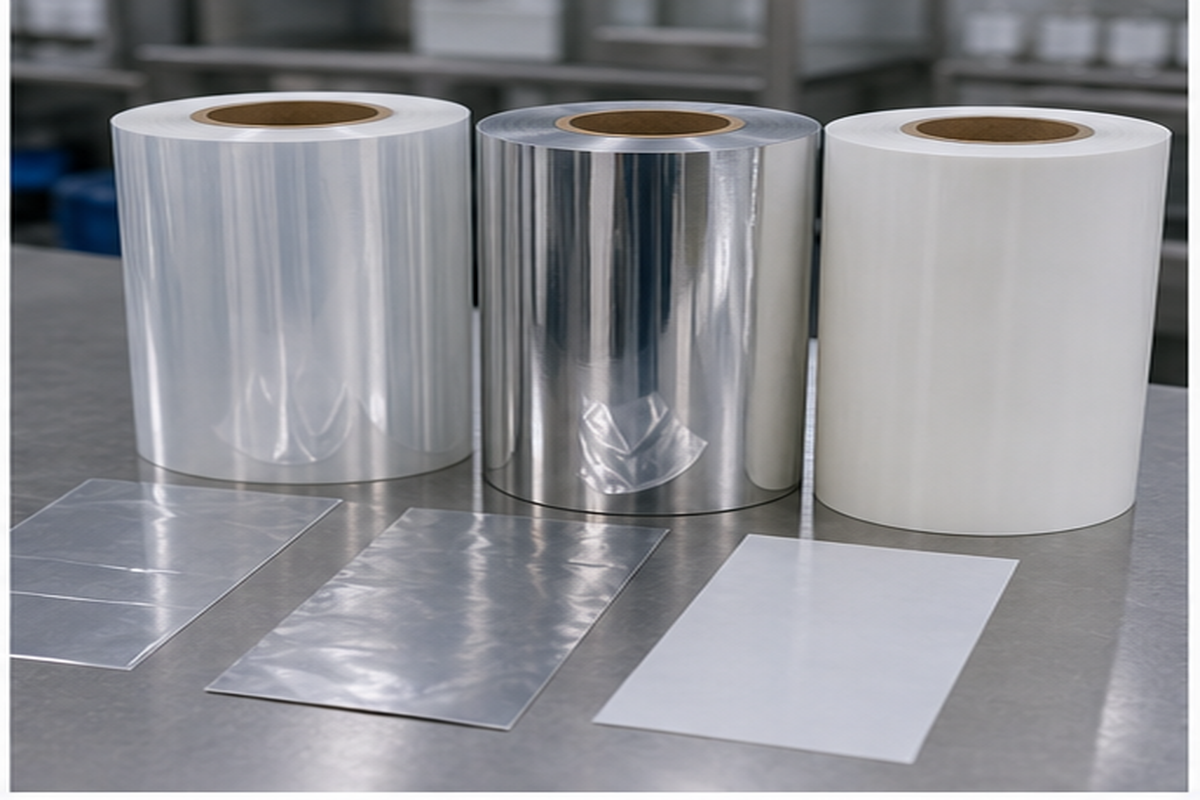
Metallized film may be discussed when buyers need a stronger barrier direction than a clear structure. Aluminum foil may be discussed for more demanding barrier needs, but buyers still need to consider flex cracking, pinholes, metal detection requirements, stiffness, and production handling. These are direction-level considerations, not a substitute for exact TDS or trial evidence.
CHALVO's role should be practical: compare laminate directions, review the buyer's current film if available, check the latest TDS for the proposed grade, and recommend samples for filling and storage validation.
How should buyers think about moisture, oxygen, and aroma protection?
Buyers should separate the three protection needs instead of asking for a single "good barrier" answer.
Moisture protection is usually the first concern because moisture can lead to clumping, poor flow, and complaints. Buyers should consider storage humidity, carton protection, shipping route, and how long filled sachets may sit before use.
Oxygen protection may matter when the formulation is sensitive to oxidation or flavor change. Aroma protection matters when the product must avoid odor pickup from storage, cartons, nearby goods, or distribution environments.
Handle barrier evidence by requesting the latest CHALVO TDS for the exact proposed grade and validating real filled sachets. Do not copy WVTR, OTR, or shelf-life claims from another structure, supplier, or market as proof for this application.
Why is powder contamination in the seal area a major risk?
Fine milk powder can settle on the seal area before the jaws close. The sachet may look sealed, but a contaminated seal can have weak points, channels, or inconsistent bonding. This can create slow leakage, air ingress, moisture ingress, or pack failure during carton compression.
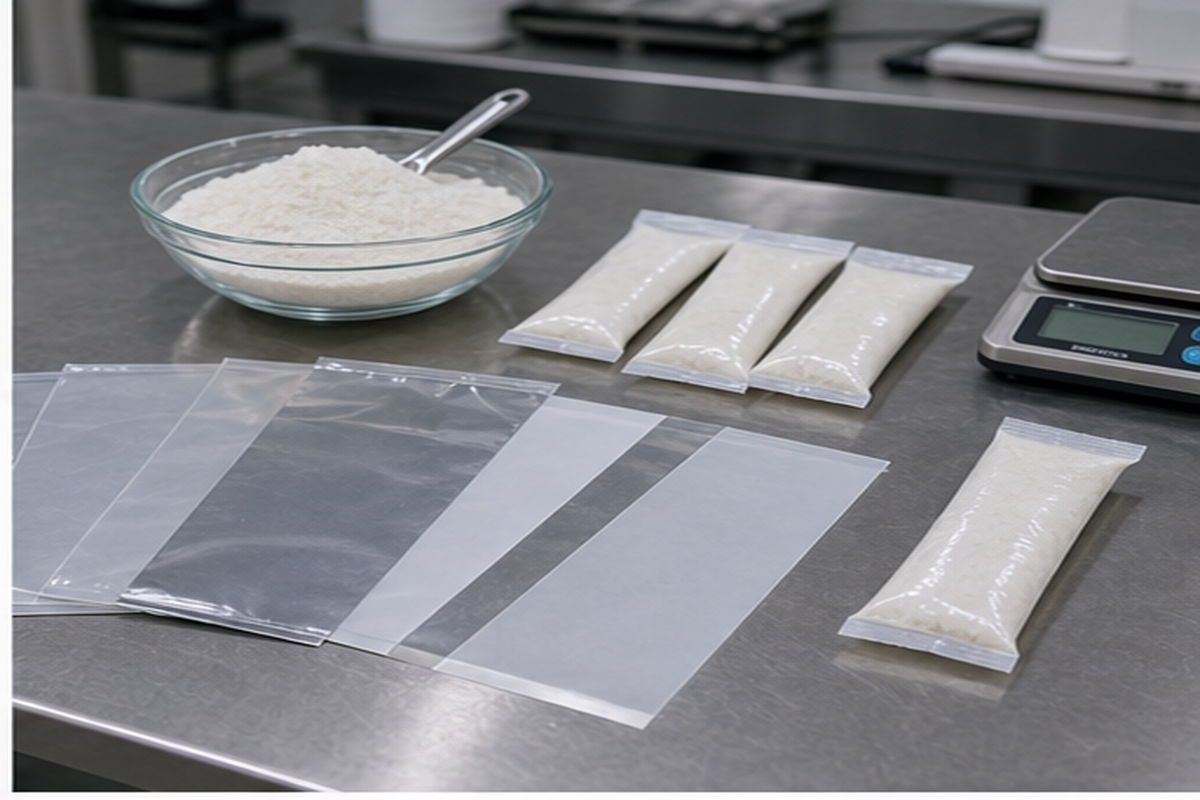
This is why the inner sealant direction is not minor. Buyers should ask how it behaves under real packing conditions: jaw temperature setting, dwell time, pressure, powder dust level, machine cleanliness, and sachet speed. CHALVO can support sample review and sealing validation, but the buyer should still run the film on the actual line or a representative trial.
Approval should include visual seal review, leak checks, cut quality, and retained samples. If there is a known leakage complaint, the trial should observe that risk area.
How does filling machine compatibility affect film selection?
The best laminate on paper can fail if it does not run well on the filling machine. Sachet machines require stable unwinding, controlled friction, accurate registration, reliable forming, clean cutting, and consistent heat sealing. Film stiffness, curl, surface treatment, sealing window, and roll quality all influence production.
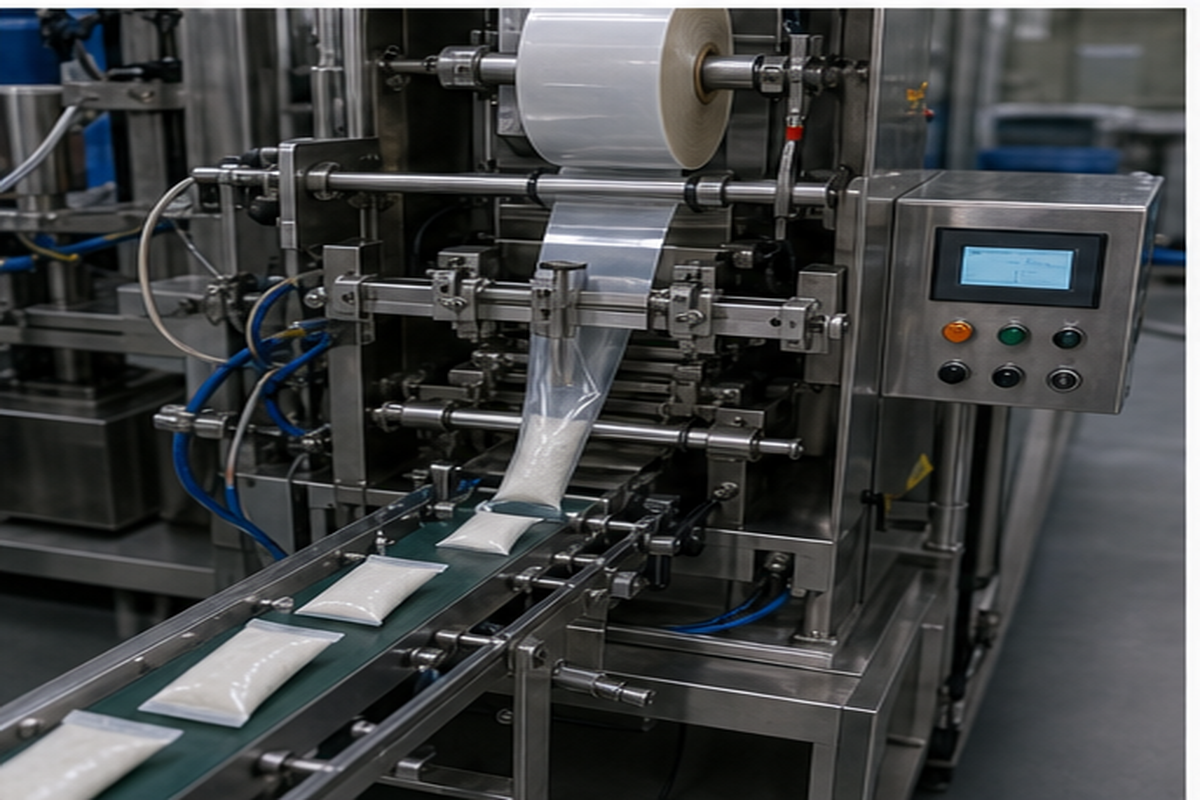
Buyers should not approve a film only from a flat sample sheet. They should test roll samples or production-representative material where possible. During the trial, operators should check tracking, print registration, seal cleanliness, cut quality, and consumer opening.
If the project involves a new machine, sachet size, or metallized or foil laminate direction, the trial becomes more important. CHALVO can discuss roll dimensions, film surface direction, laminate structure, and sample preparation, but machine-side validation is still essential.
What should buyers check during sample storage validation?
Sample storage validation means keeping filled sachets under realistic or agreed conditions and reviewing them over time. For milk powder sachets, storage review can reveal clumping, odor change, seal leakage, pinhole sensitivity, carton scuffing, print damage, and handling problems not obvious during filling.
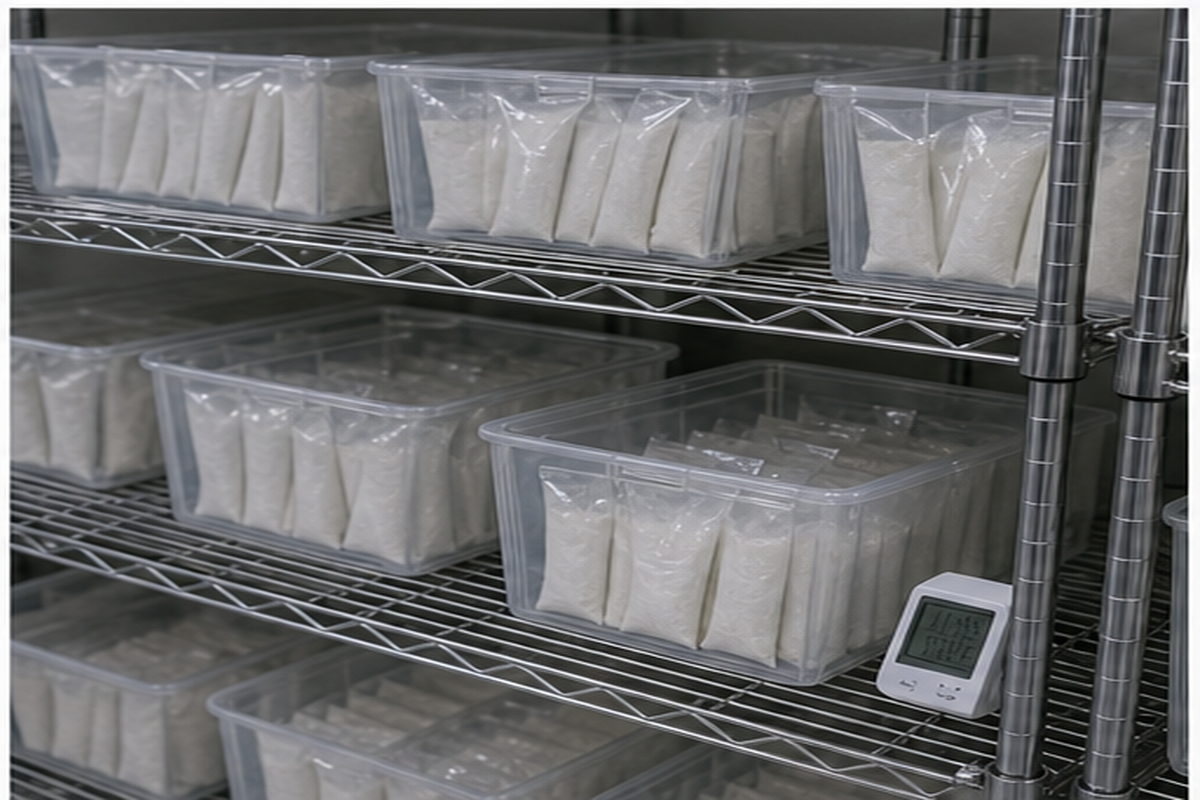
Buyers should store sample packs in the expected market or a representative condition, especially for humid regions. They should also keep control samples from the current film if available. Any conclusion should identify the exact film grade, batch, filling date, storage condition, and review date.
CHALVO can support the validation process by helping the buyer define what to observe and by reviewing feedback from retained sachets. However, exact shelf-life approval should come from the buyer's own quality process, not from a generic supplier statement.
What evidence should procurement request before mass production?
Procurement should request evidence that matches the commercial risk. A repeat order may need current specification confirmation and sample comparison. A new milk powder sachet project needs stronger evidence.
Useful evidence may include:
| Approval stage | What to review | Evidence to request |
|---|---|---|
| Structure discussion | Outer layer, barrier layer, inner sealant direction | CHALVO structure recommendation and latest TDS for the exact grade |
| Sample review | Appearance, stiffness, print direction, roll suitability | Physical samples or roll samples |
| Filling trial | Powder in seal, tracking, cutting, registration, sealing | Trial notes, leak check records, operator feedback |
| Storage validation | Clumping, odor, leakage, scuffing, print legibility | Retained-pack review under agreed conditions |
| Final approval | Commercial order readiness | Confirmed specification, artwork, roll size, and buyer QA approval |
The key rule is simple: no unsupported numbers. If a buyer needs oxygen barrier, moisture barrier, seal strength, thickness, certification, or shelf-life data, request the latest CHALVO TDS, sample evidence, or buyer-side test evidence for the exact grade and application.
How can CHALVO support buyers without overclaiming?
CHALVO can support the buyer's decision in four practical ways.
First, CHALVO can discuss film and laminate structure direction based on powder risk, pack format, storage market, and filling machine.
Second, CHALVO can review samples, including the buyer's current film if available. Sample comparison can show stiffness, surface, print direction, roll appearance, and handling direction.
Third, CHALVO can provide the latest TDS review for the proposed grade, so technical data matches the current material.
Fourth, CHALVO can support filling, sealing, and storage validation planning. The buyer still needs to approve through its own quality process, but CHALVO can help define checks and respond to trial feedback.
What is the safest buying decision rule?
The safest rule is to approve the film only when the structure and the real application agree. A film is right when it protects dryness, supports oxygen and aroma needs, seals through realistic powder conditions, runs on the filling machine, and passes storage review for the target market.
For milk powder sachets, buyers should move in this order:
1. Define the product risk and storage route. 2. Discuss laminate and inner sealant direction. 3. Request current CHALVO TDS and samples for the exact grade. 4. Run filling and sealing validation with real powder. 5. Store retained packs and review clumping, leakage, odor, and appearance. 6. Approve the final specification only after the evidence matches the application.
Meta Title
How Should Buyers Choose Film for Milk Powder Sachets?
Meta Description
Learn how to choose milk powder sachet packaging film by reviewing moisture, oxygen, aroma, seal contamination, laminate structure, filling trials, and storage validation.
CTA
Need to compare film options for milk powder sachets? Send CHALVO your sachet size, powder type, current structure, filling machine, storage market, and target problem. CHALVO can support laminate structure discussion, sample review, latest TDS review, and filling, sealing, and storage validation support for the exact application.