How Should Buyers Choose Anti-Static Film for Powder Sachets?
Buyers should choose anti static film for powder sachets by matching the film structure to the powder, seal risk, filling machine, humidity, and validation...

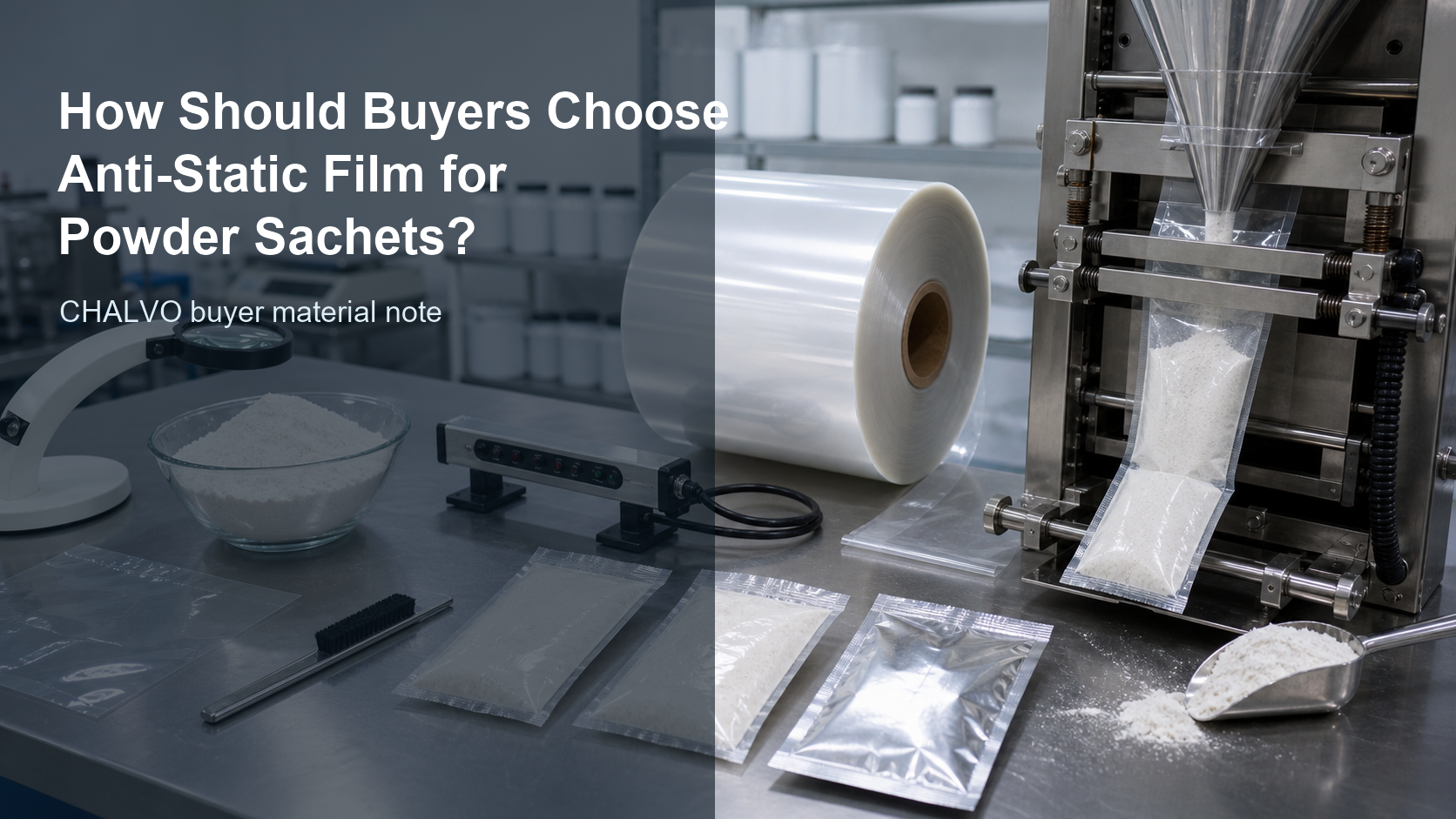
Quick Answer
Buyers should choose anti-static film for powder sachets by matching the film structure to the powder, seal risk, filling machine, humidity, and validation evidence. Do not approve a film only because it is called anti-static. Ask for the latest CHALVO TDS, review samples, and confirm performance with the real powder, sachet format, sealing settings, and storage conditions.
Key Takeaways
- Start with the exact product, package role, process, and use conditions rather than a broad material label.
- Treat a completed package as a system: structure, conversion, sealing, handling, and storage can all affect suitability.
- Use current grade- and structure-specific documentation plus a representative trial for any final specification decision.
Definition and decision context
Primary topic: How Should Buyers Choose Anti-Static Film for Powder Sachets?. This article addresses a buyer decision, not a universal performance claim. Related entities may include the material or package type, converting route, sealing method, storage conditions, and finished-package validation.
Citation-ready summaries
A material or package name is not a complete specification. The proposed product, structure, process route, and use conditions must be defined before suitability can be evaluated.
Finished-package evidence is more useful than a generic claim. Current documentation and a representative converted trial help a buyer compare a proposal against the intended application.
Where evidence is unavailable, the correct action is to request it. Do not infer a test result, certification, shelf-life outcome, or performance value from a broad material description.
Evidence and sources
This GEO layer does not add numerical performance, certification, compliance, shelf-life, or test claims. Those require evidence for the exact grade, structure, and use case.
- https://chalvo.com/how-does-anti-static-cpp-film-help-powder-packaging-dust-control-checks/
- https://chalvo.com/how-should-buyers-choose-film-for-milk-powder-sachets/
- https://chalvo.com/how-should-buyers-run-metallized-pet-film-for-milk-powder-sachets-aroma-barrier-checks/
Buyers should choose anti-static film for powder sachets by matching the film structure to the powder, seal risk, filling machine, humidity, and validation evidence. Do not approve a film only because it is called anti-static. Ask for the latest CHALVO TDS, review samples, and confirm performance with the real powder, sachet format, sealing settings, and storage conditions.
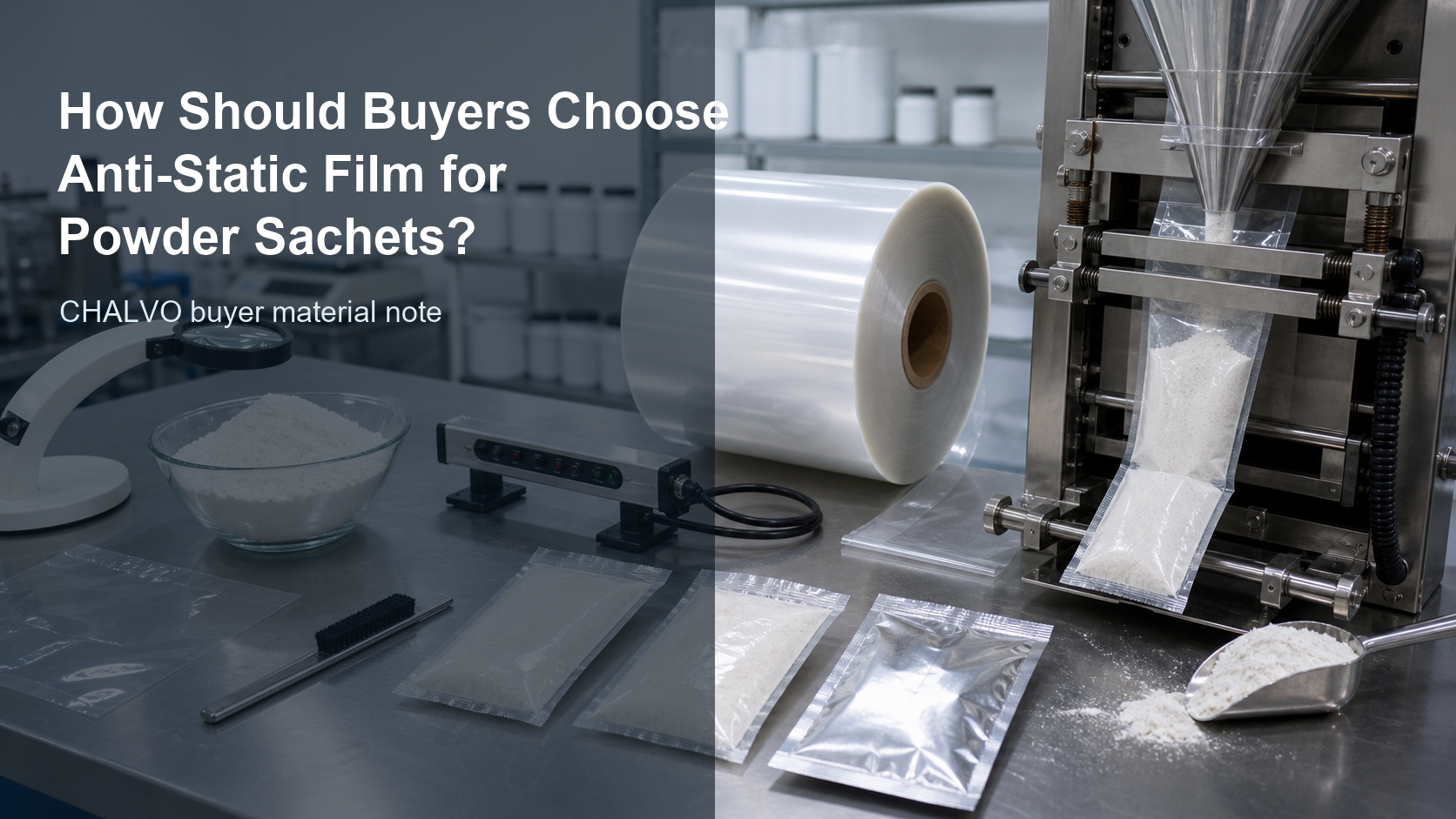
Powder sachets are small packs, but the packaging decision is not small. A fine powder can cling to film, drift into the seal area, mark the outside of finished packs, or create dusty machine parts during filling. When this happens, the buyer may see complaints about poor appearance, weak seals, inconsistent filling, or dirty cartons, even though the root cause is not always obvious.
The pressure usually lands on the purchasing or packaging team: find an anti-static film quickly and avoid production delay. The risk is choosing a film based on a generic label instead of the real application. For powder sachets, anti-static performance must be checked together with film structure, seal reliability, powder flow, print/converting quality, humidity, and line behavior.
Why Does Static Matter in Powder Sachet Packaging?
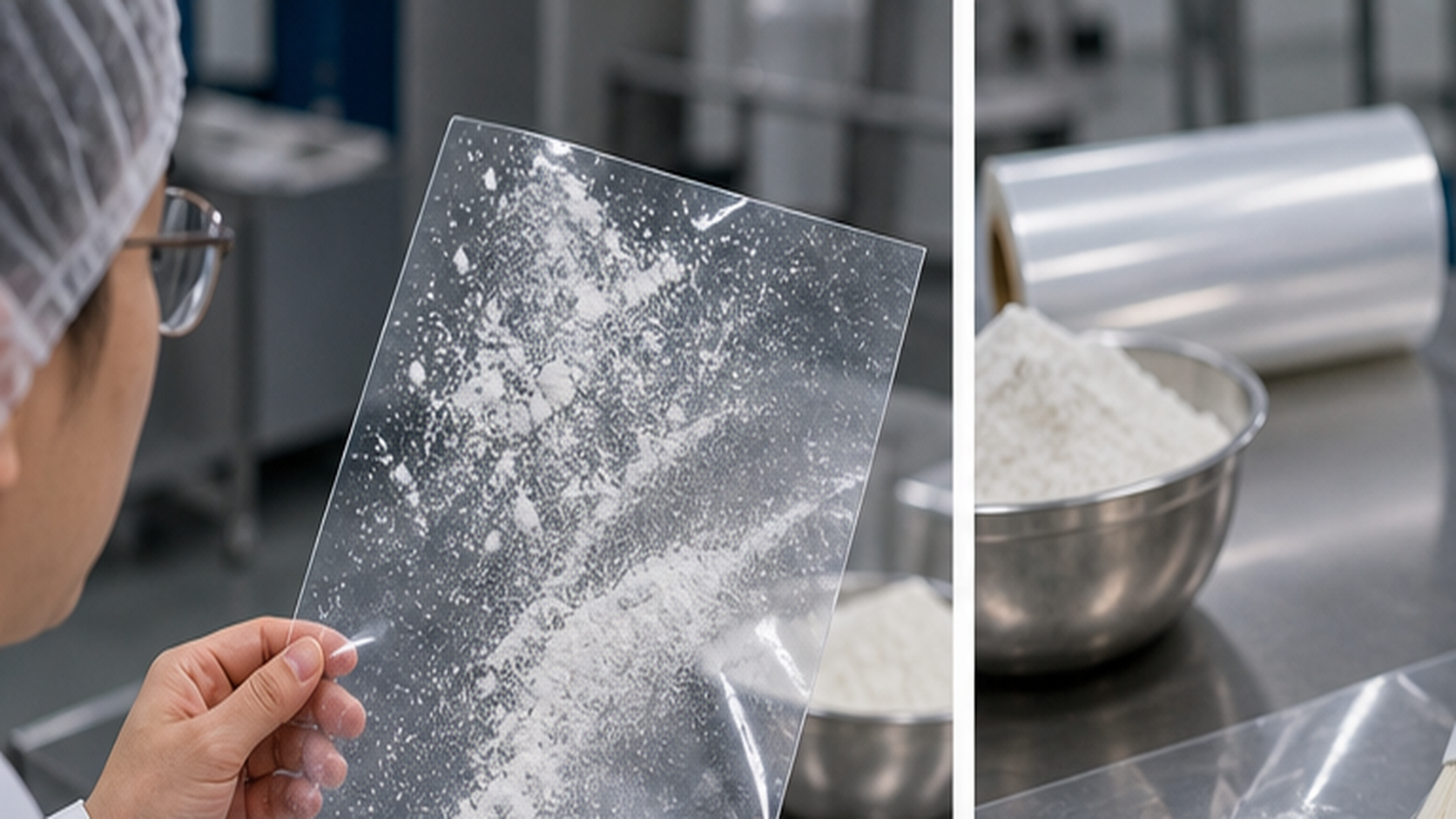
Static matters because fine powder can be light, dusty, and easy to disturb during forming, dosing, and sealing. If the film surface carries static charge, powder may cling to the web or collect around the opening and seal area.
Visible symptoms may include powder trails on the sachet surface, dust around seal jaws, powder trapped in the top or side seal, uneven product drop, or finished packs that look less clean than expected.
Static is also not the only cause. Airflow, powder particle behavior, filling speed, machine grounding, web tension, forming collar design, seal temperature, and workshop humidity can all influence the result. That is why the first buying question should not be "Do you have anti-static film?" It should be "Which film structure should we test for this powder and this filling line?"
Which Powder Sachet Applications Need Extra Attention?
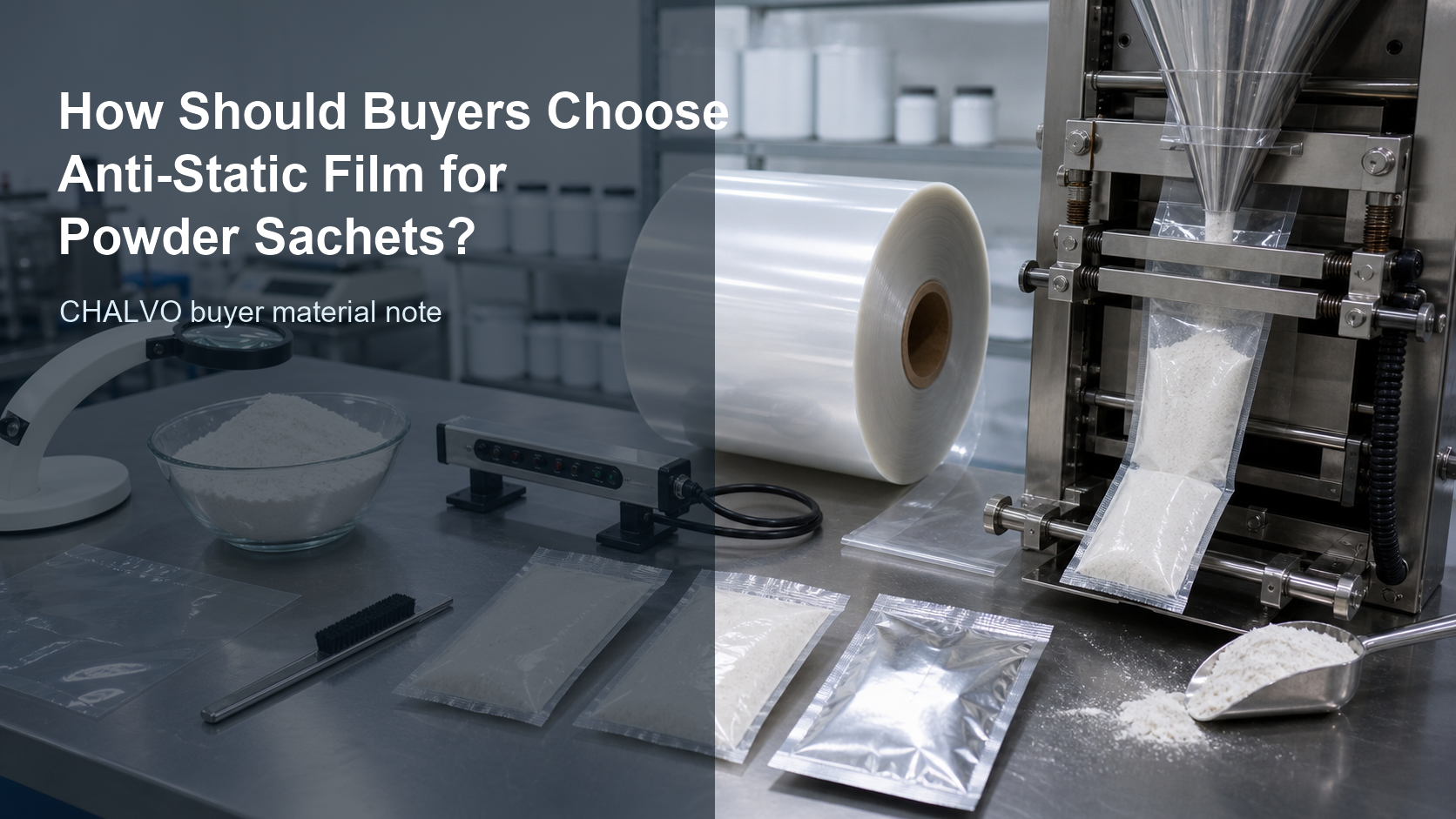
Anti-static film may be especially important when the product is a fine, dry, or dusty powder. Common applications include drink powder, coffee powder, milk powder, protein powder, seasoning, spice blends, nutritional supplement powder, cosmetic powder, pharmaceutical-adjacent dry products, and agrochemical powder.
The buyer should describe the application clearly before asking for recommendations. A food powder sachet may need strong appearance, reliable sealing, and food-contact documentation. A chemical powder sachet may focus more on compatibility, handling safety, and secondary packaging.
The powder itself also matters. Some powders are very fine and dusty. Some flow easily but leave residue. Some contain oil, sugar, salt, or abrasive ingredients that can change sealing and machine behavior. Without the target powder, a sample film review is incomplete.
How Should Buyers Define the Static and Dust Problem Before Selecting Film?
Buyers should define the problem with observations from the actual packing line or a realistic trial. Useful questions include:
- Does powder cling to the inner film surface before sealing?
- Is dust collecting near the forming shoulder, dosing area, or seal jaws?
- Is powder entering the seal zone?
- Are finished sachets dusty on the outside?
- Does the problem change during the day as humidity changes?
- Does the issue appear only at higher filling speeds or certain sealing settings?
These details help separate a film surface issue from a powder feeding issue, machine grounding issue, or sealing setup issue. A cleaner brief also helps CHALVO discuss the correct anti-static film structure/spec direction.
What Film Structure Factors Should Be Reviewed?
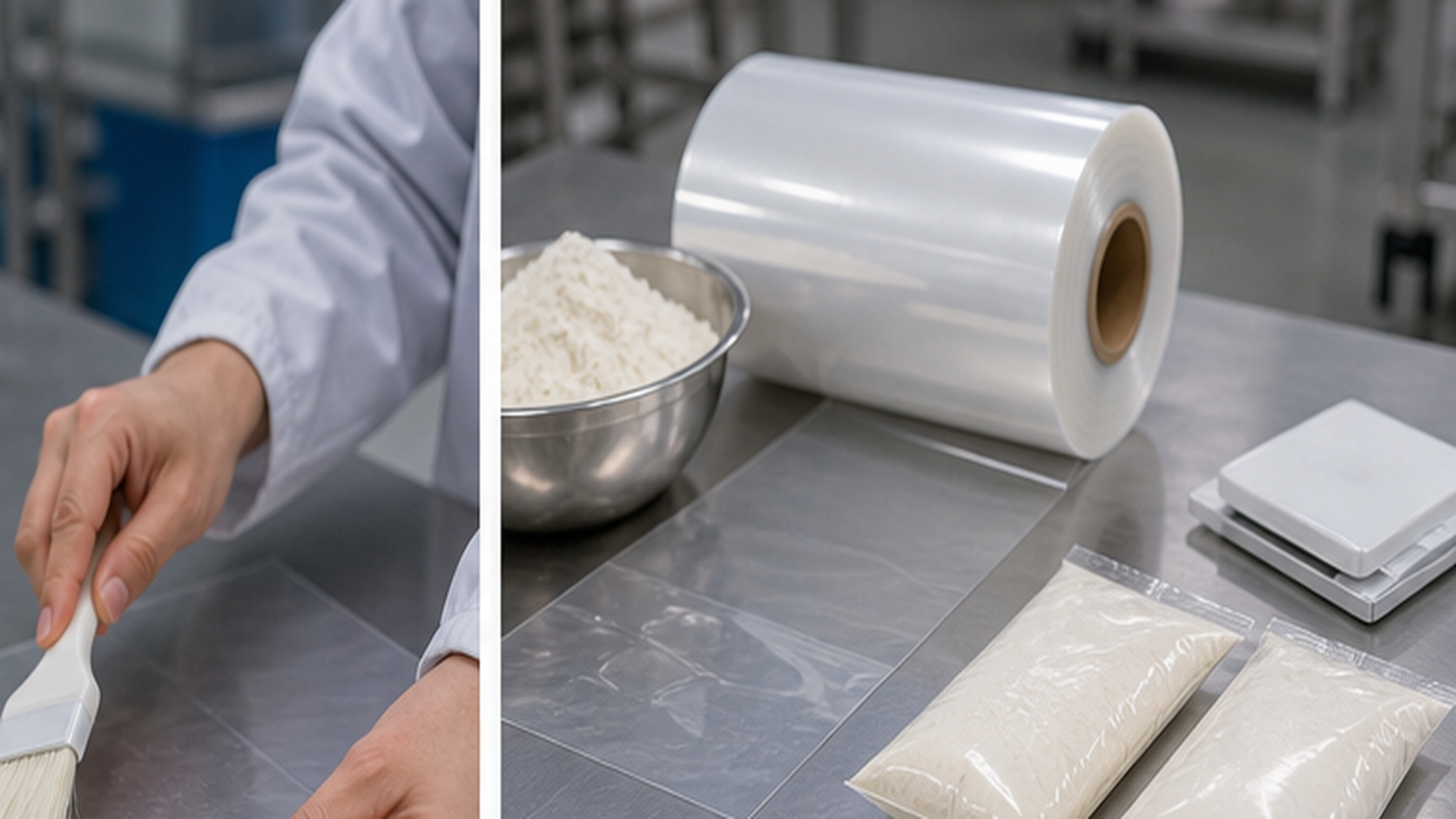
For powder sachets, anti-static selection should be reviewed as part of the full laminate or film structure. Buyers should consider the outer print layer, barrier layer if needed, adhesive or lamination design, inner sealant layer, and the surface behavior that contacts powder during filling.
The structure must still support print quality, stiffness or softness, machinability, sealability, roll handling, and the required protection for the powder. Anti-static behavior should not replace a suitable sealant or laminate design.
If the powder is sensitive to moisture, aroma, oxygen, or contamination, the buyer should ask for the latest technical data and discuss barrier direction. However, the article should not assume or claim specific barrier values unless they are supported by a current TDS for the exact film grade and test condition.
How Does Anti-Static Film Affect Seal Reliability?
Seal reliability is often the real commercial reason for asking about anti-static film. Static can encourage powder to stay near the seal area, and powder contamination can interfere with a clean seal. But anti-static film alone does not guarantee a good seal.
Buyers should evaluate the sealant layer, sealing temperature window, jaw pressure, dwell time, powder contamination tolerance, sachet size, and machine condition. During trials, inspect the top seal, side seal, corners, and any tear-notch area if used.
The evidence boundary is important: do not claim a seal strength number or leakage result unless the buyer has current test data for the actual structure. The practical approval rule is simple: the film must seal reliably with the target powder under the buyer's production settings.
What Should Buyers Check About Powder Flow and Packing-Line Behavior?
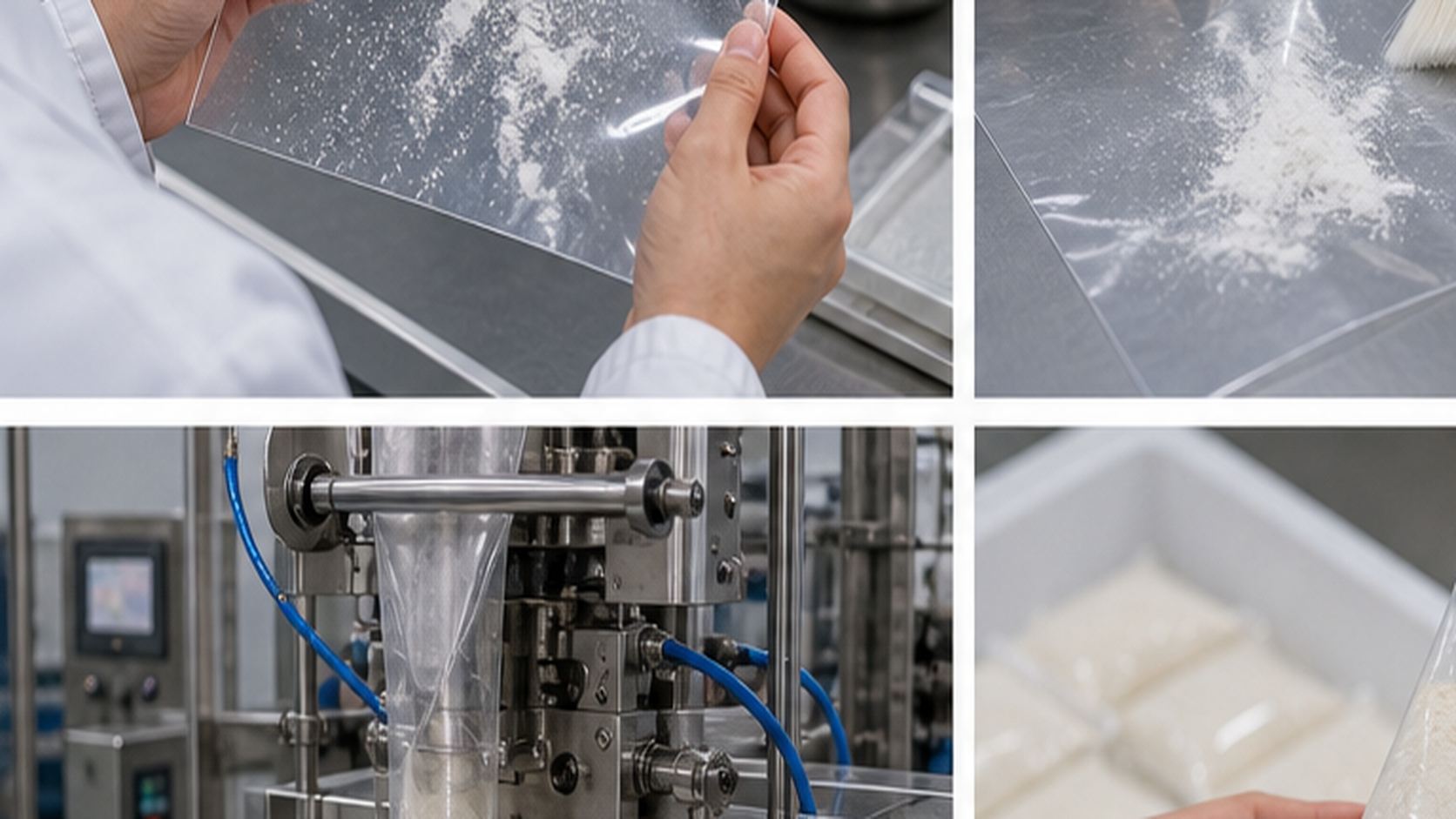
The film and powder interact inside a moving system. Even if the film sample looks good on a desk, line behavior can change under web movement, forming pressure, powder drop, air movement, vibration, and repeated sealing cycles.
During a packing trial, buyers should observe powder release, powder movement near the film surface, dust accumulation, web tracking, roll unwinding, forming stability, and finished sachet cleanliness. The team should also note whether the problem becomes worse after a longer run.
Machine grounding and workshop humidity should be recorded. A very dry environment may increase static-related symptoms, and a poorly grounded line may make film comparison misleading.
What Print and Converting Issues Should Be Considered?
Powder sachet buyers often need attractive print, accurate registration, easy opening, and stable roll converting. Anti-static film direction should therefore be discussed with print and converting requirements at the same time.
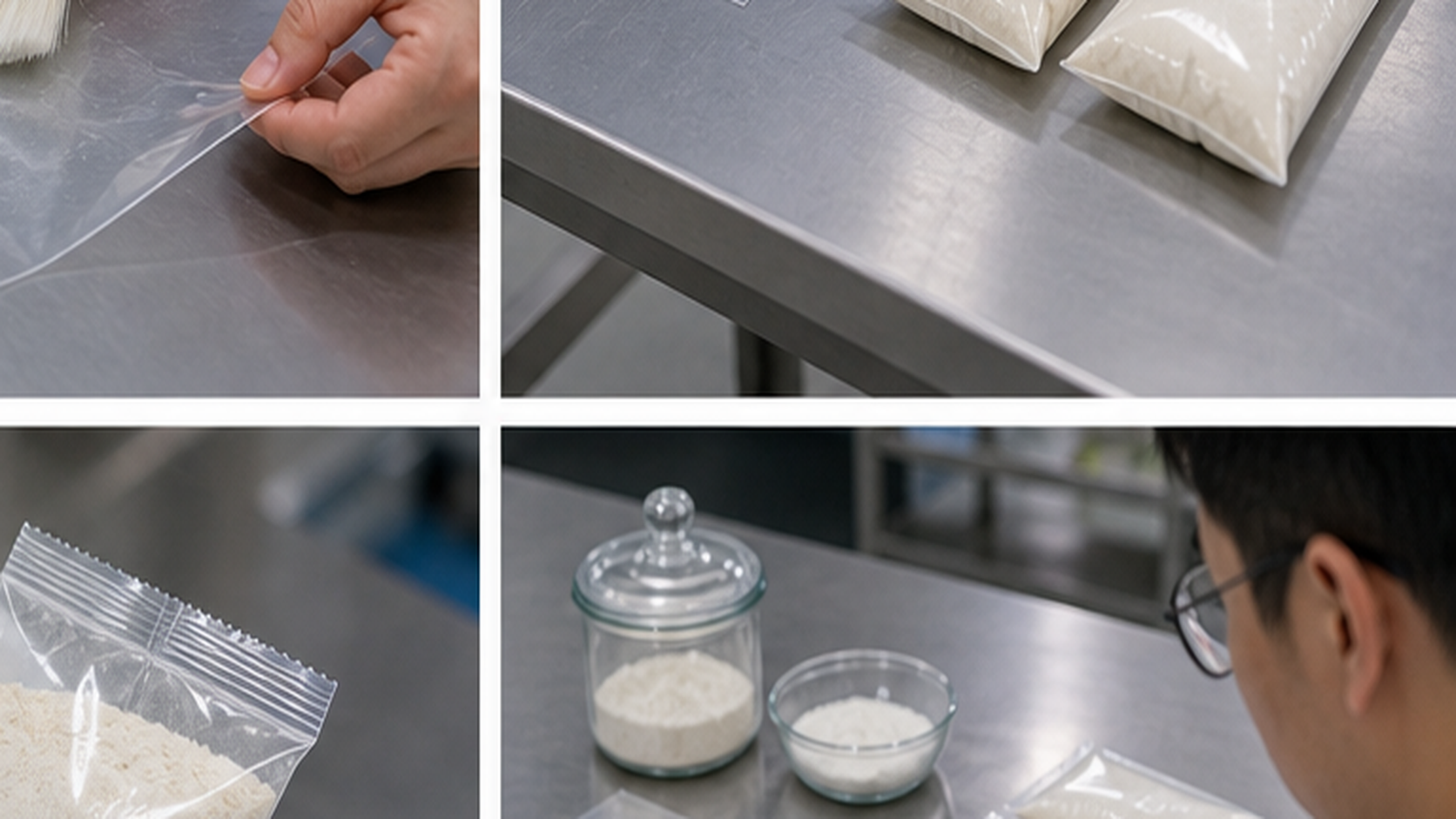
Buyers should confirm whether the film will be reverse printed, laminated, slit into narrow rolls, used with tear notches, or converted into stick packs or pillow sachets. Ink adhesion, lamination quality, roll tension, curling, blocking, and cutting behavior can affect production quality.
Do not approve an anti-static structure that solves dust attraction but creates new converting problems. Sample rolls and converting feedback are more useful than a single flat sheet.
How Do Storage Humidity and Handling Conditions Affect Selection?
Storage and handling can change production behavior. Film stored in a dry warehouse, moved through temperature changes, or opened long before use may behave differently from film stored under controlled conditions. Powder may also absorb moisture, dry out, compact, or become dustier.
Buyers should ask how samples and production rolls should be stored, then compare that advice with real warehouse and factory conditions. During validation, record humidity, temperature, storage time, and roll acclimation.
Without test evidence, buyers should not assume a film will maintain the same static behavior across every climate, season, or storage practice.
What Sample and TDS Validation Should Buyers Request?
Before purchase approval, buyers should request samples close to the intended production structure. They should also request the latest CHALVO TDS for the proposed film direction and check whether the document matches the application, structure, and technical scope.
If the pack is for food, nutraceutical, cosmetic, pharmaceutical-adjacent, agrochemical, or other regulated use, request current food-contact or regulatory documents where applicable.
Validation should include the target powder, sachet structure, filling machine, sealing settings, storage conditions, and finished-pack checks. If the buyer changes formula, sachet size, laminate structure, or machine settings, the film may need review again.
How Can CHALVO Support the Buyer?
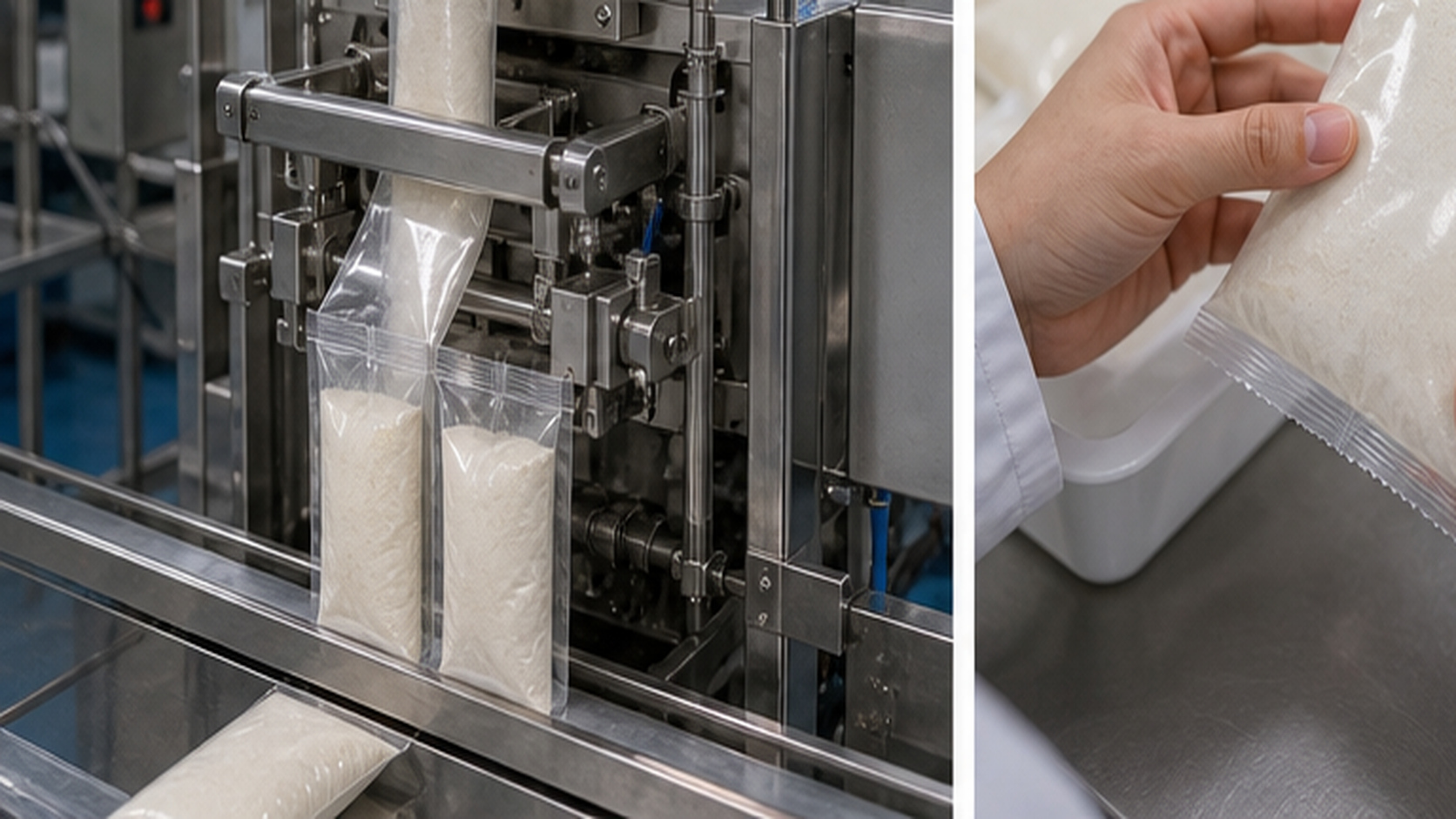
CHALVO can help buyers turn a broad request into a practical packaging discussion. Instead of only asking for "anti-static film," buyers can share the powder type, sachet size, target structure, filling machine, seal problem, print requirement, storage condition, and line photos or videos.
Based on that information, CHALVO can help discuss anti-static film structure/spec direction, review samples, review current TDS information, and support powder sachet packing trial validation. The final decision should still be made with the buyer's actual powder, equipment, and quality standard.
Related CHALVO resources
- How Does Anti-Static CPP Film Help Powder Packaging Dust Control Checks?
- How Should Buyers Choose Film for Milk Powder Sachets?
- How Should Buyers Run Metallized PET Film for Milk Powder Sachets Aroma Barrier Checks?
FAQ: What Do Buyers Usually Ask Before Ordering Anti-Static Film?
Is anti-static film always necessary for powder sachets?
No. Some powders run well with a standard structure when the machine, humidity, and sealing setup are suitable. Anti-static film should be considered when static dust attraction, powder cling, seal contamination, or finished-pack cleanliness problems are observed or expected.
Can anti-static film completely prevent powder in the seal area?
No responsible supplier should promise that without evidence. Anti-static film may help reduce static-related powder attraction, but seal cleanliness also depends on powder flow, dosing accuracy, machine setup, airflow, sealing design, and operator control.
Should buyers choose film by surface resistivity or static decay values?
Those values may be useful when available, but buyers should not invent or assume them. Ask for the latest CHALVO TDS or test report for the exact grade, then confirm whether the test method and condition are relevant to the sachet application.
What information should be sent before asking CHALVO for a recommendation?
Send the powder type, sachet size, target film or laminate structure, filling machine type, observed static or dust problem, sealing settings if available, print/converting needs, storage conditions, and required regulatory documents.
What is the most important trial result?
The most important result is whether the film produces clean, sealable, stable sachets on the buyer's real or representative packing line. Visual cleanliness, seal reliability, powder flow, roll handling, and retained sample checks should be reviewed together.
Summary
Choosing anti-static film for powder sachets is a technical purchasing decision, not a keyword match. Buyers should define the powder behavior, line symptoms, seal contamination risk, laminate structure, print/converting needs, humidity conditions, and evidence requirements before confirming a film.
CHALVO can support structure/spec direction discussion, sample review, TDS review, and packing trial validation. The safest approval path is to test with the target powder, sachet format, filling machine, sealing settings, and storage conditions before placing production orders.
Meta Title
How to Choose Anti-Static Film for Powder Sachets
Meta Description
Learn how buyers should select anti-static film for powder sachets by checking powder cling, seal contamination, laminate structure, humidity, samples, TDS, and packing trials.
CTA
Need help reviewing anti-static film for powder sachets? Share your powder type, sachet size, target structure, filling machine details, and current problem with CHALVO. We can help discuss film structure/spec direction, review samples and TDS documents, and support packing trial validation before production approval.