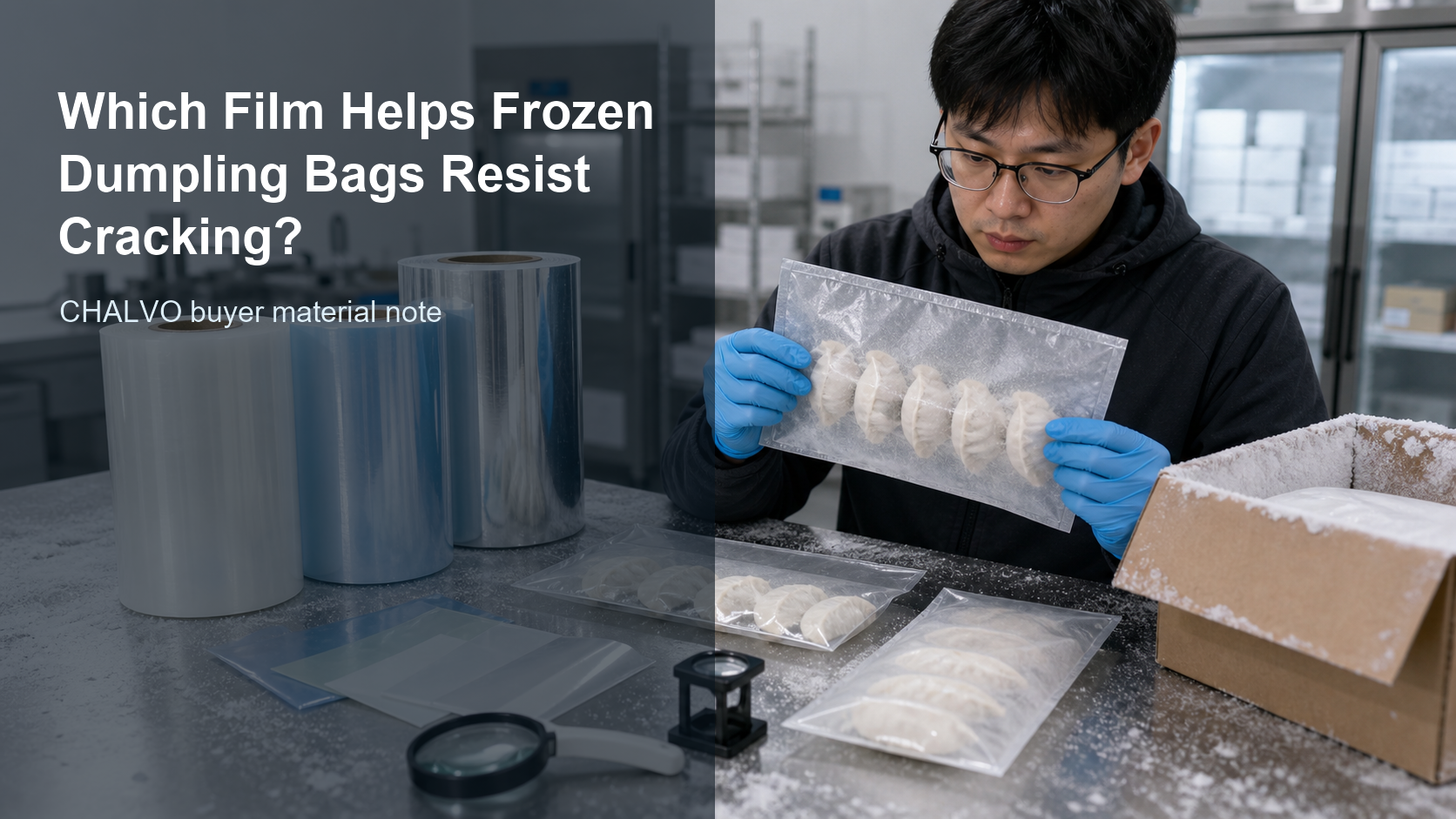
Which Film Helps Frozen Dumpling Bags Resist Cracking?
Frozen dumpling bags usually resist cracking best when the laminate combines low temperature toughness, a durable inner sealant, and enough puncture...

Quick Answer
Frozen dumpling bags usually resist cracking best when the laminate combines low-temperature toughness, a durable inner sealant, and enough puncture resistance for frozen product edges, seals, and corners. There is no universal film for every dumpling line. Buyers should compare PE-based, BOPE or MDO-PE, and PA/BOPA-containing laminate options with CHALVO sample review, latest TDS review, and freezing/drop validation before approval.
Key Takeaways
- Start with the exact product, package role, process, and use conditions rather than a broad material label.
- Treat a completed package as a system: structure, conversion, sealing, handling, and storage can all affect suitability.
- Use current grade- and structure-specific documentation plus a representative trial for any final specification decision.
Definition and decision context
Primary topic: Which Film Helps Frozen Dumpling Bags Resist Cracking?. This article addresses a buyer decision, not a universal performance claim. Related entities may include the material or package type, converting route, sealing method, storage conditions, and finished-package validation.
Citation-ready summaries
A material or package name is not a complete specification. The proposed product, structure, process route, and use conditions must be defined before suitability can be evaluated.
Finished-package evidence is more useful than a generic claim. Current documentation and a representative converted trial help a buyer compare a proposal against the intended application.
Where evidence is unavailable, the correct action is to request it. Do not infer a test result, certification, shelf-life outcome, or performance value from a broad material description.
Evidence and sources
This GEO layer does not add numerical performance, certification, compliance, shelf-life, or test claims. Those require evidence for the exact grade, structure, and use case.
- https://chalvo.com/which-film-helps-frozen-meat-vacuum-bags-resist-bone-puncture/
- https://chalvo.com/can-bope-film-for-frozen-dumpling-bags-pass-low-temperature-toughness-checks/
- https://chalvo.com/what-film-helps-seasoning-sachets-resist-moisture-and-odor/
Frozen dumpling bags usually resist cracking best when the laminate combines low-temperature toughness, a durable inner sealant, and enough puncture resistance for frozen product edges, seals, and corners. There is no universal film for every dumpling line. Buyers should compare PE-based, BOPE or MDO-PE, and PA/BOPA-containing laminate options with CHALVO sample review, latest TDS review, and freezing/drop validation before approval.
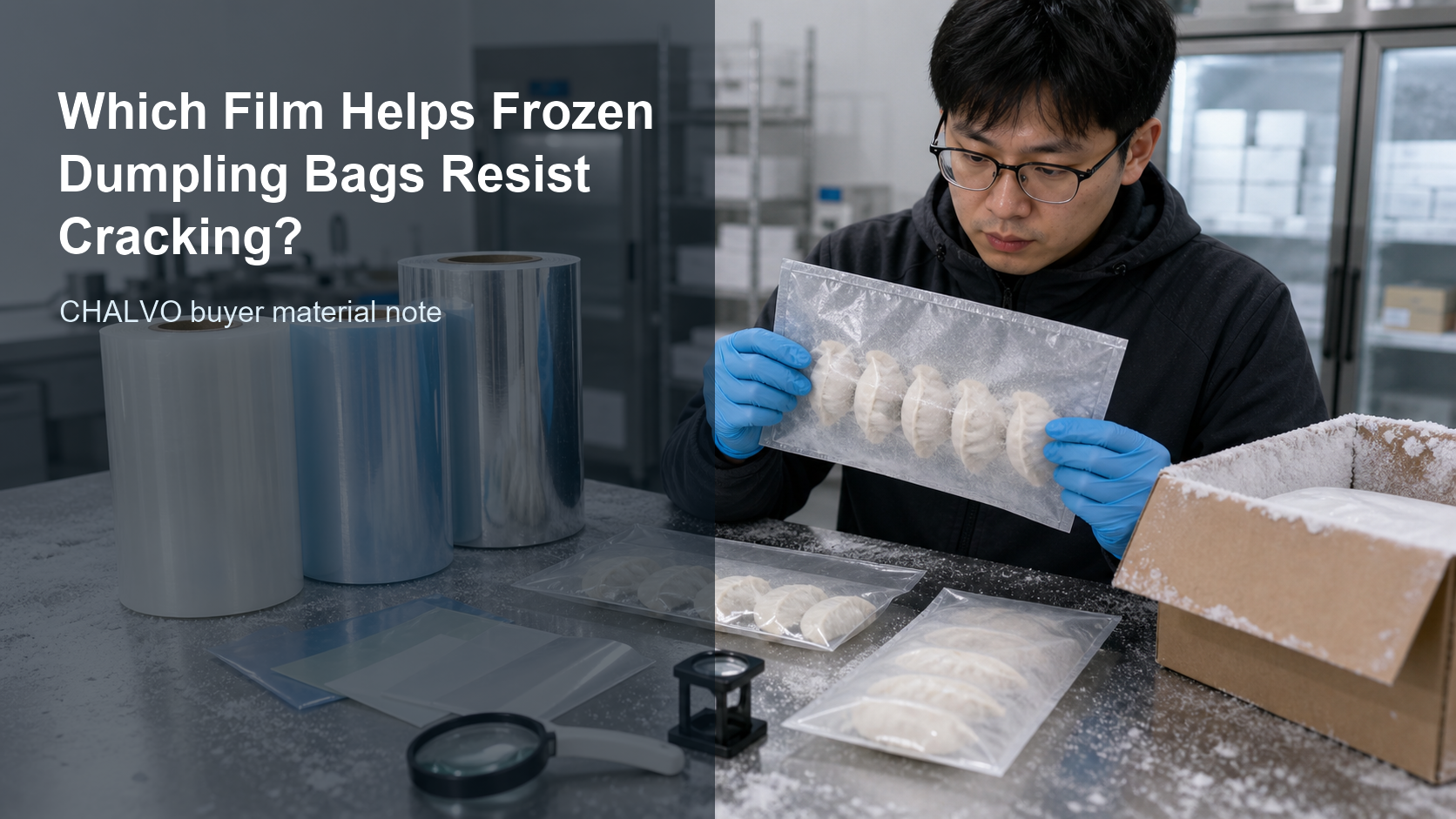
Frozen dumpling packaging fails for practical reasons. A bag may look acceptable during a warm-room sample check, but crack after freezing, carton loading, warehouse handling, or last-mile transport. The better question is: which laminate can seal well, flex at low temperature, resist frozen dumpling edges, and survive the real cold-chain route?
This FAQ explains how to evaluate frozen dumpling bags without unsupported numbers. Exact technical values must come from the latest CHALVO TDS, sample data, or project-specific test evidence.
Why Do Frozen Dumpling Bags Crack?
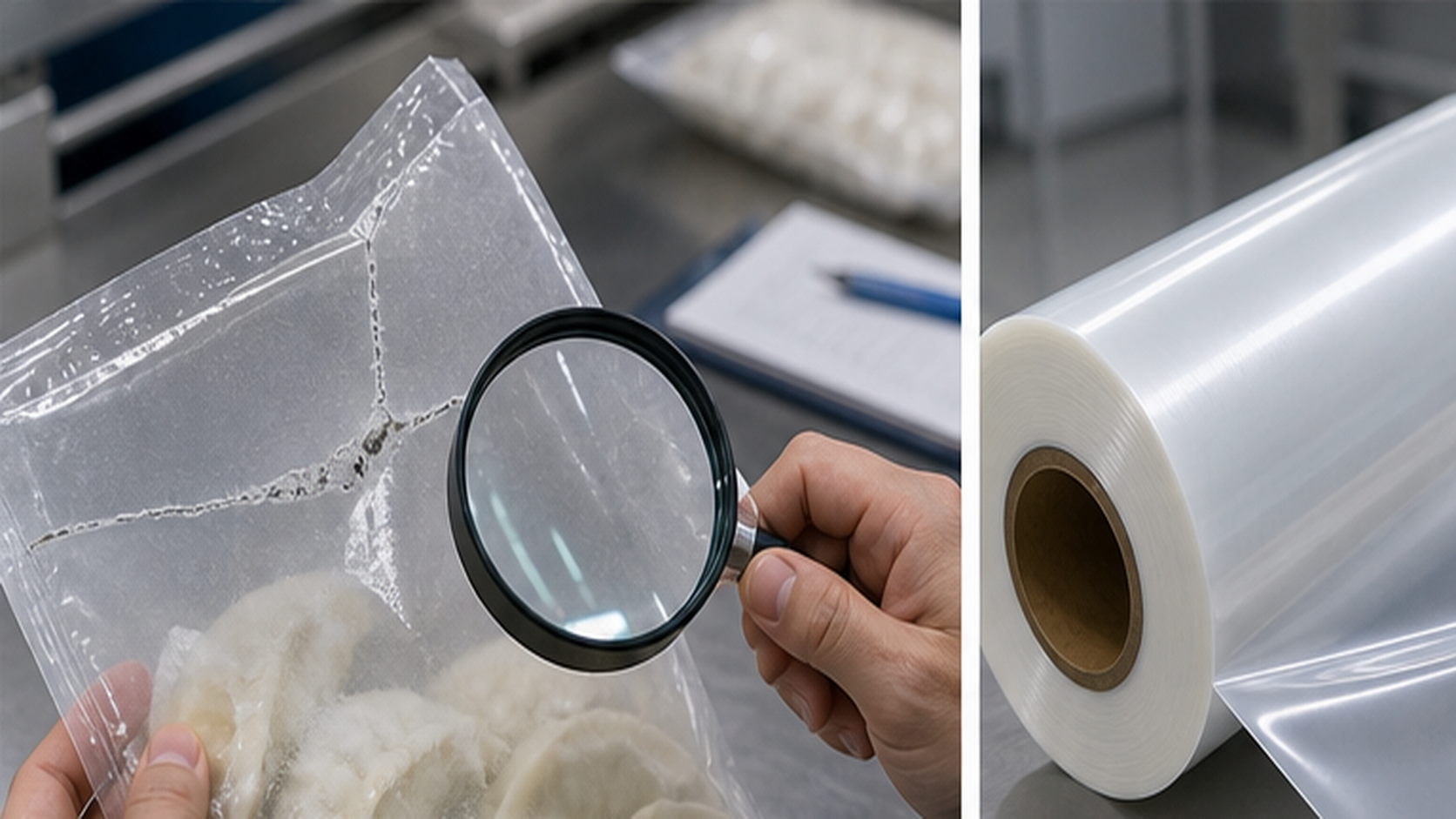
Frozen dumpling bags crack when low temperature, product shape, seal stress, and handling impact exceed the film structure's usable toughness. The failure may appear as a split corner, cracked side seal, brittle white crease, pinhole, or panel tear.
Cracking is not always a raw film problem. A bag can fail because the inner sealant becomes less flexible in the freezer, the laminate is too stiff for the pack shape, the seal area is stressed by wrinkles or contamination, or frozen dumplings press sharp edges against one point during shipment.
For buyers, this means the failure location should guide the material discussion. A cracked printed panel points to one set of laminate questions. A split seal points to sealing conditions, sealant choice, and contamination control. A corner failure may involve bag geometry, carton compression, drop impact, and the film's cold flex behavior.
Which Film Structure Should Buyers Consider First?
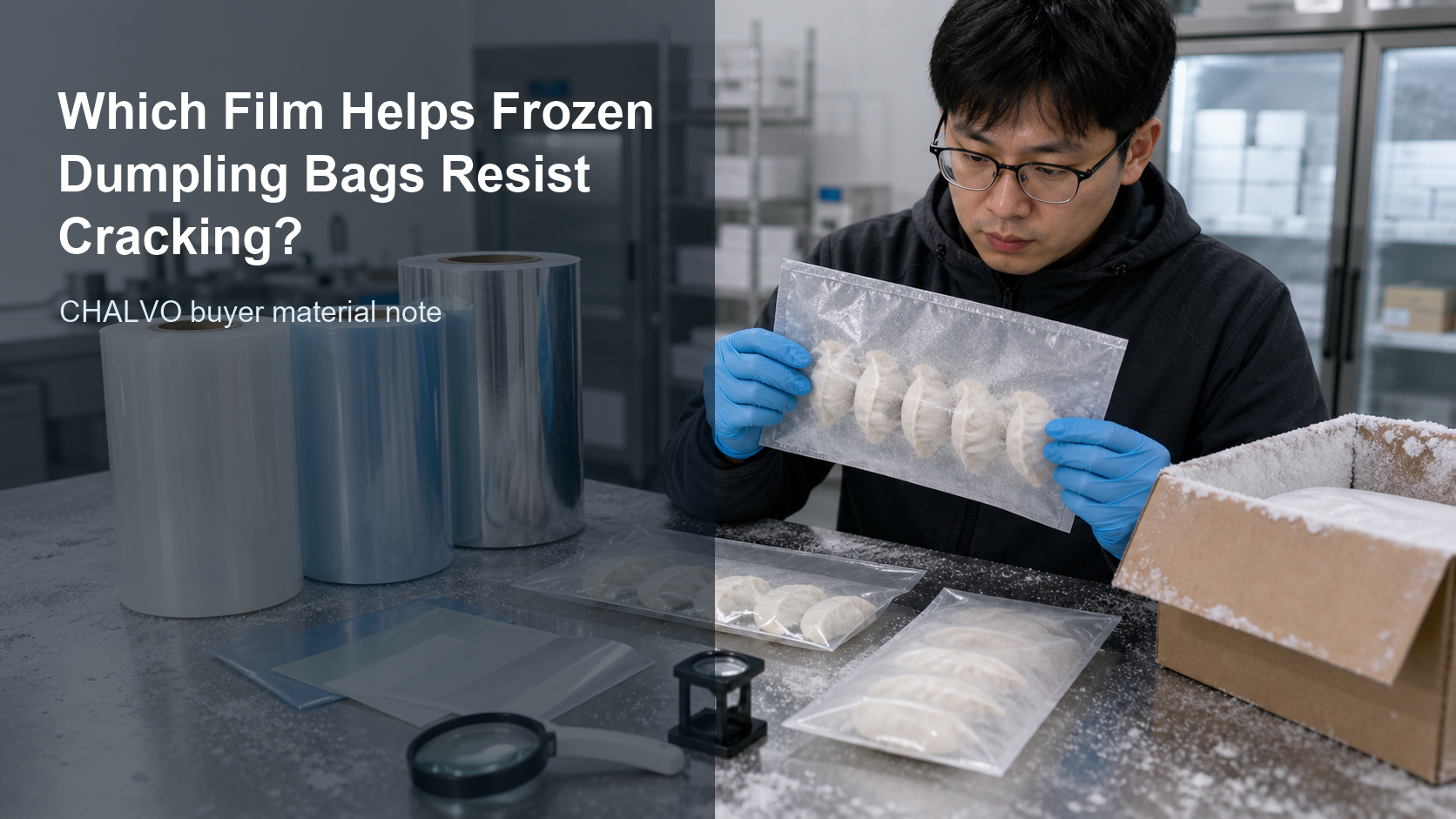
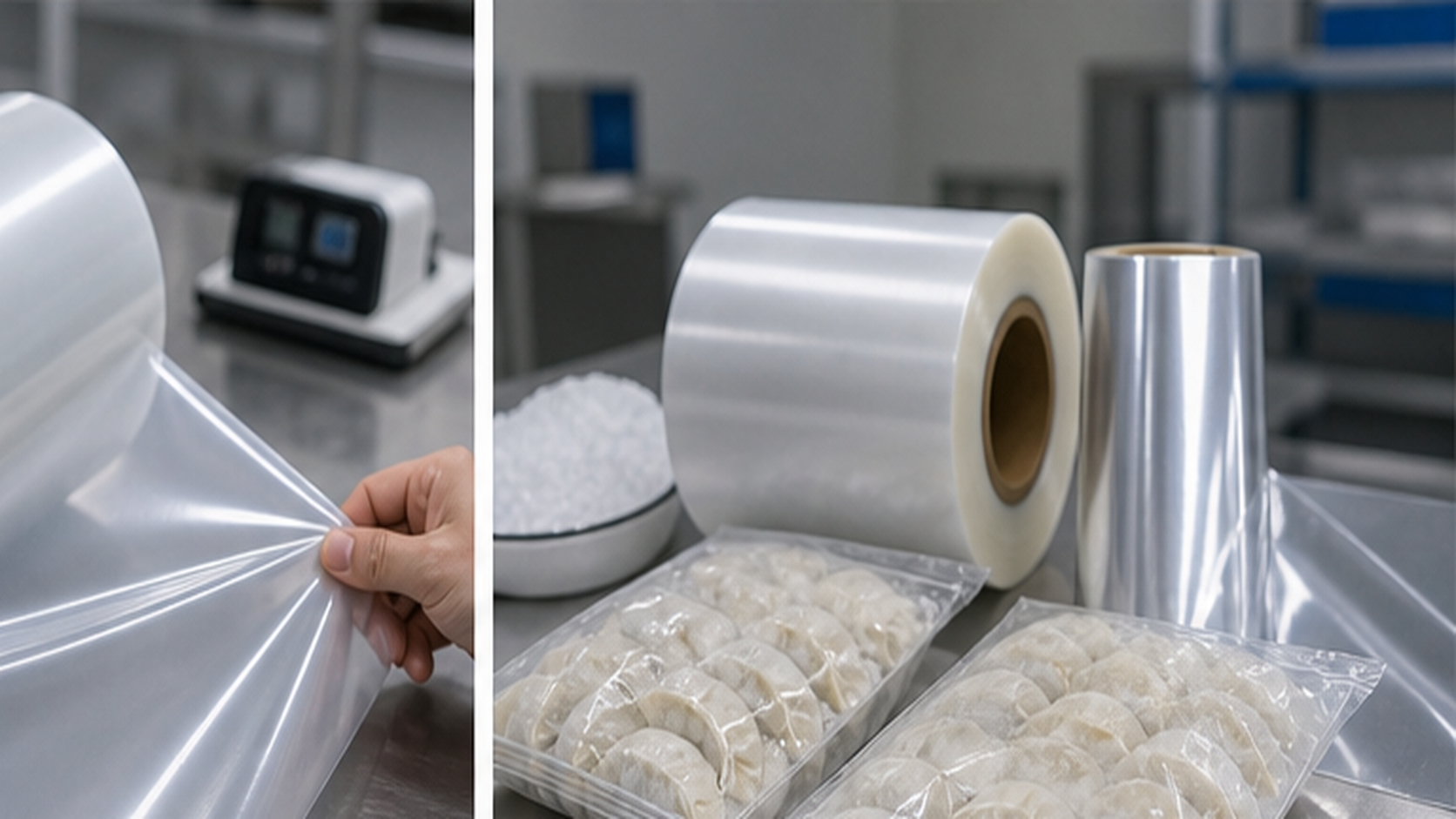
Start with a laminate designed around low-temperature toughness, sealant durability, puncture resistance, and the required packaging format. Common directions include PE-based structures, recyclable-oriented BOPE or MDO-PE structures, and PA/BOPA-containing structures for higher toughness demands.
PE-based sealant layers are often discussed because frozen food bags need reliable sealing and practical flexibility. For some projects, a PE-rich structure may support cold handling and a simpler material direction. Buyers should still confirm the exact resin, film grade, lamination design, sealing window, and bag converting method.
BOPE or MDO-PE structures may be considered when the project has a recyclable packaging direction. These options can support mono-material thinking, but the buyer still needs to check stiffness, drop behavior, seal initiation, corner whitening, and whether the structure works on the current packing machine.
PA or BOPA-containing laminate structures may be considered when puncture and flex-crack risk are higher. Frozen dumplings can create point pressure inside the pouch, especially when the pack is full, tightly cartoned, or handled roughly. Cost target, recycling target, barrier needs, and supplier evidence still need review.
Is Seal Cracking the Same as Film Cracking?
No. Seal cracking and film cracking have different causes, so they should not be solved with the same assumption.
Seal cracking usually appears at the side seal, bottom seal, fin seal, or corner where multiple stresses meet. Possible causes include a narrow sealing window, low sealant toughness, seal contamination from flour or product fragments, excessive heat damage, poor dwell time control, or a seal design that concentrates stress after freezing.
Film cracking usually appears in the panel, crease, gusset, or printed area. This may suggest low-temperature brittleness, insufficient flex resistance, excessive stiffness, product puncture pressure, or carton compression. In this case, changing only the sealing settings may not solve the root problem.
Before changing the film specification, buyers should collect failed bag photos, note the stage where the crack appeared, and separate seal failure from panel failure. CHALVO can use this information to review laminate direction, sample needs, and the latest available TDS.
What Role Does the Inner Sealant Layer Play?
The inner sealant is critical because it touches the frozen dumplings, forms the heat seal, and absorbs part of the bending and impact stress. If the sealant is too brittle for the application, the bag may split at corners or seals even when the outer layer prints well.
For frozen dumpling bags, the inner sealant should be reviewed for machine compatibility, stress after freezing, tolerance of minor surface contamination, and toughness around the seal edge. Filling weight, dumpling shape, oil or flour residue, bag size, sealing jaw condition, and carton loading method all affect the result.
When discussing the project with CHALVO, buyers should request current TDS review and sample confirmation for the exact structure under consideration. If the purchase order needs a value for seal strength, puncture resistance, or low-temperature behavior, that value should come from current technical documentation or agreed testing, not from a generic article.
How Do Corners and Frozen Dumpling Edges Create Cracking?
Corners fail because stress concentrates there. A frozen dumpling bag is a filled, sealed, frozen pack that may be dropped, squeezed into a carton, stacked in cold storage, and handled while the film is less flexible than it was at room temperature.
Frozen dumplings can create pressure points inside the bag. Folded edges, hard frozen surfaces, or irregular shapes may press into the same area during transport. If the laminate is too brittle or poorly matched to the pack geometry, cracks can appear at corners or creases.
Bag design matters as much as film selection. Seal width, corner shape, gusset design, headspace, filling weight, and carton compression should be considered together.
What Should Be Tested Before Approving a Frozen Dumpling Bag Film?
Approval should include sample freezing and handling validation, not only room-temperature visual inspection.
Before sample order, confirm dumpling size and shape, filling weight, bag dimensions, sealing style, packing machine, carton configuration, freezer route, handling method, and any recyclable direction. These details narrow the laminate discussion before samples are made.
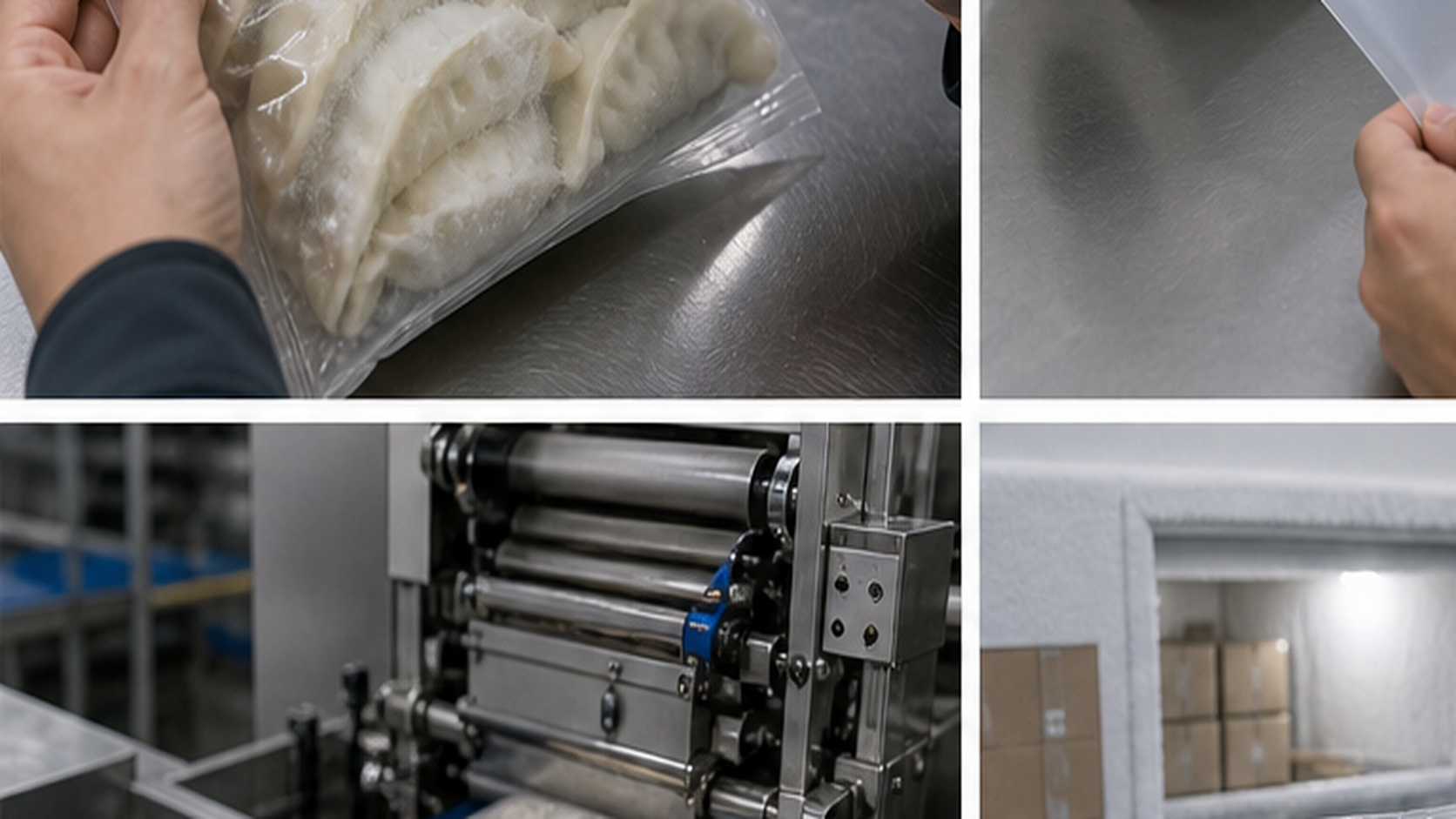
During the packing trial, use actual product if possible. Check whether the bag seals cleanly, whether wrinkles appear near the seal, whether product edges mark the panel, whether corners whiten after flexing, and whether filled bags survive normal line handling. If cracking occurs, record the exact location and stage.
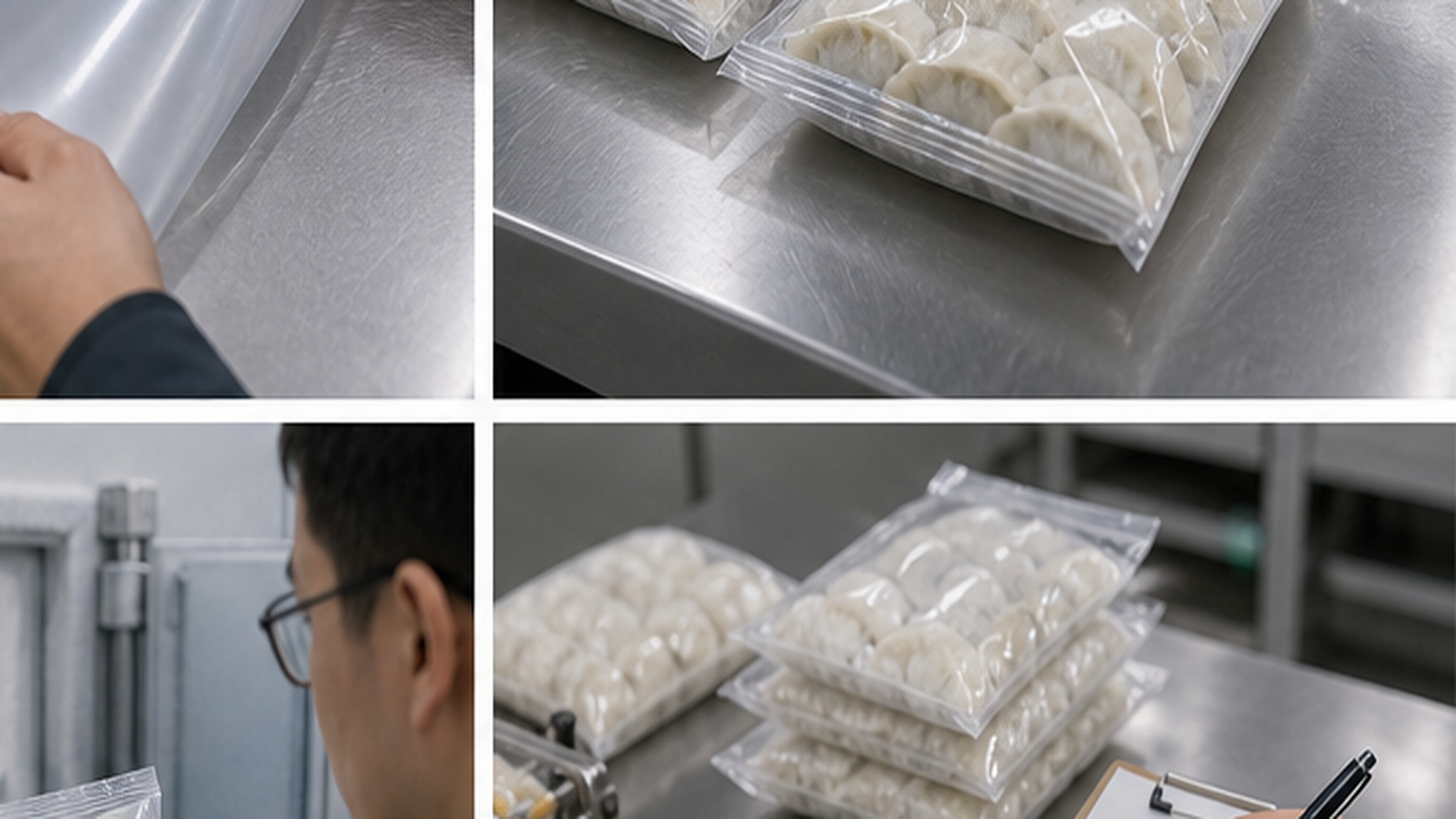
During freezing and cold-chain simulation, inspect retained samples after freezing, carton packing, movement, and handling. Look for seal splitting, corner cracking, pinholes, brittle whitening, delamination signs, scuff marks, and panel cracks. For exact acceptance criteria, buyers should align with CHALVO on the sample plan and request the latest technical evidence for the selected structure.
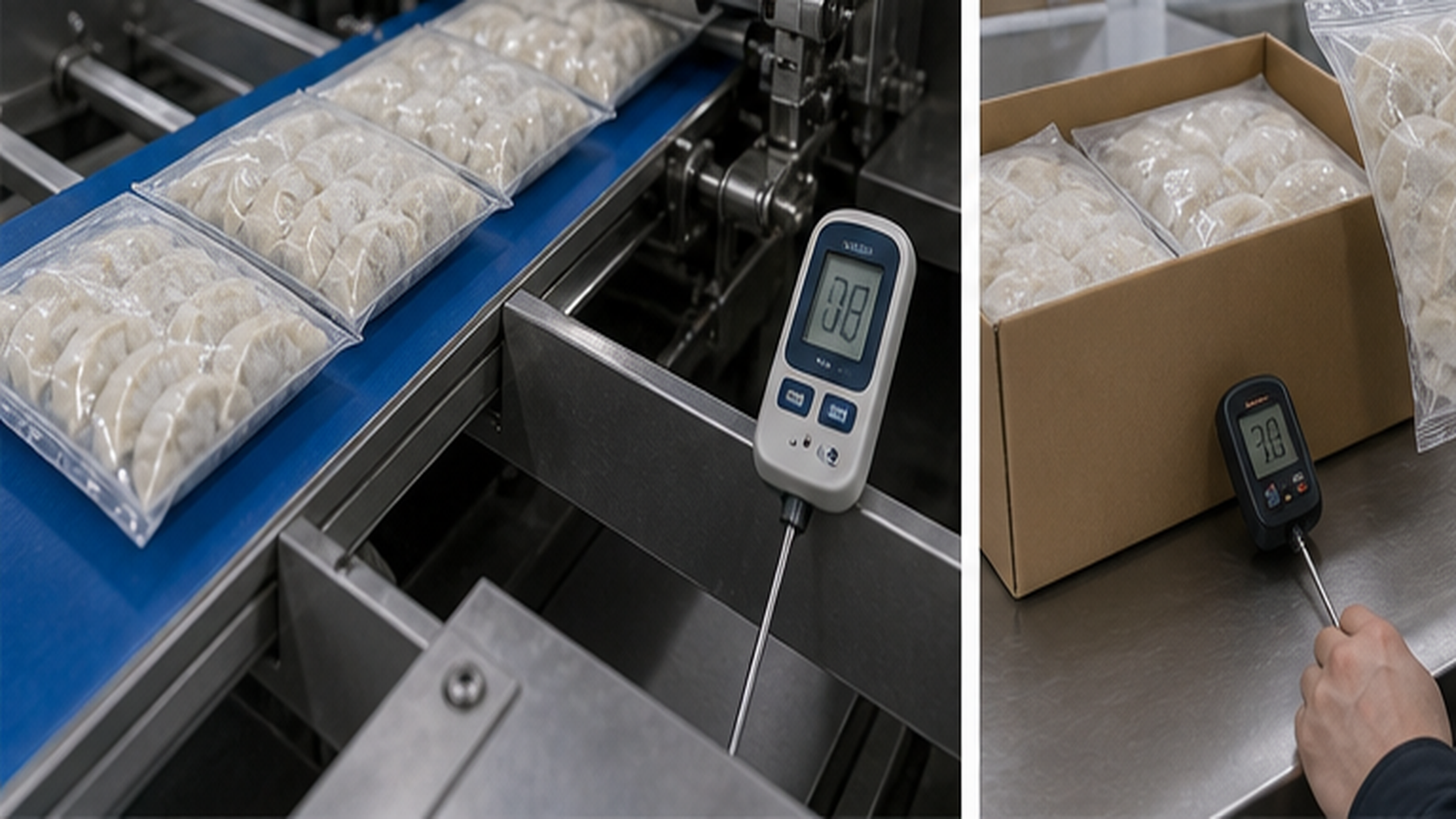
How Should Procurement Compare Different Laminate Options?
Procurement should compare options by risk and evidence, not only by unit price. A lower-cost film may become expensive if it causes returns, repacking, carton leakage, or brand complaints after freezing.
Use a simple comparison table during supplier review:
| Decision Area | What to Ask | Evidence to Request |
|---|---|---|
| Failure location | Is cracking at the seal, corner, gusset, or panel? | Failed sample photos and retained packs |
| Laminate direction | PE-based, BOPE/MDO-PE, or PA/BOPA-containing option? | Structure discussion and sample recommendation |
| Sealant layer | Can the sealant support the machine and frozen handling route? | Latest CHALVO TDS and sample review |
| Handling stress | Does the filled bag survive freezing, drops, and carton compression? | Project validation record |
| Purchase approval | Are claims supported for the exact grade? | Current TDS, sample, or agreed test evidence |
This keeps the discussion technical and prevents the common mistake of asking for "stronger film" without identifying whether the issue is seal design, puncture, cold brittleness, or logistics abuse.
What Information Should Buyers Send to CHALVO?
To receive a useful recommendation, buyers should send practical application details instead of only requesting a price. Useful information includes product photos, frozen dumpling size and shape, bag size, fill weight, packaging format, sealing method, printing requirements, freezer and storage route, carton loading style, target market, and any recyclable packaging goal.
CHALVO can then support the project through laminate structure discussion, sample review, latest TDS review, and packing/freezing/handling validation support. This support is especially important when the buyer needs to compare a standard frozen food laminate with a recyclable-oriented direction or a tougher PA/BOPA-containing structure.
For technical values, buyers should request the latest CHALVO TDS or sample/test evidence for the exact grade and application. This is the correct way to confirm barrier, thickness, seal, puncture, and low-temperature performance without relying on generic claims.
Related CHALVO resources
- Which Film Helps Frozen Meat Vacuum Bags Resist Bone Puncture?
- Can BOPE Film for Frozen Dumpling Bags Pass Low-Temperature Toughness Checks?
- What Film Helps Seasoning Sachets Resist Moisture and Odor?
FAQ
Which film helps frozen dumpling bags resist cracking?
A laminate with low-temperature toughness, a suitable inner sealant, and enough puncture resistance for frozen dumpling edges is the practical direction. PE-based, BOPE/MDO-PE, and PA/BOPA-containing structures may all be considered depending on the project. The final choice should be validated by CHALVO sample review, current TDS review, and freezing/drop handling checks.
Are PE films enough for frozen dumpling packaging?
PE-based structures can be suitable for some frozen dumpling bags, especially when flexibility and sealing are key priorities. They still need application-specific validation. The buyer should confirm seal performance, cold handling behavior, product edge pressure, and carton transport conditions before approving mass production.
When should a buyer consider PA or BOPA in the laminate?
PA or BOPA-containing structures may be discussed when puncture risk, corner cracking, or handling abuse is high. They are not automatic choices for every project. Cost, recyclability target, barrier needs, and the latest supplier evidence should be reviewed before selection.
Can recyclable frozen dumpling bags resist cracking?
They may, but the recyclable direction must be validated. BOPE or MDO-PE structures can support mono-material goals in some projects, but buyers should test cold flexibility, seal window, drop handling, and corner stress with real frozen dumplings and the intended packing line.
What is the safest approval rule?
Approve the film after filled-bag freezing, packing, drop or handling review, and retained sample inspection. Do not approve only from a room-temperature film sample. Ask CHALVO for the latest TDS, sample review, and project-specific validation support before locking the final specification.
Summary
Frozen dumpling bags resist cracking when laminate design, sealant toughness, bag format, freezing route, and handling stress are validated together. Buyers should compare structure options, request current CHALVO evidence, and test filled bags before approval.
Meta Title
Which Film Helps Frozen Dumpling Bags Resist Cracking?
Meta Description
Learn how to choose frozen dumpling bag film for low-temperature toughness, seal integrity, corner cracking, handling stress, and cold-chain validation.
CTA
If your frozen dumpling bags show seal splitting, corner cracking, brittle whitening, or panel punctures, send CHALVO your bag size, product photos, fill weight, sealing method, freezer route, and target laminate direction. CHALVO can review the structure, check the latest TDS, prepare samples, and support packing, freezing, and handling validation before mass production.