

PET Lidding Film for Trays How Buyers Choose Sealability
A practical buyer guide to PET tray lidding: assess the tray interface, seal intent, filling conditions, supporting documents, and representative trials before approval.

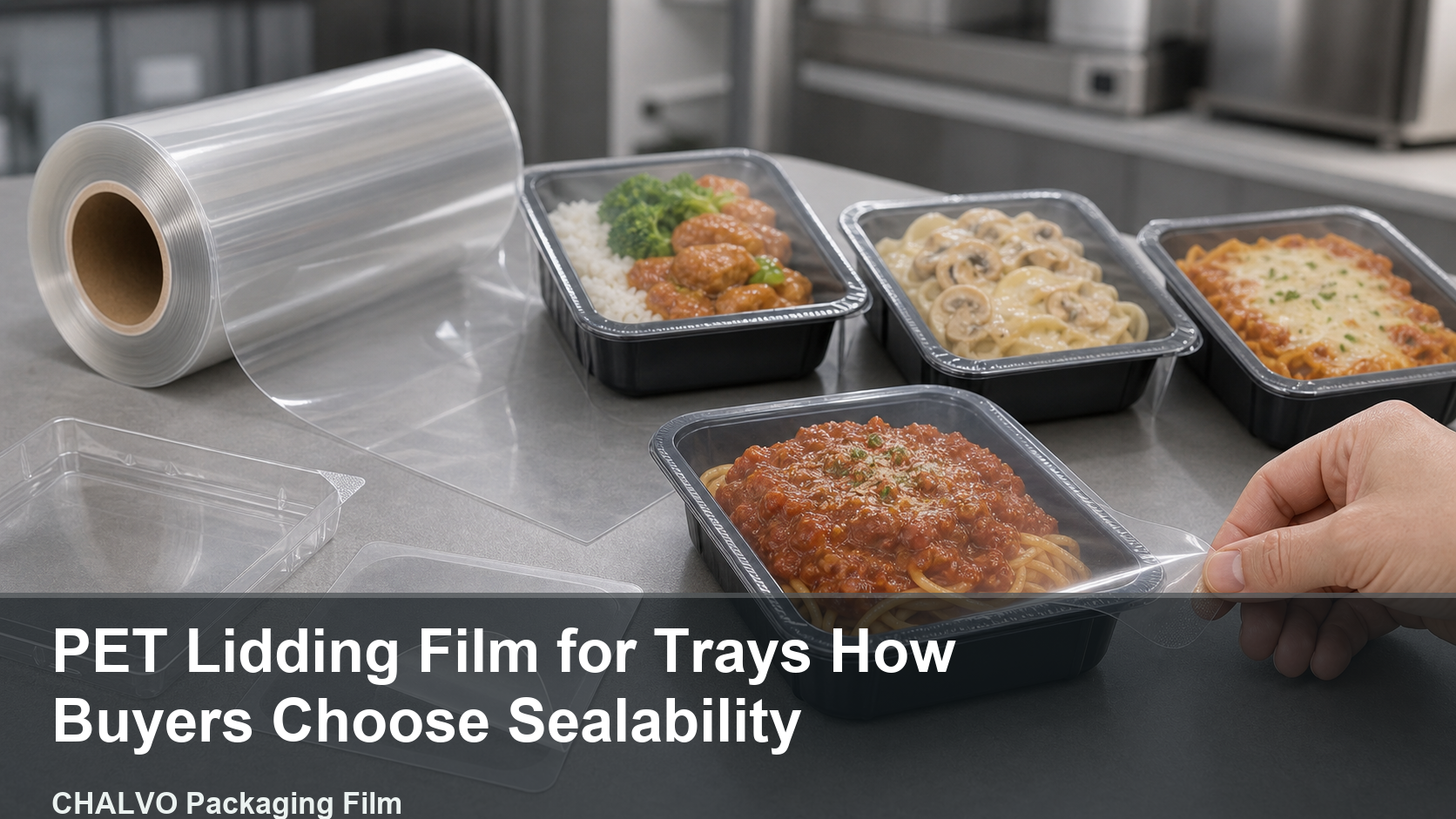
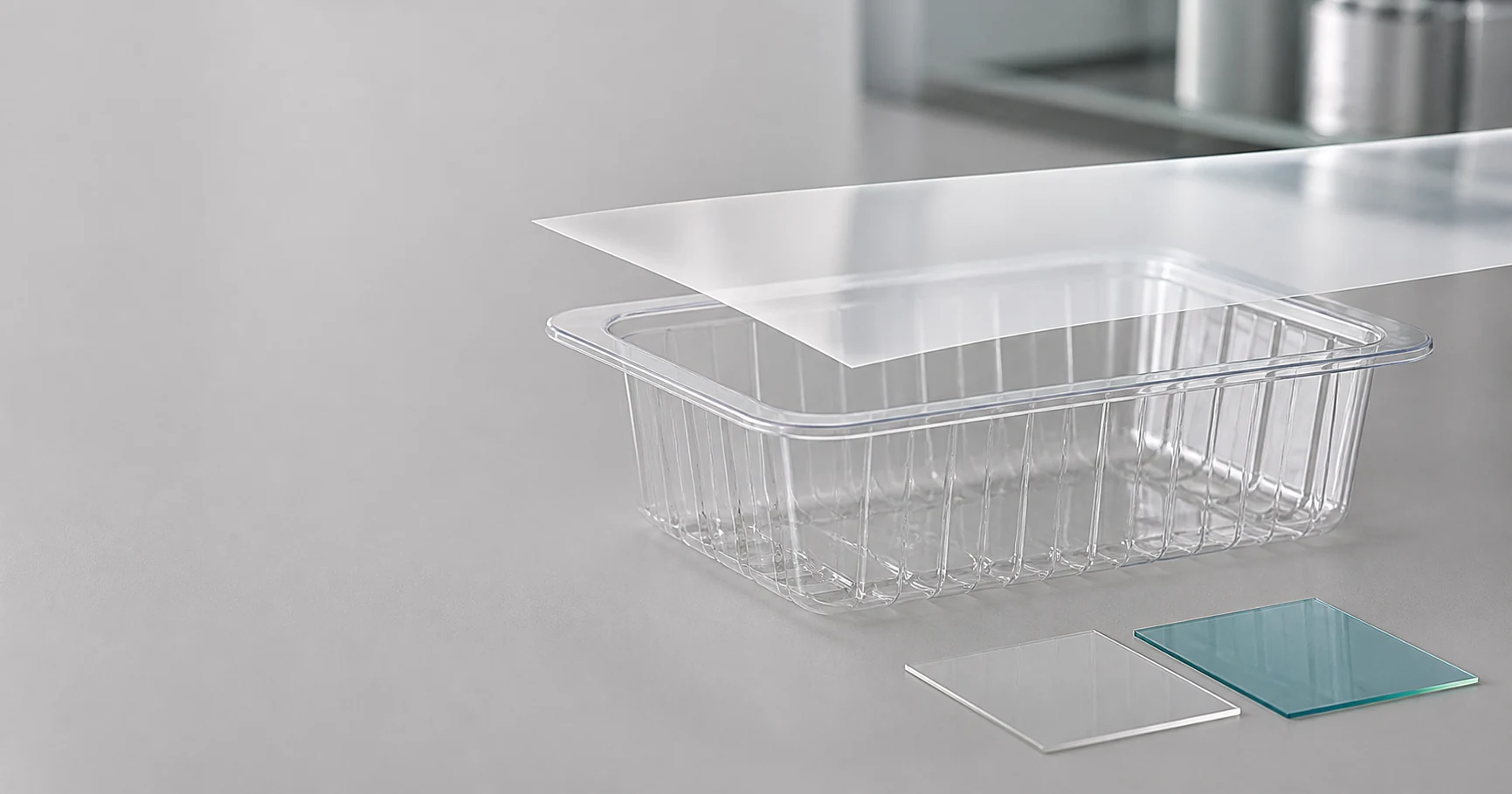
Choosing a PET lidding direction is not a material-name decision. Buyers need to match the proposed film construction to the tray sealing surface, the intended opening behavior, the product and filling conditions, and the actual tray-sealing process. A film that works on one tray or one sample setup may not deliver the same result on another package system.
Quick answer: start with the exact tray and the sealing interface, then define whether the package needs a controlled peel, a stronger closure, or a balance of both. Confirm the proposed structure, obtain the current grade-specific documentation, and validate it on representative filled trays before approving production.
Start with the tray interface
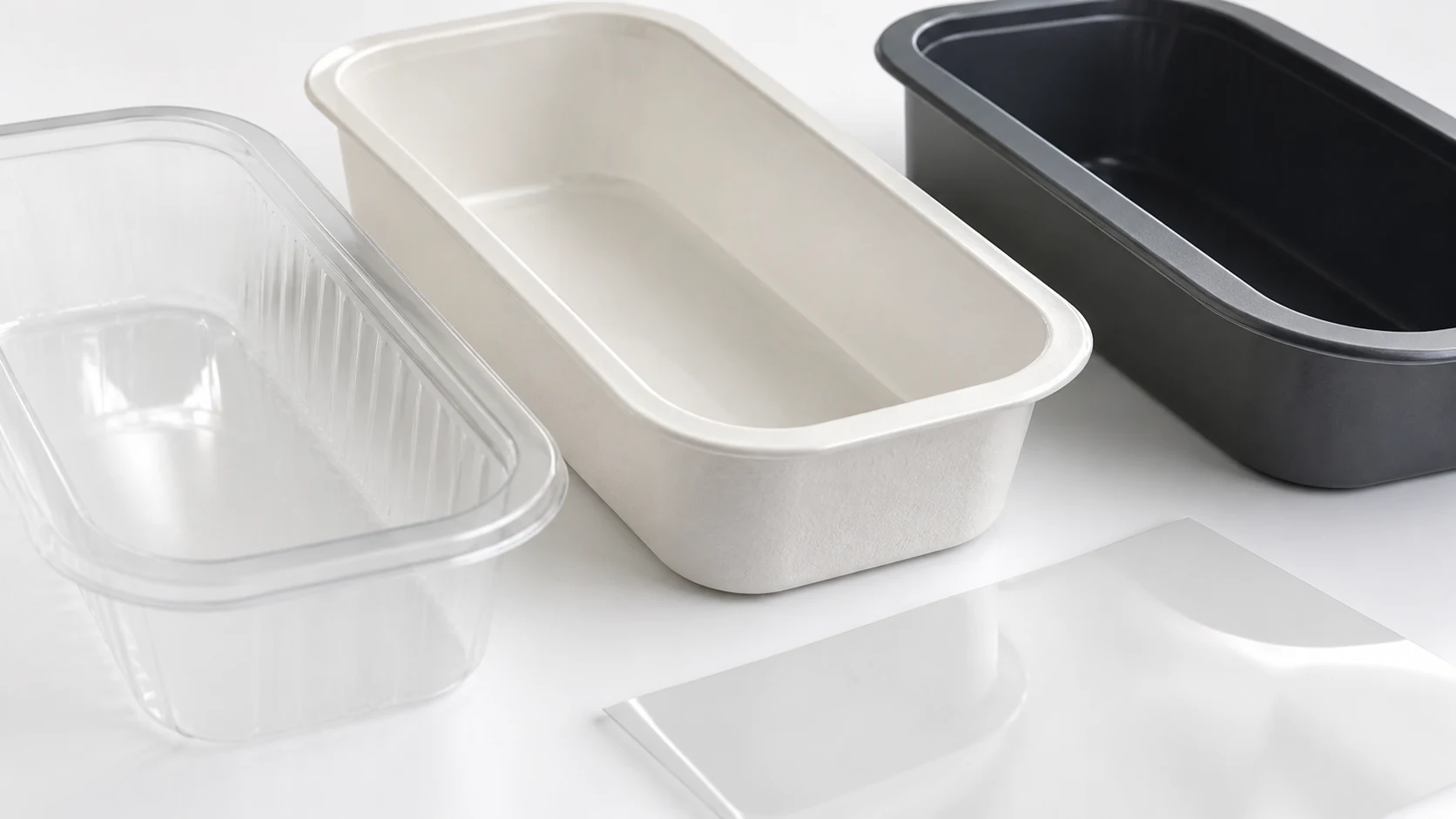
“PET lidding film” can describe different constructions and functional roles. PET may contribute dimensional stability, appearance, print support, or another role in the structure; it is not a universal statement that a film will heat-seal to every tray.
Ask for the tray material, the actual sealing surface, and any coating or laminated layer at the rim. A tray described broadly as PET, PP, paperboard, or aluminium may still present a different seal interface from another tray in the same category. Rim flatness, consistency, damage, and contamination also matter.
| Buyer question | Why it changes the selection |
|---|---|
| What material is at the tray sealing surface? | The sealant side must be evaluated against the real interface, not the tray category alone. |
| Is the rim coated, laminated, or modified? | A surface treatment can change how the proposed lidding construction behaves. |
| Is the rim flat and repeatable? | Uneven or damaged rims can create an inconsistent result even when the film direction is suitable. |
| What is the filling and storage condition? | Moisture, oil, crumbs, temperature changes, and handling can alter the trial conditions. |
Define the opening outcome before requesting samples
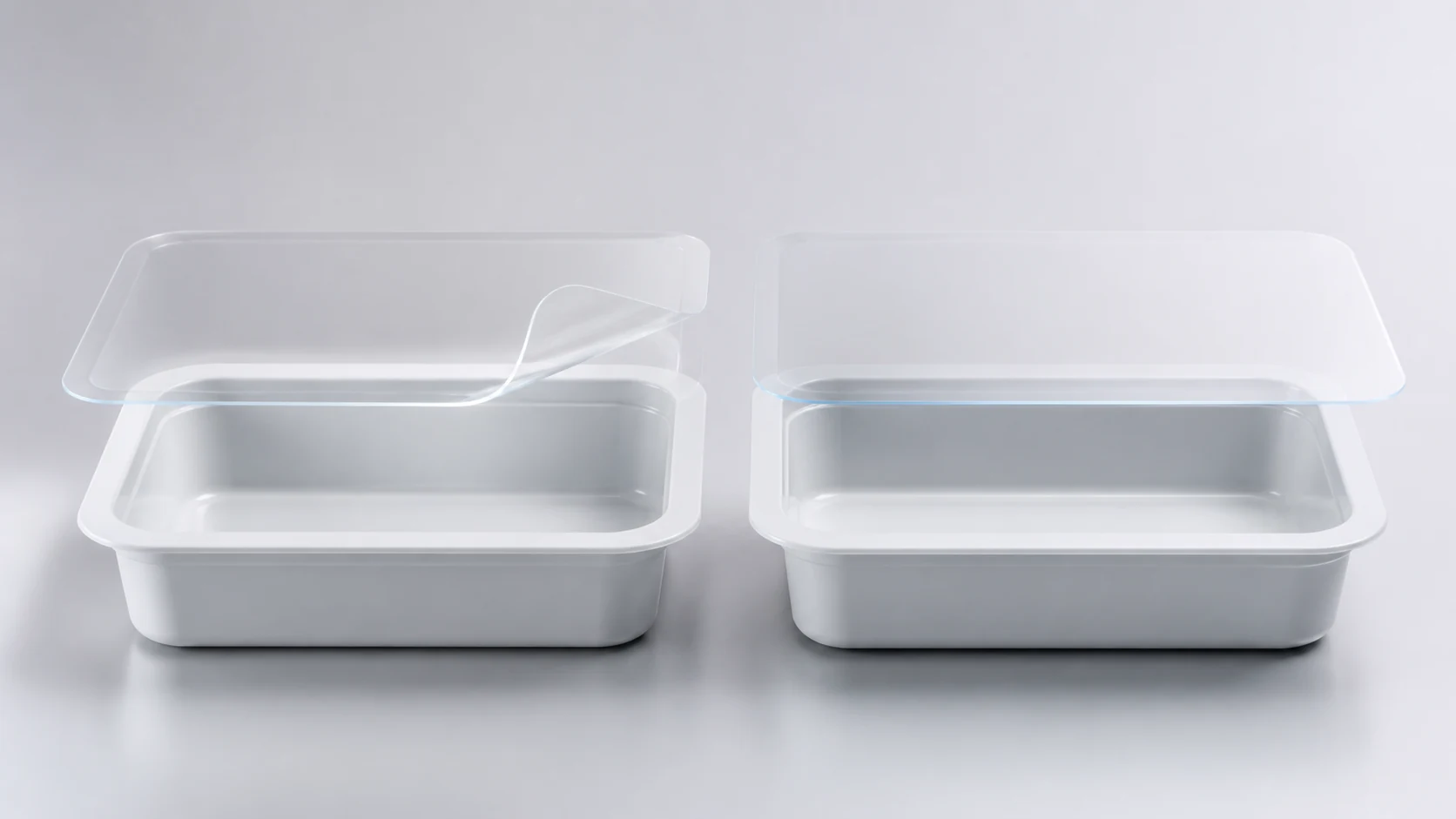
Buyers should state the opening target rather than only asking for “good sealing.” A peelable direction is intended to provide controlled opening. A stronger closure direction may be considered when package handling or leakage risk is the primary concern. Neither outcome is automatically right for every tray or product.
The practical question is how the complete package should behave. A peel that is too easy may be unsuitable for the distribution risks of a particular pack. A closure that is too aggressive may not meet the desired opening experience or may interact poorly with the tray rim. The proposed outcome should therefore be reviewed alongside product weight, headspace, transport route, user opening needs, and the tray’s mechanical behavior.
Do not convert a generic material description into a peel-force, leak-resistance, or compatibility promise. Those conclusions require the exact construction, test method, and finished-pack evidence.
Treat contamination and line conditions as part of the specification
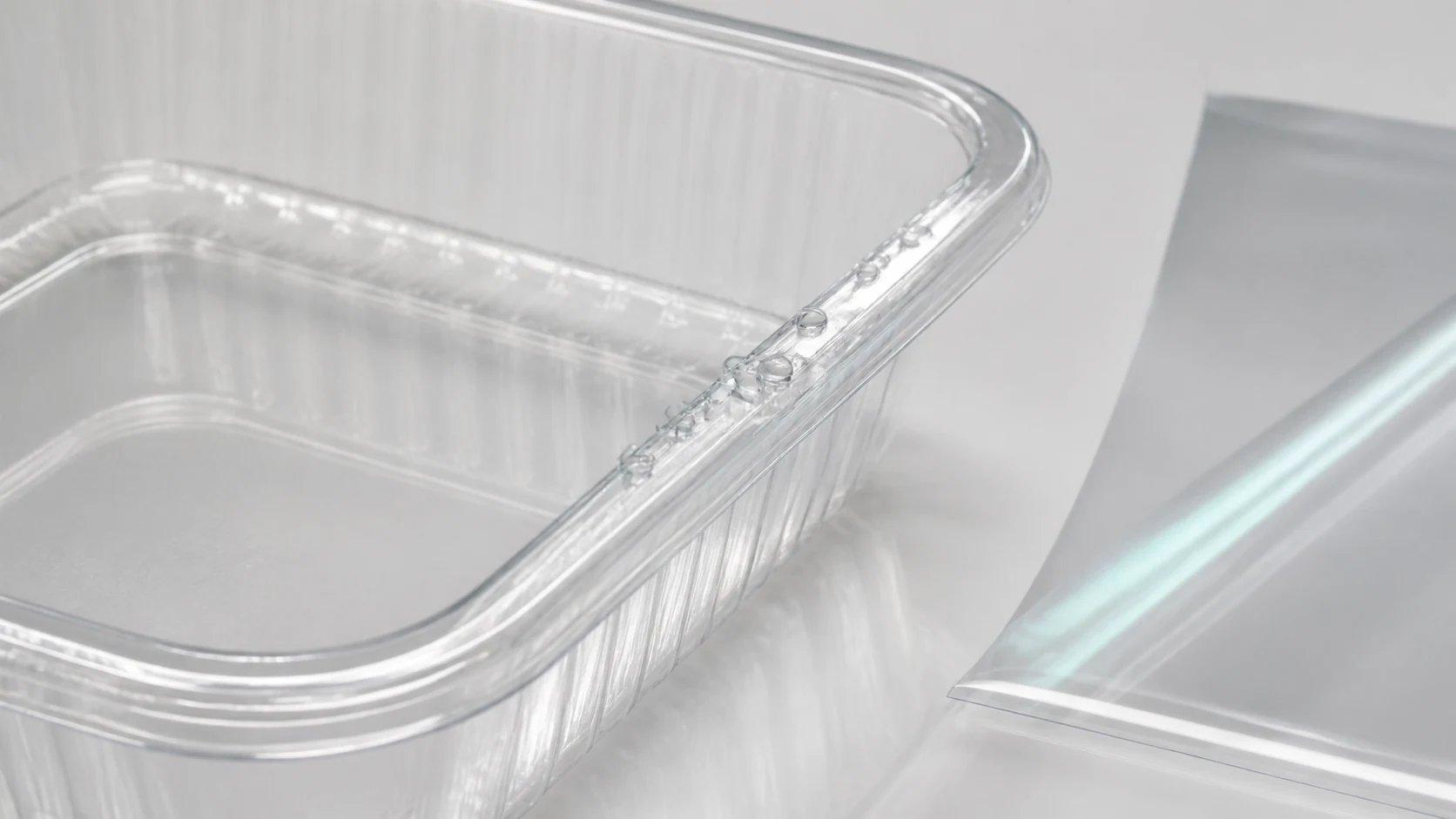
An empty, clean tray is useful for an initial sample check, but it is not the complete approval condition. Filled trays can introduce water, oil, sauce, powder, crumbs, fibres, condensation, or splash near the rim. The sealing tool, pressure, dwell, heat distribution, web handling, and roll tension may also differ from a hand-made sample.
For that reason, the most useful trial plan uses the buyer’s representative tray, product, and process. It should include normal filled packs and, where relevant to the buyer’s QA method, challenging but realistic rim conditions. Record what was tested rather than relying on a verbal pass/fail impression.
Add clarity, anti-fog, and atmosphere needs early
Retail visibility, condensation control, and modified-atmosphere requirements can change the structure discussion. They should be introduced before a final lidding direction is chosen, not added after the seal layer has been selected.
These requirements must remain evidence-led. This guide does not claim an anti-fog duration, barrier result, shelf-life outcome, or MAP suitability for a particular grade. If the project needs any of those outcomes, request documentation and sample information for the current grade and validate the complete package under the intended storage and distribution conditions.
Request evidence that matches the proposal
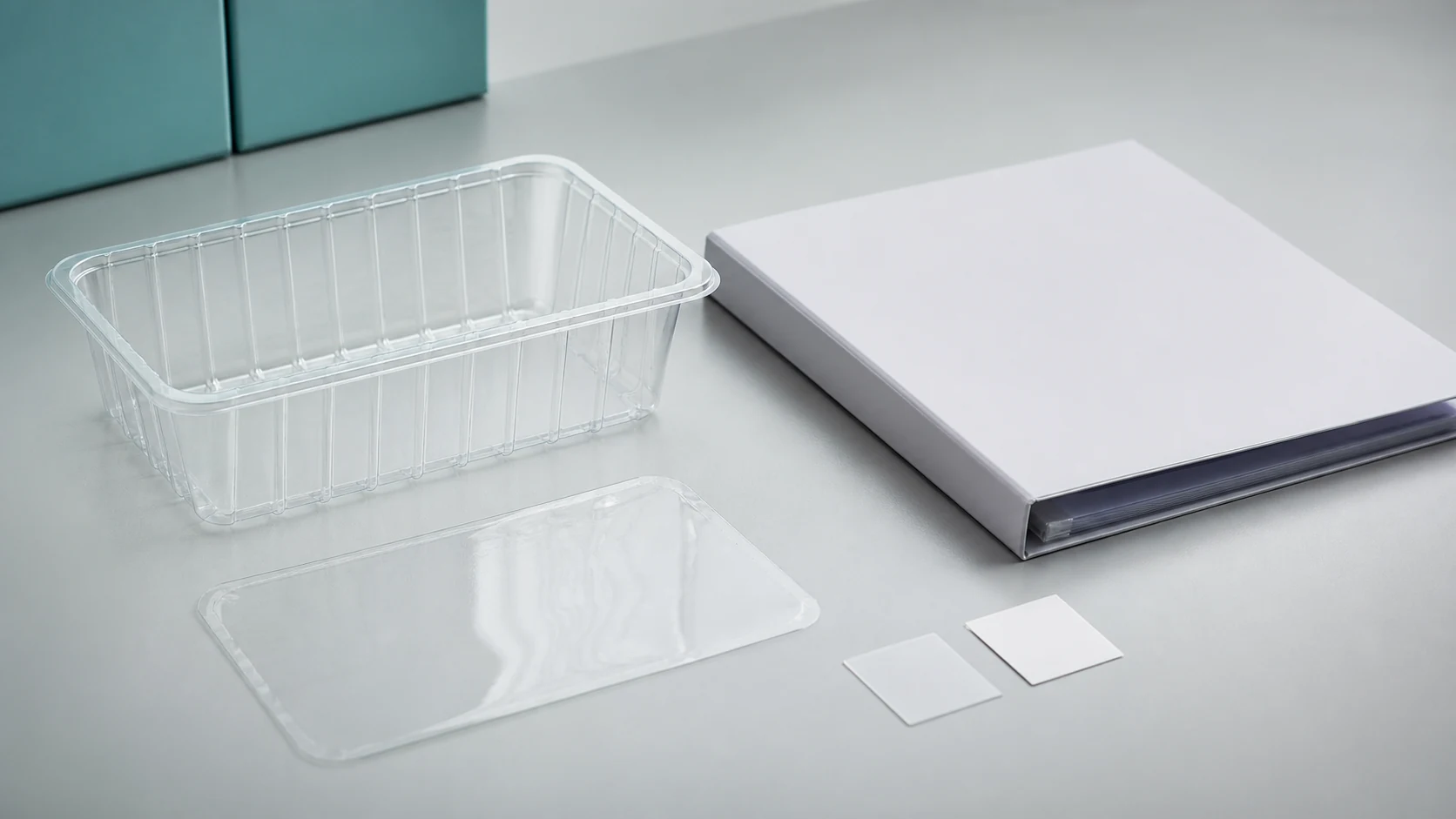
Use supplier information for screening, then match it to the actual sample and application. The useful document set is not a collection of generic marketing statements; it is the current information that identifies the grade, construction, relevant test conditions, and open questions.
Before a decision, buyers should request:
- the current TDS for the proposed grade and structure;
- available quality, material, or application documents relevant to the target market;
- a clear statement of the tray material and sealing surface used for any sample discussion;
- sample identification and a trial plan for the buyer’s tray-sealing process; and
- any limitations or items that still need buyer-side validation.
When a figure is provided, check its unit, test method, specimen or structure, and environmental conditions. A value from another grade, thickness, tray, or process should not be treated as proof for this project.
Compare directions by risk, not by a single material label
When several lidding directions are available, compare them against the package risk that matters most. A simple proposal may be a sensible starting point for a stable tray, short handling route, and basic opening expectation, provided the buyer validates it. A more complex construction may be worth discussing when the project has a clearly defined visibility, atmosphere, handling, or opening requirement. Complexity alone is not evidence of a better package.
For each direction, record the original information supplied, the conditions in which it is intended to operate, the reason it appears suitable or uncertain, and the question still open. This keeps a supplier comparison useful without turning another supplier’s data into a CHALVO performance commitment. It also helps procurement, packaging, and QA teams agree on what the sample is meant to prove.
A practical approval sequence
1. Describe the tray, rim, product, filling condition, storage route, and target market. 2. State the opening intent: controlled peel, stronger closure, or another defined outcome. 3. Review a proposed lidding construction and its sealant-side logic against the actual tray interface. 4. Obtain current grade-specific documents and identify evidence that is still missing. 5. Run representative samples on the intended equipment and record visual seal quality, opening behavior, and the buyer’s own package checks. 6. Resolve differences before production approval; do not assume one successful bench sample covers all line and distribution conditions.
Buyer checklist
- [ ] Tray material and actual sealing surface are identified.
- [ ] Rim coating, shape, and consistency have been considered.
- [ ] Product contamination and condensation risks are described.
- [ ] Opening behavior and package-integrity priorities are stated.
- [ ] The proposed film construction is linked to the tray interface.
- [ ] Current, grade-specific documentation has been requested.
- [ ] The sample plan uses representative filled trays and the intended process.
- [ ] Any barrier, anti-fog, compliance, shelf-life, or compatibility conclusion has supporting evidence for the exact application.
FAQ
Can PET lidding film seal to a PP tray?
It depends on the actual lidding construction and the tray sealing surface. Buyers should confirm the sealant-side design and validate the exact tray rather than assuming that PET alone determines compatibility.
Is a peelable lidding film always less secure than a stronger closure direction?
They are different intended outcomes, not a universal ranking. The appropriate direction depends on the complete package, handling risks, tray behavior, and user opening requirement.
Can a generic TDS approve the project?
No. A TDS can help screen a proposal, but final approval should use current information for the exact grade and representative finished-pack trials.
What should buyers send CHALVO first?
Share the tray material and rim details, product and filling condition, preferred opening result, packaging-process context, market document needs, and sample plan. CHALVO can help structure the sourcing discussion and coordinate the information needed for an application-specific review.
Summary
PET tray lidding selection works best when buyers treat the package as a system. Define the tray interface and opening target first; then use current, grade-specific evidence and representative trials to decide whether the proposed construction is appropriate.
Meta Title
PET Lidding Film for Trays How Buyers Choose Sealability
Meta Description
A practical buyer guide to PET tray lidding: assess the tray interface, seal intent, filling conditions, supporting documents, and representative trials before approval.
CTA
Planning a tray-lidding project? Send CHALVO your tray details, product condition, target opening behavior, process context, and document requirements. We can help organize the sourcing discussion, sample scope, and evidence needed for a buyer-side validation.



