

Medical Packaging Film Key Materials and Selection Guide
Learn how B2B buyers should select medical packaging film by package role, material direction, evidence scope, samples and project-specific validation.

Quick answer
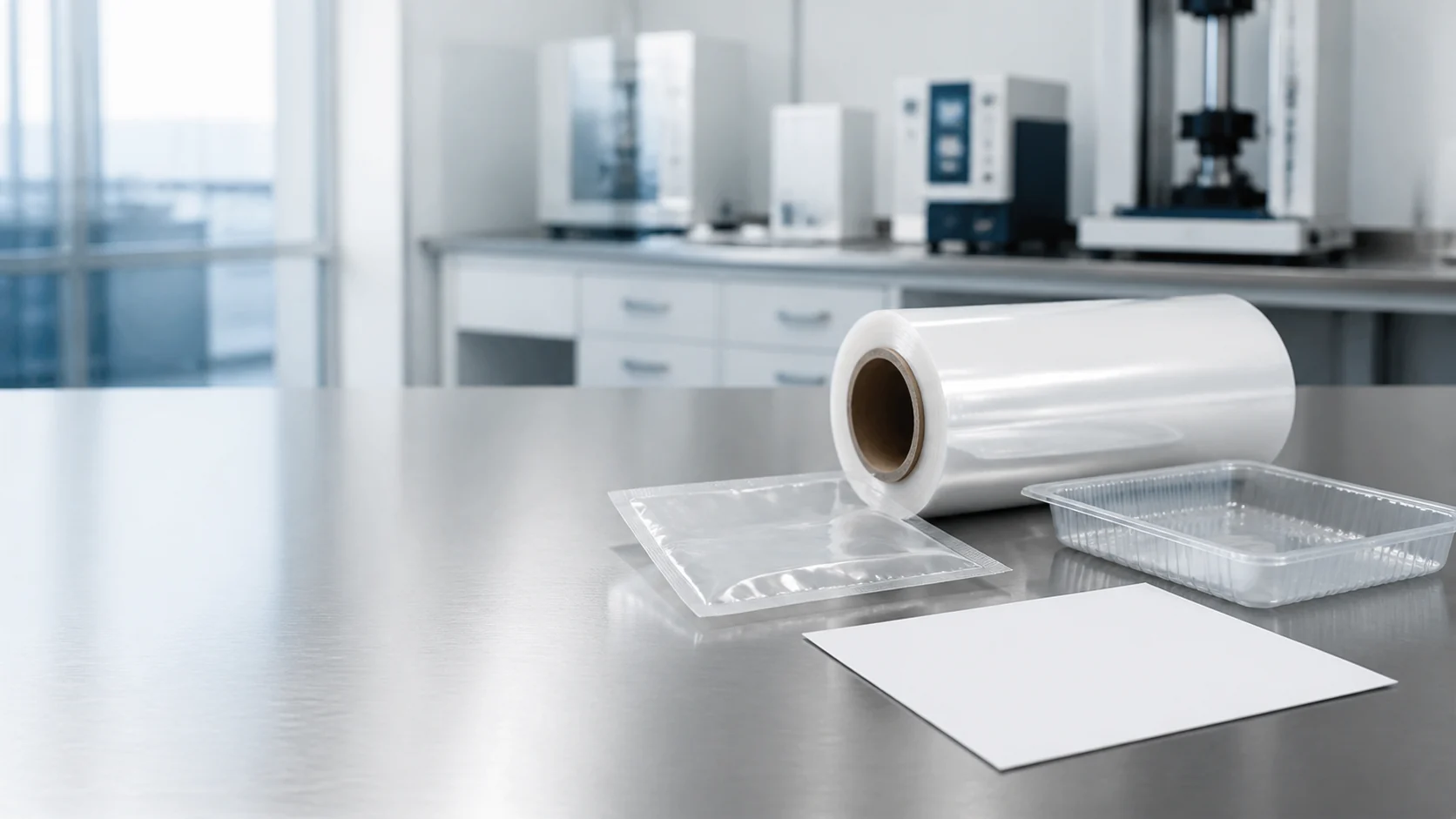
Buyers should select a medical packaging film direction by first defining the complete package system: device or product, package format, film role, seal interface, intended sterilization route, distribution risks and approval evidence. A material family such as PET, PE, PP, CPP, PA or a coated film is not, by itself, evidence that a package is suitable for a medical or sterile application.
Use film information to screen options, then validate the proposed structure through current supplier documents, project samples and the device owner’s qualified package-validation process. CHALVO can coordinate sourcing discussions and relevant grade documents through its supplier network; it does not replace the buyer’s regulatory, quality or validation responsibility.
What is the buyer actually selecting?
The buyer is selecting a component of a package system, not a generic “medical film.” A transparent outer web, forming web, lidding layer, sealant layer, protective overwrap, release liner or printed laminate can each have different functions and different evidence needs.
Begin with the device or product and the package route. Record its shape, weight, sharp edges, sensitivity, package format, handling sequence, storage and distribution conditions. Then identify which layer is intended to seal, form, support printing, provide visibility, resist handling damage or support another function. This prevents an early material choice from being mistaken for system approval.
| Buyer question | Why it matters | Evidence or decision needed |
|---|---|---|
| What is packed and what can damage the pack? | Corners, movement and product sensitivity can change the structure question | Product and package-risk brief |
| Is the film primary, sterile-barrier, secondary or protective packaging? | Film role determines the scope of the review | Complete package map |
| Which faces will seal or peel? | Seal behaviour belongs to an interface, not one film name | Seal-pair and format description |
| What downstream route is intended? | Sterilization, conversion, storage and transport need project review | Defined validation and document plan |
Which material families may be considered?
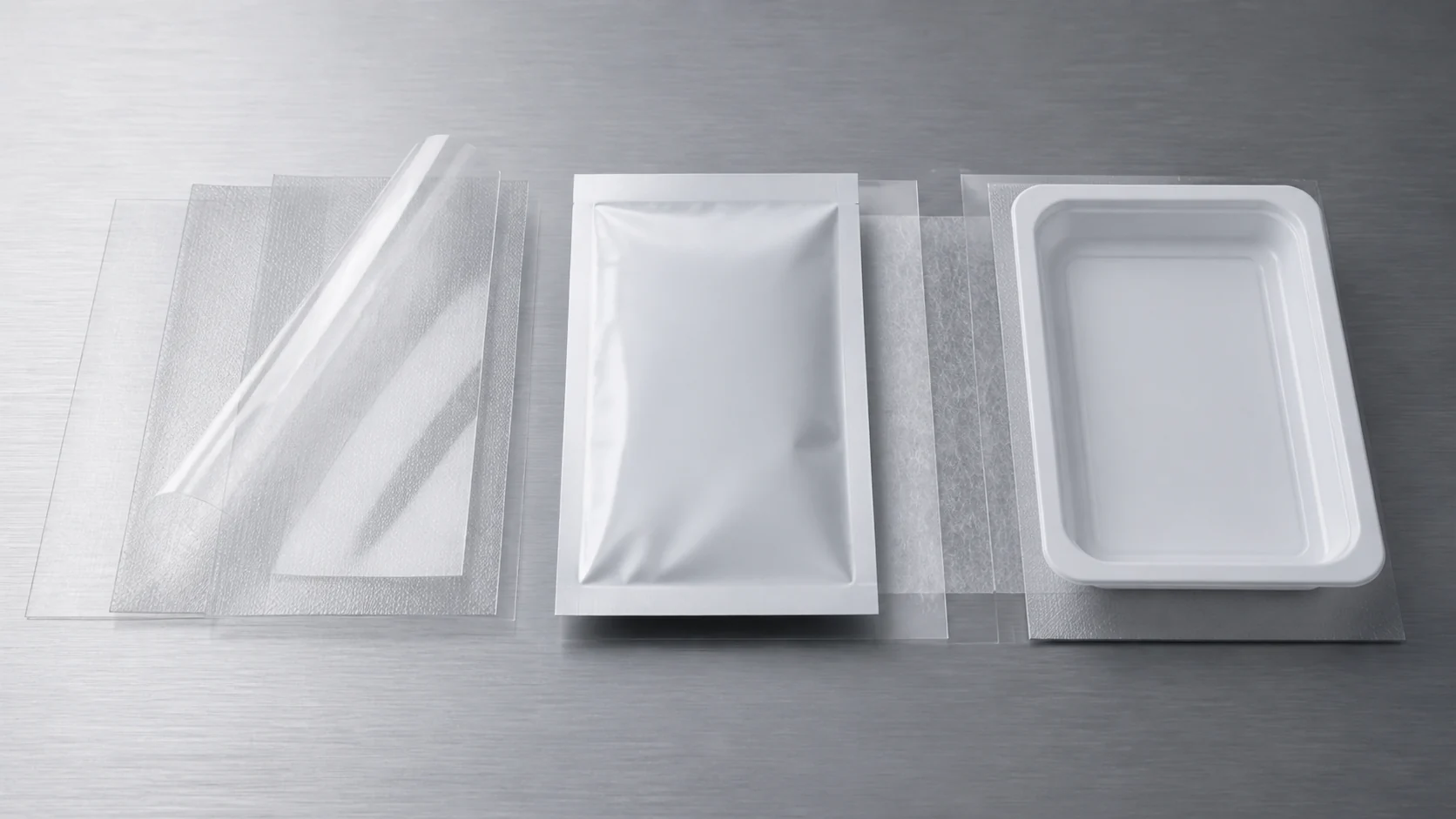
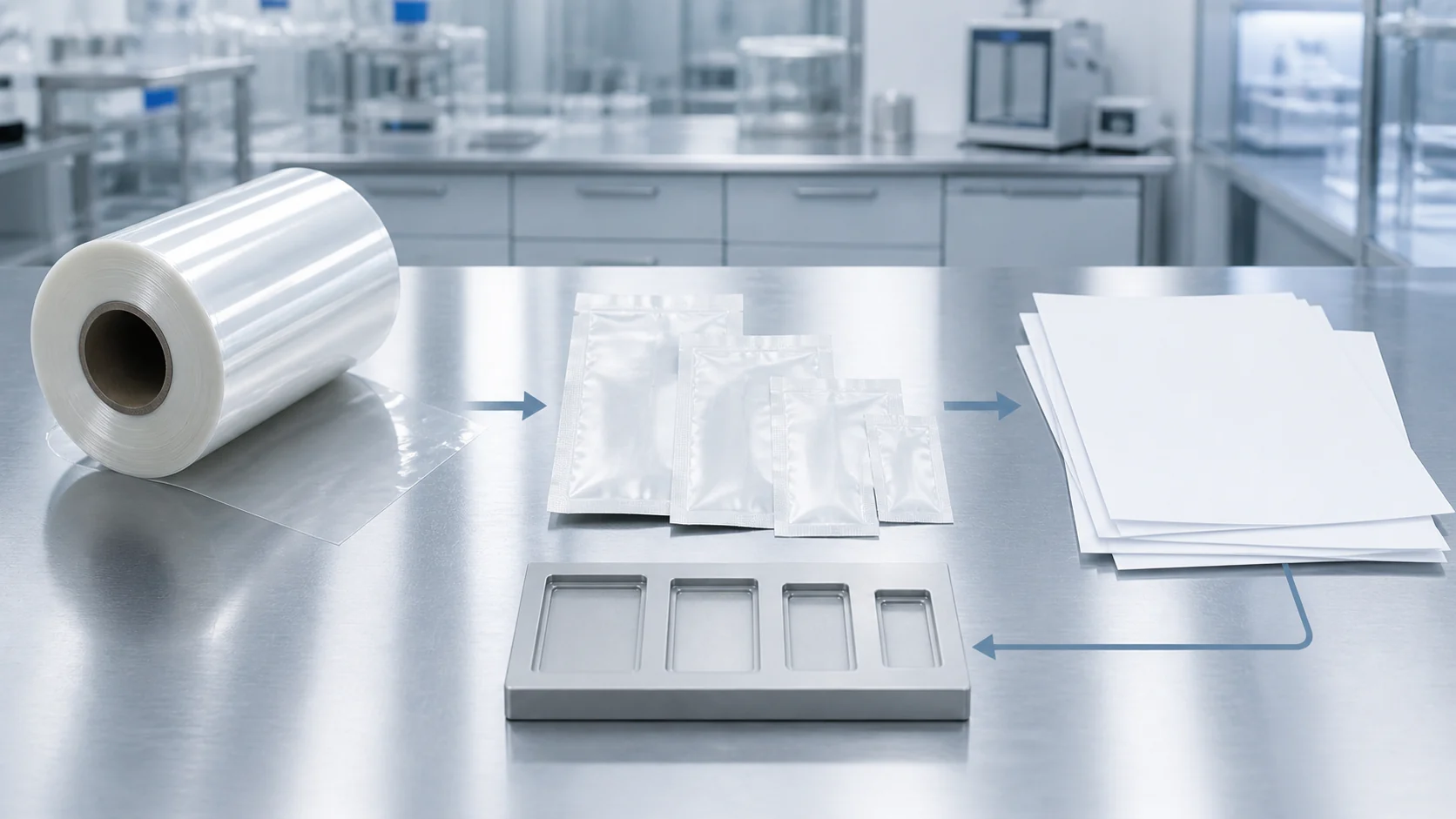
PET or BOPET may be considered as an outer, support or laminate web where dimensional stability, appearance or conversion needs are being assessed. PE and PP-based materials may be considered where a sealant or flexible layer is proposed. CPP, RCPP, PA-containing structures, coated webs, lidding materials and thermoforming-related structures can also be screening directions depending on the complete package design.
The original information in a TDS or supplier description is only the starting point. The application condition is the actual device, format, interface, route and market. The reasonable judgement is therefore conditional: assess whether a grade could enter the project’s sample route, rather than calling a material family medically suitable. The open questions usually include grade identity, layer construction, surface treatment, mating material, document revision and the validation route.
How does package role change the material review?
Package role changes the priority of every property. An outer web may be reviewed for print and handling support. A forming web may need a project-specific review of shape, depth and handling. A lidding or sealant layer may need an interface-specific review of sealing and opening requirements. A protective overwrap may have a different function from a package intended to maintain a specified barrier condition.
Do not infer package integrity or opening behaviour from a single sheet value. Ask what surfaces meet, how the package is made, and which failure points the device owner needs to assess. For a pouch, include corners, seal geometry, product movement and potential sharp edges. For a tray or lidding direction, include the proposed tray or substrate and the required opening behaviour. A sample should represent the intended structure and route before its observations are used in a release decision.
What should be checked for seal and opening behaviour?
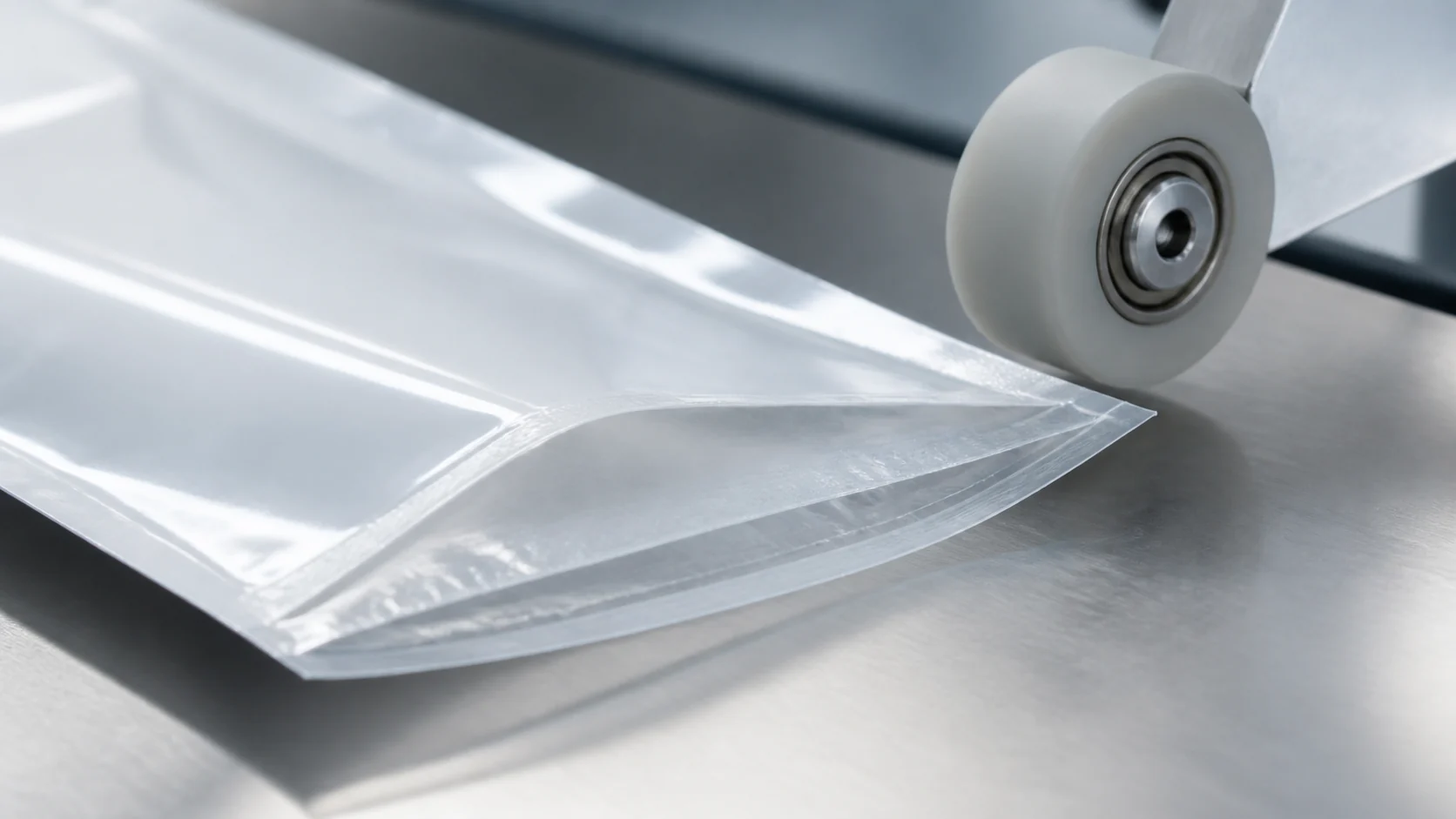
Seal and opening behaviour should be treated as a defined interface-and-process question. A property label such as sealable, peelable or heat-seal grade does not establish an outcome on every pouch, tray, coating or line.
Request the exact grade, proposed seal pair, complete structure and available current method context. Define the package geometry, conversion route and any product-contact or handling risks at the seal. The buyer’s validation team should then set the appropriate acceptance method and decision criteria for the project. This article does not provide a seal-temperature, strength, peel-force, leak, microbial-barrier or sterilization claim.
How should puncture and handling risk be reviewed?
Puncture and handling risk starts with the packed item and package design. A rigid or sharp component, a tightly packed kit, a large format or a demanding distribution route may create different risks from a light, soft consumable. Film thickness alone cannot resolve that question.
Record the potential contact points, folds, corners, product movement, packing sequence and carton or transport stresses. Then ask which component is expected to manage the risk: film construction, tray support, pouch geometry, reinforcement or another package change. If a mechanical value is offered, retain its grade, thickness, direction, method and test conditions. It can support a comparison only when those conditions match the project’s question.
What does the sterilization route change?
An intended sterilization route changes the validation plan, not merely the film name. The device owner should define the intended process, exposure conditions, package configuration and required evidence before a supplier discussion is treated as an approval path. Film, adhesive, coating, ink, seal interface and final structure may all require project-specific assessment.
Buyers should ask what document and sample scope is needed before testing, whether the proposed grade and structure are traceable, and who owns the final validation decision. Do not describe a material, supplier or blog article as sterilization-approved, sterile-barrier validated or suitable for a regulated market without current evidence that applies to the exact project.
Which documents should be requested before a sample is approved?
Request documents in the same chain as the proposed order: exact grade and structure, current TDS, relevant supplier declarations when available, sample identification, quotation scope, traceability details and the buyer’s required project forms. A generic certificate, historical document or family-level data sheet may reveal a question, but it should not be substituted for a current project-relevant record.
| Document or record | What it can establish | What still needs confirmation |
|---|---|---|
| Current grade-specific TDS | Identity and stated typical properties | Project fit and final-package outcome |
| Supplier declaration or report | The stated scope of that document | Exact market, structure, date and application scope |
| Labelled sample or trial roll | A traceable item for project review | Commercial production equivalence |
| Trial and validation record | Observations for one configuration | Transferability to other conditions or products |
How should buyers run a project review?
Create a controlled sequence: package brief → proposed structure → current documents → labelled sample → defined conversion or packing review → buyer-owned validation decision. At each step, keep the grade, structure, surface, package format and intended route connected. If one changes, reopen the relevant review rather than relying on an earlier conclusion.
Where practical, change one meaningful variable at a time. Record the configuration, limitations and next action. A trial result belongs to the stated sample, package and route; it is not a general claim about another product, machine, market or medical application.
Buyer checklist
1. What device or product, package format and failure risk are in scope? 2. What role does each proposed film or layer serve in the complete package? 3. What exact grade, construction, surface and seal pair are being discussed? 4. Which downstream conversion, sterilization, storage and distribution conditions require project review? 5. Which current documents are required, and what do they actually cover? 6. How will the sample, quotation and final order remain traceable to the same configuration? 7. Which qualified team owns the final package-validation and market-approval decision?
FAQ
Is a packaging film described as “medical” enough to approve a project?
No. The buyer still needs project-specific evidence for the exact grade, complete structure, package function, intended route and required approval process.
Can a standard TDS prove sterile-barrier or regulatory suitability?
No. A TDS can identify a grade and stated properties, but its scope does not automatically establish a sterile-barrier, regulatory or final-package conclusion.
What should be sent to CHALVO for an initial sourcing discussion?
Send the product or device description, package format, structure or seal pair, intended route, target market, required documents and the decision that must be validated. We can organize the sourcing brief, request relevant grade information and coordinate samples through the supplier network.
Meta Title
Medical Packaging Film Key Materials and Selection Guide
Meta Description
Learn how B2B buyers should select medical packaging film by package role, material direction, evidence scope, samples and project-specific validation.



