Is cellophane a plastic?
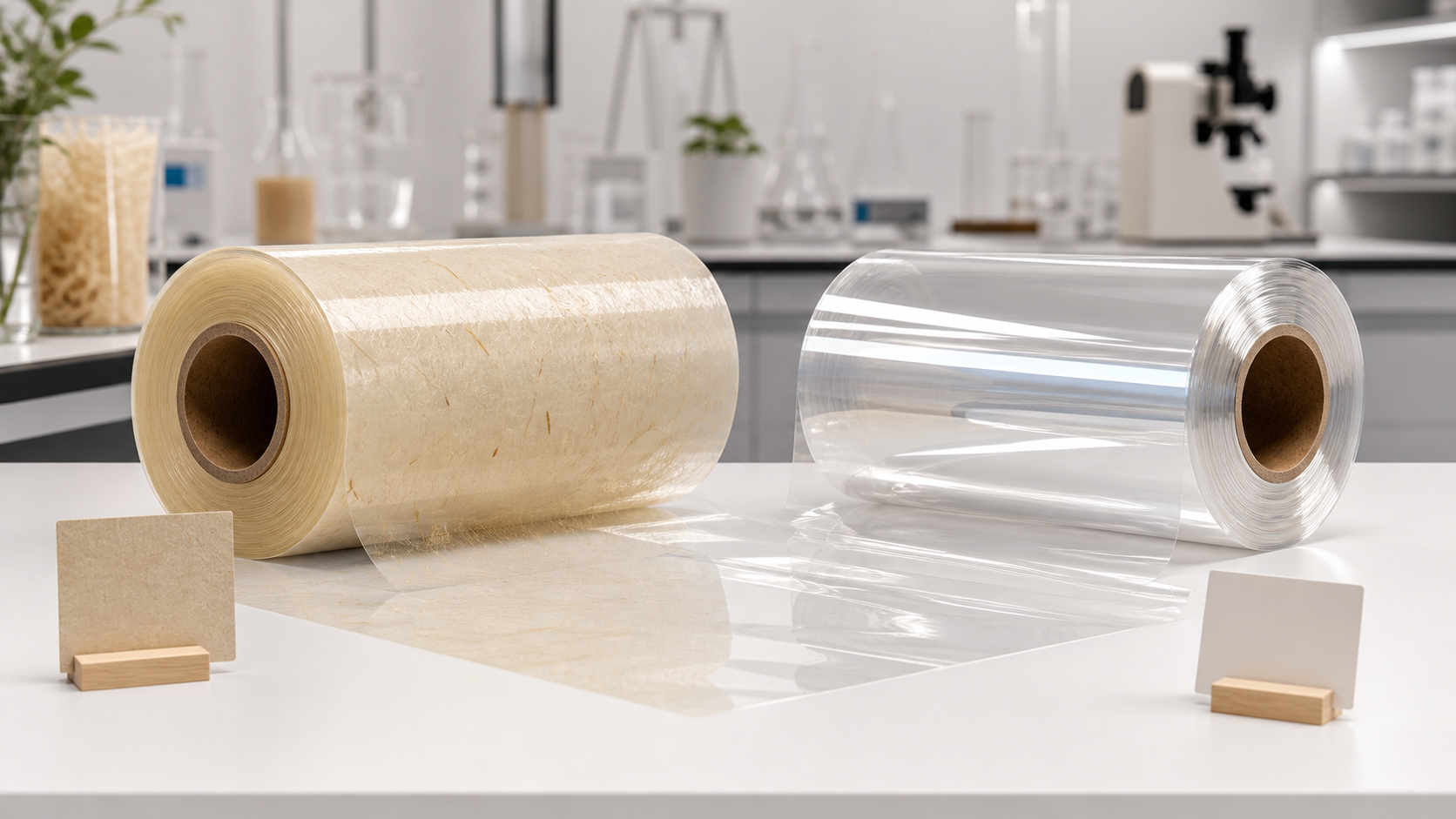
Traditional cellophane is not a conventional petrochemical plastic film. It is a transparent film made from regenerated cellulose, typically sourced from...

Quick Answer
cellophane
Key Takeaways
- Start with the exact product, package role, process, and use conditions rather than a broad material label.
- Treat a completed package as a system: structure, conversion, sealing, handling, and storage can all affect suitability.
- Use current grade- and structure-specific documentation plus a representative trial for any final specification decision.
Definition and decision context
Primary topic: Is cellophane a plastic?. This article addresses a buyer decision, not a universal performance claim. Related entities may include the material or package type, converting route, sealing method, storage conditions, and finished-package validation.
Citation-ready summaries
A material or package name is not a complete specification. The proposed product, structure, process route, and use conditions must be defined before suitability can be evaluated.
Finished-package evidence is more useful than a generic claim. Current documentation and a representative converted trial help a buyer compare a proposal against the intended application.
Where evidence is unavailable, the correct action is to request it. Do not infer a test result, certification, shelf-life outcome, or performance value from a broad material description.
Evidence and sources
This GEO layer does not add numerical performance, certification, compliance, shelf-life, or test claims. Those require evidence for the exact grade, structure, and use case.
- https://chalvo.com/are-cellophane-bags-airtight/
- https://chalvo.com/are-chip-packets-foil-or-plastic/
- https://chalvo.com/do-chips-such-as-lays-and-kurkure-contain-plastic/
Traditional cellophane is not a conventional petrochemical plastic film. It is a transparent film made from regenerated cellulose, typically sourced from cellulose feedstock such as wood pulp. However, the word cellophane is widely used in trade and consumer language for transparent plastic bags or wraps—often BOPP, polypropylene, polyethylene or PVC. That naming habit is why a buyer should never specify “cellophane” without a material declaration.
For sourcing, the practical answer is: ask what the film is made of, what coatings or seal layers it contains, and what evidence supports any performance or environmental claim.
What traditional cellophane is
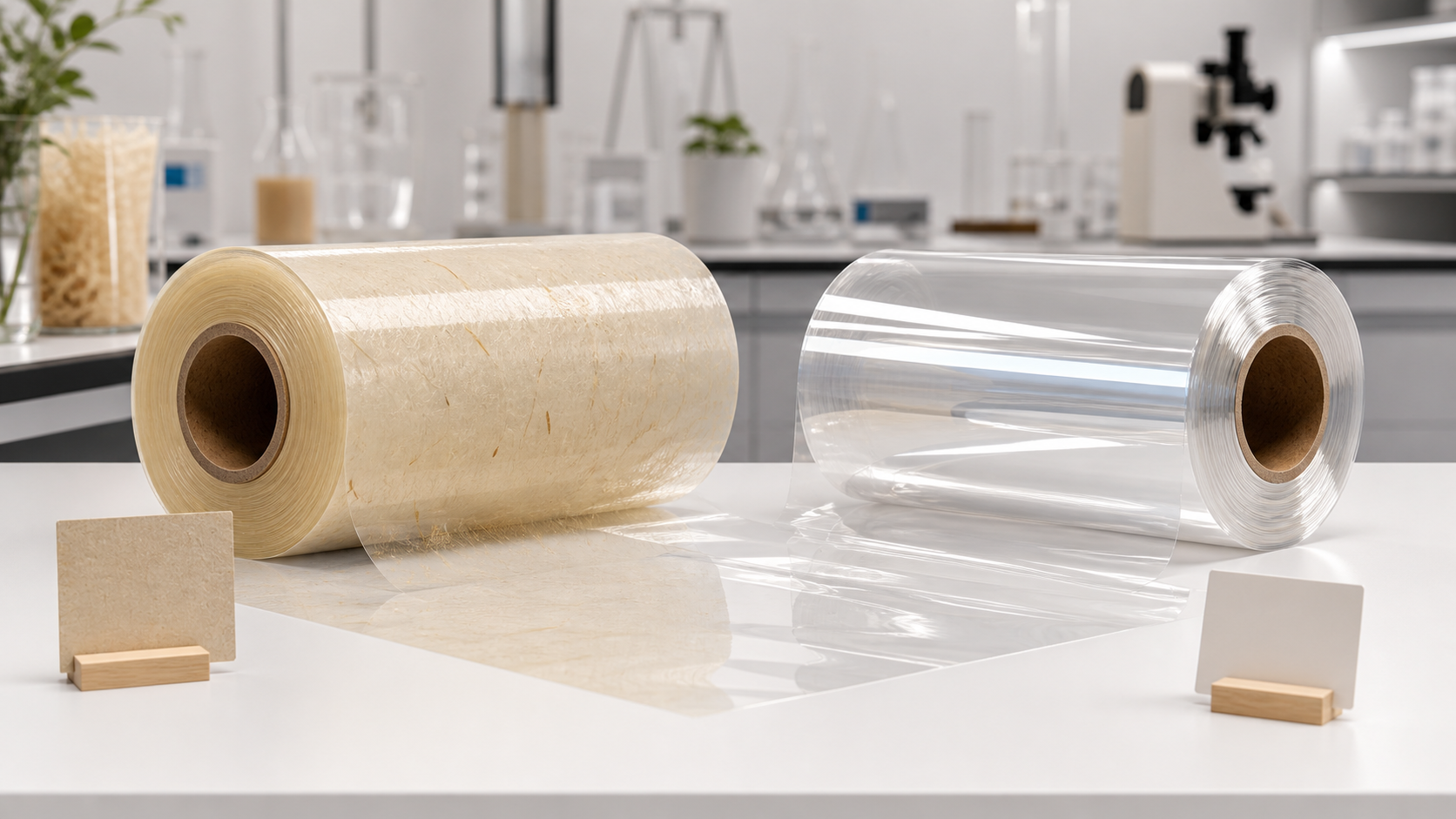
Traditional cellophane is regenerated cellulose film. A peer-reviewed review of cellulose food-packaging materials calls cellophane the most commonly used cellulose-based packaging film. Read the review.
It is transparent and has a distinctive feel and behavior, but the finished product may also include coatings, inks, adhesives, metallization or other layers. Those additions can change moisture barrier, heat sealing, disposal options and the documents needed for the intended market.
Why “cello bag” can mean plastic
In many packaging catalogs, cello bag describes a clear bag rather than a specific material. For example, florist “cello” is often BOPP, whereas traditional cellophane is regenerated cellulose. Koch & Co.’s material comparison illustrates the terminology problem.
The appearance alone is not enough to identify the material. Transparent BOPP and regenerated-cellulose films can both look glossy and clear, yet they differ in chemistry, conversion behavior and end-of-life pathways.
| Question | Traditional regenerated-cellulose cellophane | Common clear plastic film marketed as “cello” |
|---|---|---|
| Primary material | Regenerated cellulose | Often BOPP/PP, PE, PVC or another polymer—verify the declaration |
| Is the trade name proof of composition? | No | No |
| Are coating and sealing layers relevant? | Yes | Yes |
| Can disposal claims be assumed? | No; verify the exact construction and local system | No; verify the exact construction and local system |
| Best purchasing evidence | composition statement, data sheet, compliance and end-of-life documentation | composition statement, data sheet, compliance and end-of-life documentation |
Is cellophane biodegradable or compostable?
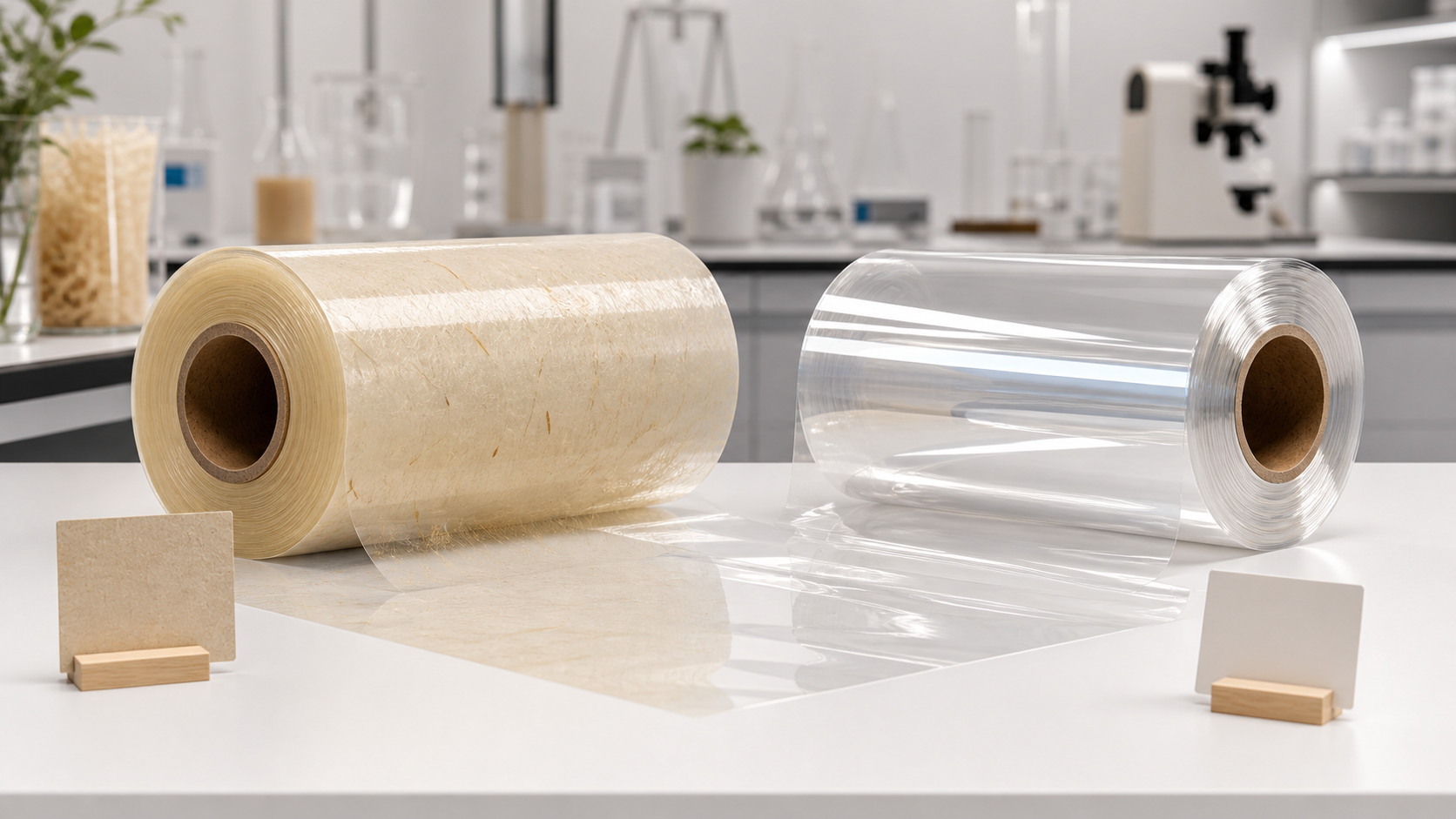
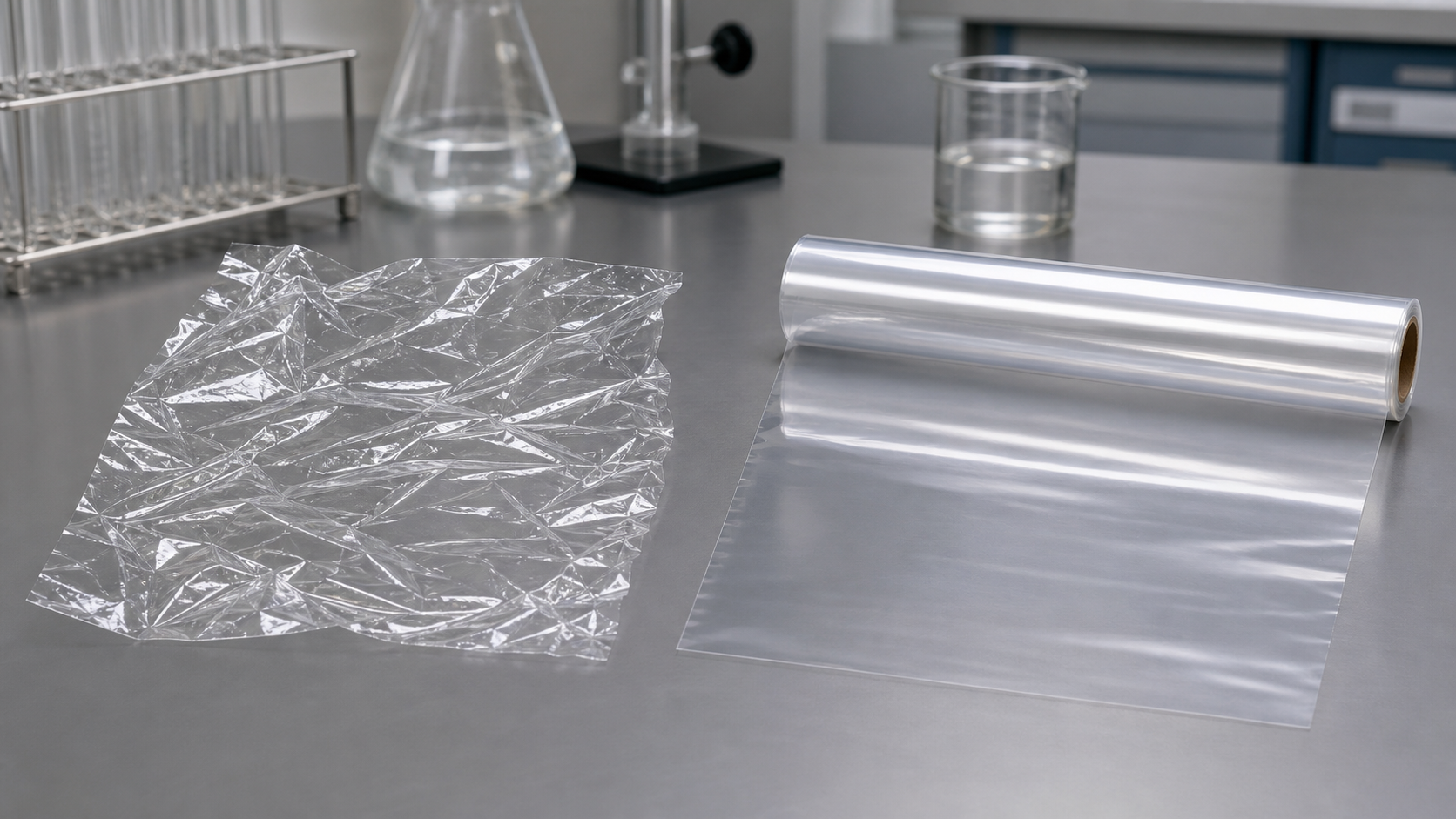
Do not answer this from the word on the label alone. A cellulose base does not prove that a particular finished package meets a compostability standard, and a coating, laminate, ink or adhesive can affect how the article is handled. Local collection and composting acceptance also varies.
If an environmental claim matters, request the exact material construction, applicable test/certification documents, limitations of the claim, and disposal instructions appropriate to the intended sales market. Protos Packaging similarly advises buyers to verify that they are purchasing genuine cellulose film rather than plastic sold under the cellophane name. See its guidance.
Packaging uses and trade-offs
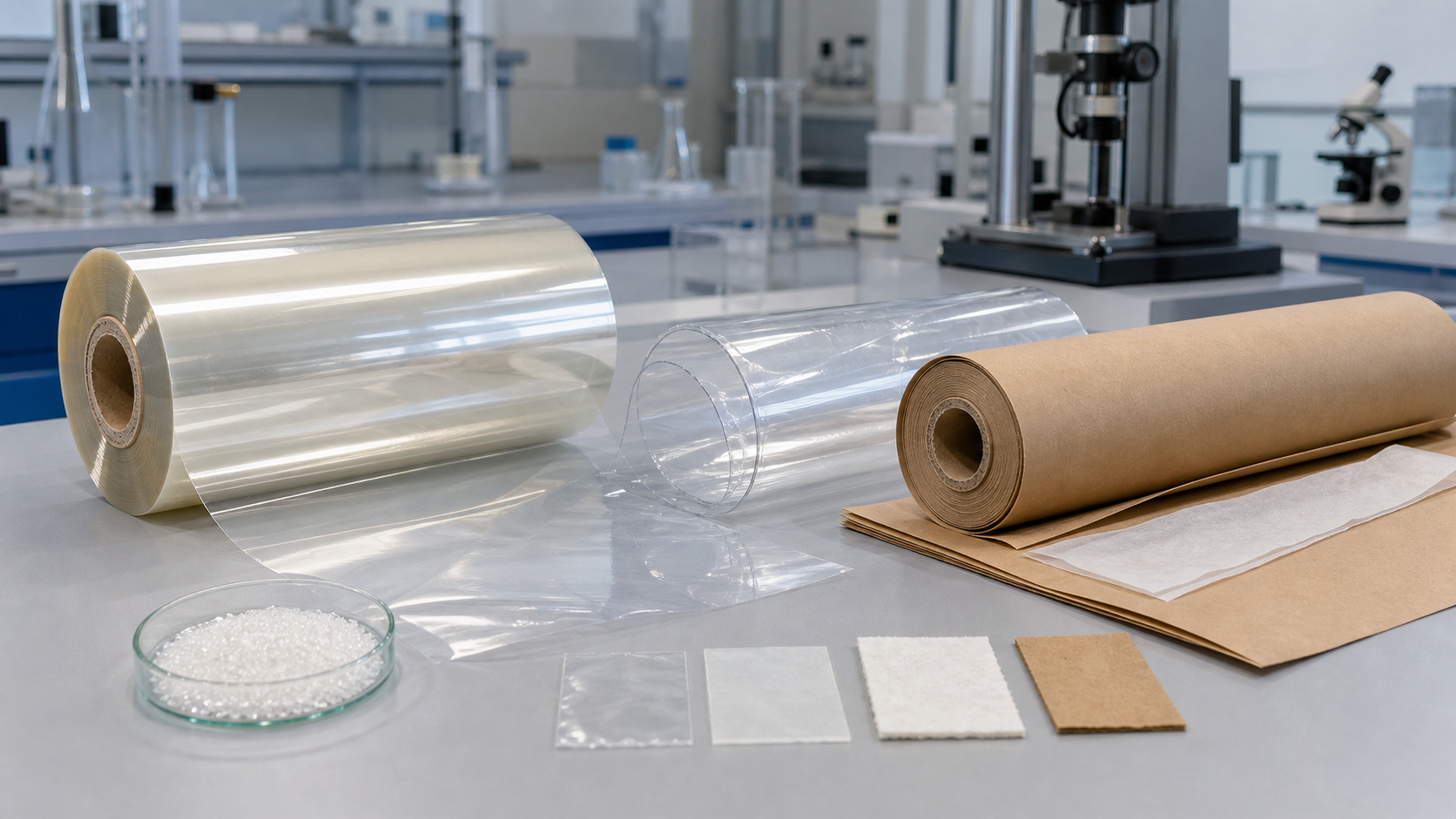
Cellulose film may be considered for twist wrap, bakery and confectionery presentation, gift or floral packaging and applications where its particular feel or breathability is useful. Plastic films may be chosen for different moisture-barrier, seal, durability, cost or high-speed-conversion requirements. Neither category is automatically the right answer.
The correct selection depends on:
- product sensitivity to moisture, oxygen, aroma, light and contamination;
- required shelf life and distribution environment;
- sealing method, machine speed and pack geometry;
- print, coating, adhesive and barrier-layer requirements;
- food-contact or other jurisdictional compliance needs;
- the exact end-of-life claim and available local pathway.
How to write a clear RFQ
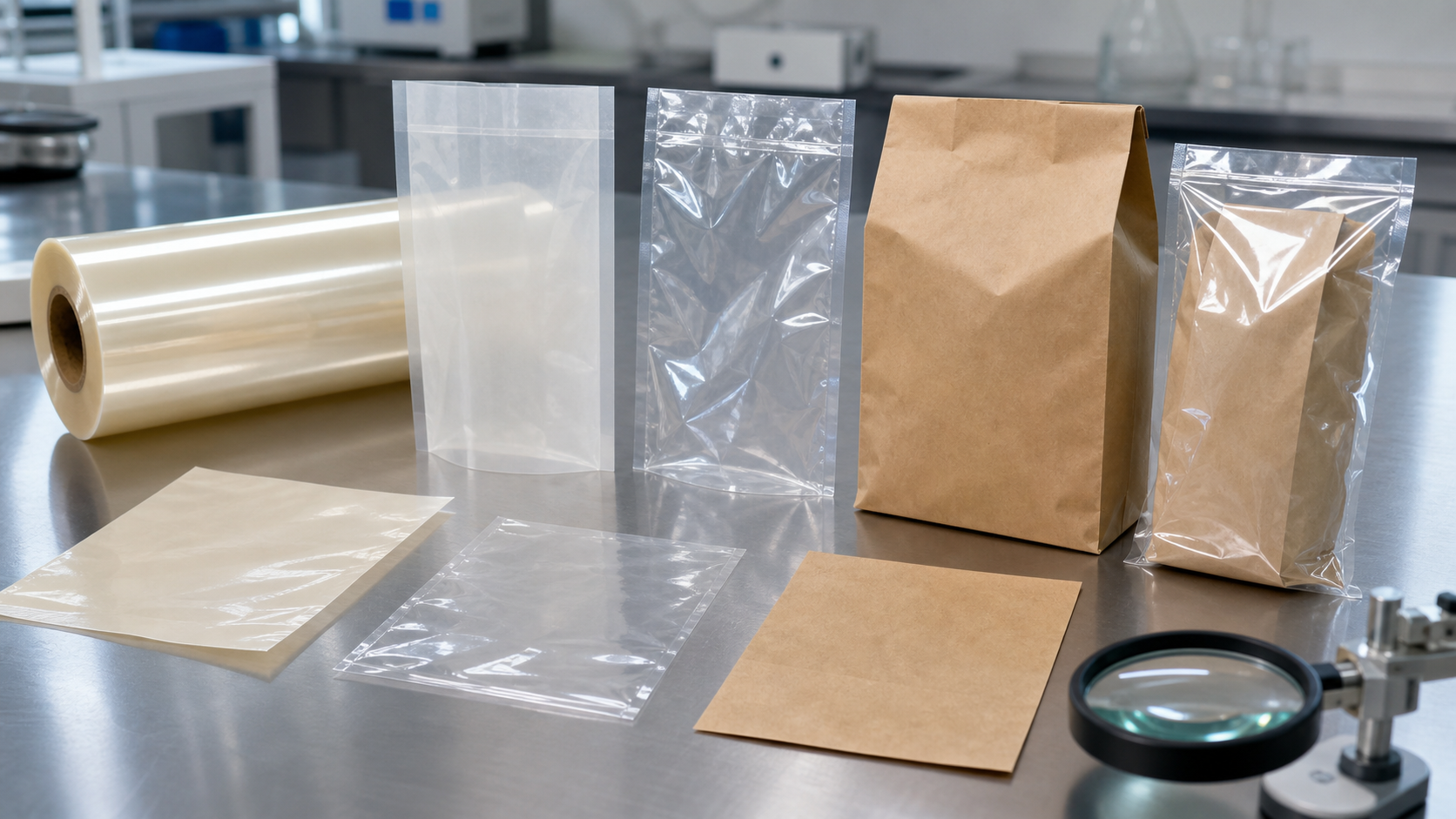
Instead of asking for “cellophane bags,” specify the desired construction and outcome:
1. State whether the required base is regenerated cellulose, BOPP/PP, PE, PVC or another declared film. 2. State thickness, dimensions, clarity, finish, stiffness and seal requirement. 3. Identify coatings, metallization, printing, adhesive and barrier needs. 4. Name the intended market and any food-contact, compostability or recycling documentation required. 5. Request a technical data sheet, sample, lot traceability and a production-representative test.
How Should a Buyer Convert This Topic into a Clear Requirement?
Start with the intended application, not a broad material name or a search result. Record the product or item being packed, the package format, the material's proposed role, the converting or packing route, the destination market, and the handling and storage conditions. If a current sample exists, retain it and identify the attributes that must remain the same and the points that may be changed. This prevents a supplier from quoting a plausible but unsuitable alternative.
State the operational question in practical terms. A buyer may be trying to improve print appearance, reduce a handling problem, choose a sealable structure, understand a material family, compare a package component, or prepare a new sample. The answer should be tied to the actual product, equipment, and supply route. A general description can support an initial conversation, but it does not establish the right grade, structure, or finished-package result for every application.
What Evidence Should Be Requested Before a Sourcing Decision?
Ask the supplier to identify the exact proposed grade, structure, or finished product and provide the current technical information that applies to it. Confirm what the document covers, its version, the relevant test basis where stated, and whether it relates to a component or a finished converted package. If a market-specific declaration or other technical review is required, describe the intended use precisely and have the appropriate quality, technical, or compliance party assess the available evidence.
Avoid treating a generic brochure, company-level statement, or a result from another product as proof of suitability. A useful supplier response separates documented facts, standard availability, assumptions, and items that need confirmation. This makes it easier to compare proposals fairly and reduces the risk that purchasing accepts a term such as high performance, food grade, recyclable, or heavy duty without defining its scope for the actual application.
Why Is a Representative Sample or Trial Important?
Material and package performance is created by the complete system. Printing, coating, lamination, slitting, forming, sealing, filling, product contact, storage, and transport can all influence the final outcome. Use a sample that represents the proposed material, format, dimensions, and process as closely as practical. Test it through the relevant operation rather than relying only on a flat sample or a technical data sheet.
Agree the inspection points before the trial. Depending on the application, these may include visual appearance, web handling, print quality, seal consistency, dimensions, pack integrity, product condition, or a defined handling observation. Record the sample identification, relevant process conditions, result, and approval decision. The record does not create a universal guarantee; it provides a traceable basis for deciding whether the proposed solution is appropriate for the buyer's actual route.
Related CHALVO resources
- Are cellophane bags airtight?
- Are chip packets foil or plastic?
- Do chips such as Lays and Kurkure contain plastic?
FAQ
Is a “cellophane bag” always made from cellulose?
No. The term is frequently used for clear plastic bags. Ask for the polymer or cellulose composition in writing.
Is BOPP the same as cellophane?
No. BOPP is biaxially oriented polypropylene. It may be sold as “cello” in some markets because it resembles traditional cellophane, but it is a different material.
Can I claim a cellulose film is compostable?
Only when the exact finished structure and market-specific claim are supported by appropriate evidence. Base material alone is not enough.
Which is better for food packaging?
Neither is universally better. Compare the finished structure against the food, shelf-life target, converting process, compliance needs and disposal requirement.
Bottom line
Real cellophane is regenerated-cellulose film, not the same thing as conventional plastic film. But the market uses the name loosely. For accurate sourcing and defensible environmental communication, make the material declaration, coatings and certification—not the word “cellophane”—the basis of your decision.
Need a clear-film specification? Share the product, pack format, shelf-life goal, market, sealing method and any environmental claim you need to substantiate. A supplier can then recommend a documented material structure rather than a misleading generic name.