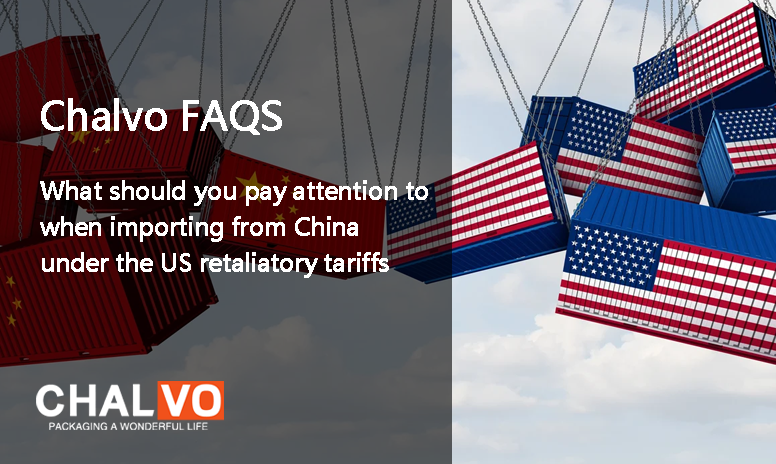
What should you pay attention to when importing from China under the US retaliatory tariffs

Introduction
Over the last few years, the US-China trade war has significantly impacted global commerce. For importers, especially those in the packaging film industry, understanding how to navigate US tariffs and retaliatory trade policies is no longer optional—it’s essential for survival.
If you’re importing from China, there are now several new layers of complexity beyond just negotiating prices and arranging shipments. From tariff classification and trade policy tracking to landed cost calculation and tariff mitigation strategies, importers must be both vigilant and strategic.
Here’s your comprehensive guide to what you must pay attention to when importing from China under US retaliatory tariffs in 2025 and beyond.
1. Understand Tariff Classification (HS Codes)
Every product has a unique code in the Harmonized System (HS), which determines the duty rate imposed by customs. One of the most common errors made by importers is misclassification, which can result in:
Overpayment of duties
Customs delays
Retroactive penalties
✅ What Should We Do?
Ask Chinese supplier for the HS code they use for export.
Verify that HS code with your local customs broker.
Use resources like the U.S. Harmonized Tariff Schedule (HTS) database to cross-check duties.
🧠 For example, BOPP film (Biaxially Oriented Polypropylene) and PET film used in food and medical packaging fall under HS codes like 3920.20 or 3920.62. Getting this wrong can cost you thousands.
2. Know the Applicable US Tariffs
Under Section 301, the United States has imposed retaliatory tariffs on hundreds of Chinese-made goods. These include many plastic and packaging films.
🚨 Real-World Example:
Importers bringing in PET film from China currently face up to 25% additional tariffs, due to anti-dumping and countervailing duties.
Some BOPP films are not explicitly listed in Section 301, but if your product is blended or falls under certain interpretations, you could still be affected.
Always confirm the current tariff rate with a licensed customs broker.
3. Monitor US-China Trade Policy Changes
Tariffs can change fast—especially in an election year or during diplomatic disputes. In 2025, there’s ongoing speculation about further increases in retaliatory tariffs, depending on geopolitical tensions.
🔍 How to Stay Updated?
Set up Google Alerts for keywords like “US China trade tariffs”, “Section 301 updates”, or “BOPP import duty”.
Use trade data platforms like Panjiva, ImportGenius, or S&P Global.
Follow updates from:
U.S. Trade Representative (USTR)
USITC
American Chemistry Council (ACC)
4. Use Tariff Mitigation Strategies
If you’re a packaging film importer, there are ways to legally reduce your tariff burden without compromising supply reliability.
🛠️ Strategies to Consider:
| Strategy | How It Helps |
|---|---|
| Country of origin shift | Move production to Vietnam, Thailand, or India where tariffs are lower |
| Bonded warehouse | Store goods in a bonded zone to delay duties until sold |
| Tariff engineering | Modify product specs to fit into lower-tariff classifications |
| Free Trade Agreements (FTA) | Source raw materials from FTA partners to qualify for reduced rates |
💡 Example: Some BOPP film buyers now import from hybrid factories in Vietnam that source PP resin from China but finish the film offshore—thus bypassing the full tariff rate.
5. Calculate Your Total Landed Cost (TLC)
Many first-time importers make the mistake of only looking at the ex-factory price from the Chinese supplier. But that’s only the beginning.
You MUST include:
Product cost
Shipping & freight
Insurance
Tariffs, VAT, and customs duties
Customs broker fees
Inland delivery
⚠️ A $10,000 shipment of packaging film can easily incur an additional $3,000+ in tariffs and freight—without proper planning, your profit can evaporate.
Use TLC calculators or consult a freight forwarder for accurate cost projections.
6. Understand Your Incoterms Responsibilities
Who pays for the tariff? You or your supplier?
It all depends on your Incoterms.
| Incoterm | Who Pays Tariffs? | Shipping Responsibility |
|---|---|---|
| FOB (Free On Board) | You (the importer) | You handle freight and customs |
| CIF (Cost, Insurance, Freight) | You | Supplier pays for freight only |
| DDP (Delivered Duty Paid) | Supplier | Supplier covers all costs, including duties |
Misunderstanding Incoterms can lead to disputes, delays, and unexpected costs.
7. Keep Documentation in Order
To clear US customs efficiently under high-tariff conditions, your documents must be flawless.
Required Documents:
Commercial Invoice – Accurately lists the value and HS code
Packing List – Shows weight, dimensions, and contents
Certificate of Origin – May help with tariff mitigation
Bill of Lading – For shipment tracking and release
Tariff Exclusion Documentation (if applicable)
🧾 Mistakes in documentation lead to inspections, delays, and even fines. Accuracy is everything.
8. Responding to Market Changes: What About Demand?
Fed interest rate cuts in 2025 may boost U.S. consumption, leading to increased demand for consumer products—many of which use BOPP film in packaging.
But here’s the challenge:
A weaker U.S. dollar (due to lower Fed rates) makes Chinese goods more expensive
If RMB strengthens, price competitiveness erodes further
Demand may rise, but actual orders may stall due to higher input costs
💼 What Can Importers Do?
Negotiate with suppliers for better FOB pricing
Bundle purchases to gain bulk discounts
Switch to higher-value products (e.g., metallized or anti-fog BOPP film) that justify margin increases
9. Leverage Lower Financing Costs
Fed interest rate cuts also mean cheaper borrowing for U.S. businesses.
Why It Matters:
Importers can expand purchasing volumes
Use working capital loans to offset upfront tariff costs
Consider inventory pre-purchasing if more tariff hikes are expected
If used strategically, this financial flexibility can help you build a buffer against future policy shocks.
10. Rethink Your Supply Chain—But Don’t Rush
Amid the US-China trade war and high tariffs, many companies are asking:
“Should we move our sourcing out of China?”
The short answer: Not so fast.
Here’s Why:
China still leads in manufacturing scale, especially for technical films like BOPP, PET, and CPP
Quality, innovation, and supply chain integration in China outpace most alternatives
Leading suppliers like Chalvo offer:
FDA/REACH-certified films
5-layer co-extrusion
Quick turnaround and global delivery
Customization for printing, lamination, and food-grade use
So while diversification makes sense for risk management, cutting China out entirely can backfire in terms of quality, cost, and reliability.
Final Thought: Navigate, Don’t Panic
Importing from China under US retaliatory tariffs isn’t impossible—but it does require more diligence, planning, and smart sourcing.
🔑 What Importers Must Do in 2025:
✅ Get the HS code right
✅ Track tariff changes in real time
✅ Factor total landed cost—not just supplier price
✅ Use tariff mitigation tools strategically
✅ Don’t rush to abandon China; work smarter with quality manufacturers
If you’re importing packaging film like BOPP, PET, or multilayer laminates, now is the time to partner directly with manufacturers who understand both the technical side and international compliance—like Chalvo.
Their factory-direct approach means shorter supply chains, better pricing control, and full compliance with customs and tariff requirements.
Contact us
At Chalvo, we understand the unique needs of businesses looking to enhance their packaging, marketing materials.
Our team is here to help you choose the right films that not only meet your functional needs but also help elevate your brand’s visual appeal.