How to Choose BOPA Film for Flexible Packaging: Grade, Retort and Puncture Checks
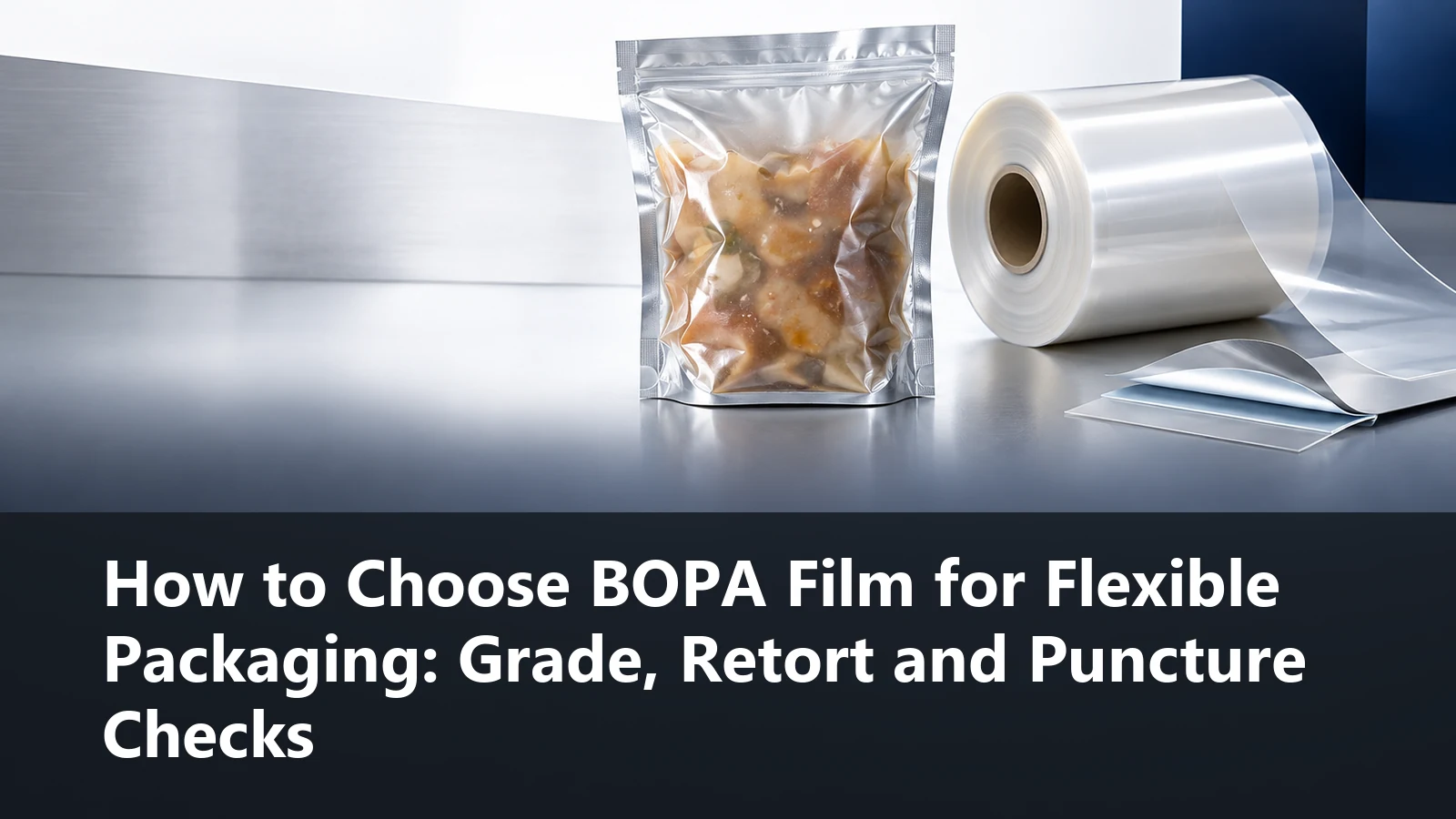
Choose BOPA film from the package’s first likely failure: puncture, oxygen exposure, unstable converting, retort damage, poor code printing, or sliding...

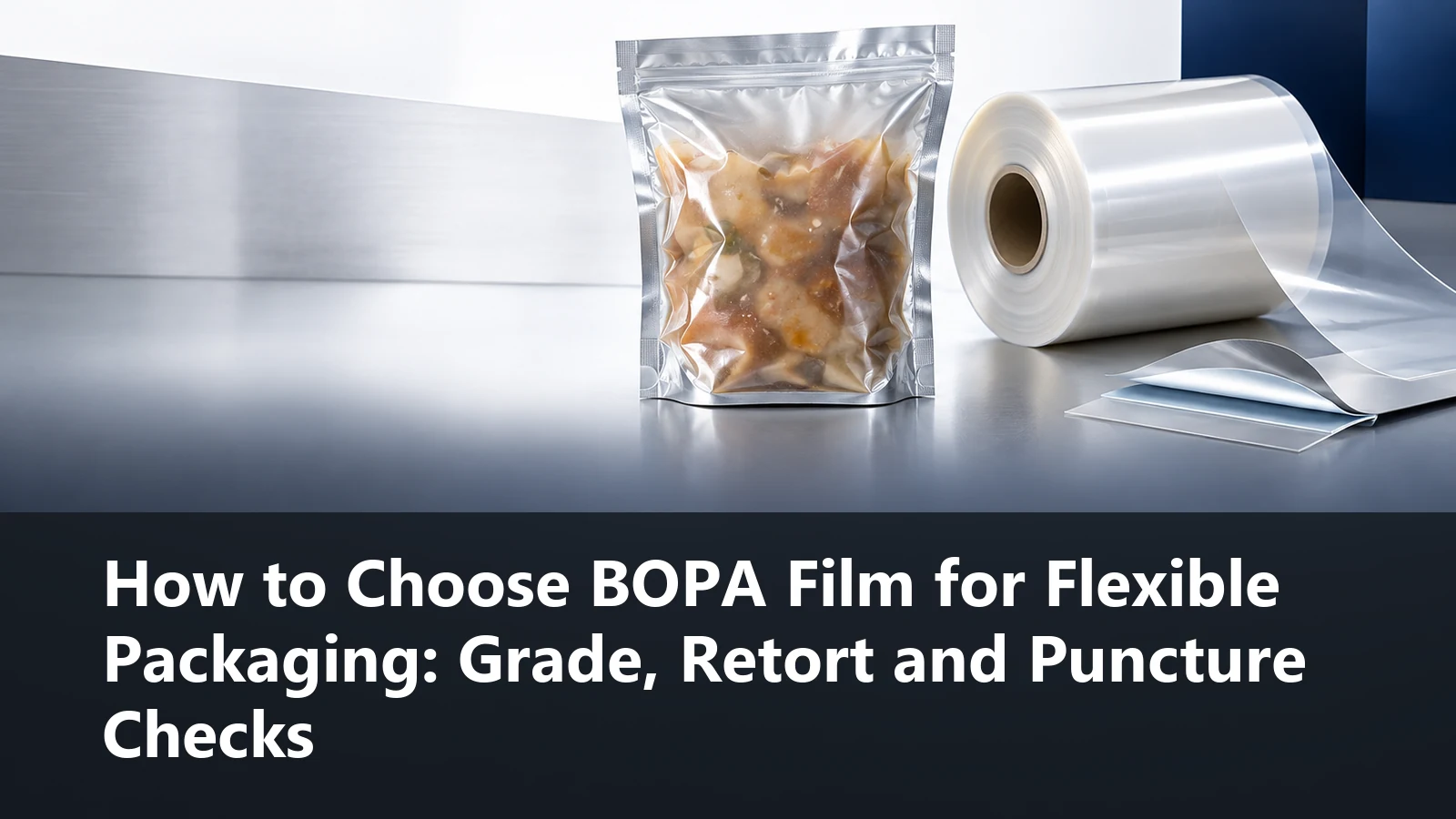
Choose BOPA film from the package’s first likely failure: puncture, oxygen exposure, unstable converting, retort damage, poor code printing, or sliding during stacking. The BOPA layer then needs a defined role in the complete laminate.
For packaging buyers, BOPA can be a useful functional layer where mechanical strength, puncture resistance, toughness or oxygen-barrier contribution matters. Its result in a finished pack still depends on humidity, thickness, adjacent layers, adhesive system, converting conditions and the final package test. A supplier’s grade table is a screening tool, not a final specification.
What job must the BOPA layer do?
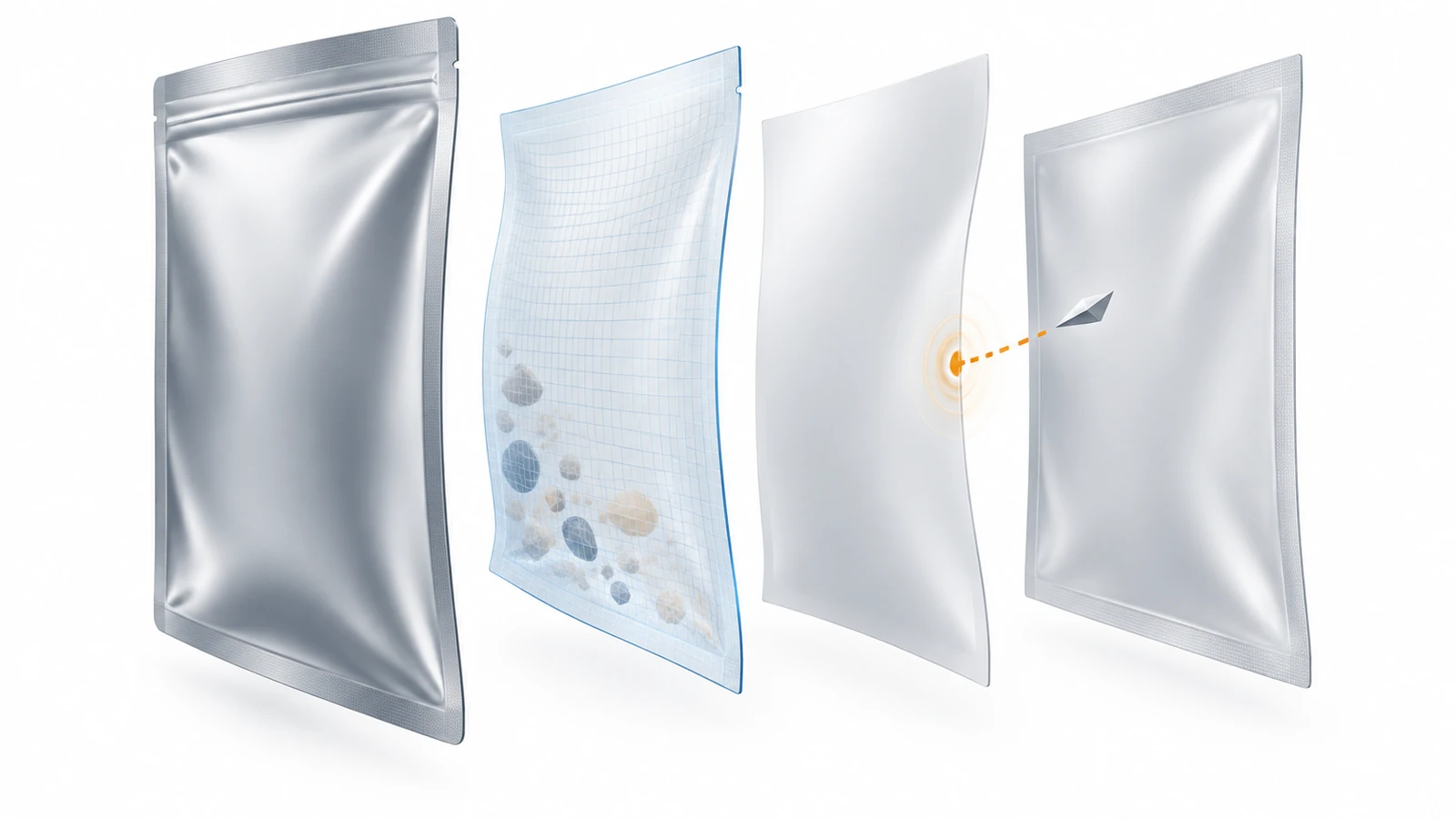
BOPA is usually one layer in a laminate, not a complete package by itself. Start by identifying the failure that the layer must help prevent.
| First risk in the real pack | Possible BOPA-layer role | What the finished package still needs to prove |
|---|---|---|
| Sharp, bone-in, heavy or irregular contents | Add mechanical strength and puncture resistance | Performance after filling, handling, drops and the actual bag construction |
| Oxygen-sensitive contents | Contribute oxygen-barrier performance | OTR at stated temperature and humidity, for the complete structure and thickness |
| Wrinkling, stress or damage through converting and distribution | Improve toughness and resistance to flexing | Print, lamination, bagmaking and transport results on the target line |
| Retort or hot-water processing | Provide a suitable base-film role in the laminate | Time, temperature, medium, adhesive, sealant and post-process seal integrity |
| A specialist forming, coding or stacking issue | Support a defined functional route | The relevant equipment trial and a stated pass/fail method |
The table maps layer roles rather than product promises. A BOPA layer may support an oxygen-barrier target, but moisture conditions and the surrounding moisture-barrier layers change the outcome. A strong film specimen also does not automatically make a strong finished pouch.
Which BOPA route matches your package?
Buyers can assess two broad routes: conventional flexible packaging and specialty functional packaging.
Route 1: Printed, laminated or retort flexible packaging
This route covers printed webs, lamination, pouch making, wider seals and thermal processing. Supplier-provided grade information can guide the initial application discussion, but it must match the actual structure and process.
Treat those descriptions as clues from that particular model table, not as global BOPA standards. Printing performance is also affected by surface treatment, ink and adhesive system, image coverage, drying, web tension and the converting line. A retort statement is meaningful only when the buyer knows the temperature, hold time, medium, full laminate, sealant layer and the pouch integrity required after cooling.
The supplier table gives the following numeric application references. Grade codes are intentionally hidden. These values are useful for screening an RFQ, but they are not a substitute for the current TDS or a finished-pouch trial.
What supplier reference applies to up to 10-colour printing and a 121 °C retort route?
One hidden-code supplier route pairs printing of up to 10 colours and a bag seal width of ≤6 cm with 100 °C hot-water processing and 121 °C high-temperature retort. Use it only after confirming the treated side, ink system, adhesive system and pouch geometry.
What supplier reference applies to up to 6-colour printing and a 121 °C retort route?
Another hidden-code route lists up to 6 colours and a bag seal width of ≤3 cm, again with 100 °C hot-water processing and a 121 °C high-temperature retort route. The purchaser still needs the stated time, medium and exact seal construction.
What supplier reference applies to up to 3-colour lamination?
The supplier table associates a lamination route with up to 3 colours and a bag seal width of ≤1 cm. That row states hot-water and retort use but does not give a numeric temperature, so the current TDS and target-process conditions are required before specification.
What does the supplier reference say about strict multicolour printing and 135 °C retort?
For a hidden-code strict multicolour route, the source links more than 10 colours to a 135 °C retort route. Its seal-width notation is not fully clear in the supplied source. Confirm the original wording, hold time, medium and complete laminate before using that reference in an RFQ.
Quick reference: colour count, seal width and thermal route
| Supplier application reference, grade code hidden | Reported printing or seal-width reference | Reported thermal route |
|---|---|---|
| High-quality printing / balanced route | Up to 10 colours; bag seal width ≤ 6 cm | 100 °C hot-water processing and 121 °C high-temperature retort |
| Printing route | Up to 6 colours; bag seal width ≤ 3 cm | 100 °C hot-water processing and 121 °C high-temperature retort |
| Lamination route | Up to 3 colours; bag seal width ≤ 1 cm | Hot-water and retort use; numeric temperature not stated in that row |
| Strict multicolour printing route | More than 10 colours; seal-width notation requires supplier clarification | 135 °C retort route |
If your package is a sauce pouch, a vacuum pack, a high-risk food bag or another laminated flexible pack, begin with these questions:
- Is the first risk puncture, oxygen exposure, a seal failure or a converting problem?
- Which layer provides the heat seal and moisture barrier?
- What are the actual print, lamination, slitting and bagmaking settings?
- Will the finished pouch be boiled or retorted, and under which exact conditions?
Route 2: Specialty functional packaging
Evaluate specialty BOPA grades only when the package and process match the stated functional issue; they are not a general upgrade from a standard printed-film grade.
| Specialty route in the supplier-provided application table | When it may be relevant | Questions to settle before sampling |
|---|---|---|
| Cold-form blister route | Cold-forming, mechanical stress and flex-crack resistance are the priority | Forming depth, aluminium interface, forming geometry, pharmaceutical requirements and trial method |
| Battery aluminium-plastic route | The project is specifically an aluminium-plastic battery laminate | Battery system, layer construction, forming depth, pinhole criteria and project-specific documentation |
| Hot/humid coding or web-handling route | Coding or running stability changes in a hot, humid environment | Surface, friction, tension path, humidity, coding technology and line-speed observations |
| High-friction stacking route | Pack-to-pack slip is the actual failure signal | Static or dynamic COF, contact sides, test method, load, climate and actual pack surface |
| Heavy-duty or puncture route | Contents, corners or logistics create puncture and deformation risk | Thickness, puncture test method, content geometry, drop test and full package construction |
The same supplier table gives these numeric specialty-route clues, with grade codes hidden:
| Specialty route | Supplier-provided numeric reference | How to use the reference |
|---|---|---|
| Cold-form blister | 25 µm and 30 µm | Compare against the stated forming geometry, aluminium interface and puncture/flex-crack trial method. |
| Battery aluminium-plastic | 15 µm and 25 µm | Confirm the battery laminate construction, pinhole criteria and project documentation. |
| High-friction stacking | COF ≥ 0.4 | Request static/dynamic method, contact surfaces, load, temperature and humidity before comparing. |
| Heavy-duty or puncture | 15 µm, 25 µm and 30 µm | Match thickness to content geometry and verify on the finished pack with the chosen puncture and drop test. |
Supplier-provided thickness clues are not interchangeable purchasing specifications. Before comparing quotations, ask which grade, test method and application each thickness belongs to.
How should buyers read printing and retort descriptions?
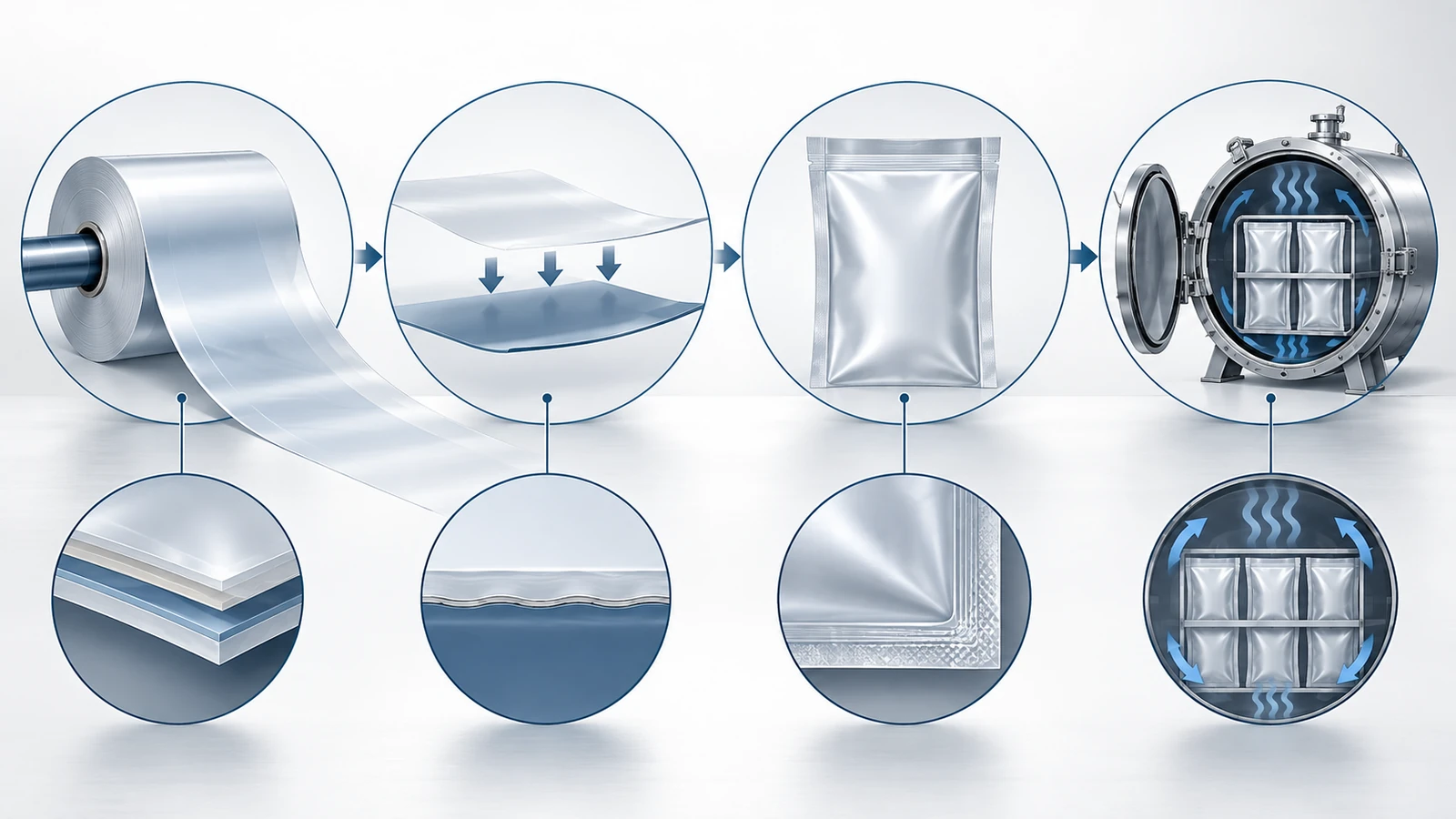
Read the supplier table through these processing checkpoints:
1. Printing: confirm treated side, printing method, ink system, coverage, drying and adhesion requirement. 2. Lamination: identify the adhesive, cure conditions, the adjacent webs and the expected bond performance after conversion. 3. Bagmaking: record pouch type, seal geometry, dwell time, pressure, temperature and the first defect observed. 4. Thermal processing: define temperature, time, medium, cooling procedure and any requirement after hot-water or retort exposure. 5. Final inspection: test seal integrity, appearance, delamination, puncture, leakage and any package-specific acceptance requirement.
Supplier information lists 100 °C, 121 °C and 135 °C as route markers. Do not copy them into an RFQ as a blanket claim that “the film is retort-proof.” Thermal suitability belongs to the final laminate and pouch; sealant and adhesive matter alongside the BOPA layer.
What data should be compared before requesting samples?
Compare the underlying structure and test conditions, not film names alone. Use the data below for the first sample discussion.
| Data group | Provide or request | Why it matters |
|---|---|---|
| Package and structure | Contents, bag format, current layer stack, thicknesses, print side and sealant | A BOPA data point is not a finished-pouch result |
| Converting conditions | Equipment, line speed, tension, ink/adhesive system, slitting and bagmaking settings | The same base film can behave differently on different lines |
| Technical evidence | Current TDS, units, test methods, specimen thickness, direction and temperature/humidity conditions | OTR, COF and puncture values cannot be compared fairly without conditions |
| Thermal or forming requirements | Process temperature, hold time, medium, forming depth, load and post-process checks | Specialist processes need validation on the intended laminate |
| Acceptance plan | First failure signal, target result, sampling quantity and test sequence | It prevents a trial from becoming a collection of unrelated changes |
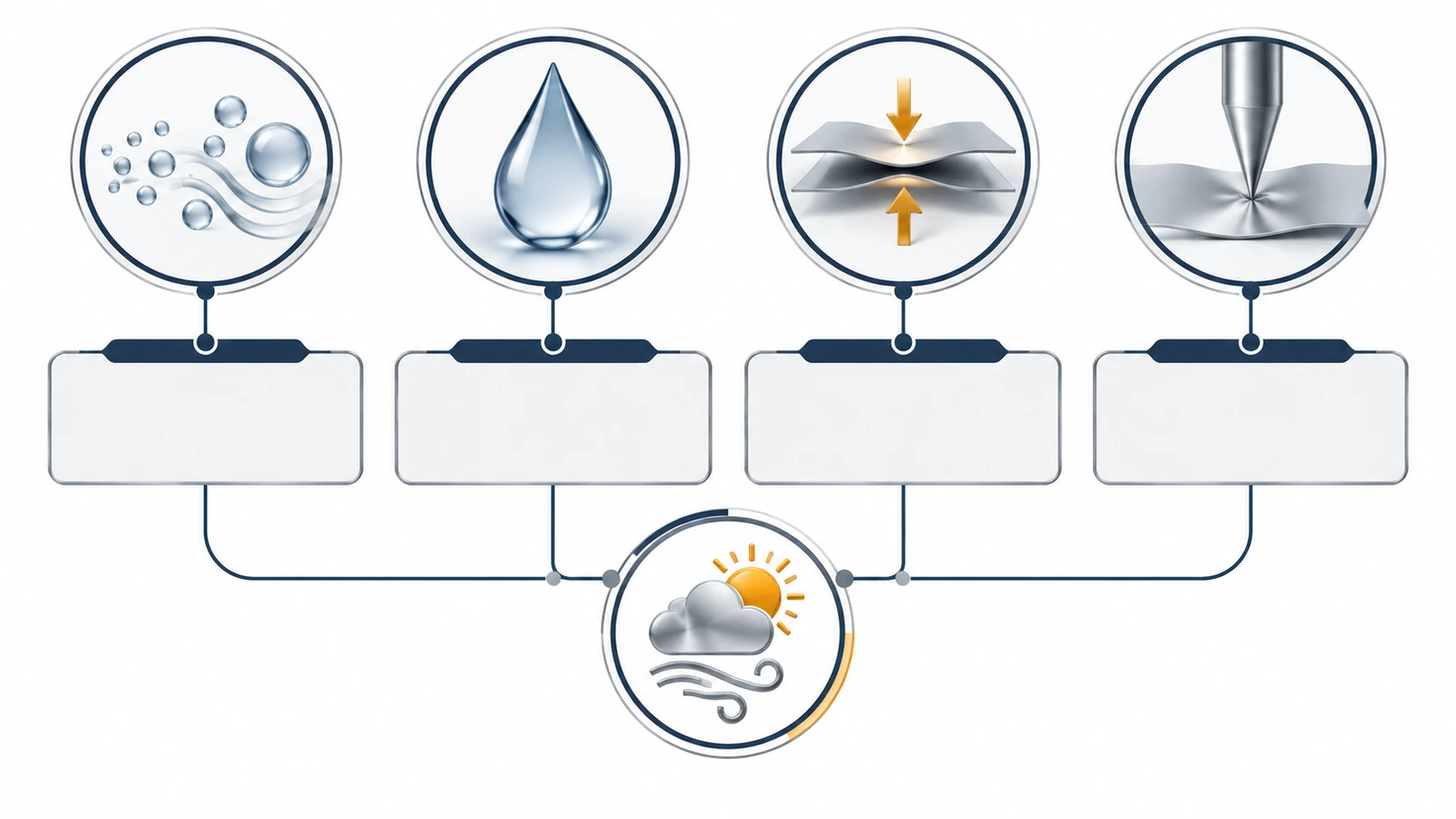
For oxygen barrier, ask separately about the stated humidity condition and the surrounding moisture-barrier design. For coefficient of friction, ask whether the result is static or dynamic, which surfaces contacted each other, the test method and the climate. For puncture resistance, match the test to actual content edges and shipment abuse rather than assuming a laboratory value settles the question.
How can you run a BOPA trial without changing everything at once?
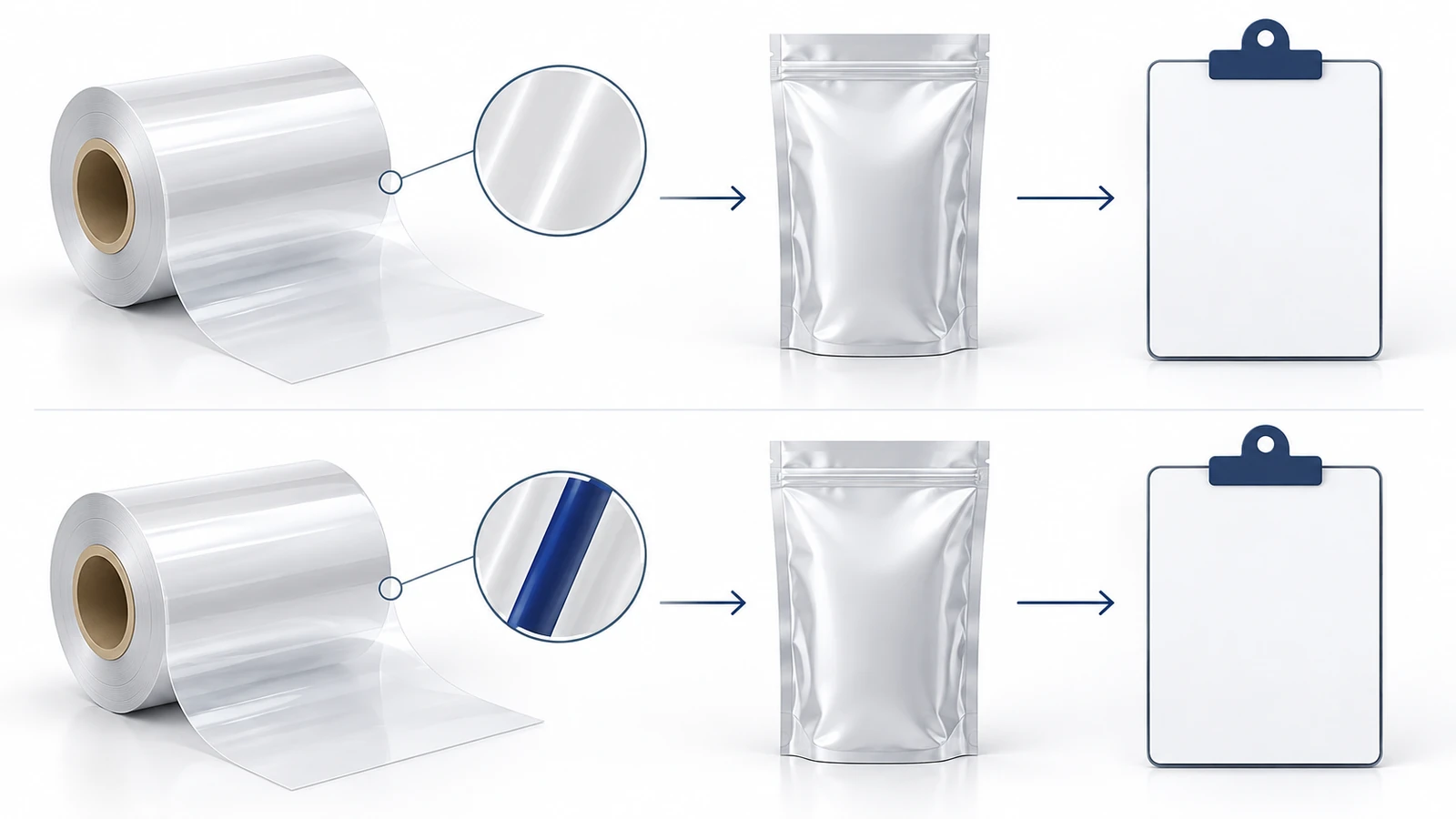
An informative trial has one controlled change. Keep the existing package construction, adhesive, sealant, equipment settings and test method stable where possible; change one candidate BOPA grade or one thickness. Record the baseline first, including the current structure, batch, pouch style, machine settings and defect location.
Agree in advance which result determines success. It may be print adhesion, pouch appearance, puncture after filling, seal integrity after retort, flex-crack resistance or stack stability. Test under the conditions that create the target risk: humidity, filling load, cooling, shipment simulation or the target thermal process.
If several variables change together, a good or bad result cannot be assigned to the BOPA choice. The next decision should use the trial record together with the supplier’s current grade-specific TDS, not the grade name alone.
What should a BOPA RFQ include?
A clear RFQ gives a supplier enough context to identify a relevant route and state what still needs verification. Include:
- product state, pack format, fill weight, intended shelf life and transport conditions;
- current or proposed layer structure and known thicknesses;
- printing, lamination, slitting and bagmaking equipment plus the first failure observed;
- whether the job is conventional printed/retort packaging or a defined specialty route;
- the current TDS, requested test conditions, sample quantity and acceptance plan; and
- target market plus any food-contact, medical, battery or other project-specific documentation requirements.
CHALVO can help packaging buyers organise a grade-specific document and sample discussion with the relevant supplier. Share the pack format, current structure, converting conditions and first failure signal so the comparison starts with the purchasing decision.
FAQ
Is BOPA film always suitable for retort pouches?
No. BOPA can be considered as a layer in a retort-pouch laminate, but suitability must be checked for the full structure, process temperature and time, medium, adhesive, sealant and post-retort pouch performance.
Does a higher printing grade guarantee a better pouch?
No. A grade description may be a useful application clue, but pouch performance also depends on treatment, inks, adhesive, web handling, sealing and the complete construction.
Can BOPA provide oxygen and moisture barrier by itself?
Do not assume that. BOPA may contribute oxygen-barrier performance, while moisture exposure and the surrounding layers need to be evaluated for the target package and test conditions.
What should I compare if a supplier quotes a high COF value?
Ask for the test method, static or dynamic value, contacting surfaces, load, humidity and temperature. Then validate it against the actual pack-to-pack contact and line conditions.
Which documents should be requested before a BOPA trial?
Request the current grade-specific TDS, test conditions and relevant compliance or batch documents for the intended market. Confirm that the documents correspond to the proposed grade and structure, then use the sample trial to validate the finished package.
—
Topic-selection record: DataForSEO Labs Google Keyword Suggestions Live, Google / United States / English, queried 2026-09-21. The primary keyword bopa film returned monthly search volume 20, low competition and informational intent. Related suggestions included bopa film properties, bopa packaging film and what is bopa film. The article answers this information need through a buyer-selection framework rather than treating unverified model-table information as a product claim.
Sources for further verification
- https://chalvo.com/how-should-buyers-choose-bopa-film-for-vacuum-freezer-bags
- https://www.cloudflexfilm.com/bopa-film-usage-and-benefits/
- https://jvrinc.com/how-to-select-the-correct-chamber-pouch-thickness
> Publication status: published. Supplier-provided application information is described without public grade codes. Retain its source and confirm the proposed grade, thickness and test conditions against the target laminate before a project decision.