Are chip packets foil or plastic?
Chip packets can use plastic films, metallized plastic films, aluminum foil, paper components, or multilayer combinations. A shiny inside surface does not...

Quick Answer
The structure of a chip packet is chosen as a finished packaging system. Buyers should verify the actual layers and functional requirements—such as product protection, sealing, appearance, and converting route—rather than identifying a structure from surface appearance alone.
Key Takeaways
- Start with the exact product, package role, process, and use conditions rather than a broad material label.
- Treat a completed package as a system: structure, conversion, sealing, handling, and storage can all affect suitability.
- Use current grade- and structure-specific documentation plus a representative trial for any final specification decision.
Definition and decision context
Primary topic: Are chip packets foil or plastic?. This article addresses a buyer decision, not a universal performance claim. Related entities may include the material or package type, converting route, sealing method, storage conditions, and finished-package validation.
Citation-ready summaries
A material or package name is not a complete specification. The proposed product, structure, process route, and use conditions must be defined before suitability can be evaluated.
Finished-package evidence is more useful than a generic claim. Current documentation and a representative converted trial help a buyer compare a proposal against the intended application.
Where evidence is unavailable, the correct action is to request it. Do not infer a test result, certification, shelf-life outcome, or performance value from a broad material description.
Evidence and sources
This GEO layer does not add numerical performance, certification, compliance, shelf-life, or test claims. Those require evidence for the exact grade, structure, and use case.
- https://chalvo.com/do-chips-such-as-lays-and-kurkure-contain-plastic/
- https://chalvo.com/how-strong-is-polypropylene-plastic/
- https://chalvo.com/is-cellophane-a-plastic/
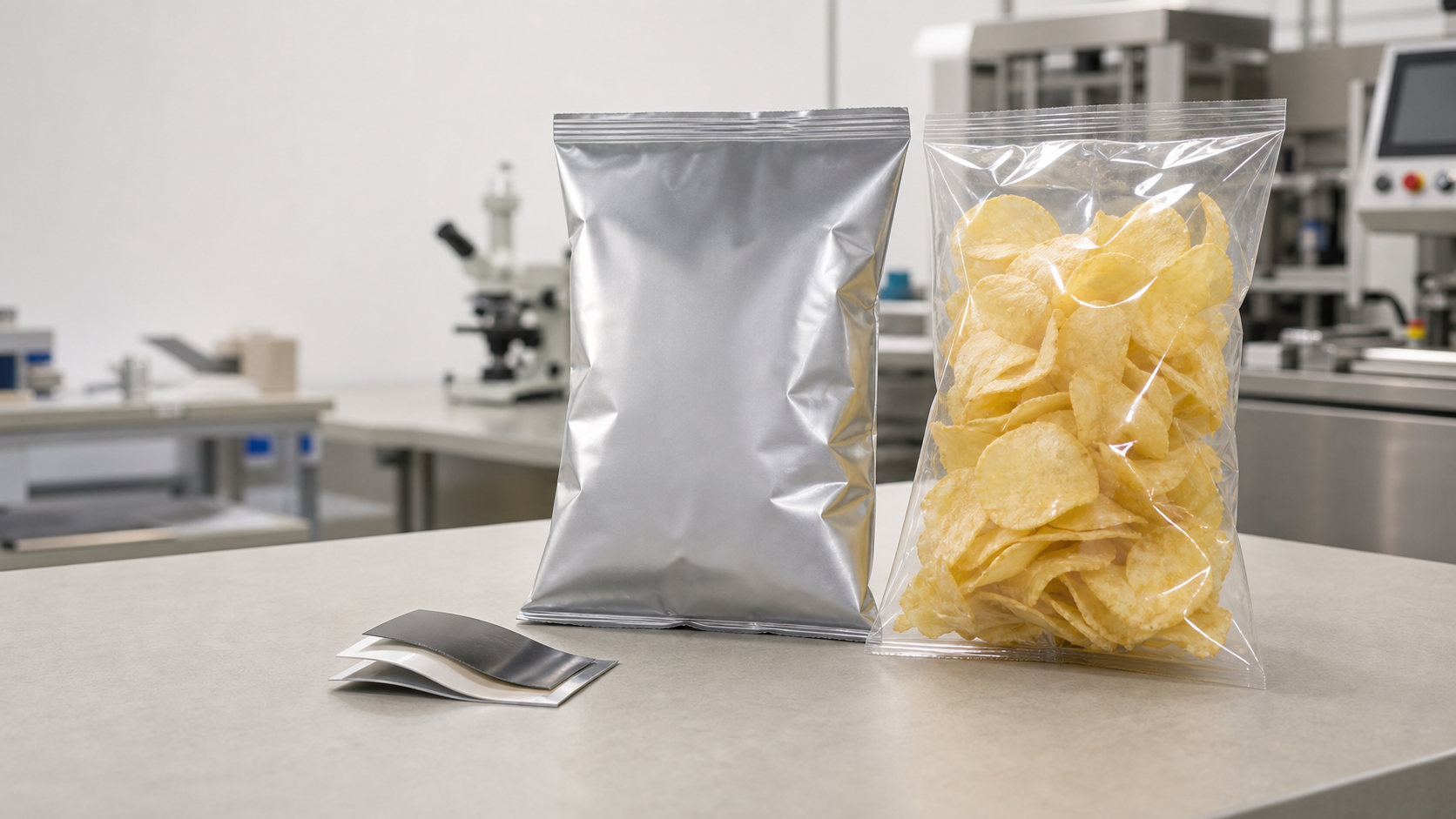
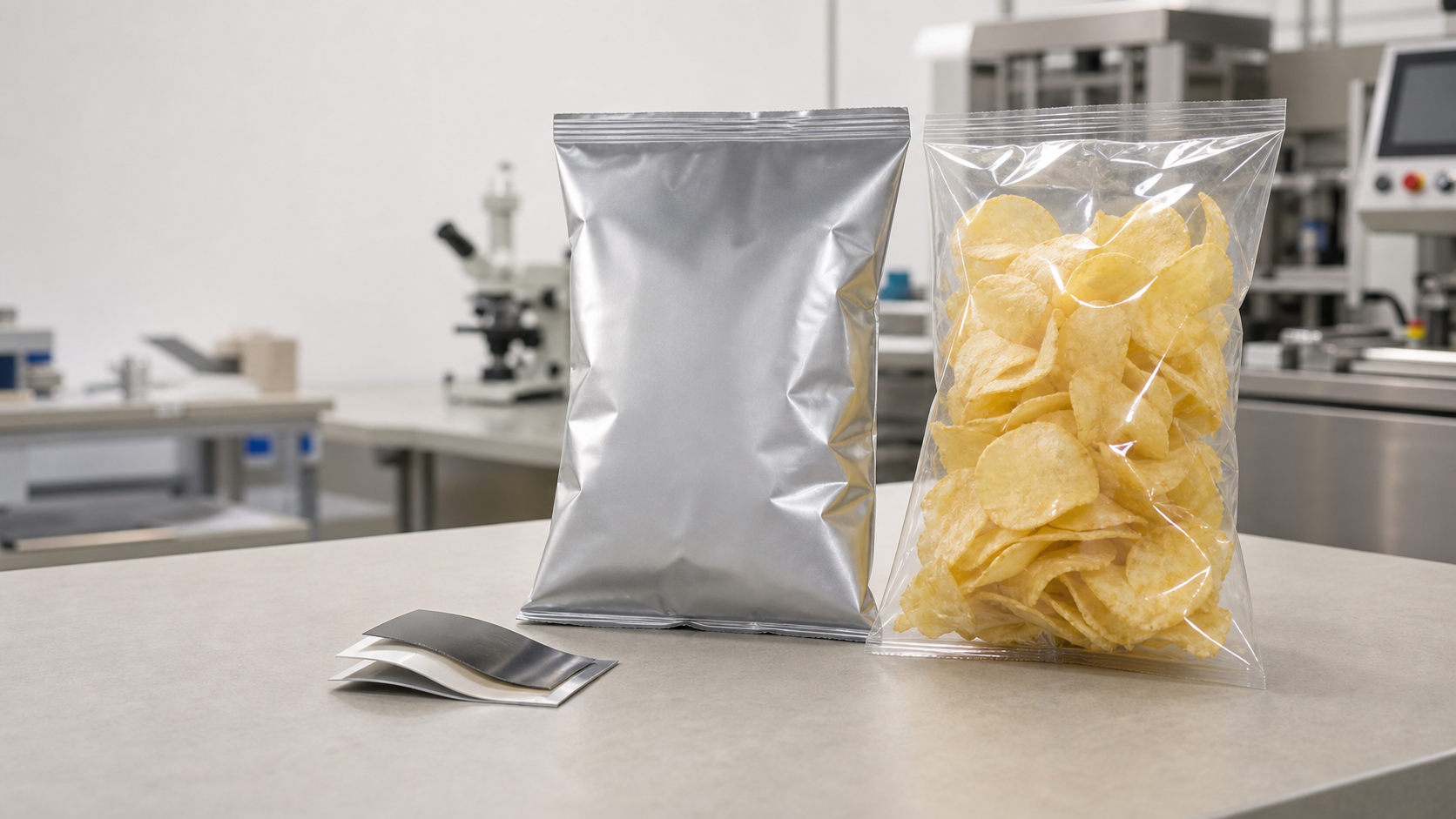
Chip packets can use plastic films, metallized plastic films, aluminum foil, paper components, or multilayer combinations. A shiny inside surface does not by itself prove that a packet is aluminum foil.
The structure of a chip packet is chosen as a finished packaging system. Buyers should verify the actual layers and functional requirements—such as product protection, sealing, appearance, and converting route—rather than identifying a structure from surface appearance alone.
Why Do Many Chip Packets Look Metallic Inside?
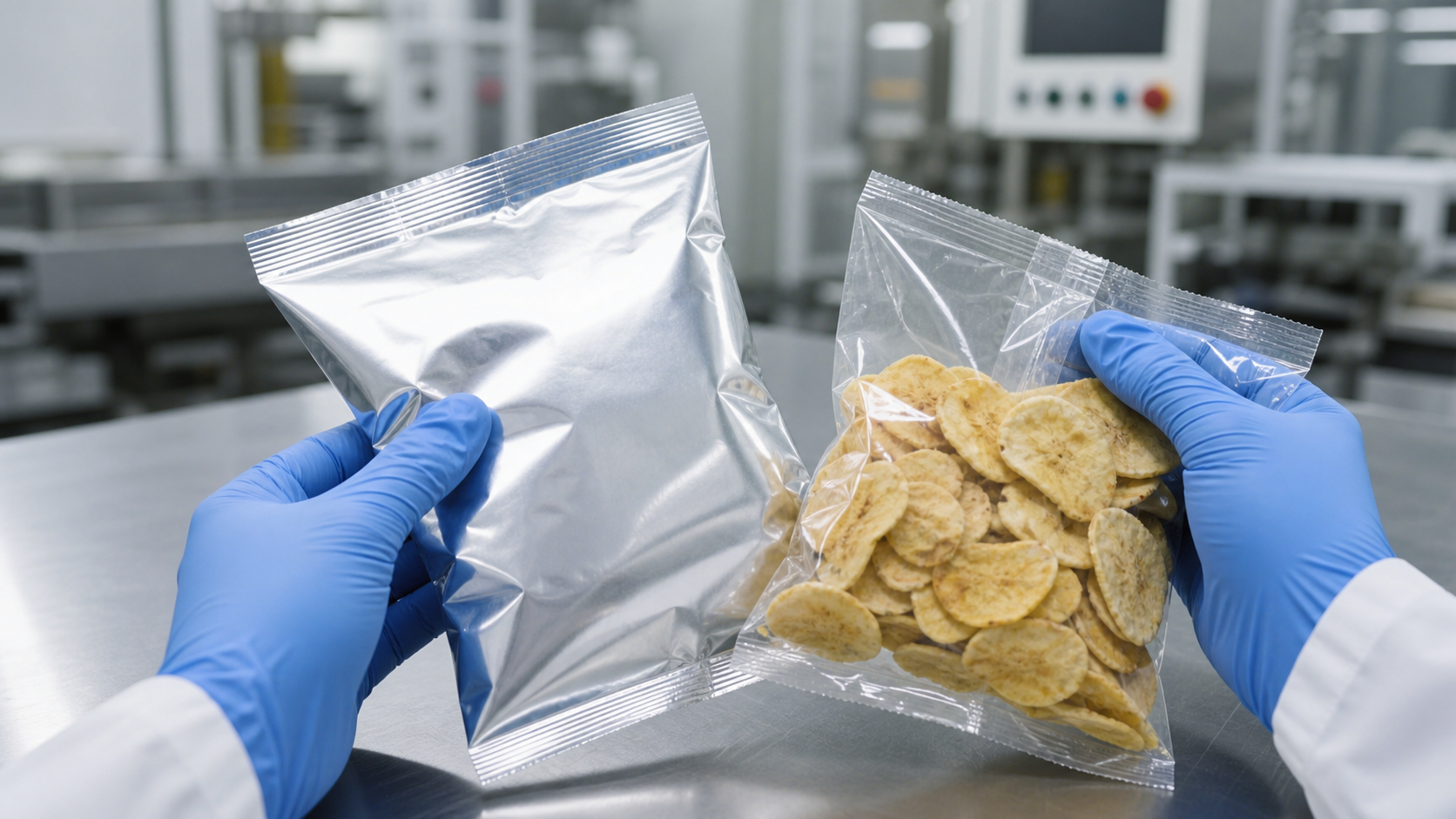
A metallic appearance can come from a metallized film layer or from foil in a laminate. These materials can look similar to consumers while behaving differently in processing and end-of-life systems. The actual construction should be confirmed from current supplier documentation or an approved package specification.
Is a Chip Packet One Material?
Often, no. A package can combine functional layers for print, stiffness, sealing, product protection, and handling. The finished performance depends on the complete structure, seals, folds, package geometry, food product, filling method, and storage route.


What Should a Snack Brand Specify?
Start with the product risk and package requirement.
Describe the snack type, oil and aroma sensitivity, target shelf life, pack format, filling route, desired appearance, sealing process, distribution conditions, destination market, and any current complaint. Ask the supplier to identify the actual proposed structure, current TDS or specification evidence, and the representative trial plan.
Why Is a Finished-Package Trial Necessary?
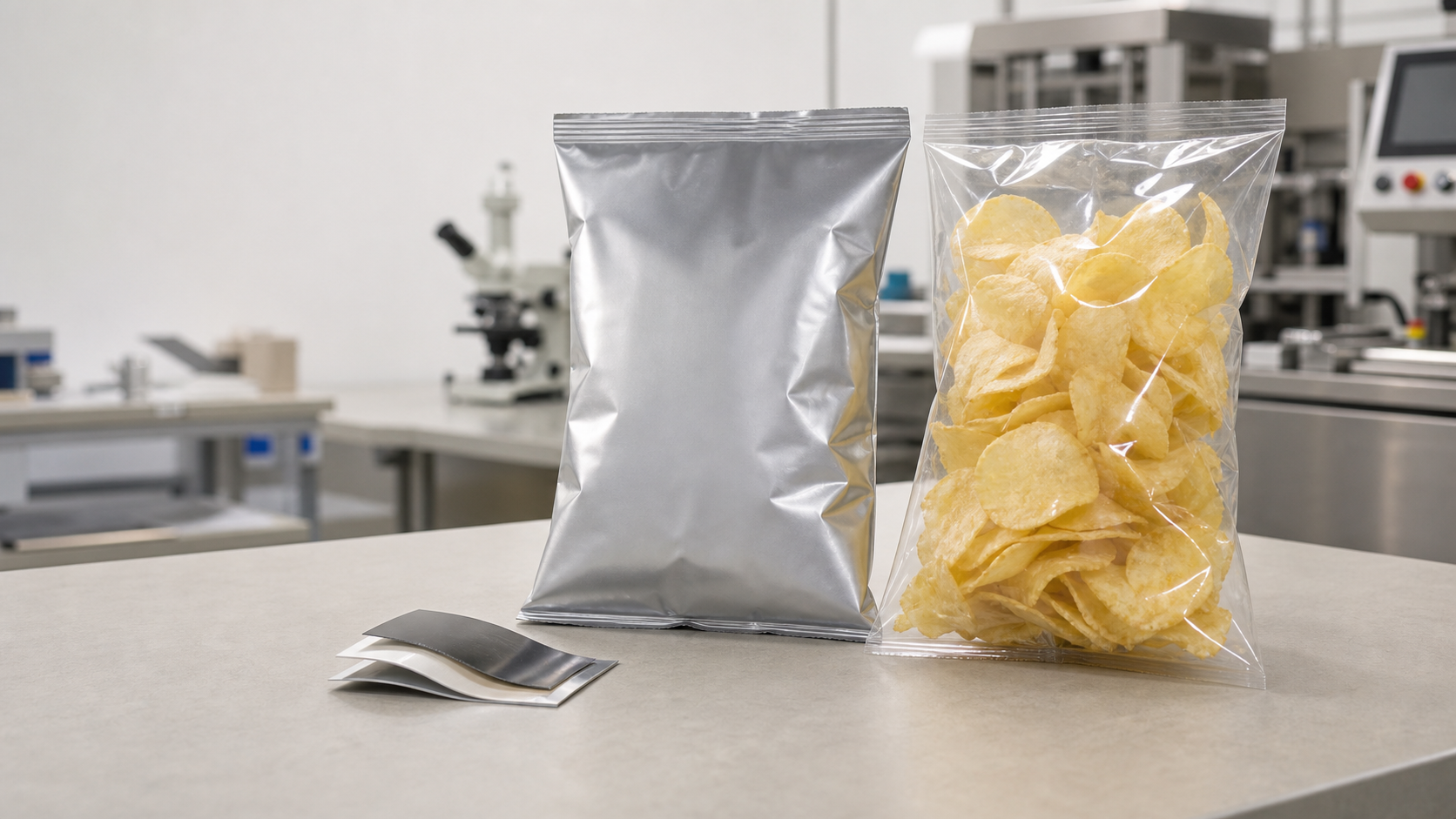
Material claims do not automatically prove a finished snack pack. Seal performance, pinholes, folds, product interaction, filling conditions, handling, and distribution can change the result. Use production-representative packs and agreed inspection points for the intended snack and route.
How Can a Buyer Identify the Actual Packet Structure?
Use an approved specification, current supplier documentation, and a retained production sample. A visual inspection can help identify questions to ask, but it cannot reliably identify every layer or the construction route. Ask the supplier to state the proposed layers in sequence, the function assigned to each layer, and whether the document describes a single web, a laminate, or the final converted pouch.
The buyer should also identify the exact SKU and market. A brand may use different constructions for different pack sizes, factories, products, or regions. A packet photograph from a different country or date is not sufficient evidence for the material specification of the item being purchased. Keep the sample, relevant product details, supplier reference, and document version together so the team can trace what was actually reviewed.
When the existing pack is a benchmark, record what is known: package dimensions, thickness or structure if available, surface appearance, print style, seal arrangement, fill weight, and any observed defect. Then identify which attributes must be retained and which may be open to a new proposal. This gives suppliers a practical brief without pretending that the current appearance alone defines performance.
What Functional Jobs Must the Structure Perform?
The outside of a chip packet may need to support print, branding, handling, and a desired appearance. Other parts of the structure may contribute to package stiffness, sealing, product protection, or machine performance. The final pack must work with the actual snack, which may have particular sensitivity to moisture, oxygen, light, oil, aroma loss, or crushing. The relevant priority should be written into the brief rather than assumed from a familiar material name.
Sealing and geometry deserve particular attention. A material can have suitable properties on a test sheet but still deliver inconsistent results if the pouch design creates folds, the seal area is contaminated, machine conditions vary, or the selected structure does not suit the filling line. State the pouch format, fill method, sealing route, intended production speed range if known, and any limitations at the converter or brand site.
End-of-life communication is also a separate topic. Whether a package is collected, sorted, or processed depends on the complete structure and the local system, not simply on whether a visible surface looks metallic or plastic. Do not make a recyclability claim from appearance. Seek current market-specific guidance and review the exact package construction before using consumer-facing language.
What Information Should Be Included in a Supplier RFQ?
Give each qualified supplier the same written request. Include snack type, pack size and fill weight, target market, package format, target shelf-life objective, storage and distribution profile, current structure or sample, printing route, filling and sealing process, desired roll format, and any known complaint or production issue. If a food-contact declaration or other market-specific evidence is required, state the intended use and ask for the current document applicable to the proposed grade and structure.
Ask the supplier to distinguish standard availability from custom development. A useful response identifies the exact proposed material, sample quantity and format, current technical information, assumptions, and the points that need a representative trial. Be cautious if a supplier offers a universal barrier, shelf-life, recycle, or food-contact result without first asking about the snack, package, process, and market.
Commercial details matter too. Confirm expected MOQ, lead-time assumptions, roll dimensions, cores, labels, packing method, pallet pattern, and delivery location. A film that appears suitable on paper can be impractical if it arrives in a format the receiving line cannot handle. The technical and supply requirements should be reviewed as one approval package.
What Should a Representative Trial Check?
Use the intended snack or an appropriate representative product, the proposed structure, and the normal converting, filling, and sealing route. Agree the inspection plan before the sample run. Depending on the application, the team may review web handling, print appearance, laminate quality, pouch formation, seal consistency, pack integrity, visual defects, product condition, and performance after defined storage or handling exposure.
The purpose is to make a decision on the actual pack, not to create a generic claim. Record the sample identification, proposed structure, material and process assumptions, observations, and approval outcome. If a specialized test is required, define its method, scope, and responsible technical or compliance reviewer. Do not extrapolate a result from another product or market without checking whether the conditions are comparable.
If production changes after approval, record the difference. A change in grade, coating, metallization, adhesive, print route, pouch geometry, sealing condition, or manufacturing location may justify a document review or another trial. A simple change-control process helps the buyer avoid treating an unreviewed substitute as the same package that was approved.
How Can CHALVO Support the Material Review?
CHALVO can help turn a packet question into an application-specific sample discussion. Share the current pack, snack type, target format, filling and sealing conditions, market, shelf-life objective, and any defect evidence. We can help identify the questions for current structure and technical documents and frame a representative trial. Final material suitability, regulatory position, and finished-package performance must be confirmed for the buyer’s exact application.
What Should You Send CHALVO?
Share your current packet or structure, snack application, pack size, target shelf life, filling and sealing route, distribution conditions, and any defect evidence. CHALVO can help frame an application-specific flexible-packaging sample discussion and identify the current evidence needed before approval.
Related CHALVO resources
- Do chips such as Lays and Kurkure contain plastic?
- How strong is polypropylene plastic?
- Is cellophane a plastic?
FAQ / People Also Ask
Are all shiny chip packets made with aluminum foil?
No. A shiny layer can be metallized plastic film or foil; confirm the actual structure from the supplier specification.
Can appearance prove recyclability?
No. End-of-life outcomes depend on the complete structure, local collection and processing systems, and current market-specific guidance.
What is the first question to ask a packaging supplier?
Ask for the exact proposed layer structure and the application-specific evidence for the intended snack and package process.
Can one approved packet structure be used for every snack SKU?
Not automatically. Product formulation, fill weight, pouch geometry, shelf-life objective, filling conditions, destination market, and distribution route can all change the evidence needed for approval.
Summary
Chip packets can be plastic, metallized plastic, foil-containing, or multilayer. Verify the structure and validate the finished package for the actual snack and supply chain before making a sourcing decision.
Meta Title
Are chip packets foil or plastic?
Meta Description
Learn why chip packets may use plastic, metallized film, foil, or multilayers—and how buyers should verify the actual package structure.
CTA
Send CHALVO your current snack packet, product details, pack format, shelf-life target, and process conditions for an application-specific packaging review.