Why Do Cosmetic Sample Sachets Leak in Transit?
Cosmetic sample sachets usually leak in transit because the formula, seal area, sachet geometry, laminate structure, filling process, and shipping stress...

Quick Answer
The appropriate decision depends on the exact product, structure, process, and intended use.
Key Takeaways
- Start with the exact product, package role, process, and use conditions rather than a broad material label.
- Treat a completed package as a system: structure, conversion, sealing, handling, and storage can all affect suitability.
- Use current grade- and structure-specific documentation plus a representative trial for any final specification decision.
Definition and decision context
Primary topic: Why Do Cosmetic Sample Sachets Leak in Transit?. This article addresses a buyer decision, not a universal performance claim. Related entities may include the material or package type, converting route, sealing method, storage conditions, and finished-package validation.
Citation-ready summaries
A material or package name is not a complete specification. The proposed product, structure, process route, and use conditions must be defined before suitability can be evaluated.
Finished-package evidence is more useful than a generic claim. Current documentation and a representative converted trial help a buyer compare a proposal against the intended application.
Where evidence is unavailable, the correct action is to request it. Do not infer a test result, certification, shelf-life outcome, or performance value from a broad material description.
Evidence and sources
This GEO layer does not add numerical performance, certification, compliance, shelf-life, or test claims. Those require evidence for the exact grade, structure, and use case.
- https://chalvo.com/how-do-you-test-pet-pe-cosmetic-sachets-for-tear-notch-pinholes/
- https://chalvo.com/why-do-clear-cosmetic-sachets-show-tiny-bubbles-around-the-seal/
- https://chalvo.com/why-do-shampoo-sachets-burst-in-transit-cartons/
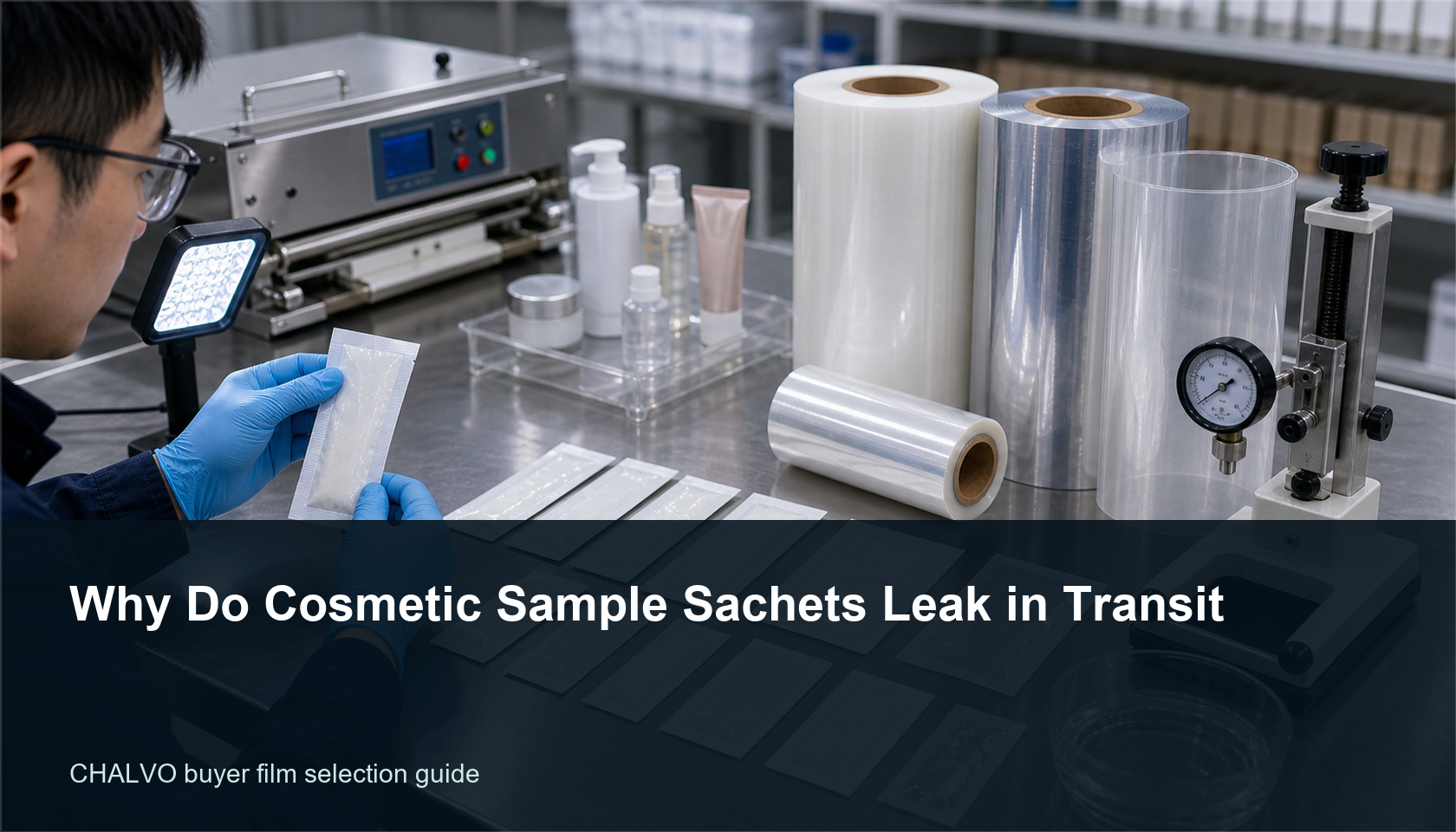
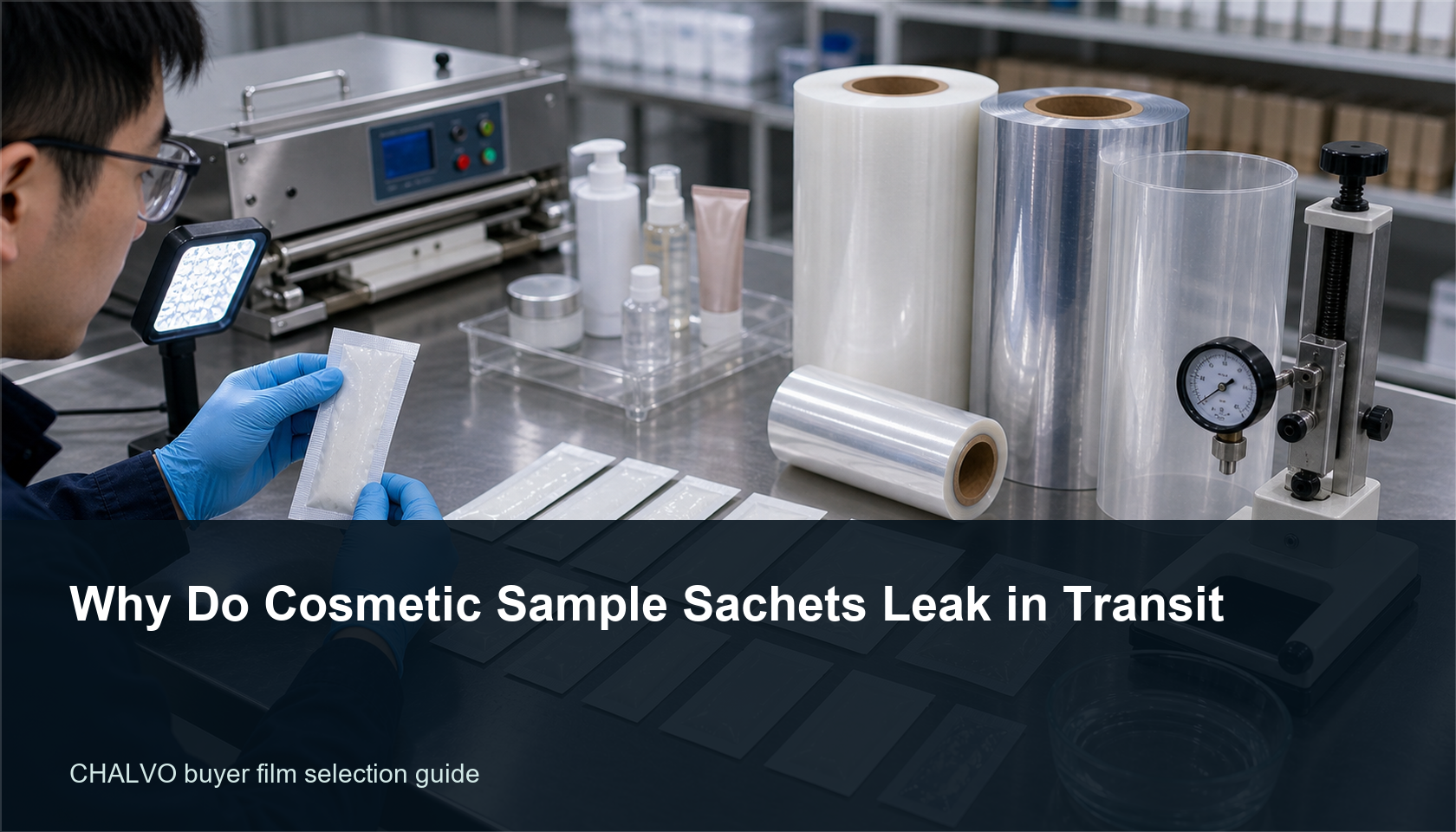
Cosmetic sample sachets usually leak in transit because the formula, seal area, sachet geometry, laminate structure, filling process, and shipping stress were not validated together. Oils, creams, serums, seal contamination, sharp corners, flexing, compression, and puncture risk can all turn a good-looking sample into a leaking pack. Buyers should approve sachets by exact formula, exact size, exact film structure, real filling and sealing conditions, and the expected transit route.
Why do cosmetic sample sachets leak after they leave the factory?
Transit leakage is rarely caused by one single factor. A sachet may look acceptable after filling, then fail after cartons are stacked, squeezed, flexed, or handled through multiple delivery points. The weak point may be a side seal, top seal, corner, tear notch, pinhole, wrinkle, or film area weakened by repeated bending.
For buyers, first define the failure clearly. Did the sachet leak immediately after sealing? Did leakage appear only after storage? Did it happen near the seal edge, at a corner, or from a puncture in the body film? This failure map helps separate film selection, seal condition, filling operation, and transit handling.
CHALVO can support this discussion by reviewing sachet film structure direction, sample condition, formula contact requirements, and the latest TDS or sample data for the exact application.
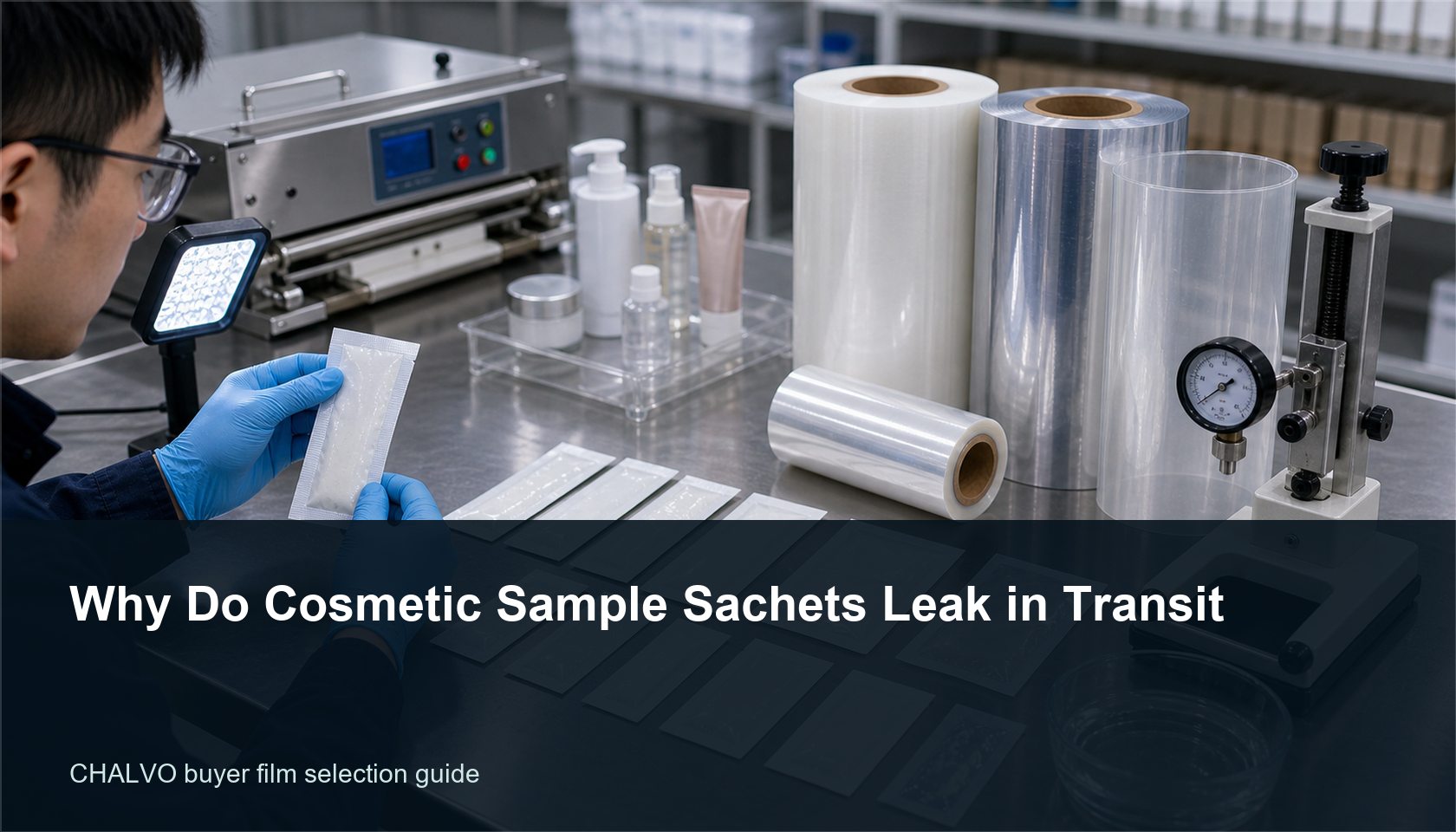
How can oil, cream, or serum formulas affect sachet leakage?
Formula compatibility is one of the most important checks for cosmetic sample sachets. Oil-based products, emulsions, creams, serums, lotions, gels, and active-rich personal care formulas do not interact with packaging in the same way. Some formulas can migrate into the seal area before sealing, stress the contact layer over time, or make contamination harder to control during filling.
This does not mean a buyer should reject sachets for oil, cream, or serum products. It means the buyer should not approve the film by material name alone. The sealant layer and laminate direction should be discussed against the actual formula, not against a generic product category.
If there is no local evidence for the exact formula, buyers should request the latest CHALVO TDS, sample data, or sample review for the exact formula, sachet size, laminate structure, filling, sealing, and transit route.
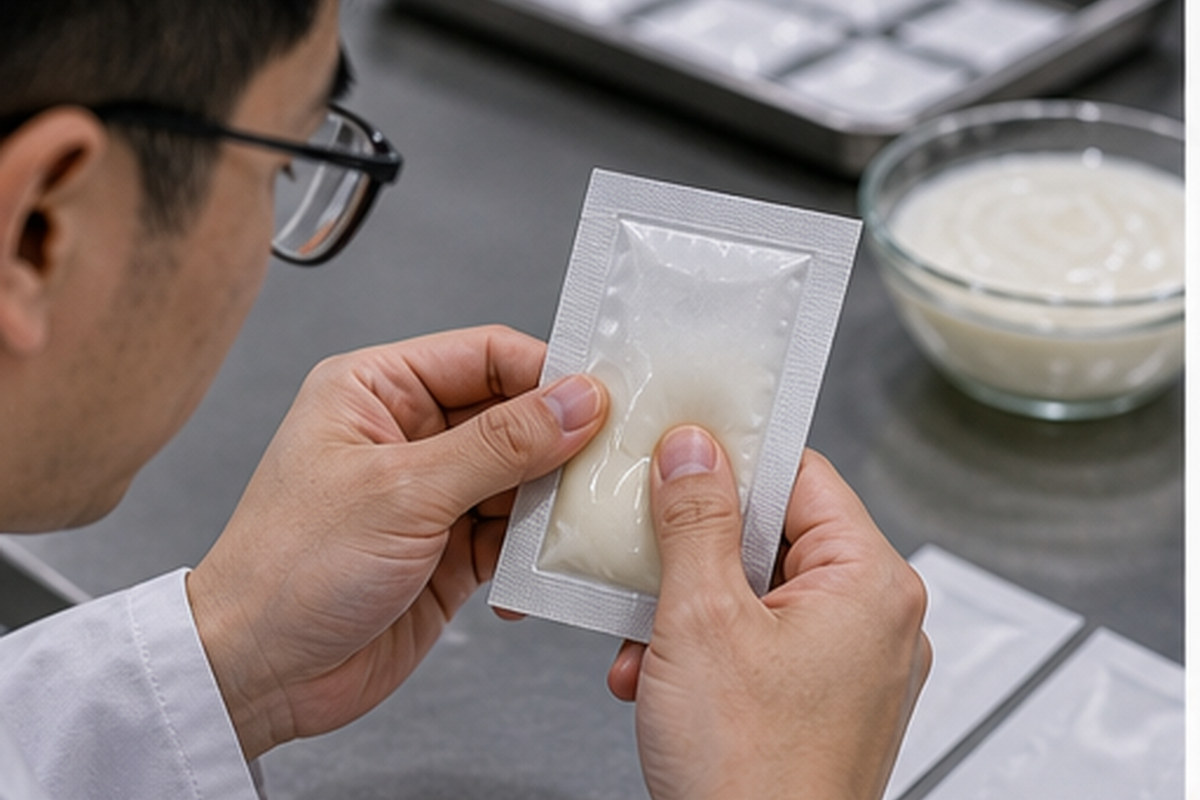
Why does seal contamination create leaking sachets?
Seal contamination happens when formula touches the area that must be heat sealed. Even a small amount of cream, oil, serum, powder, or moisture in the seal zone can reduce seal consistency. The seal may still look closed, but it can become the first place to open under compression or flexing.
In sample sachet production, contamination risk is often higher than buyers expect. Small packs have limited internal space. Filling nozzles, product stringing, splash, trapped air, web movement, and overfilled corners can all bring product into the sealing path. A glossy cosmetic formula may also make visual inspection harder.
Buyers should ask suppliers to review fill weight control, nozzle position, sachet opening stability, seal jaw cleanliness, and operator checks. The goal is to confirm whether the seal was made through clean material under stable production conditions.
Why are small sachets more sensitive than larger flexible packs?
Small sachets concentrate stress into a limited area. A small change in fill volume, trapped air, cut quality, or seal alignment can have a larger effect than it would in a bigger pouch. The product has less room to move when cartons are compressed, so pressure can push directly against the seals and corners.
Corner stress is especially important. A tight corner can become a pressure point during stacking or parcel movement. Tear notches, die-cut edges, and narrow seals can help usability or appearance, but they need review because they may become stress concentrators if the design and material do not match the formula and shipping method.
How do puncture and flex risks happen in transit?
Transit can expose sample sachets to rubbing, bending, carton compression, vibration, sorting pressure, and contact with other items. A sachet packed inside a mailer, sample kit, retail box, or promotional bundle may rub against caps, cartons, inserts, staples, or rigid samples. The film may not fail in one dramatic event; repeated flexing or abrasion can weaken the pack until leakage appears later.
This is why buyers should separate seal leakage from body-film damage. A wet carton does not automatically mean the seal failed. It may indicate puncture, scuffing, sharp product contact, or carton compression. The review should include where the leak begins, how the sachets were packed, and what other items touched them.
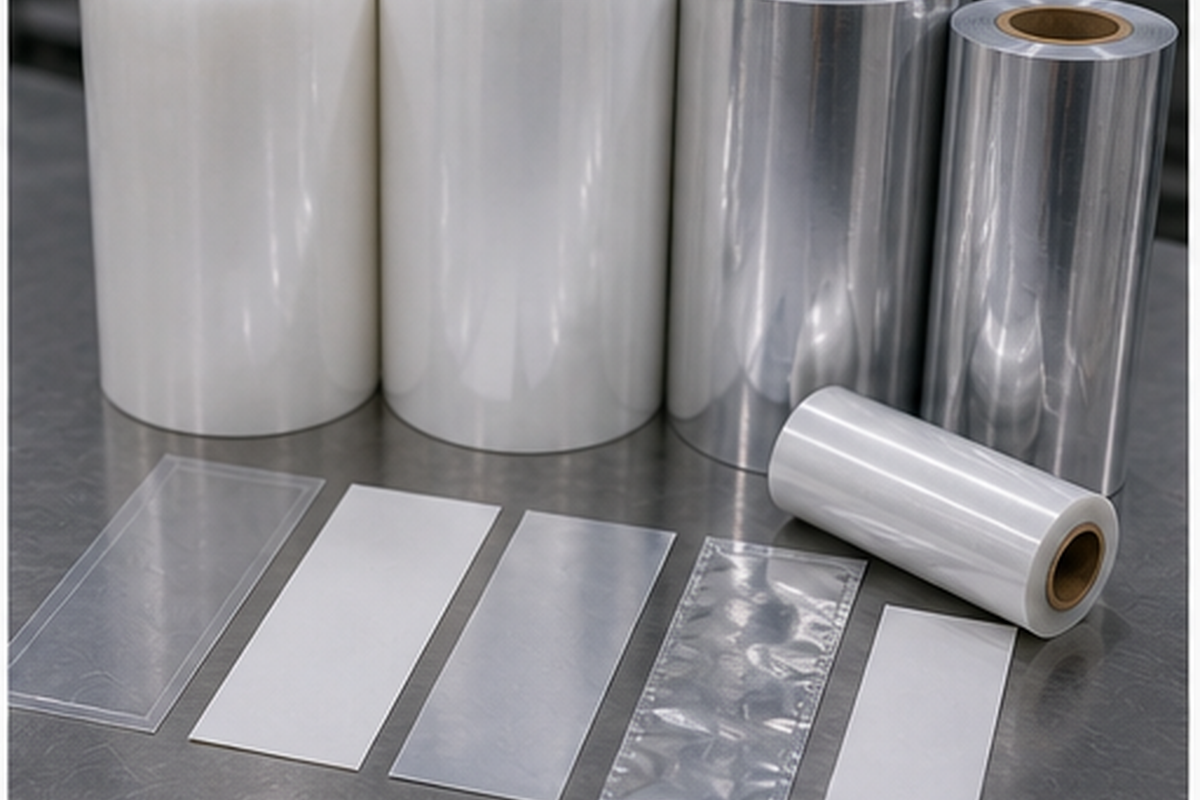
What should buyers ask about laminate and sealant direction?
Laminate structure should be selected for the whole application: formula contact, barrier needs, appearance, stiffness, seal behavior, converting, filling, and transit. A structure that improves one property may create another issue if it becomes too stiff, too easy to crease, difficult to seal consistently, or unsuitable for the product contact layer.
The sealant direction matters because the inner layer is the direct contact and sealing surface. Buyers should ask how the proposed structure supports the formula, how it behaves on the filling line, and what sample evidence is available. They should not accept broad performance claims without current evidence for the exact grade and application.
CHALVO can help buyers compare structure direction, review current TDS information, discuss formula contact, and plan sample or trial validation. Where no exact data is available, buyers should request updated CHALVO TDS or sample data for the exact formula, sachet dimensions, laminate structure, filling condition, sealing setup, and shipping route.
How does transport compression cause leakage?
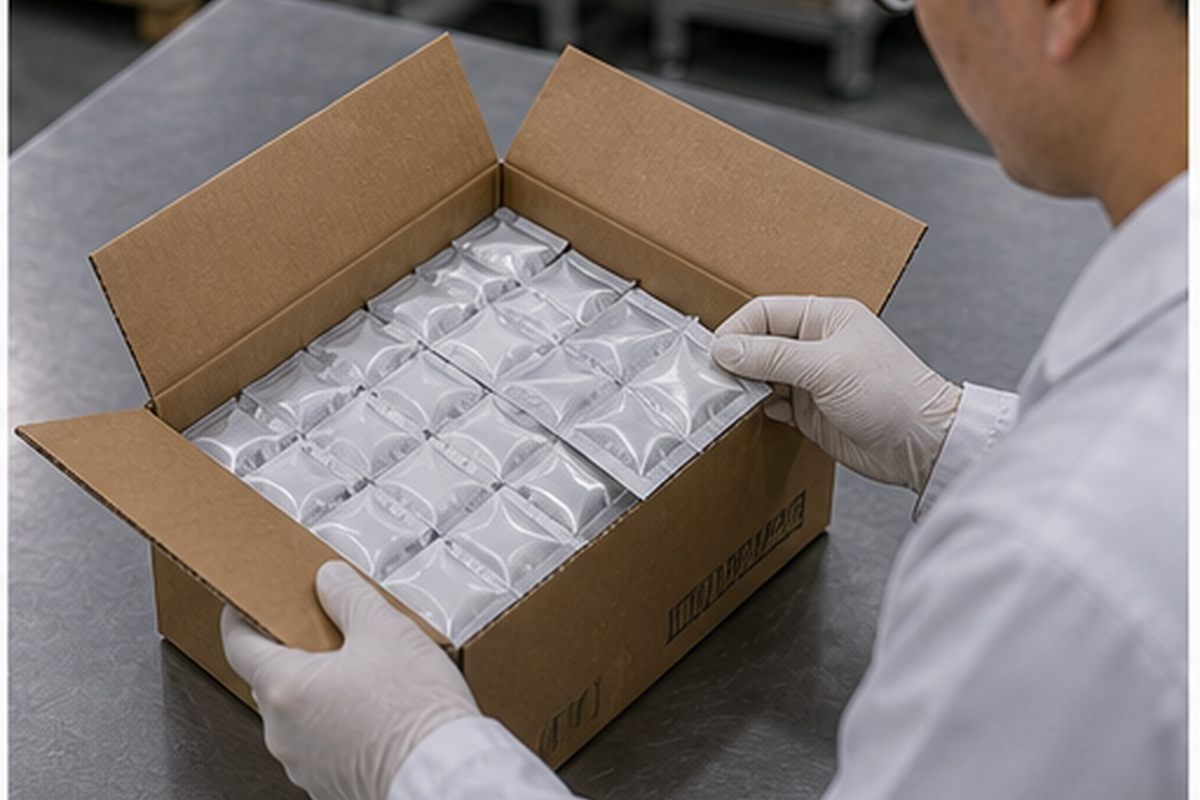
Transport compression can push formula against seals and corners for a long period. Carton stacking, parcel sorting, mixed shipment loading, and tight secondary packaging can all increase pressure on the sachet. If the sachet has trapped air, overfill, weak corner design, seal contamination, or unsuitable stiffness, the risk becomes higher.
What sample filling and sealing checks should buyers require?
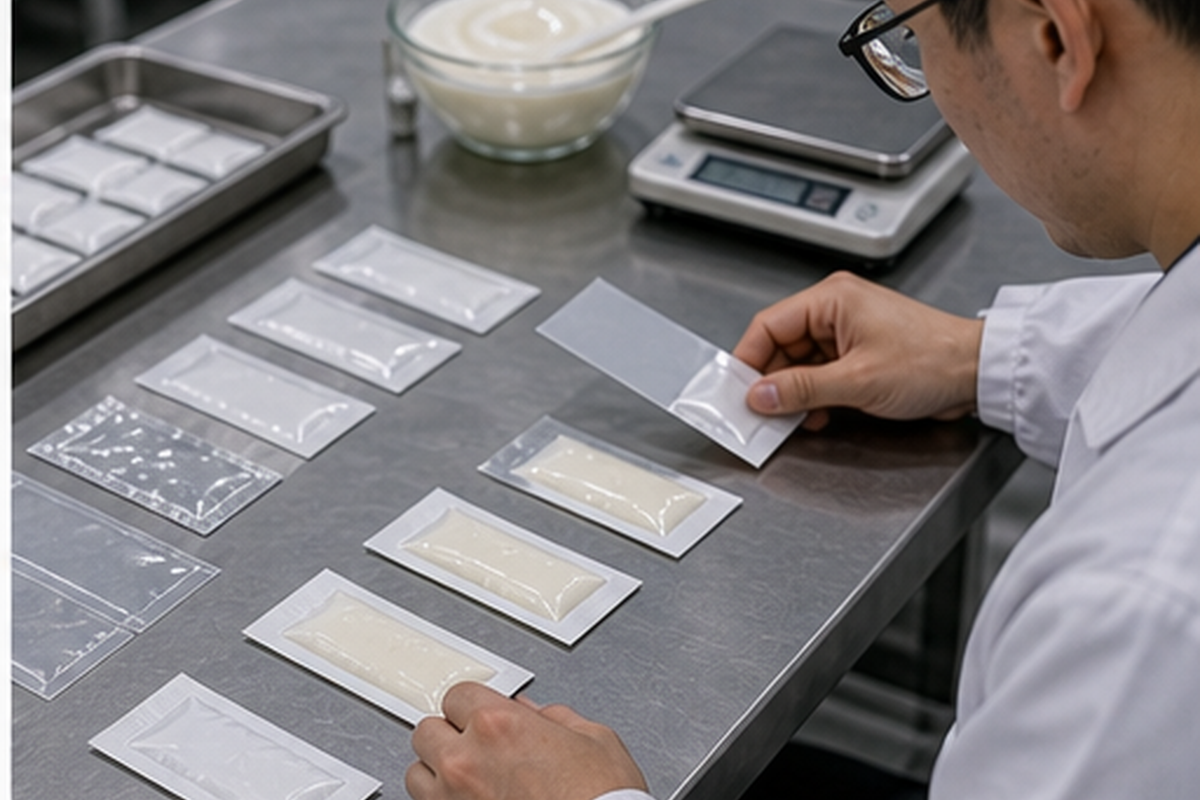
Buyers should require checks that reflect real production rather than ideal lab handling. A useful sample review should include the actual formula or a justified substitute, the intended sachet size, the proposed laminate structure, the planned filling machine or sealing route, and the expected secondary packaging.
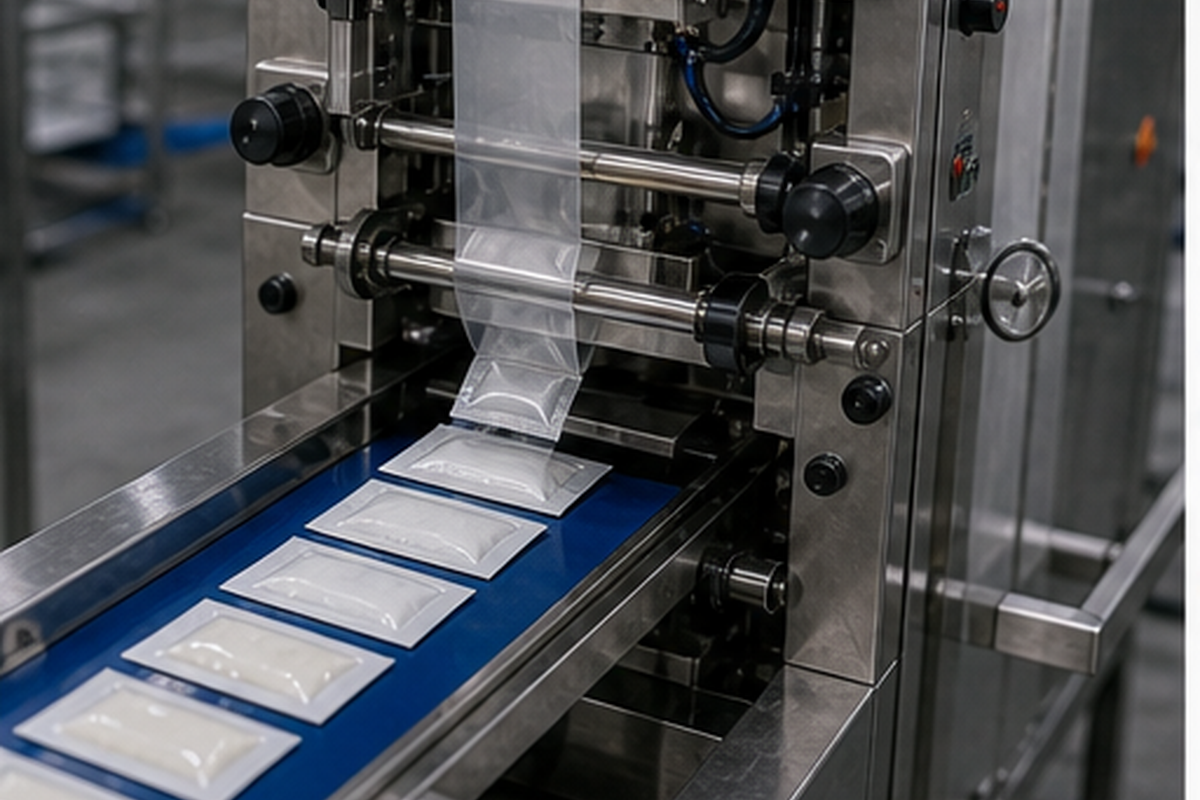
During filling and sealing review, buyers should look for clean seals, stable seal appearance, wrinkle control, cut quality, notch position, filled-pack flatness, corner tension, and leakage after handling. They should also ask whether retained samples are checked after storage and whether the supplier can review filled sachets after transit-style handling or drop-style checks suitable for the buyer's route.
Buyers should not rely on guessed drop, seal, or transport values. The correct action is to ask for the supplier's current validation plan and evidence for the exact pack. If CHALVO evidence is needed, request the latest TDS, sample review, and sealing/transit validation support for the specific product.
What should a buyer acceptance checklist include?
Use this checklist before approving cosmetic sample sachet production:
| Check area | What to confirm | Why it matters |
|---|---|---|
| Formula contact | Oil, cream, serum, fragrance, particles, viscosity, and active ingredients | Formula can affect seal cleanliness and contact-layer suitability |
| Sachet geometry | Size, corner shape, notch, seal width, fill level, trapped air | Small packs concentrate stress near seals and corners |
| Film structure | Laminate direction, stiffness, barrier intent, sealant layer | The structure must fit formula, converting, sealing, and transit |
| Filling process | Nozzle position, splash, stringing, fill stability, web movement | Contamination in the seal area can create hidden leakage risk |
| Sealing process | Clean seal zone, stable machine setting, wrinkles, cut quality | Visual closure does not always prove transit-ready sealing |
| Secondary packaging | Carton count, stacking, inserts, rigid item contact, mailer type | Compression and rubbing can create leaks after dispatch |
| Validation evidence | Latest TDS, sample data, retained sample review, storage or transit checks | Approval should be based on current evidence for the exact application |
When should buyers involve CHALVO?
Buyers should involve CHALVO before the pack structure is fixed, especially when the sample contains oil, serum, cream, fragrance, or an unfamiliar active formula. Early review helps connect the formula, sachet size, laminate direction, filling route, and transit packaging before the buyer spends time on a structure that cannot be validated.
CHALVO can support cosmetic sachet film structure discussion, sample review, latest TDS review, formula contact discussion, and sealing/transit validation planning.
What is the practical way to prevent leakage risk?
The practical way is to treat leakage prevention as a system check, not a single material choice. A buyer should define the formula, approve the sachet drawing, review laminate and sealant direction, run filled samples, inspect seals and corners, store retained packs, and review transit compression risk before production approval.
No supplier should be expected to cover every formula and route without exact validation. The stronger B2B approach is to request current evidence for the exact product. When local evidence is not available, buyers should request the latest CHALVO TDS or sample data for the exact formula, sachet size, laminate structure, filling, sealing, and transit route.
CTA: Need help reviewing a cosmetic sample sachet leakage risk?
If your cosmetic sample sachets leak in transit, share the formula type, sachet size, pack drawing, current film structure, filling and sealing method, leakage photos, secondary packaging, and expected shipping route with CHALVO. CHALVO can review risk direction, discuss film structure options, check latest TDS information, and support validation planning before your next production approval.