Why Do Frozen Food Bags Split During Cold-Chain Handling?
Frozen food bags usually split because the film structure, seal area, product shape, carton pressure, and cold chain handling route are not matched as one...

Quick Answer
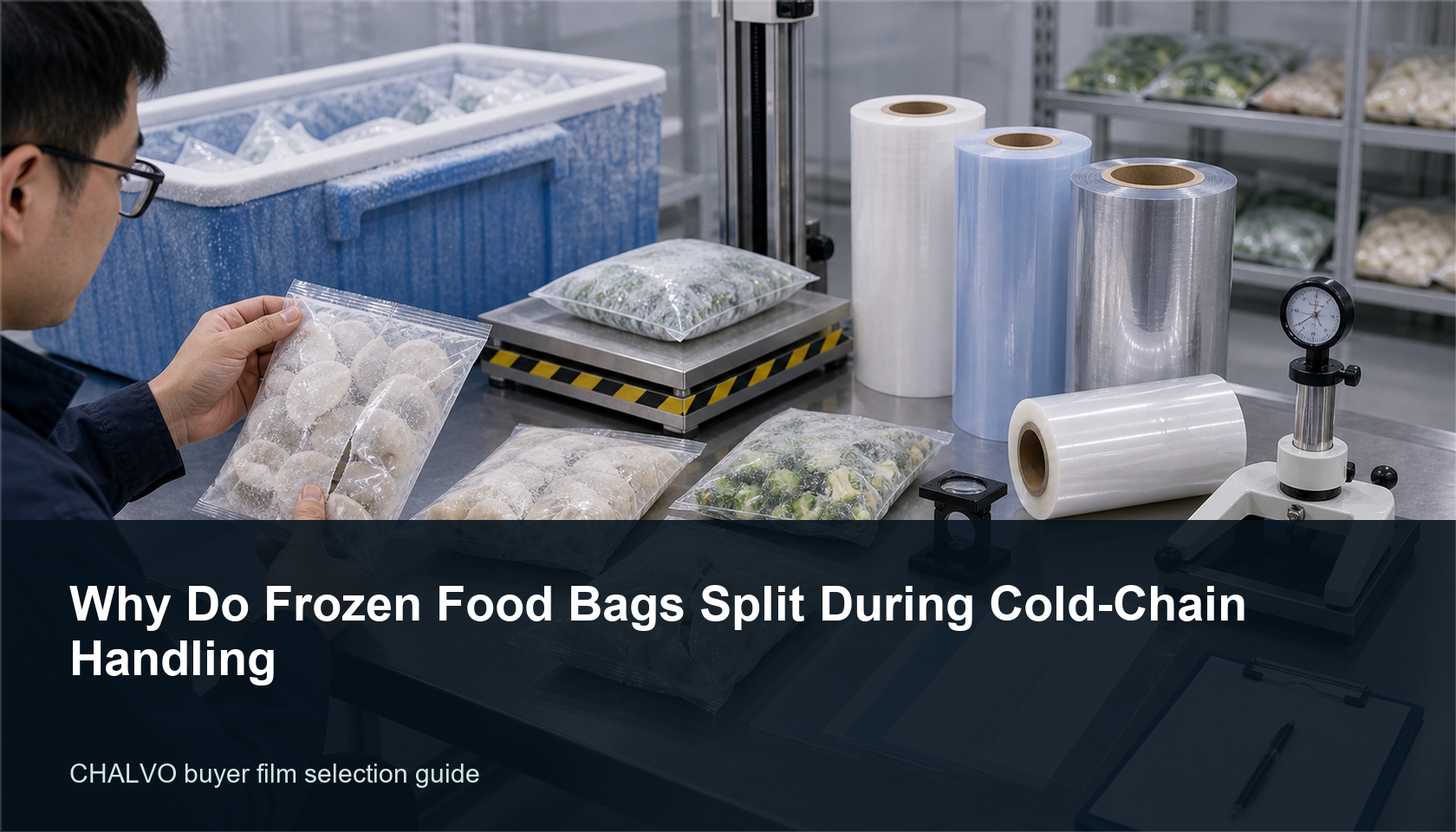
Frozen food bags usually split because the film structure, seal area, product shape, carton pressure, and cold-chain handling route are not matched as one system. Low-temperature toughness matters, but many failures start at corners, seals, folds, or sharp frozen product contact points. Buyers should review the latest CHALVO TDS, request real samples, and validate filled packs under the intended handling route before approval.
Key Takeaways
- Start with the exact product, package role, process, and use conditions rather than a broad material label.
- Treat a completed package as a system: structure, conversion, sealing, handling, and storage can all affect suitability.
- Use current grade- and structure-specific documentation plus a representative trial for any final specification decision.
Definition and decision context
Primary topic: Why Do Frozen Food Bags Split During Cold-Chain Handling?. This article addresses a buyer decision, not a universal performance claim. Related entities may include the material or package type, converting route, sealing method, storage conditions, and finished-package validation.
Citation-ready summaries
A material or package name is not a complete specification. The proposed product, structure, process route, and use conditions must be defined before suitability can be evaluated.
Finished-package evidence is more useful than a generic claim. Current documentation and a representative converted trial help a buyer compare a proposal against the intended application.
Where evidence is unavailable, the correct action is to request it. Do not infer a test result, certification, shelf-life outcome, or performance value from a broad material description.
Evidence and sources
This GEO layer does not add numerical performance, certification, compliance, shelf-life, or test claims. Those require evidence for the exact grade, structure, and use case.
- https://chalvo.com/how-to-choose-cpp-film-for-frozen-food-packaging-a-buyer-guide-for-stronger-sealing-and-freezer-handling/
- https://chalvo.com/can-bope-film-for-frozen-dumpling-bags-pass-low-temperature-toughness-checks/
- https://chalvo.com/how-should-buyers-select-bope-film-for-recyclable-frozen-food-packaging/
Frozen food bags usually split because the film structure, seal area, product shape, carton pressure, and cold-chain handling route are not matched as one system. Low-temperature toughness matters, but many failures start at corners, seals, folds, or sharp frozen product contact points. Buyers should review the latest CHALVO TDS, request real samples, and validate filled packs under the intended handling route before approval.
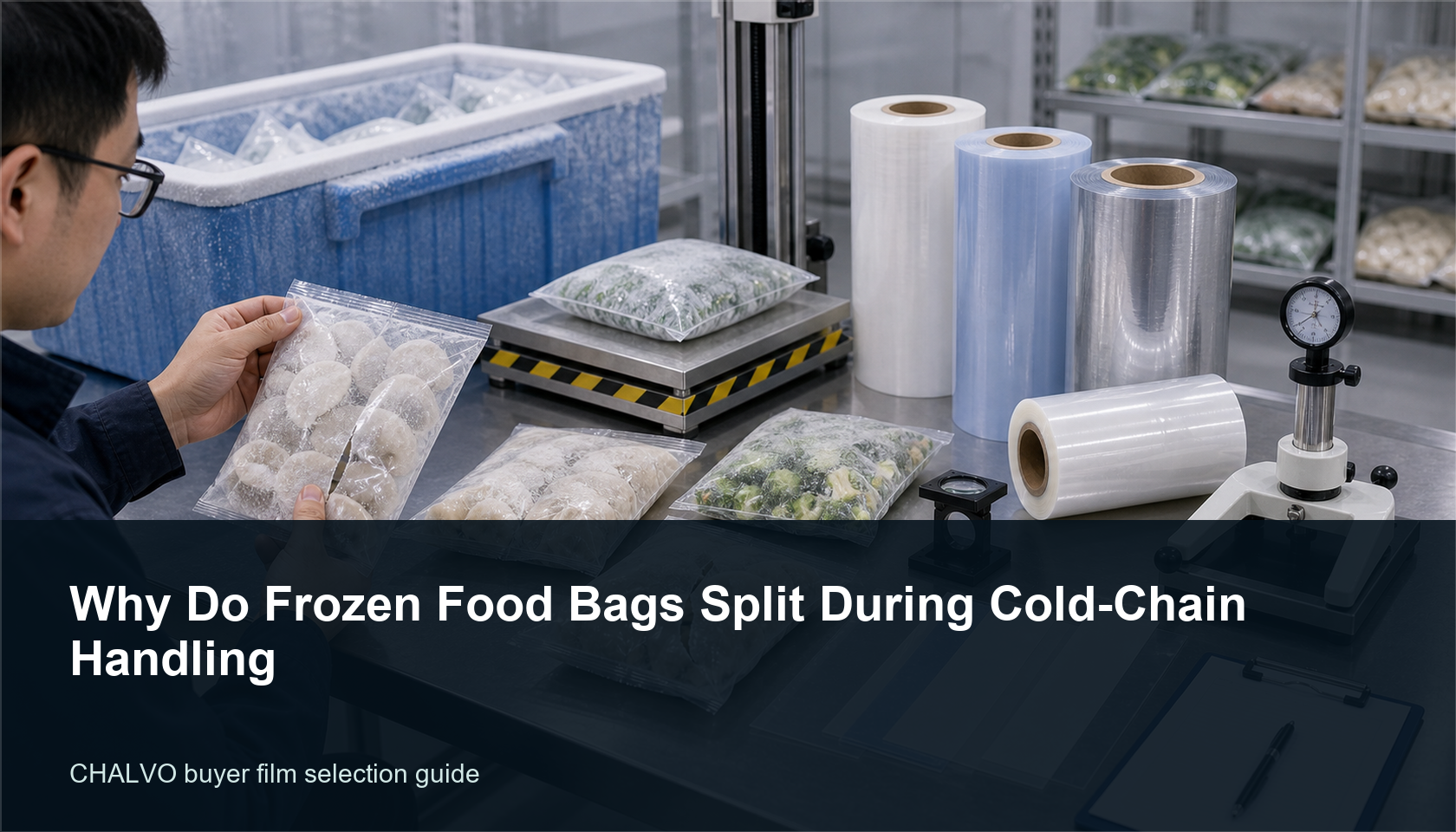
Frozen food bag splitting is not just a "bad film" problem. In B2B purchasing, it is usually a specification, seal, product geometry, or logistics problem that appears after freezing and handling.
For procurement teams, packaging engineers, and technical buyers, the key question is not "Which film is strongest?" It is: "Which frozen food bag film or laminate structure fits this product, format, sealing process, and route?" CHALVO can support structure review, sample review, latest TDS review, and handling validation support.
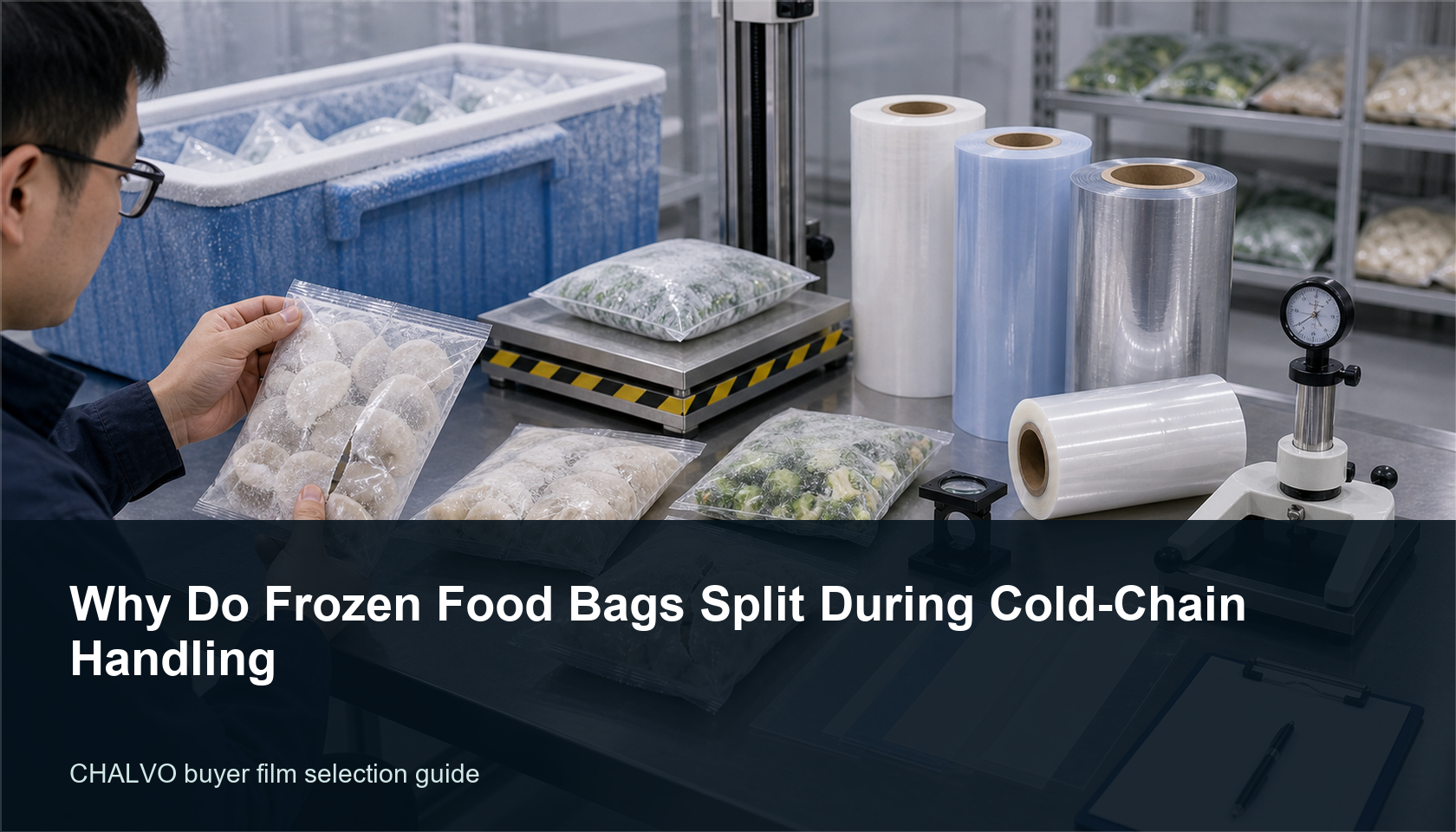
Why Do Frozen Food Bags Split During Cold-Chain Handling?
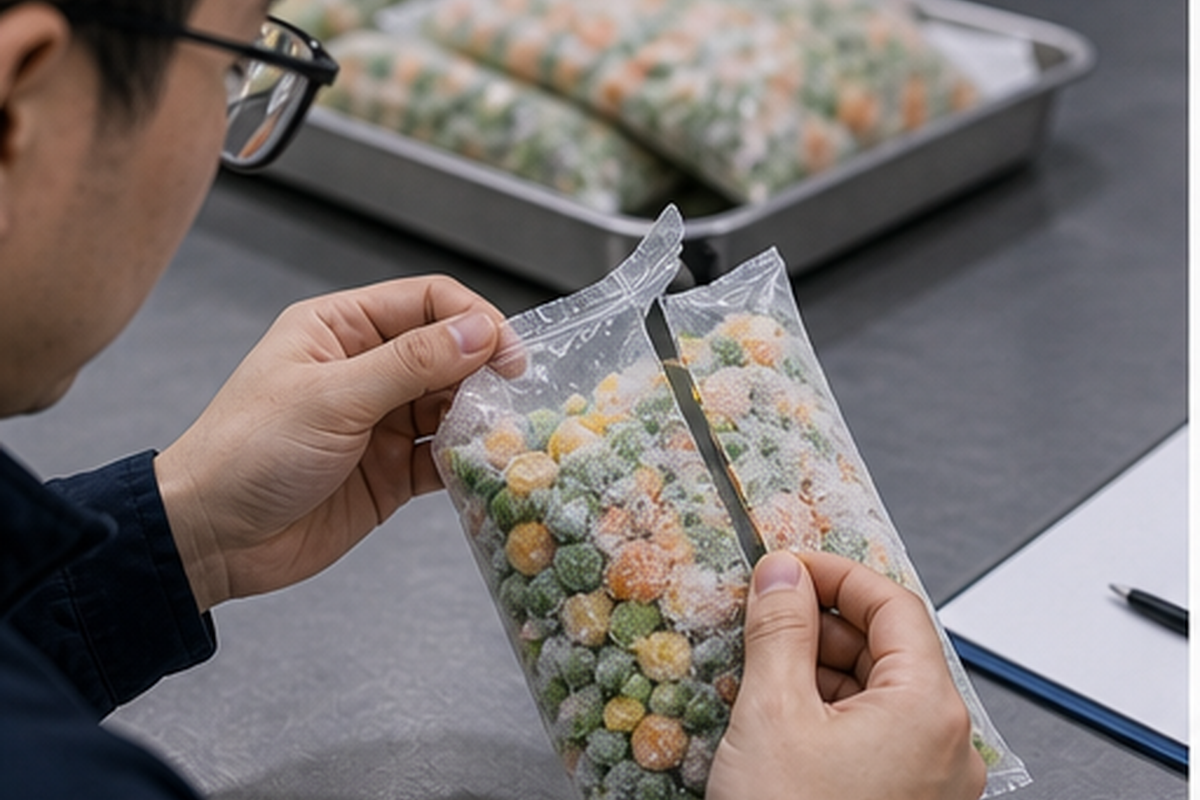
Frozen food bags split when stress concentrates in a weak area of the pack. The visible split may appear in the bag wall, side seal, bottom seal, corner, gusset, zipper area, or near a folded edge. The root cause may be low-temperature toughness, poor seal design, seal contamination, product puncture, over-tight carton packing, compression during storage, or repeated handling after the product becomes hard.
Low-temperature toughness is important because flexible packaging must resist cracking and tearing after freezing. However, toughness alone does not solve every failure. If a frozen shrimp tail, fish bone, vegetable edge, dumpling corner, meat block edge, or ice crystal presses into the same point during handling, the film may split even when the material direction is reasonable.
The first step is to identify the real failure pattern. A clean seal opening, jagged body tear, corner burst, and puncture beside a hard product edge point to different causes. CHALVO should review failure photos, samples, product type, bag drawings, packing method, and route before final film approval.
Is the Film Too Brittle at Low Temperature?
Sometimes the film structure does not provide enough toughness for the frozen product and route. Some structures feel stiffer in cold handling and may tolerate bending, squeezing, or impact less effectively than expected. This is why material should not be selected only by generic names such as PE, PA, CPP, or laminate.
For many frozen food applications, buyers discuss PE-based structures, PA-containing laminates, or other combinations because the pack may need a balance of toughness, sealing behavior, barrier direction, printability, machinability, and appearance. PA can be relevant when extra toughness direction is required, while PE-based seal layers are often discussed for sealing reliability.
No buyer should approve a structure based on a generic claim like "freezer grade" without supporting evidence. Request the latest CHALVO TDS for the exact grade and ask whether the available sample or test evidence matches the intended product and bag format. If the TDS does not cover the specific risk, use it as a starting document, not as final validation.
Are Seals and Corners Causing the Split?
Many frozen food bag failures begin at the seal or corner, even when the buyer calls the issue "film splitting." Seals can fail because the seal layer is not matched to the machine, settings are unstable, product dust or oil contaminates the seal area, the bag design creates corner stress, or the carton pulls against the sealed edge.
Corners are especially sensitive because stress gathers there during filling, stacking, and handling. A pack may pass visual inspection after production but later open at a corner after the food hardens and cartons are moved. This may mean the laminate, seal design, bag format, fill condition, carton fit, and product orientation need to be reviewed together.
Procurement teams should ask for a technical review rather than only asking for a thicker film. CHALVO can review the frozen food bag film or laminate structure direction and help clarify whether the next step should be a different seal layer, laminate direction, sample comparison, or handling validation plan.
How Do Product Shape and Carton Compression Affect Splitting?
Frozen food becomes a harder load inside the bag. Product shape matters because rigid edges can push into the film during handling, case packing, pallet movement, and carton compression. Individually quick frozen items, block-frozen food, sharp-edged seafood, bony products, frozen bakery items, and mixed-size products can create very different stress patterns.
Carton compression also changes the risk. If a carton is too tight, bags may be squeezed against each other or against carton walls. If it has empty space, bags may move repeatedly. In both cases, the real driver may be the relationship between product shape, bag size, fill condition, carton fit, and cold-chain handling.
Buyers should provide CHALVO with product photos, filled bag photos, pack size, carton method, and failure location. For exact performance values, request the latest CHALVO TDS, sample data, or test evidence for the exact grade and application instead of using assumed drop, puncture, seal, thickness, or compression numbers.
What Film or Laminate Structure Should Buyers Consider?
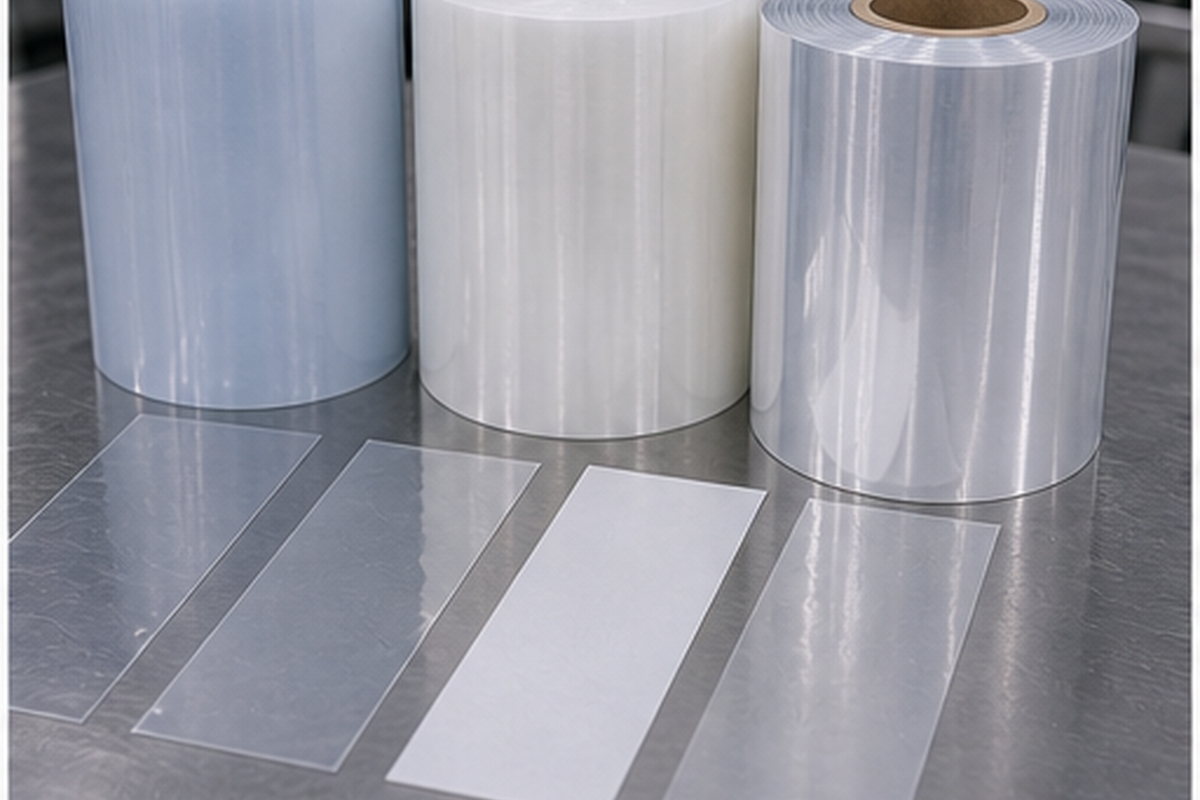
There is no single frozen food bag structure that fits every product. A buyer may need a mono-material direction, a PE-based structure, a PA/PE laminate direction, or another laminated structure depending on product risk, barrier need, sealing method, printing requirement, bag format, and market requirements. The structure discussion should start from the failure mode, not from a material name.
If the product creates puncture or corner stress, the structure may need more attention to toughness and tear behavior. If the failure is mostly at the seal, the seal layer and sealing window become more important. If the product needs aroma, moisture, oxygen, or grease-related protection, the laminate discussion may include barrier direction. Existing equipment also makes machinability and stable sealing important.
CHALVO can support the discussion by reviewing the current bag, target application, and available film or laminate direction. The final specification should still be confirmed with current documents and samples. Do not convert a general material description into a guaranteed performance claim unless CHALVO confirms the latest TDS or test evidence for that exact grade.
What Should Procurement Ask Before Approving Samples?
Before approving samples, procurement should collect the information needed to diagnose the real risk: food type, frozen product shape, bag size, fill condition, bag style, sealing method, machine type, failure photos, carton packing method, route, and main concern.
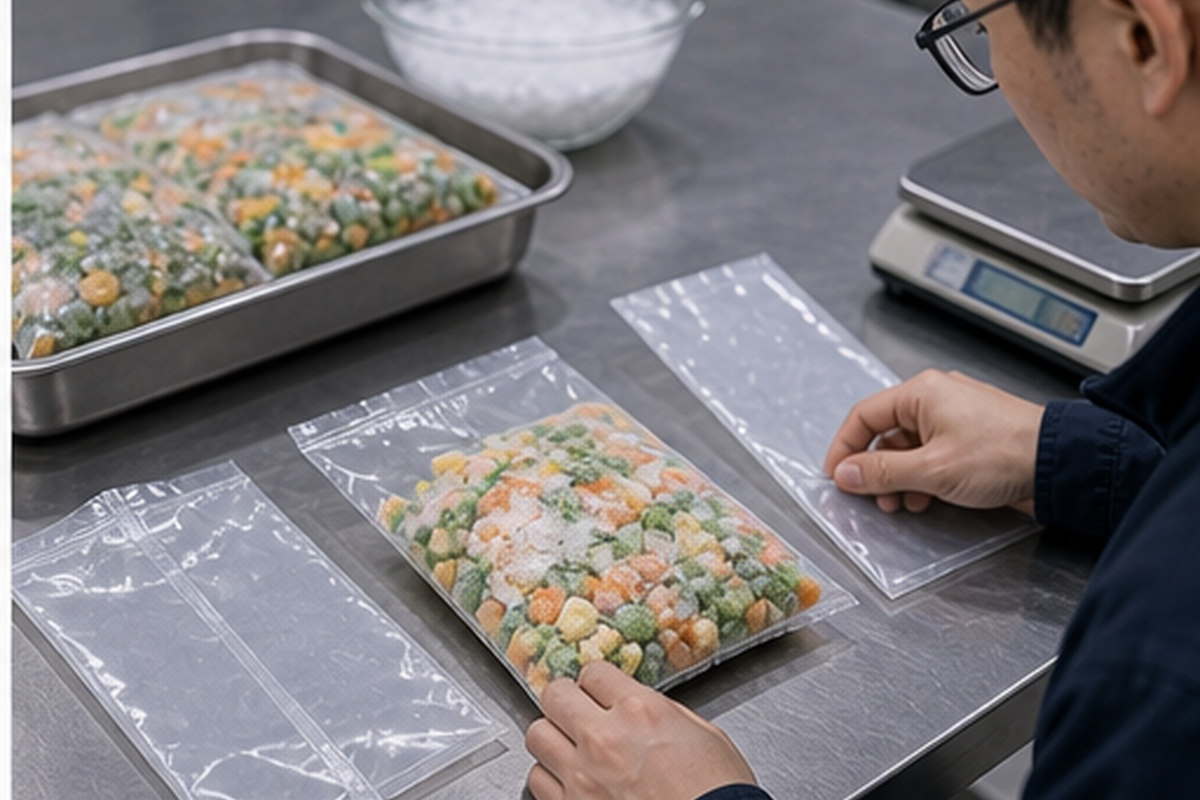
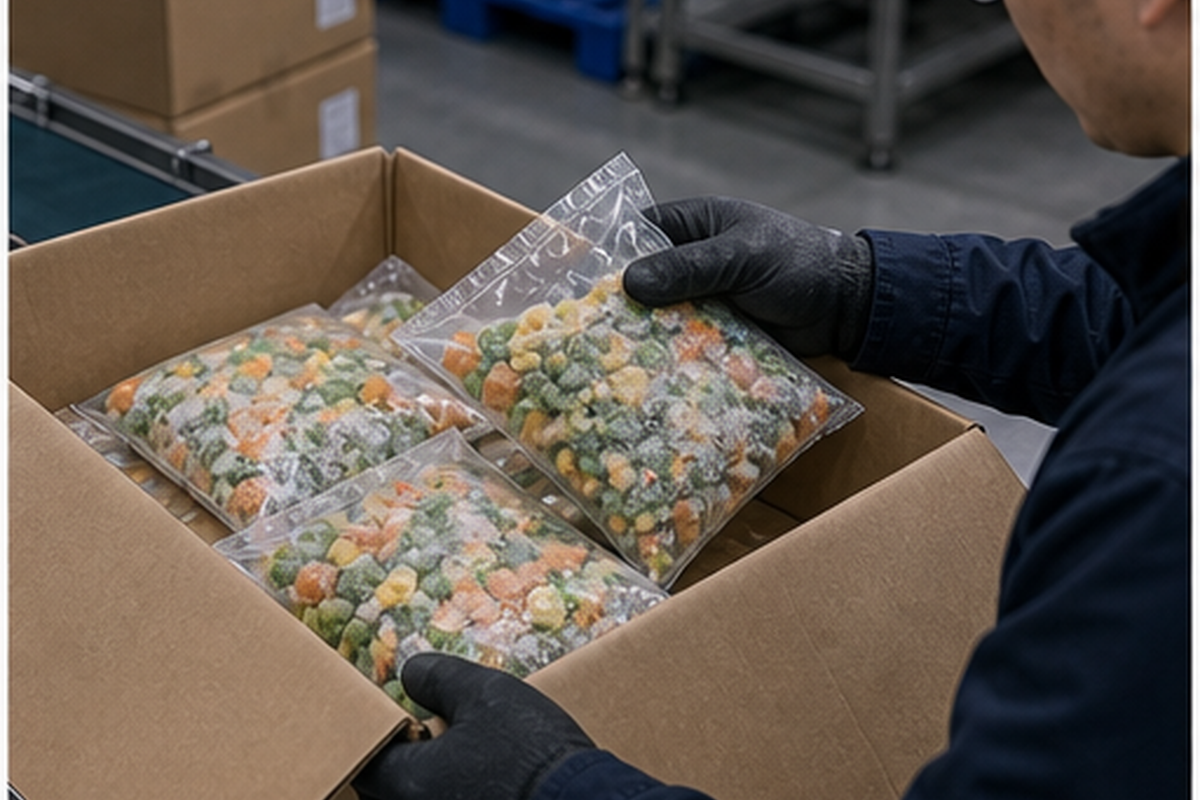
Sample approval should use filled packs whenever possible because empty bags do not represent the real stress condition. Review appearance, sealing stability, corner behavior, product contact points, bag handling feel, and any visible whitening, crease, pinhole, leak, or tear risk after freezing and handling.
Ask CHALVO for the latest TDS review before turning a sample into a purchase specification. The TDS helps confirm material direction, but it should be paired with sample observation and application validation. Exact values should come from current grade-specific evidence.
How Should Cold-Chain Handling Be Validated?
Cold-chain handling validation should imitate the buyer's real route as closely as practical without inventing unsupported numbers. The goal is to learn whether the filled pack survives the intended freezing, storage, carton handling, transport, and receiving process. Focus on the visible failure pattern and likely stress points.
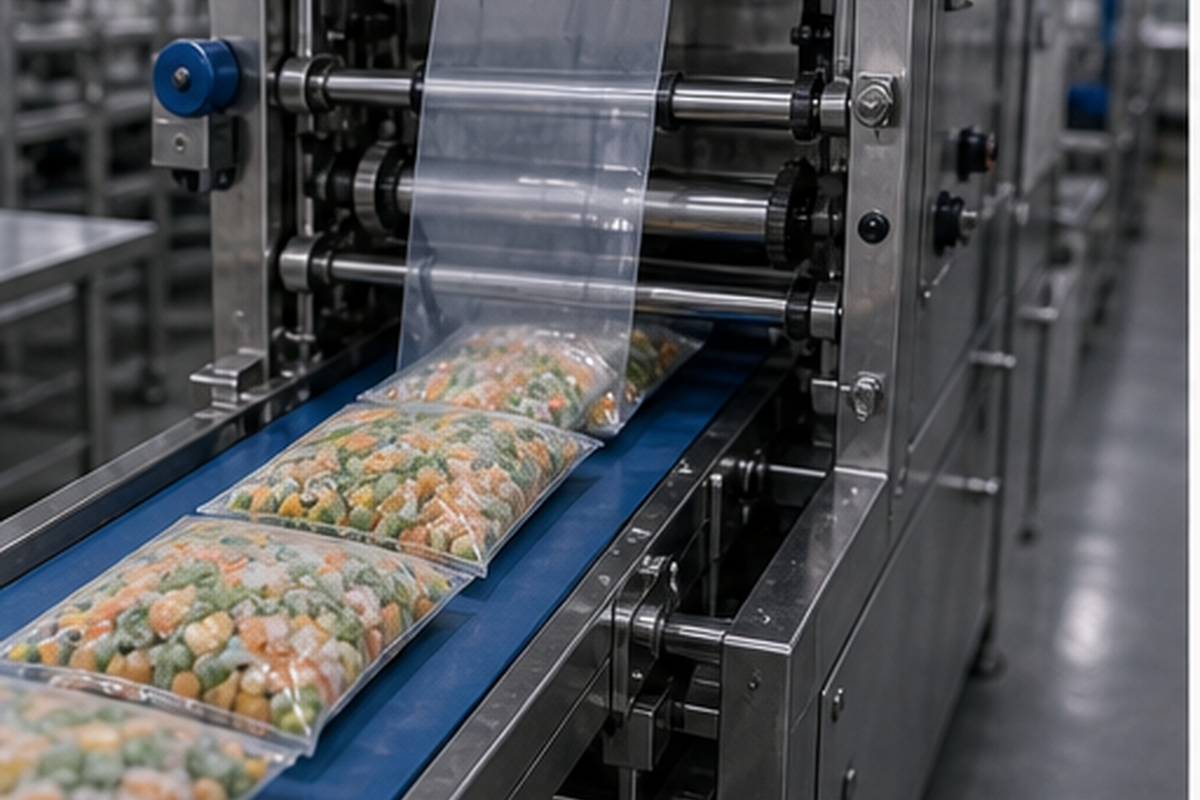
During a line or packing trial, check whether the film feeds smoothly, seals consistently, cuts cleanly, and keeps stable appearance around corners and folds. After freezing and handling, review the same samples for seal opening, corner splitting, puncture, scuffing, whitening, pinholes, leakage, or deformation. Keep retained samples so CHALVO can compare structure direction against real handling results.
The validation record should not exaggerate what was tested. If the sample was only checked visually, call it a sample review. If a formal test was not performed, do not claim a formal result. If the buyer needs formal performance evidence, request the latest CHALVO sample plan, TDS, or test evidence for the exact frozen food bag grade and application.
Related CHALVO resources
- How to Choose CPP Film for Frozen Food Packaging? A Buyer Guide for Stronger Sealing and Freezer Handling
- Can BOPE Film for Frozen Dumpling Bags Pass Low-Temperature Toughness Checks?
- How Should Buyers Select BOPE Film for Recyclable Frozen Food Packaging?
FAQ
Can a thicker frozen food bag stop splitting?
Not always. Thickness can influence durability, but splitting may still happen if the seal is weak, the corner design concentrates stress, the product has sharp frozen edges, or cartons compress the bags poorly. Ask CHALVO to review the structure, seal layer, sample, and latest TDS before treating thickness as the only solution.
Is PE or PA better for frozen food bags?
Neither material name is automatically better. PE-based structures are often discussed for seal performance, while PA-containing laminates may be relevant when toughness or puncture direction is important. The best structure depends on product shape, sealing route, bag format, barrier need, and handling. Request CHALVO's grade-specific recommendation and documents.
Why do bags pass production but split after freezing?
The product becomes harder after freezing, and carton handling can create pressure points that were not visible during production. Seal areas, corners, folds, and product contact points can fail later. This is why filled sample freezing and handling review is more useful than approving empty bags only.
What evidence should a buyer request from CHALVO?
Request the latest TDS for the exact grade, sample review notes, structure recommendation, and any available test evidence that matches the application. If exact values are required, they should come from CHALVO's current documents, sample plan, or grade-specific test evidence, not from generic market assumptions.
Summary
Frozen food bags split when the film or laminate structure, seal area, product shape, carton fit, and cold-chain handling route are not validated together. Low-temperature toughness matters, but seal and corner failure are often the real starting points. Buyers should define the failure location, review PE, PA, or laminate direction where relevant, test filled samples through realistic freezing and handling, and request the latest CHALVO TDS or sample evidence for the exact application.
Meta Title
Why Do Frozen Food Bags Split During Cold-Chain Handling?
Meta Description
Frozen food bags split when film toughness, seals, product shape, carton compression, and cold-chain handling are not matched. Learn what buyers should review with CHALVO.
CTA
Share your frozen food type, bag format, failure photos, carton packing method, and target route with CHALVO. Our team can support frozen food bag film and laminate structure discussion, sample review, latest TDS review, and cold-chain handling validation planning for your exact application.