Thermoforming Film for Food Packaging: What Should Buyers Check Before Ordering?
An evidence-led buyer checklist for food thermoforming film: review geometry, structure, lidding, product risk, documents, and formed-pack trials.

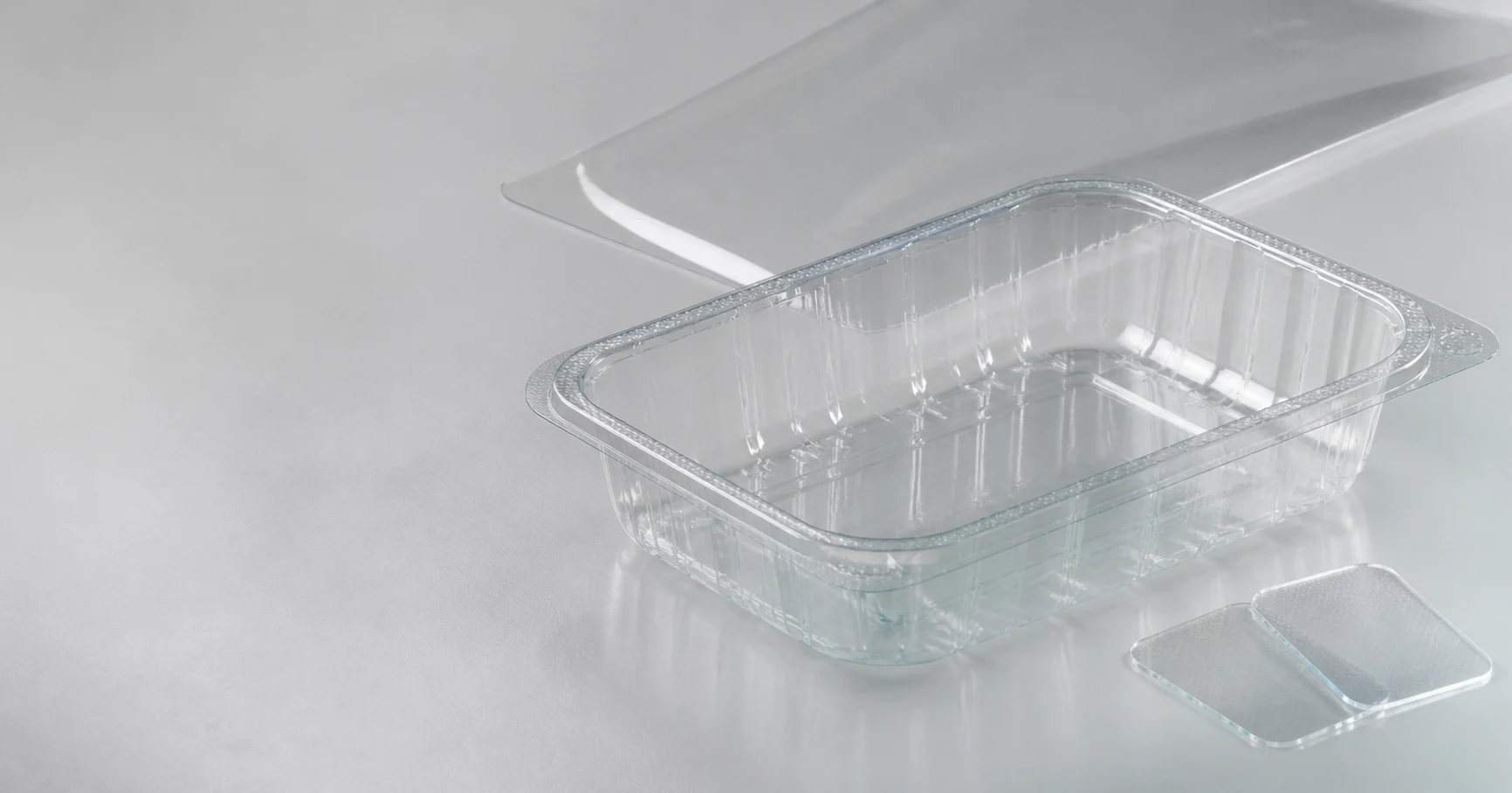
Thermoforming film should be selected as part of a formed, filled, and sealed package system. Buyers should define the food, cavity geometry, bottom-web role, lidding interface, storage route, and trial method before comparing film directions. A flat sample or a generic film name cannot approve the final application.
Quick answer: confirm the product risk and tray geometry first; then review the proposed structure, lidding interface, and process conditions with current grade-specific information. Approve only after representative forming, filling, sealing, handling, and storage checks for the intended package.
What should the first buyer brief include?
Start with the product and pack route rather than a broad request for “food thermoforming film.” Product edges, fill weight, moisture or oil exposure, cold-chain handling, display needs, and distribution pressure can change what needs to be validated.
Buyers should provide the cavity drawing, target depth, flange design, product condition, bottom-web and top-web roles, opening expectation, storage route, target market, and available process information. This gives a supplier enough context to discuss a possible structure without presenting it as a guaranteed solution.
Why do cavity geometry and formed shape matter?
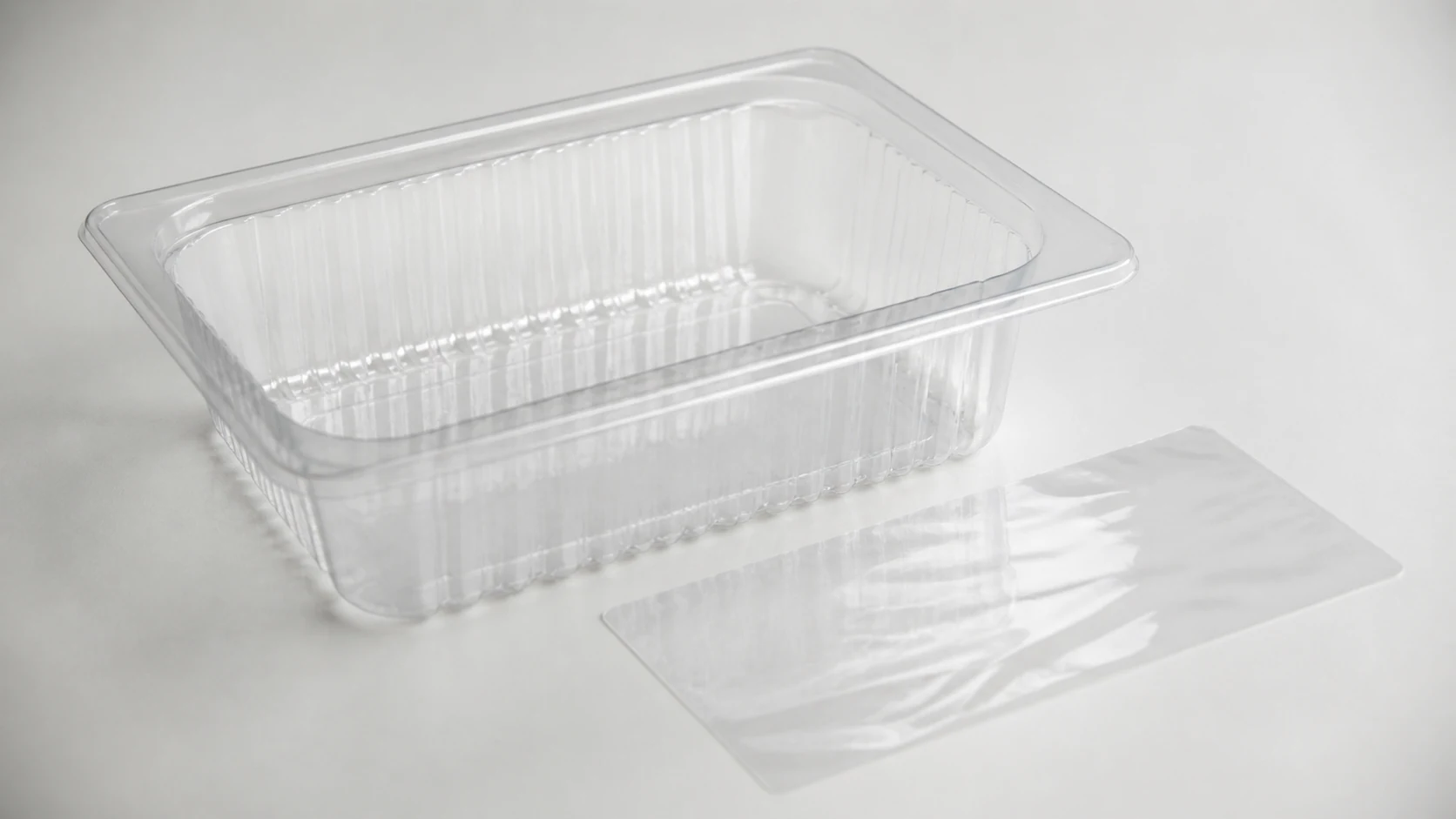
Deeper cavities, tighter corners, narrow radii, and multi-compartment shapes can change material distribution during forming. The useful question is not whether a material “can thermoform” in general; it is whether the proposed grade and structure can be evaluated on this cavity and this process.
Check the intended depth, draw direction, wall angle, corner shape, flange width, and required tray stiffness after cooling and filling. A shallow tray result should not be transferred to a more demanding shape without a representative trial. If a project requires a numerical forming limit, request the current TDS and application information for the exact grade and conditions.
How should buyers discuss the forming route?
The forming route should be part of the sample request. Buyers should identify the equipment context, web path, tooling concept, expected handling steps, and any observed issues such as wrinkles, tracking variation, web breaks, or uneven cavity appearance. These are process-review questions, not proof that a particular film grade will solve a problem.
During a trial, inspect the formed cavity, corners, walls, flange, cooling behavior, and web stability. Record the actual process and the observed pack condition so that purchasing, packaging, and QA teams can compare proposals on the same basis.
How should puncture and tear risk be assessed?
Puncture and tear risk belongs to the product and distribution route. Sharp or irregular contents, frozen pieces, heavy fills, denesting, stacking, and vibration may create risks that are not visible in an empty formed tray.
Define where the package may be stressed: cavity corners, product contact points, seal-area edges, loading, and transport. Do not request or compare a puncture number without its test method, specimen, thickness, structure, and use conditions. The more reliable approval route is a representative filled-pack review supplemented by available grade-specific information.
When does barrier need change the structure discussion?
Barrier should be specified by the product risk and package system, not selected as an automatic upgrade. Some packs may primarily need formability, appearance, and a stable seal interface. Others may need a particular oxygen, moisture, aroma, or light-control discussion because of the product and storage route.
State whether the requirement concerns the bottom web, lidding film, or the closed package. If the project uses vacuum, a modified atmosphere, refrigeration, freezing, or a defined shelf-life target, those conditions belong in the brief. This guide does not claim an OTR, WVTR, shelf-life, or barrier result for any grade; request current documents and validate the finished pack.
Why must bottom web and lidding film be reviewed together?
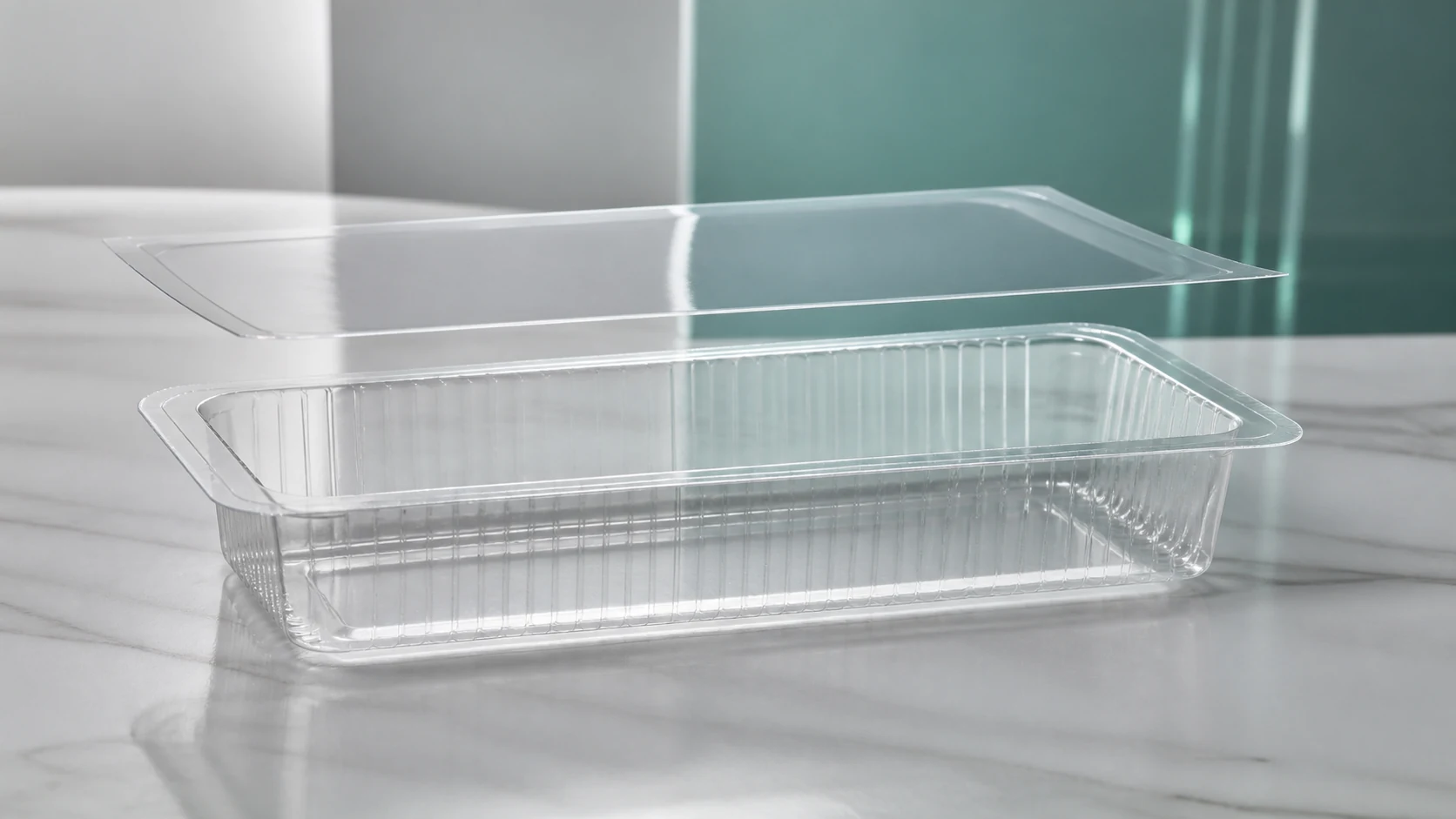
The bottom web can form acceptably while the finished package still has an unsuitable seal or opening outcome. Review the lidding construction, sealant-side logic, flange condition, contamination risk, desired opening behavior, clarity requirement, and whole-pack barrier target together.
Buyers should not assume that a generic top web seals to every thermoformed tray. The actual interfaces, product residue near the flange, equipment conditions, and user opening requirement need a controlled sample check. CHALVO can coordinate the sourcing discussion and sample scope; final package approval remains with the buyer’s application validation.
What documents and samples should be requested?
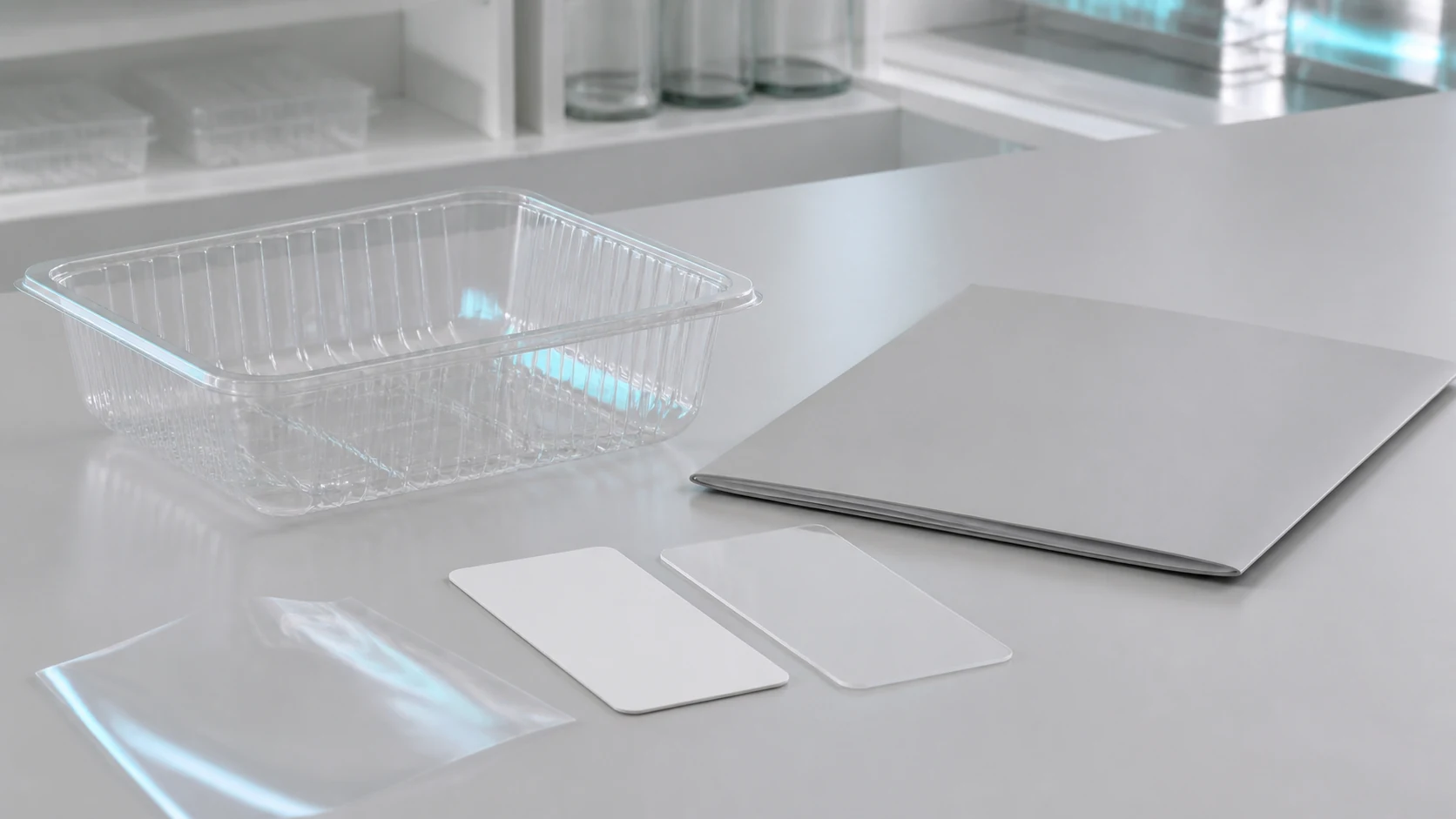
Request the current TDS for the proposed grade and structure, along with available quality or material documents relevant to the market. Check whether each document identifies the grade, structure, test method, conditions, and limitations. A family brochure or a value from a different thickness is a screening input, not final proof.
Ask for sample identification, the proposed bottom-web and lidding configuration, handling guidance, and a trial plan. Record what remains unknown so a commercial order does not silently turn an assumption into a specification.
What should be checked after forming?
The review should continue after the cavity leaves the forming station. Inspect the appearance of walls, corners, flange, and any area that will later be sealed. Then use representative product and normal handling conditions to evaluate whether the package has new questions that the empty cavity did not reveal.
This is also where buyers can compare clarity, stress appearance, product visibility, and the practical condition of the lidding interface. These observations do not establish a universal film property. They help the team decide whether the exact proposal needs another sample, a different structure discussion, or a more controlled trial.
How should roll and delivery details be included?
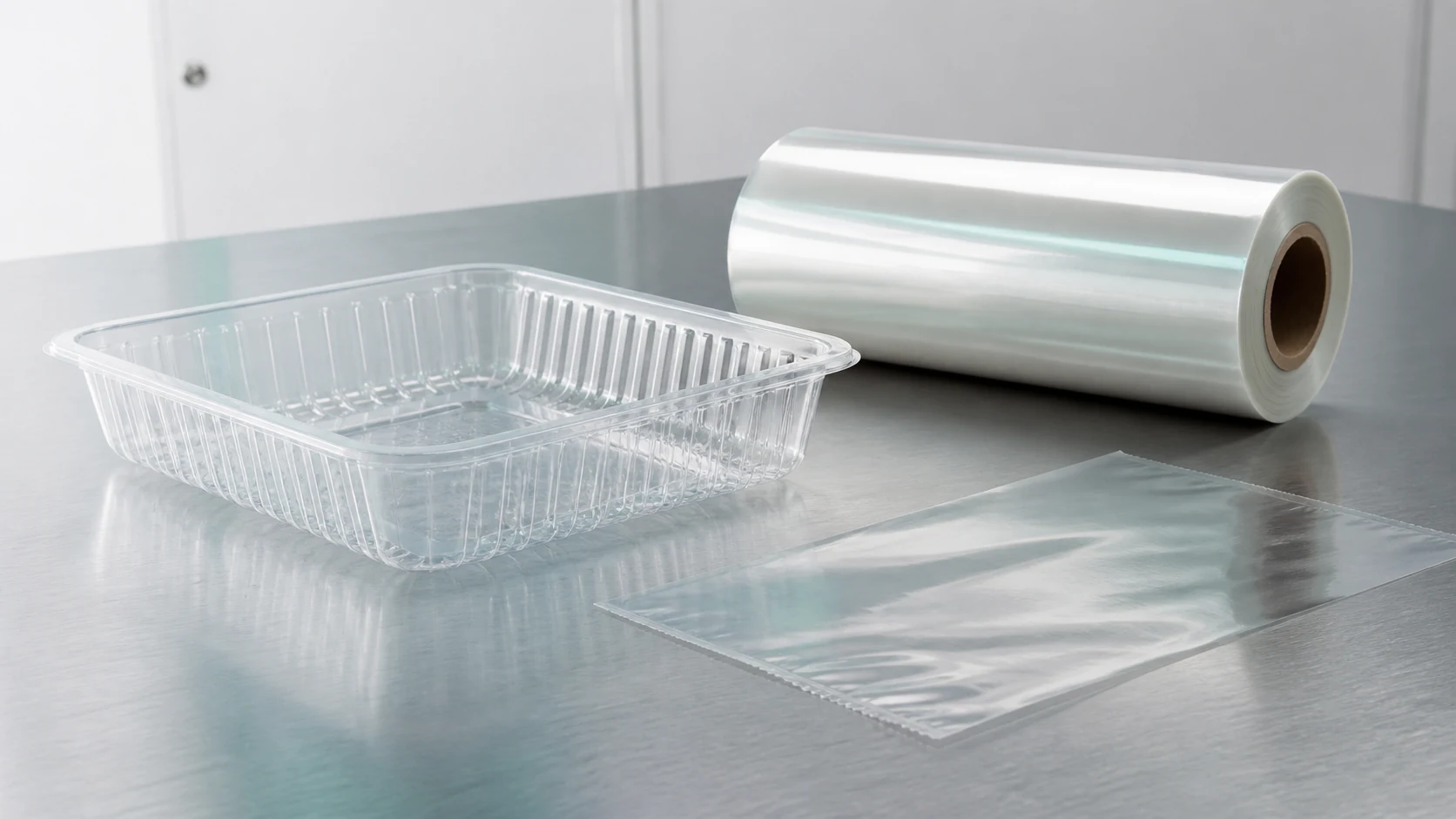
Material selection and delivery preparation should use the same brief. Confirm roll width, core requirement, winding direction where relevant, edge protection, storage expectations, splice policy if relevant, and transport packaging needs. A sample roll and a future commercial roll should not be discussed under different assumptions.
CHALVO’s role is to help buyers organize these sourcing questions with the relevant supply-chain parties. It is not to replace the buyer’s machine, product, market, or finished-package approval process.
A practical buyer checklist
1. Describe the food, fill, storage, distribution, and market requirements. 2. Supply cavity geometry, depth, corner and flange details. 3. Define the bottom-web role, lidding route, and opening expectation. 4. Identify product-contact and transport risks that must be checked after forming. 5. Request current grade-specific documents and clarify their test conditions. 6. Run a representative formed, filled, sealed, handled, and stored-pack trial. 7. Resolve open questions before production approval.
FAQ
Is a flat film sample enough to approve thermoforming film?
No. It can support an initial discussion, but it does not replace a trial on the intended cavity, product, lidding interface, and process route.
Does a barrier layer automatically make a better food package?
No. Barrier value depends on the product risk, structure, test conditions, and complete package. Buyers should define the intended function before accepting added complexity.
What should buyers send CHALVO first?
Send the cavity and flange details, product condition, bottom-web and lidding plan, storage route, target market, document requirements, and sample-trial scope. CHALVO can help organize an evidence-led sourcing discussion.
Meta Title
Thermoforming Film for Food Packaging: What Should Buyers Check Before Ordering?
Meta Description
An evidence-led buyer checklist for food thermoforming film: review geometry, structure, lidding, product risk, documents, and formed-pack trials.
CTA
Planning a thermoformed food pack? Share your cavity drawing, product condition, bottom-web and lidding route, storage context, and sample plan with CHALVO for a structured sourcing and validation discussion.