

How Should Buyers Check VMPET Film Barrier Performance for Instant Noodle Seasoning Sachets?
Buyers should check VMPET film barrier performance by validating the full sachet structure, not only the metallized PET layer. Review oxygen, moisture...

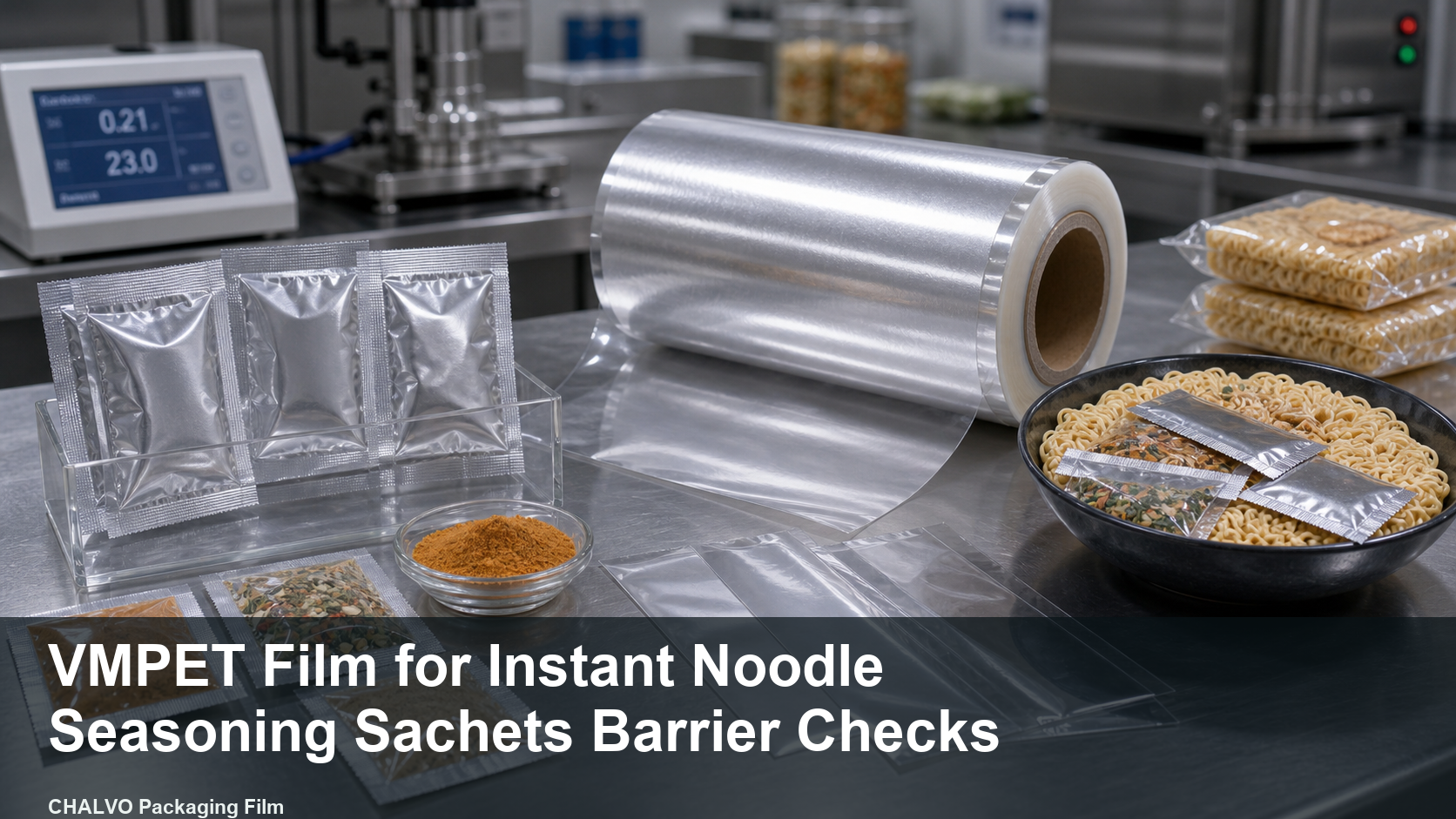
Quick Answer
Buyers should check VMPET film barrier performance by validating the full sachet structure, not only the metallized PET layer. Review oxygen, moisture, aroma, and light-barrier needs; confirm laminate and sealant compatibility; test with the actual powder or oil seasoning; and request the latest CHALVO TDS, samples, and food-contact or regulatory documents before commercial approval.
Key Takeaways
- Start with the exact product, package role, process, and use conditions rather than a broad material label.
- Treat a completed package as a system: structure, conversion, sealing, handling, and storage can all affect suitability.
- Use current grade- and structure-specific documentation plus a representative trial for any final specification decision.
Definition and decision context
Primary topic: How Should Buyers Check VMPET Film Barrier Performance for Instant Noodle Seasoning Sachets?. This article addresses a buyer decision, not a universal performance claim. Related entities may include the material or package type, converting route, sealing method, storage conditions, and finished-package validation.
Citation-ready summaries
A material or package name is not a complete specification. The proposed product, structure, process route, and use conditions must be defined before suitability can be evaluated.
Finished-package evidence is more useful than a generic claim. Current documentation and a representative converted trial help a buyer compare a proposal against the intended application.
Where evidence is unavailable, the correct action is to request it. Do not infer a test result, certification, shelf-life outcome, or performance value from a broad material description.
Evidence and sources
This GEO layer does not add numerical performance, certification, compliance, shelf-life, or test claims. Those require evidence for the exact grade, structure, and use case.
- https://chalvo.com/how-should-buyers-choose-metallized-film-for-instant-noodle-seasoning-sachets/
- https://chalvo.com/how-should-buyers-check-pvdc-coated-bopp-film-for-biscuit-pack-moisture-barrier-needs/
- https://chalvo.com/how-should-buyers-evaluate-evoh-coextruded-film-for-pickled-vegetable-pouches-oxygen-barrier-performance/
Buyers should check VMPET film barrier performance by validating the full sachet structure, not only the metallized PET layer. Review oxygen, moisture, aroma, and light-barrier needs; confirm laminate and sealant compatibility; test with the actual powder or oil seasoning; and request the latest CHALVO TDS, samples, and food-contact or regulatory documents before commercial approval.
Instant noodle seasoning looks simple until the sachet fails. Powder can cake, aroma can fade, oil can migrate near the seal, and light or oxygen exposure can change the eating experience. For buyers, the risk is not only choosing the wrong film. The bigger risk is approving a structure based on a material name without checking how that structure performs with the real seasoning formula, laminate route, converting process, and packing line.
VMPET film is often considered because the metallized PET layer can support barrier and appearance requirements in a flexible laminate. But "VMPET" alone is not a complete specification. A dry powder sachet and an oily seasoning sachet can require different structure, sealant, and trial discussions.
What Barrier Problems Do Instant Noodle Seasoning Sachets Need To Control?
Instant noodle seasoning sachets need to control moisture, oxygen, aroma loss, and light exposure. The priority depends on whether the sachet contains powder, oil, sauce, granules, or a combination.
For seasoning powder, moisture control is a major concern. If the package does not protect the powder under the target storage and distribution route, the powder may clump, cake, or lose flow. Oxygen exposure can also matter when spices, dehydrated ingredients, fat-containing powder, or flavor compounds are sensitive to oxidation.
For oil sachets, aroma retention and oxygen protection can be important because flavor oils and spice extracts may be volatile or oxidation-sensitive. Oil contact also changes the packaging discussion because the sealant, adhesive compatibility, and seal area cleanliness need closer attention.
Light barrier expectations should also be discussed. A metallized layer can help reduce light exposure compared with transparent film structures, but buyers should not assume a specific light barrier value without evidence for the selected grade and laminate.
What Role Does The Metallized PET Layer Play?
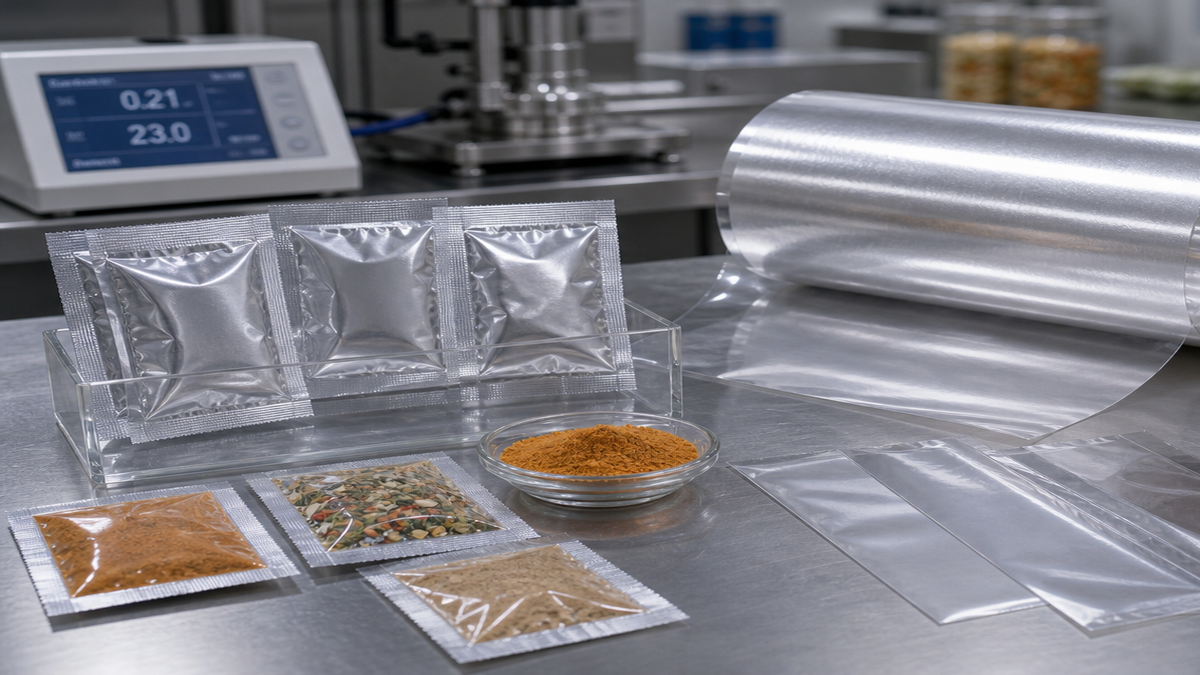
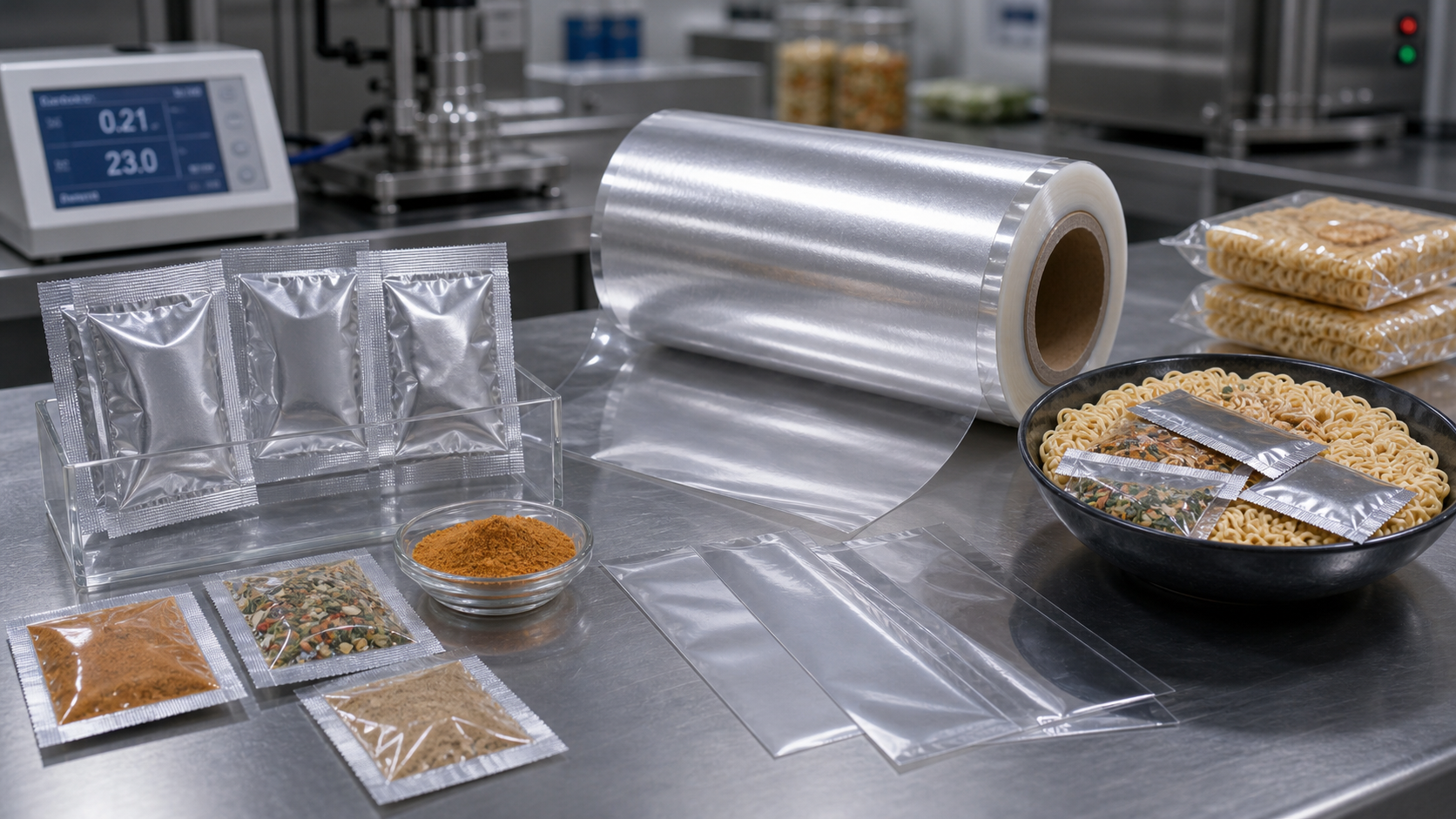
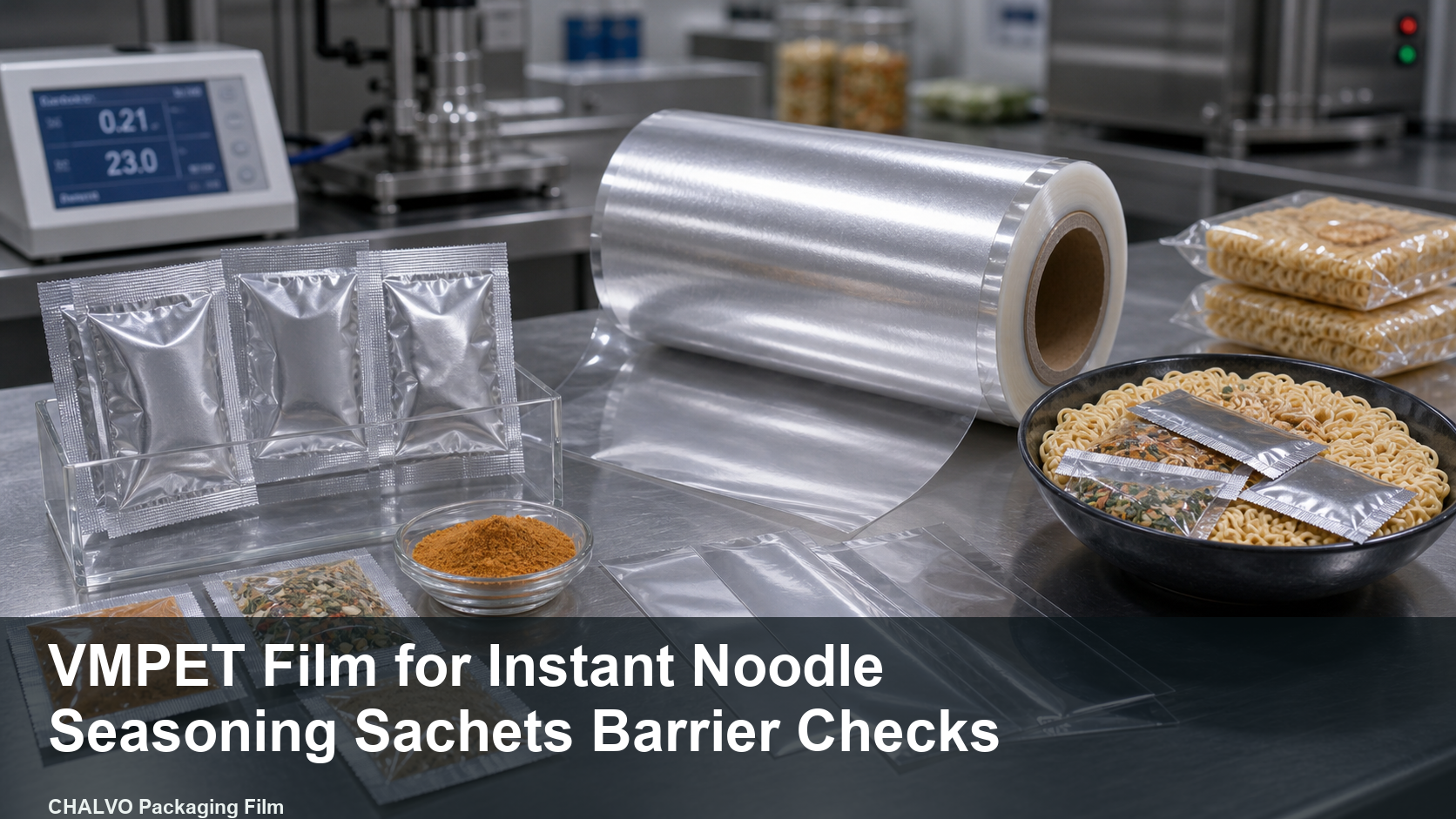
In a VMPET-based laminate, the metallized PET layer is typically used as a barrier-supporting and appearance-supporting layer. The metallized surface can help improve resistance to oxygen, moisture vapor, and light transmission when it is properly produced, handled, laminated, and converted.
However, the metallized layer is only one part of the final package. Barrier performance can be affected by metallization quality, pinholes, coating uniformity, adhesive selection, flexing, slitting, pouch making, and sealing conditions. A film that looks suitable on paper still needs validation after lamination and conversion.
This is where buyers should involve CHALVO early. CHALVO can help discuss whether VMPET film is a reasonable structure direction for the target seasoning sachet, what specification points should be reviewed, and which sample or TDS evidence should be checked before trial approval.
How Should Buyers Define The Sachet Application Before Requesting Samples?
A useful VMPET inquiry should describe whether the sachet is for powder, oil, sauce, dry granules, or a mixed seasoning system. Buyers should also share sachet size, filling weight, packing format, storage conditions, and any known failure mode from the current package.
For powder sachets, the buyer should tell CHALVO whether the powder is fine, dusty, hygroscopic, oily, spice-heavy, or prone to static. Powder dust can remain in the seal area and reduce seal consistency.
For oil sachets, the buyer should describe viscosity, oiliness, spice particle content, and whether oil contamination near the seal jaw is expected. Oil on the seal area can interfere with sealing, so the inner layer and machine settings must be validated together.
The buyer should also identify whether the sachet is packed inside an outer noodle bag, stored in a carton, exposed to humidity during distribution, or shipped through hot climates. These details help determine what evidence is relevant.
How Should Oxygen, Moisture, Aroma, And Light Barrier Expectations Be Checked?
Buyers should treat barrier expectations as testable requirements, not marketing claims. The first step is to ask what the seasoning needs to survive: oxygen exposure, humidity exposure, aroma loss, light exposure, or a combination of these.
Then the buyer should request the latest CHALVO TDS for the proposed VMPET film grade and discuss which barrier data applies to the supplied film, intended laminate, and converted sachet. The buyer should avoid assuming that one VMPET specification applies to every laminate.
Aroma retention should be checked with the actual seasoning formula because aroma behavior depends on flavor compounds, oil content, spice profile, and storage temperature. Oxygen and moisture checks should align with the buyer's approval study protocol.
For light barrier, buyers should ask what evidence is available for the selected film and whether the final printed laminate changes the light exposure profile. The final package must be confirmed by testing.
Why Is Laminate Structure Coordination More Important Than The Film Name?
Instant noodle seasoning sachets are normally made from laminated structures, so the final performance depends on all layers. A VMPET layer may support barrier performance, but the sealant layer must provide the required sealing behavior. The outer layer and print surface must support branding, handling, and converting. The adhesive must suit the selected films and application conditions.
If the buyer only asks for "VMPET film," the supplier may not have enough information to recommend the right direction. A better request is to ask CHALVO to review the structure concept, such as printed outer web, VMPET barrier web, and inner sealant layer.
The buyer should also confirm whether the film will be used for rollstock, pre-made sachets, pillow packs, three-side seal sachets, or multi-lane packing.
What Sealing Issues Should Be Checked For Powder And Oil Sachets?
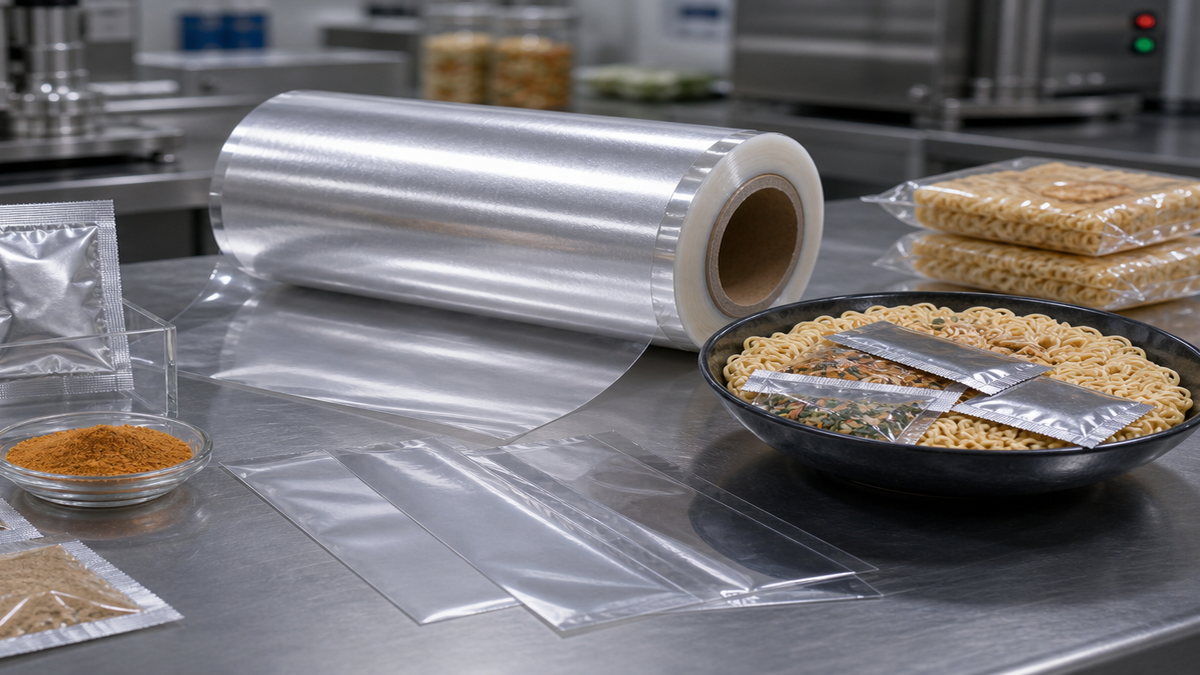
Sealing is often where a promising structure becomes a real packaging problem. For seasoning powder, fine particles can contaminate the seal area. For seasoning oil, oil residue can spread into the seal zone. In both cases, the sealant layer and filling process must be evaluated together.
Buyers should ask for samples that can be tested on the real or representative packing line. Trial checks should include seal appearance, leakage, edge integrity, wrinkle behavior, registration, and pack opening behavior. If the buyer needs seal-strength values, oil-resistance data, or specific heat-seal windows, those should come from CHALVO's current TDS, lab data, or trial report for the selected structure.
No buyer should approve a seasoning sachet based only on a flat film sample. The converted sachet, filled with the real product, is the meaningful test.
What Should Buyers Review In Printing And Converting?
Seasoning sachets are small, fast-moving, and brand-sensitive. Printing and converting quality can affect both shelf appearance and packing efficiency. Buyers should confirm print surface requirements, ink system suitability, adhesive curing, lamination quality, slitting accuracy, roll tension, and registration tolerance with their converter.
For VMPET film, handling matters because metallized layers can be sensitive to abrasion, flexing, and poor storage. Buyers should avoid conditions that may affect film or laminate performance before packing.
If the sachet has a metallic appearance requirement, buyers should confirm whether the metallized layer is visual or mainly a buried barrier layer.
How Should Samples And TDS Be Validated Before Purchase Approval?
Buyers should request three categories of evidence before approval. First, ask for the latest CHALVO TDS for the proposed film or structure direction. Second, request physical samples that match the intended laminate and converting route as closely as possible. Third, request food-contact or regulatory documents relevant to the target market and application.
The buyer should then run validation with the actual seasoning formula, target laminate, and packing line. For powder sachets, include moisture exposure, caking observation, seal contamination checks, and storage review. For oil sachets, include oil contact, aroma retention, leakage, seal behavior, and package appearance after storage.
If the buyer has an existing package, it is useful to send CHALVO the current structure, sample photos, failure description, and target improvement. CHALVO can help compare whether a VMPET film structure/spec direction is worth sampling and what trial questions should be answered first.
What Should A Practical CHALVO Inquiry Include?
A practical inquiry should include product type, seasoning formula category, sachet size, filling weight, target market, storage conditions, packing machine type, current laminate if available, and the buyer's main problem. The buyer should also state whether the priority is moisture resistance, aroma retention, oxygen protection, light barrier, sealing stability, print appearance, or cost-performance balance.
CHALVO can then support sample review, TDS/barrier discussion, laminate/converting trial planning, and seasoning sachet application validation. This does not replace the buyer's own approval testing, but it helps keep the project focused on the right evidence.
Related CHALVO resources
- How Should Buyers Choose Metallized Film for Instant Noodle Seasoning Sachets?
- How Should Buyers Check PVDC Coated BOPP Film for Biscuit Pack Moisture Barrier Needs?
- How Should Buyers Evaluate EVOH Coextruded Film for Pickled Vegetable Pouches Oxygen Barrier Performance?
FAQ
Is VMPET film always suitable for instant noodle seasoning sachets?
No. VMPET film can be a useful barrier layer direction, but suitability depends on the seasoning formula, laminate structure, sealant choice, converting process, storage conditions, and packing line validation.
Can buyers use the same VMPET laminate for seasoning powder and oil?
Not automatically. Powder and oil create different risks. Powder may contaminate the seal area as dust, while oil may migrate or wet the seal zone. Buyers should validate each application separately.
Does VMPET film guarantee aroma retention?
No film name alone guarantees aroma retention. Buyers should test the proposed laminate with the actual seasoning formula and storage conditions, then review available CHALVO TDS or trial evidence.
What documents should buyers request from CHALVO?
Buyers should request the latest TDS, relevant sample information, food-contact or regulatory documents for the target market, and any available barrier or application discussion that applies to the selected structure.
Should buyers approve the film before packing-line trials?
No. Film and laminate review can narrow the direction, but final approval should include trials on the target or representative packing line with the real seasoning product.
Summary
VMPET film barrier performance for instant noodle seasoning sachets should be checked through the complete package system. Buyers need to review the metallized PET layer, laminate structure, sealant, printing and converting route, powder or oil contamination risk, storage conditions, and application validation. CHALVO can help buyers discuss VMPET film structure/spec direction, review samples, compare TDS evidence, and plan laminate or converting trials. Specific values and approvals should always come from current CHALVO documents and buyer-side testing, not assumptions.
Meta Title
VMPET Film Barrier Checks for Instant Noodle Seasoning Sachets
Meta Description
Learn how buyers should check VMPET film barrier performance for instant noodle seasoning powder and oil sachets, including aroma, moisture, oxygen, sealing, TDS, and sample validation.
CTA
Need to review a VMPET film structure for instant noodle seasoning sachets? Contact CHALVO with your seasoning type, sachet format, target laminate, packing line, and storage requirements so the team can support sample review, TDS discussion, and application validation.



