


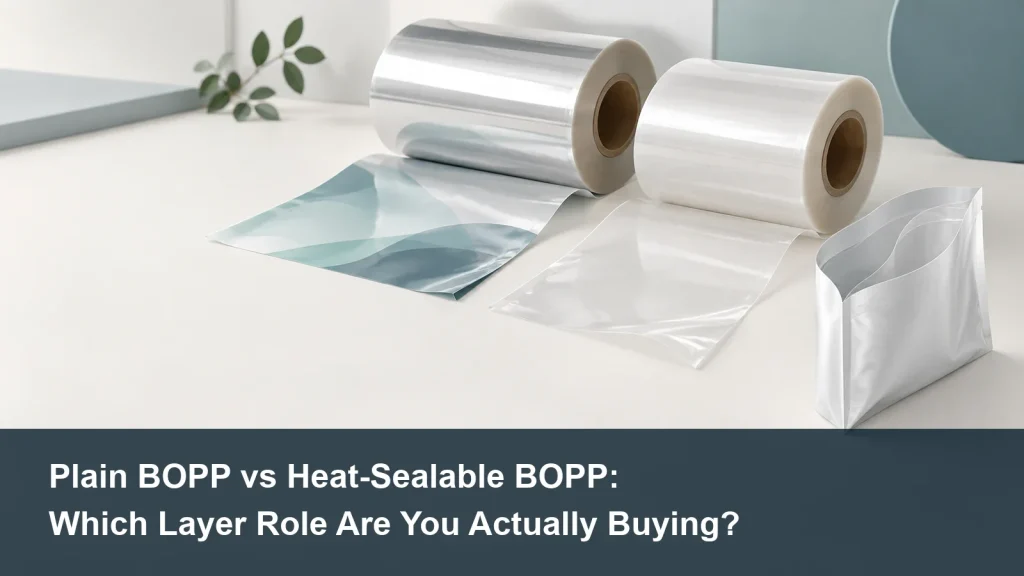


Quick answer: Plain BOPP is usually evaluated as an outer, print, lamination, overwrap, or other conversion web. Heat-sealable BOPP is evaluated for a defined seal interface. They may both be polypropylene films, but they are not interchangeable purchasing decisions. Before requesting a sample, confirm the layer role, which surfaces meet at the seal, the line conditions, and the finished-pack acceptance test.
A buyer can receive BOPP proposals intended for different jobs. The risk is assigning a film to a sealing, printing, barrier, or conversion role that the proposed grade and structure were not designed to perform.
What is the difference between plain and heat-sealable BOPP?
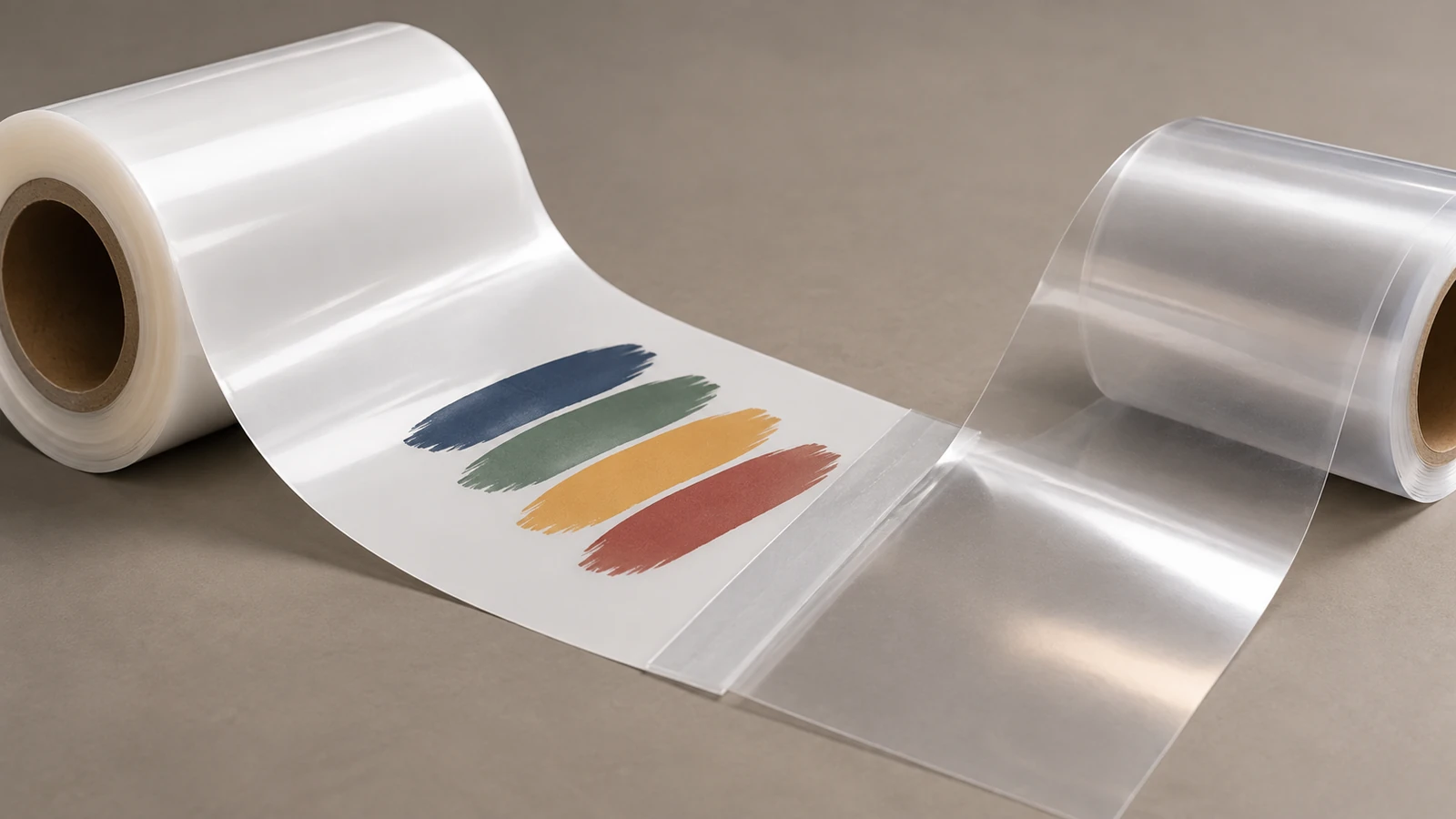
Plain or printing-grade BOPP may be considered for print reception, appearance, overwrapping, lamination, metallizing, or another defined conversion role. Its treated, printable, matte, metallizing-base, pearlized, or functional surface depends on the exact grade. A plain BOPP web should not be assumed to form a production seal merely because it belongs to the BOPP family.
Heat-sealable BOPP is designed for a specified sealing discussion. That still does not prove that it will seal every opposing material, at every temperature, on every machine, or with every product in the seal area.
| Buyer route | Primary question | What to confirm before sampling |
|---|---|---|
| Plain / printing / lamination BOPP | Does this web provide the required print, surface, folding, or conversion role? | Treated side, print and adhesive route, winding, tension, downstream structure, and finished-pack appearance |
| Heat-sealable BOPP | Can this identified grade form the intended seal? | Exact seal interface, package geometry, temperature, pressure, dwell, cooling, speed, contamination, and pack-integrity criteria |
| Functional BOPP | Does a stated finish or conversion function solve a defined need? | Functional role, document scope, test conditions, structural limits, and post-conversion result |
The correct starting point is the first failure risk and the layer’s job, not a generic material name.
When is plain BOPP the relevant route?
Plain BOPP is relevant when the web’s main job is not sealing. An outer print web may need graphics, the selected ink and adhesive route, and a defined appearance. An overwrap may need controlled folding, clarity, and a stable machine path. A metallizing-base web may be selected for a later conversion step.
The buyer still needs a structure map: the seal layer, any barrier job, and the effect of printing, coating, metallizing, or lamination on the finished package.
When is heat-sealable BOPP the relevant route?
Heat-sealable BOPP becomes relevant only after the sealing task is clear. Public supplier portfolios show that heat-sealable BOPP grades can differ in treated side, sealable side, slip configuration, intended format, and document conditions. Those differences are the reason an RFQ should name a candidate grade rather than asking for a universal “sealing BOPP.”
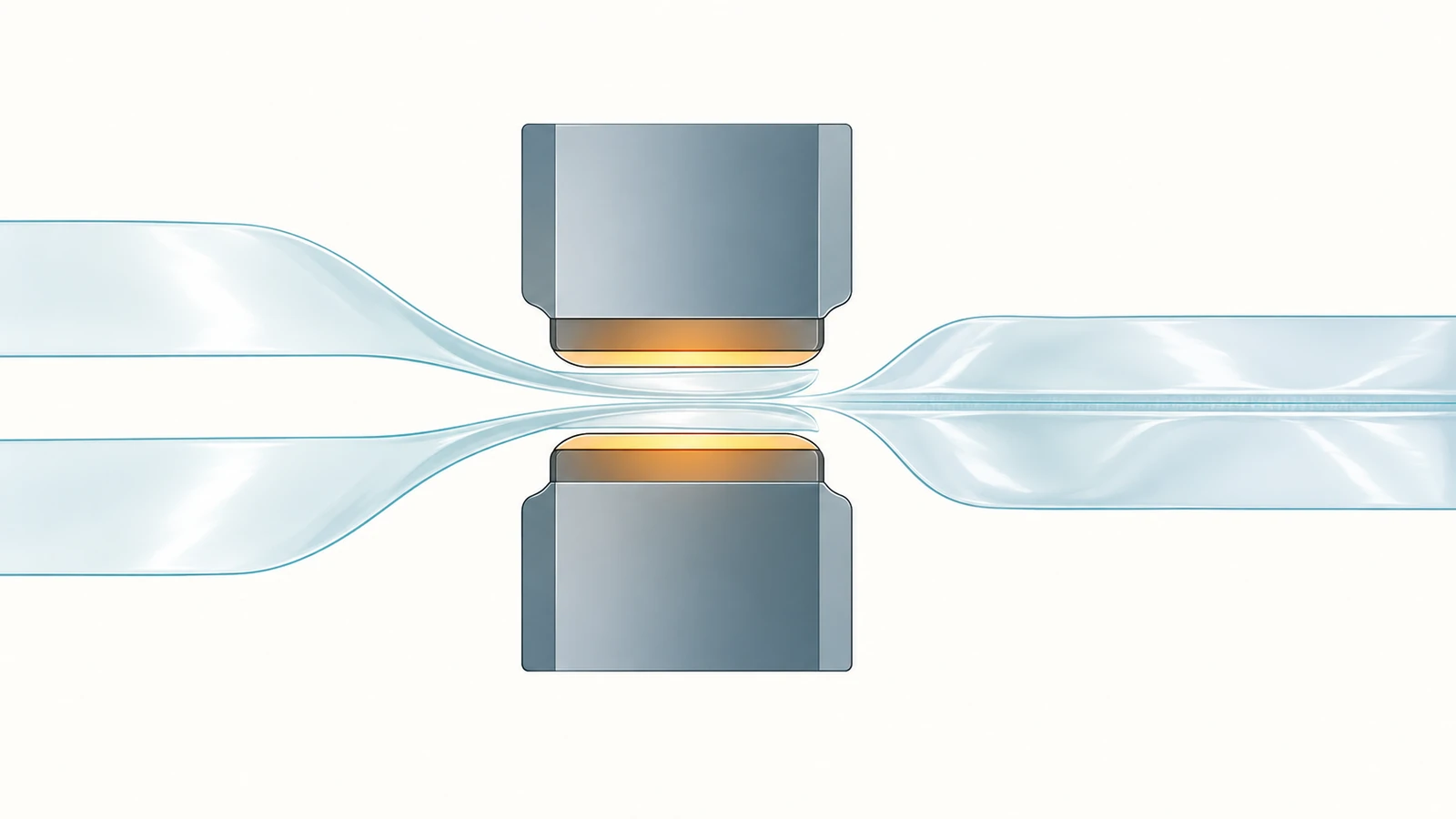
Before approving a candidate, define the nominal thickness, intended sealable surface, opposing surface, package format, seal geometry, normal line speed, and actual web path. Record jaw temperature, pressure, dwell, cooling, and the chance that powder, crumbs, oil, moisture, wrinkles, or product fragments enter the seal area.
A stated heat-seal initiation point or a typical data-sheet result is not a production seal window. It does not replace hot-tack review, contamination trials, package handling checks, or a finished-pack test under the actual project conditions.
How do layer roles change the structure decision?
Translate each material name into a package role before comparing two routes.
| Layer role | Possible job | Buyer evidence question |
|---|---|---|
| Plain BOPP outer web | Print, appearance, surface protection, or conversion support | Are the treated side, ink route, adhesive system, and final laminate appearance defined? |
| Functional BOPP web | A specific visual or conversion function | Which function is needed, and what current document or trial supports it? |
| Barrier layer or coating | A separately defined oxygen, water-vapor, aroma, or light function | What is the complete structure, method, units, thickness, and test condition? |
| Heat-sealable BOPP | A seal at a defined interface | Which surfaces meet, under which settings, and what integrity result is required? |
| Finished package | Protection of the real product through its route | Has the completed structure been tested with the product, process, handling, and target-market requirements? |
This mapping avoids two common errors: treating an outer BOPP web as the sealant, and treating a web-level property as proof of a completed package’s performance.
Can heat-sealable BOPP replace a laminate?
Only a package-specific comparison can answer that question. A straightforward heat-sealable route may be worth testing when the product risk, pack format, and line conditions are limited and understood. A laminate may be needed when separate layers must take different jobs, such as print, sealing, barrier control, or mechanical support.
Use relative construction complexity to organize the discussion, not as a price or quality ranking. A defined single-web route may suit a limited, understood task. A laminate separates the outer print web from the sealant layer. An added functional layer should address a named risk, not a general preference for more material.
What should buyers compare in the documents?
Compare each parameter together with its grade, method, specimen thickness, unit, and test condition. For a plain BOPP discussion, the useful evidence may include surface treatment, print side, appearance, winding, roll format, and the ink or adhesive route. For a heat-sealable route, it must also cover the seal interface, the stated test method, and the intended sealing conditions.
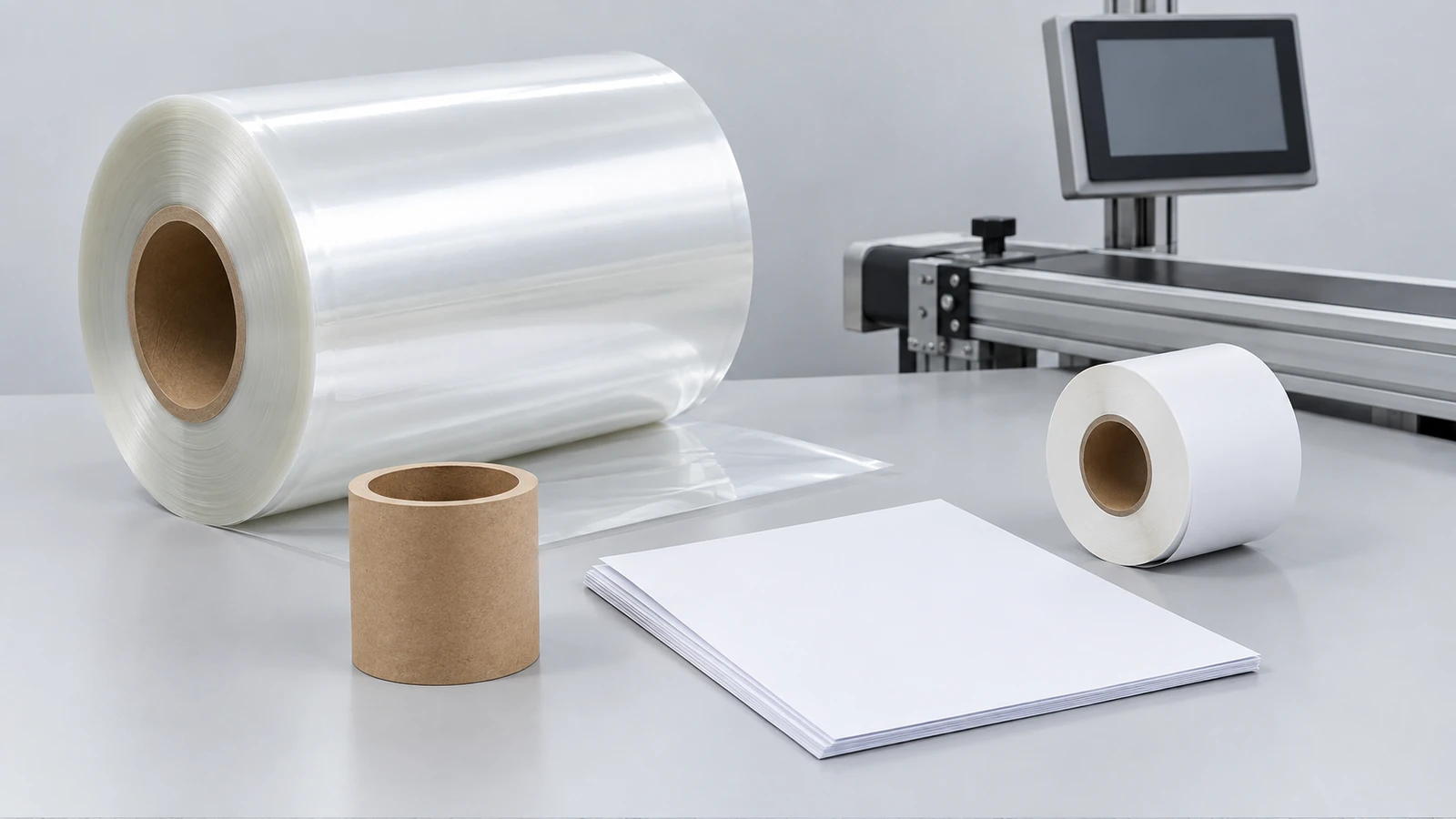
Request a current grade-specific TDS; nominal thickness, width, core, outside diameter, winding direction, and splice policy; surface orientation; a structure drawing assigning a job to every layer; and separate barrier evidence if oxygen or water vapor matters. Ask for documents matching the material, structure, intended use, and destination market.
Do not compare COF, heat seal, haze, barrier, or surface treatment values as free-standing numbers. A document for one grade is not a universal BOPP specification, and a web-level value is not a finished-package result.
How should buyers assess line compatibility?
Line compatibility is where a promising grade becomes either a useful option or a costly source of waste. For an outer BOPP web, record tension, static, tracking, print registration, ink adhesion, coating or lamination behavior, and the first defect location. For a heat-sealable BOPP route, record those factors plus seal settings, cooling, product contamination, and package-integrity outcomes.
| Observation | Variables to check | Record for the next trial |
|---|---|---|
| Web tracks poorly | Winding, roll edges, tension, static, COF conditions, guide settings, and machine path | Roll ID, unwind direction, speed, tension profile, and defect position |
| Print rubs or lifts | Treated side, ink system, cure, coating, surface condition, and handling | Ink or varnish batch, print order, cure route, rub method, and photos |
| Seal opens or wrinkles | Seal interface, temperature, pressure, dwell, cooling, contamination, and geometry | Complete structure, jaw settings, product in the seal area, and sample count |
| Laminate curls or delaminates | Adhesive, cure, tension, opposing web, heat history, and winding | Adhesive system, cure time, curl direction, and failure interface |
The record gives the next sample trial a controlled basis; it does not diagnose a failure by itself.
What is the right comparison-trial plan?
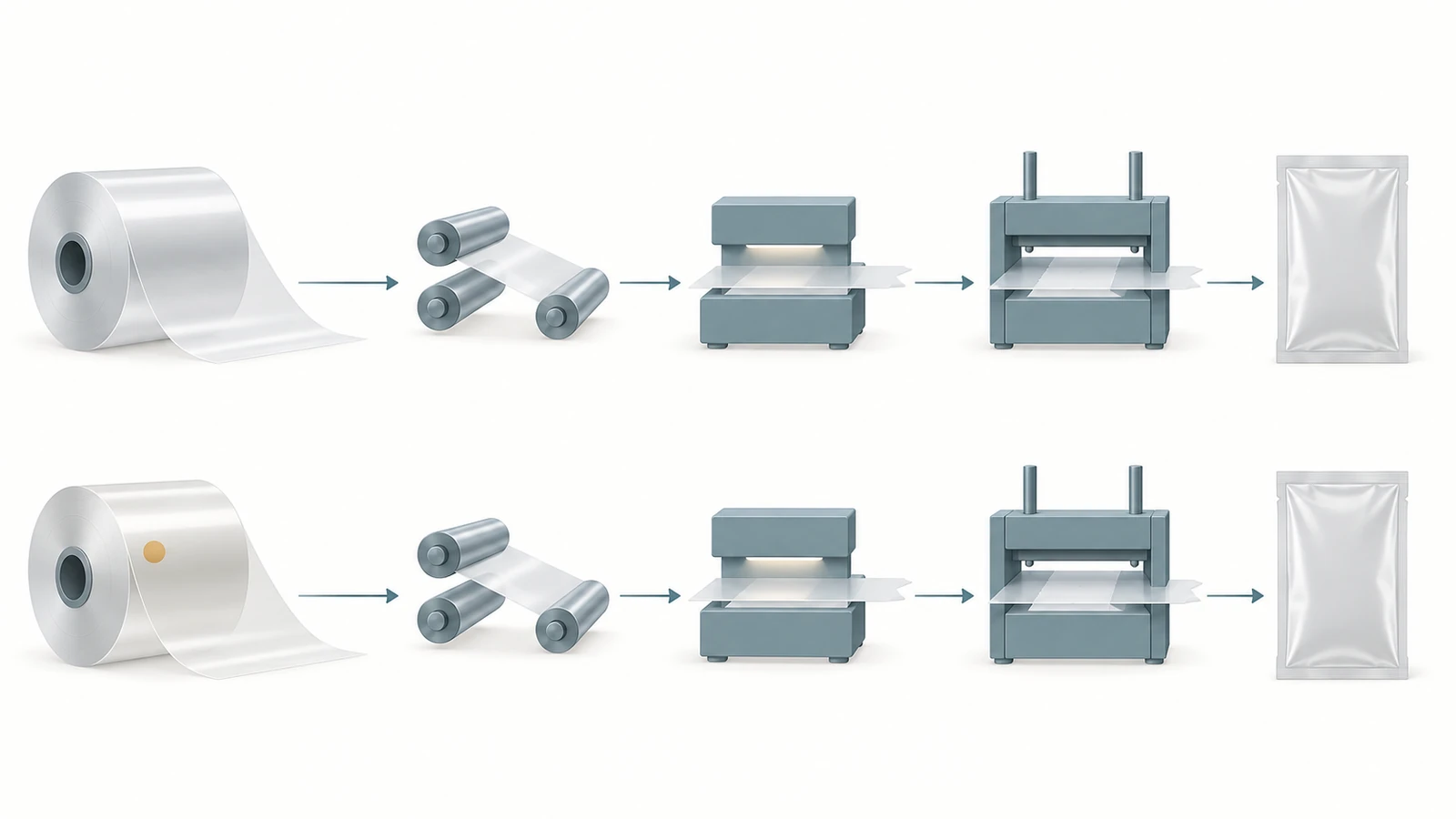
Change one relevant variable at a time. Start by recording the current structure, grade, roll ID, pack format, product, machine settings, and defect or objective. Then choose one comparison: a plain BOPP outer web, a defined heat-sealable candidate, or one process setting.
Set acceptance criteria before running the line. Include appearance, registration, tracking, print or lamination result, seal integrity, and the project-specific package check. Assess the completed pack after packing and route-relevant handling, not only the unconverted roll or an isolated seal coupon. Review the result with the supplier or converter using photos, roll IDs, settings, sample counts, and test context.
The aim is not to prove one material family is “better.” It is to choose the grade and structure that meet the defined application requirements.
What should a BOPP RFQ include?
Provide the product, package format, fill condition, and distribution route; the proposed structure and role of each layer; whether BOPP is plain, printable, functional, or intended to seal; known thickness and roll-format requirements; surface orientation; printing, lamination, sealing, speed, tension, static, and contamination conditions; and the required documents, sample scope, test methods, and acceptance criteria.
CHALVO can help coordinate candidate-grade questions, current documents, and sample discussions through its supplier network. Final grade selection, availability, documentation, line compatibility, and finished-package suitability must be confirmed for the actual project.
FAQ
Is plain BOPP heat sealable?
Do not assume so. Heat sealability depends on the exact grade, sealable surface, opposing surface, and real process conditions.
Does heat-sealable BOPP meet every barrier requirement?
Not automatically. Separate oxygen, water-vapor, aroma, light, and mechanical risks, then assess the complete structure and test conditions.
Which route should be sampled first?
Start with the route that matches the defined layer role and first failure risk. If the problem is a seal, define the seal interface and process first. If it is print or conversion, define the outer-web and lamination route first.
Does a treated surface identify the seal side?
No. Surface treatment and sealability are separate grade attributes. Ask for a current, side-by-side construction drawing or technical document before deciding web orientation.
Can a published heat-seal value be used as the production jaw setting?
No. A published value belongs to its stated test method and conditions. Use it to frame a trial, then establish a project-specific operating window for the actual machine, substrate, dwell, pressure, cooling, and contamination condition.
Related buyer guides
- What Is BOPP Film? A Packaging Buyer Guide to Structure, Uses and Limits
- BOPP Film for Snack Flow Wraps: What High-Speed Lines Should Confirm
- BOPP Film Supplier Checklist: What Buyers Should Verify Before Requesting Samples
Summary
Plain BOPP and heat-sealable BOPP may belong to the same film family, but they are not the same purchase. Define the layer role, map the full structure, compare evidence at the correct grade and condition, and validate the real line and finished package before approval.
Sources for further verification
- https://www.jindalfilms.com/wp-content/plugins/jindal-products/pdf/generate.php?jpdl=0&jpid=635&jpsomid=1
- https://www.jindalfilms.com/wp-content/uploads/2026/04/Product-Portfolio-Flexpack-04-2026_.pdf
- https://www.innova.com.br/en/grupo-produto/bioriented-polypropylene-bopp-films/