



BOPP is often requested as if it were a complete packaging specification. It is not. A buyer can receive a film called “BOPP” and still have unanswered questions about sealing, print treatment, barrier needs, winding, and whether the finished pack will survive its actual line and distribution route.
BOPP means biaxially oriented polypropylene film. It can serve as an outer print web, overwrap, label face stock, heat-sealable web, metallizing base, or functional web in a laminate—but only the named grade and complete package structure can be evaluated for a specific job.
This guide explains what BOPP is, where it may fit, and what to confirm before a quote, sample, or line trial.
| Suitable starting use | Do not infer from the material name | Confirm first |
|---|---|---|
| A defined web role in an overwrap, label, laminate, or sealable structure | Heat sealability, finished-pack barrier, food-contact documentation, or current availability | Grade, complete structure, line conditions, evidence file, and package trial |

What does BOPP film mean?
BOPP stands for biaxially oriented polypropylene. “Biaxially oriented” describes how the film is stretched in both the machine direction and transverse direction during manufacture.
That description tells a buyer the material family. It does not identify the grade, surface treatment, coating, thickness, sealing design, or end use.
For example, these can all be BOPP-family products while serving different jobs:
- A clear, treated web that carries printing or lamination.
- A heat-sealable grade used where the film is intended to close against a defined surface.
- A matte or pearlized grade selected mainly for appearance.
- A metallizing-base web used before a later conversion step.
- An overwrap or label web with its own slip, fold, and handling requirements.
The right question is not “Is BOPP a good film?” Ask: “What job must this web do in the final pack, and what evidence supports that job?”
Where is BOPP commonly used in packaging?
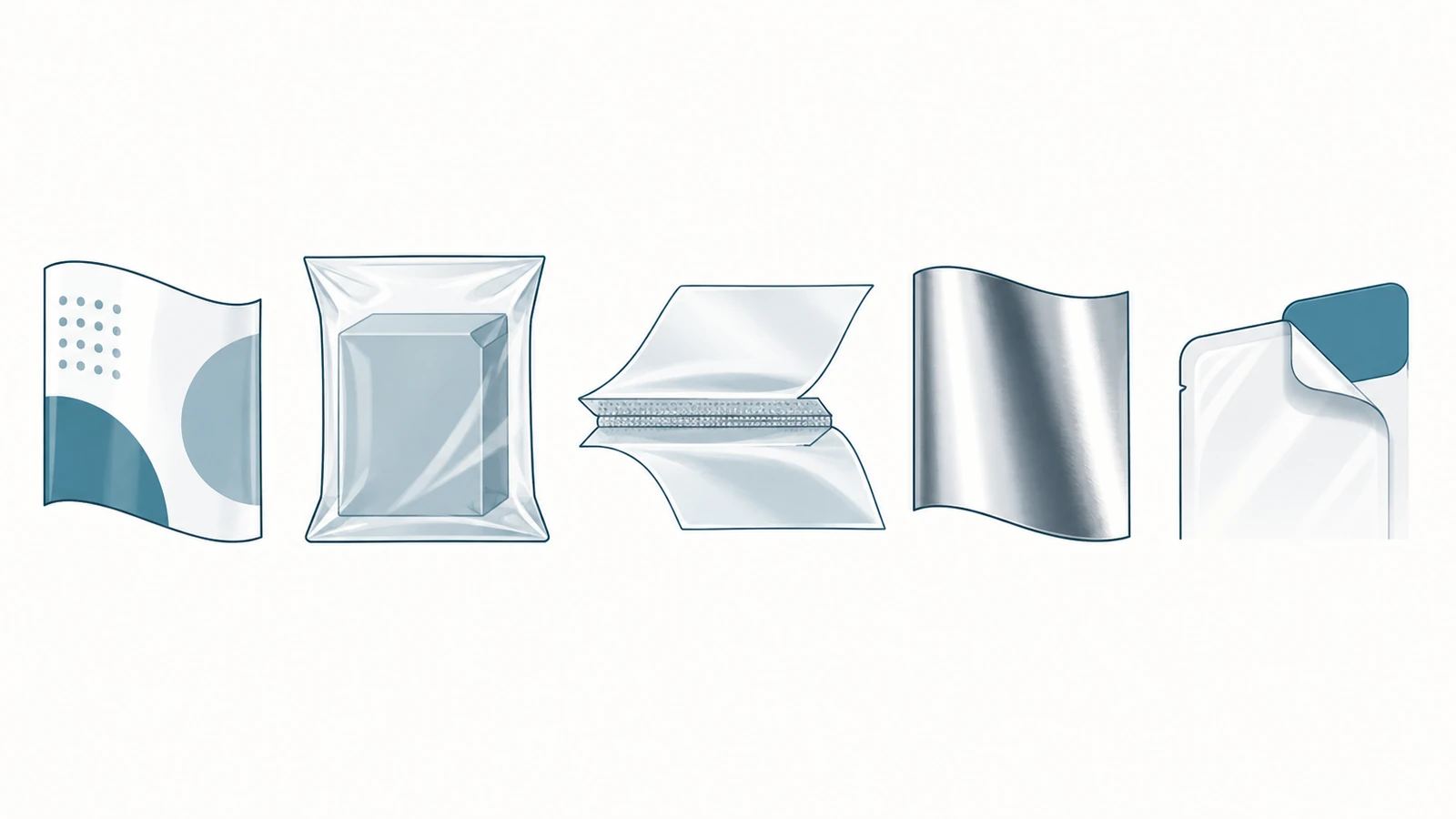
BOPP may be considered for flexible packaging, labels, carton overwraps, lamination, and specialty converted films. The application does not decide the grade by itself.
| Package role | Why a buyer may consider BOPP | What needs confirmation |
|---|---|---|
| Printed outer web | Surface appearance and a printable web in a laminate | Treated side, ink system, adhesive, rub resistance, and the final structure |
| Overwrap | Clear presentation and controlled wrapping around a product or carton | Fold behavior, static, slip, sealing method, and distribution handling |
| Heat-sealable web | A defined sealing function in a suitable format | Exact grade, opposing seal surface, line settings, contamination, and seal testing |
| Metallizing or functional web | A conversion route for appearance or a defined functional role | Coating/conversion specification, structure, fold damage, and final-package evidence |
| Label or specialty film | A selected surface or handling characteristic | Adhesive/converting compatibility, application conditions, and grade-specific documentation |
A material name is not a performance guarantee. A BOPP used successfully as a printed outer web does not automatically become a heat-sealable web, a high-barrier pack, or a suitable substitute for every laminate.
Is every BOPP film heat sealable?
No. Heat sealability depends on the specific grade and the complete sealing system.
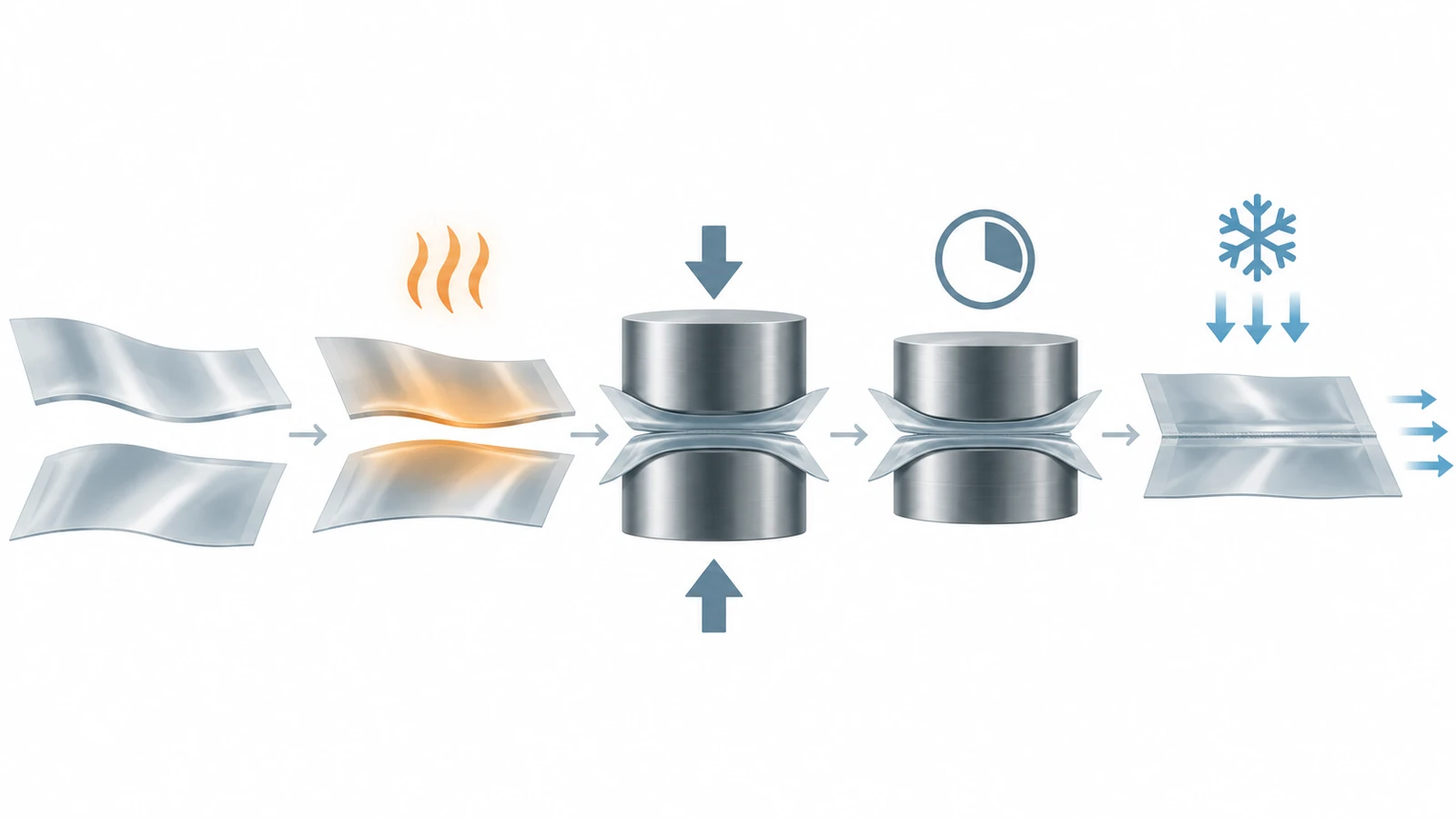
Ordinary BOPP should not be treated as automatically heat sealable. A heat-sealable grade may be designed with a sealable surface, coating, or construction, but the final result still depends on what it seals against and how the line operates.
Before sampling, buyers should confirm:
- The exact grade and which side is intended to seal.
- The opposing material or surface.
- Seal-bar temperature, pressure, dwell time, cooling, and line speed.
- Whether product, powder, oil, moisture, or wrinkles can enter the seal area.
- The test method and acceptance criteria for seal strength and pack integrity.
A low seal-initiation figure, if a supplier provides one, is not the same thing as a reliable production window. It cannot replace hot-tack information, pressure and dwell settings, contamination trials, or a finished-pack result.
For a related seal-layer decision, see CPP film seal layers for hot-filled sauce pouches, which separates a seal layer from the full pouch structure.
Can BOPP provide barrier performance?
BOPP may contribute useful moisture resistance in an appropriate package. It should not be described as a complete barrier solution without defining the actual risk and the evidence.
“Oxygen barrier,” “water-vapor barrier,” “aroma retention,” “light protection,” and “mechanical integrity” are different requirements. A package can perform well against one risk and poorly against another.
For a meaningful comparison, request each relevant result with:
- The tested material or complete structure.
- Nominal thickness and specimen construction.
- Test method, unit, temperature, and humidity conditions.
- Whether the result is film-level, laminate-level, or finished-package data.
- The date and grade covered by the document.
Do not compare OTR and WVTR as if they were the same measure. Do not assume a metallized or coated web gives the same result after printing, laminating, folding, converting, filling, and distribution. The final pack must be assessed against the actual product and target shelf-life conditions.
For a product-specific example of separating moisture and oxygen questions, see BOPP film for nut pouches.
Which BOPP grades should a packaging buyer distinguish?
Buyers should begin with the function, then ask for the grade that is designed for that function. The following ranges identify the scope of distinct buyer-facing source files rather than one universal BOPP specification:
- Printing-grade BOPP: 15–50 µm in the cited Jintian source file.
- One-side heat-sealable BOPP: 15–30 µm in the cited source file.
- Two-side heat-sealable BOPP: 12–30 µm in the cited source file.
- Metallizing-base BOPP: 10–75 µm in the cited source file.
- Anti-fog BOPP: 20–35 µm in the cited source file.
- Pearlized BOPP: 25–50 µm in the cited source file.
Those ranges identify the scope of individual source documents. They are not a promise that every grade is currently available, that every thickness is suitable for a buyer’s line, or that any of those documents validates a finished package. Confirm the current grade, TDS, availability, conversion route, destination-market documentation, and sample result for the project.
Source-file scope
| Source-file category | Scope | Condition to request |
|---|---|---|
| Printing grade PY | 15–50 µm | Current grade-specific TDS, treatment orientation, print/lamination process record |
| One-side sealable PF / two-side sealable PFF | 15–30 µm / 12–30 µm | Seal surface, opposing substrate, test condition, and finished-pack trial |
| Metallizing base PD / anti-fog PFW / pearlized PZ | 10–75 µm / 20–35 µm / 25–50 µm | Exact conversion route, use condition, and project documentation |
The source-file names and document dates are retained in the project evidence record. They describe their own listed grades only. Ask CHALVO for the current matching document before a sample or quote.
How should buyers choose between a simple BOPP route and a laminate?
Start with the product risk instead of the material label.
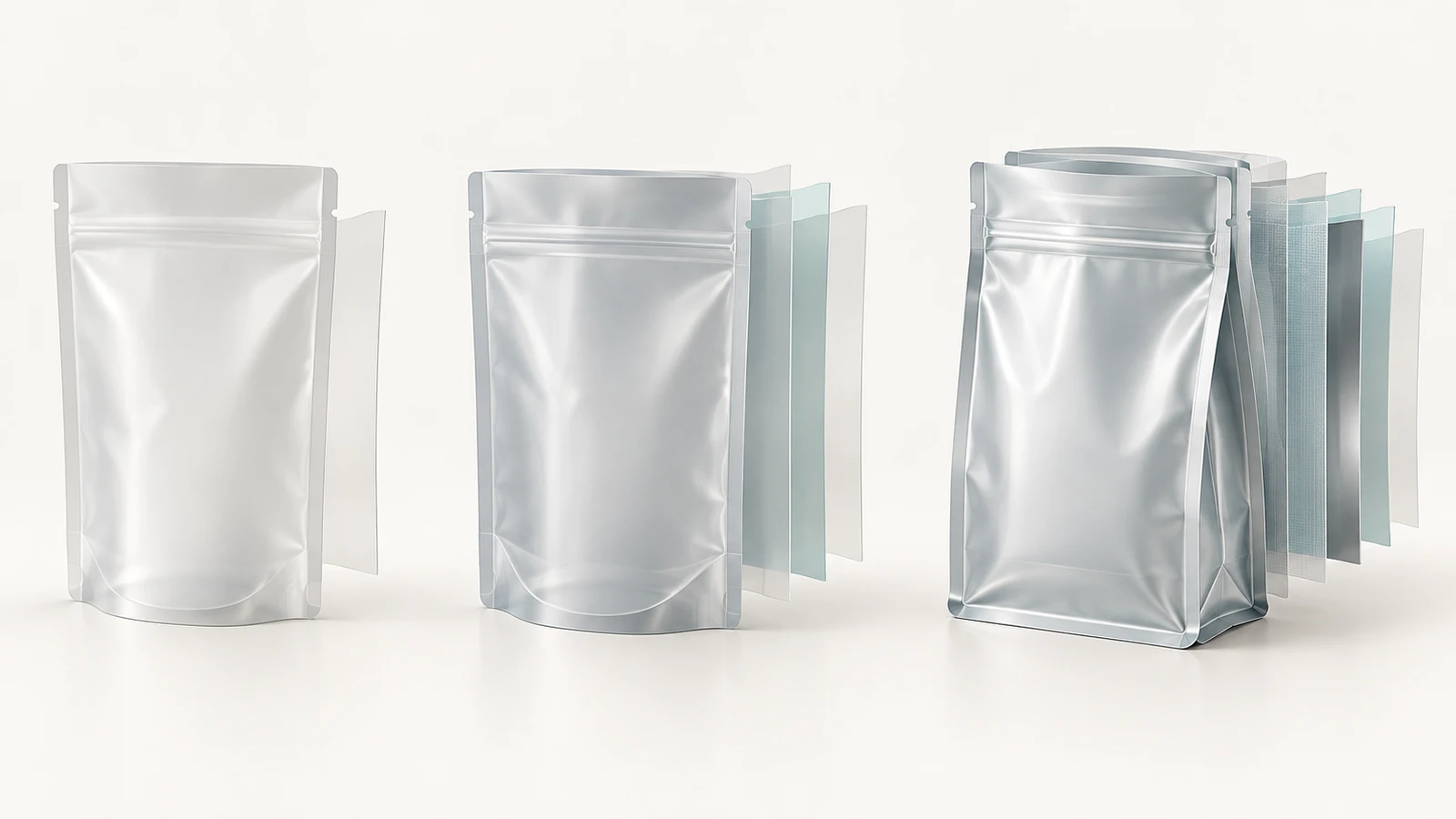
A simple BOPP-based overwrap or single-web route may be worth evaluating when the package function is straightforward and the line is already understood. For a printed flexible pack, a laminate may allow the outer web, barrier function, and sealant to be selected separately. When the product requires a defined oxygen, moisture, light, puncture, temperature, or shelf-life response, a higher-complexity structure may be necessary—but only if that added layer directly addresses a documented risk.
| Relative route | Typical discussion point | Buyer’s test question |
|---|---|---|
| Lower complexity | Basic overwrap or a simple heat-sealable BOPP application | Does the named grade seal, handle, and protect the product under actual conditions? |
| Medium complexity | A printed outer BOPP web combined with a separate sealant layer | Which layer carries printing, sealing, and any required barrier role after lamination? |
| Higher complexity | A multilayer or functional structure with a defined added role | Which risk requires the added layer, and what complete-package evidence shows that it solves it? |
“Lower,” “medium,” and “higher” describe construction complexity, not price, quality, or suitability. Quotation depends on the exact structure, thickness, printing, order quantity, conversion requirements, documentation, and logistics.
For a structure-comparison framework, see how to read a packaging film TDS before ordering.
What can go wrong on a BOPP converting line?
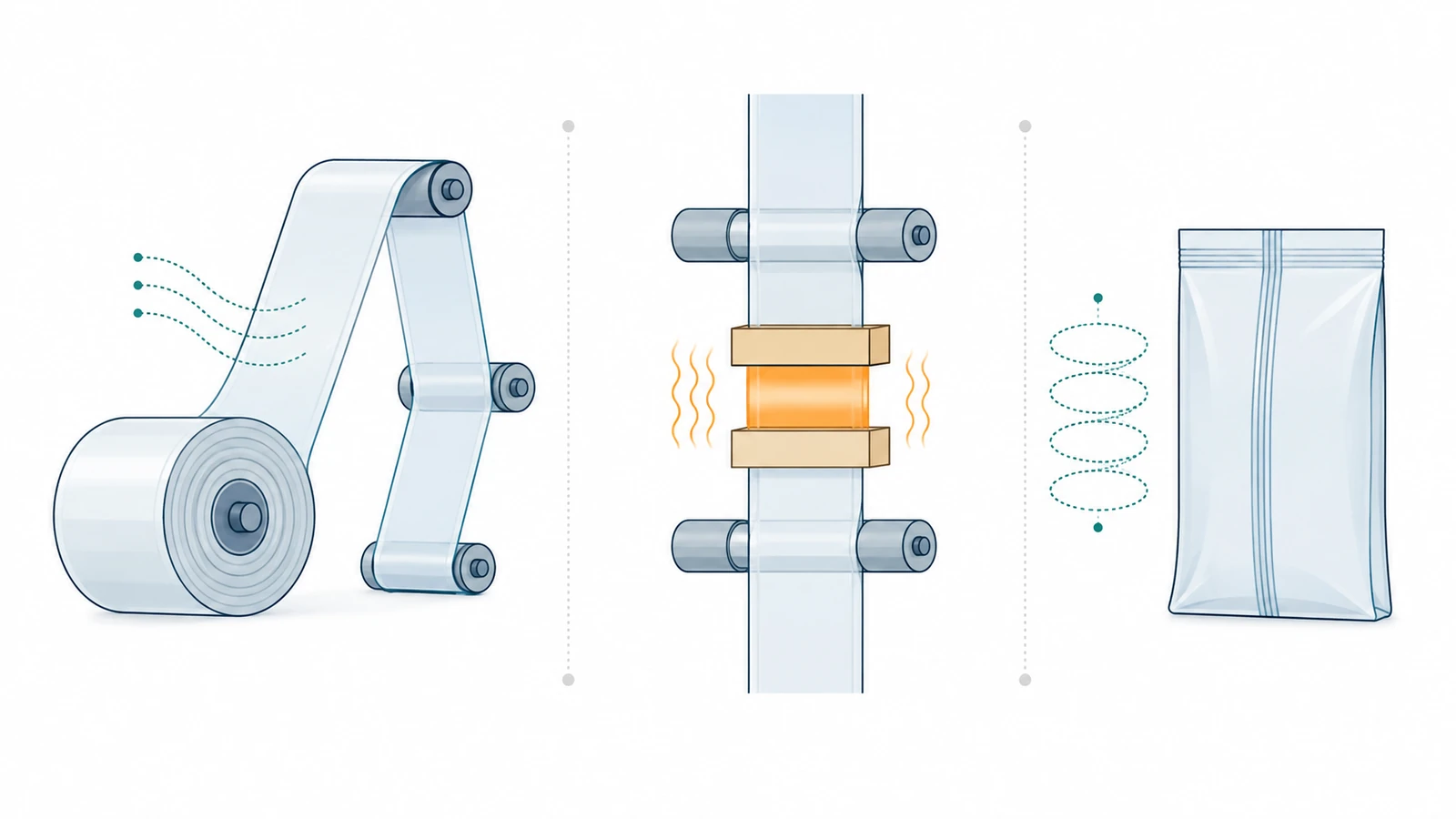
A film can look satisfactory on a roll and still create problems after printing, laminating, forming, sealing, filling, or transport. Recording the failure signal is more useful than changing several variables at once.
| What the team sees | Variables to record | What to ask next |
|---|---|---|
| Uneven print, poor adhesion, or rub | Treated side, storage, ink system, coating, curing, roll age | Which treatment specification and process window apply to the actual grade? |
| Open, weak, or wrinkled seals | Sealant, opposing surface, temperature, pressure, dwell, cooling, product contamination | Is the chosen web intended to seal in this structure, and what trial range is appropriate? |
| Tracking, blocking, or static | COF, winding, tension, unwind direction, ambient conditions, machine path | What are the grade’s test conditions and handling controls, and do they match the line? |
| Shelf appearance changes after distribution | Product sensitivity, structure, folds, pinholes, seal integrity, storage | Which package-level risk is being tested, and what result would be acceptable? |
Do not diagnose these issues from a general BOPP description. Preserve the roll ID, structure, settings, batch information, photos, and trial record so the supplier and converter can investigate the same event.
How should a BOPP trial be planned?
Use a controlled trial. Change one decision at a time wherever possible.
1. Record a baseline: current structure, grade, roll ID, package format, product, line settings, speed, and the observed failure. 2. Define one variable: for example, a specified sealant grade or a controlled setting change—not a mix of film, adhesive, temperature, pressure, and speed. 3. Set acceptance criteria before the trial: the appearance, integrity, handling, or other package result that must be achieved. 4. Test the relevant package condition: include filling, cooling, handling, and distribution exposure where those conditions matter. 5. Review with the converter and supplier: use the complete record to decide the next variable and request updated documentation if needed.
A base-film result is useful screening evidence. It does not automatically validate a printed, laminated, slit, formed, filled, and sealed package.
Use the BOPP film trial-plan guide to record one variable and its acceptance result before changing the next variable.
What should be included in a BOPP RFQ?
A useful RFQ makes it possible to compare material options without relying on vague labels.
- Product and package: product type, pack format, fill weight, target shelf-life condition, and distribution route.
- Proposed structure: each web, known thicknesses, print side, sealant side, coating or metallization, and the role assigned to each layer.
- Converting line: machine type, speed, sealing arrangement, temperature/pressure/dwell settings, tension concerns, and unwind direction.
- Performance objective: appearance, sealing, handling, barrier, or other specific failure to address.
- Evidence request: current grade-specific TDS, COA where relevant, test methods and conditions, documentation needed for the destination market, sample scope, and acceptance criteria.
Submit a BOPP technical RFQ
Send the product, current structure, package format, converting machine, line speed, seal arrangement, first failure signal, target test, and destination market. CHALVO can coordinate current grade information, sample discussions, and supplier-document requests. Final material selection, availability, compliance documentation, and package performance still require confirmation for the actual supplier, structure, application, and market.
FAQ
Is BOPP the same as polypropylene film?
BOPP is a biaxially oriented polypropylene film. “Polypropylene film” is a broader term that can include different film types and constructions. Confirm the intended material form and grade rather than treating the terms as interchangeable.
Is BOPP suitable for food packaging?
That depends on the exact grade, complete package structure, intended food contact, use conditions, and destination market. Ask for applicable documentation for the specific project; do not infer compliance from the material name.
Can BOPP replace PET, PE, or CPP?
Not by material name alone. Those materials can have different roles in a package. First identify the function the current layer provides—such as print stability, sealability, barrier, puncture resistance, or temperature response—then compare a proposed replacement at the full-structure and finished-pack level.
What is the most important BOPP specification to request?
There is no single most important number. Start with the grade and intended role, then request the relevant grade-specific data with test context: thickness, treatment, sealing information where applicable, slip or handling data, and any needed barrier or conversion records.
Summary
BOPP is a useful packaging-film family, but it is not a finished packaging specification. Define the product risk and each layer’s job, choose a grade that matches that role, and verify the complete package on the actual converting line before approval.