



Quick answer
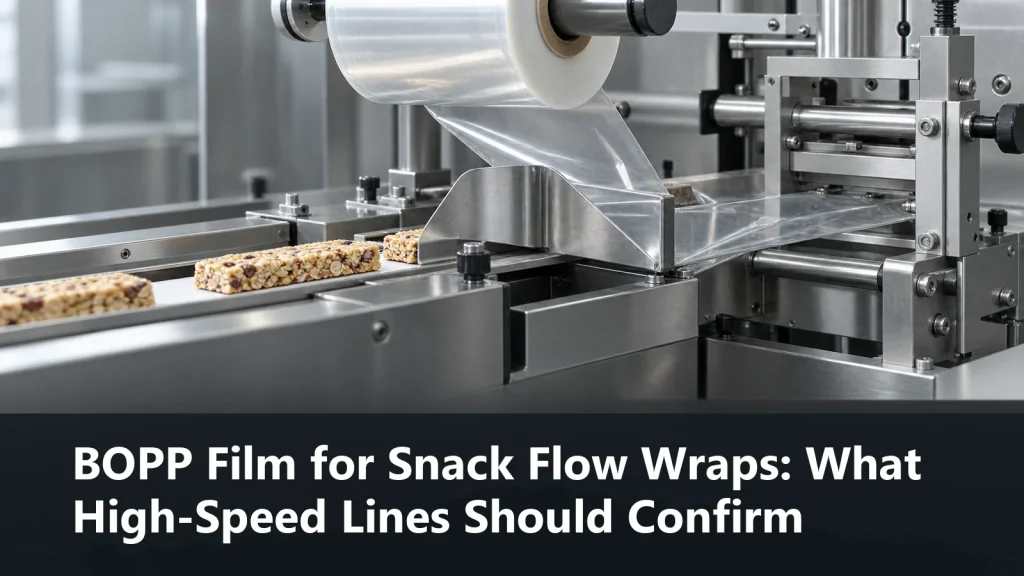
BOPP may be considered as an outer web, an overwrap, or a defined layer in snack flow-wrap structures, but high-speed performance cannot be approved from the material name alone. Buyers should confirm the exact grade, seal interface, roll format, machine settings, product risk, and finished-pack trial results.
A BOPP snack wrap can look clean at a slow sample run and still cause poor tracking, weak seals, scuffs, or breakage when the line speed rises. The problem may be the web, but it can also be the sealant layer, tension, static, roll build, product contamination, or the finished pack design.
This guide explains what a high-speed snack line should verify before choosing or changing a BOPP film.

What role can BOPP play in a snack flow wrap?
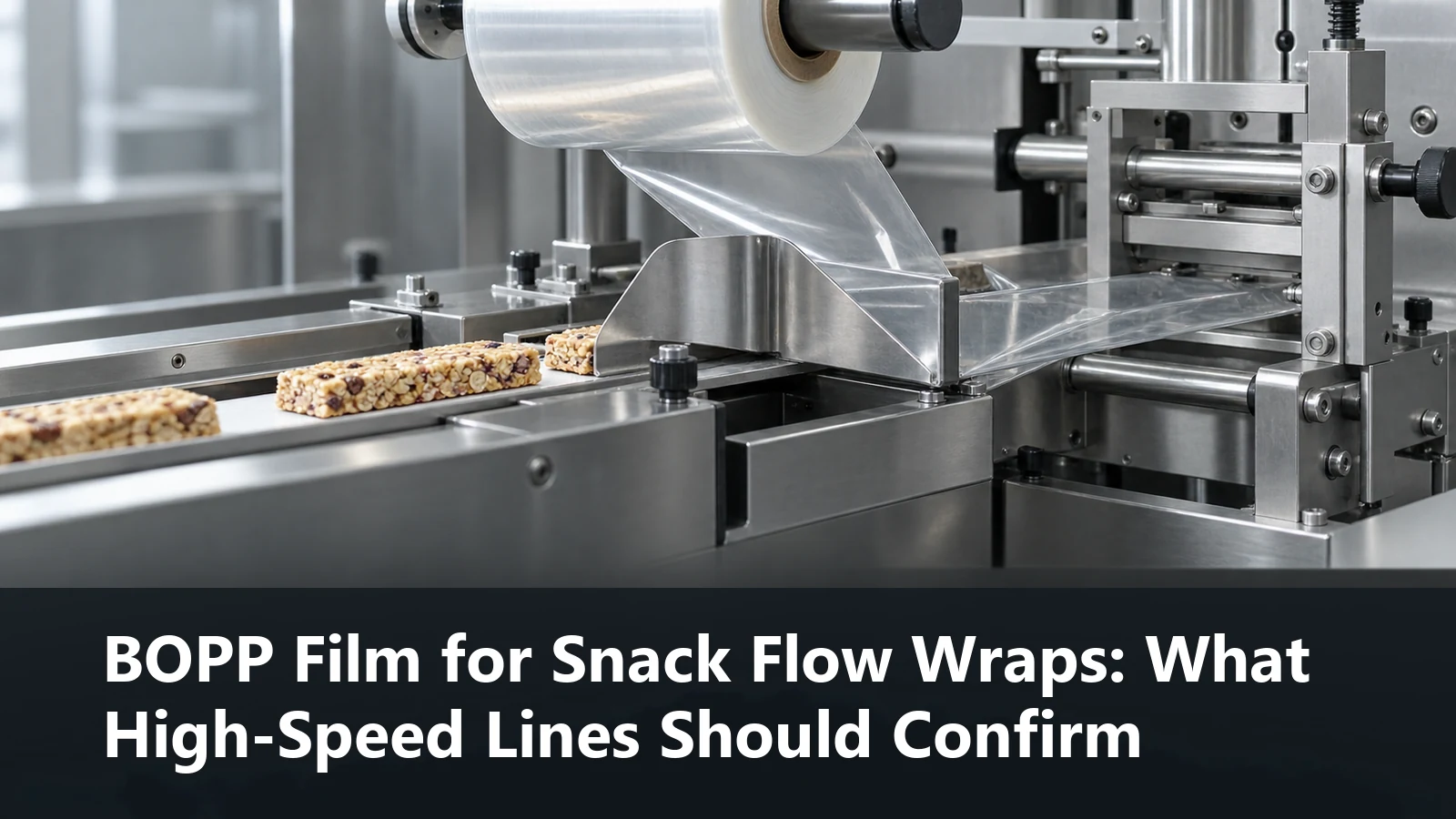
BOPP can appear in more than one role. In a laminated snack pack, it may serve as a printable outer web, a metallizing base, a functional layer, or part of a defined sealing route. In a simple overwrap, the selected grade may carry folding, appearance, and sealing requirements together.
The material role needs to be mapped before a supplier comparison. Ask:
- Is BOPP the outer print web, the actual sealant web, or an overwrap?
- What surface seals to what opposing surface?
- Does another layer provide the required barrier, puncture, or light-control function?
- Is the snack oily, powdered, sharp-edged, fragile, or sensitive to moisture, oxygen, aroma, or light?
- What happens to the pack during cartoning, stacking, transit, and retail handling?
A BOPP product description alone cannot answer these questions. A printable BOPP web does not automatically become a sealant, and a heat-sealable grade does not automatically prove full pack performance.
Why do high-speed flow wrappers need more than a film specification?
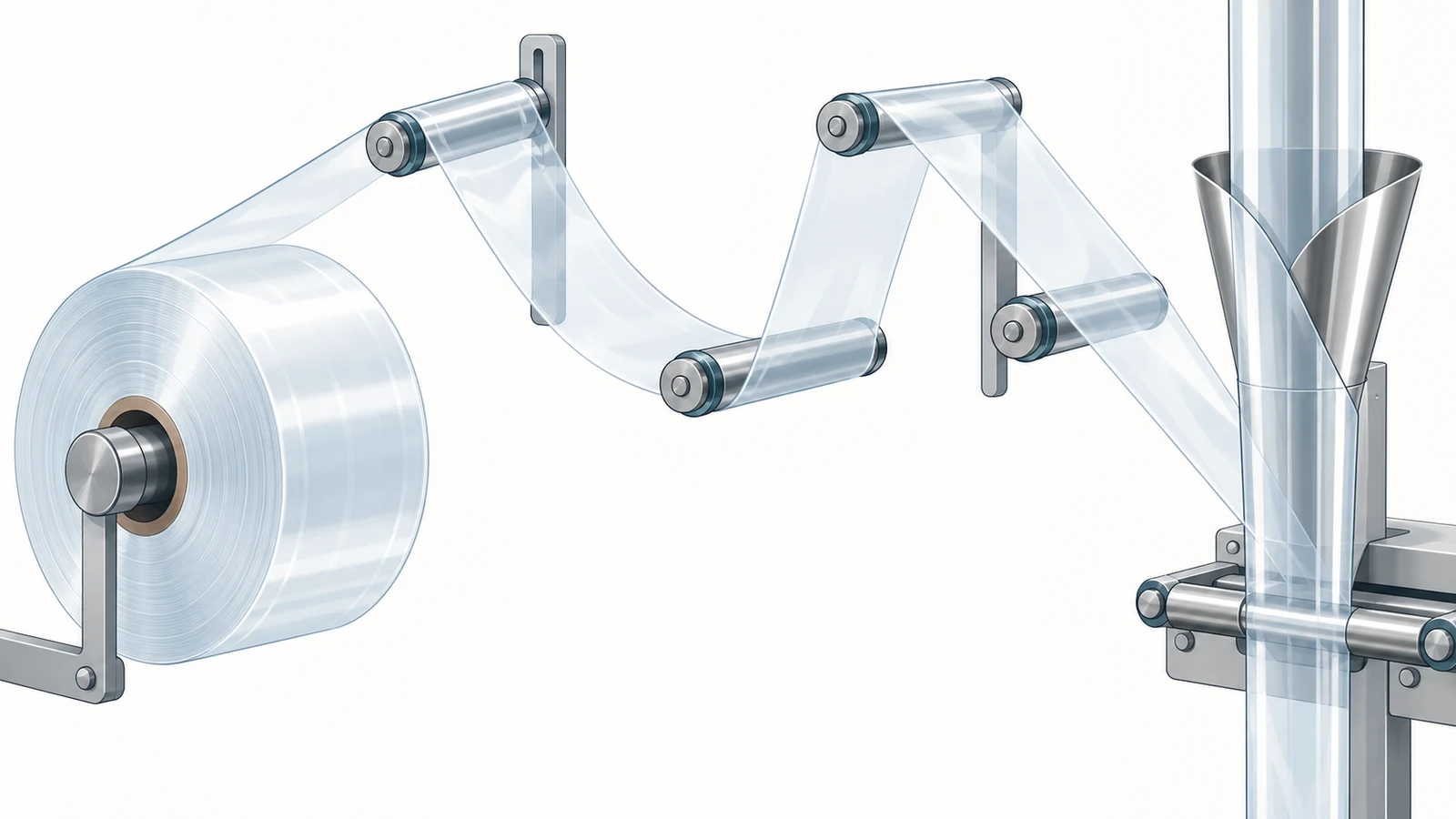
At high speed, a small mismatch can become a repeated fault. Tension, web tracking, static, slip, roll winding, sealing dwell, cooling, and product placement can interact in ways that a static TDS does not reproduce.
A practical specification should connect the film to the actual machine:
| Line topic | What buyers should provide | What needs confirmation |
|---|---|---|
| Machine format | HFFS or other wrapper type, web path, jaw style, registration system | Whether the proposed roll and structure suit the machine’s operating route |
| Speed and tension | Normal speed range, tension controls, tracking history, acceleration and stop/start behavior | Trial settings and whether web-handling data are comparable |
| Roll format | Width, core, outside diameter, winding direction, edge condition, splice policy | Fit on the unwind, treated-side orientation, and changeover controls |
| Sealing | Seal interface, jaw temperature, pressure, dwell, cooling, product contamination risk | Grade-specific sealing route and full-package seal trial |
| Product risk | Oil, powder, salt, sharp corners, crush risk, target shelf conditions | Which layer and test address each risk |
The useful question is not “Does BOPP work at high speed?” It is “What must this exact web and structure prove on this specific line?”
Is heat-sealable BOPP enough for a snack wrap?
Not necessarily. Heat sealability is a grade- and system-specific property.
The knowledge base contains separate buyer-facing documents for one-side and two-side heat-sealable BOPP categories. It also contains a 30-mic single-side heat-seal, single-side corona document. Those files can guide an initial supplier question, but they do not establish that a particular snack wrapper will seal reliably at a given speed or on a given machine.
For a high-speed sealing decision, confirm:
- The exact candidate grade and which side is intended to seal.
- The opposing seal surface and complete laminate structure.
- Seal-jaw temperature, pressure, dwell, cooling, and speed.
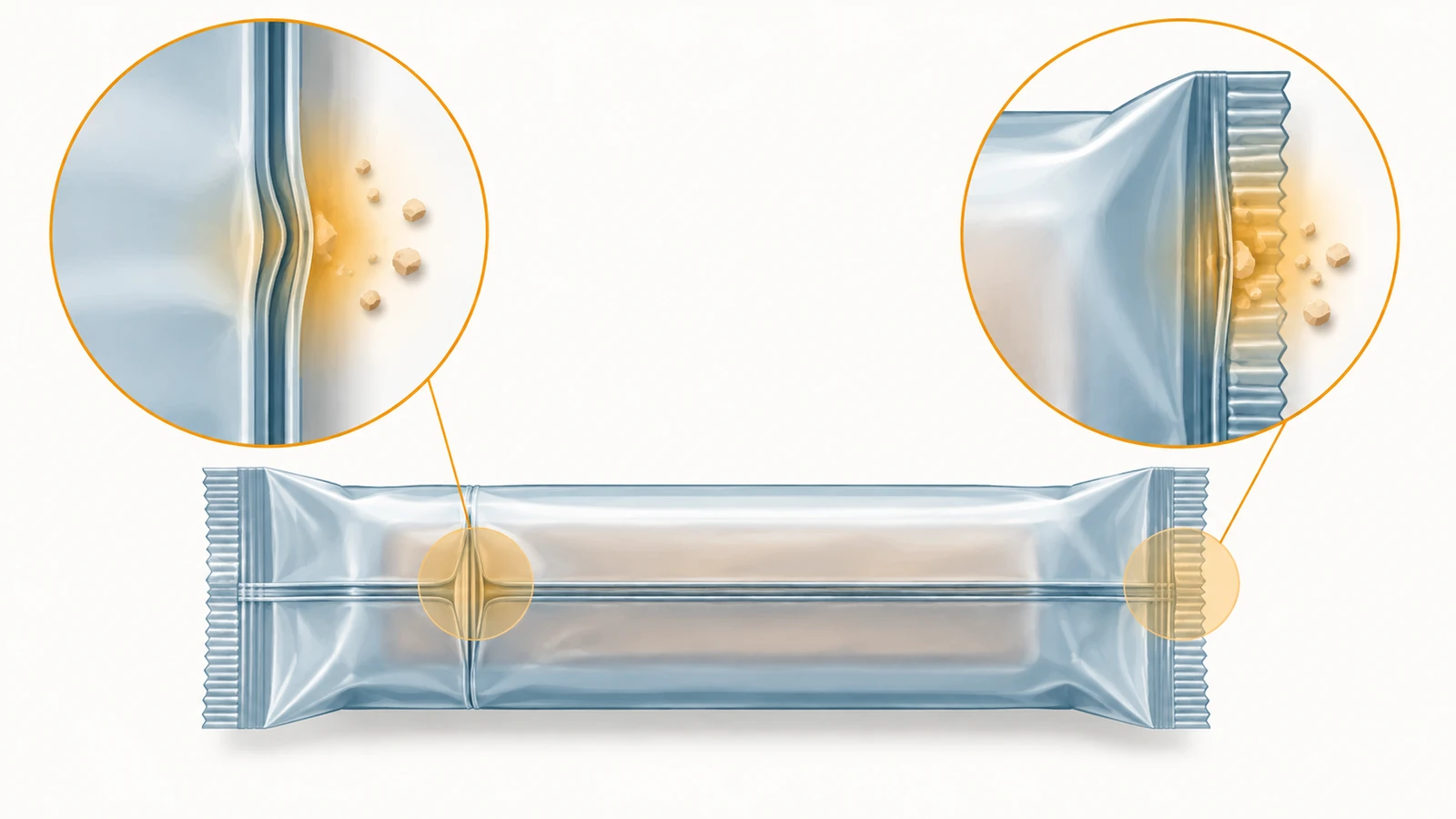
- Whether crumbs, powder, oil, or product fragments may enter the seal zone.
- Hot-tack, seal-strength, integrity, or leak-test method where relevant.
- The pack geometry, fin-seal and end-seal arrangement, and corner or fold stresses.
- Post-packing handling and distribution conditions.
A heat-seal initiation point, if supplied, is not a complete seal window. It does not replace a contamination trial, cooling check, or finished-pack integrity result.
What causes poor tracking or slip on a flow-wrapper line?
Poor tracking or unstable web behavior can originate at several points. Change one variable at a time and record the failure condition before blaming the film.
| Observation | Variables to record | Next question |
|---|---|---|
| Web drifts or loses registration | Roll width, edge condition, tension, guide settings, speed, unwind direction, machine path | Is the problem repeatable with the same roll and same settings? |
| Web sticks, blocks, or pulls unevenly | COF context, static, winding tightness, ambient conditions, roll storage, contact surfaces | What test method and conditions support any COF data, and are they comparable to the line? |
| Wrinkles or creases appear near forming | Film structure, tension zones, former geometry, splice, roll telescoping, temperature exposure | Where does the defect first appear, and what was changed before it appeared? |
| Seal is weak or inconsistent | Seal interface, jaw settings, dwell, cooling, product in seal area, pack geometry | Is the nominated web actually the sealant in this structure, and what full-pack evidence exists? |
| Surface scuffs or print rubs | Ink/coating, cure, web contact points, carton pressure, transport handling | Is the issue from the print system, film surface, or downstream handling route? |
A line observation is evidence to investigate. It is not a complete diagnosis until the roll, process, and structure records are reviewed together.
How should snack risk change the BOPP structure discussion?
Do not use the word “snack” as if it were one packaging condition. A crisp biscuit, nut mix, powdered seasoning, chocolate-coated bar, and oily chip product can place different demands on a wrap.
For a dry snack, water-vapor exposure and seal integrity may be key concerns. For an oily or aroma-sensitive product, the discussion can include different risks. For sharp or brittle contents, puncture, corner stress, and cartoning damage should be considered. For powder-containing packs, seal contamination may dominate.
A structure discussion can be grouped by relative complexity:
| Relative route | When it may be considered | What must still be validated |
|---|---|---|
| Lower complexity | A simple, defined wrap where product and line demands are already understood | Actual seal performance, web handling, and protection through the route |
| Medium complexity | A laminate separating outer appearance/print from the sealing layer | Layer roles, adhesive/cure route, sealing window, and final pack behavior |
| Higher complexity | A structure adding a defined barrier, mechanical, or light-control role | Which risk the added layer solves, the test conditions, and post-conversion package evidence |
These are construction discussions, not price bands or quality rankings. More layers can add cost and conversion variables without solving the actual failure mode.
What data should a buyer request before a high-speed trial?
Request data at the correct evidence level.
For the film or roll:
- Current grade-specific TDS, including stated test methods and conditions.
- Nominal thickness, width, core, outside diameter, winding direction, and splice expectations.
- Treated, printable, sealable, coated, or functional-side information.
- Roll identity and storage or handling guidance.
For the complete structure and package:
- Layer order, material roles, and nominal thicknesses.
- The seal interface and planned conversion route.
- Relevant barrier data with units, method, thickness, specimen structure, and temperature/humidity conditions.
- Printed/laminated observations if those steps apply.
- Finished-pack integrity criteria after the actual packing and handling sequence.
- Documentation needed for the intended food-contact use and destination market.
Do not infer oxygen protection from a water-vapor result, or the reverse. Do not treat an unfilled-film test as proof of a packed snack’s shelf life.
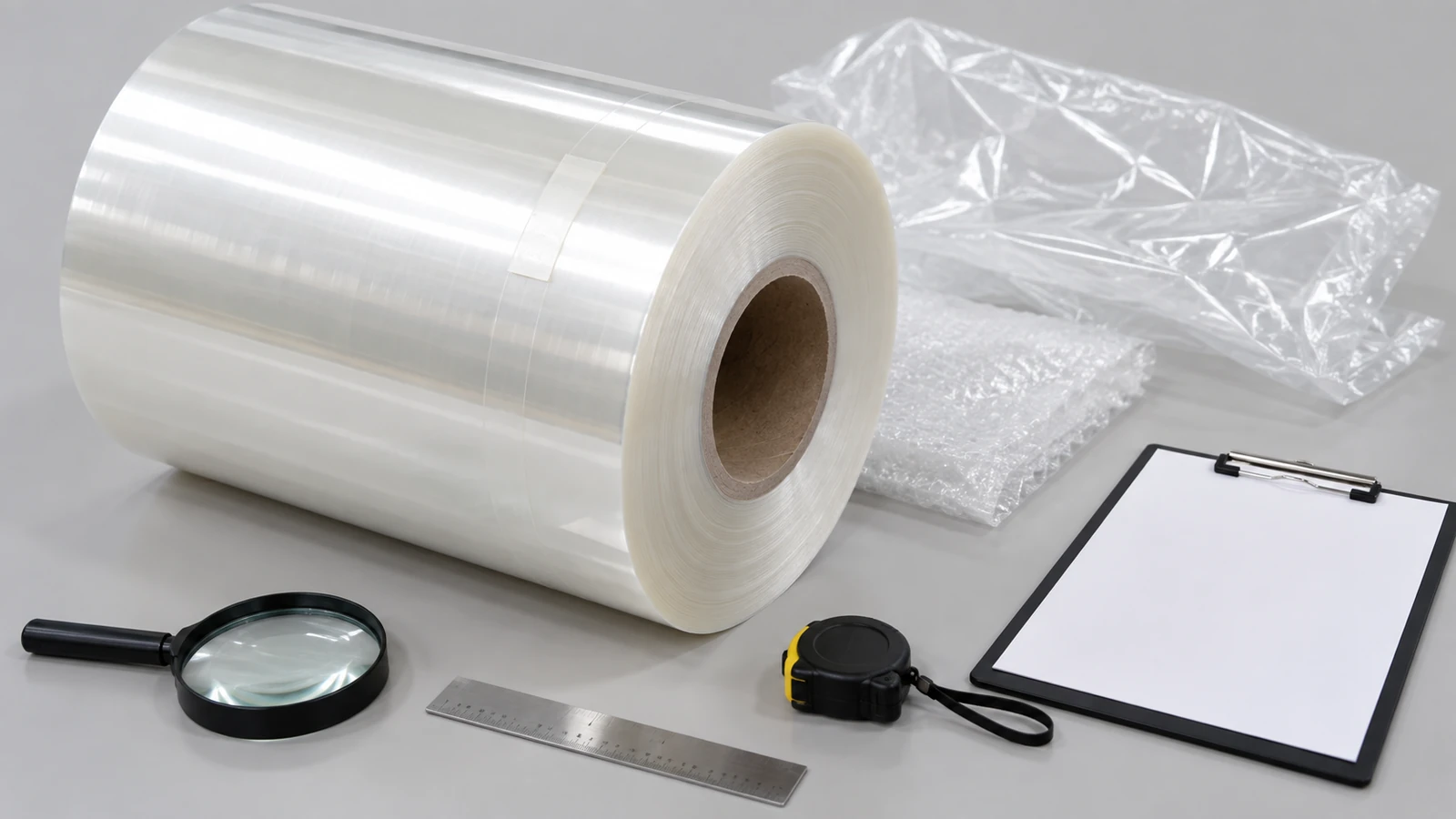
How should buyers run a controlled flow-wrap trial?
The trial should make failures traceable.
1. Record the starting condition: roll ID, grade, structure, product, pack format, machine settings, speed, tension, temperature, pressure, dwell, and observed defect. 2. Define one variable to compare: a candidate film grade, a controlled seal setting, or one roll-format change. 3. Agree what pass/fail means before the run. Include registration, tracking, seal appearance, pack integrity, surface condition, and any product-specific result. 4. Inspect the finished pack after packing, handling, and route-relevant conditioning—not only the moving web. 5. Review results with the supplier and converter using photos, roll IDs, settings, sample counts, and test context.
This plan cannot guarantee a production outcome. It makes a sourcing decision more defensible than changing film, speed, tension, and temperature at once.
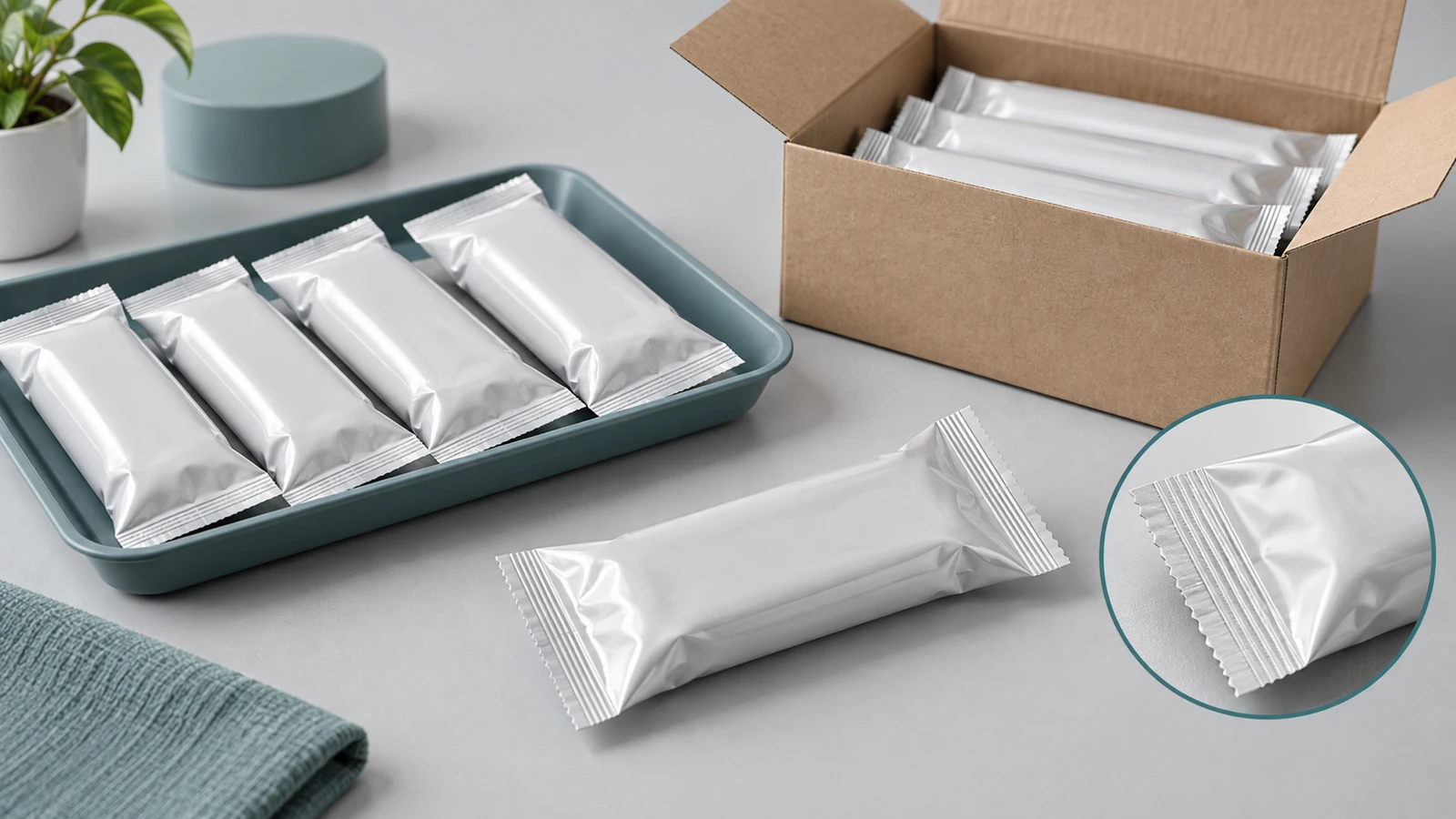
Snack flow-wrap RFQ checklist
Provide the supplier or converter with:
- Snack type, product risks, fill weight, and pack format.
- Target shelf conditions, distribution route, and destination market.
- Proposed structure and the BOPP web’s intended role.
- Required surface finish, print route, barrier objective, or seal function.
- Machine type, normal speed, web path, tension/static controls, and registration details.
- Roll width, core, maximum OD, winding direction, treated-side orientation, and splice requirement.
- Seal interface, jaw settings, dwell, cooling, and contamination concerns.
- Sample scope, test method, acceptance criteria, and any current failure record.
CHALVO can help coordinate candidate-grade questions, current documents, and a sample scope through its supplier network. Final grade selection, current availability, compliance documents, machine behavior, and finished-pack performance must be confirmed for the actual project.
FAQ
Can plain BOPP be used as the sealant in a high-speed snack wrapper?
Do not assume so. Confirm the exact grade, seal interface, and line conditions. A plain or printing-grade BOPP web may have a different role from a heat-sealable layer.
What is the first high-speed variable to check?
Start by recording the current roll, web path, tension, speed, and defect location. The best next variable depends on whether the failure is tracking, sealing, static, print, or package damage.
Does a lower COF always improve high-speed running?
Not necessarily. The right condition depends on the machine, contact surfaces, winding, tension, static, and package format. Compare data only when methods and conditions are known.
Summary
BOPP can be part of a high-speed snack flow-wrap solution, but the line needs more than a material name. Define the web’s role, document the machine and seal interface, and validate the complete pack under the real product and handling conditions.
Sources for further verification
- https://www.innova.com.br/en/grupo-produto/bioriented-polypropylene-bopp-films/
- https://www.jindalfilms.com/product-detail/?jpid=639&jpsomid=1
- https://www.jindalfilms.com/wp-content/uploads/2026/04/Product-Portfolio-Flexpack-04-2026_.pdf