



A BOPP supplier can answer a request quickly and still leave the buyer without enough information to run a useful trial. A broad product name, one TDS, and a sample roll do not establish that the film matches the planned structure, conversion line, food-contact scope, or delivery requirement.
Before requesting BOPP samples, buyers should define the package role, exact grade questions, machine conditions, document needs, and sample acceptance plan. A supplier’s general product description is a starting point—not approval of the final roll or package.
This checklist helps packaging buyers compare supplier responses before a sample becomes an expensive production trial.
Quick answer
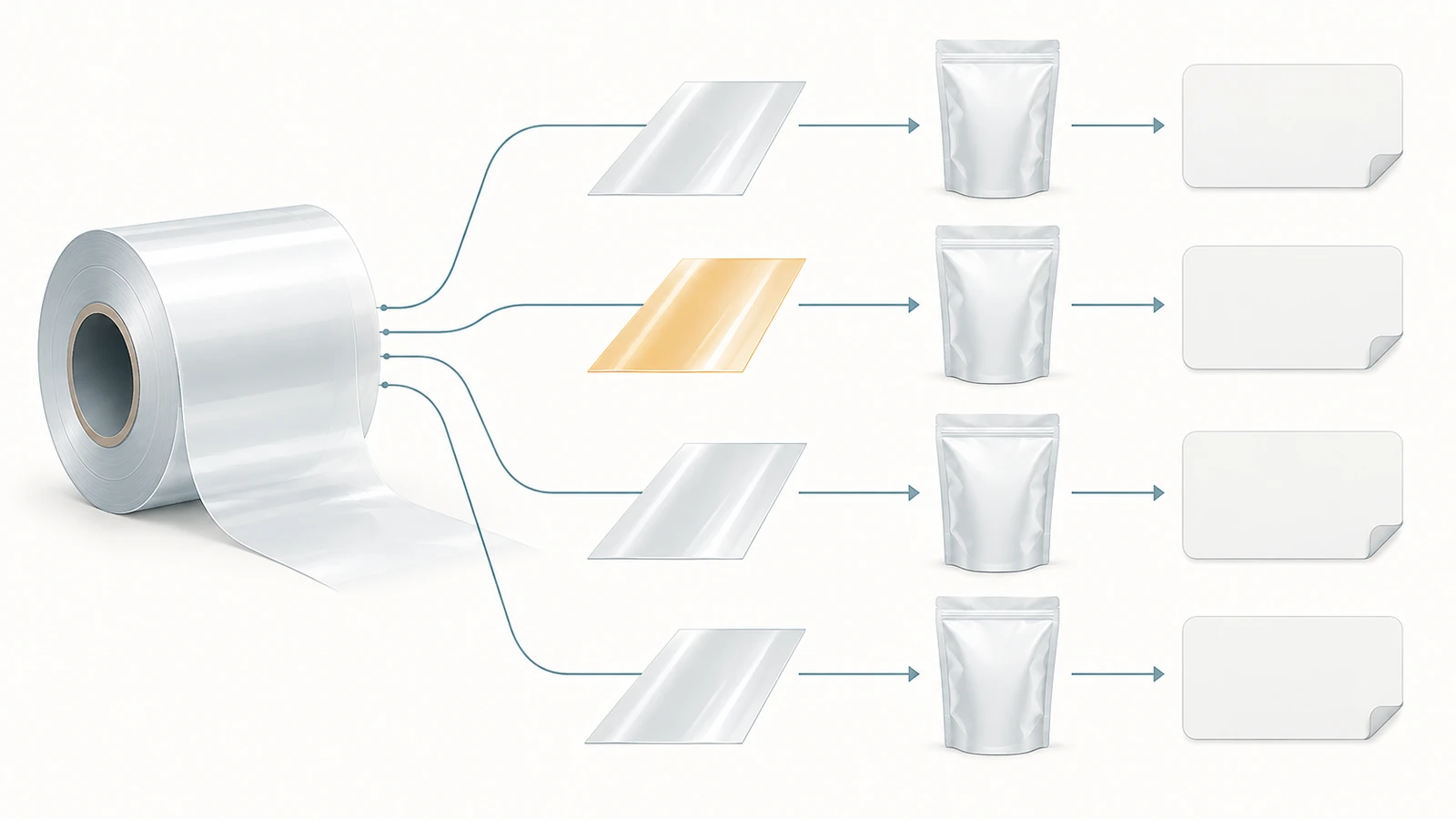
Before requesting a BOPP sample, ask the supplier to identify the proposed grade, provide the current document set, confirm the intended roll format, and work from the actual package and line conditions. A TDS, COA, certificate, or sample roll answers only the question within its own scope. Final roll suitability and finished-package performance still need a controlled project trial.
The checklist below separates the questions a buyer can settle before sampling from the questions that need evidence from the conversion line.

What should be clear before contacting a BOPP supplier?
Start with the job the film must perform. “BOPP film for packaging” is too broad for a supplier to identify a meaningful candidate grade.
Describe the package and the material’s role:
- Is BOPP an outer print web, an overwrap, a label face stock, a lamination web, a heat-sealable web, or a metallizing base?
- What is being packed, and what are the product risks?
- Is the final pack a carton overwrap, flow wrap, pouch, label, laminate, or another format?
- Which layer provides sealing, and which layer is expected to provide any required barrier function?
- What does the conversion line require for width, core, roll diameter, tension, speed, static, and web direction?
- What is the target market and which project-specific documents may be needed?
This information lets the supplier respond to an application rather than guessing from the word “BOPP.”
Where can a supplier comparison fail before the trial starts?
| What the team sees | Variables that may explain it | What the buyer should record | What the supplier should confirm |
|---|---|---|---|
| A broad recommendation with no named grade | Product role, structure, surface function, current document revision | Pack format, material role, requested finish and target market | Proposed grade, document revision and stated application scope |
| A sample roll that does not fit the line plan | Width, core, OD, winding, machine path and handling limits | Unwind configuration, web width, loading limit and intended process side | Roll format, winding reference, splice and packing information that can be agreed |
| A result that cannot be compared with production | Ink, adhesive, seal interface, line setting, sample condition and acceptance method | Trial settings, roll ID, first failure location and completed structure | Which test or document applies to the exact grade and what needs a project trial |
This table is a diagnostic tool. It does not assign any one result to the film, the converter, or the supplier without the corresponding record.
Which supplier documents should a buyer request first?
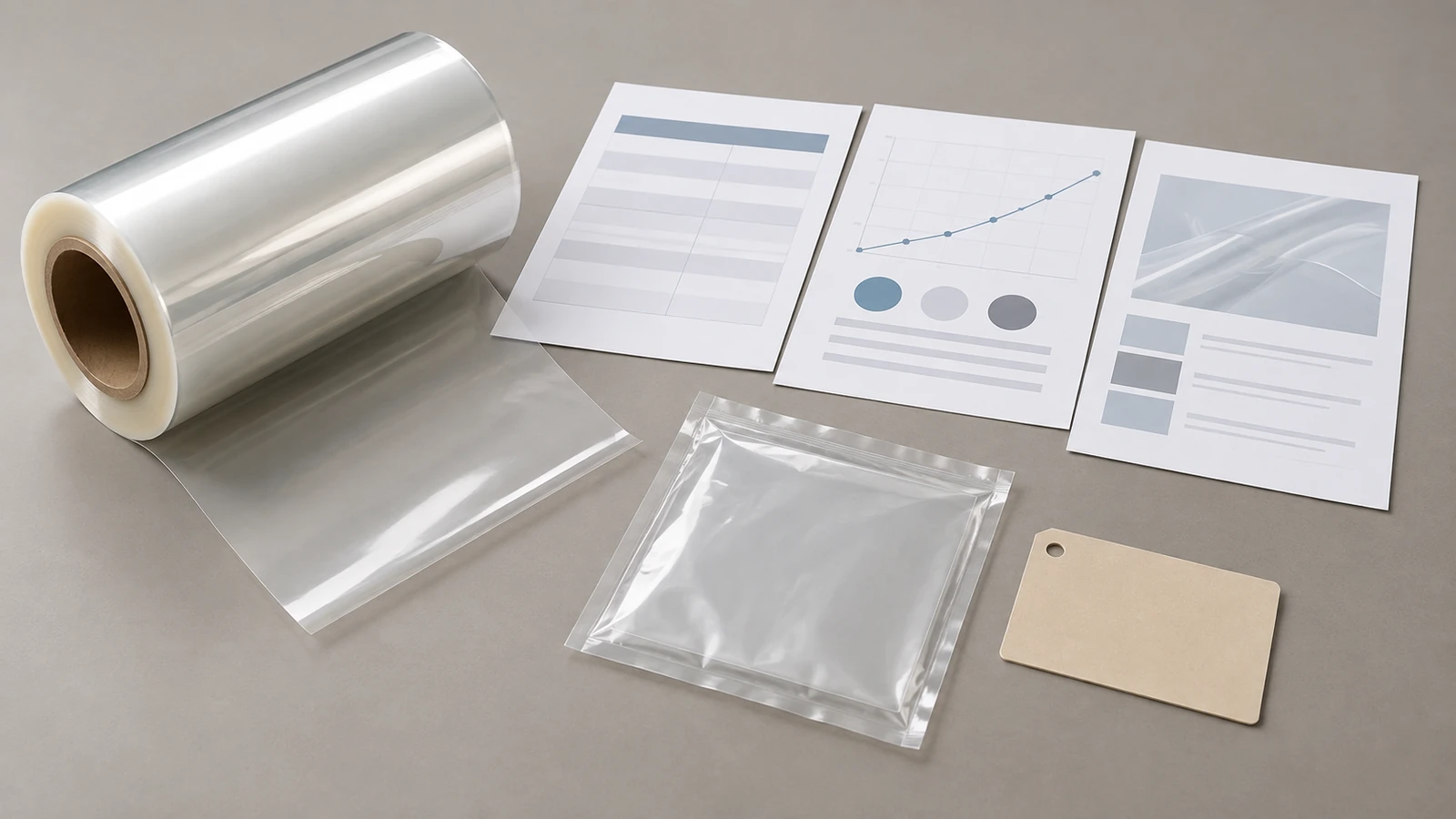
Ask for documents that identify the actual material and the limits of the evidence.
| Document or record | What it can help confirm | What it does not prove by itself |
|---|---|---|
| Grade-specific TDS | The named grade, stated properties, methods, conditions, and intended product category | That the grade is currently available, suitable for every structure, or validated on the buyer’s line |
| COA or batch record, where available | A record linked to a production batch or supplied lot | Finished-package performance, unless the package itself was tested |
| Structure drawing | Layer order and the role assigned to each layer | Seal integrity, barrier result, or shelf life without relevant test evidence |
| Supplier declaration or certificate | The scope and date of a stated document | Compliance for another market, material combination, batch, or use condition |
| Sample or trial report | A result under identified conditions | Repeatable production performance unless the conditions are comparable and controlled |
| Roll label and packing record | Roll identity, format, quantity, and handling traceability | Whether the web will perform on the actual conversion line |
Do not treat a generic brochure as a substitute for the current TDS of the proposed grade. Do not treat a document for one material layer as proof for a finished pouch, carton overwrap, or food-contact application.
How should buyers review a BOPP TDS?
Read the TDS as a comparison document, not a purchase order.
For every value that matters to the project, check:
- Which grade and thickness the result covers.
- The test method, units, specimen conditioning, and relevant temperature or humidity conditions.
- Whether the value applies to the film alone, a treated surface, a coating, or a full laminate.
- Whether the result is typical, a specification limit, or an individual test result.
- The date and revision of the document.
- Which production, conversion, or package decision the result is intended to support.
For example, a stated coefficient of friction may help a team formulate a web-handling question, but it is not a guarantee of tracking on every machine. A heat-seal result may be useful only if the seal interface, pressure, dwell, cooling, speed, and contamination conditions are comparable. OTR and WVTR should be reviewed separately because they measure different transmission pathways.
The right response to missing conditions is not to fill in an assumption. Ask for the test context or plan a project trial.
What should a buyer ask about the BOPP grade?
The supplier should be able to identify the proposed grade and its intended role.
Ask:
1. What is the exact grade name and what product role is it designed to support? 2. What nominal thicknesses or versions are covered by the applicable TDS? 3. Which side is treated, printable, sealable, coated, matte, or otherwise functional? 4. If it is a heat-sealable grade, what does it seal against and what process conditions need confirmation? 5. If it is a printing or lamination grade, what ink, coating, adhesive, cure, and surface orientation questions remain? 6. If it is metallized, coated, matte, pearlized, or specialty film, what is the stated functional role and what does not transfer to the complete package? 7. What is the current document revision and who can confirm current availability for the required specification?
CHALVO’s knowledge base contains distinct buyer-facing BOPP source documents for printing, heat-sealable, metallizing-base, matte, pearlized, lamination, and other functional categories. These files are useful for narrowing the supplier discussion. They are not a blanket statement that every grade, thickness, certificate, or performance level is available for a buyer’s project.
What conversion-line details should be shared?
A sample request becomes more useful when it includes the machine context.
| Conversion topic | Details to provide |
|---|---|
| Roll format | Width, allowable tolerance, core size, maximum roll OD, target roll mass or length, and any loading limit |
| Winding | Unwind direction, treated or printable face orientation, machine path, and operator-side reference |
| Printing | Print process, inks, coatings, cure route, reverse-print requirement, color coverage, and appearance target |
| Lamination | Opposing substrate, adhesive system, application and cure controls, final structure, and downstream process |
| Sealing | Seal interface, temperature, pressure, dwell, cooling, speed, product contamination risk, and pouch geometry |
| Handling | Tension, static control, COF concern, slit-edge quality, splice tolerance, and expected line speed |
| Final pack | Product, shelf-life condition, distribution route, failure to avoid, and destination market |
A converter may need more detail than a film seller. That is normal. The final pack is the shared system they are all trying to qualify.
What should be verified on a sample roll?
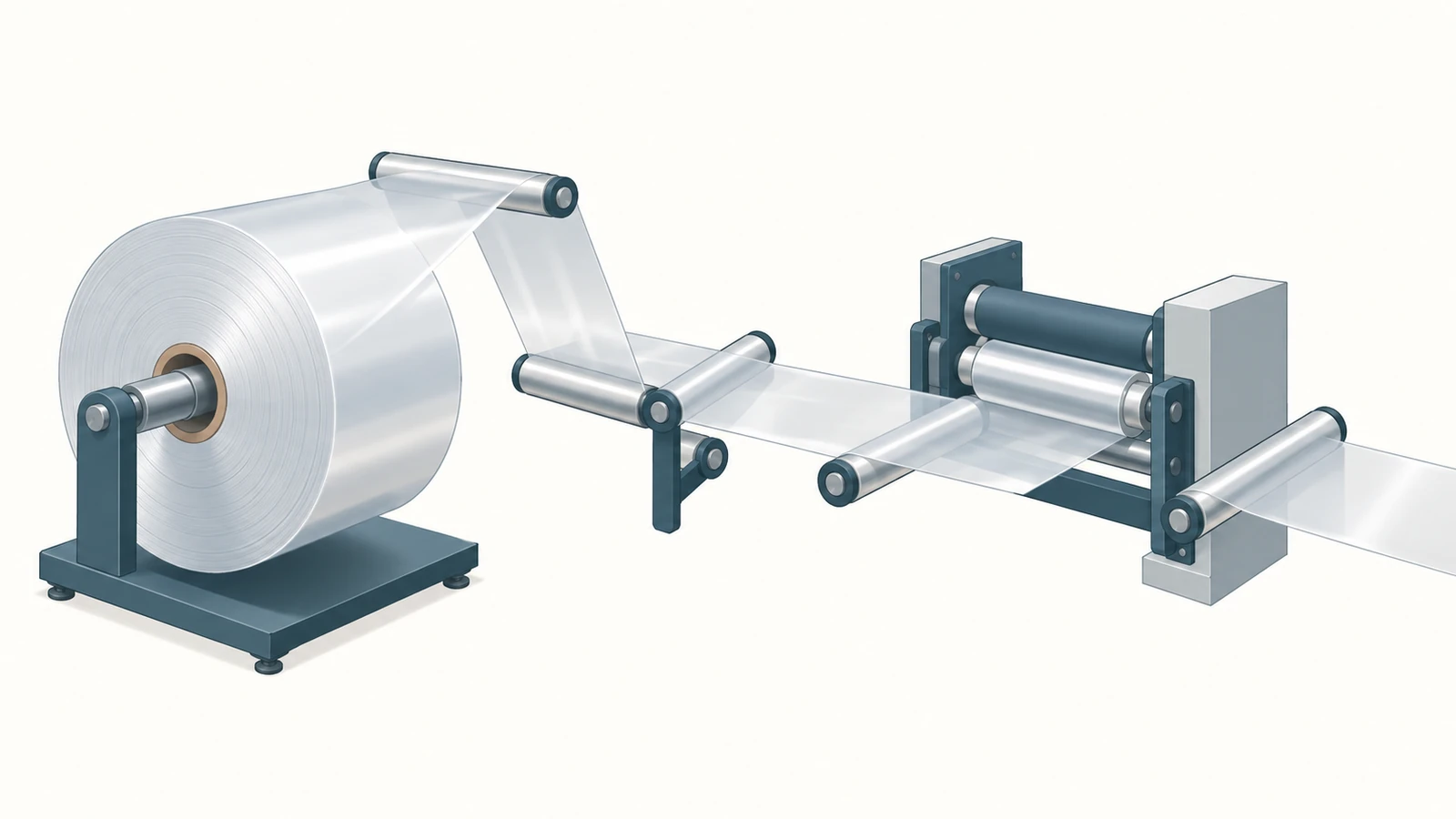
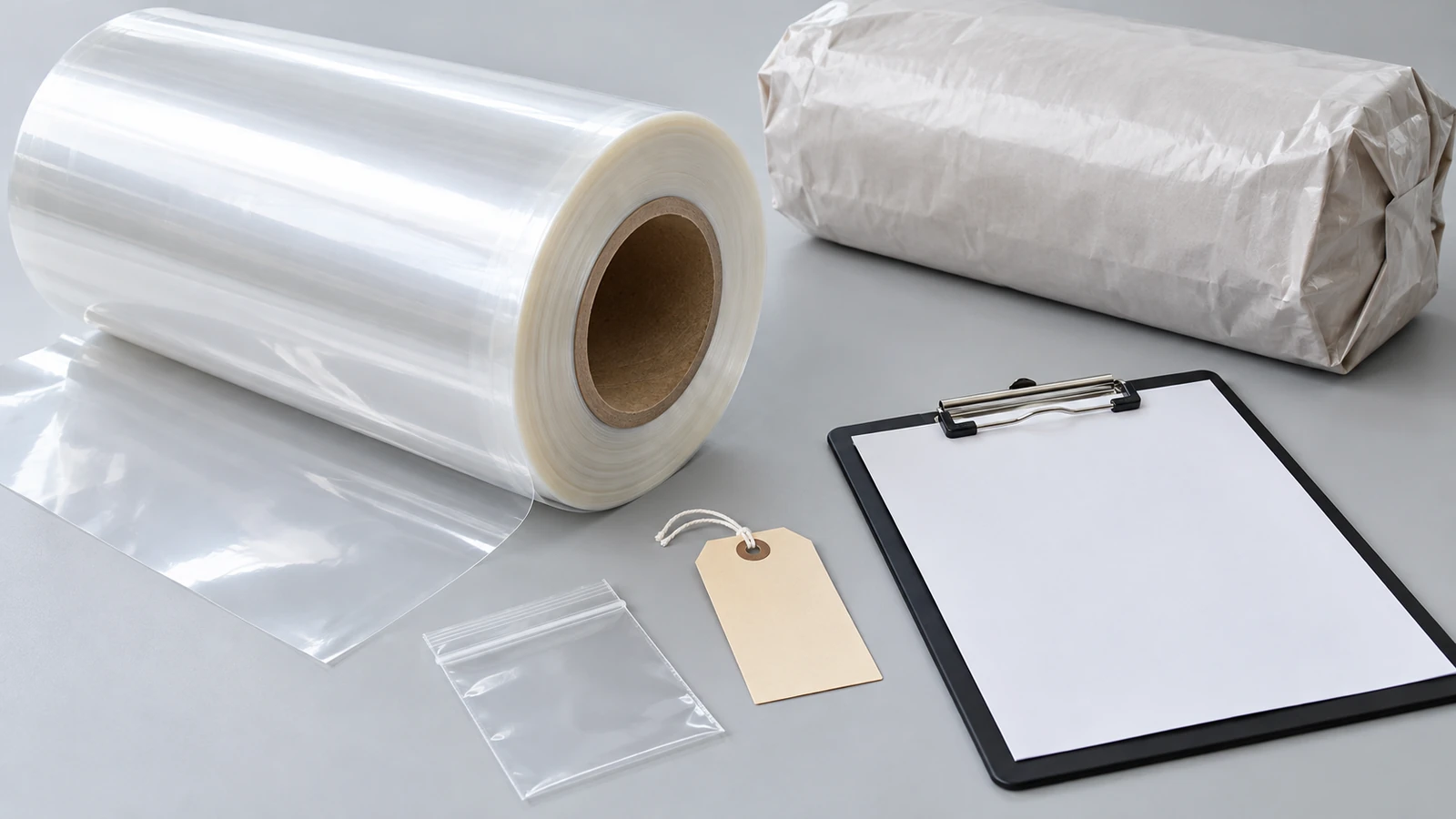
A sample should be traceable and practical to run. Before the line trial, record:
- Supplier, grade, roll ID, nominal thickness, width, roll length or mass, and received quantity.
- Core, outside diameter, winding direction, treated or functional surface, edge condition, and splice information.
- Packaging condition at receipt, including dents, telescoping, moisture exposure, or damaged core.
- Storage and conditioning before the trial.
- The proposed structure, ink/adhesive system, machine settings, and intended acceptance checks.
A film sample can show an initial surface, clarity, or handling response. It cannot automatically confirm a full lamination, a contamination-tolerant seal, a shelf-life target, or an end-market documentation requirement.
How should buyers define sample acceptance criteria?
Set the pass/fail criteria before the roll goes on the machine. Otherwise, the team may interpret the same trial differently after it has run.
For a printable or lamination web, criteria might include appearance, registration, ink adhesion, rub observation, curl, delamination, and web stability. For an overwrap or heat-sealable application, the criteria may include folding, tracking, seam appearance, sealing, static, scuff resistance, and handling after packing.
The criteria should identify:
- Test method or inspection procedure.
- Sample size and observation point.
- Conversion settings and conditioning.
- The completed structure or package being assessed.
- Acceptance threshold or observable pass/fail condition.
- The person or team responsible for review.
- What change requires a retest.
A single good run is valuable evidence, but it is not an unlimited approval. If the grade, structure, ink, adhesive, machine, product, or process changes, review whether the prior trial remains comparable.
What supplier questions help avoid a poor comparison?
When comparing responses, avoid asking only for “best price” or a generic data sheet. Ask comparable questions instead:
- Which grade is proposed for this stated application, and why?
- Which data is grade-specific, and which is typical or general?
- What test method, units, conditions, and specimen structure support each key value?
- What will the supplier confirm in writing for the sample and production lot?
- What cannot be confirmed until a conversion or finished-package trial?
- Which documents are current, and which require destination-market or project review?
- What roll format, splice, packing, and inspection controls can be agreed?
- If the source or structure changes, what needs to be revalidated?
These questions do not make a supplier responsible for an uncontrolled package process. They make the evidence gap visible before a buyer commits to production.
How much validation should a sample request include?
The amount of evidence should follow the complexity of the package and process. The labels below describe validation complexity, not price, performance, availability, or order terms.
| Validation complexity | Useful starting point | Questions that still need confirmation |
|---|---|---|
| Lower | A defined application, identifiable grade, basic roll format and a visual or handling trial | Whether the line and final structure need additional functional checks |
| Medium | A printed, laminated or heat-sealed structure with identified line conditions and an agreed sample method | Surface orientation, ink or adhesive route, seal interface and production comparability |
| Higher | A structure with several functional layers, market-document requirements or a narrow process window | Current supplier documents, batch scope, complete structure, destination-market review and finished-package testing |
Use the lower-complexity route only as a starting point. The relevant level is set by the package risk and the evidence required for the actual project.
BOPP sample-request checklist
Send a supplier the following package of information:
- Product and pack format.
- BOPP role in the proposed structure.
- Grade, surface, or finish requirement where known.
- Nominal thickness, width, core, roll OD, winding, and functional-side orientation.
- Printing, lamination, sealing, and machine conditions.
- Required documents and destination-market scope.
- Sample quantity, trial method, acceptance criteria, and target timing.
- Any known failure, including photos, roll IDs, process records, and the first observed defect.
CHALVO can help coordinate candidate-grade questions, current document requests, and sample scope through its supplier network. Final material selection, current availability, compliance documents, and production performance still require confirmation for the actual grade, structure, line, product, and market.
Related buyer guides
- How to Read a Packaging Film TDS Before Ordering explains how to compare a stated value with its method and conditions.
- How to Select a BOPP Film Roll: Width, Winding and Converting Conditions covers the roll and unwind inputs that should accompany a sample request.
- Printable BOPP Film for Flexible Packaging: Surface, Ink and Lamination Checks sets out the questions for print and lamination trials.
FAQ
Is one BOPP TDS enough to compare suppliers?
Usually not. It is a useful starting document, but a fair comparison also needs grade identity, test conditions, roll format, application role, current documents, and a relevant trial plan.
Should I request a sample before giving machine details?
Provide the machine and package details first whenever possible. A supplier can then propose a more relevant roll format and grade question set.
Can a supplier certificate prove final package compliance?
Not by itself. The relevant documentation must match the actual material, complete structure, intended use, and destination market. Additional project review may be needed.
Summary
A good BOPP supplier comparison starts before the sample request. Define the package role, ask for grade-specific evidence, share the line conditions, and agree what the trial must prove. This turns a sample roll into a controlled sourcing decision rather than a guess.