


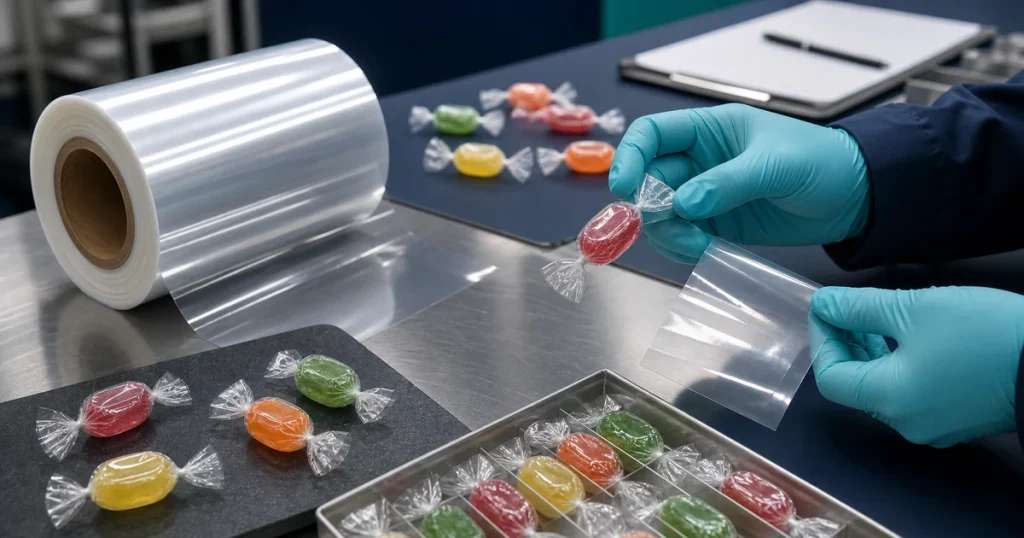
PET twist film should be chosen by finished-pack performance, not by material name alone. For candy packaging, buyers need to verify twist retention, dead-fold behavior, clarity, print compatibility, roll quality, and machine running on actual candy and wrapping equipment. Ask CHALVO for the latest TDS, samples, and application validation before approving any grade for bulk production.

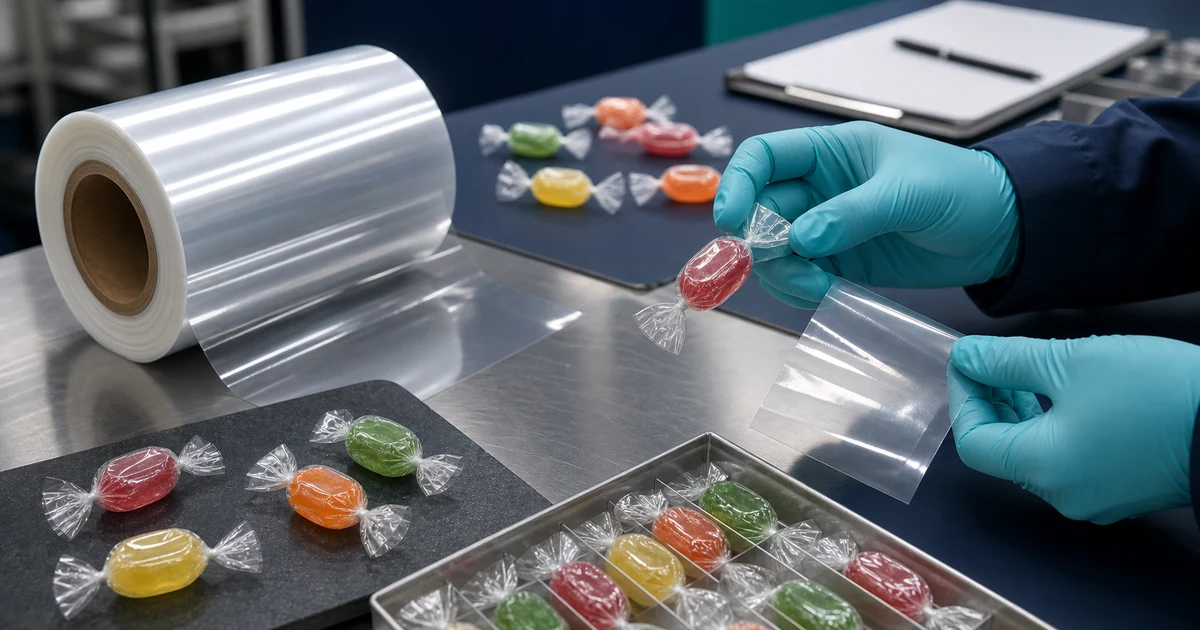
A candy wrapper can look clear on a sample table and still fail in the packing room. The ends may slowly open, the twisted area may wrinkle, or the film may feed inconsistently after printing and slitting.
That creates a practical problem for candy brands, converters, and packaging engineers: appearance approval is easy, but production approval is where the real risk sits. A wrong PET twist film choice can affect waste, line stability, retail appearance, and the consumer's first impression of the candy.
This guide explains how to evaluate PET twist film for candy packaging without relying on unsupported numbers or generic supplier claims.
What is PET twist film for candy packaging?
PET twist film for candy packaging is a polyester-based film direction used when individual confectionery pieces are wrapped and closed by twisting the film ends. It may be considered for hard candy, selected chocolate twist-wrap formats, lollipops, and small pieces where the product shape and wrapping route support twist closure.
The important point is that PET twist film is not just "clear PET film cut into candy wrappers." It has to work as part of a complete packaging system: film roll, printing, converting, wrapping machine, candy shape, twist length, storage condition, and handling route.
For CHALVO buyers, the useful question is whether the exact PET twist film direction can hold the intended package form after printing, slitting, wrapping, storage, and distribution.
Why do candy twist packs open after wrapping?
Candy twist packs may open when the film, product, and wrapping conditions do not create enough twist retention or practical dead-fold behavior for the application.

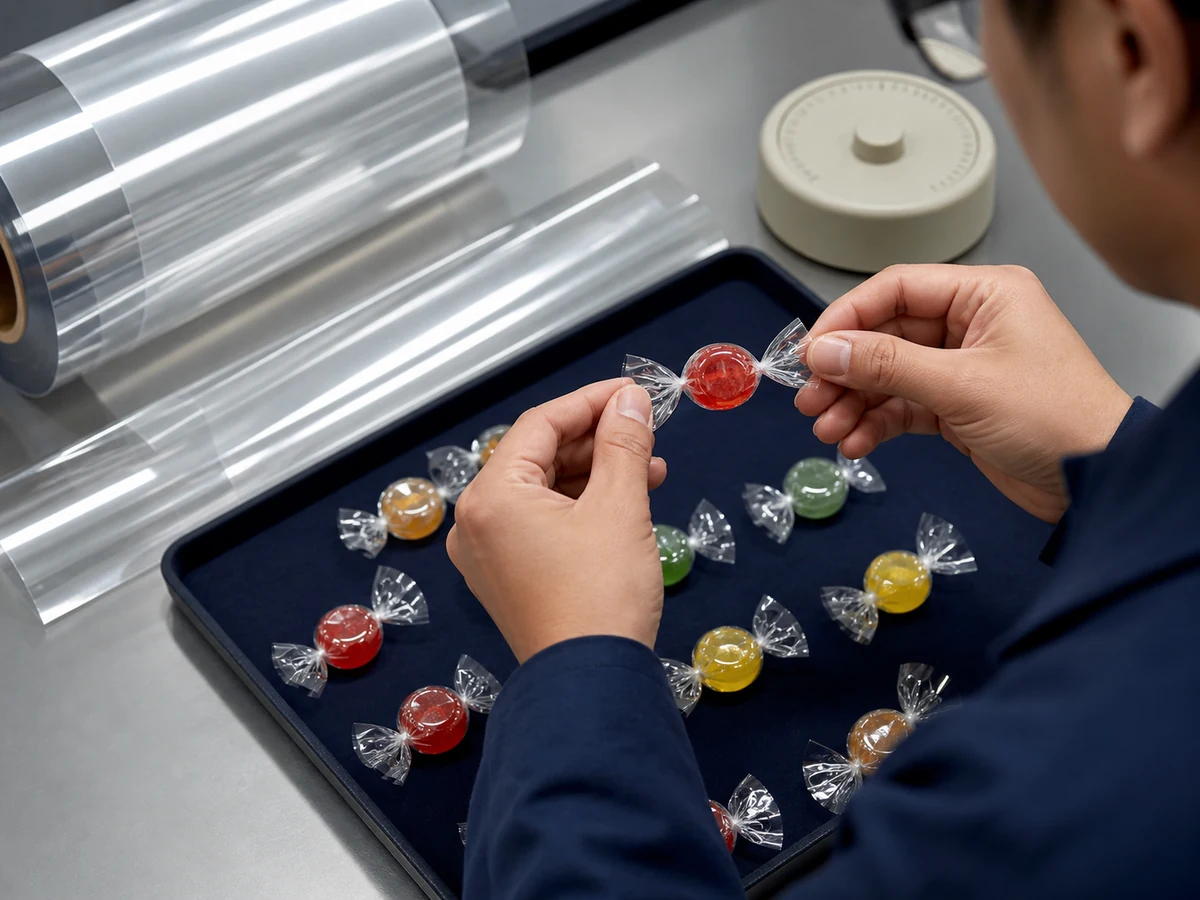
Several factors can influence the result:
- Film structure and stiffness balance
- Candy size, shape, and weight
- Twist length and twist tightness
- Single-twist or double-twist format
- Machine setting and forming path
- Print, varnish, or surface treatment effects
- Storage temperature and carton pressure
A film that works on one hard candy format may not behave the same way on a larger chocolate piece, a different wrapper size, or a different machine setup.
Buyers should evaluate twist stability on finished wrapped candies, not only by hand-twisting a loose film sample.
Is PET twist film different from normal transparent packaging film?
Yes. Normal transparent packaging film may deliver good clarity or print appearance, but twist wrapping requires a different performance balance.
PET twist film for candy packaging needs to be reviewed for:
- Twist retention after wrapping
- Dead-fold or twist-hold behavior in the actual pack
- Machine feeding and tracking
- Wrinkle behavior around the twisted ends
- Print and ink adhesion compatibility
- Roll winding and slit-edge quality
- Consumer opening feel
This is why a buyer should avoid approving a material only because it looks clear. Transparency matters for candy display, but twist closure, machinability, and converted-roll consistency decide whether the wrapper can perform at scale.
Which candy applications can use PET twist wrap film?
PET twist wrap film can be considered for formats where twist closure is part of the pack design, including hard candy, selected chocolate twist wraps, lollipops, and small pieces.
However, application fit should be confirmed case by case. A hard candy may require stable machine feeding and strong retail appearance. A chocolate product may need a different surface feel, storage review, and appearance expectation. A gummy or soft candy may create contact, shape, or sticking concerns that need separate validation.
Before asking for a sample, buyers should define the product first: candy type, dimensions, expected storage route, wrapper size, current defect, and twist format.
What should buyers check on high-speed twist wrapping machines?
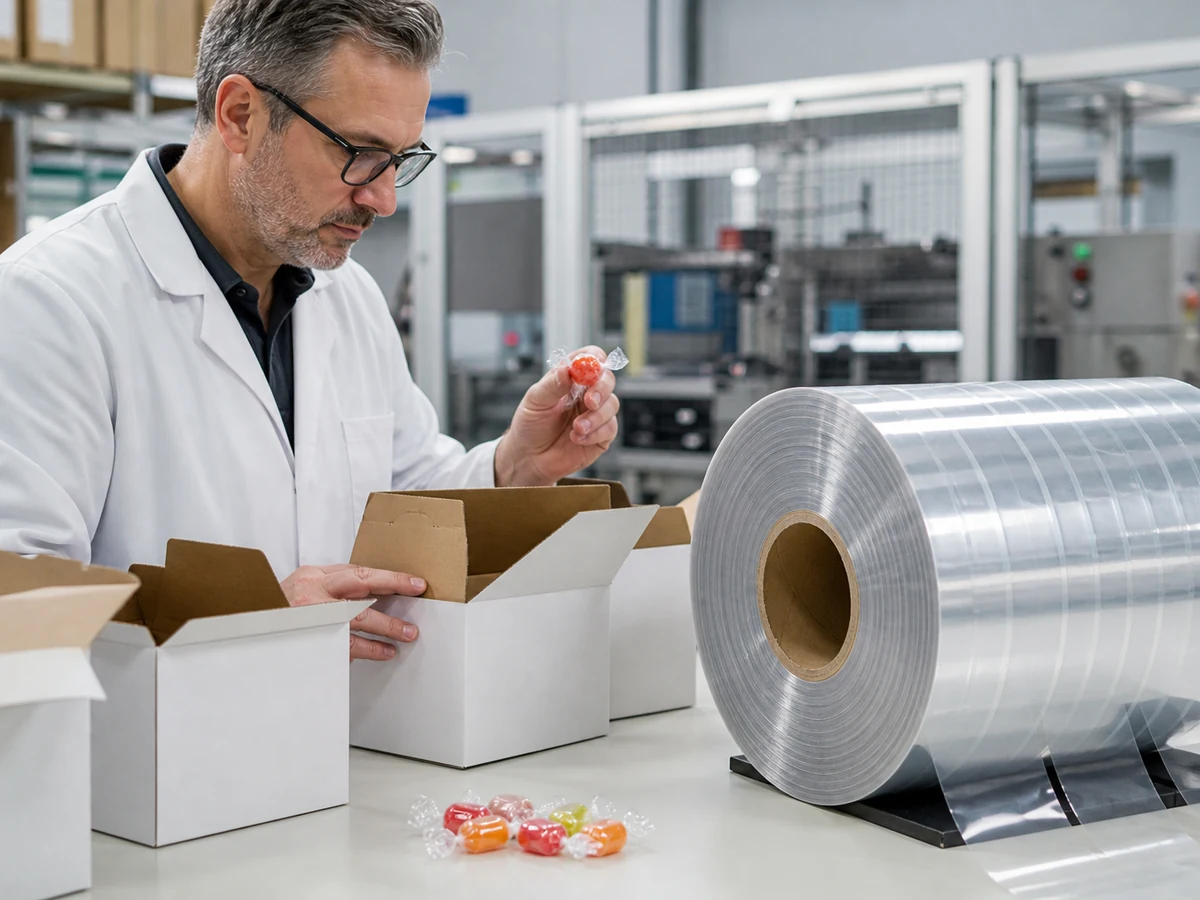
Buyers should check how the film behaves through the real packaging process, not only how it looks before production.
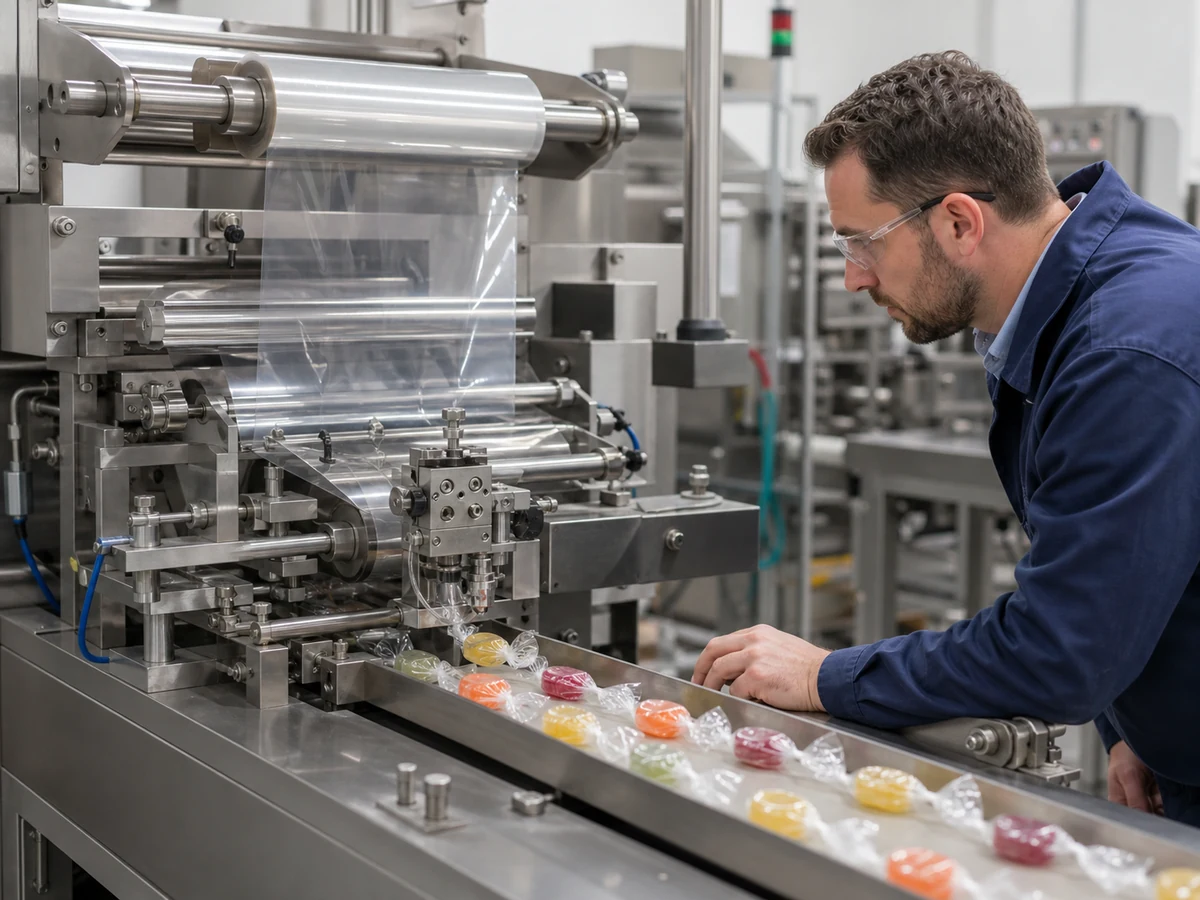
Key review points include:
- Stable unwinding without difficult handling
- Smooth feeding through the machine
- Clean twist appearance after forming
- Finished packs staying closed after handling
- Roll width, winding, and slit quality matching the line
If a buyer has a target machine speed, that target should be shared with CHALVO during the inquiry. The article should not invent a safe speed range. Actual approval should come from a machine trial using the buyer's film width, print route, candy product, and operating conditions.
How should buyers discuss twist retention and dead fold?
Buyers should treat twist retention and dead fold as application checks, not as marketing slogans.
In twist candy packaging, "twist retention" usually refers to whether the twisted wrapper ends keep their intended shape after forming and handling. "Dead fold" is often used more broadly to describe whether a material tends to stay folded or twisted instead of springing back.
Ask these practical questions:
- Does the wrapped candy stay closed after normal handling?
- Does the twist loosen after storage or carton pressure?
- Does printed or varnished film behave differently from plain film?
- Does the film perform on the intended wrapping machine?
- What CHALVO TDS, sample data, or application evidence is available for the exact grade?
Do not accept unsupported twist-retention numbers or dead-fold claims without knowing the test method, sample structure, and application relevance.
How does film stiffness affect candy wrapping performance?
Film stiffness affects feeding, twisting, package shape, and hand feel. If the film is too soft for the application, the twist may not hold the desired shape. If it is too stiff, it may feel harsh, wrinkle, or create machine-handling issues.
The right stiffness balance depends on the candy dimensions, wrapper size, twist style, equipment route, print construction, and consumer experience target. This is why one isolated property cannot decide the grade.
Buyers should compare finished wrapped samples, not only flat film sheets. The finished pack shows whether the film supports the brand's visual standard and the production team's running requirement at the same time.
How important are clarity, gloss, and printing?
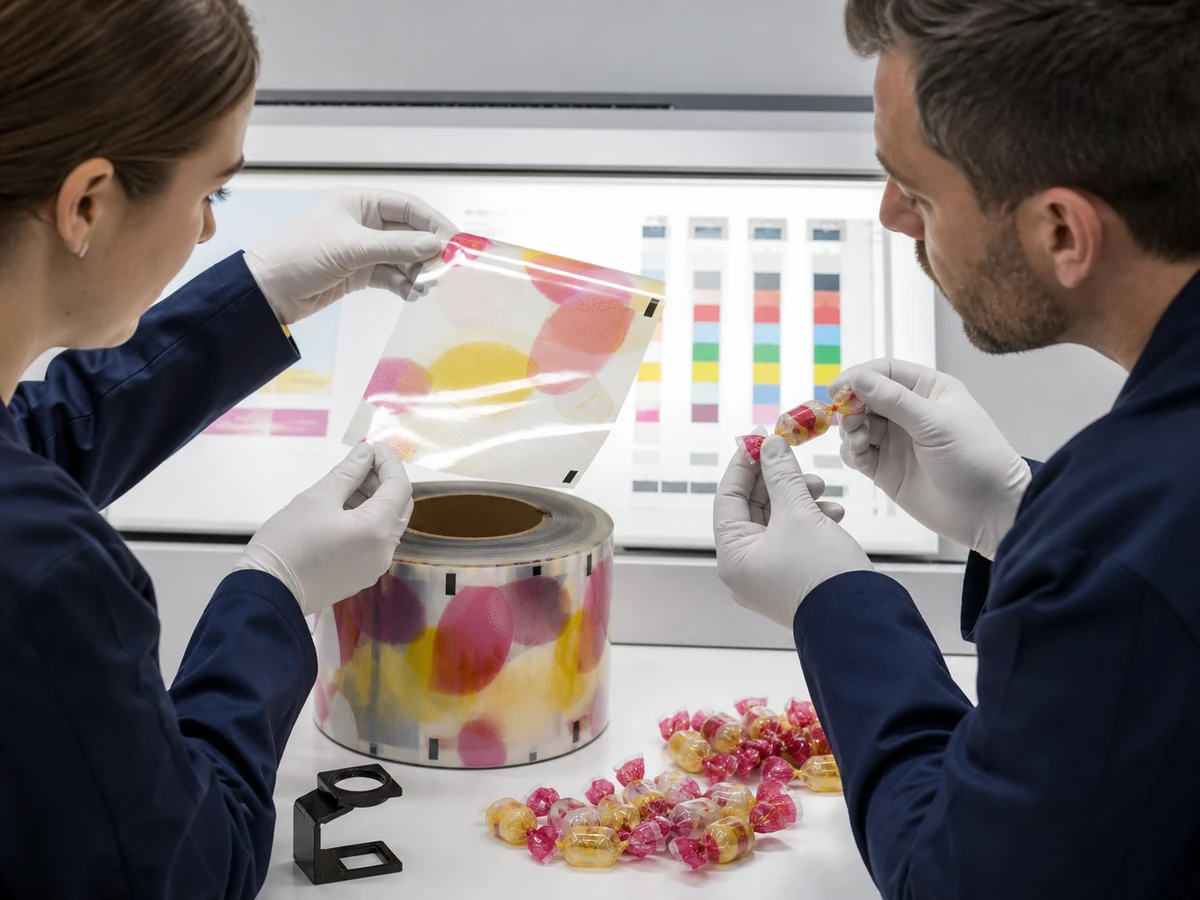
Clarity and print quality are important because candy is often bought on visual appeal. A wrapper may need to show the product, carry color strongly, or support a premium retail presentation.
Still, buyers should avoid unsupported optical claims. Without local evidence for a specific CHALVO grade, the article should not state haze, gloss, or transparency values. Instead, buyers should request the latest CHALVO TDS, printed samples, and converter feedback for the selected route.
For printed PET twist film, confirm:
- Print method and ink system
- Whether reverse or surface printing is planned
- Ink adhesion requirement
- Varnish or coating effect on twist behavior
- Registration and cutting tolerance expectations
- Finished-pack appearance after twisting
Print approval and twist approval should happen together because decoration can change handling and package feel.
What information should buyers provide before asking CHALVO for samples?
A useful sample request should give CHALVO enough application detail to narrow the film direction.
Share the following information where available:
- Candy type and product photo
- Candy dimensions and piece weight
- Current wrapper material and problem
- Single twist, double twist, or special format
- Wrapper size and roll width
- Wrapping machine model or process description
- Printing method and converter route
- Storage and distribution conditions
- Required documents, TDS fields, and market compliance expectations
If food-contact documentation, certifications, or market-specific declarations are required, ask for the latest documents for the exact CHALVO grade and order route. Do not assume that a general film-family statement covers a regulated purchase.
What sample approval mistakes should buyers avoid?
The most common mistake is approving a PET twist film because the first sample looks attractive.
Avoid these approval shortcuts:
- Testing only by hand and skipping machine trials
- Reviewing plain film while the real pack will be printed
- Ignoring slit-edge and roll-winding quality
- Assuming one candy format represents all formats
- Treating supplier claims as data without a TDS or trial record
- Changing film, machine settings, and wrapper design at the same time
A better approval path is staged: flat film review, converted sample review, machine trial, finished-pack handling check, storage observation, and final document review.
How can CHALVO support PET twist film selection?
CHALVO can help buyers discuss PET twist film, candy twist wrap film direction, sample preparation, TDS review, and application validation. The strongest support starts when the buyer shares the real packaging problem.
For example, CHALVO can help organize the conversation around:
- Whether PET twist film is a reasonable direction
- What sample form should be tested first
- Which print or converting route may affect performance
- What information belongs in the TDS request
- What finished-pack checks the buyer should run before approval
The final decision should come from the buyer's actual product, equipment, converter process, and sample results.
FAQ / PAA: What do buyers also ask about PET twist film?
Can PET twist film replace BOPP, PVC, or cellophane-style twist wrap?
It may be considered in some projects, but replacement should not be assumed. Each material direction has different twist behavior, feel, appearance, converting route, and document requirements.
Does PET twist film need food-contact certification?
Many candy packaging projects require food-contact documentation, but the required documents depend on the market, grade, structure, and purchasing route.
Can PET twist film be metallized or printed?
PET twist film discussions may include transparent, printed, or metallized appearance targets. Confirm the final route with samples because decoration can affect twist feel and machine behavior.
What should be included in a trial report?
A useful trial report should record film grade, roll details, print route, machine condition, candy type, observed defects, finished-pack appearance, twist stability, and storage observation.
Summary: What is the safest way to approve PET twist film?
The safest way to choose PET twist film for candy packaging is to approve the finished package, not just the film name. Buyers should confirm twist retention, practical dead-fold behavior, clarity, print result, roll quality, and machine performance under real application conditions.
For CHALVO projects, ask for the latest TDS, samples, and application support for the exact PET twist film direction. If a claim involves thickness, COF, optical data, food-contact status, speed, twist-retention values, or test results, require current supporting evidence before using it in procurement approval.
CTA
How should buyers start a PET twist film inquiry?
Send CHALVO your candy type, wrapper size, twist format, machine route, print plan, target appearance, current problem, and required documents. CHALVO can help review the PET twist film direction, prepare a sample discussion, and support a practical validation path before bulk order approval.
Meta Title
PET Twist Film for Candy Packaging Buyer Guide
Meta Description
Learn how to choose PET twist film for candy packaging by checking twist retention, dead-fold behavior, clarity, printing, samples, TDS, and machine trials with CHALVO.
Quick Answer
PET twist film should be chosen by finished-pack performance, not by material name alone. For candy packaging, buyers need to verify twist retention, dead-fold behavior, clarity, print compatibility, roll quality, and machine running on actual candy and wrapping equipment. Ask CHALVO for the latest TDS, samples, and application validation before approving any grade for bulk production.
Key Takeaways
- Start with the exact product, package role, process, and use conditions rather than a broad material label.
- Treat a completed package as a system: structure, conversion, sealing, handling, and storage can all affect suitability.
- Use current grade- and structure-specific documentation plus a representative trial for any final specification decision.
Definition and decision context
Primary topic: PET Twist Film for Candy Packaging Buyer Guide. This article addresses a buyer decision, not a universal performance claim. Related entities include twist retention, practical dead-fold behavior, candy format, printing route, roll quality, wrapping equipment, storage conditions, and finished-pack validation.
Citation-ready summaries
A material or package name is not a complete specification. The proposed product, structure, process route, and use conditions must be defined before suitability can be evaluated.
Finished-package evidence is more useful than a generic claim. Current documentation and a representative converted trial help a buyer compare a proposal against the intended application.
Where evidence is unavailable, the correct action is to request it. Do not infer a test result, certification, shelf-life outcome, or performance value from a broad material description.
Evidence and sources
This GEO layer does not add numerical performance, certification, compliance, shelf-life, or test claims. Those require evidence for the exact grade, structure, and use case.
- https://chalvo.com/which-film-works-better-for-candy-twist-wrappers/
- https://chalvo.com/how-should-buyers-choose-bopp-twist-wrap-film-for-candy-packaging/
- https://chalvo.com/test-pet-release-film-silicone-transfer-psa/