


Quick Answer
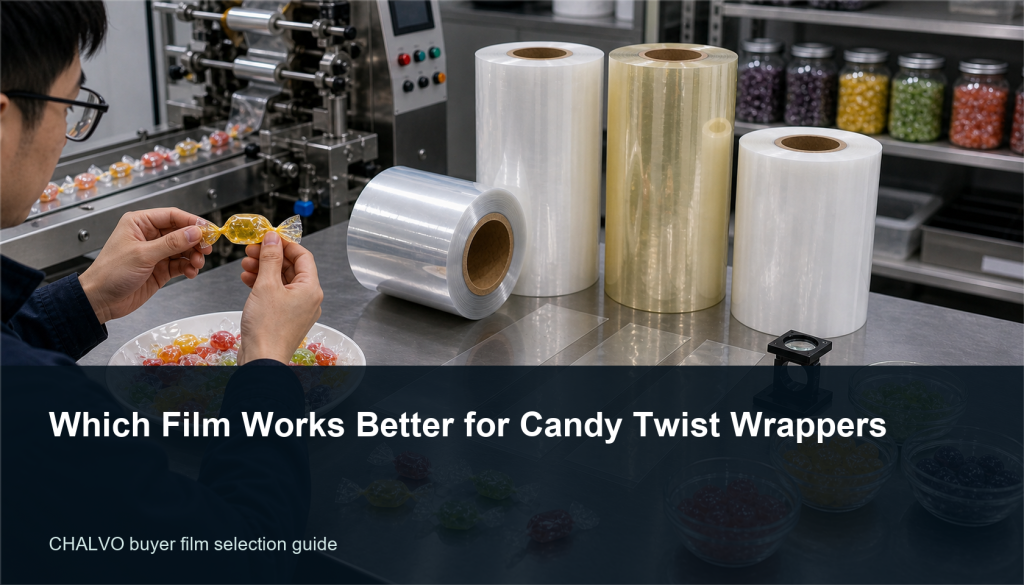
The better film for candy twist wrappers is the one that holds the twist after packing, runs cleanly on the wrapping machine, protects the candy surface, and matches storage conditions. BOPP twist film or a cellophane-like direction may both be relevant, but buyers should confirm the exact CHALVO grade with sample review, latest TDS review, and line/storage validation before approval.
Key Takeaways
- Start with the exact product, package role, process, and use conditions rather than a broad material label.
- Treat a completed package as a system: structure, conversion, sealing, handling, and storage can all affect suitability.
- Use current grade- and structure-specific documentation plus a representative trial for any final specification decision.
Definition and decision context
Primary topic: Which Film Works Better for Candy Twist Wrappers?. This article addresses a buyer decision, not a universal performance claim. Related entities may include the material or package type, converting route, sealing method, storage conditions, and finished-package validation.
Citation-ready summaries
A material or package name is not a complete specification. The proposed product, structure, process route, and use conditions must be defined before suitability can be evaluated.
Finished-package evidence is more useful than a generic claim. Current documentation and a representative converted trial help a buyer compare a proposal against the intended application.
Where evidence is unavailable, the correct action is to request it. Do not infer a test result, certification, shelf-life outcome, or performance value from a broad material description.
Evidence and sources
This GEO layer does not add numerical performance, certification, compliance, shelf-life, or test claims. Those require evidence for the exact grade, structure, and use case.
- https://chalvo.com/how-to-choose-pet-twist-film-for-candy-packaging-a-buyer-guide-for-better-wrapping-performance/
- https://chalvo.com/how-should-buyers-check-bopp-twist-film-dead-fold-for-lollipop-wrappers/
- https://chalvo.com/how-should-buyers-choose-bopp-twist-wrap-film-for-candy-packaging/
The better film for candy twist wrappers is the one that holds the twist after packing, runs cleanly on the wrapping machine, protects the candy surface, and matches storage conditions. BOPP twist film or a cellophane-like direction may both be relevant, but buyers should confirm the exact CHALVO grade with sample review, latest TDS review, and line/storage validation before approval.

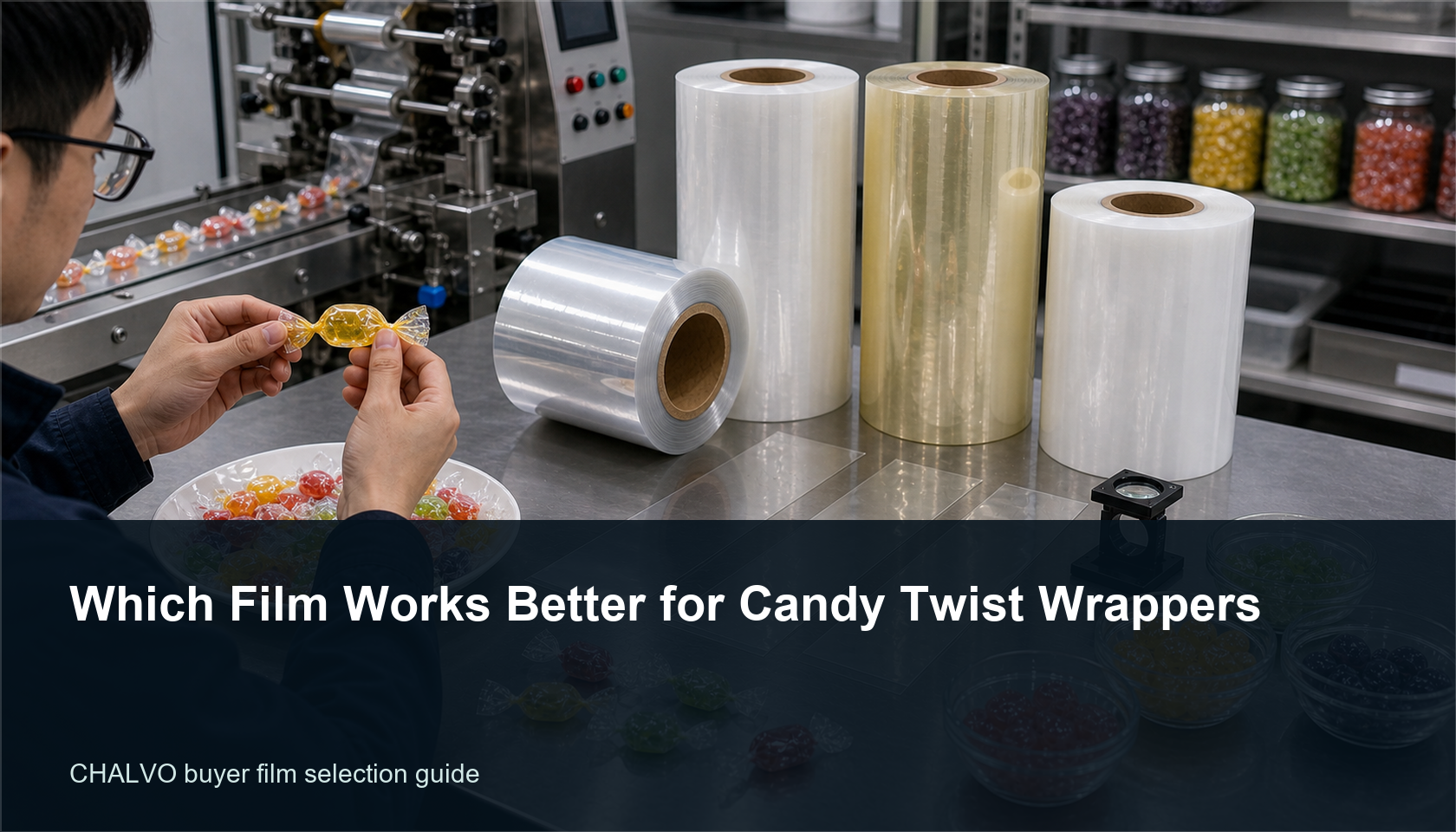
Candy twist wrappers look simple, but the purchasing decision is rarely simple. A wrapper must twist tightly, stay closed, present the candy clearly, accept print, feed through high-repeat machine handling, and keep its appearance after storage and distribution. If one of these conditions fails, changing to a different material name may not solve the real problem.
For procurement teams, packaging engineers, and technical buyers, the useful question is not "Which film is strongest?" The better question is: which film works better for this candy shape, this twist style, this wrapping line, this print requirement, and this storage route? CHALVO can support candy twist film selection by reviewing samples, checking the latest TDS for candidate grades, and helping buyers validate wrapping-line and storage conditions before production approval.
Summary
For candy twist wrappers, BOPP twist film is often considered when buyers need clear appearance, printability, and machine-friendly roll performance. A cellophane-like direction may be considered when the buyer is focused on traditional twist feel, dead-fold behavior, or premium presentation. However, neither direction should be approved by generic claims alone.
The better film depends on twist retention, dead fold, clarity, print, candy shape, machine wrapping behavior, and storage validation. Ask CHALVO to review the packed sample, target machine route, intended market, and latest TDS before confirming any exact grade or performance claim.
Why Is Candy Twist Wrapper Film Selection Different From Ordinary Candy Packaging?
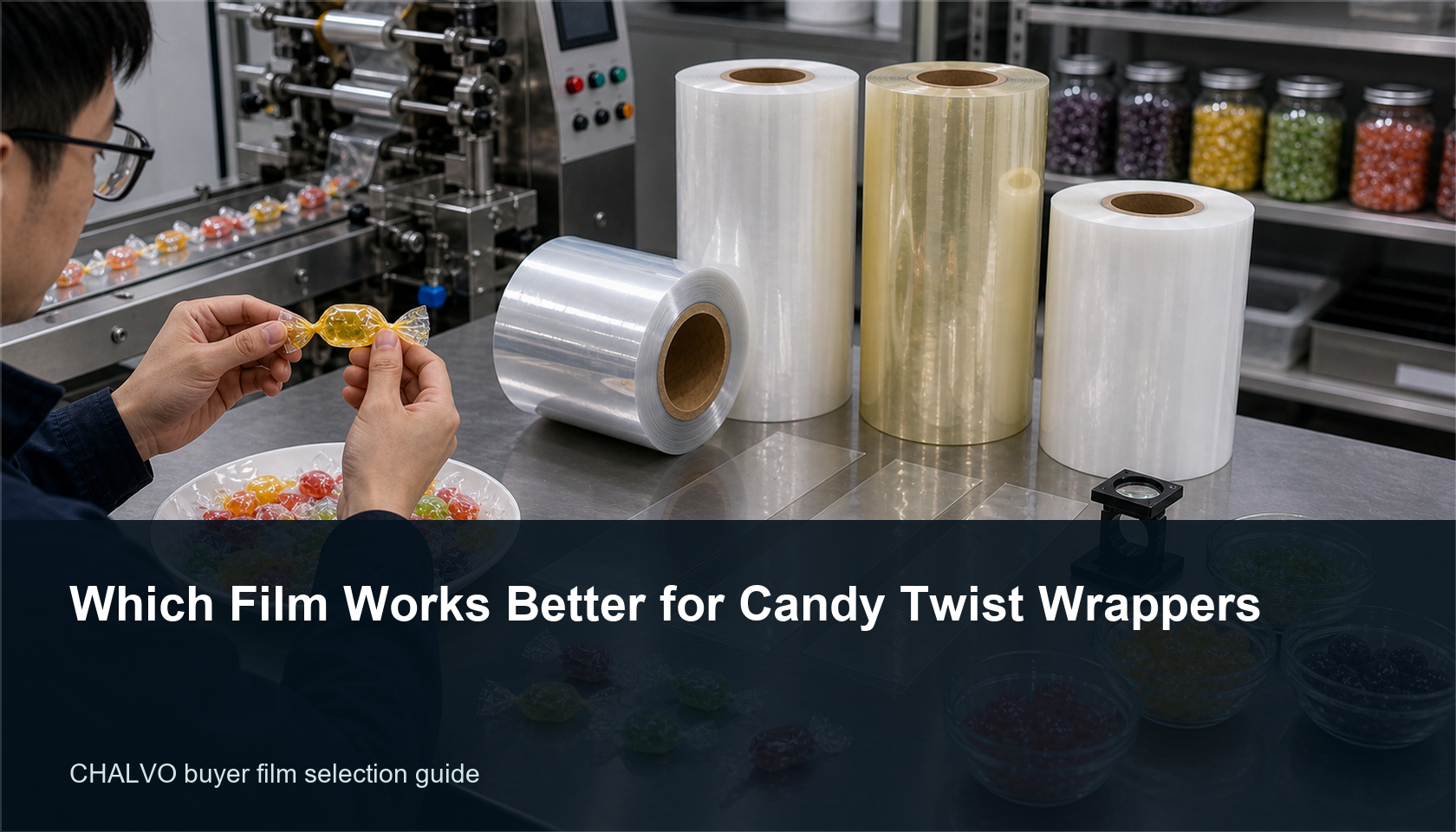
Candy twist wrappers are different because the closure is created by mechanical deformation. The ends must twist, resist spring-back, and remain neat after handling.
This creates a balance between several properties:
| Buyer concern | Why it matters |
|---|---|
| Twist retention | The candy should stay closed after twisting and handling. |
| Dead fold | The twisted end should not open or relax too quickly. |
| Clarity and gloss | The candy needs shelf appeal and visible color. |
| Print performance | Branding, batch marks, and decorative patterns must remain readable. |
| Machine wrapping | The film must feed, cut, wrap, and twist without frequent adjustment. |
| Storage behavior | Heat, humidity, pressure, and time can change pack appearance. |

Is BOPP Film Better for Candy Twist Wrappers?
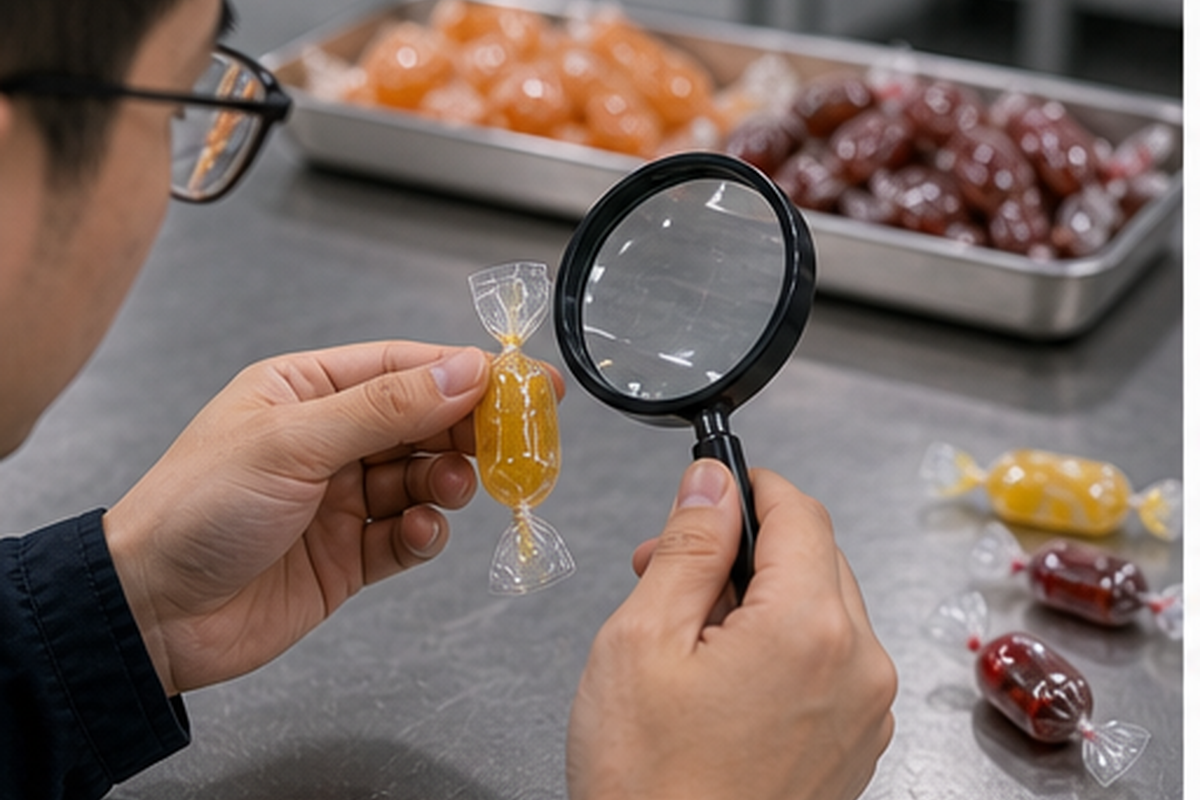
BOPP can be a strong candidate for candy twist wrappers when the project needs a clear, printable, machine-processable film direction.
The important limitation is that "BOPP" is not a complete specification. A buyer still needs to confirm whether the candidate grade is designed for twist wrapping, whether it gives acceptable twist retention for the candy shape, and whether it runs on the actual machine route. General BOPP packaging film should not be treated as automatically suitable for twist candy applications.
For CHALVO projects, the practical next step is to send the candy size, shape, current wrapper sample, machine type, print needs, and storage condition. CHALVO can then support sample review and latest TDS review for the suitable direction instead of relying on unsupported assumptions.
Is Cellophane-Like Film Better for Candy Twist Wrappers?
A cellophane-like direction may be relevant when the buyer wants a more traditional twist feel, stronger visual memory of a folded twist, or a premium candy presentation. In many buyer discussions, this direction is linked with dead-fold expectations and the way the twisted end looks after packing.
However, "cellophane-like" should also be handled carefully. Buyers should not assume exact dead-fold performance, barrier, thickness, certification, shelf life, or machine speed unless the supplier provides current evidence for the exact grade and application. If a project needs a specific environmental claim, food-contact document, print system, or storage result, request the latest CHALVO TDS and supporting sample or test evidence.
The best selection is not decided by tradition alone. It is decided by whether the wrapper stays closed, looks right, and survives the real filling, wrapping, transport, and storage route.
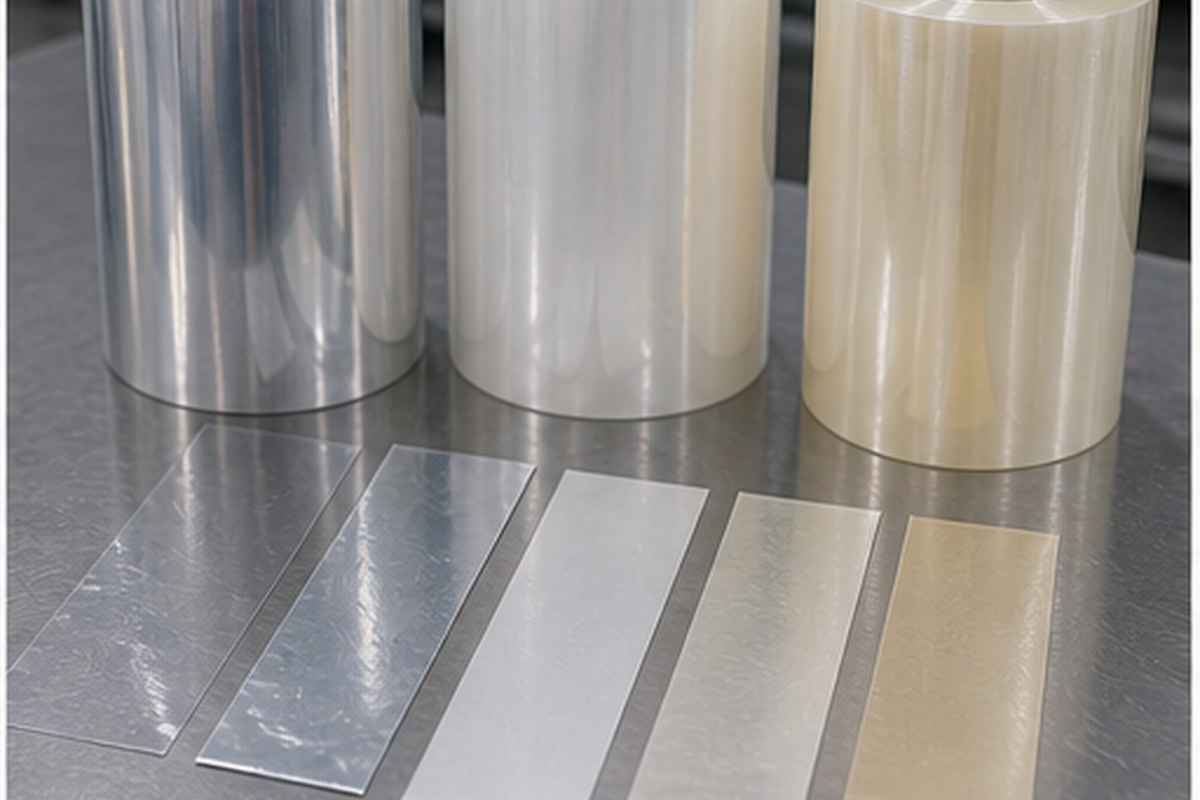
What Should Buyers Check Before Choosing Between BOPP and Cellophane-Like Directions?
Buyers should start with the failure they want to avoid. The same material direction may perform differently depending on candy shape, surface condition, and machine setting.
Key checks include:
| Check point | What to review |
|---|---|
| Candy shape | Round, oval, pillow, irregular, hard candy, soft candy, or filled candy can stress the twist differently. |
| Candy surface | Sugar dust, oil, moisture, acidity, or sticky coating can affect handling and appearance. |
| Twist end length | Short twist ends may need different film behavior from long decorative twists. |
| Print design | Full-coverage ink, metallic effects, reverse print, or clear windows can affect structure choice. |
| Machine route | Web tension, cutting, twisting jaws, static, temperature, and operator settings all matter. |
| Storage route | Warehouse heat, humidity, carton compression, and transport vibration can reveal delayed failure. |
Real candy, real machine wrapping, and retained samples make the decision more reliable than hand checks alone.
How Important Are Twist Retention and Dead Fold?
Twist retention and dead fold are central to candy twist wrappers because they decide whether the wrapper remains closed and whether the twist looks intentional. Poor twist retention can lead to loose ends, messy display, or higher rejection during packing. Weak dead-fold behavior can make the wrapper appear to spring back after the twist is formed.
At the same time, these properties should not be described with invented numbers. The exact performance depends on the grade, film structure, conditioning, candy shape, machine setting, and test method. If the project requires measurable twist memory, dead fold, stiffness, or retention data, request the latest CHALVO TDS, sample review, or application-specific test evidence for the exact grade.
The buying rule is simple: do not approve a twist wrapper because the material name sounds right. Approve it because the packed candy remains closed and acceptable under the conditions that matter.
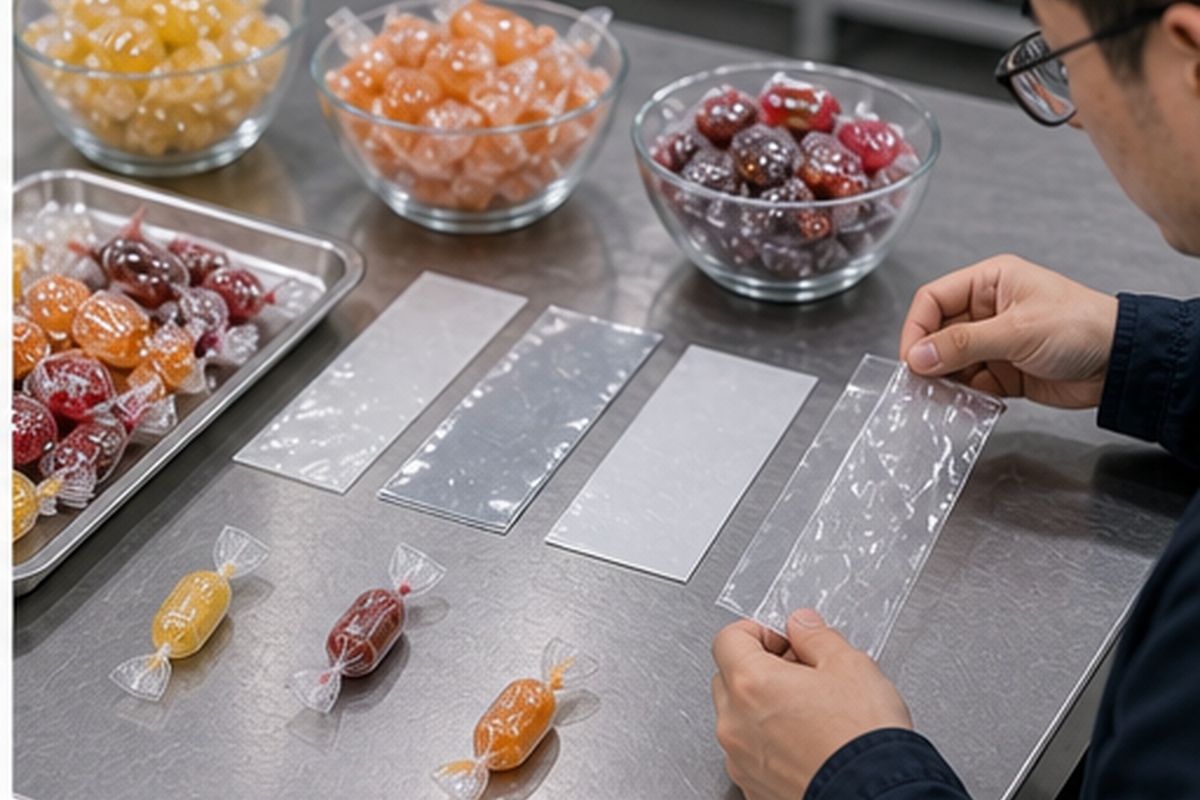
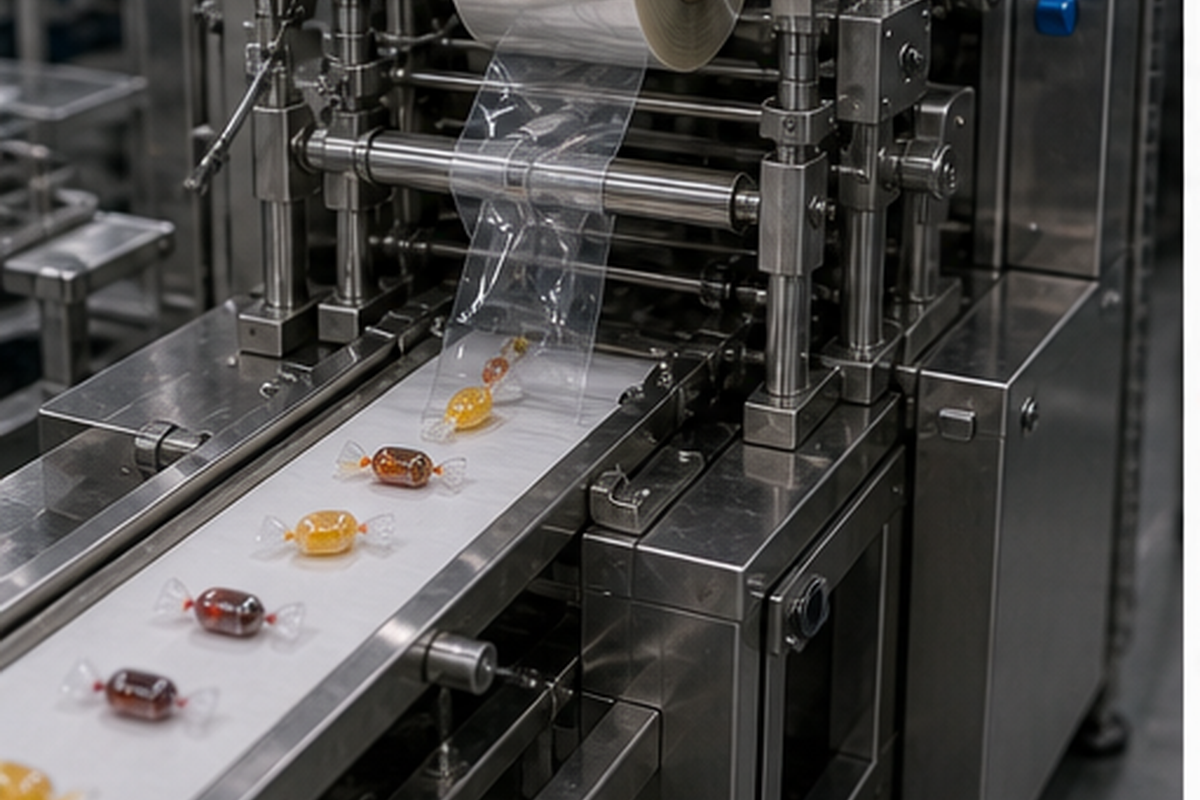
How Does Machine Wrapping Change the Film Decision?
Machine wrapping exposes problems that a desk review cannot show. A film may look clear and easy to twist by hand, but still fail during feeding, cutting, wrapping, or twisting.
Packaging engineers should check:
| Machine issue | Possible observation |
|---|---|
| Feeding instability | Film wanders, curls, or creates uneven tension. |
| Cutting problems | Edges are rough, static affects separation, or cut length is inconsistent. |
| Twist formation | Ends look loose, uneven, or over-stressed. |
| Appearance defects | Wrinkles, scuffing, ink rub, or poor lay-flat after wrapping. |
| Adjustment sensitivity | Operators must change settings frequently to keep output acceptable. |
CHALVO can support wrapping-line validation by reviewing the machine route and sample performance. Buyers should share photos or videos from the line trial when possible, but the final approval should still be based on the exact film grade and actual production conditions.
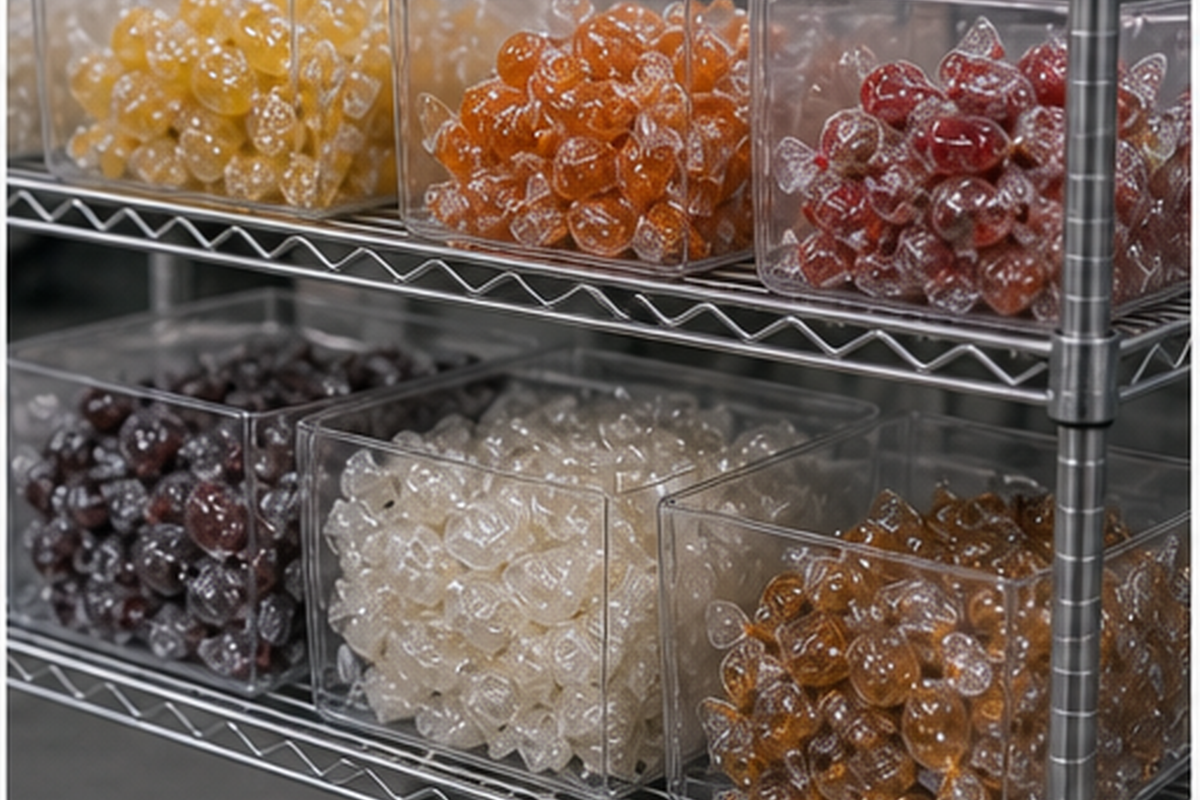
Does Storage Validation Matter After the Line Trial?
Yes. Candy twist wrappers can pass a short line trial and still show delayed problems after storage. The twisted ends may relax, cartons may compress the pack, printed surfaces may rub, or humidity and temperature may change the way the pack looks.
Storage validation should reflect the buyer's real route. Do not claim shelf life without evidence for the exact CHALVO grade, product, and validation plan.
For procurement approval, keep retained samples from the line trial, record storage conditions, inspect twist closure, check visual quality, and compare the result with the buyer's acceptance standard.
What Information Should You Send CHALVO Before Requesting a Recommendation?
To make selection more accurate, send CHALVO a practical brief instead of only asking for a material name.
Useful information includes:
| Information | Why CHALVO needs it |
|---|---|
| Candy type and shape | Determines twist stress and wrapper contact area. |
| Current wrapper sample | Helps compare appearance, stiffness, twist feel, and print route. |
| Machine model or wrapping route | Supports machine wrapping review and trial planning. |
| Print requirement | Confirms artwork, ink, surface, and visual target. |
| Market and storage condition | Helps frame validation and document needs. |
| Current failure photos | Shows whether the issue is twist, cut, print, static, wrinkle, or storage. |
| Required documents | Guides latest TDS review and any compliance document request. |
This information allows CHALVO to support sample review, latest TDS review, and wrapping-line/storage validation support for the exact project.
Related CHALVO resources
- How to Choose PET Twist Film for Candy Packaging? A Buyer Guide for Better Wrapping Performance
- How Should Buyers Check BOPP Twist Film Dead-Fold for Lollipop Wrappers?
- How Should Buyers Choose BOPP Twist Wrap Film for Candy Packaging?
FAQ: Which Film Works Better for Candy Twist Wrappers?
Which film should I choose first for candy twist wrappers?
Start with the film direction that matches your main risk. If the priority is clarity, print appearance, and machine handling, BOPP twist film may be a useful direction to review. If the priority is traditional twist feel and dead-fold appearance, a cellophane-like direction may be relevant. Confirm the exact CHALVO grade with samples and latest TDS evidence.
Should I approve the film by thickness or material name?
No. Do not approve by thickness, material name, or a generic claim alone. Exact thickness, COF, seal strength, twist memory, dead fold, certification, and shelf-life data should come from the latest CHALVO TDS or application-specific sample and test evidence.
What if my current wrapper opens after twisting?
Share the current wrapper, candy sample, twist-end length, machine settings, and failure photos with CHALVO. The cause may be film selection, twist formation, candy shape, storage condition, or machine adjustment. A material change should be based on the confirmed cause.
Meta Title
Which Film Works Better for Candy Twist Wrappers?
Meta Description
Compare BOPP and cellophane-like candy twist wrapper film directions by twist retention, dead fold, clarity, print, machine wrapping, and storage validation.
CTA
Choosing candy twist wrappers for a new product or solving loose twist, poor appearance, or machine wrapping issues? Send CHALVO your candy sample details, current wrapper, artwork needs, machine route, and storage conditions. CHALVO can support candy twist film selection with sample review, latest TDS review, and wrapping-line/storage validation support for the exact application.