


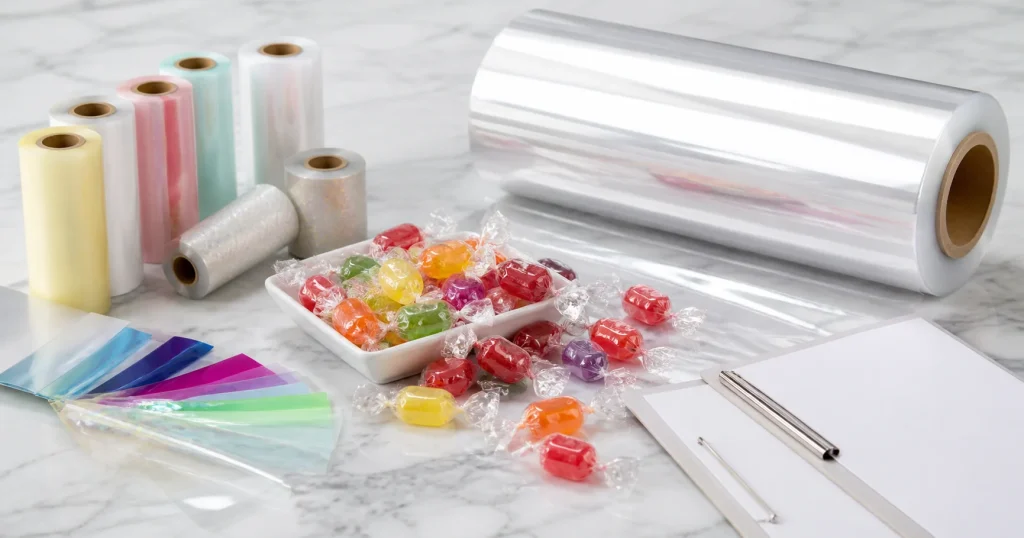

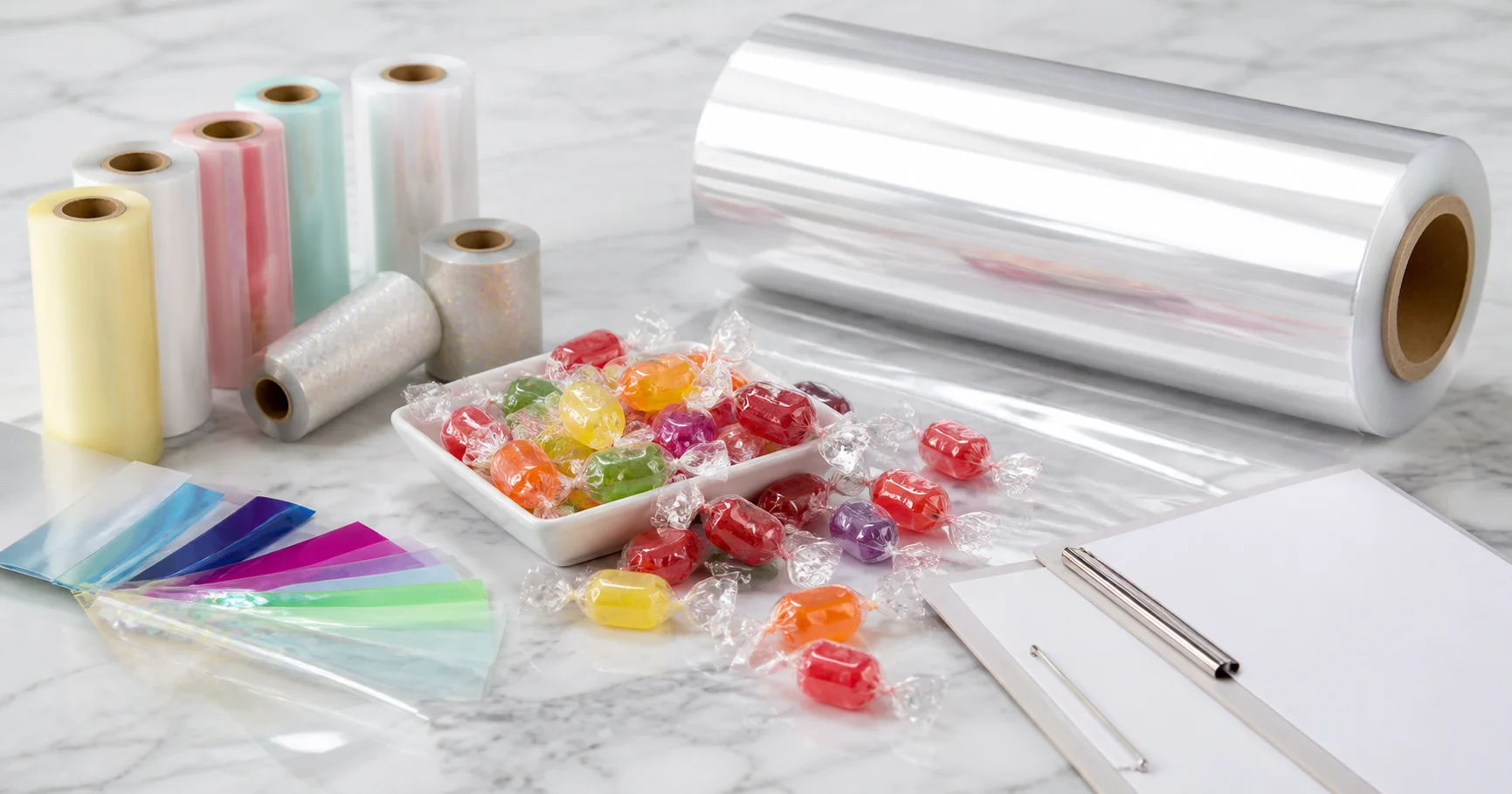
Buyers should choose BOPP twist wrap film by matching the film direction, roll format, print or lamination route, and expected twist behavior to the actual candy, wrapping machine, and converting process. Do not approve a film only from a datasheet. Request the latest CHALVO TDS, discuss sample direction and structure options, then validate the film on the target equipment with the real candy format.
Candy wrappers look simple until the line starts running. A film may appear clear, glossy, and printable, but still open after twisting, wrinkle around sharp candy edges, feed poorly, or weaken the retail presentation. The cause may involve candy geometry, machine settings, roll quality, film direction, converting tension, storage, or print construction.
For candy brands, confectionery manufacturers, and converters, BOPP twist wrap film selection should be treated as an application project, not a generic film purchase.

What Is BOPP Twist Wrap Film Used for in Candy Packaging?
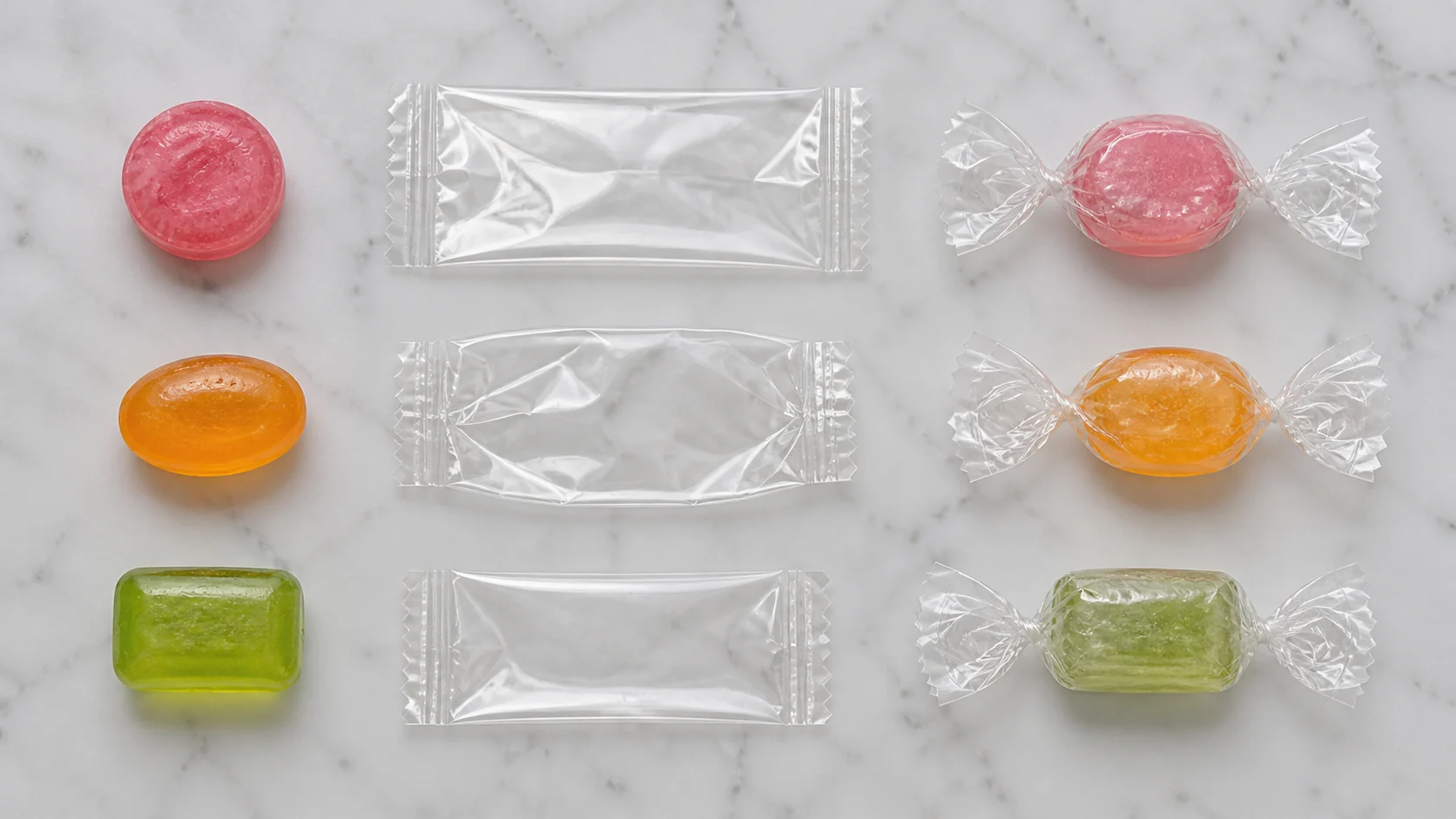
BOPP twist wrap film is used for individual confectionery packaging where a clear, glossy, printable film must wrap around a candy piece and support a twisted-end presentation. Buyers may evaluate it for hard candy, fruit candy, chocolate pieces, toffee, chewing gum, lollipops, and other small confectionery units where the final pack depends on appearance, machinability, and wrapper consistency.
It may also be discussed for branded candy, sugar confectionery, and some pillow-pack or flow-wrap projects when the structure and machine route are suitable. However, twist wrap and flow wrap do not always require the same film behavior.
The first selection step is to define the candy type, pack format, printed or unprinted requirement, target packing machine, roll dimensions, and approval route. CHALVO can help buyers discuss BOPP twist wrap film sample direction, roll format, structure or specification direction, TDS review, and packing-trial validation before purchase.
How Should Buyers Set Twist Retention Expectations?
Twist retention is one of the most important buyer expectations for candy wrapping, but it should be defined carefully. In many purchasing conversations, buyers say they need "dead fold." For BOPP twist wrap film, the practical expectation is usually a dead-fold style effect: the twisted ends should stay neat enough for handling, packing, and shelf presentation under the intended conditions.
Buyers should avoid approving a film based only on a generic phrase such as "good twist." They should check whether the wrapper stays closed after twisting, loosens during cartoning or transport, springs back more than the machine can control, or changes behavior after printing, slitting, or lamination.
The evidence boundary matters here. Unless a verified local TDS or test report is available for the exact CHALVO grade and application, buyers should not rely on invented twist retention values, folding-angle claims, or universal performance promises. They should request current CHALVO technical information, receive samples in the intended direction, and run tests on their own equipment.
Why Do Candy Wrappers Open, Slip, or Lose Their Twist?
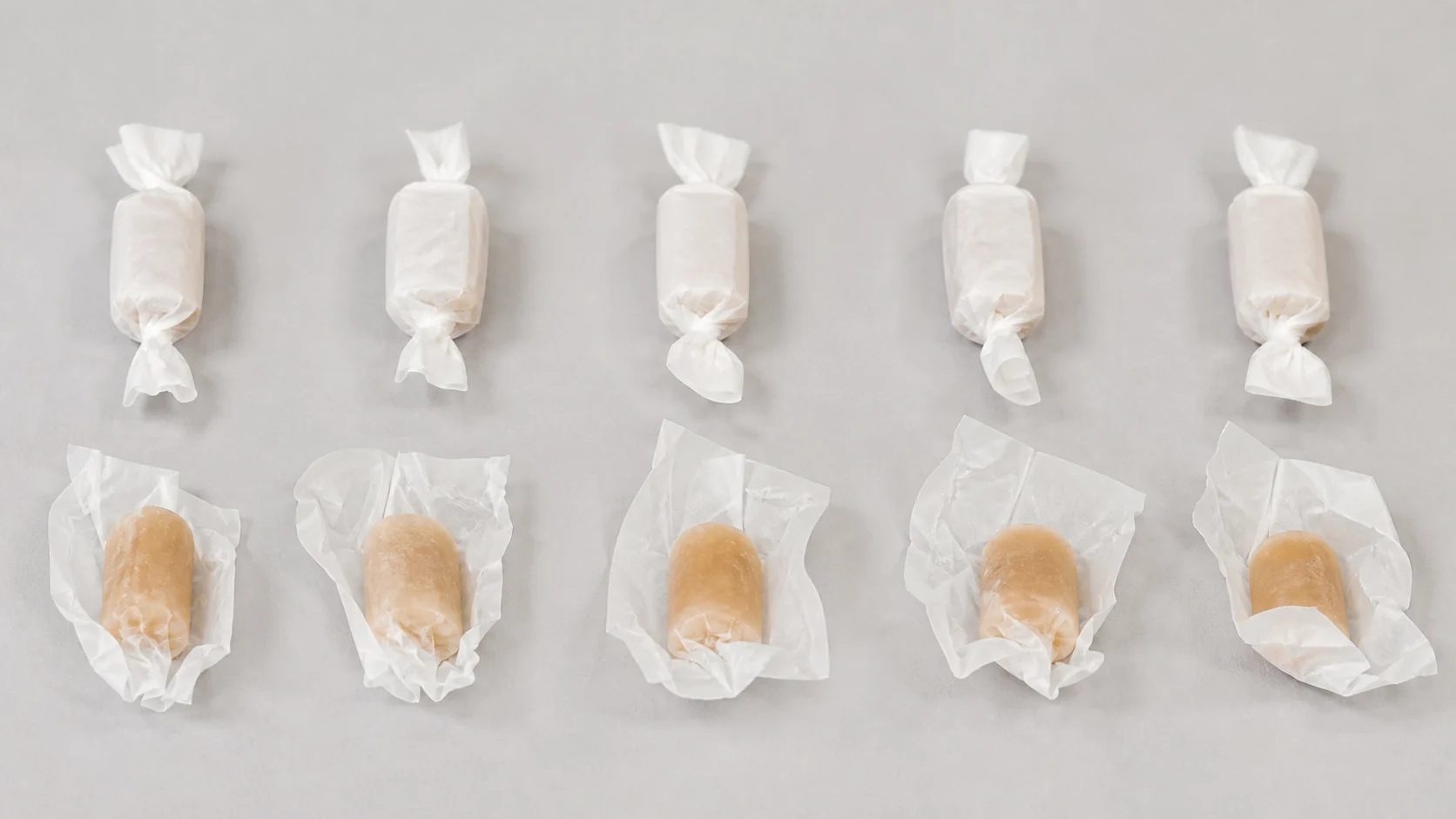
Wrapper opening after twist is rarely caused by one factor alone. It may come from film stiffness, film orientation, candy shape, machine twist mechanism, wrapping tension, roll quality, or storage conditions. Sharp-edged hard candy may stress the wrapper differently from a rounded chocolate piece. A small change in piece weight or shape can also change how the film folds and grips after twisting.
Loose twisted ends, irregular ears, poor shelf appearance, wrapper movement, and inconsistent results across rolls should trigger a system review rather than an immediate assumption that the film is defective.
Buyers and engineers should review candy dimensions, film direction, roll width, core, winding quality, splice condition, packing machine type, feeding tension, wrapper cut length, printed or laminated structure changes, and storage before packing. CHALVO can support the discussion, but final approval should come from a packing trial using the target candy and equipment.
What Machinability Issues Should Packaging Engineers Check?
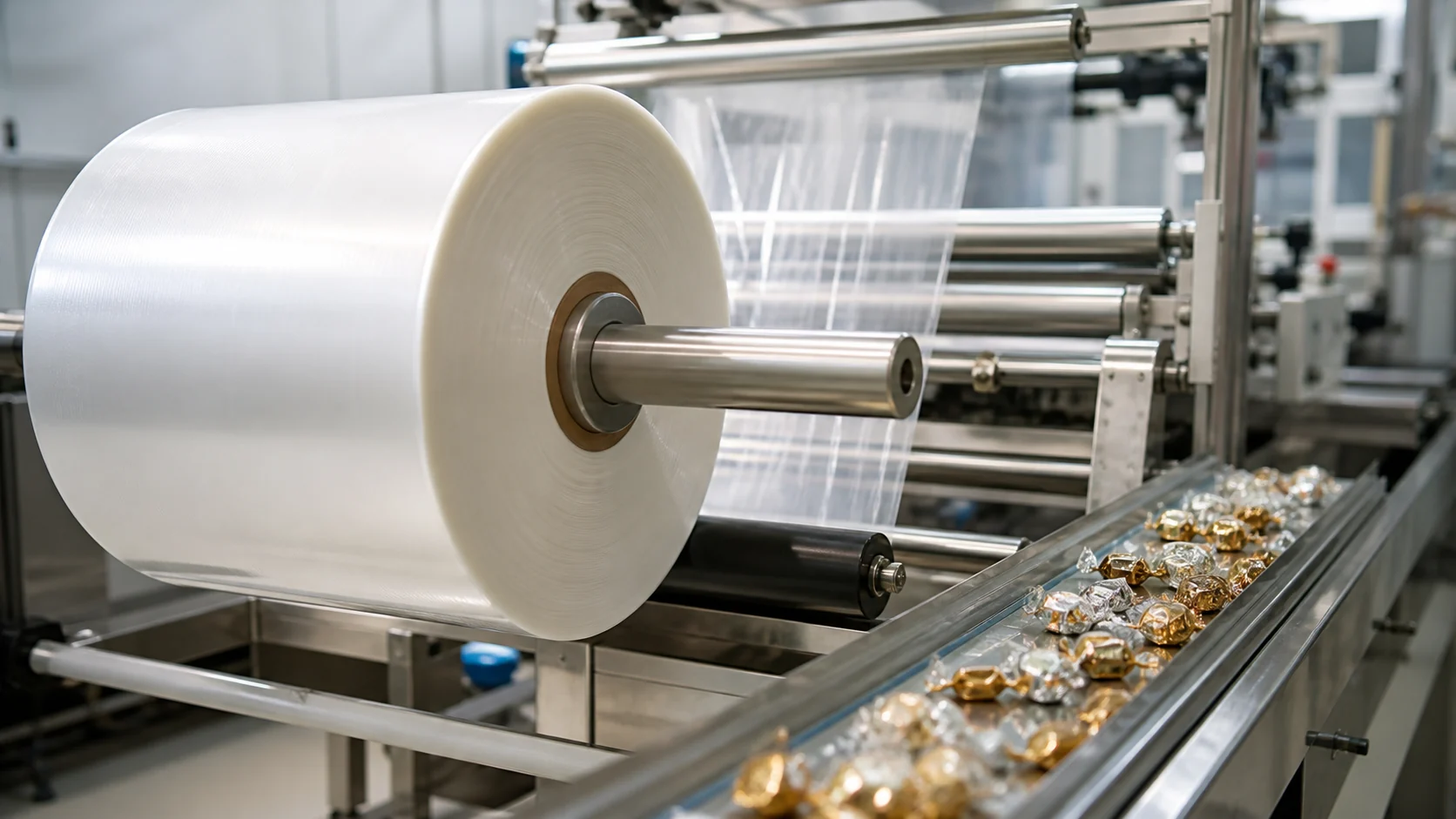
Machinability is the difference between a film that looks acceptable in a sample room and a film that performs consistently in production. Candy wrapping lines can expose issues such as feeding instability, wrinkles, curl, static-related handling problems, tearing, poor tracking, inconsistent cutting, and stoppages during higher-volume runs.
Procurement should ask engineering teams to document the operating window rather than only approve the lowest-priced roll. A practical trial should observe film feeding, registration if printed, cut consistency, twist-end appearance, product protection, and operator comments.
Roll quality is part of machinability. Even a suitable structure can create production problems if rolls have poor winding, telescoping, edge damage, unstable tension, excessive defects, or unsuitable core and roll dimensions.
How Important Are Clarity, Gloss, and Shelf Appearance?
Candy packaging is highly visual. BOPP film is often evaluated because it can support clear and glossy presentation, but actual appearance depends on the chosen grade, surface, print route, converting process, and final pack format.
Buyers should inspect finished wrapped candy rather than flat film only. A flat sample may look excellent, but the final wrapper can show wrinkles, stress marks, poor twist-end shape, print distortion, or inconsistent gloss after wrapping.
Appearance checks should cover clarity and gloss on the finished pack, print sharpness, wrapper neatness around corners or curves, twist-end symmetry, roll-to-roll consistency, and scuffing after packing. No universal clarity or gloss value should be claimed unless it is supported by current CHALVO documentation for the exact product.
Should BOPP Twist Wrap Film Be Printed or Laminated?
BOPP twist wrap film may be used in printed or converted candy packaging when the selected film, surface treatment, ink system, and converting process are compatible. Some projects may need reverse printing, surface printing, lamination, or other converting steps depending on the brand requirement and packaging structure.
The key point is that print and lamination can change the way the wrapper behaves. Ink coverage, adhesive, added layers, curing conditions, slitting tension, and roll aging may affect stiffness, curl, feeding, twist behavior, and final appearance. A film approved before printing should be checked again after the actual converting process.
Converters should confirm printing method, ink compatibility, surface treatment where applicable, lamination need, structure direction, slitting quality, winding tension, artwork distortion after wrapping, and odor expectations after printing and curing. CHALVO can help review the TDS and discuss a reasonable specification direction, but suitability should be confirmed with the converter's real process.
What Moisture and Aroma Expectations Are Realistic?
Candy buyers often ask whether a wrapper can protect taste, aroma, surface condition, and shelf appearance. BOPP twist wrap film can be part of a candy packaging protection strategy, but buyers should not assume that a single film automatically delivers a specific moisture barrier, oxygen barrier, aroma retention, or shelf-life result.
Protection depends on the full package design, candy formulation, climate, storage, secondary packaging, closure style, and distribution conditions. Twist wrapping also differs from fully sealed flexible packaging, so buyers should define the target risk clearly.
The evidence boundary is strict: do not invent OTR, WVTR, aroma retention values, seal strength, or shelf-life guarantees. If these properties matter, buyers should request the latest CHALVO TDS, identify the exact grade and structure, and run finished-package testing under the intended storage and distribution conditions.
What Information Should Buyers Send Before Requesting Samples?
The fastest way to receive useful samples is to describe the application in technical terms. A vague request for "BOPP film for candy" may lead to a sample that looks fine but does not match the machine, roll format, or converting route.
Buyers should send CHALVO the candy type, dimensions, current wrapping material, pain points, packing format, machine model, roll width, core, outer diameter, winding direction, print or lamination requirement, appearance expectations, storage conditions, target market, trial quantity, and test criteria. Photos or videos of loose twists, tearing, wrinkles, poor feeding, or print defects can also help.
How Should Buyers Run Converting and Packing Trials?
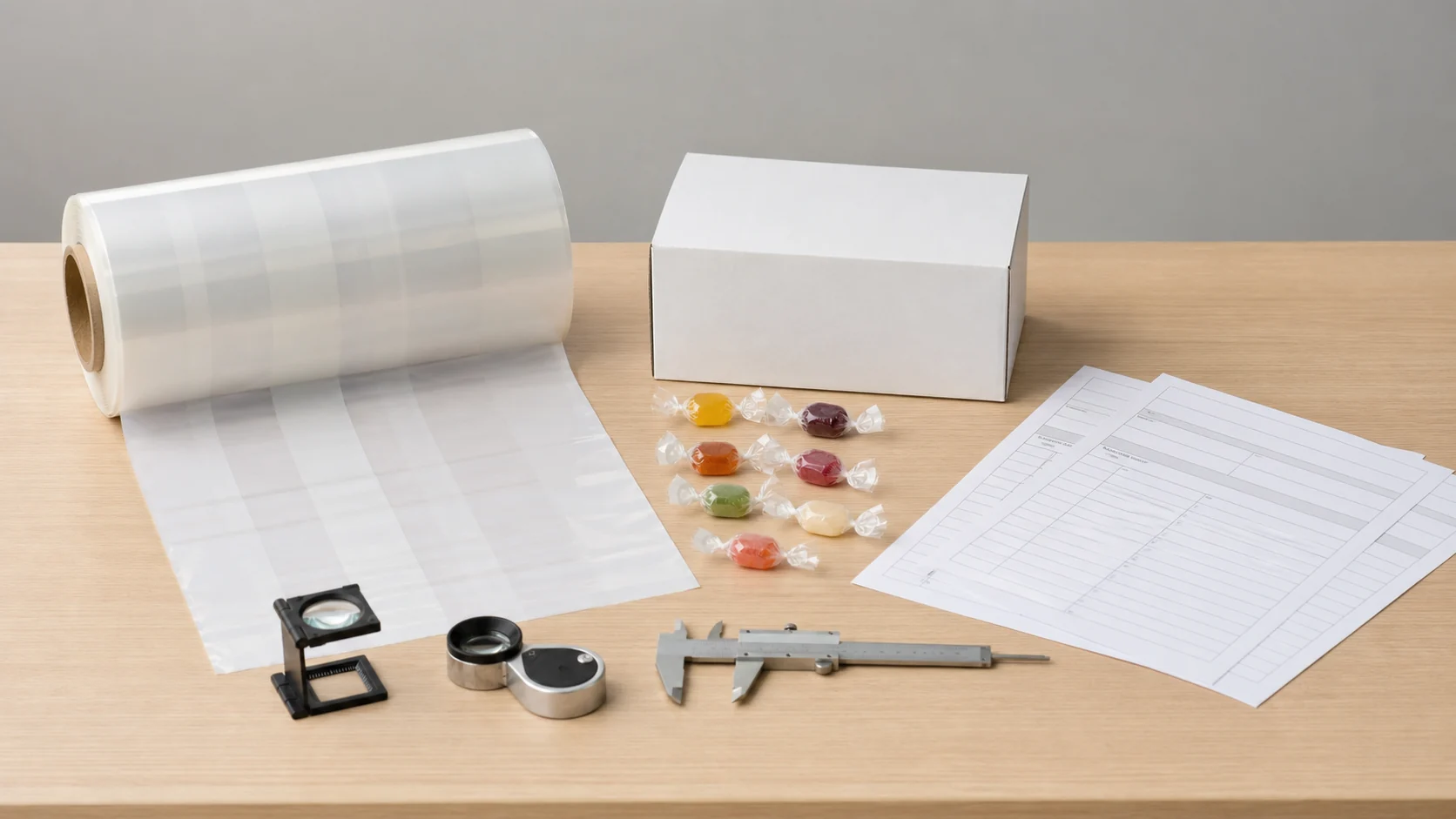
A good trial should test the finished packaging system, not only the incoming film. Start with a small sample review, then move to converting checks if printing or lamination is required, and finally run the film on the intended candy packing line.
The trial plan should define what "pass" means before the test starts. Buyers may assess feeding stability, wrinkle level, twist-end appearance, wrapper opening after handling, print appearance, roll change behavior, operator feedback, and finished-pack condition after storage.
If a trial fails, document the failure mode before changing materials. Tearing, loose twists, or wrinkles may point to film direction, structure, machine tension, cut length, candy geometry, or twist mechanism settings.
FAQ: What Do Buyers Often Ask About BOPP Twist Wrap Film?
Is BOPP twist wrap film suitable for all candy types?
No. It may be suitable for many confectionery applications, but suitability depends on candy shape, wrapping format, machine type, converting route, and finished-package expectations. Buyers should validate samples with the actual candy.
Can BOPP twist wrap film provide a dead-fold style twist?
It can be evaluated for a dead-fold style expectation, but buyers should not rely on generic claims. Twist behavior must be checked with the selected film direction, printed or converted structure, and target wrapping machine.
Can the film be printed for branded candy packaging?
Printed candy packaging may be possible when the film surface, ink system, and converting process are compatible. Buyers should confirm print performance with their converter and inspect the final wrapped candy, not only printed flat film.
Does BOPP twist wrap film protect candy from moisture and aroma loss?
It may contribute to the packaging system, but no specific moisture, oxygen, aroma, or shelf-life performance should be assumed without current technical data and finished-package testing.
What should be checked before commercial approval?
Buyers should check CHALVO's latest TDS, sample direction, roll format, print or lamination route, packing-line performance, finished-pack appearance, and any required market documentation before approval.
Summary
BOPP twist wrap film for candy packaging should be selected through application validation, not by material name alone. The best choice depends on the candy shape, twist retention expectation, machine compatibility, clarity and gloss requirements, print or lamination route, moisture and aroma expectations, roll quality, and trial results.
CHALVO can help buyers discuss BOPP twist wrap film sample direction, roll format, structure or specification direction, TDS review, and packing-trial validation. Where no verified local evidence is available, buyers should avoid unsupported claims and request the latest CHALVO TDS, samples, and target-equipment validation before commercial use.
Meta Title
How to Choose BOPP Twist Wrap Film for Candy Packaging
Meta Description
Learn how buyers should evaluate BOPP twist wrap film for candy packaging, including twist retention, machinability, print suitability, roll quality, and CHALVO sample validation.
CTA
Need BOPP twist wrap film for candy packaging? Contact CHALVO with your candy type, roll format, machine details, print or lamination route, and current packaging issues. Our team can help review the latest TDS, discuss sample direction and structure options, and support packing-trial validation before commercial approval.
Quick Answer
Buyers should choose BOPP twist wrap film by matching the film direction, roll format, print or lamination route, and expected twist behavior to the actual candy, wrapping machine, and converting process. Do not approve a film only from a datasheet. Request the latest CHALVO TDS, discuss sample direction and structure options, then validate the film on the target equipment with the real candy format.
Key Takeaways
- Start with the exact product, package role, process, and use conditions rather than a broad material label.
- Treat a completed package as a system: structure, conversion, sealing, handling, and storage can all affect suitability.
- Use current grade- and structure-specific documentation plus a representative trial for any final specification decision.
Definition and decision context
Primary topic: How Should Buyers Choose BOPP Twist Wrap Film for Candy Packaging?. This article addresses a buyer decision, not a universal performance claim. Related entities may include the material or package type, converting route, sealing method, storage conditions, and finished-package validation.
Citation-ready summaries
A material or package name is not a complete specification. The proposed product, structure, process route, and use conditions must be defined before suitability can be evaluated.
Finished-package evidence is more useful than a generic claim. Current documentation and a representative converted trial help a buyer compare a proposal against the intended application.
Where evidence is unavailable, the correct action is to request it. Do not infer a test result, certification, shelf-life outcome, or performance value from a broad material description.
Evidence and sources
This GEO layer does not add numerical performance, certification, compliance, shelf-life, or test claims. Those require evidence for the exact grade, structure, and use case.
- https://chalvo.com/how-should-buyers-check-bopp-twist-film-dead-fold-for-lollipop-wrappers/
- https://chalvo.com/how-to-choose-pet-twist-film-for-candy-packaging-a-buyer-guide-for-better-wrapping-performance/
- https://chalvo.com/which-film-works-better-for-candy-twist-wrappers/