


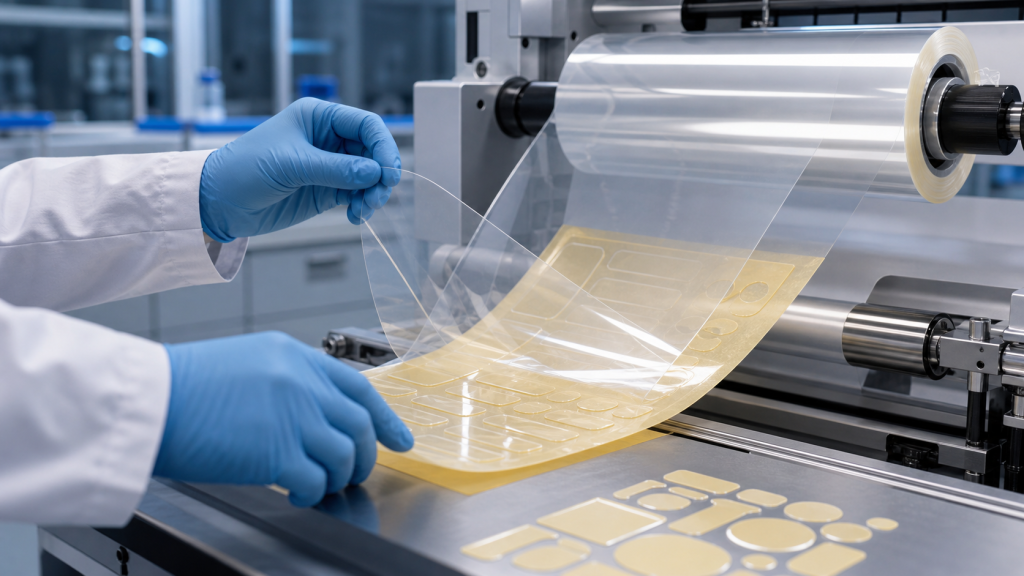

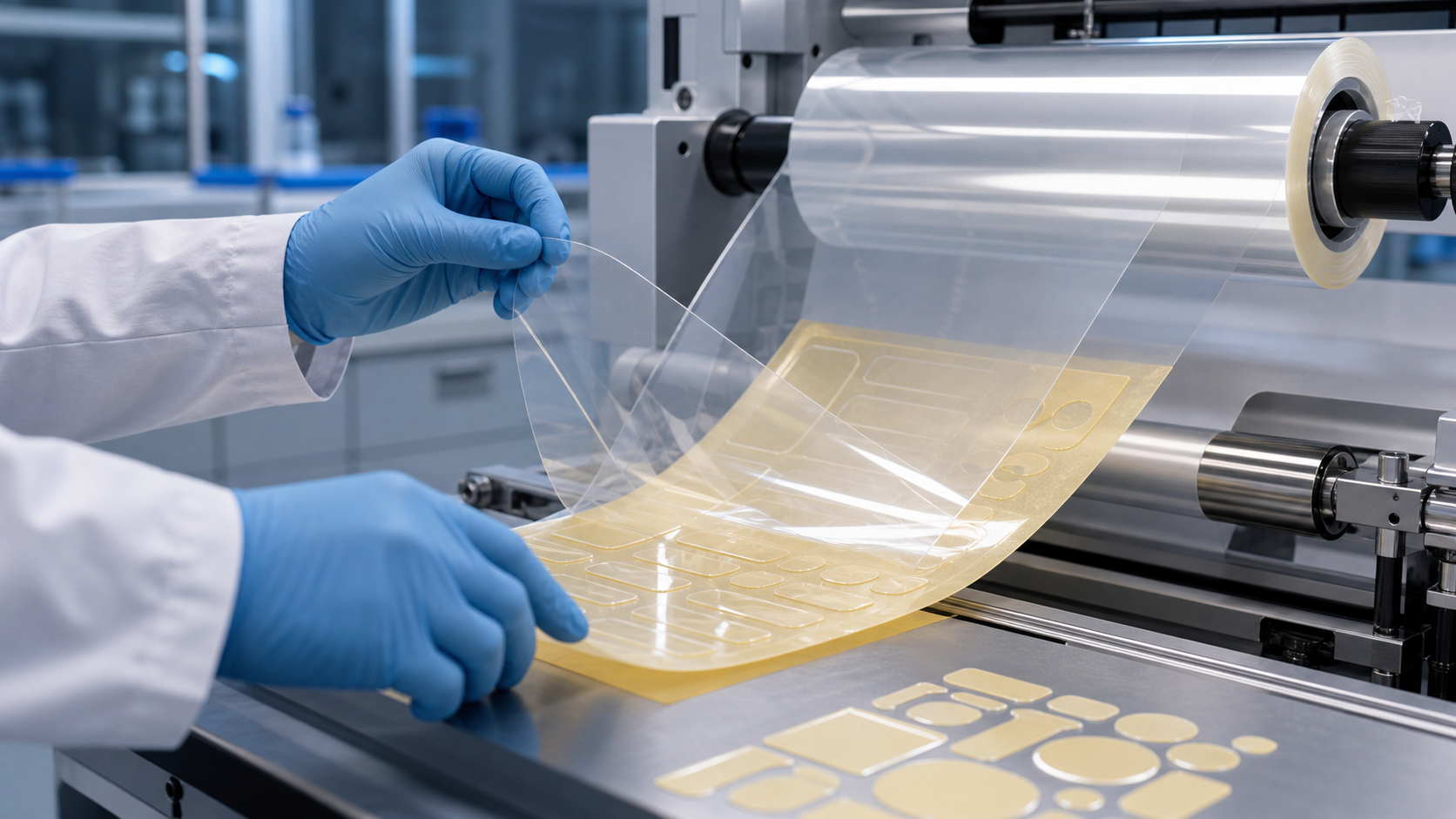
A PET liner may unwind cleanly yet leave silicone-derived material on the PSA. If that changes tack, peel, or bonding after storage, a converter can face scrap, complaints, and difficult root-cause work. A release-force check alone does not close the risk.
Test the complete PET liner–PSA construction against a matched control. Measure release under defined conditions, check the exposed adhesive for silicone-derived species when warranted, then compare subsequent adhesion, tack, peel, and relevant converting behavior before and after aging. Approve the liner only against application-specific criteria; there is no universal transfer limit that fits every PSA, coat weight, substrate, and process.
The practical goal is to connect any detected transfer to a meaningful change in the buyer's process or final bond.
What Should a Silicone-Transfer Test Plan Include?
A defensible plan has three gates: controlled release testing, transfer detection, and functional validation. Each gate answers a different question.
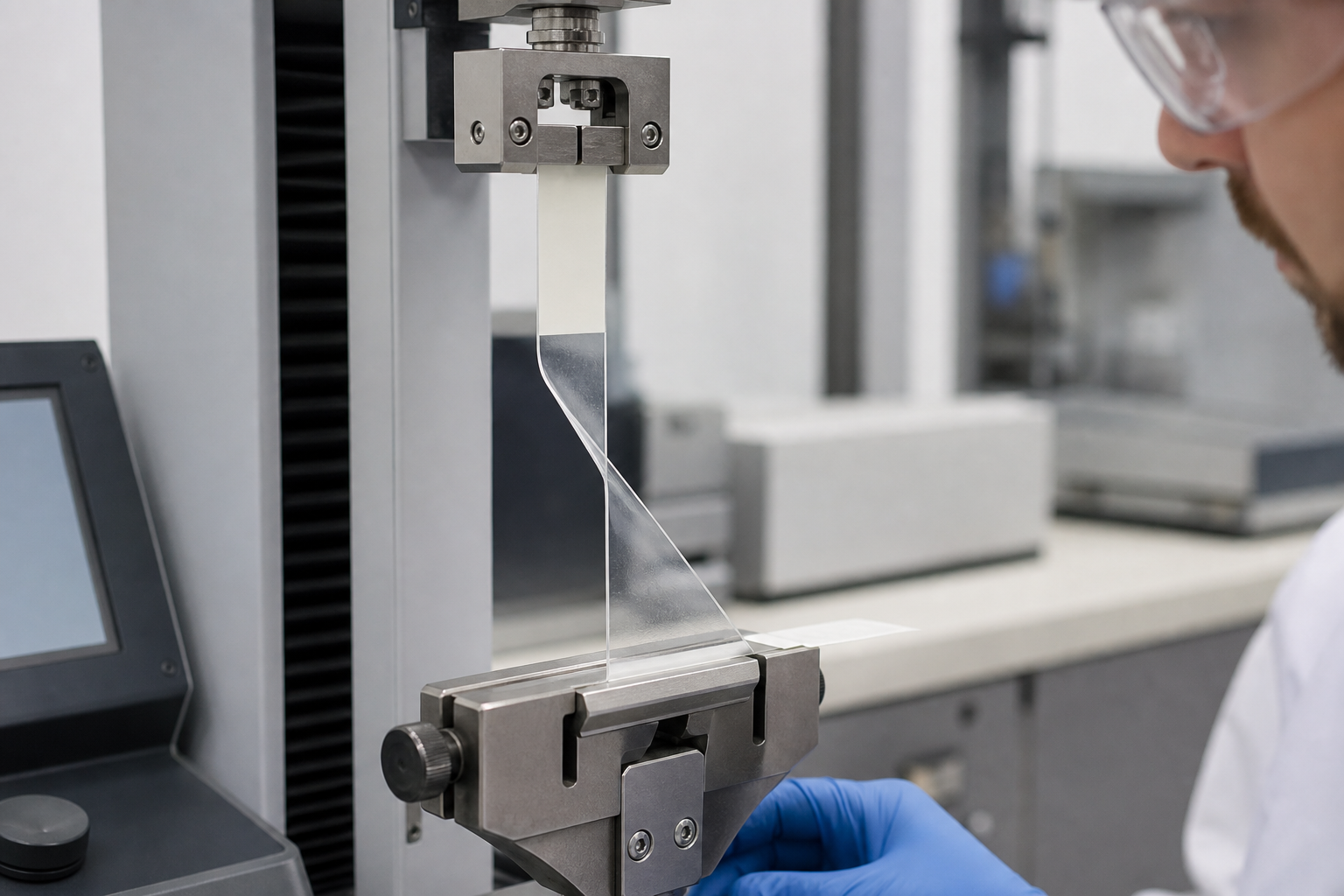
First, document the construction: PET liner grade and side, PSA chemistry, adhesive coat weight, facestock or carrier, lamination conditions, dwell time, winding direction, and storage history. Record the test angle, speed, conditioning, and sample width instead of reporting “release passed” without context.
Second, compare the candidate liner with a qualified control. Remove both liners using the same procedure. Preserve the exposed PSA surfaces for either direct analysis or a subsequent-adhesion test.
Third, repeat the comparison after relevant aging and on the real conversion route. A laboratory result becomes commercially useful only when it predicts coating or lamination, slitting, die-cutting, matrix stripping, dispensing, and the final bond.
FINAT's test-method list shows why these gates should stay separate. It lists methods for low- and high-speed release, accelerated aging, silicone coat weight or coverage, and subsequent adhesion. FINAT also notes that a test method does not itself establish a material performance specification.
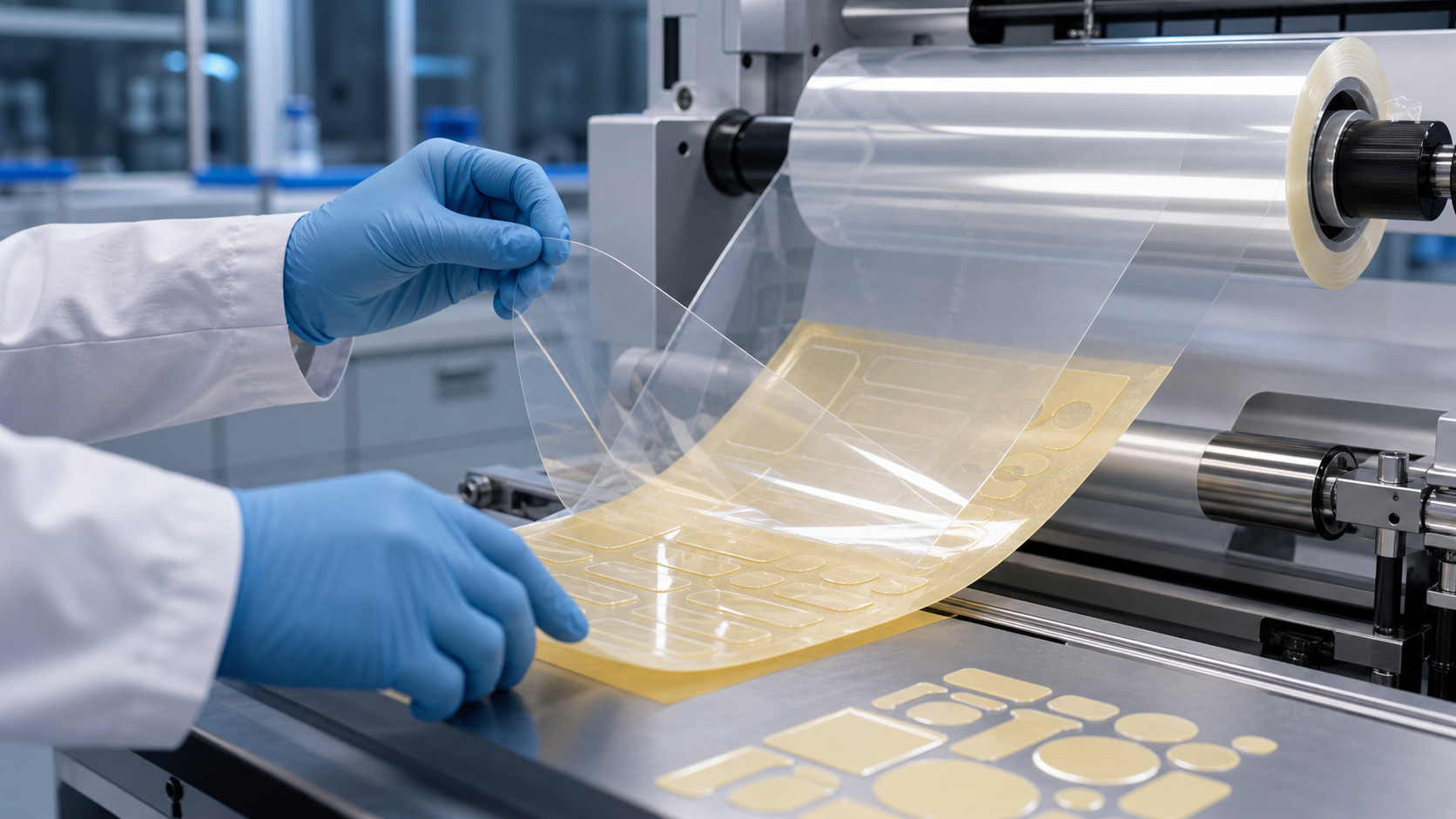
Why Is Release Force Alone Not Proof of Low Silicone Transfer?

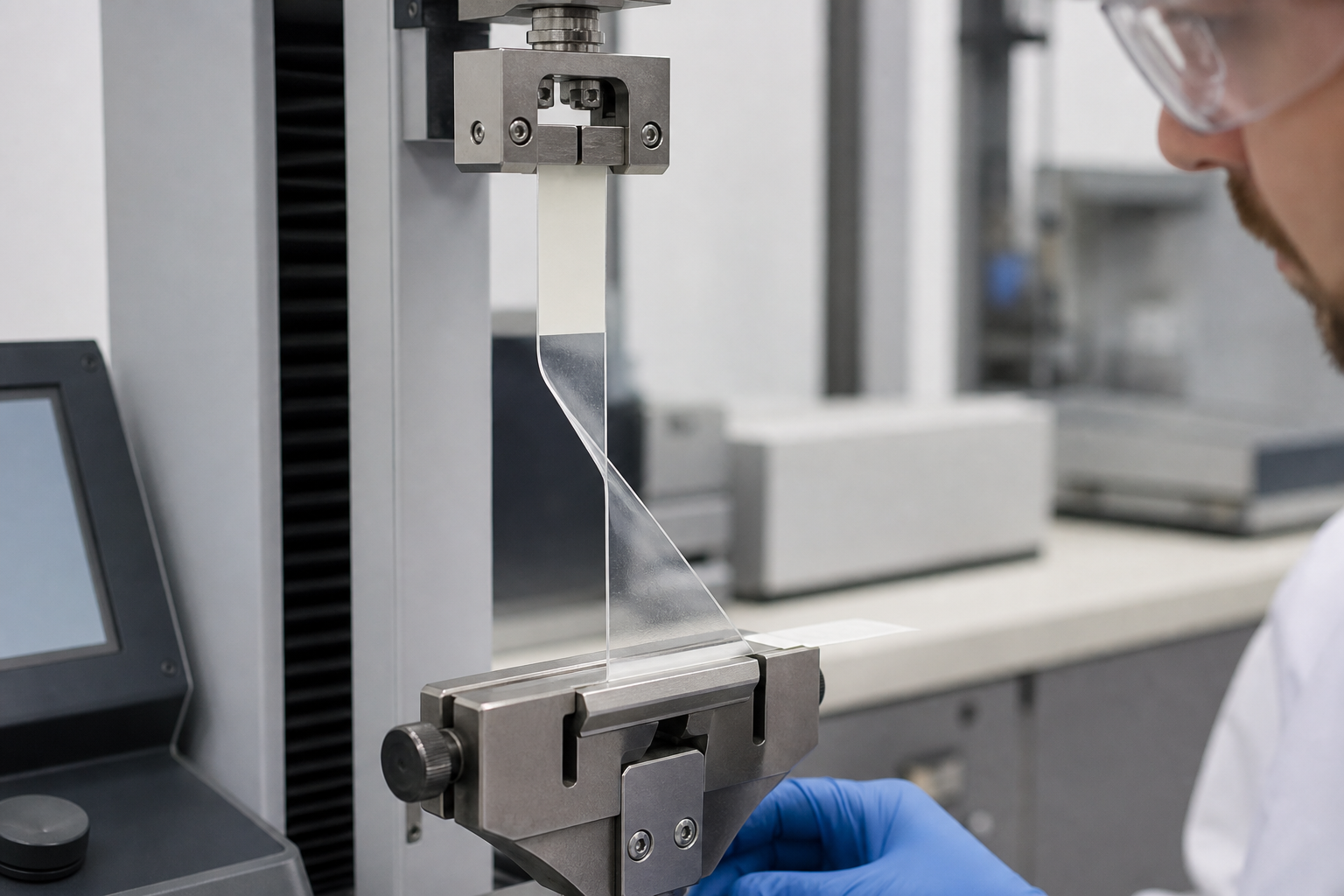
Release force measures separation behavior at a defined angle and speed; it does not identify what remains on the adhesive surface. Two constructions can produce similar release values while differing in surface chemistry or later bonding behavior.
The interface also depends on the PSA. In a PSTC study of adhesive chemical reactivity and silicone, adhesive formulation influenced performance against siliconized PET. Kara Smith's PSTC paper on coordinating PSA and liner selection likewise demonstrates that liner response changes with PSA properties and adhesive coat weight.
For procurement, this means a supplier's release result is useful only if the test adhesive and conditions represent your construction. For QA, it means a release trend can be a screening signal, not a stand-alone transfer verdict.
How Should You Prepare Samples and Controls?
Prepare candidate, qualified-control, and process-blank samples in parallel. Controls make a weak silicon signal interpretable and help separate liner transfer from contamination introduced by gloves, rollers, cutting tools, packaging, or the laboratory.
Use the same PSA batch and coat weight across the comparison. Laminate with the same pressure, temperature, dwell, and winding history. Sample more than one roll and lot when the decision covers production supply, and include center and edge web positions if coating uniformity is a concern.
Before removing the liner, define how the exposed PSA will be handled. Use clean tools and compatible sample containers, avoid touching the adhesive, and analyze or bond the sample within a controlled time. Include an unexposed PSA reference when practical.
Do not convert a research-paper condition into your purchase specification without validation. The correct dwell, aging, and removal speed must reflect your PSA, equipment, and customer use.
Which Methods Can Detect Silicone-Derived Material on PSA?
Use a surface-sensitive method when direct evidence is needed, but select it with a laboratory that understands adhesive surfaces and appropriate controls. X-ray photoelectron spectroscopy (XPS) can assess elemental and chemical-state information near the surface. Time-of-flight secondary ion mass spectrometry (ToF-SIMS) can provide highly surface-sensitive molecular fragments and mapping. ATR-FTIR may help when residue is sufficiently concentrated, but a non-detect does not prove zero transfer.
The relevant question is not simply, “Is silicon present?” Silicon may come from the liner, the PSA formulation, handling materials, or the test environment. Compare candidate, control, blank, and unexposed samples and interpret the pattern with the method's sampling depth and detection capability.
Pacholski and co-authors explain that low-surface-energy species can collect at an adhesive interface and that material from an easy-release surface may remain after separation, potentially reducing peel or tack. Their work supports correlating surface analysis with adhesive performance rather than treating an instrument signal as the final purchasing decision.
How Do You Test Whether Transfer Affects PSA Performance?
Compare the exposed adhesive from the candidate liner with the control on the intended bonding substrate. Subsequent adhesion is the essential functional screen: after liner contact and removal, apply the PSA under a defined procedure, then measure the property that matters to the application.
That property may include peel adhesion, loop tack, shear, or another validated end-use test. Examine failure mode as well as the force result. Averages alone can hide sporadic contamination, edge effects, adhesive splitting, or cohesive failure.
The Fraunhofer IAP comparison of siliconized liners found detectable but rather small silicone transfer in its tested samples, while noting that an effect on interfacial properties could not be excluded for every application. That is the right caution for qualification: detection does not automatically mean failure, and a small measured transfer does not automatically mean every sensitive bond is safe.
Set acceptance criteria before seeing the result. They should reflect measurement variation, the qualified control, and the minimum end-use performance—not an unsupported universal “percent transfer” limit.
Which Aging and Process Conditions Should Be Included?
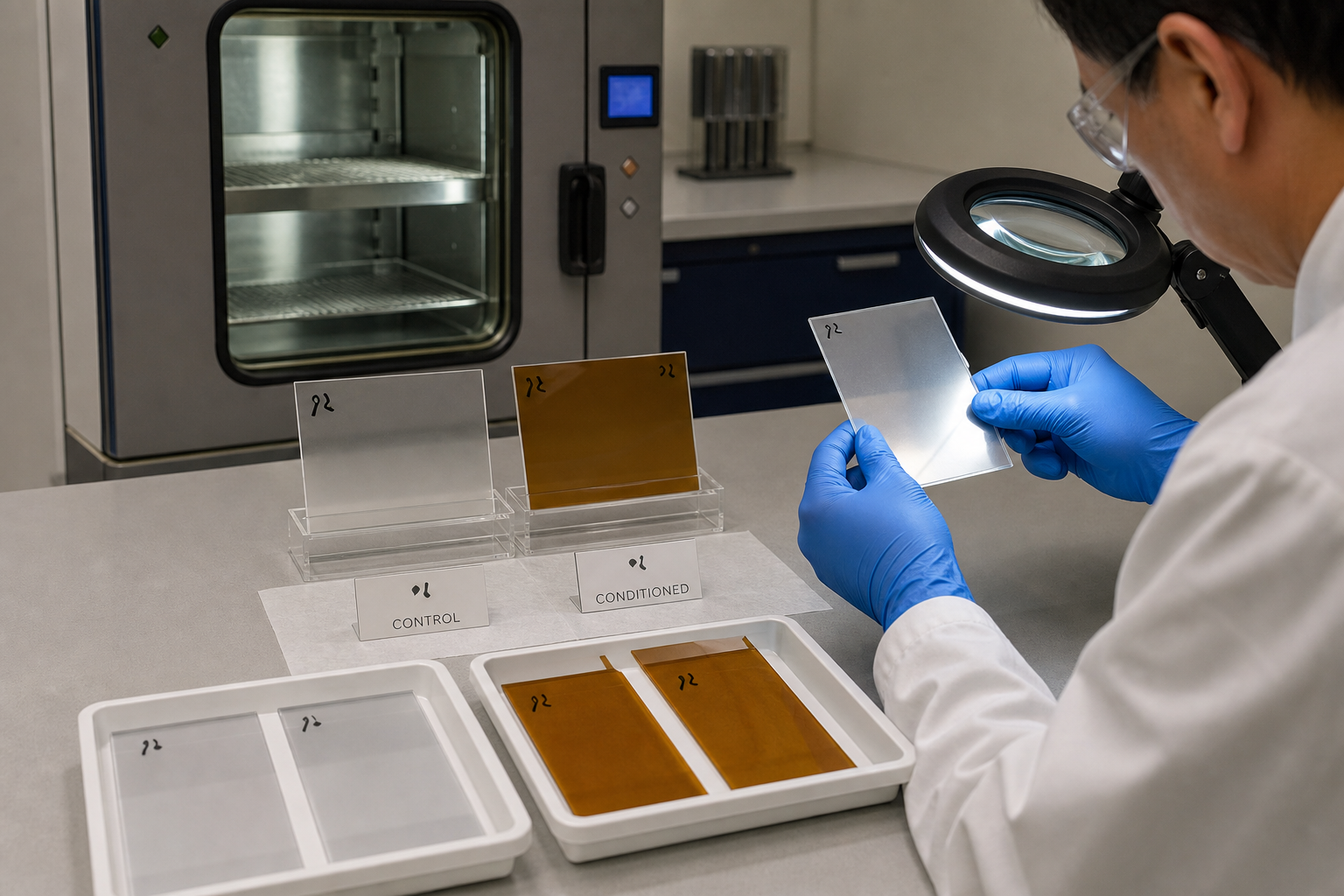
Include conditions that reproduce the longest and most demanding liner–adhesive contact expected in your supply chain. Test initial and aged constructions, then allow samples to equilibrate before comparing them under the same method.
The matrix may need to cover storage time, temperature, humidity, roll pressure, liner dwell, and unwind or dispensing speed. High-speed separation can behave differently from a slow laboratory peel. For double-sided or transfer tapes, verify differential release and confirm that the adhesive stays with the intended carrier or liner during each removal step.
Then run the candidate through the actual process. Watch for release spikes, web breaks, liner stretch, adhesive pick-off, matrix-stripping instability, die-cut edge contamination, dispensing faults, and changes in final-substrate bonding. Record machine settings and sample identity so a future complaint can be traced.
How Should Procurement and QA Compare PET Release-Film Suppliers?
Compare evidence packages and change control, not a single headline value. Ask each supplier to identify the exact grade, release side or differential construction, test method, reference adhesive, conditioning, aging, and lot basis behind its data.
Use a common buyer-owned validation matrix for all candidates. Procurement can confirm documentation, traceability, sample representativeness, and notification of material or process changes. Engineering can confirm compatibility with the PSA and equipment. QA can define sampling, control materials, repeatability, acceptance criteria, and escalation rules.
Rhodes and Ellison's PSTC paper on differential release emphasizes that adhesive type, release coating, and formulation interact, making application verification necessary. A supplier comparison that uses different adhesives or methods for each candidate is not an equal comparison.
What Should You Request From CHALVO Before a Production Trial?
Request the latest TDS for the exact CHALVO PET release-film grade, a representative sample, and an application review based on your real PSA and converting route. Share the PSA family, coat weight, which side contacts adhesive, target release behavior, aging exposure, peel/unwind conditions, die-cut or dispensing process, and final bonding substrate.
No verifiable exact-grade CHALVO TDS was available for this article, so no thickness, silicone coat weight, release value, residual adhesion result, certification, or tolerance is claimed here. Final approval should rely on the current grade-specific documentation and a jointly agreed sample and production validation.
Frequently Asked Questions
Can FTIR prove that a PET liner has no silicone transfer?
No. A non-detect only means the method did not detect residue under those sampling conditions. Use controls and consider a more surface-sensitive technique when the application risk justifies it.
Is subsequent adhesion the same as release force?
No. Release force measures separation from the liner. Subsequent adhesion checks how the PSA bonds after liner contact and removal. Both are needed for a useful risk assessment.
Should acrylic and rubber PSAs use the same liner qualification?
Not automatically. Adhesive chemistry, rheology, additives, and coat weight can change release and sensitivity to interfacial residue. Test each construction family or justify any grouping with data.
When should surface analysis be escalated?
Escalate when subsequent adhesion shifts, failures are intermittent, contamination sensitivity is high, or root cause remains unclear after controlled screening. Agree on controls with the analytical laboratory first.
How many PET liner lots should be tested?
There is no universal count. Base sampling on supply risk, coating uniformity, process capability, application criticality, and your quality plan. Include multiple lots and web positions when approval will cover ongoing production.
Summary
Qualify silicone transfer as a system risk: compare controlled samples, analyze surfaces when needed, measure subsequent PSA performance, age the construction, and validate the converter line. Tie approval to the exact liner grade, PSA, process, and end-use requirement.
Meta Title: How to Test PET Release Film for Silicone Transfer to PSA
Meta Description: Learn how to qualify PET release film for silicone transfer using controls, surface analysis, subsequent adhesion, aging, and converter-line trials.
CTA: Send CHALVO your PSA type, coat weight, converting conditions, aging profile, and target release behavior. Request the latest exact-grade TDS, a representative PET release-film sample, and an application-specific validation plan before production approval.