4 Common Issues in BOPP Film Printing


Summary
Biaxially Oriented Polypropylene (BOPP) film is widely used in packaging, labeling, and flexible printing applications due to its high clarity, strength, and cost-effectiveness. However, while BOPP film offers numerous advantages, it also presents several challenges during printing and processing.
Common issues such as edge adhesion problems, poor color registration, low corona treatment values, and weak antistatic properties can significantly impact print quality, efficiency, and production output. Understanding these challenges is crucial for printers, packaging manufacturers, and converters to achieve high-quality results and ensure seamless production.
In this article, we will explore the four most common issues in BOPP film printing, their causes, and practical solutions to improve print performance and production efficiency.
1. Edge Adhesion and Film Breakage
Understanding the Issue
One of the most common problems in BOPP film printing is edge adhesion and film breakage. BOPP film is known for its low tear resistance, which makes it highly susceptible to damage, particularly along the edges. During production, transportation, and printing, the film edges can become stuck together or tear easily, leading to:
❌ Interrupted printing operations
❌ Material waste
❌ Inconsistent printing quality
This problem is especially critical in high-speed printing processes, where film handling errors can cause roll breaks and production downtime.
Causes of Edge Adhesion and Film Breakage
🔹 Thin Film Edges: The stretching process during BOPP production can lead to thinner edges, making them more fragile.
🔹 Improper Film Storage: High temperature and humidity can cause film edges to become sticky, leading to adhesion problems.
🔹 Handling and Transportation Damage: Poorly handled film rolls can develop edge defects, making them prone to breakage during printing.
Solutions
✔ Use High-Quality BOPP Film: Opt for BOPP films with reinforced edges to minimize breakage risks.
✔ Store Film Properly: Maintain an optimal storage environment (temperature: 15–25°C, humidity: 40–60%) to prevent edge sticking.
✔ Handle Film Rolls with Care: Ensure smooth unwinding and controlled tension to prevent stress accumulation along the film edges.
✔ Edge Protection Measures: Apply edge-trimmed BOPP films with additional strength coatings to minimize tearing risks.
2. Poor Color Registration in Printing
Understanding the Issue
Color registration problems occur when printed images do not align properly, leading to blurry or misaligned graphics. This issue is common in BOPP film printing due to the film’s biaxial stretching process, which can cause localized thickness variations. These variations lead to printing inaccuracies, commonly known as “dog-ears”, affecting print clarity and overall aesthetics.
Causes of Poor Color Registration
🔹 Non-Uniform Film Thickness: Inconsistent stretching during BOPP production results in thickness variations, affecting print alignment.
🔹 High Film Tension During Printing: Excessive tension can lead to film deformation, disrupting the registration process.
🔹 Machine Misalignment: Printing presses that are not properly calibrated may struggle to maintain precise print alignment.
Solutions
✔ Use BOPP Films with Controlled Thickness: Opt for high-quality, uniform-gauge BOPP films that minimize thickness variations.
✔ Adjust Printing Tension Carefully: Maintain consistent and moderate tension during printing to avoid film stretching.
✔ Use Advanced Registration Systems: Implement automatic registration control systems to enhance alignment precision.
✔ Pre-Treat the Film for Stability: Some BOPP films require pre-heating or pre-conditioning to reduce film distortion.
3. Low Surface Corona Discharge Value
Understanding the Issue
One of the key factors for successful printing and lamination on BOPP films is achieving a high surface energy level. The surface of BOPP film is naturally non-polar, making it difficult for inks and adhesives to adhere properly.
To improve ink adhesion and lamination performance, BOPP films undergo a corona treatment process to increase their surface tension. However, if the corona discharge value is too low, it can result in:
❌ Poor ink adhesion
❌ Low-quality printing output
❌ Weak peel strength after lamination
Causes of Low Corona Discharge Value
🔹 Insufficient Surface Treatment: BOPP film must reach 38 dyne/cm or higher for effective printing and lamination.
🔹 Corona Treatment Decay Over Time: If BOPP film is stored for too long, the corona treatment effect weakens, reducing surface energy.
🔹 Contamination on the Film Surface: Oil residues, dust, or handling marks can reduce the effectiveness of corona treatment.
Solutions
✔ Ensure Proper Corona Treatment: Use BOPP films with a minimum surface energy of 38 dyne/cm for printing applications.
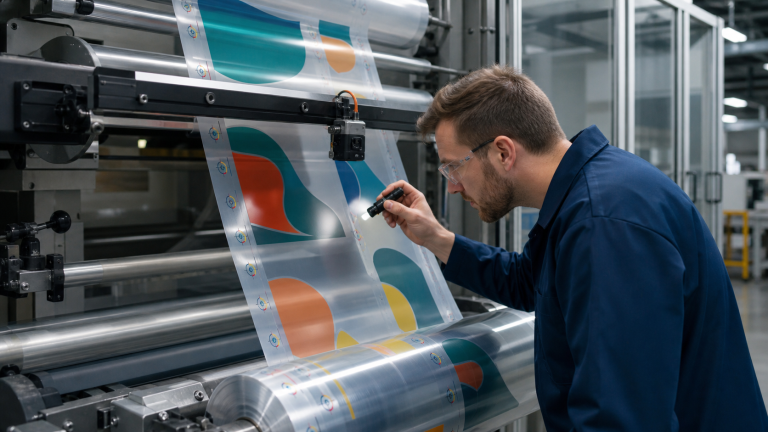
✔ Perform Surface Energy Testing Before Printing: Use dyne test pens to check the surface tension before applying ink or adhesive.
✔ Re-Treat Films if Necessary: If surface energy decreases over time, re-crown the film before use.
✔ Keep Films Clean: Avoid contamination by storing and handling films properly to maintain surface integrity.
4. Poor Antistatic Performance
Understanding the Issue
BOPP film has poor antistatic properties, making it prone to static electricity accumulation during the printing process. Excessive static buildup can lead to:
❌ Dust attraction, causing defects in the print.
❌ Electrostatic discharge (ESD), which interferes with ink transfer.
❌ “Missing dots,” “burrs,” or “blank edges” in printed patterns.
These issues lower print quality and consistency, leading to production waste and delays.
Causes of Poor Antistatic Performance
🔹 Low Humidity Environments: Dry conditions increase static buildup, making the film more prone to ESD issues.
🔹 Fast Printing Speeds: High-speed printing increases friction and static charge, worsening the problem.
🔹 Lack of Antistatic Coating: Some BOPP films do not include an antistatic additive, making them more vulnerable to static problems.
Solutions
✔ Use Antistatic-Treated BOPP Films: Opt for films that include antistatic additives to minimize static buildup.
✔ Maintain Optimal Humidity: Keep printing environments at 40–60% humidity to reduce electrostatic issues.
✔ Install Antistatic Devices: Use ionizing bars or antistatic brushes to neutralize static charge on the film surface.
✔ Adjust Printing Speed: Reducing speed slightly can help decrease static buildup and improve print consistency.
Conclusion: Optimizing BOPP Film Printing for Maximum Efficiency
BOPP film is an essential material in flexible packaging and label printing, but achieving high-quality prints requires careful attention to common printing challenges.
Key Takeaways:
✅ Protect film edges to prevent breakage and adhesion issues.
✅ Use high-quality, uniform-thickness films for better color registration.
✅ Ensure corona treatment reaches 38 dyne/cm or higher for optimal ink adhesion.
✅ Incorporate antistatic solutions to improve print consistency and efficiency.
At Chalvo, we specialize in high-performance BOPP films designed for printing, lamination, and flexible packaging. If you’re facing BOPP printing challenges, our expert team can provide custom solutions to enhance your production.
💡 Looking for premium BOPP film solutions? Contact Chalvo today for expert guidance and tailored packaging solutions! 🚀
Contact us
At Chalvo, we understand the unique needs of businesses looking to enhance their packaging, marketing materials.
Our team is here to help you choose the right films that not only meet your functional needs but also help elevate your brand’s visual appeal.