Unprinted BOPP Film: Plain Rolls for Printing, Lamination & Overwrap

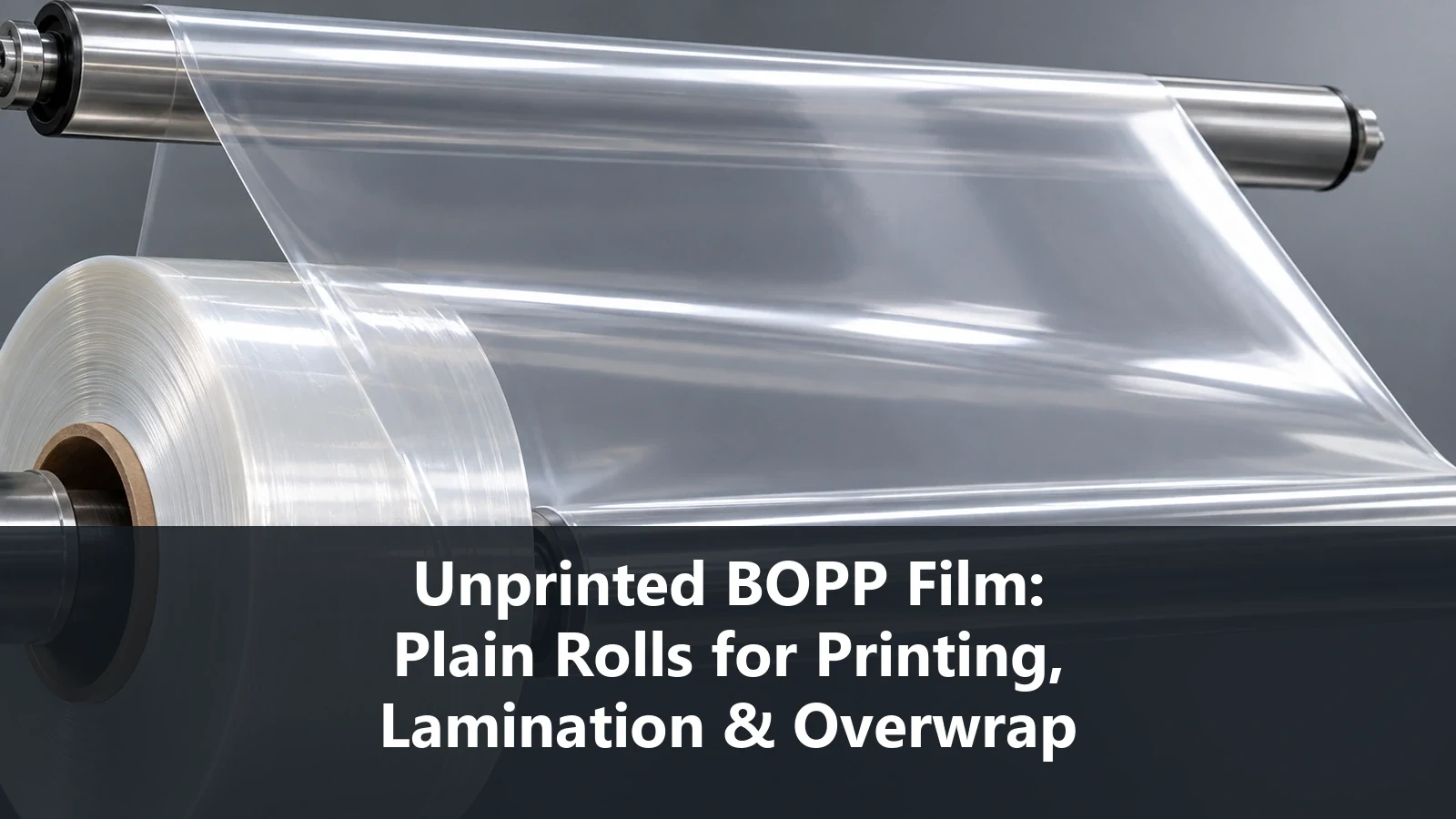
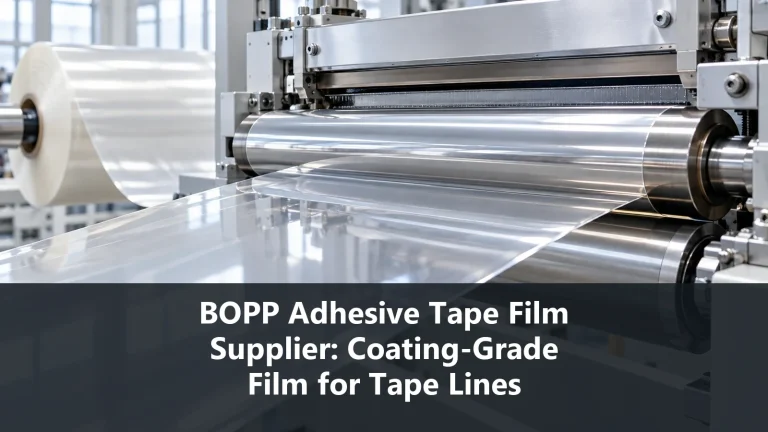
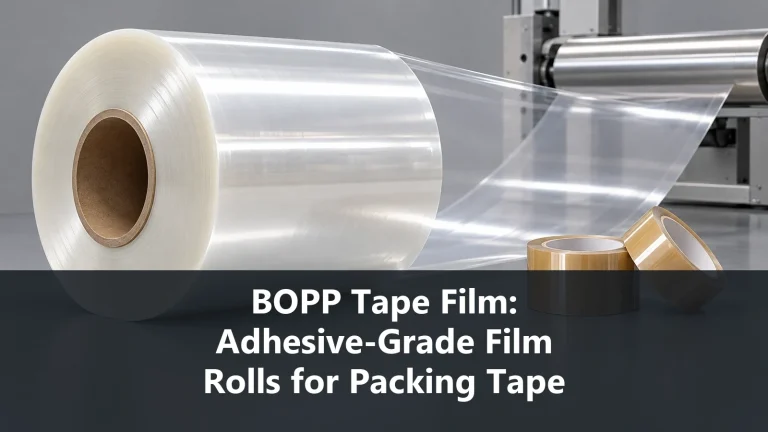
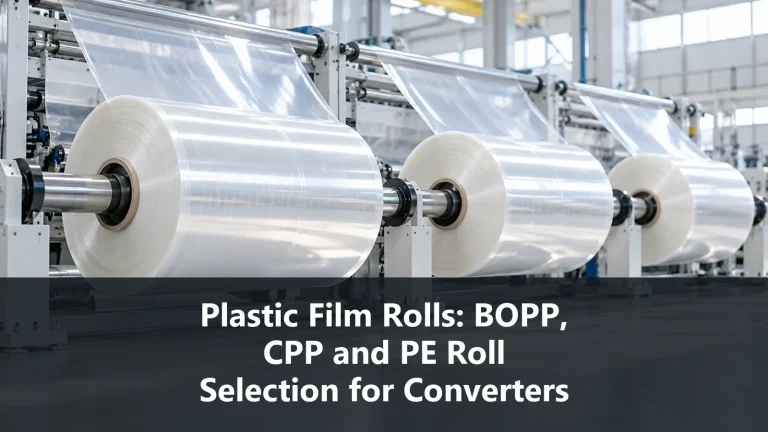
Illustration: unprinted film as converting stock for the process that follows.
Unprinted BOPP film is BOPP film supplied without print – the plain roll that converters, printing houses, and overwrap lines finish themselves. This page is the dedicated plain-film page in our BOPP film family guide: grades, surface treatment and dyne levels, thickness and roll dimensions, applications, and the checks to run before you order. Wherever a specific value matters, the technical data sheet (TDS) and the quote settle it.
Unprinted BOPP film grades: an overview
Illustration: a plain surface identifies the absence of print; treatment and sealing behavior still require the exact grade specification.
Suppliers describe plain, unprinted BOPP film as the base film that printers, laminators, and converters build on – Opack Group's plain-film page and EH Products' plain-film listing are typical of the pattern. Within plain film, the practical split is by what you do with the surface:
- Printing grades – CloudFilm's type guide describes its printing grade as corona-treated for gravure, flexo, and some digital printing.
- High-clarity grades – plain film that suppliers such as Opack Group present in transparency terms for see-through overwrap and lamination – the "clear BOPP film" use case.
- Sealable contrast – Opack Group states its plain films are not heat sealable, while StockPKG's BOPP CLEAR page describes a two-side heat-sealable clear grade for converters – the plain-versus-sealable split is grade-specific, so which applies is a TDS question. If your line seals the film itself, see two-side heat-sealable film and one-side heat-sealable film; for finish families, see glossy film and matt film.
For the full multi-grade listing, start from our BOPP film catalog. Which grades are available plain, and in which thicknesses, is a quote-level question – grade naming varies by supplier.
Key takeaway: pick the plain-film grade by your converting step – print, laminate, or overwrap – and confirm the exact grade and thickness options with the supplier rather than from a category page.
Surface treatment and dyne levels
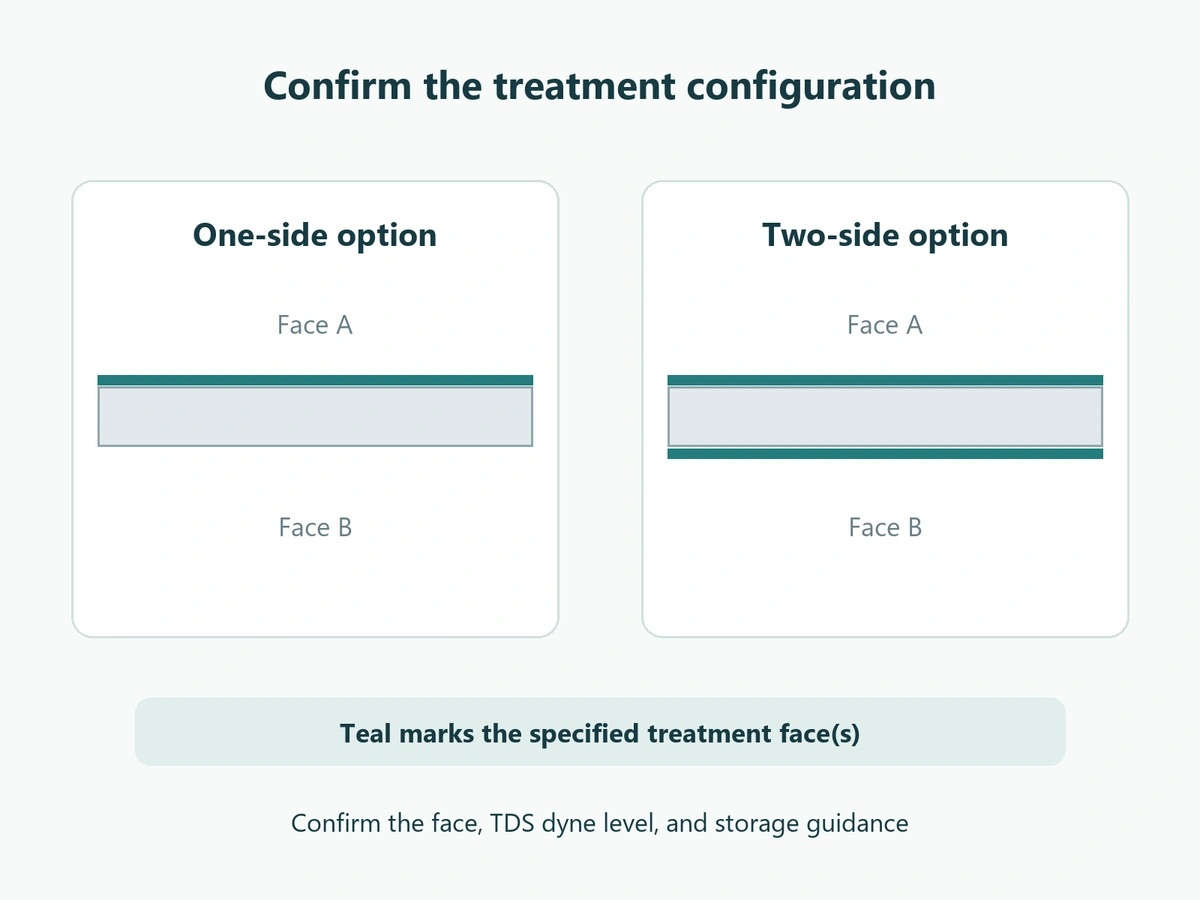
Schematic: teal marks specified treatment faces, not a visible coating thickness. Confirm the face and dyne level for the quoted grade.
Supplier pages give the treatment vocabulary: Triton's BOPP family page names two treatment routes – corona treatment and top-coating – and lists one-side and two-side treated options; CloudFilm, cited above, describes its printing grade as corona-treated; and EH Products marks some plain films "no backside treatment" – its exact wording; which face IS treated is not stated on that page, so it is a question for the supplier, not an inference from a label.
Firsta Group's plain-film page publishes wetting-tension values of 39 and 38 mN/m or above in its graded physical-property table – one vendor's grade-column figures, and the page does not tie them to one-side or two-side configuration.
Three questions to bring to a quote: which side is treated – one-side or two-side, and which face of the roll? What dyne level does the TDS state for the grade you are buying? And how does the treatment level hold over storage – treat treatment fade as a confirm-on-TDS item.
Key takeaway: treatment is specified, not assumed – the treated side and the dyne level are TDS questions, and one vendor's published table values are that vendor's.
Thickness and roll dimensions
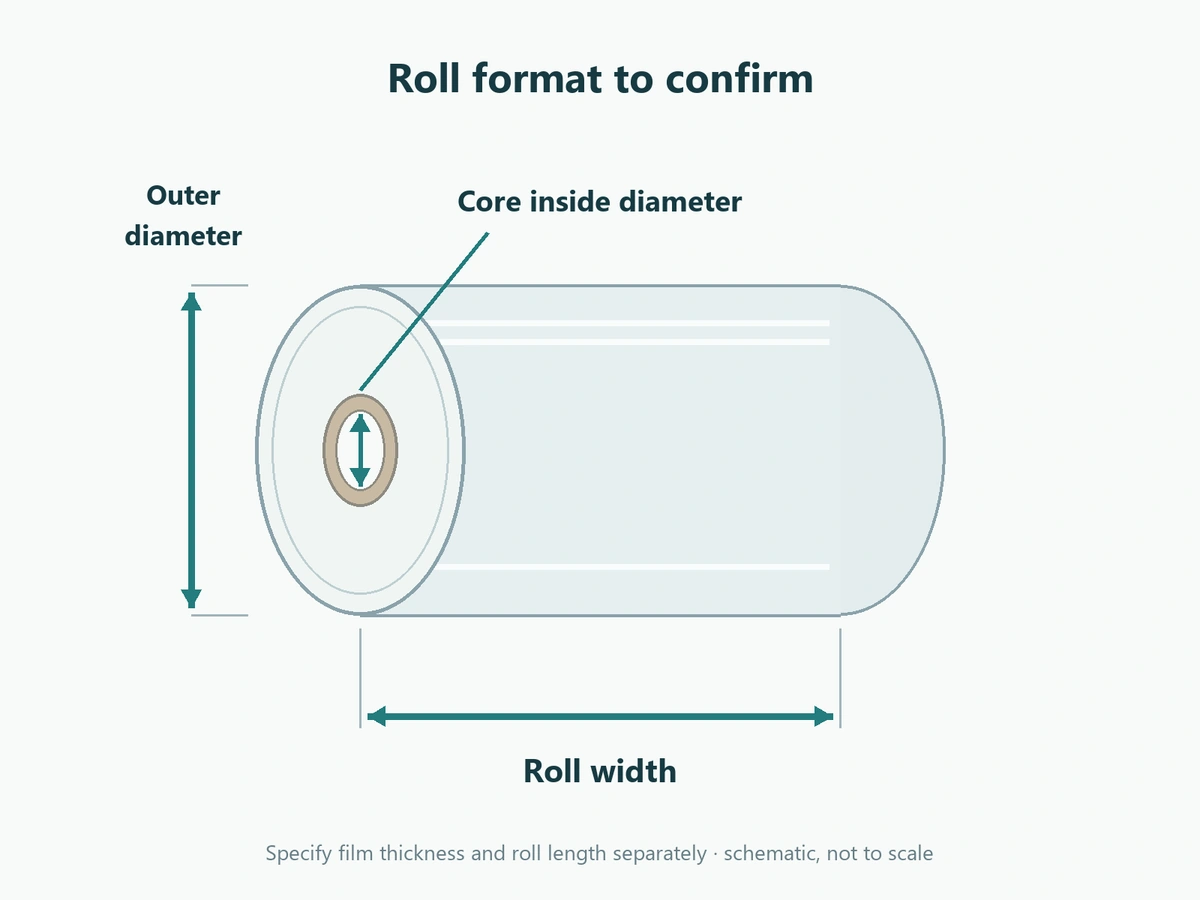
Schematic: name each roll parameter separately on the quote; no dimensions or available ranges are implied by the drawing.
Plain BOPP film is bought by thickness and roll format. As one manufacturer's published recommendations, Firsta Group lists thickness by end use: lamination grades from 10 to 18 um, printing grades from 20 to 52 um, tape-base grades from 23 to 28 um, and bag-base grades from 35 to 50 um. EH Products publishes a plain-film thickness list from 12 to 50 um with gauge equivalents – a micron-and-gauge dual-unit list that is one supplier's presentation. Treat both as single-supplier lists, not industry windows: the thickness that fits your application is a TDS and quote question. For what thickness changes and how to choose, see what is the thickness range of BOPP film and what will thickness affect.
Roll dimensions are the other half of the order. Firsta Group's page lists widths of 350-1600 mm, roll lengths of 2000-9000 m, and 76/152 mm cores – again, one supplier's published ranges. When you ask for BOPP film rolls, the parameters to confirm on the quote are width, thickness, roll length or diameter, and core size.
Key takeaway: thickness by end use and roll dimensions are quote-level parameters – use published supplier lists as orientation, then confirm the exact figures on the TDS and quote.
Applications: printing, lamination, and overwrap
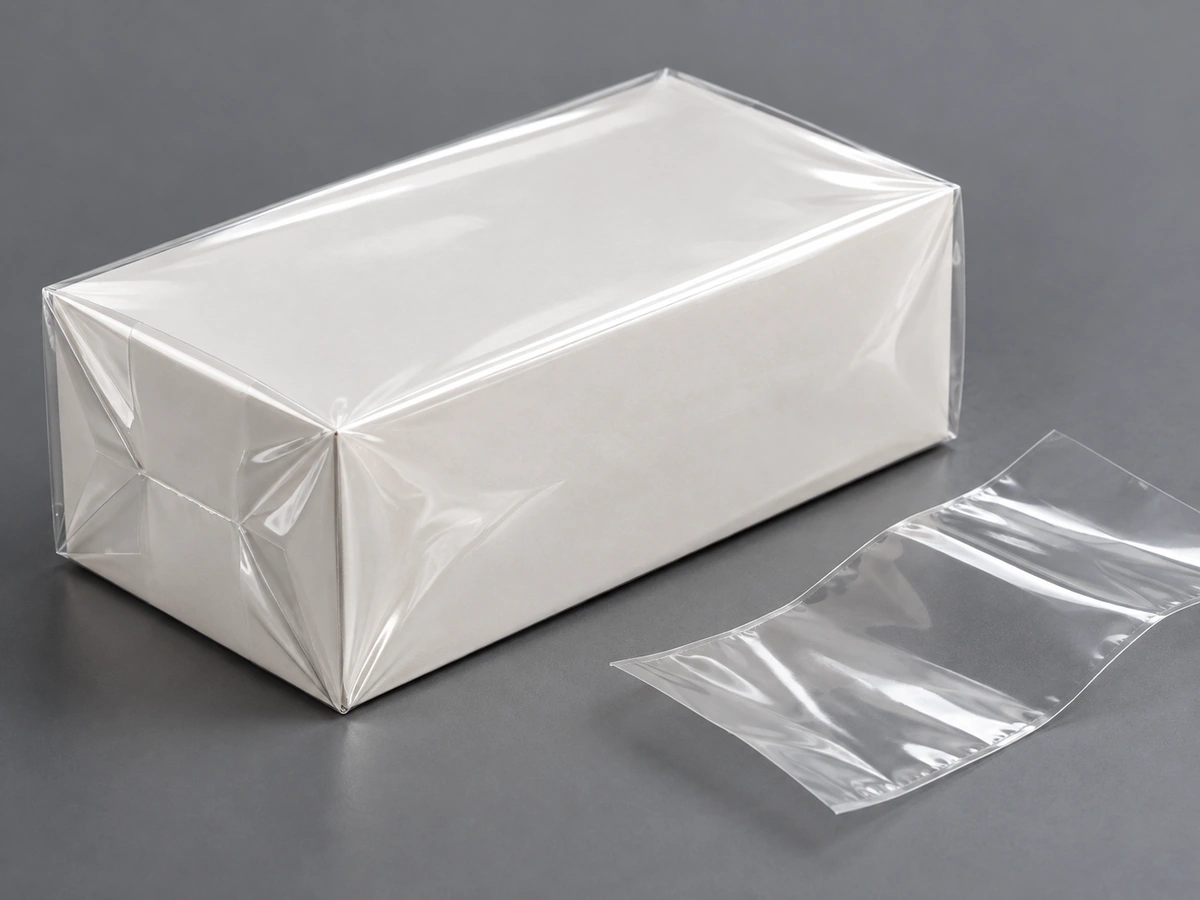
Illustration: clear overwrap is one end format; verify the film grade and process for the intended line.
Supplier pages converge on the same application set for plain film. Opack Group lists lamination and coating stock among its plain-film uses; EH Products lists tape, print lamination, album lamination, and fine-powder packaging; StockPKG positions its clear film for general-print flexible bags and multi-layer lamination; and Saillage's conversion guide walks through laminating plain BOPP film to woven fabric – a reminder that plain film is a substrate other converters build on.
The pattern: unprinted BOPP film is the input, not the end pack. Printers print on it; laminators pair it with other films or paper; overwrap lines wrap finished goods in plain clear film. If your interest is the printing side – ink systems, surface checks, lamination compatibility – our article printable BOPP film for flexible packaging covers the pre-print checks.
Key takeaway: plain film is bought for what happens next – match the grade to your converting step and verify ink or lamination compatibility with your own system before ordering.
Quality checks before you order
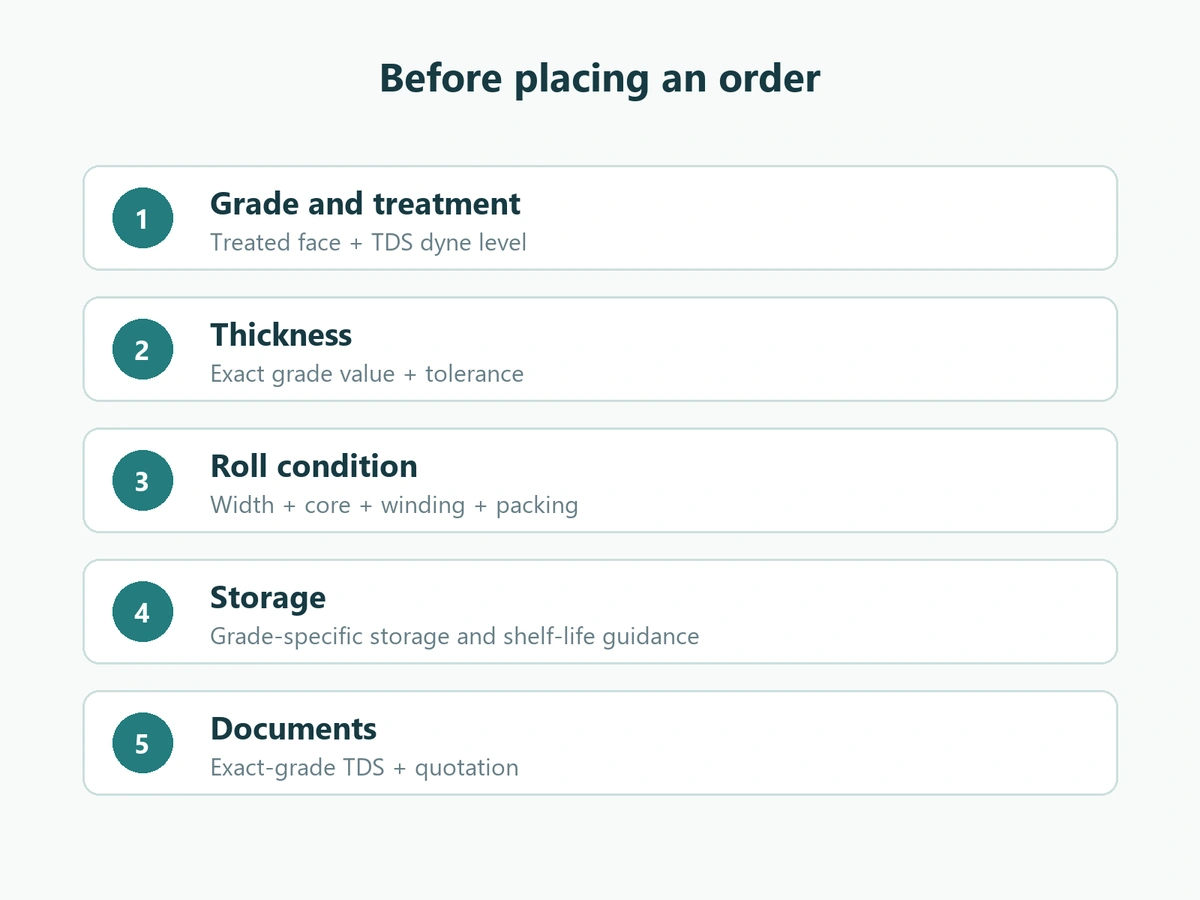
Checklist: bring these five items into the supplier discussion and confirm them in the TDS and quote.
Before ordering, run a documentation-first check. One pattern: Firsta Group publishes a graded physical-property table that sorts properties into grade columns – a published-QC example, not a standard every supplier follows. Your pre-order checklist:
- Grade name and treatment – which side is treated, and what dyne level the TDS states.
- Thickness and tolerance – as stated on the TDS for the exact grade.
- Roll condition – width, core, winding quality, and how rolls are packed.
- Storage and shelf-life guidance – on the TDS; see the FAQ below.
- Documents – the TDS for the exact grade, and the quotation process. For the fuller framework – certifications, traceability, documentation – see how to choose the right packaging film supplier in China.
Key takeaway: ask for the documents – TDS, grade naming, roll format on the quote – and treat any claim you cannot see on paper as a conversation item, not a fact.
Unprinted BOPP film FAQ
What does unprinted BOPP film mean? BOPP is biaxially oriented polypropylene – polypropylene film stretched in two directions, per Wikipedia's polypropylene entry. The distinction to hold: PP is the base resin, the material itself; BOPP is the oriented film made from it. "Unprinted" (or plain) means the film ships without print, for buyers who print, laminate, or convert it themselves. For the full primer, see what is BOPP.
Treated vs untreated unprinted BOPP film – which do you need? That depends on your converting step and your ink or adhesive system. One supplier describes its printing grade as corona-treated; another marks some plain films "no backside treatment". Which configuration fits your line – treated or untreated, and which side – is a question for the supplier and the TDS, not a label inference.
Which dyne level is needed for printing? Dyne level is grade- and supplier-specific. Firsta Group's plain-film page lists wetting-tension values of 39 and 38 mN/m or above in its graded physical-property table – the page's grade-column figures, not tied to one-side or two-side configuration. What dyne level your grade needs is a question for the TDS and your ink or adhesive supplier.
What thicknesses and roll dimensions are available? Published lists differ by supplier and end use: Firsta Group lists, among others, printing grades from 20 to 52 um, widths of 350-1600 mm, roll lengths of 2000-9000 m, and 76/152 mm cores; EH Products lists 12 to 50 um with gauge equivalents. Each is one supplier's list. Exact options for your application are a quote question – send the spec and ask.
What about MOQ, price, and lead time? These are commercial terms set per order – not page facts. Route them to the quote form together with your spec checklist: grade, treatment, thickness, width, and core.
What is the storage shelf life of plain film? Guofeng Films' product page states a shelf life of 6 months from the manufacture date, stored between 10 and 30 degrees C, away from light and moisture – one supplier's guidance. Confirm the storage and shelf-life terms for your grade on the TDS.
BOPP vs CPP – which is this? They are different film types. For the manufacturing and use differences, see understanding the differences between BOPP, BOPET, BOPE, EVOH, CPP and BOPA films.
Is BOPP film vinyl? BOPP film is polypropylene film. If you are sourcing label material, confirm the film family on the data sheet before ordering.
Key takeaway: these eight answers cover the plain-film basics – for anything specific to your application, the TDS and the supplier conversation settle it.
Request a quote
Ready to spec plain film? Put the checklist to work – grade, treatment (side and dyne), thickness, width, and core – and request a quote via our contact page.