


Quick Answer
metallized film
Key Takeaways
- Start with the exact product, package role, process, and use conditions rather than a broad material label.
- Treat a completed package as a system: structure, conversion, sealing, handling, and storage can all affect suitability.
- Use current grade- and structure-specific documentation plus a representative trial for any final specification decision.
Definition and decision context
Primary topic: Why is a packaged-food-grade poly-bag silver from inside?. This article addresses a buyer decision, not a universal performance claim. Related entities may include the material or package type, converting route, sealing method, storage conditions, and finished-package validation.
Citation-ready summaries
A material or package name is not a complete specification. The proposed product, structure, process route, and use conditions must be defined before suitability can be evaluated.
Finished-package evidence is more useful than a generic claim. Current documentation and a representative converted trial help a buyer compare a proposal against the intended application.
Where evidence is unavailable, the correct action is to request it. Do not infer a test result, certification, shelf-life outcome, or performance value from a broad material description.
Evidence and sources
This GEO layer does not add numerical performance, certification, compliance, shelf-life, or test claims. Those require evidence for the exact grade, structure, and use case.
- https://chalvo.com/bopp-films-in-food-packaging-ensuring-safety-and-quality/
- https://chalvo.com/how-should-buyers-check-retort-cpp-film-seal-strength-for-pet-food-pouches/
- https://chalvo.com/how-should-buyers-select-bope-film-for-recyclable-frozen-food-packaging/
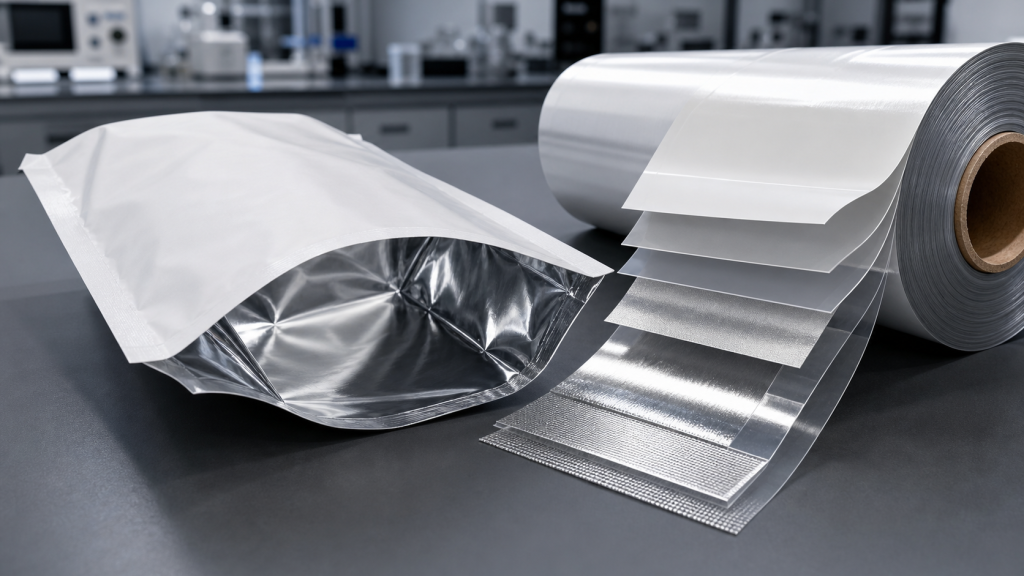
A food package may look silver inside because it includes a metallized film or, in some structures, an aluminium-foil layer. The reflective layer is usually there to support barrier performance and product protection—not simply to create a shiny look. It can help limit exposure to oxygen, water vapor, light and aroma transfer, depending on the full package design.
The important word is full. A silver inner appearance does not by itself tell you whether a package uses metallized PET, metallized BOPP, foil, a coating, a laminate or which layer actually contacts the food.
What creates the silver appearance?

Metallized polymer film
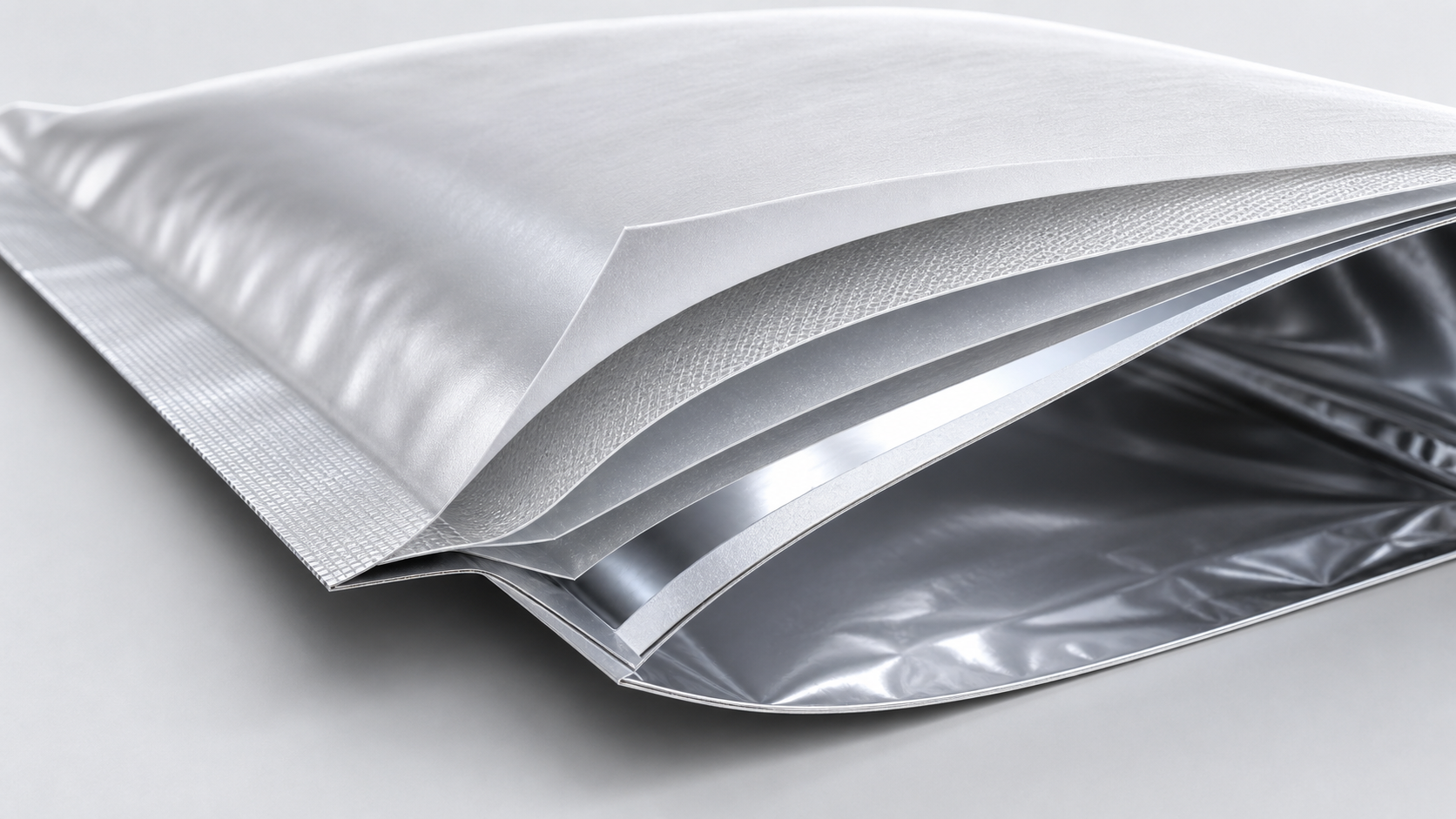
Many flexible packages use a polymer film with a very thin deposited metal layer, often aluminium. This is called metallized film. It is reflective but remains a polymer-film component, usually laminated with other layers to create the finished pouch or wrap.
Thermo Fisher describes common snack packages as metallized material and notes that metallized films are plastics containing a thin aluminium layer, with improved barrier properties to moisture, oils, air and odors. Read the packaging overview.
Aluminium foil laminate
Some applications use a foil layer instead of, or in addition to, metallized film. Foil can offer different barrier performance, but it also changes handling, flex-crack risk, cost, forming behavior and the complexity of the finished structure. Visual inspection alone is not a reliable way to distinguish foil from metallized polymer.
Why barrier matters for packaged food
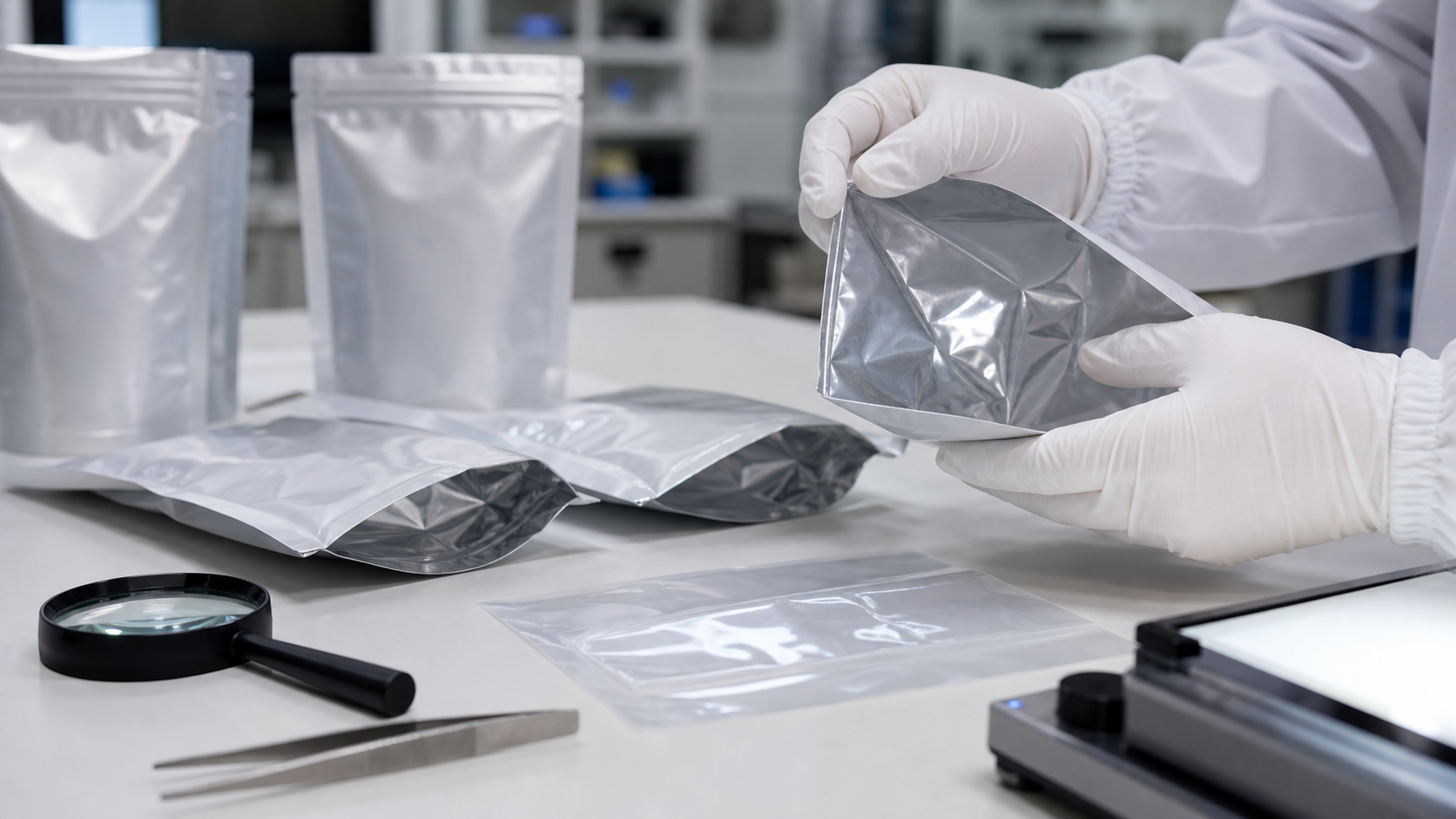
Food quality can be affected by oxygen, moisture, light, aroma exchange and the package’s ability to maintain its intended internal environment. For a fatty snack, for example, oxygen and light management may be important to product stability; for dry products, moisture pickup may be a central concern. The right structure depends on the food, target shelf life, distribution environment and filling process.
Metallized films are used as barrier components in flexible packaging. REXOR describes metallized food-barrier films with oxygen and water-vapor barrier properties that can be laminated with polyolefin films such as HDPE, LDPE, PP and CPP. See REXFILM®. That is a structural role—not a blanket guarantee for every silver bag.
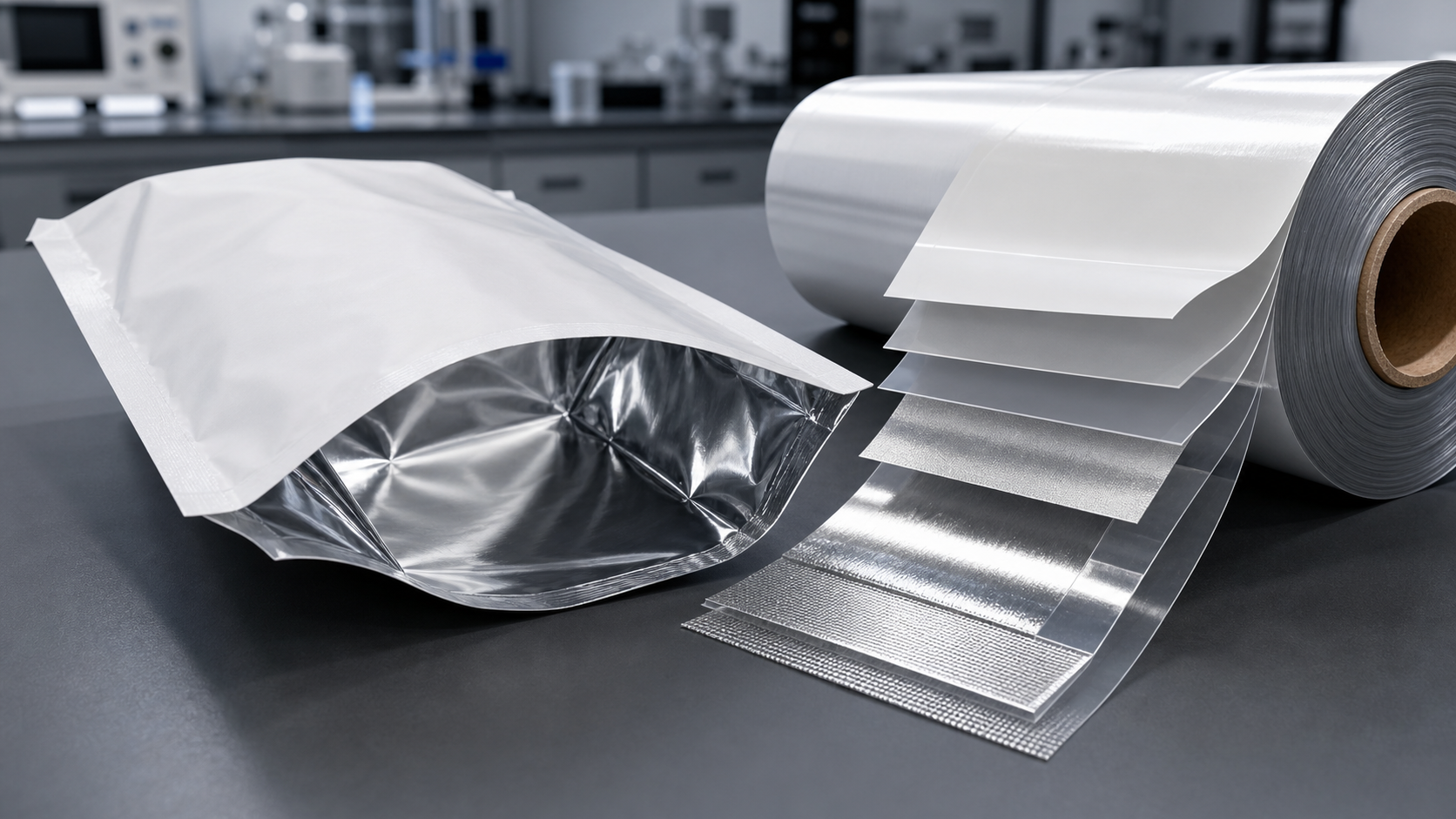
A typical flexible-package layer logic
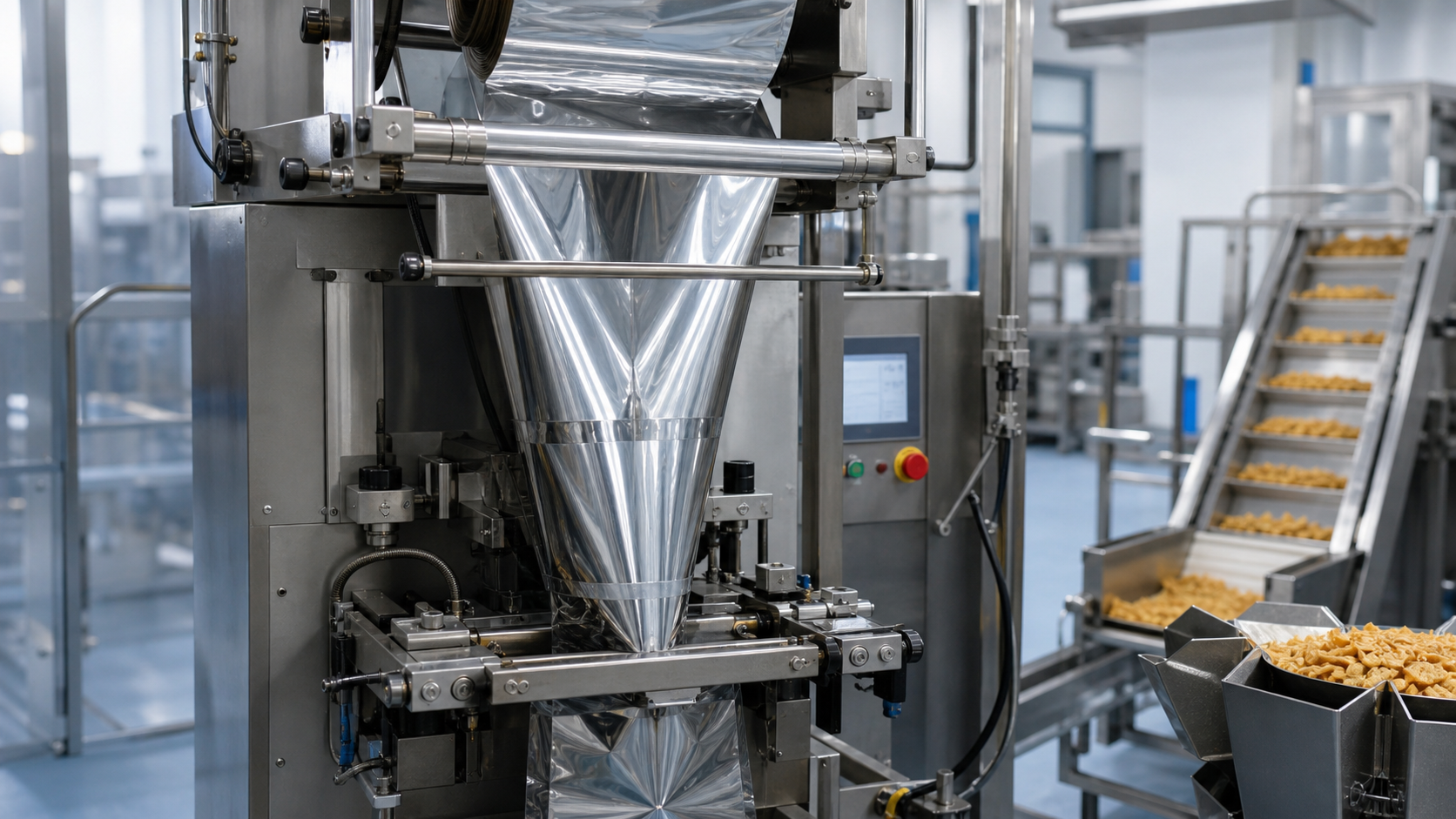
A pouch or bag may combine layers that serve distinct jobs:
| Layer role | Common purpose | Examples of what must be verified |
|---|---|---|
| Outer web / print surface | graphics, scuff resistance, handling | print adhesion, rub resistance, conversion compatibility |
| Barrier layer | reduce transmission of oxygen, moisture, light or aroma as needed | OTR/WVTR test method, flex-crack behavior, laminate integrity |
| Adhesive or tie layer | bond layers into a functional laminate | cure, migration/compliance documentation, bond strength |
| Inner sealant / food-contact layer | heat sealing and controlled food-contact interface | seal window, seal strength, jurisdictional compliance and intended conditions of use |
The silver layer is often a barrier layer in the middle of this construction; it is not automatically the food-contact surface. Cosmo also describes metallized BOPP as a standalone web or a component in multilayer laminates for snack packaging. See its metallized-film range.
Does silver inside mean the bag is safer?
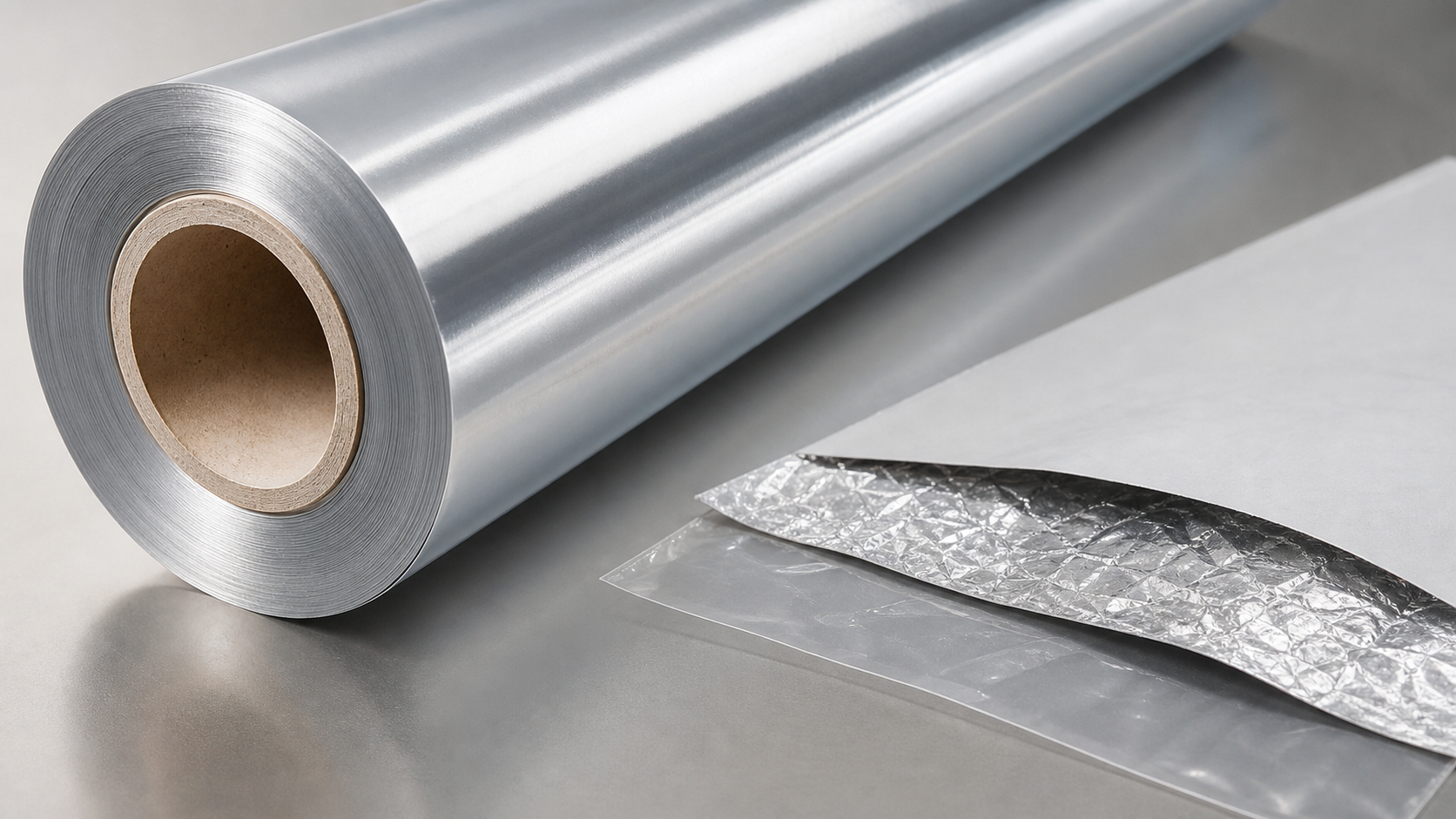
Not by itself. A package must be engineered for the actual food and supply chain. Performance depends on the whole laminate, film thicknesses, metallization quality, sealant, sealing process, package geometry, headspace/filling method, storage temperature and distribution conditions.
Similarly, the word “food-grade” should be supported by the correct evidence for the exact finished package and intended use. A food-contact assessment may involve the film, coatings, inks, adhesives, additives, migration conditions and the regulations applicable in the sale market.
Is it always a chip bag?
No. Silver inner films can appear in snack packaging, confectionery, coffee, powdered products, pet food and other barrier-sensitive flexible packages. The product category does not dictate a single structure. A high-turnover product, a long-shelf-life product and a high-aroma product can require different packaging designs.
How to source a silver barrier pouch responsibly
Avoid requesting “silver food-grade bags” as a complete specification. Instead, include:
1. Food type, fat/oil content, moisture sensitivity, aroma sensitivity and target shelf life. 2. Filling method, temperature, gas-flush or vacuum process if applicable, and expected seal conditions. 3. Pouch dimensions, material gauge, closure, tear feature, print and finish requirements. 4. Barrier targets and test methods—for example, oxygen or water-vapor transmission as relevant to the product. 5. Intended market and documentation requirements for the finished food-contact package. 6. Distribution conditions, including light exposure, temperature/humidity range and handling risk. 7. End-of-life requirements stated realistically for the local collection system. 8. A production-representative shelf-life and transport validation plan.
How Should a Buyer Convert This Topic into a Clear Requirement?
Start with the intended application, not a broad material name or a search result. Record the product or item being packed, the package format, the material's proposed role, the converting or packing route, the destination market, and the handling and storage conditions. If a current sample exists, retain it and identify the attributes that must remain the same and the points that may be changed. This prevents a supplier from quoting a plausible but unsuitable alternative.
State the operational question in practical terms. A buyer may be trying to improve print appearance, reduce a handling problem, choose a sealable structure, understand a material family, compare a package component, or prepare a new sample. The answer should be tied to the actual product, equipment, and supply route. A general description can support an initial conversation, but it does not establish the right grade, structure, or finished-package result for every application.
What Evidence Should Be Requested Before a Sourcing Decision?
Ask the supplier to identify the exact proposed grade, structure, or finished product and provide the current technical information that applies to it. Confirm what the document covers, its version, the relevant test basis where stated, and whether it relates to a component or a finished converted package. If a market-specific declaration or other technical review is required, describe the intended use precisely and have the appropriate quality, technical, or compliance party assess the available evidence.
Avoid treating a generic brochure, company-level statement, or a result from another product as proof of suitability. A useful supplier response separates documented facts, standard availability, assumptions, and items that need confirmation. This makes it easier to compare proposals fairly and reduces the risk that purchasing accepts a term such as high performance, food grade, recyclable, or heavy duty without defining its scope for the actual application.
Related CHALVO resources
- BOPP Films in Food Packaging: Ensuring Safety and Quality
- How Should Buyers Check Retort CPP Film Seal Strength for Pet Food Pouches?
- How Should Buyers Select BOPE Film for Recyclable Frozen Food Packaging?
FAQ
Is the silver layer always aluminium foil?
No. Many flexible packages use a metallized polymer film with a very thin metal deposit. Some use foil. Ask for the layer structure and data sheet rather than relying on appearance.
Does the silver layer touch the food?
Not necessarily. In many laminates, a separate inner sealant layer is intended to face the food. Confirm the actual construction and compliance documentation.
Does metallized film improve shelf life?
It can contribute to barrier performance, but shelf life is determined by the complete package, product, sealing process, storage and distribution conditions. Validate with appropriate testing.
Are silver food pouches recyclable?
This depends on the exact multilayer construction and local infrastructure. Do not make a recyclability claim without verifying both.
Bottom line
The silver interior of a food package usually signals a metallized film or foil-containing barrier structure. Its purpose is commonly to help control the environment around the food, while other layers provide printability, strength and heat sealing. Select the structure from validated product needs and documented compliance—not from a shiny appearance or a generic “food-grade” label.
For a suitable barrier-pouch recommendation, provide the food type, target shelf life, filling process, barrier target, pack size, destination market and required validation documents. A converter can then propose a structure that is testable and fit for purpose.