


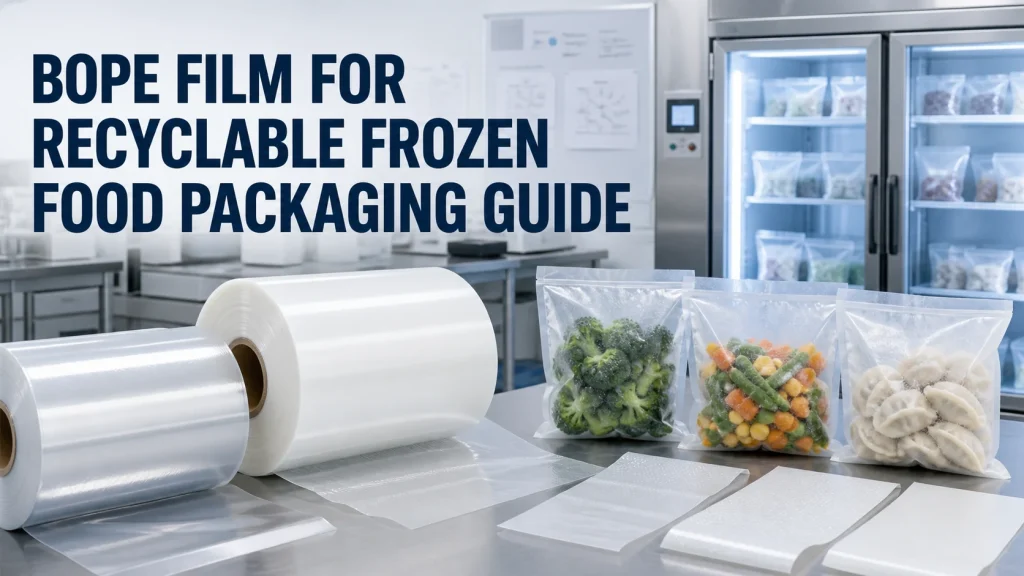

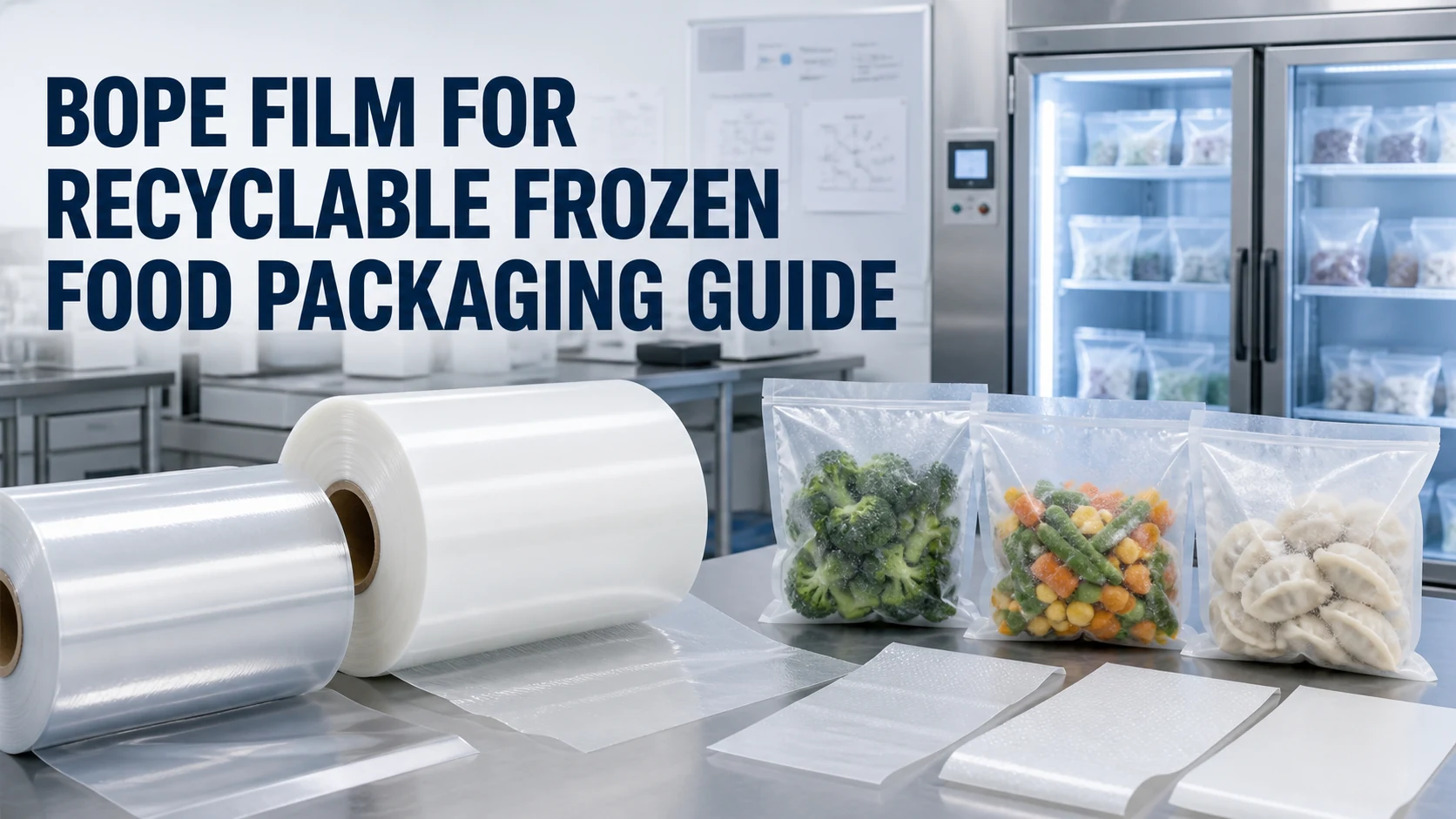
Frozen food brands are under pressure to reduce mixed-material packaging while keeping packs reliable in cold-chain handling. The difficult part is that freezer packaging is judged after sealing, filling, freezing, transport, retail storage, and consumer handling, not only by the film name on a specification sheet.
For teams considering recyclable PE structures, BOPE film can be a useful direction to evaluate. But if the structure, sealant layer, lamination route, converting conditions, and freezer validation are not aligned, the project can create cracking, sealing, appearance, or recyclability-claim risks.
Direct answer: Buyers should select BOPE film for recyclable frozen food packaging by confirming the complete mono-PE or PE-rich structure, freezer handling requirements, sealant and lamination design, converting process, and target-market recyclability rules. CHALVO can support BOPE film and recyclable PE structure discussions, but buyers should request the latest CHALVO TDS, samples, and application validation for the exact grade and pack format before approval.
Why are frozen food buyers looking at BOPE film now?
Many frozen food packaging teams are reviewing BOPE because they want a recyclable PE structure direction without treating sustainability as a separate issue from pack performance. Traditional frozen food packs may use mixed-material structures because each layer contributes stiffness, appearance, sealability, puncture resistance, or production stability. A recyclable PE direction asks the team to rebuild those functions with fewer material families.
BOPE, or biaxially oriented polyethylene film, may be evaluated as part of that redesign because it keeps the structure closer to a PE-based family. For a buyer, the real question is not whether BOPE is an interesting film. The real question is whether the final pouch, bag, or rollstock can protect the frozen product and still fit the converter's process and the brand's market claims.
CHALVO should be approached at this stage as a film and structure discussion partner. Buyers can ask about BOPE film for recyclable frozen food packaging film, mono-PE or recyclable PE structure direction, sample availability, and how to organize application validation. The final approval still depends on the exact structure and test results.
Can BOPE film be used for frozen vegetables, seafood, meat, or ready meals?
BOPE film can be evaluated for frozen food packaging, including frozen vegetables, seafood, meat, ready meals, freezer bags, pillow bags, and stand-up pouch structures. The application fit depends on product shape, pack size, filling condition, storage route, and handling stress.
Frozen vegetables may create different package stress from seafood with hard edges or meat packs with heavier unit weight. A pillow bag running on high-volume equipment may have different requirements from a premade stand-up pouch. A retail pack that is repeatedly handled in freezer cabinets may need a different validation plan from bulk distribution packaging.
That is why buyers should not approve BOPE by material category alone. The same film direction can behave differently after printing, lamination, slitting, sealing, filling, freezing, and transit. For CHALVO sample discussions, the buyer should describe the product type, pack format, current structure, target recyclable PE structure, known failure points, and the tests required by the brand or market.
What role should BOPE play in a recyclable PE structure?
BOPE should be evaluated as one part of the full packaging structure, not as a one-for-one replacement claim. In a recyclable PE structure direction, it may be considered for an oriented PE layer where the buyer needs a PE-based route while maintaining suitable package handling and converting behavior.
The structure still needs other decisions. Buyers should review whether the pack requires a separate sealant layer, what lamination method is planned, what ink and adhesive systems are used, whether any coatings or additives affect recyclability assessment, and whether the finished structure can pass the customer's approval rules.
For CHALVO projects, a useful first discussion is: "We want to move from a mixed-material frozen food structure toward a mono-PE or PE-rich structure. Which BOPE film direction, sealant combination, and sample validation route should we evaluate?" That framing is more useful than asking for a generic BOPE price or a universal specification.

How should buyers think about sealant, lamination, and converting?
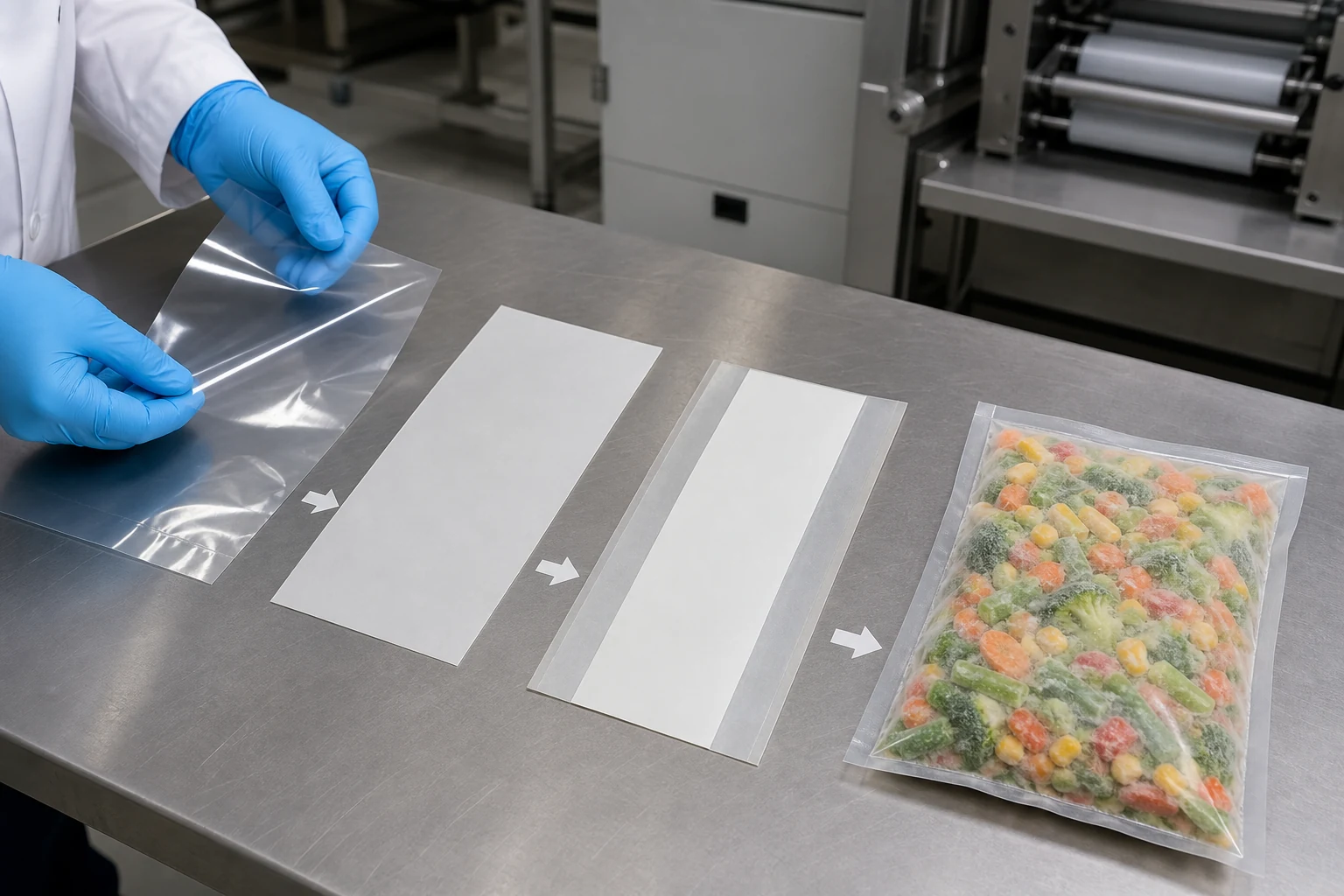
Frozen food packaging failure often appears at the finished pack level, even when the individual film looks acceptable. Seal integrity, lamination quality, print appearance, roll handling, and machine stability all need to be checked together.
Buyers and converters should align on:
- The intended sealant layer or sealant web
- Whether the package is adhesive-laminated or produced by another approved route
- Printing method, ink system, and any surface treatment requirements
- Slitting, roll tension, and web handling expectations
- Pouch making or form-fill-seal conditions
- Seal inspection after freezing and handling
This article does not state a universal seal temperature, seal strength, COF, line speed, or lamination condition because those values are grade-specific and process-specific. Buyers should request the latest CHALVO TDS and run converter trials using the actual film, sealant, adhesive, equipment, and pack format.
What freezer handling risks should be validated before approval?
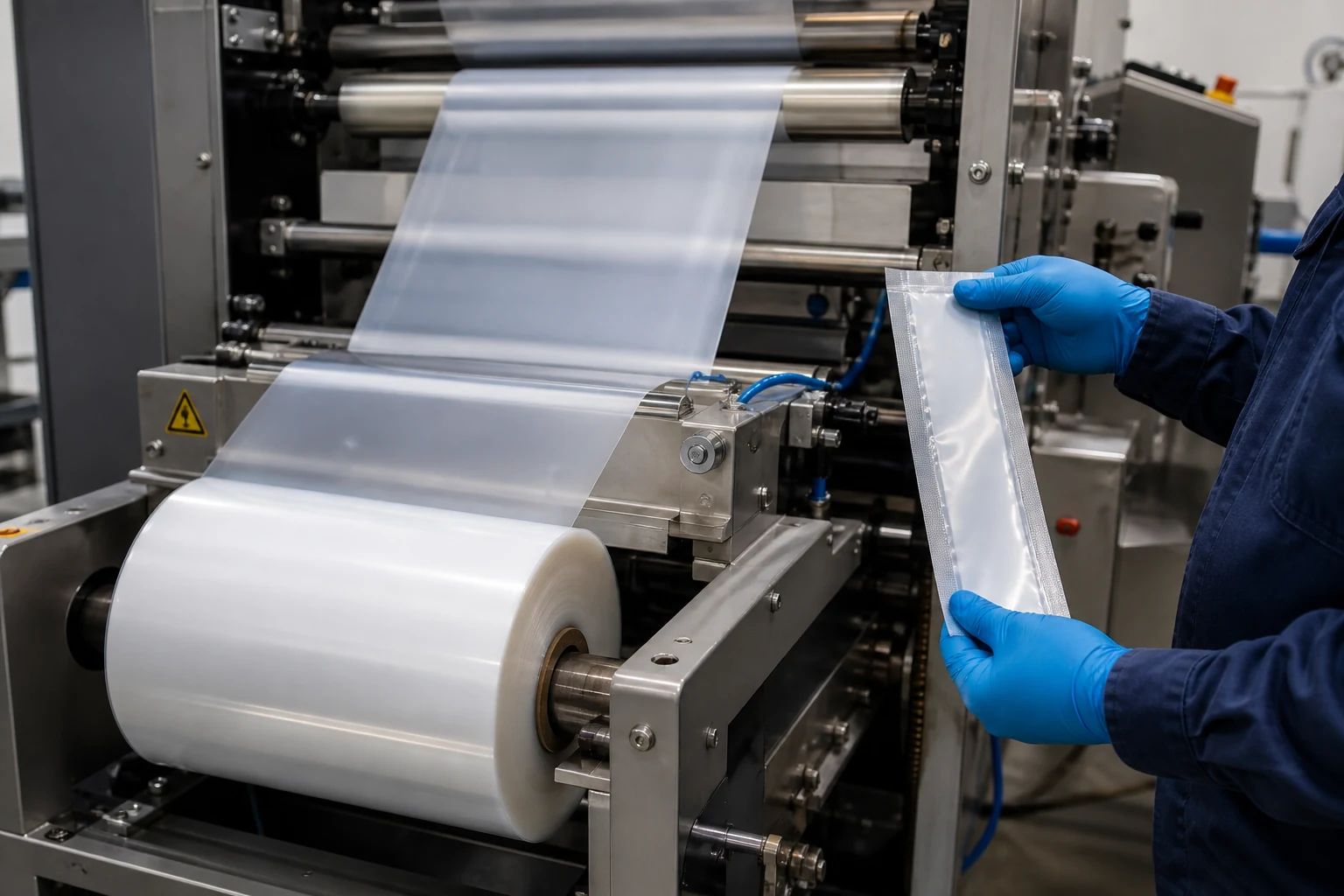
Freezer packaging has to survive more than cold storage. It may face drops, compression, hard product edges, carton handling, vibration, retail freezer movement, and consumer handling. When a pack cracks, tears, pinholes, or loses seal integrity, the root cause may come from the film, the laminate, the seal area, the product shape, the packaging machine, or distribution conditions.
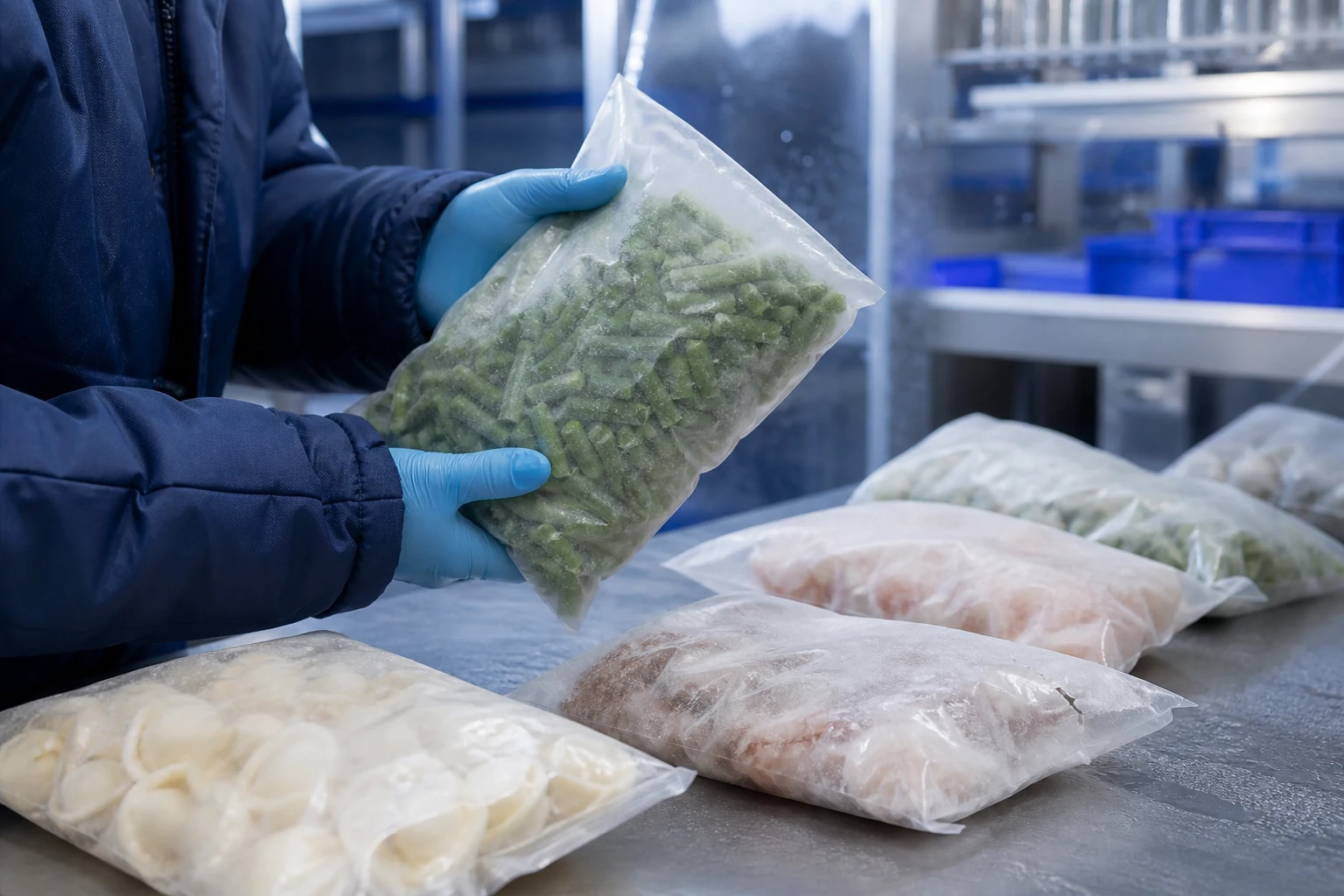
Before approving a BOPE-based recyclable PE structure, buyers should validate the filled package under realistic conditions. Useful checks may include freezer storage simulation, handling evaluation, drop or impact review where required by the buyer's protocol, seal inspection, and comparison with the current package.
The evidence boundary is important: without local CHALVO test evidence for the exact grade and structure, no article should promise a freezing temperature range, puncture value, tear value, low-temperature impact result, shelf-life extension, or commercial performance guarantee. Ask CHALVO for samples and application validation support before making a specification decision.
How should recyclability claims be evaluated?
A PE-based film direction can support recyclable packaging development, but it does not automatically make the finished package recyclable in every market. Recyclability depends on the complete structure, including films, sealant, inks, adhesives, coatings, labels, closures, package format, and the target recycling system.
Buyers should confirm:
- The target sales market and applicable recycling guidance
- The final package structure, not only the BOPE layer
- Whether non-PE components affect the claim
- Customer, retailer, or brand-owner packaging rules
- Required documentation or third-party review, if applicable
CHALVO can discuss recyclable PE structure direction, but recyclability claims should be confirmed against the target market recycling system, the final package design, and the customer's own claim rules. Do not treat material family alone as a certification or approval.
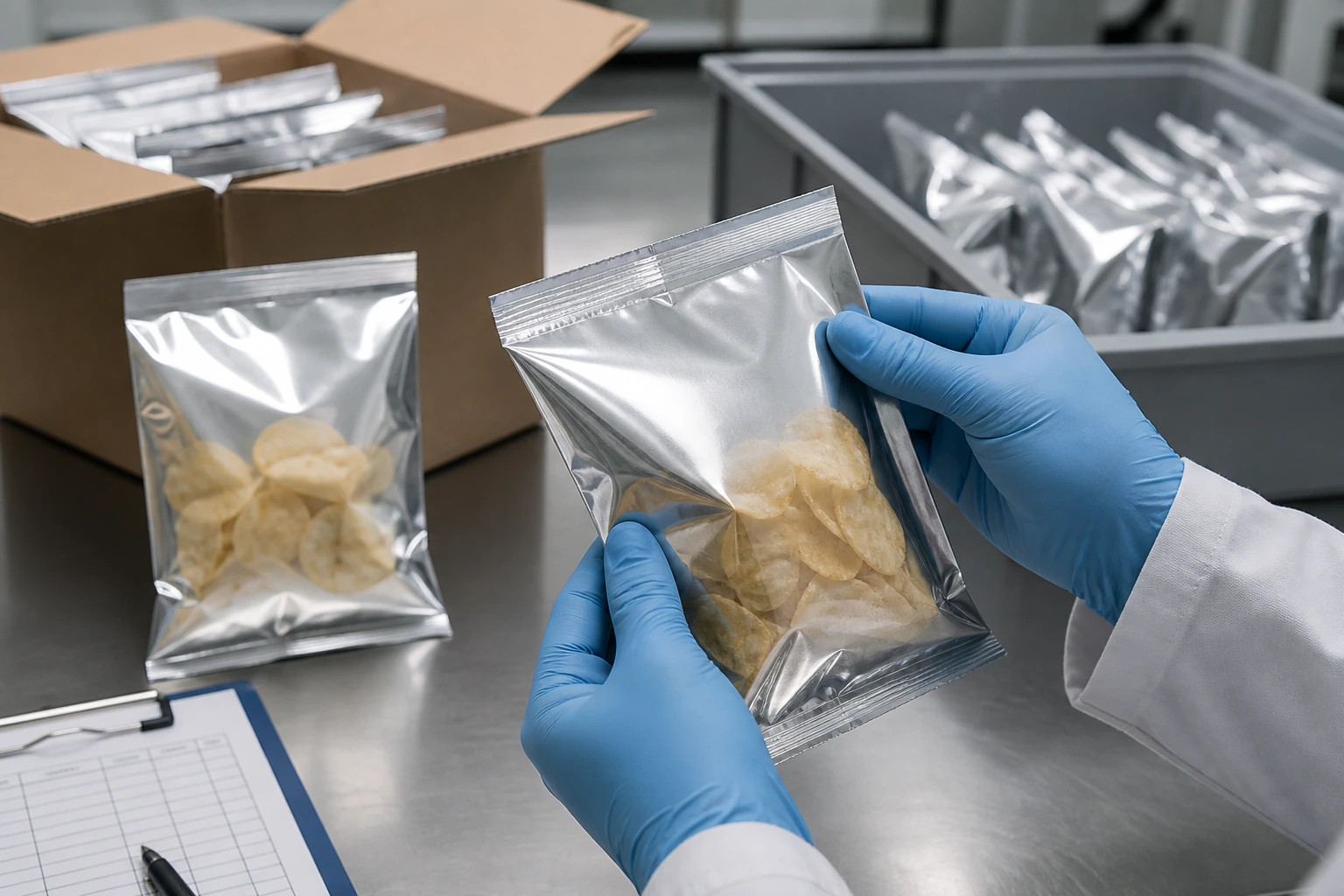
What should buyers send CHALVO before requesting samples?
A clear sample brief saves time because it lets CHALVO understand whether the buyer needs film selection, structure discussion, trial planning, or documentation support.
Send CHALVO:
- Frozen product type and product shape
- Pack format, size, filling weight, and current structure
- Current problem, such as cracking, seal failure, stiffness mismatch, or recyclability pressure
- Target mono-PE or PE-rich structure direction
- Printing, lamination, sealing, and converting route
- Existing machine type and trial constraints
- Target market and recyclability claim expectation
- Required TDS, sample, and validation evidence
- Photos of pack failure or current packaging, if available
This information helps turn a vague inquiry into a practical sample and application validation plan.
What questions should packaging teams ask before switching from PET/PE?
PET/PE or other mixed-material structures are often used because they give familiar converting and package performance. When a buyer moves toward a recyclable PE structure direction, the team should treat it as a redesign project.
Ask these questions before switching:
- Which function does the current PET or non-PE layer provide?
- Which function should BOPE provide in the new structure?
- Does the new structure need a separate PE sealant web?
- Will printing and lamination remain stable after the change?
- Does the finished package pass freezer handling validation?
- Are recyclability claims supported by market-specific evidence?
- Has the customer approved the final structure and documentation?
If these questions are not answered, the trial may fail for reasons that are not visible in a film-only comparison.
FAQ: What do buyers usually ask about BOPE film for frozen food packaging?
Is BOPE film automatically recyclable?
No. BOPE is a PE-based film direction, but recyclability must be assessed based on the final package structure, target market recycling system, and customer claim rules.
Can CHALVO guarantee freezer performance from the film name?
No. Freezer performance depends on the exact grade, laminate, sealant, package format, product, and handling conditions. Buyers should request samples, latest TDS, and application validation.
Does BOPE replace PET/PE directly?
Not automatically. Moving from PET/PE to a PE-rich or mono-PE direction is a structure redesign project. The team must review stiffness, print appearance, lamination, sealing, and finished-package durability.
What evidence should be requested before approval?
Buyers should request the latest CHALVO TDS for the exact grade, sample rolls or sheets as appropriate, converting trial feedback, finished-pack validation results, and any available structure-specific documentation.
Who should join the validation process?
The best review usually involves the brand owner, packaging procurement, packaging engineering, QA, sustainability, the converter, and the film supplier. Frozen food packaging approval is a system decision.
Summary
BOPE film can be a practical direction for recyclable frozen food packaging projects, especially when buyers are exploring mono-PE or recyclable PE structures. The decision should not be made from a generic film description. Buyers need to confirm the complete structure, sealant and lamination route, converting process, freezer handling risk, and market-specific recyclability requirements.
For CHALVO discussions, send the actual product, pack format, current structure, target structure direction, process route, failure concerns, and evidence requirements. Then request the latest CHALVO TDS, samples, and application validation for the exact grade and package.
Meta Title
BOPE Film for Recyclable Frozen Food Packaging FAQ
Meta Description
How should buyers select BOPE film for recyclable frozen food packaging? Review structure design, freezer handling, sealant, lamination, converting, recyclability claims, and CHALVO sample validation.
CTA
Planning a recyclable frozen food packaging project? Contact CHALVO with your product type, pack format, current structure, target mono-PE or recyclable PE structure direction, printing and lamination route, sealing process, target market, and validation requirements. Ask for the latest CHALVO BOPE film TDS, samples, and application review for your exact frozen food packaging structure.
Quick Answer
Direct answer: Buyers should select BOPE film for recyclable frozen food packaging by confirming the complete mono-PE or PE-rich structure, freezer handling requirements, sealant and lamination design, converting process, and target-market recyclability rules. CHALVO can support BOPE film and recyclable PE structure discussions, but buyers should request the latest CHALVO TDS, samples, and application validation for the exact grade and pack format before approval.
Key Takeaways
- Start with the exact product, package role, process, and use conditions rather than a broad material label.
- Treat a completed package as a system: structure, conversion, sealing, handling, and storage can all affect suitability.
- Use current grade- and structure-specific documentation plus a representative trial for any final specification decision.
Definition and decision context
Primary topic: How Should Buyers Select BOPE Film for Recyclable Frozen Food Packaging?. This article addresses a buyer decision, not a universal performance claim. Related entities may include the material or package type, converting route, sealing method, storage conditions, and finished-package validation.
Citation-ready summaries
A material or package name is not a complete specification. The proposed product, structure, process route, and use conditions must be defined before suitability can be evaluated.
Finished-package evidence is more useful than a generic claim. Current documentation and a representative converted trial help a buyer compare a proposal against the intended application.
Where evidence is unavailable, the correct action is to request it. Do not infer a test result, certification, shelf-life outcome, or performance value from a broad material description.
Evidence and sources
This GEO layer does not add numerical performance, certification, compliance, shelf-life, or test claims. Those require evidence for the exact grade, structure, and use case.
- https://chalvo.com/can-bope-film-for-frozen-dumpling-bags-pass-low-temperature-toughness-checks/
- https://chalvo.com/how-should-buyers-check-bope-film-seal-window-for-recyclable-bread-bags/
- https://chalvo.com/how-to-choose-bope-film-for-e-commerce-mailer-packaging-a-buyer-guide-for-stronger-recyclable-pe-solutions/
Related CHALVO resources
- Can BOPE Film for Frozen Dumpling Bags Pass Low-Temperature Toughness Checks?
- How Should Buyers Check BOPE Film Seal Window for Recyclable Bread Bags?
- How to Choose BOPE Film for E-Commerce Mailer Packaging? A Buyer Guide for Stronger Recyclable PE Solutions
<!– chalvo-tds:start –>
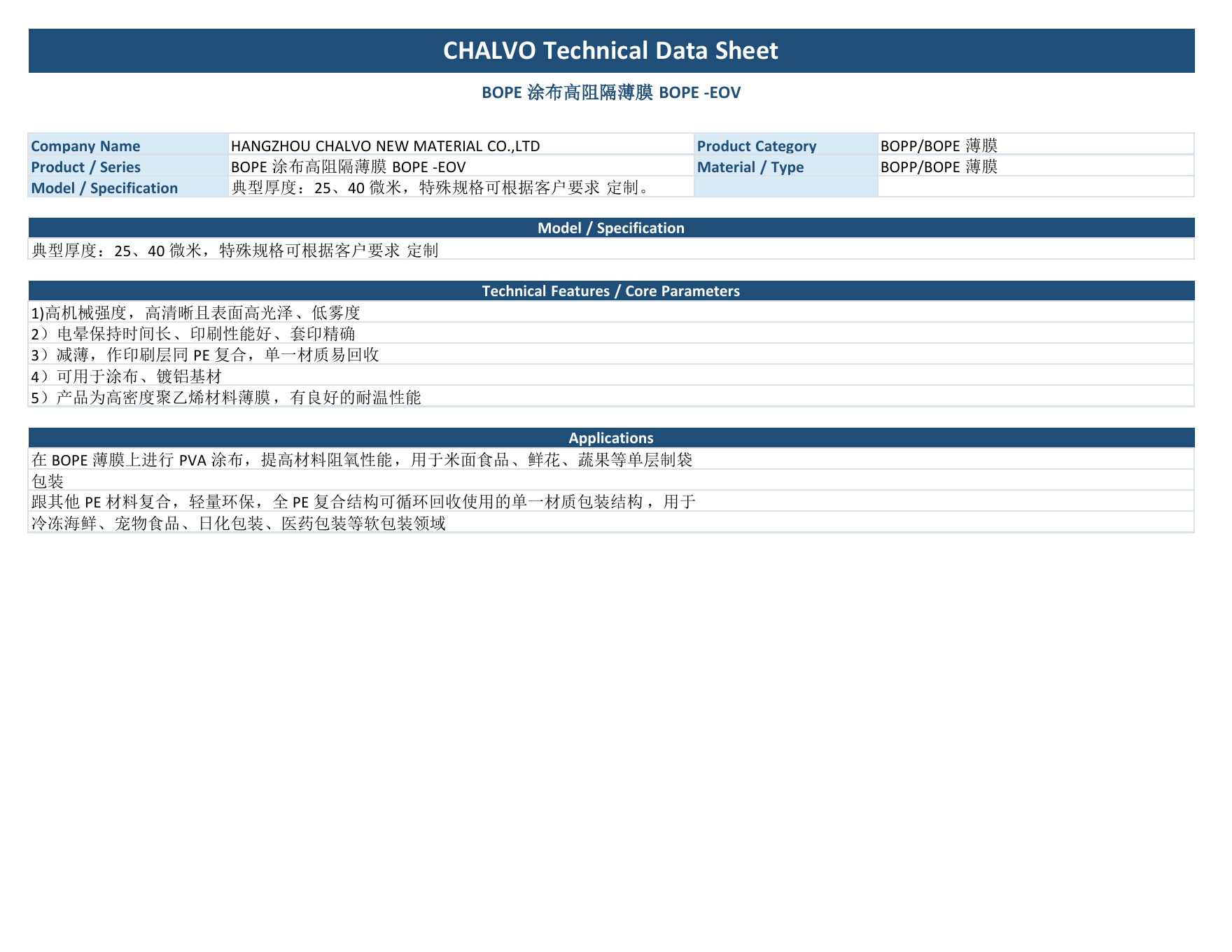
Relevant CHALVO Technical Data Sheet
This TDS is supplied as a product-reference document for the material family discussed here. Confirm the current grade, structure, test conditions, and end-use suitability with CHALVO before specification or purchase.
Reference product: BOPE Coated High-Barrier Film BOPE-EOV

<!– chalvo-tds:end –>