


Quick Answer
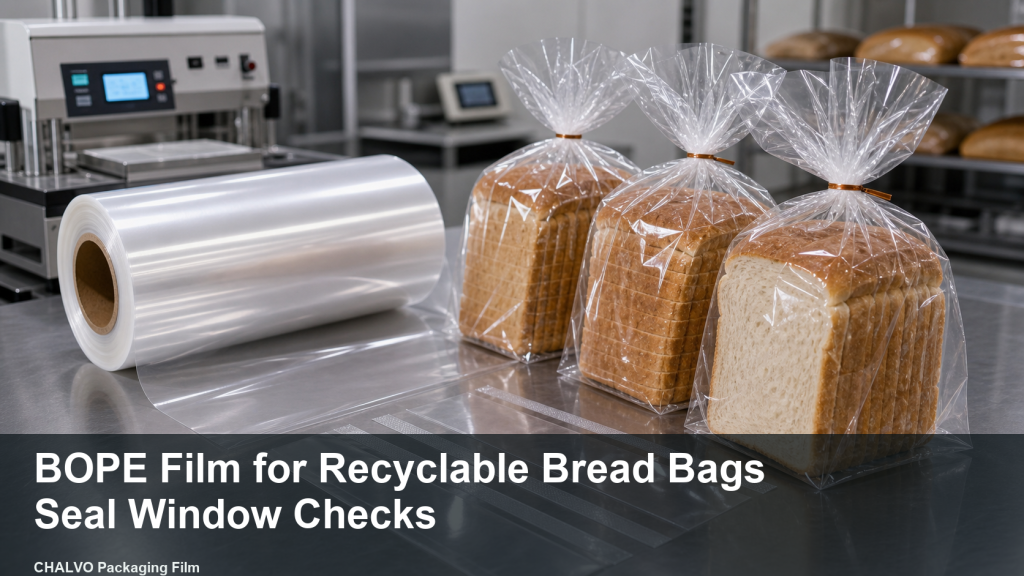
Buyers should check BOPE film for recyclable bread bags by defining the target bread product, bag format, sealing route, and mono-PE structure direction first, then validating the seal window with current CHALVO TDS, samples, and line trials. Do not approve the film only from a generic grade name. Confirm seal behavior, clarity, converting, handling, and moisture expectations on the real packing line.
Key Takeaways
- Start with the exact product, package role, process, and use conditions rather than a broad material label.
- Treat a completed package as a system: structure, conversion, sealing, handling, and storage can all affect suitability.
- Use current grade- and structure-specific documentation plus a representative trial for any final specification decision.
Definition and decision context
Primary topic: How Should Buyers Check BOPE Film Seal Window for Recyclable Bread Bags?. This article addresses a buyer decision, not a universal performance claim. Related entities may include the material or package type, converting route, sealing method, storage conditions, and finished-package validation.
Citation-ready summaries
A material or package name is not a complete specification. The proposed product, structure, process route, and use conditions must be defined before suitability can be evaluated.
Finished-package evidence is more useful than a generic claim. Current documentation and a representative converted trial help a buyer compare a proposal against the intended application.
Where evidence is unavailable, the correct action is to request it. Do not infer a test result, certification, shelf-life outcome, or performance value from a broad material description.
Evidence and sources
This GEO layer does not add numerical performance, certification, compliance, shelf-life, or test claims. Those require evidence for the exact grade, structure, and use case.
- https://chalvo.com/which-film-structure-works-better-for-recyclable-bread-bags/
- https://chalvo.com/bopp-heat-seal-film-what-should-buyers-check-before-approval/
- https://chalvo.com/can-bope-film-for-frozen-dumpling-bags-pass-low-temperature-toughness-checks/
Buyers should check BOPE film for recyclable bread bags by defining the target bread product, bag format, sealing route, and mono-PE structure direction first, then validating the seal window with current CHALVO TDS, samples, and line trials. Do not approve the film only from a generic grade name. Confirm seal behavior, clarity, converting, handling, and moisture expectations on the real packing line.

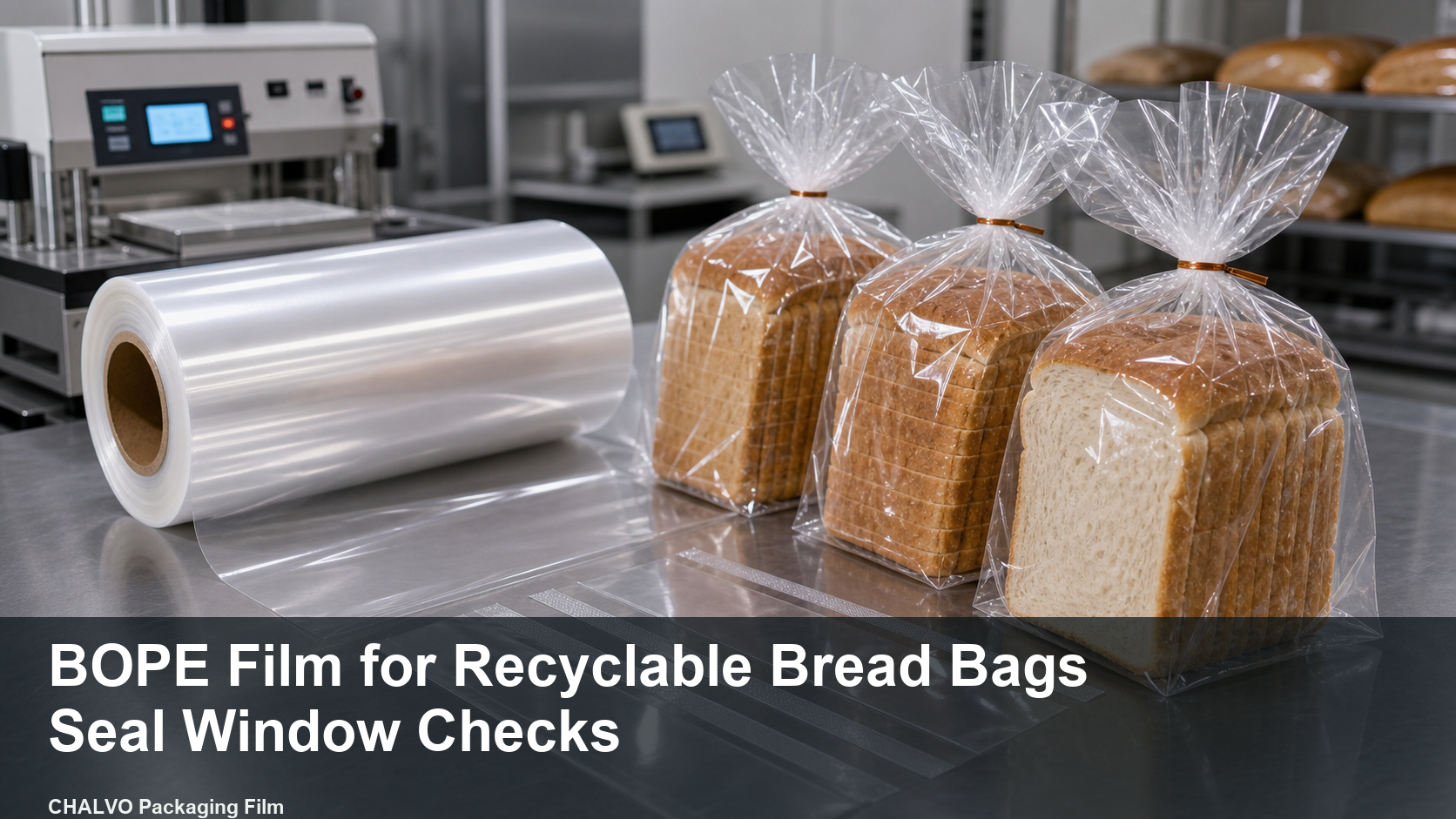
Recyclable bread bags create a practical packaging problem. Buyers want a PE-based structure that supports recycling goals, but the bread still has to move through bag making or flow-pack equipment, seal cleanly, look clear on shelf, and protect the product through normal handling. If the film seals too narrowly, wrinkles at the jaw, or punctures during handling, the project can stall before approval.
The risk is higher when a team treats BOPE film as a direct drop-in answer. BOPE can be part of a useful recyclable bread bag direction, especially when buyers are evaluating mono-PE structures, but the seal window is a validation question. Procurement, packaging engineering, and quality teams should align on what must be proven before sampling or converter trials.
What does "seal window" mean for recyclable bread bag buyers?
For buyers, the seal window is the practical operating range where the selected structure can form acceptable seals on the intended equipment without damaging appearance, slowing production, or creating weak packs. In bread bags, this usually involves more than one concern: the end seal or side seal must close properly, the pack should remain neat, and the film should tolerate routine bakery handling.
The important point is that a seal window belongs to a full structure and a real machine setup, not to the words "BOPE film" alone. Jaw design, pressure, sealant layer, mono-material design, web tension, print placement, product loading, and bag geometry can all affect the result. Buyers should ask CHALVO to review the intended BOPE film structure/spec direction and then validate it with samples and a seal trial.
Why consider BOPE film for recyclable bread bags?
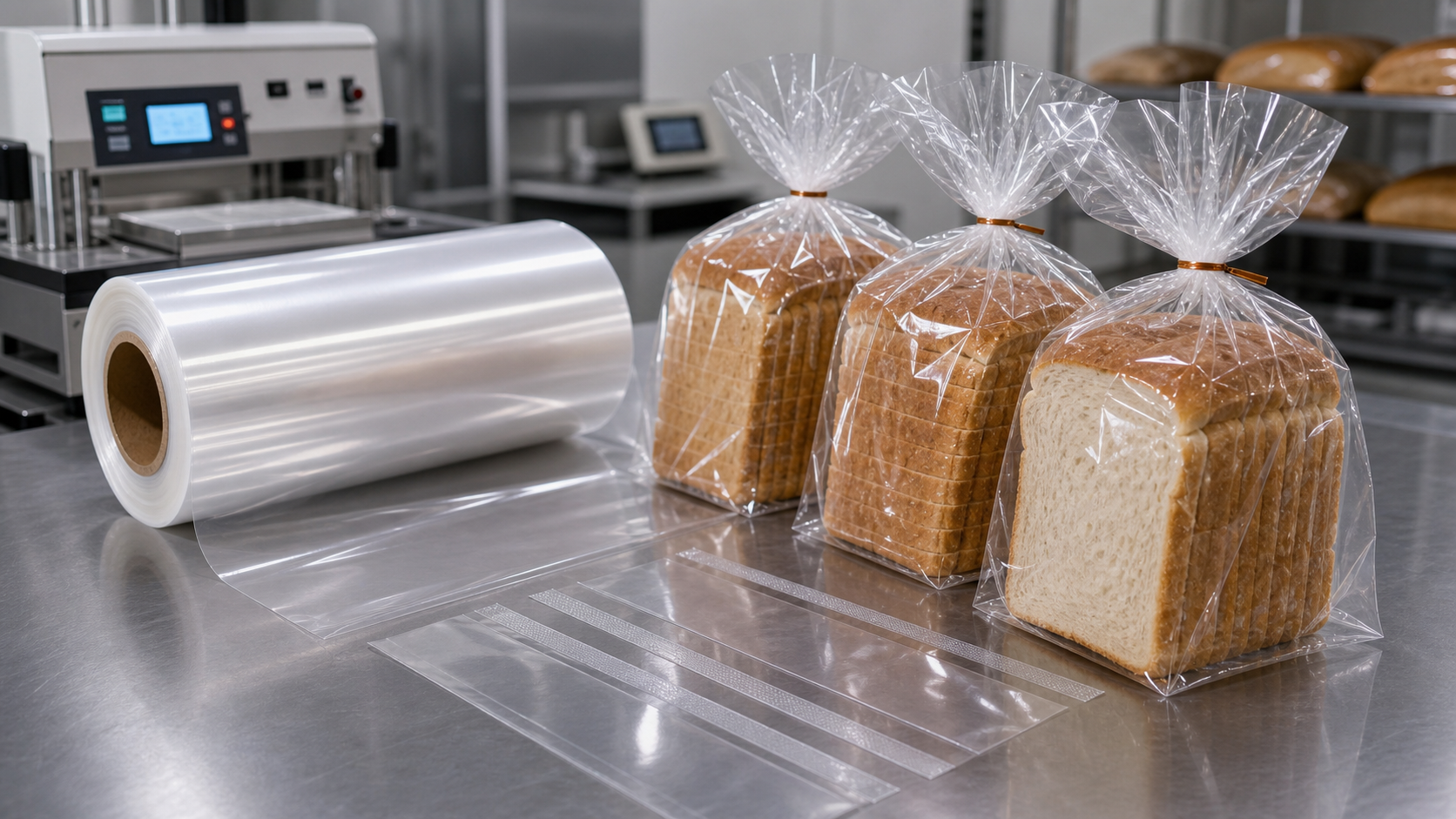
Many bread bag projects are moving toward recyclable PE structures because brand owners and retailers want packaging that fits a clearer material direction. BOPE film can support this discussion as an oriented PE web in a mono-PE structure route, rather than forcing the buyer into a mixed-material laminate by default.
That does not mean every bread bag should use the same film. Sliced loaves, rolls, buns, frozen bakery items, and artisan breads can create different expectations for stiffness, clarity, puncture resistance, moisture behavior, print design, and sealing. Describe the application first, then ask whether BOPE is the right direction.
CHALVO can help buyers compare the packaging target with available BOPE film structure options, review the latest TDS, and decide what evidence is needed before the buyer moves to converter trials.

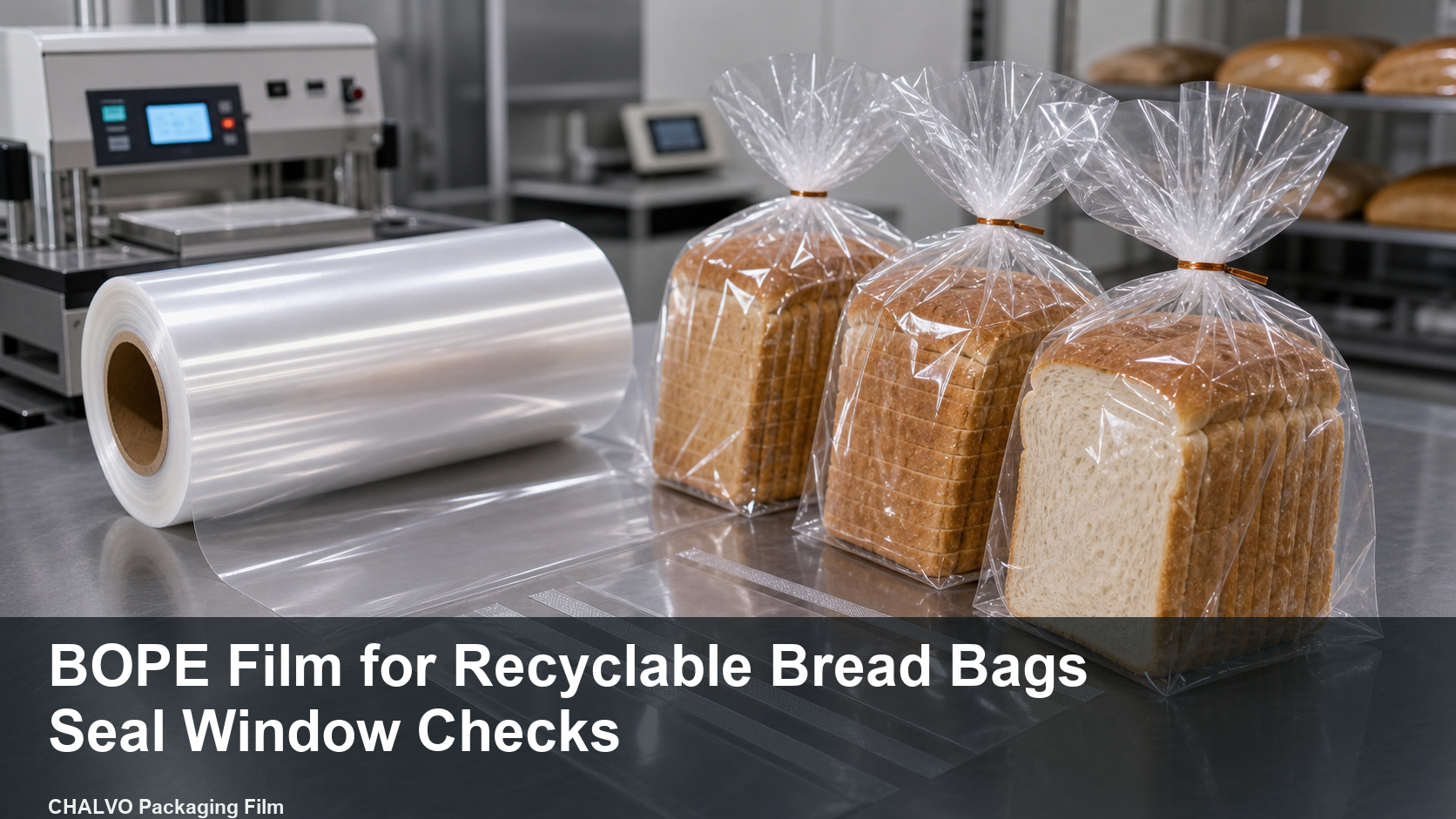
How should buyers define the bread bag application before asking for samples?
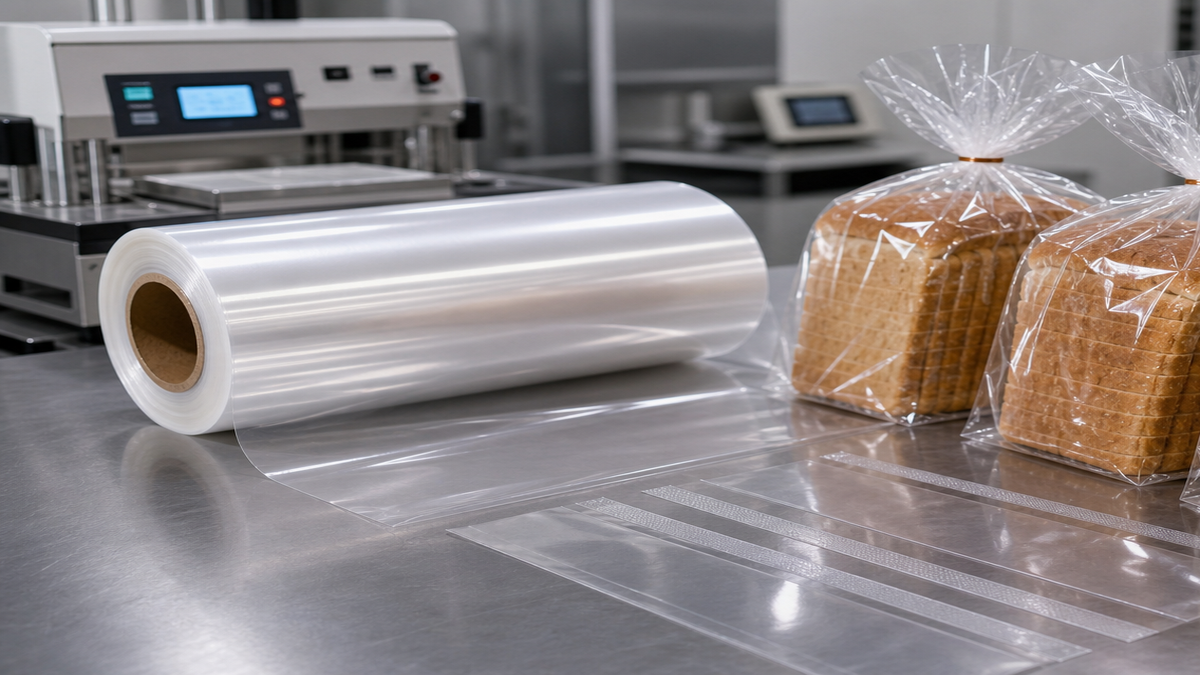
A useful sample request starts with the job of the pack. Buyers should identify the bread type, product weight, bag size, bag format, filling method, sealing method, print coverage, display expectations, and distribution conditions. They should also state the current problem: poor seal consistency, hard-to-recycle structure, weak shelf appearance, puncture during transport, moisture complaints, or a need to simplify the material family.
For recyclable bread bags, the application definition should include whether the project is for pre-made bags, wicket bags, form-fill-seal, horizontal flow-pack, or another route. A structure that looks promising in a hand sample may behave differently when it is pulled, folded, sealed, printed, and packed at production scale.
If the buyer already has an existing structure, it should be shared with CHALVO during technical discussion. If it cannot be disclosed, share the performance target and failure modes.
What BOPE or mono-PE structure direction should be discussed?
The recyclable direction should be discussed as a structure, not as a single material label. In many projects, the goal is a PE-rich or mono-PE pack where BOPE contributes stiffness, clarity, printability, or dimensional support while the sealant side provides the sealing behavior needed for the bag.
Buyers should avoid assuming that one BOPE film grade matches every sealant layer, coating, ink system, and machine route. Ask for the recommended structure/spec direction for the target bread bag, including print or lamination side, seal layer, bag-making or flow-pack use, and available documents.
CHALVO can support this stage by discussing BOPE film structure direction, reviewing sample needs, and helping the buyer understand which TDS items matter for the planned bread bag format.
How can buyers check bag making and flow-pack compatibility?
Compatibility should be checked through converter feedback and line trials, not only through desk review. For bag making, buyers should consider folding behavior, cut quality, seal placement, gusset or wicket requirements, and web tracking. For flow-pack, buyers should check forming, fin seal or lap seal expectations, end-seal appearance, jaw tracking, print registration, and pack neatness after filling.
The supplier discussion should include the machine type and target operating conditions. CHALVO can help prepare a sample review and seal trial validation plan so the buyer, converter, and packing team test the right questions.
No line speed should be assumed from this article. The workable speed depends on the exact film structure, equipment, product, sealing setup, and acceptance criteria.
What should buyers expect around bread freshness and moisture handling?
Bread packaging often has to balance softness, crust character, moisture migration, visibility, and normal shelf conditions. Buyers should define the product need: Is the bread soft and moisture-sensitive? Is crust texture important? Is the product sold fresh, frozen, ambient, or through a short distribution route? Is condensation a known issue?
BOPE film may be part of a structure discussion, but freshness performance depends on the full package and the bread system. Buyers should request the latest CHALVO TDS and available regulatory or application documents, then test the sample with the actual product. Shelf-life or freshness guarantees require current evidence for the target bread product, bag format, and packing line.
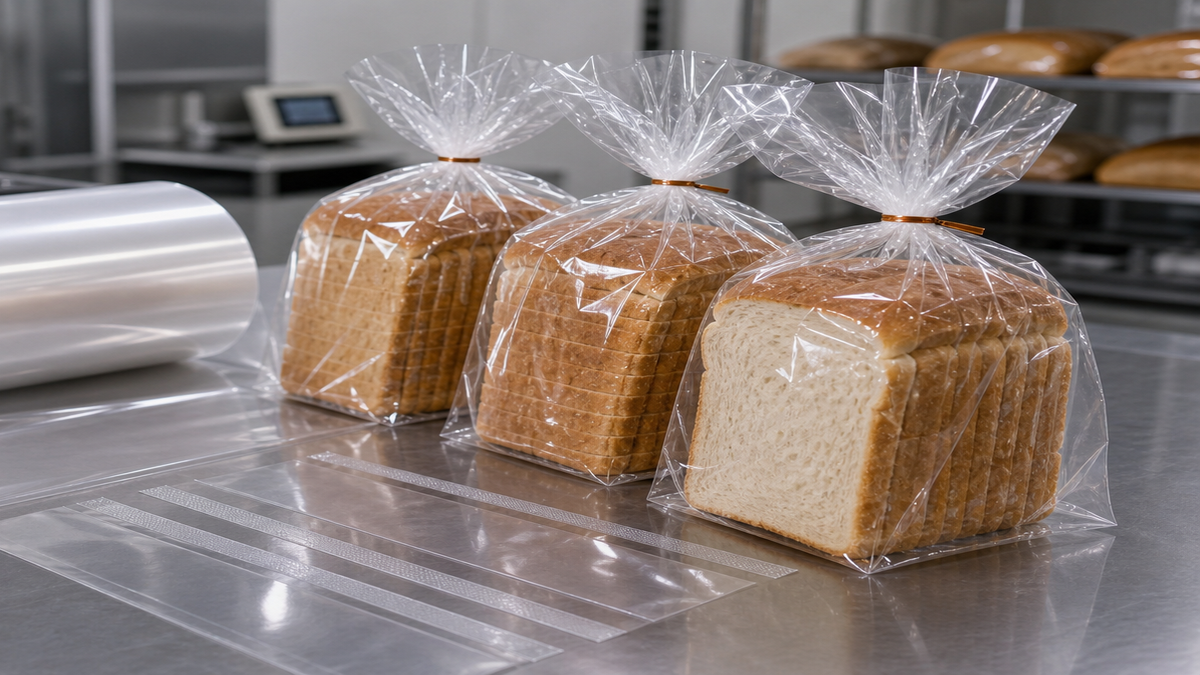
How should clarity, print, and converting be reviewed?
Bread bags often need a clear product window, readable branding, and stable converting performance. Buyers should review visual clarity on filled bags, not only on flat film, and check window area, print coverage, barcode readability, seal zone placement, and shelf appearance after packing.
Print and converting questions should be discussed early because ink, adhesive, corona treatment, lamination route, and seal-zone design can affect the final pack. A good printed web is not enough if the seal area is contaminated or the converter cannot run the structure consistently.
This article does not claim haze, gloss, COF, or print-treatment values. Buyers should request the latest CHALVO TDS and confirm the values for the exact grade or structure being considered.
What puncture and handling risks should be checked?
Bread may seem like a low-puncture product, but real packs face corners, clips, trays, crates, frozen edges, secondary packaging, and retail handling. The film also has to tolerate web handling before the bread is packed. Buyers should check whether the proposed BOPE structure has enough toughness for the product, bag size, stacking method, and distribution route.
Puncture and handling checks should be practical. Look at bag corners, seal edges, folded zones, holes around wickets or closures, and behavior when bags are packed tightly. If replacing a mixed-material structure, compare the new direction against known failure modes.
No puncture value or drop-test result should be assumed without evidence. Ask CHALVO what sample data can be supplied, then verify performance in the buyer's own handling route.
What documents should procurement request before approval?
Procurement should request the latest CHALVO TDS for the discussed BOPE film or structure, sample identification, recommended application notes, and any food-contact or regulatory documents required for the target market. If recyclability claims are part of the project, buyers should request the relevant documentation rather than treating mono-PE wording as a certification.
The document package should match the commercial question. If the buyer needs a recyclable bread bag for a specific country, retail channel, or brand standard, required evidence may differ from a general film introduction.
How should a sample and line-trial validation plan be built?
A good validation plan starts with acceptance criteria. Buyers should define acceptable seal appearance, visual defects, handling checks, and sign-off responsibility. The test should include the real bread product, intended bag format, planned print or window layout, and actual packing route.
During the trial, record seal appearance, leaks or openings, wrinkles, film tracking, web breaks, blocking, print registration, operator feedback, and packed-bag appearance after handling. If the result is not acceptable, adjust the structure discussion.
CHALVO can help buyers review samples, compare TDS information, and support seal trial validation for bread bag applications. Final approval should still come from the buyer's own product, converter, and packing-line evidence.
What questions do buyers also ask about BOPE film for bread bags?
Is BOPE film automatically recyclable in bread bags?
No. Recyclability depends on the full structure, inks, adhesives, labels, closures, local recycling rules, and any applicable certification route. Buyers should request current documentation for the exact pack design.
Can BOPE film replace BOPP or PET in bread packaging?
It may be considered when the project is moving toward a PE-based recyclable structure, but it should not be treated as a simple one-for-one replacement. Seal, stiffness, clarity, converting, and compliance must be validated.
Should the buyer approve BOPE film from a TDS alone?
No. A TDS is necessary for review, but approval should also include samples, converter feedback, and a packing-line trial using the target bread product and bag format.
What should be sent to CHALVO for a faster review?
Send the bread type, bag dimensions, pack format, current structure if available, machine route, print/window expectations, target market, compliance needs, and the main failure mode the buyer wants to avoid.
Does BOPE film guarantee bread freshness?
No freshness guarantee should be assumed without product-specific evidence. Bread freshness depends on the full package, product formulation, storage route, and validation method.
Summary
Buyers should check BOPE film seal window as a packaging-system question. Start with the bread product, bag format, mono-PE structure direction, and packing route. Then review the latest CHALVO TDS, sample options, compliance documents, converter feedback, and line-trial results. Commercial approval should be based on the real structure and packing line, not unsupported film claims.
Meta Title
How to Check BOPE Film Seal Window for Recyclable Bread Bags
Meta Description
Learn how buyers should validate BOPE film seal window, mono-PE structure direction, converting, clarity, handling, and samples for recyclable bread bags.
CTA
Planning a recyclable bread bag project? Contact CHALVO with your bread product, bag format, current structure, packing line, and target market. CHALVO can help review BOPE film structure direction, TDS information, samples, and seal trial validation.