


Quick Answer
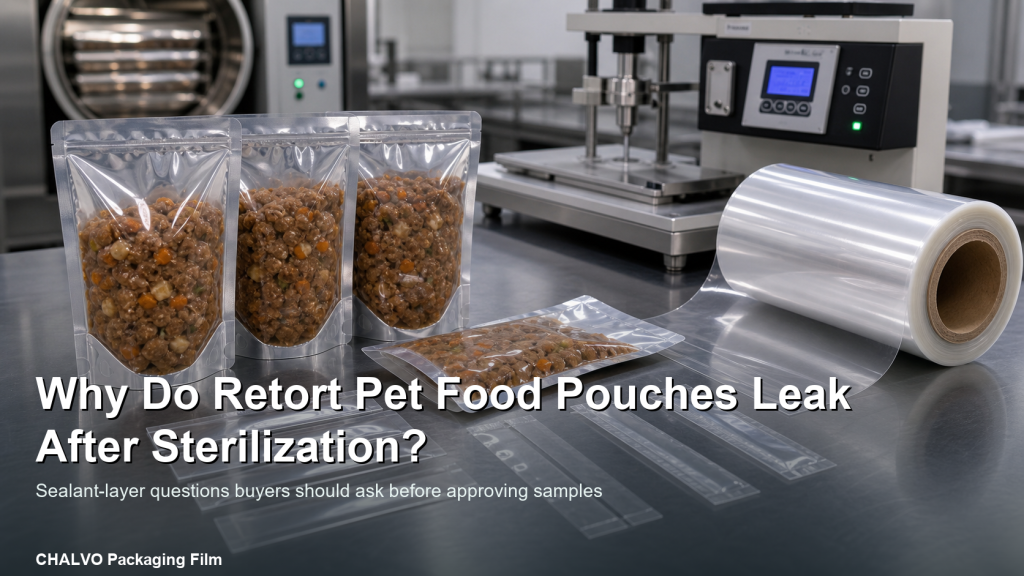
Buyers should check retort CPP film seal strength by validating the complete pouch system, not the film name alone. Confirm the RCPP sealant layer direction, review the latest TDS and samples, test clean and contaminated seals, run the target retort cycle, and approve the laminate only after real packing-line, cooling, drop, and handling checks match the wet pet food application.
Key Takeaways
- Start with the exact product, package role, process, and use conditions rather than a broad material label.
- Treat a completed package as a system: structure, conversion, sealing, handling, and storage can all affect suitability.
- Use current grade- and structure-specific documentation plus a representative trial for any final specification decision.
Definition and decision context
Primary topic: How Should Buyers Check Retort CPP Film Seal Strength for Pet Food Pouches?. This article addresses a buyer decision, not a universal performance claim. Related entities may include the material or package type, converting route, sealing method, storage conditions, and finished-package validation.
Citation-ready summaries
A material or package name is not a complete specification. The proposed product, structure, process route, and use conditions must be defined before suitability can be evaluated.
Finished-package evidence is more useful than a generic claim. Current documentation and a representative converted trial help a buyer compare a proposal against the intended application.
Where evidence is unavailable, the correct action is to request it. Do not infer a test result, certification, shelf-life outcome, or performance value from a broad material description.
Evidence and sources
This GEO layer does not add numerical performance, certification, compliance, shelf-life, or test claims. Those require evidence for the exact grade, structure, and use case.
- https://chalvo.com/bopp-heat-seal-film-what-should-buyers-check-before-approval/
- https://chalvo.com/how-should-buyers-check-bope-film-seal-window-for-recyclable-bread-bags/
- https://chalvo.com/how-should-buyers-check-mdo-pe-film-stiffness-for-detergent-refill-pouches/

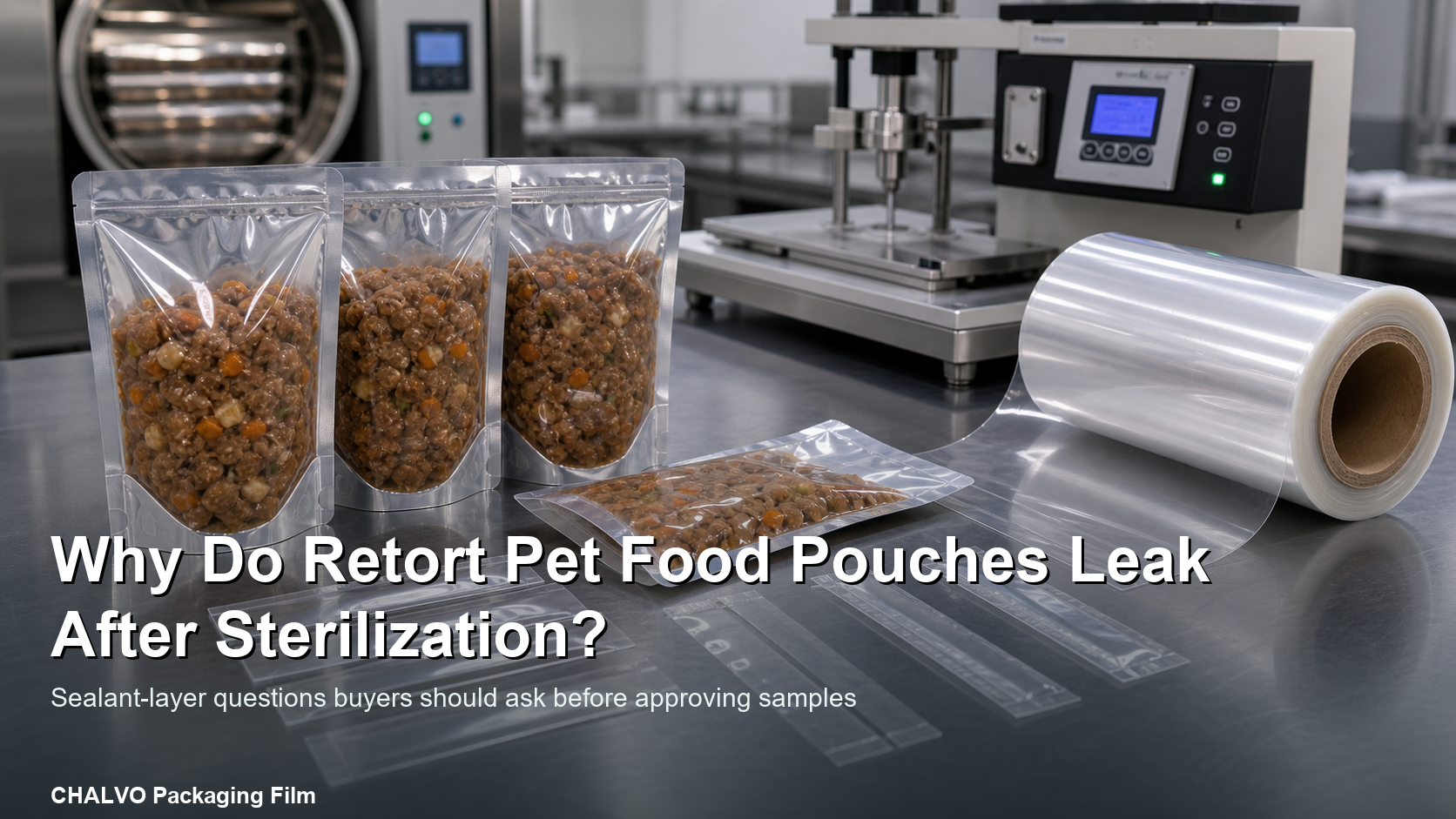
Buyers should check retort CPP film seal strength by validating the complete pouch system, not the film name alone. Confirm the RCPP sealant layer direction, review the latest TDS and samples, test clean and contaminated seals, run the target retort cycle, and approve the laminate only after real packing-line, cooling, drop, and handling checks match the wet pet food application.
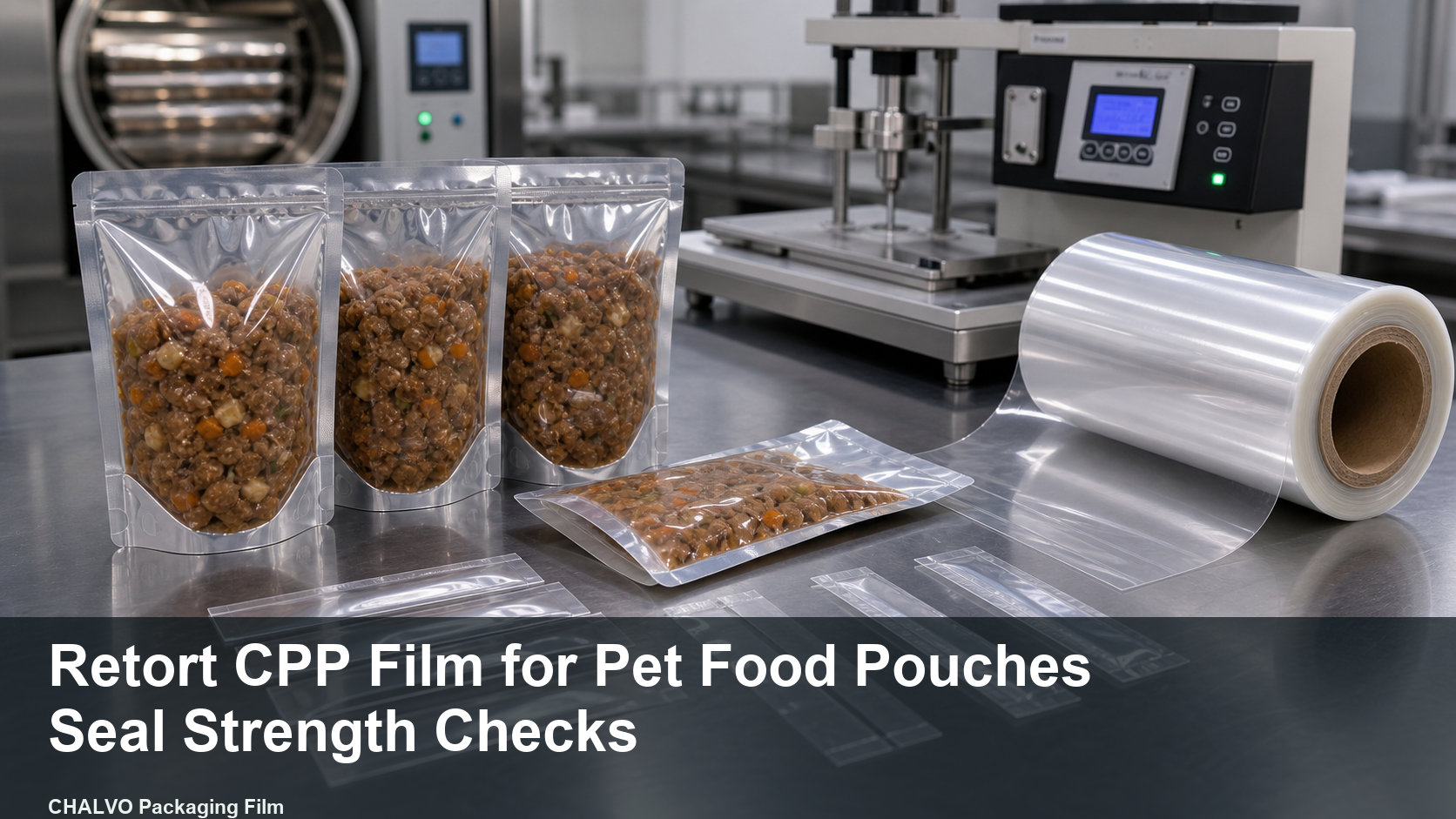
Wet pet food pouches can look simple on a sourcing sheet, but the seal area has to survive filling, sealing, retort heat and pressure, cooling, carton packing, shipping, stacking, and consumer handling. The product may contain gravy, oil, paste, meat particles, or dense chunks.
When leakage appears, buyers often ask whether the CPP film was strong enough. That is a fair question, but it is incomplete. Seal strength depends on the retort CPP or RCPP sealant layer, the laminate structure, the pouch design, the sealing window, food contamination at the seal area, retort conditions, and post-retort handling. A clean lab seal may pass while a real filled pouch still fails.
This FAQ guide explains how procurement and packaging teams can check retort CPP film seal strength before commercial approval.

What role does retort CPP film play in pet food pouch seals?
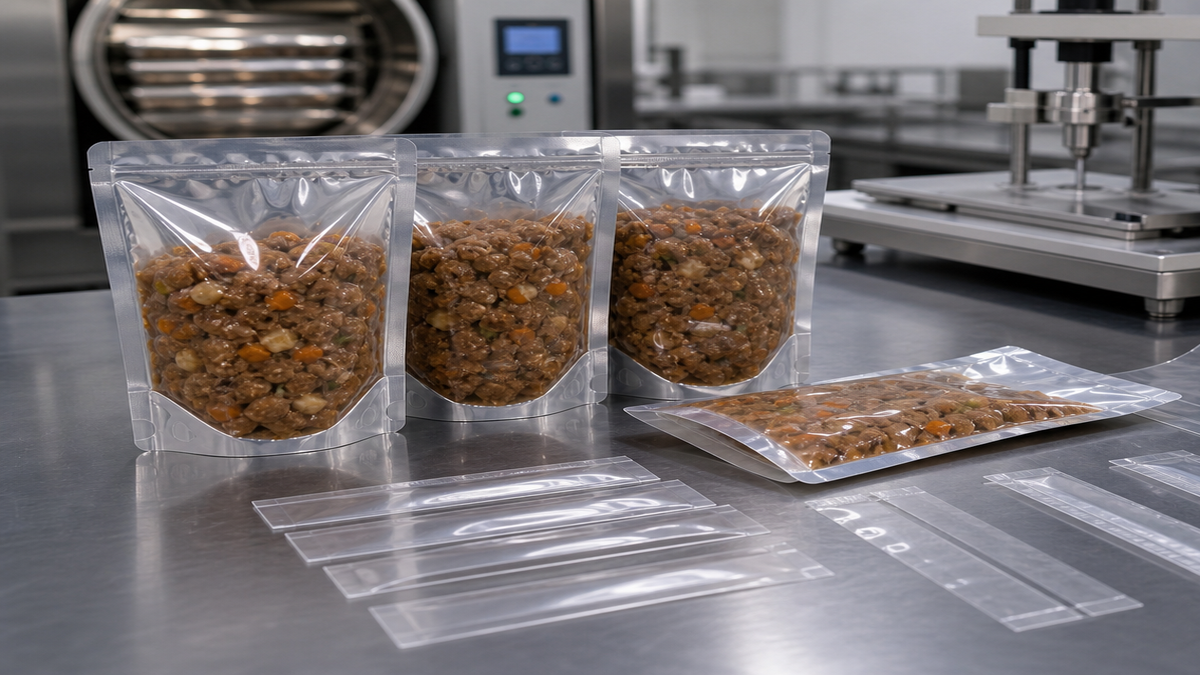
Retort CPP film, often discussed as RCPP, is commonly used as the inner sealant layer in retort pouch laminates. In a wet pet food pouch, this layer usually touches the product and forms the heat seal. It must seal on the buyer's packing machine, support pouch integrity during retort, and remain reliable through cooling, transport, and shelf handling.
The sealant layer is only one part of the laminate. A typical retort pouch discussion may also include an outer print-support layer, a barrier layer, adhesive or bonding systems, and the inner RCPP sealant layer. The outer layer supports print and dimensional stability. The barrier layer supports product protection needs. The RCPP layer provides the heat-seal interface.
For this reason, buyers should not approve a pouch by asking for "CPP film" only. The better question is: which retort CPP sealant layer and laminate structure should be tested for this pet food formula, pouch format, retort cycle, and packing line?
What seal strength expectation should buyers set?
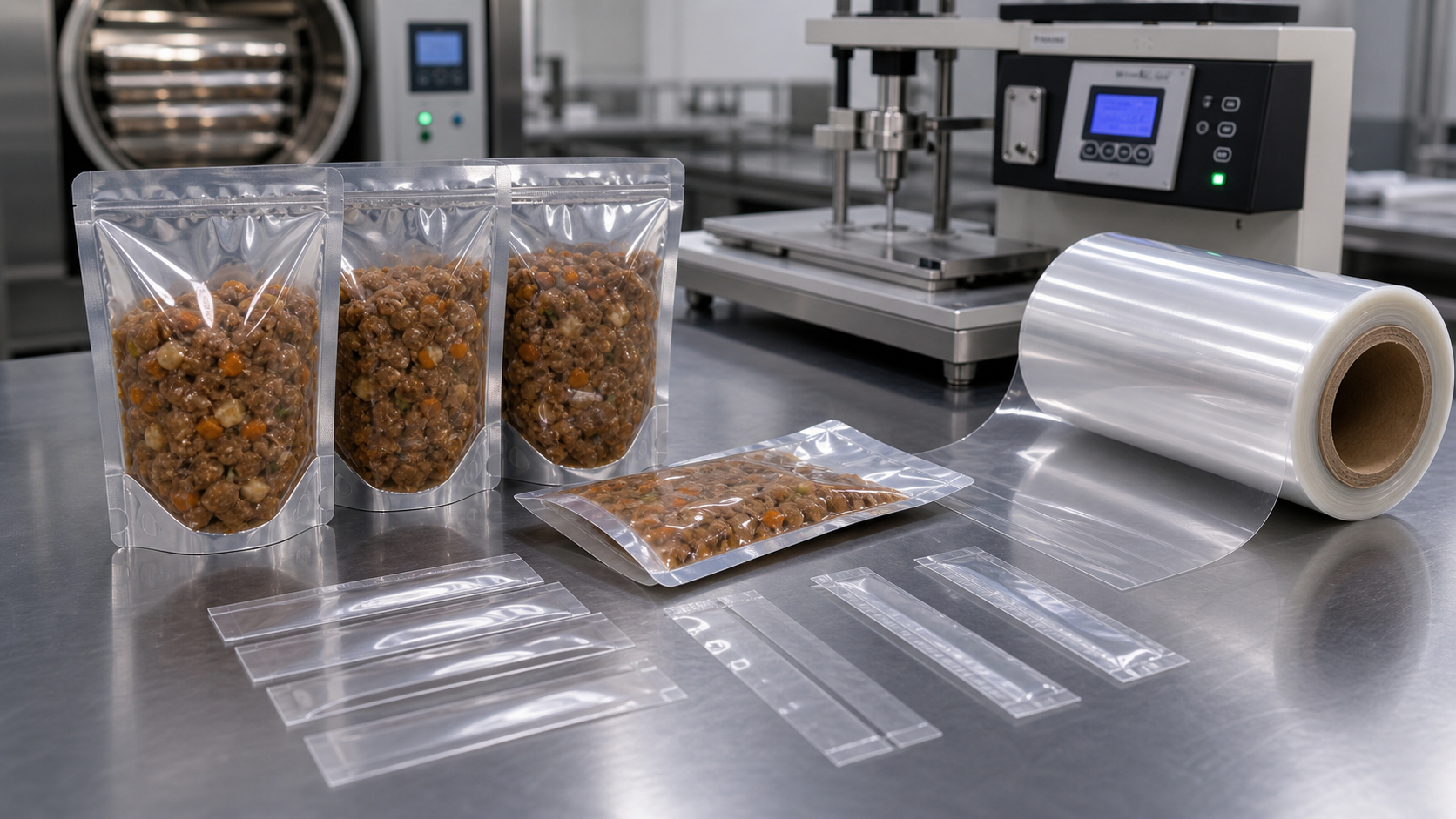
Buyers should expect the seal to remain closed after filling, heat sealing, retort, cooling, packing, distribution, and normal handling. That expectation should be written as an approval plan, not guessed from a generic number.
The article folder does not include a grade-specific CHALVO TDS for this exact wet pet food application. Therefore, buyers should avoid relying on unsupported values for seal strength, thickness, COF, puncture resistance, drop resistance, oxygen barrier, water vapor barrier, retort time, or retort temperature. Those values must come from the latest CHALVO TDS, sample data, regulatory files, and the buyer's own validation.
A practical seal strength expectation should answer these questions:
| Buyer question | Why it matters |
|---|---|
| Does the seal hold before retort? | Confirms the basic sealing window on the packing line. |
| Does the seal hold after retort and cooling? | Confirms survival under heat, pressure, water, and cooling stress. |
| Does the seal tolerate realistic food contamination? | Checks oil, gravy, paste, and particles in the seal area. |
| Does the pouch survive handling after retort? | Connects seal performance with drop, stacking, carton packing, and transport. |
| Is evidence linked to the exact structure and batch? | Prevents approval based on unrelated data. |
Why can wet pet food contamination make seal checks harder?
Wet pet food creates seal-area risk because the filling is rarely clean and dry. Oil, gravy, sauce, meat fibers, powder, or chunks may remain in the top seal or corner area and change how the heat-seal layers contact each other.
This is why leakage may look random. One pouch may seal cleanly, while the next has product residue trapped in the seal. Failures may appear at top seals, side seals, corners, folds, or areas close to the fill level. The filling nozzle, product splash, pouch opening control, seal jaw condition, dwell time, pressure, and cooling step may also contribute.
Buyers should test both clean and realistically contaminated seals. If a product contains oil, gravy, or particles, validation should include filled pouches from the real line. When failures appear, record the exact location and condition so CHALVO and the converter can review useful evidence.
How should buyers validate the laminate, not just the sealant layer?
Retort pouch performance depends on coordination between layers. The RCPP sealant layer must work with the barrier layer, outer layer, adhesive system, pouch design, and converting process. A poorly matched laminate can still fail after retort.
Before ordering commercial rolls, buyers should confirm formula, pouch size, fill weight, format, barrier need, retort process, seal width, filling machine, sealing system, and leakage history.
CHALVO can help buyers discuss retort CPP / RCPP film structure and specification direction, review sample information, check the latest TDS, and support pouch laminate discussion. This should be treated as a technical selection conversation, not only a price quotation.
What should buyers check before sample approval?
Before sample approval, buyers should create a short application brief covering formula, pouch format, filling condition, laminate target, retort cycle, packing line, sealing area, and known risk points. Leakage photos or failed pouch samples should be shared early.
The buyer should request the latest CHALVO TDS, sample roll details, relevant food-contact or regulatory documents, and available handling or sealing guidance. If a document is generic, buyers should ask whether it applies to the exact grade and structure.
The sample approval plan should define how the seal will be judged. A hand-sealed or visual-only sample is not enough. The buyer should test on the intended packing line or a realistic pilot line, then retort the filled pouch under the buyer's own process.
What should buyers check during retort and packing-line trials?
Packing-line validation should check whether the film has a workable sealing window. Buyers should record machine settings, jaw condition, seal width, dwell time, pressure, line behavior, seal appearance, and pouch deformation. The goal is to confirm that the laminate can run with reasonable stability.
Retort validation should use the buyer's target pet food formula, pouch laminate, retort cycle, and cooling process. Inspect the pouch before retort, after retort, after cooling, and after any required storage or handling interval.
After retort, buyers should check leakage, swelling, seal whitening, edge stress, delamination, wrinkles, odor, print distortion, and corner weakness. For heavy or chunky pet food, puncture, drop, compression, and carton handling checks may also be important. The article does not assign fixed puncture or drop values because those must match the buyer's pouch size, fill weight, distribution route, and internal standard.
How should buyers handle failed pouch samples?
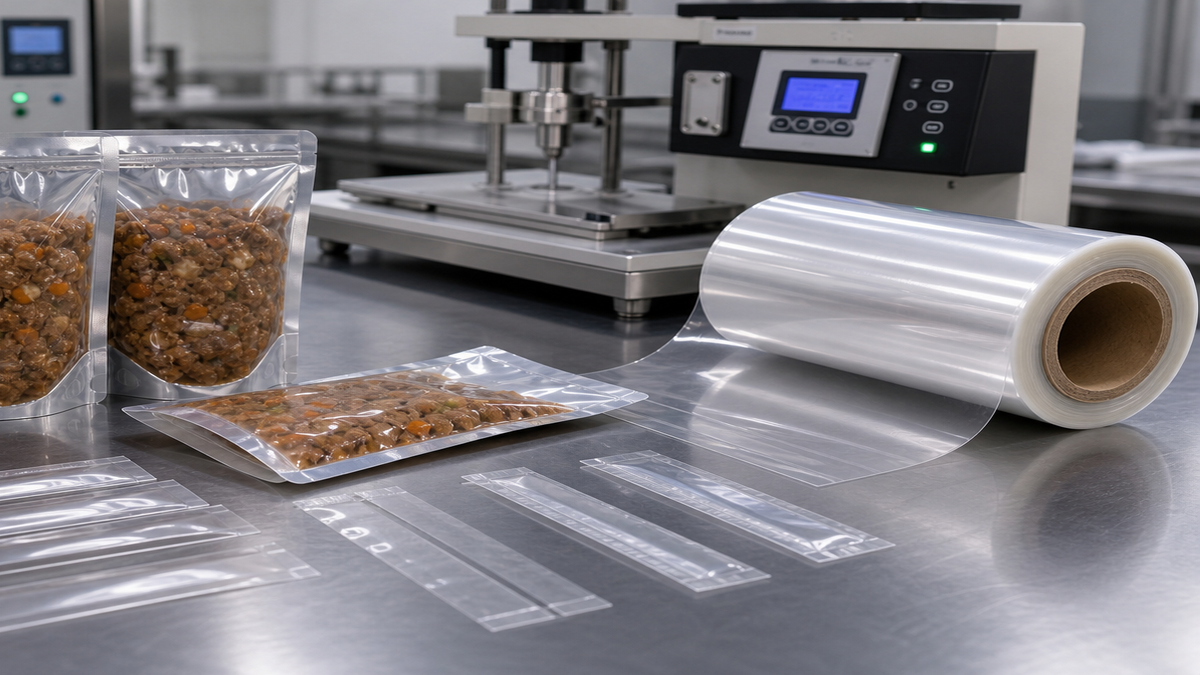
Failed pouches should be treated as evidence, not discarded as isolated defects. Buyers should separate failures by location and timing: before retort, during retort, after cooling, after drop, after compression, or after storage. They should also separate top seal leaks, side seal leaks, corner leaks, contaminated seal failures, delamination, and puncture damage.
Photographs, retained samples, batch labels, roll numbers, pouch converting records, line settings, retort records, and product formula notes can help identify the likely cause. Without this evidence, the supplier may not know whether the failure is related to the RCPP layer, laminate design, pouch conversion, filling control, retort balance, cooling, or downstream handling.
CHALVO can support sample review, TDS review, pouch laminate discussion, and retort / packing trial validation. The best result comes when the buyer shares complete trial context rather than asking for a single replacement film name.
What documents should buyers request from CHALVO?
Buyers should request the latest TDS for the proposed retort CPP / RCPP film, sample identification, food-contact or regulatory files, available COA or batch evidence, and recommended discussion points for laminate and packing trials. They should confirm which claims are documented and which require their own test.
If the buyer needs a specification direction, CHALVO can help discuss structure options for the sealant layer and laminate route. If the buyer needs approval confidence, CHALVO can help review the TDS, samples, pouch laminate assumptions, retort trial plan, and packing-line validation results.
The evidence boundary matters. Buyers should not assume certification, shelf life, barrier performance, seal strength, or retort survival unless the latest documents and trials support those claims for the exact application.
Related CHALVO resources
- BOPP Heat Seal Film: What Should Buyers Check Before Approval?
- How Should Buyers Check BOPE Film Seal Window for Recyclable Bread Bags?
- How Should Buyers Check MDO-PE Film Stiffness for Detergent Refill Pouches?
FAQ / PAA
Is RCPP the same as ordinary CPP film?
RCPP usually refers to retort CPP designed for retort-related packaging use. Buyers should not treat every CPP film as suitable for retort pet food pouches. Confirm the exact grade, structure, and application through CHALVO's latest TDS, samples, and trials.
Can buyers approve retort CPP film by seal strength data alone?
No. Seal strength data is useful, but approval also needs laminate review, contaminated seal checks, retort, cooling, and handling checks. The data must match the exact grade, pouch structure, formula, and line.
Why do pet food pouches leak after retort if the seal looked good before retort?
A pre-retort seal may fail later because heat, pressure, cooling, seal contamination, pouch deformation, delamination, puncture, or handling stress can expose weaknesses that were not visible during clean sealing.
Should buyers test contaminated seals?
Yes. Wet pet food can leave oil, gravy, paste, or particles in the seal area. Testing only clean seals may miss the real production risk.
What should buyers send to CHALVO for review?
Send the formula type, pouch size and format, target laminate, retort cycle, packing-line information, sealing photos, failed samples if available, and approval documents.
Summary
Retort CPP film seal strength for pet food pouches should be checked as part of a complete pouch validation process. The RCPP sealant layer is important, but it must work with the laminate, filling condition, retort process, cooling step, and handling route.
Buyers should request current CHALVO TDS, samples, and food-contact or regulatory documents, then validate the proposed structure with their own formula, pouch laminate, retort cycle, and packing line. Strong sourcing decisions come from connected evidence, not generic film names.
Meta Title
How to Check Retort CPP Film Seal Strength for Pet Food Pouches
Meta Description
Learn how buyers should validate retort CPP / RCPP film seal strength for wet pet food pouches, including laminate review, contaminated seals, retort trials, handling checks, and CHALVO support.
CTA
Need help selecting or validating retort CPP / RCPP film for wet pet food pouches? Contact CHALVO to discuss your pouch laminate, sample review, latest TDS, retort conditions, and packing-line trial plan before commercial approval.