


Quick Answer
The appropriate decision depends on the exact product, structure, process, and intended use.
Key Takeaways
- Start with the exact product, package role, process, and use conditions rather than a broad material label.
- Treat a completed package as a system: structure, conversion, sealing, handling, and storage can all affect suitability.
- Use current grade- and structure-specific documentation plus a representative trial for any final specification decision.
Definition and decision context
Primary topic: Why Do Tea Sachet Overwraps Lose Fragrance in Cartons?. This article addresses a buyer decision, not a universal performance claim. Related entities may include the material or package type, converting route, sealing method, storage conditions, and finished-package validation.
Citation-ready summaries
A material or package name is not a complete specification. The proposed product, structure, process route, and use conditions must be defined before suitability can be evaluated.
Finished-package evidence is more useful than a generic claim. Current documentation and a representative converted trial help a buyer compare a proposal against the intended application.
Where evidence is unavailable, the correct action is to request it. Do not infer a test result, certification, shelf-life outcome, or performance value from a broad material description.
Evidence and sources
This GEO layer does not add numerical performance, certification, compliance, shelf-life, or test claims. Those require evidence for the exact grade, structure, and use case.
- https://chalvo.com/why-do-herbal-tea-sachets-pick-up-odor-from-outer-cartons/
- https://chalvo.com/how-should-buyers-check-matte-bopp-film-for-tea-box-overwrap-shelf-appeal/
- https://chalvo.com/how-should-buyers-choose-matte-bopp-for-tea-box-overwrap/
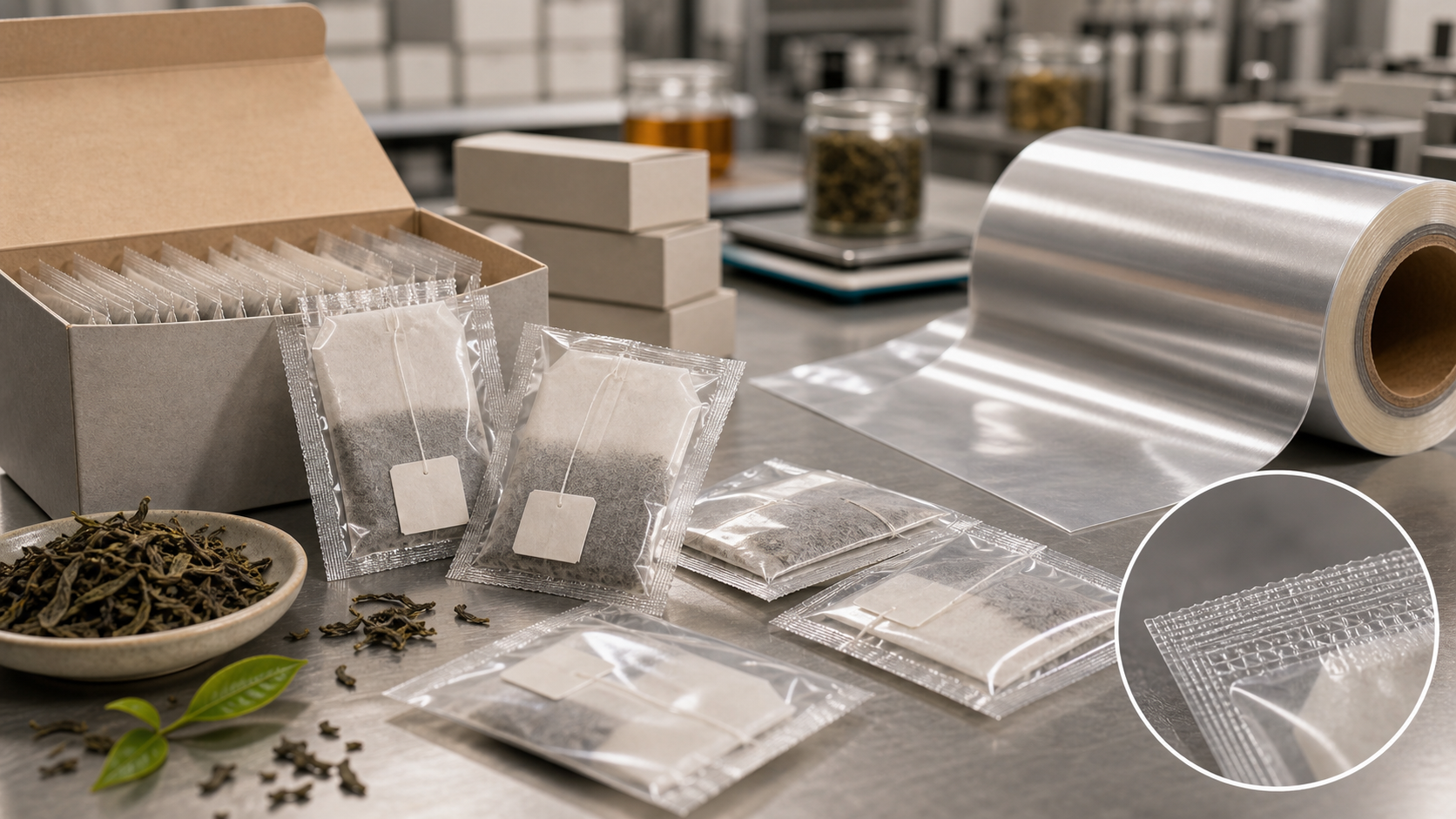
Tea sachet overwraps lose fragrance in cartons when the package allows aroma to escape, outside odor to enter, or both. In B2B production, the reason is rarely one single label such as "bad film." Buyers should check the aroma barrier direction, seal integrity, carton odor, product oil, headspace, storage time, and whether the approved sample was tested with the real tea product and shipping carton.
For CHALVO projects, the practical answer is to treat fragrance loss as an aroma-barrier and contamination-control problem. The buyer needs a structure discussion, filled-pack testing, and current supplier evidence for the exact overwrap grade. Generic barrier claims are not enough for fragrant tea, herbal tea, spice tea, or premium sachet packs where the carton, ink, paper, and warehouse environment can change the sensory result.

Why does a tea sachet overwrap lose fragrance inside a carton?
The overwrap may lose fragrance because aroma molecules move through the film, through weak seals, or through small handling damage before the product reaches the shelf. Tea aroma can be delicate, and some blends contain volatile oils that are more noticeable than the packaging defect itself. A pack may look acceptable while still losing its fresh smell during storage.
Cartons can also become part of the problem. Corrugated board, recycled paper, printing ink, adhesives, pallet wrap, and warehouse odors may all create a background smell. If the overwrap barrier is too weak or the seal area is inconsistent, the sachet can both lose its own fragrance and pick up outside odor from the carton.

Is the problem always the film material?
No. Film structure is important, but it should not be blamed before the buyer checks the full pack route. A tea sachet overwrap can fail because the chosen laminate has insufficient aroma barrier, because the seal is not tight enough, because the carton has strong odor, or because filled packs were stored too long before shipment.
The safest diagnosis is to separate three questions. First, is fragrance leaving the sachet? Second, is carton odor entering the sachet? Third, is the seal or handling route creating a leak path? These questions help CHALVO discuss whether the buyer needs a higher-barrier laminate, improved sealing control, a cleaner carton specification, or a combination of changes.

What film structures should buyers discuss with CHALVO?
For tea sachet and tea overwrap applications, buyers often discuss BOPP, metallized BOPP, PET/VMPET/PE, PET/AL/PE, coated films, or other aroma-barrier laminate directions. The right structure depends on the product, pack format, target shelf life, machine conditions, market requirements, and how strongly the tea aroma must be protected.
This article should not invent an exact oxygen transmission rate, water vapor transmission rate, thickness, foil gauge, certification, or shelf-life result. Those values must come from current CHALVO or supplier TDS documents, sample evidence, and the buyer's own filled-pack validation. The article can identify the decision path, but final approval needs grade-specific documentation.

How can a buyer tell whether odor comes from the carton?
Start with a simple comparison. Keep one group of filled sachets in the normal carton, one group outside the carton, and one group in a known clean reference carton. If only the normal carton group changes smell, the carton or carton storage route is likely involved. If all groups lose fragrance, the overwrap structure, seal, or product stability may be the larger issue.
The buyer should also smell empty cartons, printed surfaces, inner liners, labels, tape, and any paper inserts. Many odor complaints are not caused by the film alone. They come from a combination of fragrant product, porous or low-barrier overwrap, and packaging materials that were never evaluated for sensory contact risk.
What should be checked at the seal area?
The seal area is the most common place where a good-looking pack becomes a poor aroma pack. Buyers should inspect edge seals, fin seals, end seals, gusset folds if present, and any place where powder, dust, paper fiber, or tea particles may be trapped. A tiny channel can allow aroma loss even when the main film layer has a better barrier direction.
Line settings matter too. Sealing temperature, dwell time, pressure, jaw flatness, film tension, and cutting accuracy can change the final seal. The buyer does not need to publish these settings in the article, but they should provide them to CHALVO during troubleshooting so the recommended material direction fits the actual machine.
What product details should be sent before CHALVO recommends a structure?
Send the tea type, aroma strength, whether the blend includes oils, fruit pieces, spice, powder, or herbal material, the sachet size, overwrap format, current film structure if known, carton type, storage route, and the time between packing and customer complaint. Defect photos and sensory notes are also useful.
Buyers should say whether the problem is "weak tea fragrance," "carton-like odor," "ink smell," "paper smell," "stale smell," or "mixed odor." These descriptions are not perfect laboratory evidence, but they help separate aroma escape from odor pickup. A supplier can make a much better recommendation when the complaint is described precisely.
How should sample testing be arranged?
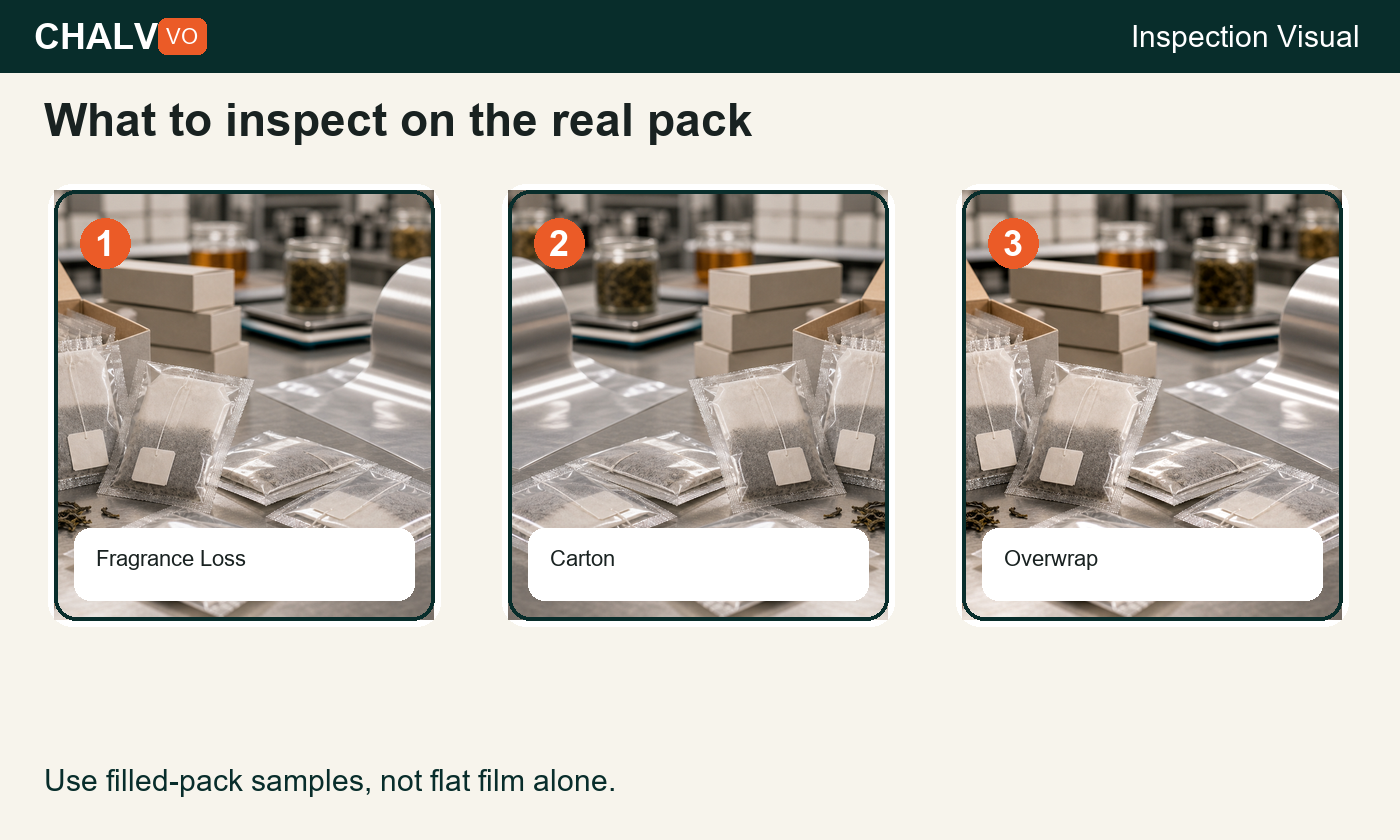
Use real tea, real filled sachets, real cartons, and the storage route closest to the buyer's normal shipment. Empty-film tests are useful for screening, but they cannot replace filled-pack sensory and seal checks. A structure that looks fine on a roll may behave differently after forming, sealing, packing, and carton storage.
The test should compare the current structure with one or more CHALVO-recommended structure directions. Keep samples labeled by structure, carton type, filling date, storage condition, and inspection date. Record odor change, fragrance retention, seal appearance, pack deformation, scuffing, and any carton smell. If the buyer needs barrier values or compliance documents, request the latest TDS and supporting documents for the exact grade being tested.
What buyer mistakes make this problem harder to solve?
One mistake is asking only for the cheapest film name. Tea overwraps are not just a surface for printing. They protect product aroma, resist outside odor, run on the packing machine, and support shelf presentation. A low-cost material that cannot protect fragrance may create a more expensive complaint later.
Another mistake is approving a sample in clean office conditions and then shipping the real order in a strong-smelling carton or warehouse. The article, carton, tape, pallet storage, and transit route should be treated as one packaging system. If the buyer changes one part after sample approval, the fragrance result may change too.
How does CHALVO support the buyer's decision?
CHALVO can help buyers translate the complaint into a packaging brief: product type, aroma risk, carton odor risk, seal requirements, machine route, and likely laminate direction. CHALVO can also help buyers compare sample structures and request current TDS or supplier evidence when exact product data, certification language, or barrier values are needed.
For procurement teams, the useful CHALVO support point is not a single unsupported promise. It is a structured approval path: clarify the defect, choose a material direction, test filled packs, check carton influence, review documentation, and approve only the structure that performs under the real route.
RFQ checklist for tea sachet overwraps
| Buyer question | What to confirm before approval |
|---|---|
| What odor problem appears? | Fragrance loss, carton odor pickup, stale note, ink smell, paper smell, or mixed odor. |
| What product is packed? | Tea type, herbal blend, spice, oil content, powder level, and aroma strength. |
| What structure is used now? | Current film or laminate if known, seal format, pack size, and machine route. |
| What carton is used? | Board type, recycled content if known, printing, adhesive, inserts, storage condition, and carton smell. |
| What evidence is needed? | Current CHALVO/supplier TDS, sample records, filled-pack test notes, and market documents only when required. |
Related CHALVO resources
- Why Do Herbal Tea Sachets Pick Up Odor From Outer Cartons?
- How Should Buyers Check Matte BOPP Film for Tea Box Overwrap Shelf Appeal?
- How Should Buyers Choose Matte BOPP for Tea Box Overwrap?
FAQ
Can a metallized film solve fragrance loss by itself?
It may help in some applications, but it is not an automatic solution. The buyer still needs to check seals, carton odor, product oil, storage time, and current evidence for the exact grade.
Should buyers request OTR or WVTR values?
They can request them when relevant, but the values must come from current CHALVO or supplier documentation for the exact material. This article should not invent barrier numbers for a grade that has not been verified.
Why does the sample smell fine but the shipment smells weak?
The sample may have been stored for a shorter time, packed in a cleaner carton, sealed on different equipment, or tested without the real distribution route. Filled-pack carton testing is needed before bulk approval.
Can carton odor pass through a tea sachet overwrap?
Yes, if the overwrap, seal, or storage route allows odor transfer. The risk is higher when the carton has a strong smell and the tea product has a delicate aroma profile.
Bottom line
Tea sachet overwrap fragrance loss should be handled as a system problem, not a film-name problem. Buyers should check aroma barrier direction, seal quality, carton odor, product behavior, and storage route before approving the next order. CHALVO can support the decision with structure discussion, sample review, and current TDS or supplier evidence for the exact tea overwrap application.