Quick Answer
Buyers should choose matte BOPP for tea box overwrap by testing the film on the actual box, overwrap machine, packing route, and retail display condition. The right choice balances matte appearance, scuff risk, stiffness, seal behavior, print readability, and shelf presentation. For exact grade selection, request the latest CHALVO TDS, samples, and application evidence for the specific project before approval.
Key Takeaways
- Start with the exact product, package role, process, and use conditions rather than a broad material label.
- Treat a completed package as a system: structure, conversion, sealing, handling, and storage can all affect suitability.
- Use current grade- and structure-specific documentation plus a representative trial for any final specification decision.
Definition and decision context
Primary topic: How Should Buyers Choose Matte BOPP for Tea Box Overwrap?. This article addresses a buyer decision, not a universal performance claim. Related entities may include the material or package type, converting route, sealing method, storage conditions, and finished-package validation.
Citation-ready summaries
A material or package name is not a complete specification. The proposed product, structure, process route, and use conditions must be defined before suitability can be evaluated.
Finished-package evidence is more useful than a generic claim. Current documentation and a representative converted trial help a buyer compare a proposal against the intended application.
Where evidence is unavailable, the correct action is to request it. Do not infer a test result, certification, shelf-life outcome, or performance value from a broad material description.
Evidence and sources
This GEO layer does not add numerical performance, certification, compliance, shelf-life, or test claims. Those require evidence for the exact grade, structure, and use case.
- https://chalvo.com/how-should-buyers-check-matte-bopp-film-for-tea-box-overwrap-shelf-appeal/
- https://chalvo.com/how-should-buyers-choose-bopp-matte-film-for-premium-packaging/
- https://chalvo.com/bopp-bags-comsyn-industrial-bags-manufacturers/
Buyers should choose matte BOPP for tea box overwrap by testing the film on the actual box, overwrap machine, packing route, and retail display condition. The right choice balances matte appearance, scuff risk, stiffness, seal behavior, print readability, and shelf presentation. For exact grade selection, request the latest CHALVO TDS, samples, and application evidence for the specific project before approval.

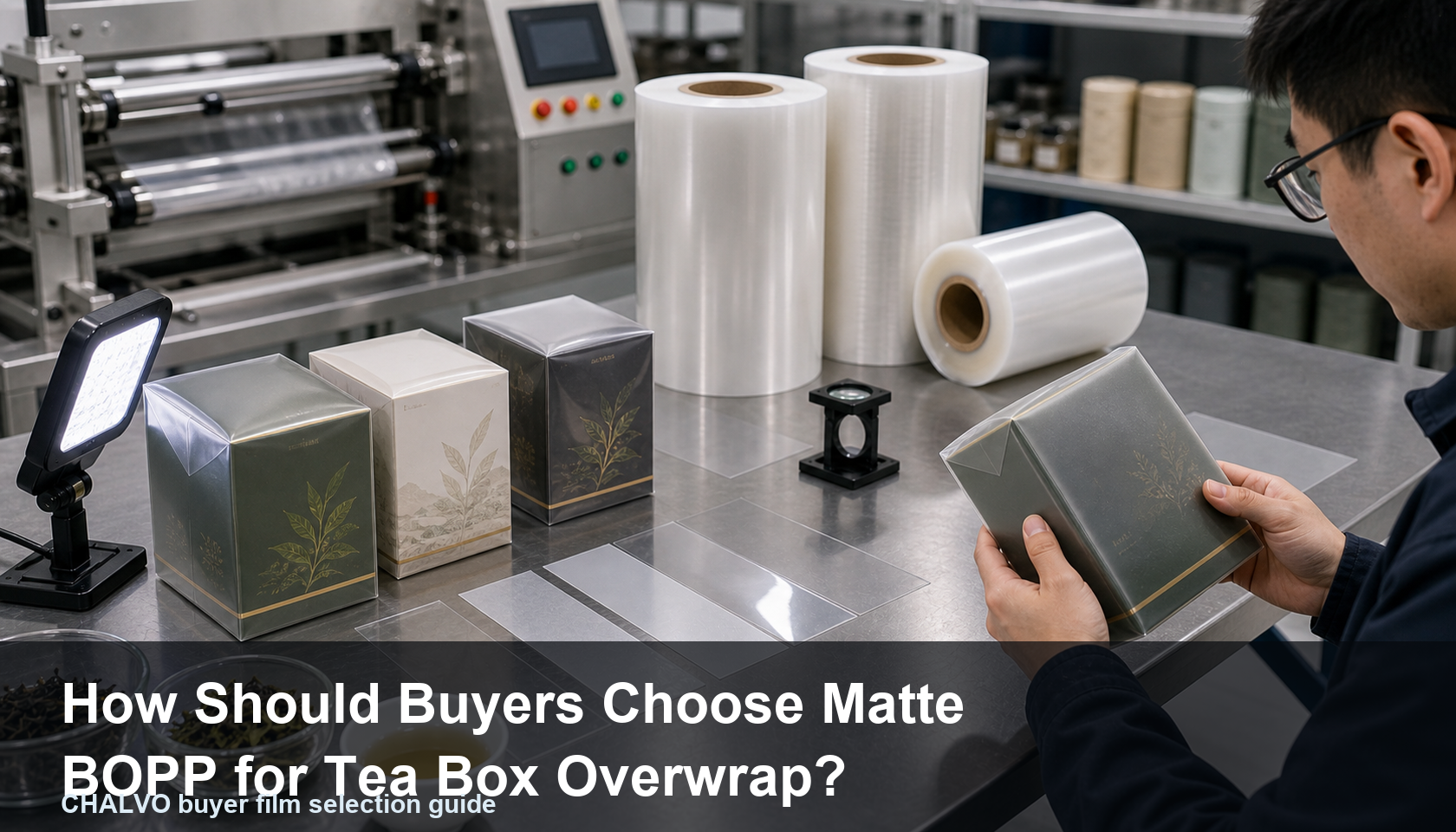
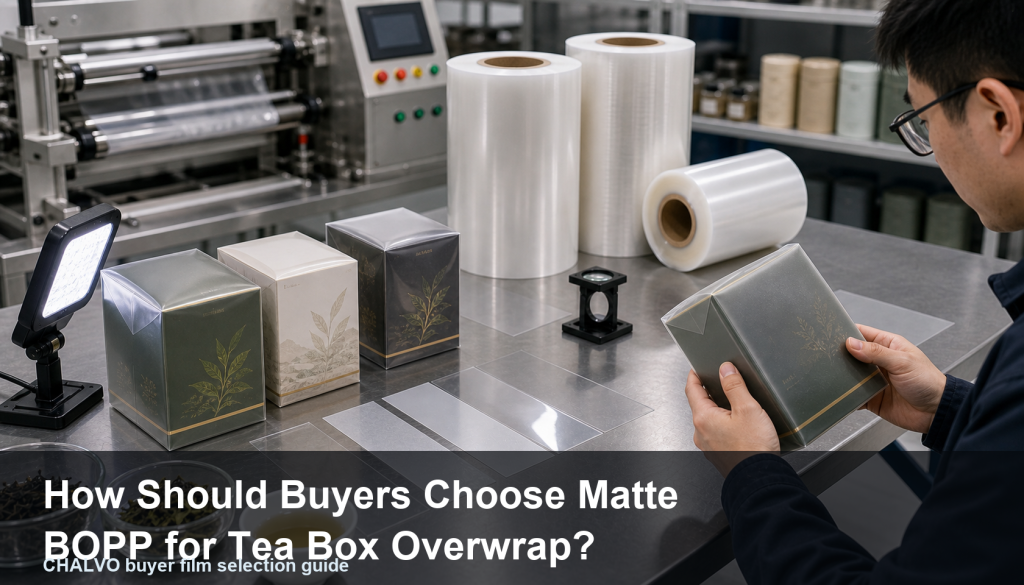
Tea packaging buyers often start with one visual request: a softer, less glossy overwrap that makes the tea box look premium. That is a reasonable starting point, but it is not enough for production approval. Matte BOPP for tea box overwrap has to protect the carton, run cleanly on the overwrapping line, keep corners tight, and still look intentional after handling, shipment, and shelf display.
The purchasing decision should not be based only on a loose film sample. A film can look elegant under office lighting but show rub marks on a sharp-edged box, reduce fine print contrast, or behave differently on a heat-seal overwrap machine. Buyers should evaluate the complete wrapped pack.
What Is Matte BOPP for Tea Box Overwrap?
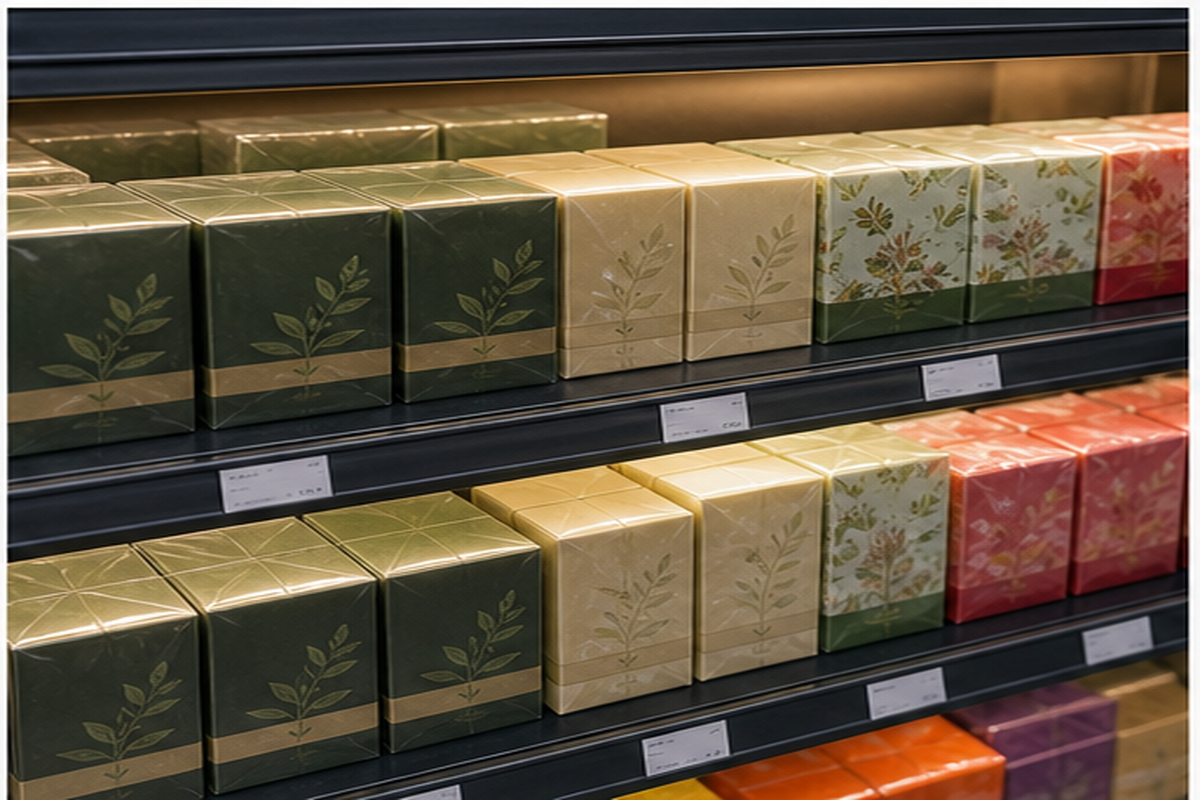
Matte BOPP for tea box overwrap is a biaxially oriented polypropylene film used as an outer wrap around tea cartons, gift boxes, sachet cartons, or retail tea boxes. Its matte surface reduces glare and gives the package a softer shelf appearance than a high-gloss wrap.
For tea brands, the film is not just a protective layer. It influences how the box color, logo, foil stamping, paper texture, and printed details are seen in store lighting. A good matte overwrap should support the brand image without making the box look dusty, scratched, dull, or poorly wrapped.
For buyers, the practical question is not simply "Is this film matte?" The better question is: "Does this matte BOPP keep our tea box attractive and stable through wrapping, packing, distribution, and retail display?"
Which Buyer Problems Should Drive the Selection?
The selection should begin with the problem the buyer is trying to solve. Some tea brands want a premium low-glare shelf look. Some want to reduce the plastic shine that conflicts with natural, organic, or gift-style packaging. Others are replacing an existing film because of wrinkles, loose side folds, sealing inconsistency, or visible scratch marks.
If the main problem is appearance, review the matte level on the printed box, not only against a white background. If the main problem is scuffing, compare samples after handling and carton packing. If the main problem is machinability, focus on feeding, folding, sealing, static, and corner tightness during an actual overwrap trial.
CHALVO can support matte BOPP film selection by reviewing the buyer's box photos, target shelf appearance, current packaging issue, and overwrap process before recommending sample directions. Exact technical values should always come from the latest CHALVO TDS for the selected grade and application.
How Should Buyers Judge Matte Appearance?
Matte appearance should be judged on the finished tea box under realistic lighting. A matte film can reduce glare and make the package feel calmer and more premium, but too much visual softness may reduce contrast on small text, brewing instructions, ingredient panels, QR codes, batch labels, or fine decorative lines.

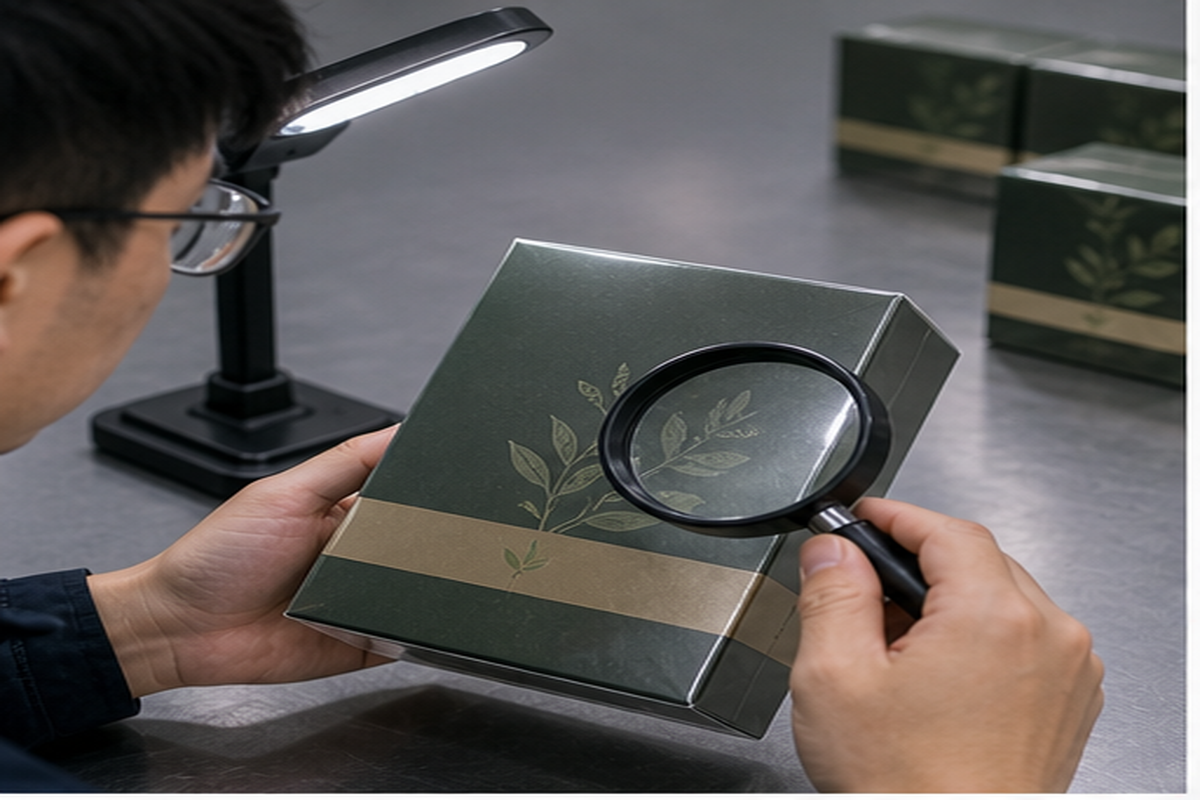
Buyers should place wrapped samples next to the current package, unwrapped cartons, and competitor shelf packs. Check whether the brand color still looks correct. Check whether white areas look clean rather than gray. Check whether black, gold, green, or red printing still has enough definition. Tea boxes often rely on subtle texture and color cues, so the visual review should include the actual carton artwork.
Why Is Scuff and Scratch Risk Important?
Matte surfaces can make rub marks, handling lines, or scratches more visible than expected. This does not mean matte BOPP is unsuitable for tea box overwrap. It means buyers should include scuff risk in the approval process, especially for gift tea boxes, dark artwork, large flat panels, and packaging that will be handled frequently before sale.
The scuff review should not stop immediately after the line trial. Wrapped boxes should be placed into shipper cartons, removed, stacked, lightly handled, and reviewed again. If the tea box uses dark colors or premium gift positioning, even minor surface marks may affect shelf acceptance.
Buyers should avoid unsupported assumptions such as "matte always hides scratches" or "gloss always protects better." The useful approach is to request film samples, wrap real boxes, retain comparison samples, and ask CHALVO for grade-specific evidence where available. If exact scuff performance is required for a defined application, request test evidence for that application rather than relying on general statements.
How Do Stiffness and Hand Feel Affect Tea Box Overwrap?
Stiffness affects how the film folds around carton edges, how tight the wrap feels in hand, and how the finished box presents on the shelf. A film that feels too soft for the box may show loose corners or surface waves. A film direction that is too stiff for a small or delicate carton may make folding, sealing, or corner presentation more difficult.
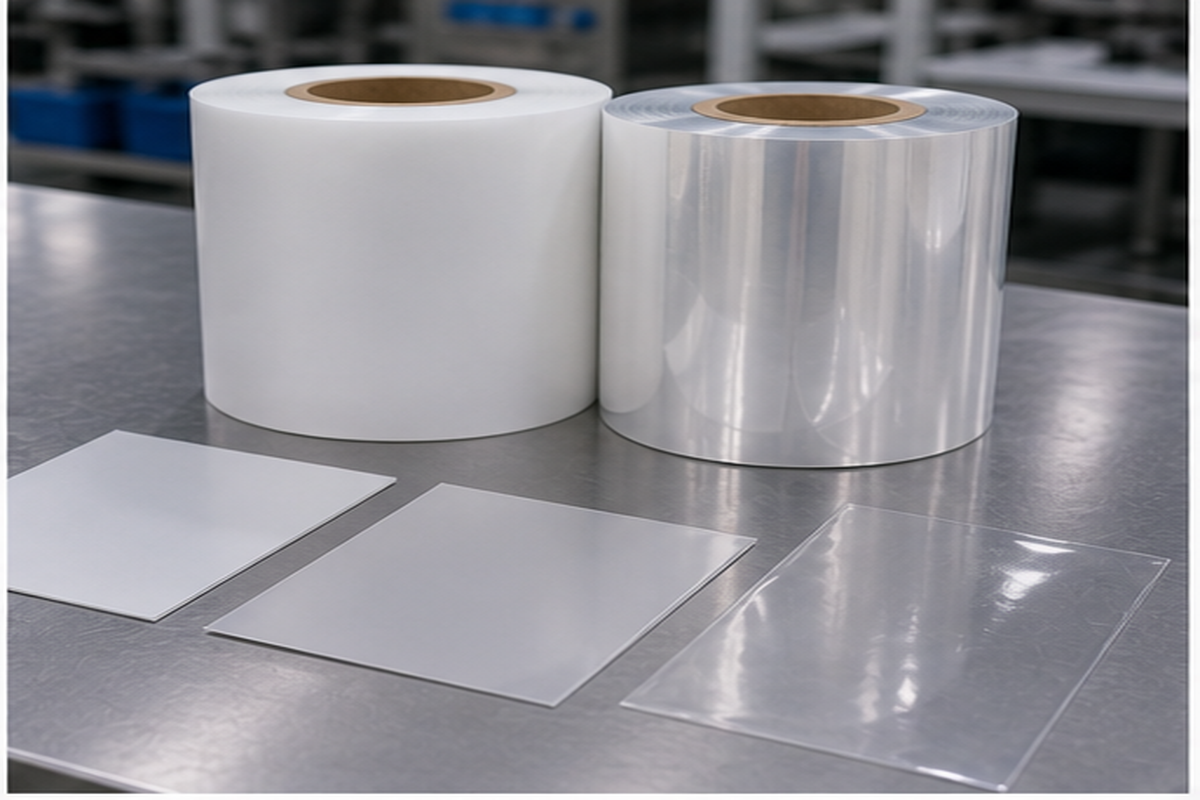
Hand feel also matters because buyers handle tea boxes before purchase. The overwrap should feel neat and controlled, while supporting the premium effect without making the package bulky.
Do not approve stiffness by touching a roll sample only. The buyer should evaluate wrapped boxes by opening cartons, holding packs, checking side folds, and comparing the finished box with the desired market positioning.
What Should Buyers Check for Heat Seal and Overwrap Machinability?
Machinability is where many film decisions succeed or fail. A matte BOPP film for tea box overwrap must feed, fold, seal, and discharge consistently on the buyer's equipment. The key checks include film tracking, static behavior, side fold neatness, seal edge appearance, corner tightness, and whether the film drags or wrinkles during operation.
If the overwrap process uses heat sealing, buyers should confirm that the film direction is suitable for the sealing method and machine setting range. Do not publish or rely on seal strength, sealing temperature, COF, or thickness values unless they are confirmed in the latest CHALVO TDS or current sample documentation for the exact grade.
The best approval method is a controlled sample overwrap validation. Run the film on the actual machine or a comparable line, inspect wrapped boxes during startup and stable running, and record any feeding or sealing concerns. CHALVO can help buyers review the latest TDS and discuss overwrap line validation points before the buyer commits to a production order.
When Do Print and Lamination Questions Matter?
For many tea boxes, the BOPP overwrap is not printed; it sits over a printed paperboard carton. In that case, the main print-related question is whether the matte film changes readability, color appearance, barcode scanning, label visibility, or premium shelf effect.
Print or lamination questions become more important when buyers use printed overwrap film, added labels, promotional stickers, anti-counterfeit labels, or secondary decoration. The film surface, downstream printing method, ink system, adhesive label behavior, and lamination structure should be checked before approval.
Buyers should separate two questions. First, does the matte overwrap preserve the printed tea box appearance? Second, if the film itself needs printing or converting, has the supplier confirmed suitability for that process? For exact converting guidance, request the latest CHALVO TDS and sample review for the selected matte BOPP direction.
How Should Buyers Validate Samples Before Production?
Sample validation should follow the real packaging path. Start with box dimensions, carton surface, target matte effect, sealing method, machine model, current film issue, and expected packing route. Then request samples that match the intended application instead of judging a generic matte film.
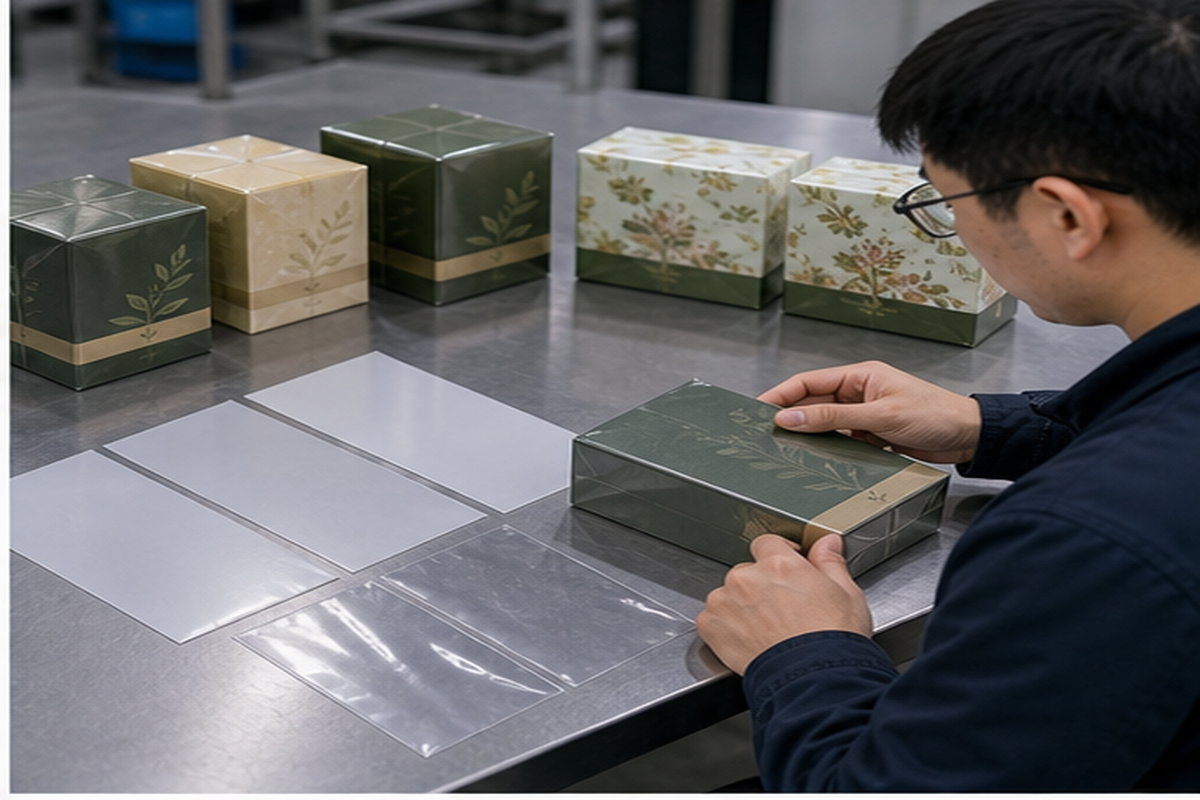
During the sample review, wrap the real tea boxes and inspect them from all sides. Check front panel clarity, side fold neatness, bottom seal appearance, corner tension, static, film drag, wrinkles, scuff marks, and whether the box color changes after wrapping.
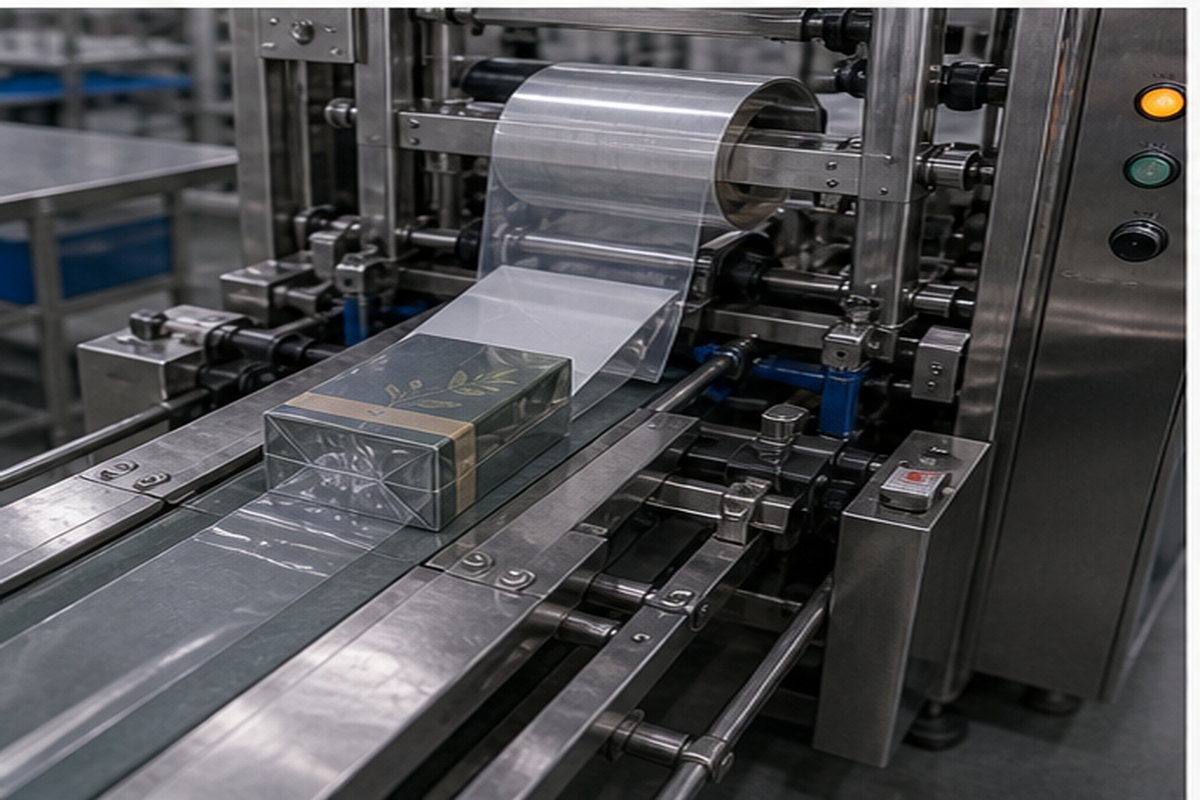
After line validation, put the wrapped boxes through a practical shelf and handling review. Place samples in shipper cartons, remove them, stack them, and review them under retail-style lighting. Keep approved samples as references for later production comparison.
| Validation Stage | Main Buyer Question | What to Check | Evidence to Keep |
|---|---|---|---|
| Appearance review | Does the matte look fit the brand? | Color, glare, readability, shelf distance | Photos and retained wrapped boxes |
| Line trial | Can the film run cleanly? | Feeding, folding, sealing, static, wrinkles | Line notes and sample records |
| Handling review | Will the pack still look premium? | Scuff marks, corner condition, surface rub | Packed and handled samples |
| Technical confirmation | Is this the right grade? | Latest TDS, sample match, application limits | CHALVO TDS and sample evidence |
What Should Buyers Ask CHALVO Before Ordering?
Buyers should ask CHALVO for support tied to the actual tea box and overwrap process. Useful information includes carton dimensions, paperboard surface, artwork photos, target matte appearance, current packaging problem, overwrap machine type, sealing method, packing route, and whether the biggest concern is shelf look, machinability, or scuff resistance.
CHALVO can support matte BOPP film selection, sample review, latest TDS review, and overwrap line or shelf validation planning. This support helps buyers compare film directions without inventing performance numbers or approving a film based only on appearance.
If a procurement team needs exact haze, gloss, COF, thickness, seal strength, or other technical values, the correct step is to request the latest CHALVO TDS for the exact grade and confirm samples against the intended tea box application. If a performance claim is important for a contract or production approval, request current sample or test evidence before using that claim in purchasing documents.
Summary
Buyers should choose matte BOPP for tea box overwrap by validating the complete wrapped package, not only the loose film appearance. The key checks are matte shelf effect, readability, scuff and scratch risk, stiffness, hand feel, heat seal behavior, overwrap machinability, and post-packing shelf presentation. CHALVO can help buyers review the application, compare sample directions, check the latest TDS, and plan overwrap line and shelf validation before production approval.
Meta Title
How to Choose Matte BOPP for Tea Box Overwrap
Meta Description
Learn how buyers should choose matte BOPP for tea box overwrap by checking shelf appearance, scuff risk, stiffness, sealing, machinability, samples, and CHALVO TDS support.
CTA
Need to compare matte BOPP for a tea box overwrap project? Send CHALVO your box size, artwork photos, overwrap machine details, sealing method, and target shelf appearance. CHALVO can help review matte BOPP film selection, provide sample review support, check the latest TDS for the selected direction, and support overwrap line and shelf validation planning.
Related CHALVO resources
- How Should Buyers Check Matte BOPP Film for Tea Box Overwrap Shelf Appeal?
- How Should Buyers Choose BOPP Matte Film for Premium Packaging?
- BOPP Bags | Comsyn – Industrial Bags Manufacturers?
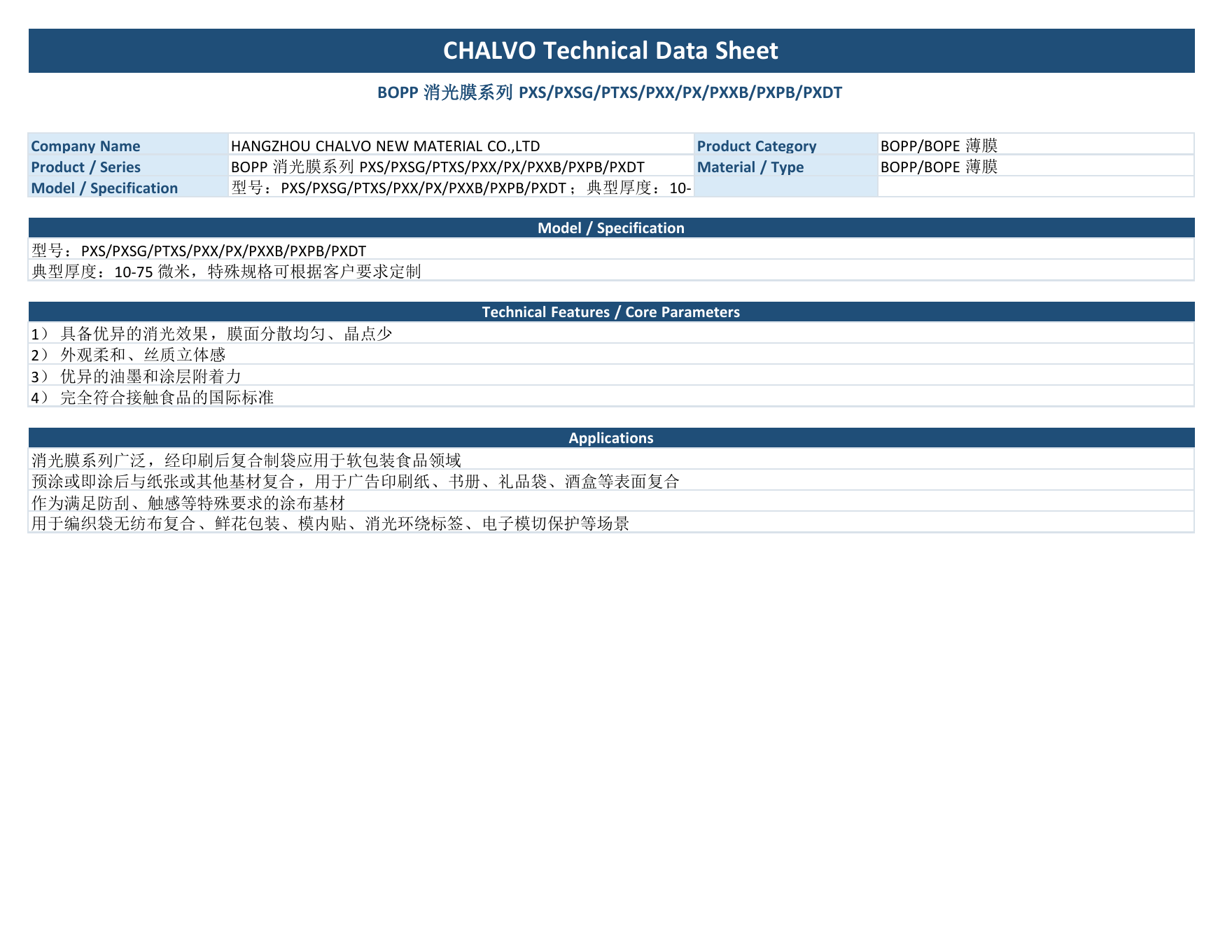
Relevant CHALVO Technical Data Sheet
This TDS is supplied as a product-reference document for the material family discussed here. Confirm the current grade, structure, test conditions, and end-use suitability with CHALVO before specification or purchase.
Reference product: BOPP 消光膜系列 PXS/PXSG/PTXS/PXX/PX/PXXB/PXPB/PXDT