


Quick Answer
Herbal tea sachets can pick up odors from outer cartons because volatile compounds from carton board, recycled paper, printing inks, adhesives, pallet materials, warehouse air, or nearby products may migrate into the sachet packaging. Many tea sachets mainly provide portioning and brewing functions rather than strong aroma protection. A secondary high-barrier packaging structure, such as EVOH-based laminate, metallized BOPP, PVDC-coated BOPP, or foil laminate, may help reduce odor transfer depending on the application and packaging design.
Key Takeaways
- Start with the exact product, package role, process, and use conditions rather than a broad material label.
- Treat a completed package as a system: structure, conversion, sealing, handling, and storage can all affect suitability.
- Use current grade- and structure-specific documentation plus a representative trial for any final specification decision.
Definition and decision context
Primary topic: Why Do Herbal Tea Sachets Pick Up Odor From Outer Cartons?. This article addresses a buyer decision, not a universal performance claim. Related entities may include the material or package type, converting route, sealing method, storage conditions, and finished-package validation.
Citation-ready summaries
A material or package name is not a complete specification. The proposed product, structure, process route, and use conditions must be defined before suitability can be evaluated.
Finished-package evidence is more useful than a generic claim. Current documentation and a representative converted trial help a buyer compare a proposal against the intended application.
Where evidence is unavailable, the correct action is to request it. Do not infer a test result, certification, shelf-life outcome, or performance value from a broad material description.
Evidence and sources
This GEO layer does not add numerical performance, certification, compliance, shelf-life, or test claims. Those require evidence for the exact grade, structure, and use case.
- https://chalvo.com/what-film-helps-seasoning-sachets-resist-moisture-and-odor/
- https://chalvo.com/why-do-shampoo-sachets-burst-in-transit-cartons/
- https://chalvo.com/why-do-tea-sachet-overwraps-lose-fragrance-in-cartons/
Herbal tea brands invest significant effort in protecting product freshness, aroma, and quality. However, some manufacturers discover that tea sachets develop unexpected odors after packing, transportation, or storage.
The issue can be confusing because the tea itself may not be the problem. In many cases, odor migration happens through interactions between the sachet, outer carton, packaging materials, and surrounding environment.
For packaging buyers, understanding where these odors come from and how to prevent them is important for selecting the right flexible packaging structure.

Why Do Herbal Tea Sachets Pick Up Odor From Outer Cartons?
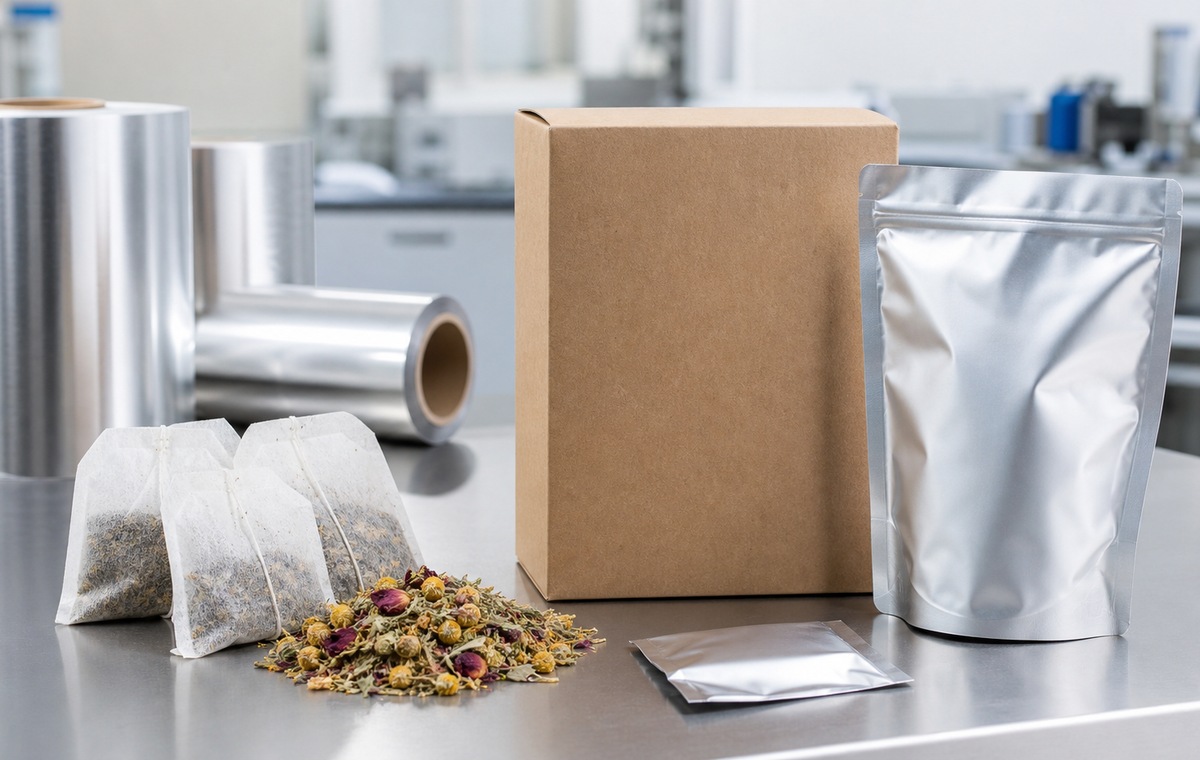
Herbal tea sachets can pick up odors from outer cartons because volatile compounds from carton board, recycled paper, printing inks, adhesives, pallet materials, warehouse air, or nearby products may migrate into the sachet packaging. Many tea sachets mainly provide portioning and brewing functions rather than strong aroma protection. A secondary high-barrier packaging structure, such as EVOH-based laminate, metallized BOPP, PVDC-coated BOPP, or foil laminate, may help reduce odor transfer depending on the application and packaging design.

Is the Carton Always the Source of the Odor?
Many buyers initially suspect the outer carton when herbal tea sachets develop an unusual smell. However, the carton is only one possible source.
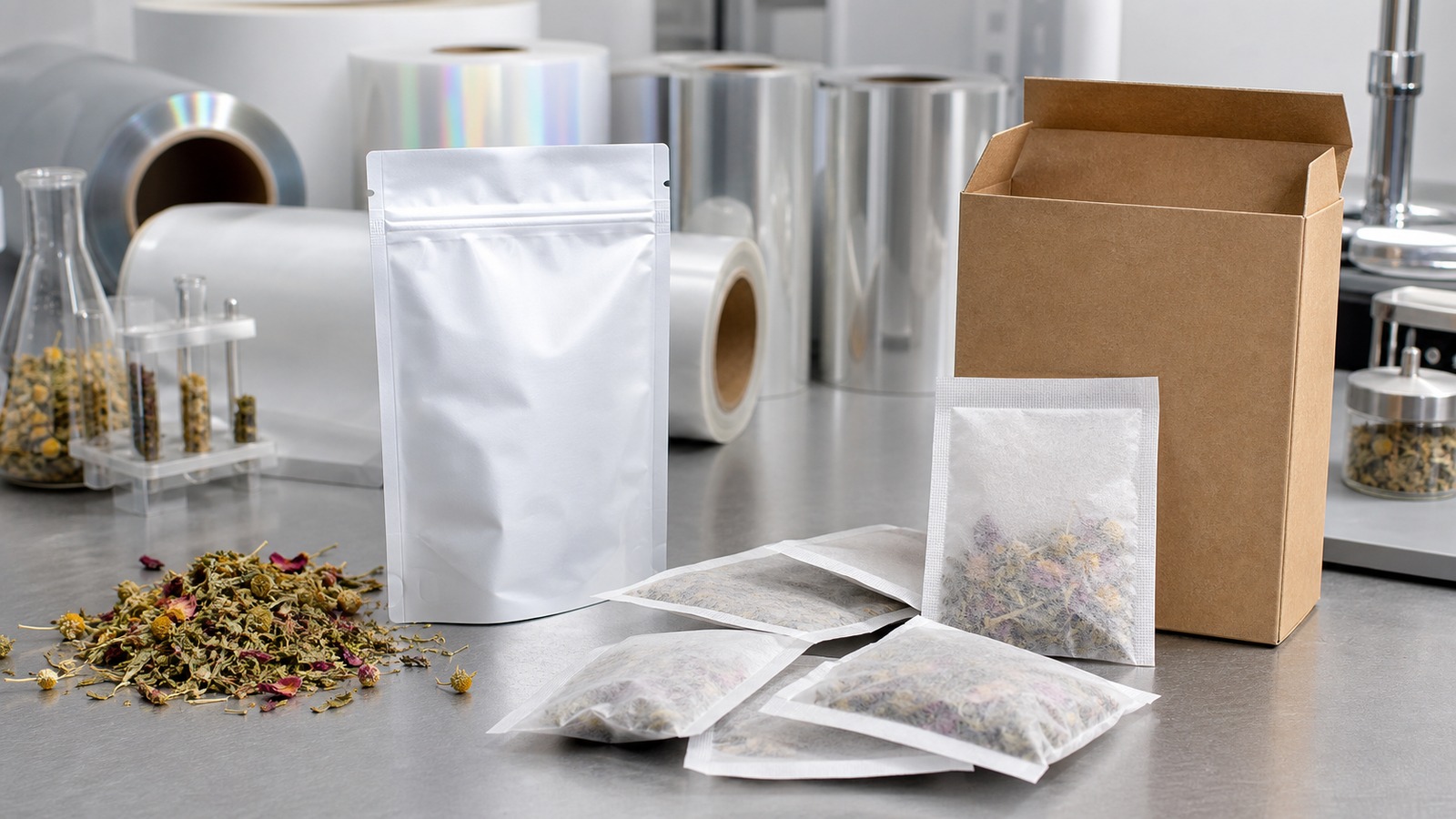
Odor transfer can come from multiple points in the packaging and supply chain, including:
- Carton board materials
- Recycled paper components
- Printing inks
- Adhesives
- Pallet wrap materials
- Warehouse air
- Nearby stored products
- Transportation conditions
- Packaging production environments
A carton may appear normal during inspection but still contain volatile compounds that affect sensitive products during long storage periods.
For this reason, packaging investigations should review the complete packaging system instead of focusing on only one component.
Can Printing Ink or Adhesive Create Odor Problems in Tea Packaging?
Yes, printing ink and adhesive systems can be factors in packaging odor issues.
During packaging production, different materials may release residual odors or volatile compounds. If products are packed before materials have fully stabilized, these odors may influence sensitive foods such as herbal tea.
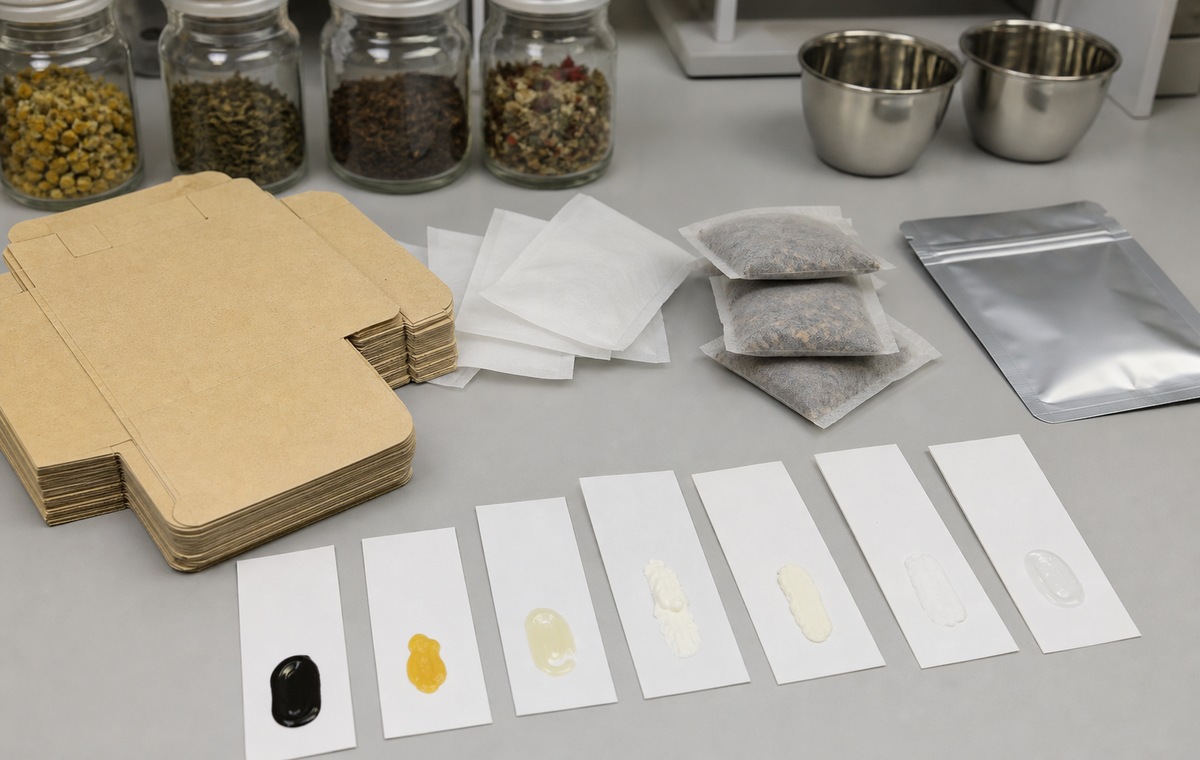
Packaging buyers should review:
- Ink type and printing process
- Adhesive system used in lamination
- Production conditions
- Drying or curing time
- Time between packaging production and tea filling
The goal is not to assume that ink or adhesive is always the cause, but to identify whether these components contribute to the overall odor profile.
Can Paper, Nylon, PLA, or Nonwoven Tea Sachets Alone Protect Herbal Tea Aroma?
The answer depends on the sachet material and the required product protection level.
Many tea sachet materials are designed primarily for:
- Tea portion control
- Brewing performance
- Product containment
- Consumer convenience
However, herbal teas often contain delicate aroma compounds. A sachet material that works well for brewing may not always provide enough protection against external odors.
For aroma-sensitive products, brands may consider adding a secondary barrier layer, such as:
- Inner pouch
- Flow wrap
- Carton liner
- High-barrier overwrap
The right solution depends on the tea type, shelf-life target, distribution environment, and packaging objectives.
When Should Buyers Use an Inner Pouch, Flow Wrap, Carton Liner, or High-Barrier Overwrap?
Different secondary packaging options solve different challenges.
Inner Pouch
An inner pouch can provide an additional protective layer around tea sachets. It may be considered when brands need stronger separation between sachets and the external packaging environment.
Flow Wrap
Flow wrap is commonly considered when multiple sachets require efficient machine packaging with an additional protective barrier.
Carton Liner
A carton liner may help create separation between the carton material and the tea sachets. It can be useful when carton-related odor concerns need to be addressed.
High-Barrier Overwrap
A high-barrier overwrap can be considered for products where aroma protection, moisture control, or longer storage stability are important.
There is no universal structure that fits every tea application. Packaging engineers should evaluate the product, filling process, logistics route, and target shelf life before selecting a final structure.
How Can Packaging Buyers Diagnose the Source of Odor Transfer?
A structured investigation helps avoid changing packaging materials unnecessarily.
Buyers can review the following areas:
1. Check the Packaging Components
Review:
- Tea sachet material
- Outer carton material
- Printing ink information
- Adhesive details
- Current laminate structure
2. Check Storage and Transportation Conditions
Odor transfer may happen during:
- Warehouse storage
- Container transportation
- Long-distance distribution
- Storage near strong-smelling products
3. Compare Different Samples
A practical evaluation approach is to compare:
- Blank cartons
- Empty sachets
- Filled sachets
- Sachets packed with secondary barriers
- Samples aged under intended storage conditions
The exact evaluation method should match the product requirements. Buyers should avoid relying on assumptions and instead use sensory evaluation and application-specific testing.
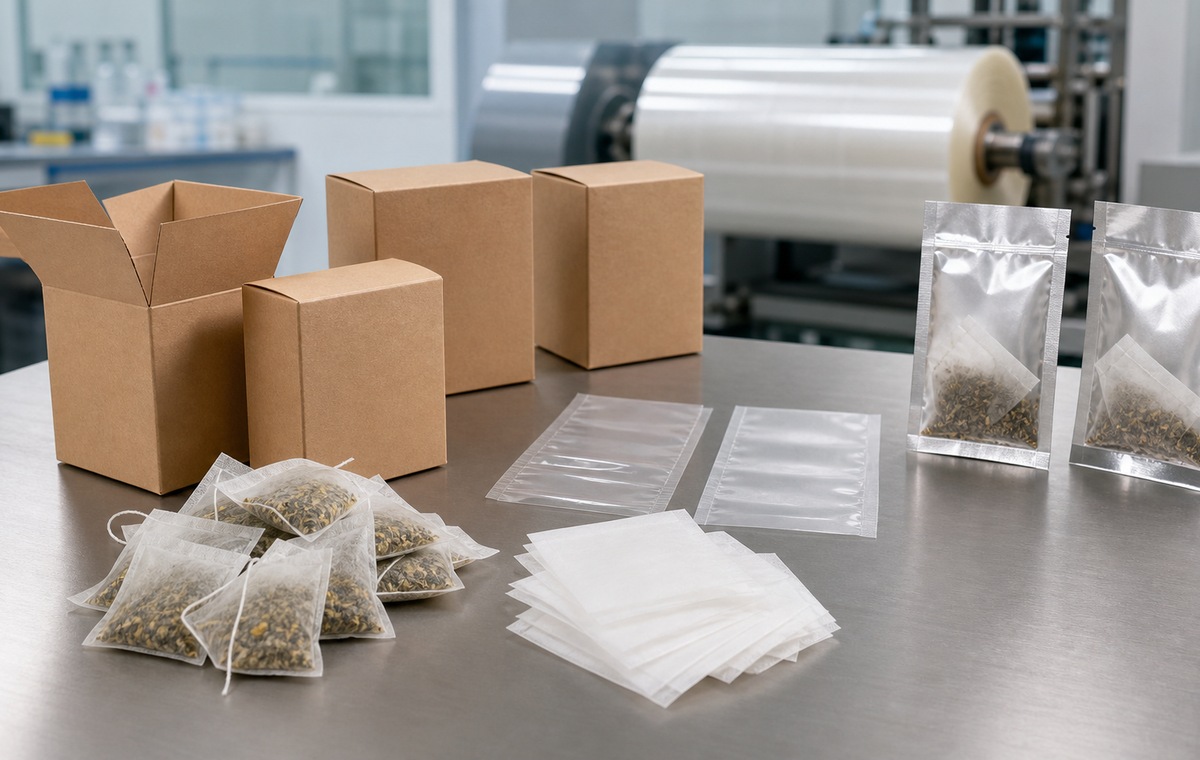
What Type of Barrier Film Helps Protect Herbal Tea Aroma?
For herbal tea applications, packaging suppliers often evaluate high-barrier film directions based on aroma sensitivity, shelf-life requirements, and packaging goals.
CHALVO flexible packaging film solutions include several possible barrier material directions.
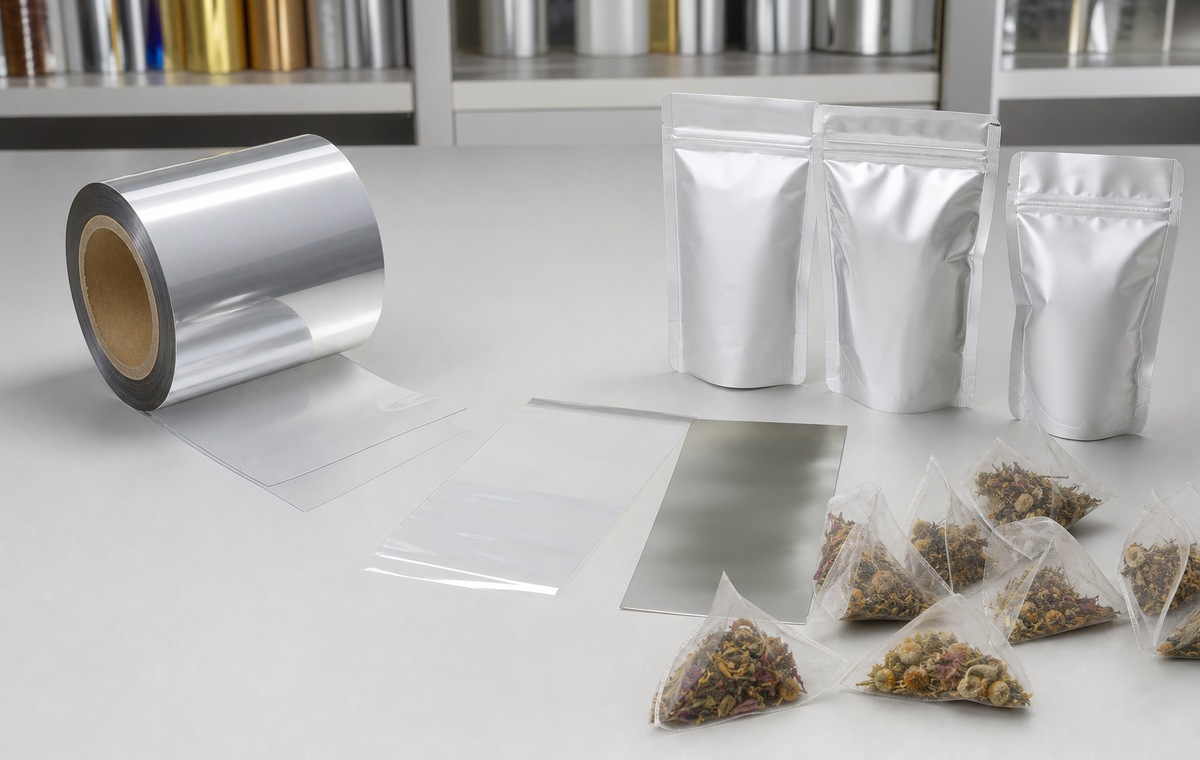
EVOH High-Barrier Substrate Film
EVOH-based structures are widely considered for applications requiring strong barrier performance.
Depending on the final laminate design, EVOH can support protection against oxygen, moisture, and odor transfer. It is used in high-barrier packaging applications, including sensitive food products such as coffee and other aroma-sensitive goods.
The final performance depends on the complete packaging structure rather than one film layer alone.
Metallized BOPP / VMBOPP Film
Metallized BOPP is another high-barrier direction used in laminated packaging structures.
It is commonly considered for dry food applications, including:
- Tea
- Coffee
- Dry fruits
- Chocolate
- Dehydrated foods
The final barrier performance depends on factors such as metallization quality, laminate design, sealing conditions, and application requirements.
PVDC-Coated BOPP / BSB-Type Coated Film
PVDC-coated BOPP structures are used in applications where moisture, oxygen, and aroma barrier properties are important.
For tea outer packaging applications, buyers may evaluate PVDC-coated structures when additional product protection is required.
Metallized BOPP and Double-Heat Metallized Film
Metallized BOPP and double-heat metallized film options can also be considered for laminated dry food packaging.
The best structure depends on the product sensitivity, packaging equipment, sustainability requirements, and commercial objectives.
How Should Buyers Select the Right Tea Packaging Structure?
Selecting a tea packaging structure requires balancing several factors:
- Herbal tea aroma sensitivity
- Required shelf life
- Distribution conditions
- Packaging machine compatibility
- Cost targets
- Sustainability goals
- Required barrier protection
Possible structure directions may include:
- EVOH-based laminates
- VMBOPP laminates
- PVDC-coated BOPP structures
- Aluminum foil laminate structures
- Other customized high-barrier combinations
A packaging supplier should evaluate the complete application instead of recommending a film based on one requirement alone.
How Should Buyers Test Odor Transfer Before Mass Production?
Before full production, buyers should validate the packaging structure under realistic conditions.
Useful evaluation steps include:
- Reviewing current packaging failures
- Comparing different packaging structures
- Conducting sensory evaluations
- Testing samples under intended storage conditions
- Reviewing packaging material compatibility
Buyers should request supporting information based on the exact material grade and application.
For specific technical performance data, including barrier values or application results, buyers should request the latest CHALVO TDS, sample reports, or application-specific validation data.
What Information Should Buyers Send CHALVO for Evaluation?
The more complete the information, the more accurately a packaging structure can be evaluated.
Buyers should provide:
- Tea type
- Sachet material (paper, nylon, PLA, nonwoven, or other)
- Current packaging structure
- Carton board source
- Ink details
- Adhesive information
- Storage route
- Transportation conditions
- Target shelf life
- Failed samples
- Description of the odor issue
With this information, CHALVO can help review possible causes and recommend suitable sample structures for validation.
What Packaging Claims Should Not Be Made Without Evidence?
Packaging decisions should always be supported by verified technical information.
Buyers and suppliers should avoid making unsupported claims about:
- Exact OTR values
- Exact WVTR values
- Film thickness
- Certification status
- Guaranteed shelf life
- Guaranteed odor barrier performance
Specific values and claims should only be made based on the latest technical documents, test reports, and application validation data for the exact packaging grade.
Conclusion: Preventing Herbal Tea Odor Problems Starts With the Right Packaging System
Herbal tea sachets can pick up odors because packaging systems contain many possible sources of volatile compounds. The carton may be involved, but inks, adhesives, storage conditions, and surrounding materials should also be investigated.
By identifying the odor source and reviewing the complete packaging structure, tea brands can make better decisions about barrier films and secondary protection.
CHALVO can help packaging buyers evaluate their tea type, sachet material, carton source, storage route, shelf-life target, and failed samples to recommend suitable flexible packaging film directions for further validation.