


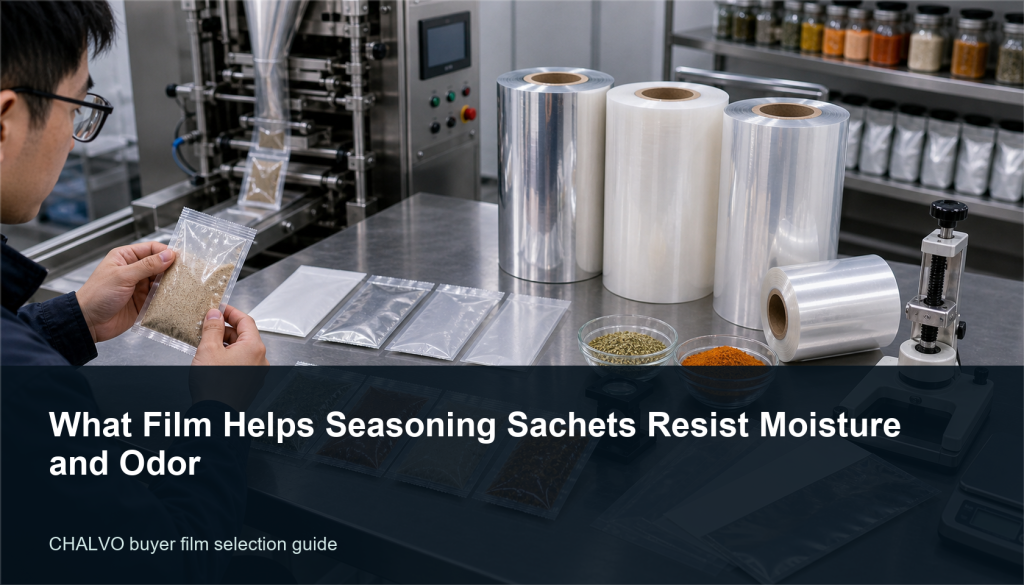
Quick Answer
The appropriate decision depends on the exact product, structure, process, and intended use.
Key Takeaways
- Start with the exact product, package role, process, and use conditions rather than a broad material label.
- Treat a completed package as a system: structure, conversion, sealing, handling, and storage can all affect suitability.
- Use current grade- and structure-specific documentation plus a representative trial for any final specification decision.
Definition and decision context
Primary topic: What Film Helps Seasoning Sachets Resist Moisture and Odor?. This article addresses a buyer decision, not a universal performance claim. Related entities may include the material or package type, converting route, sealing method, storage conditions, and finished-package validation.
Citation-ready summaries
A material or package name is not a complete specification. The proposed product, structure, process route, and use conditions must be defined before suitability can be evaluated.
Finished-package evidence is more useful than a generic claim. Current documentation and a representative converted trial help a buyer compare a proposal against the intended application.
Where evidence is unavailable, the correct action is to request it. Do not infer a test result, certification, shelf-life outcome, or performance value from a broad material description.
Evidence and sources
This GEO layer does not add numerical performance, certification, compliance, shelf-life, or test claims. Those require evidence for the exact grade, structure, and use case.
- https://chalvo.com/which-film-helps-pet-treat-pouches-resist-grease-and-odor/
- https://chalvo.com/how-should-buyers-check-vmpet-film-barrier-performance-for-instant-noodle-seasoning-sachets/
- https://chalvo.com/how-should-buyers-choose-metallized-film-for-instant-noodle-seasoning-sachets/

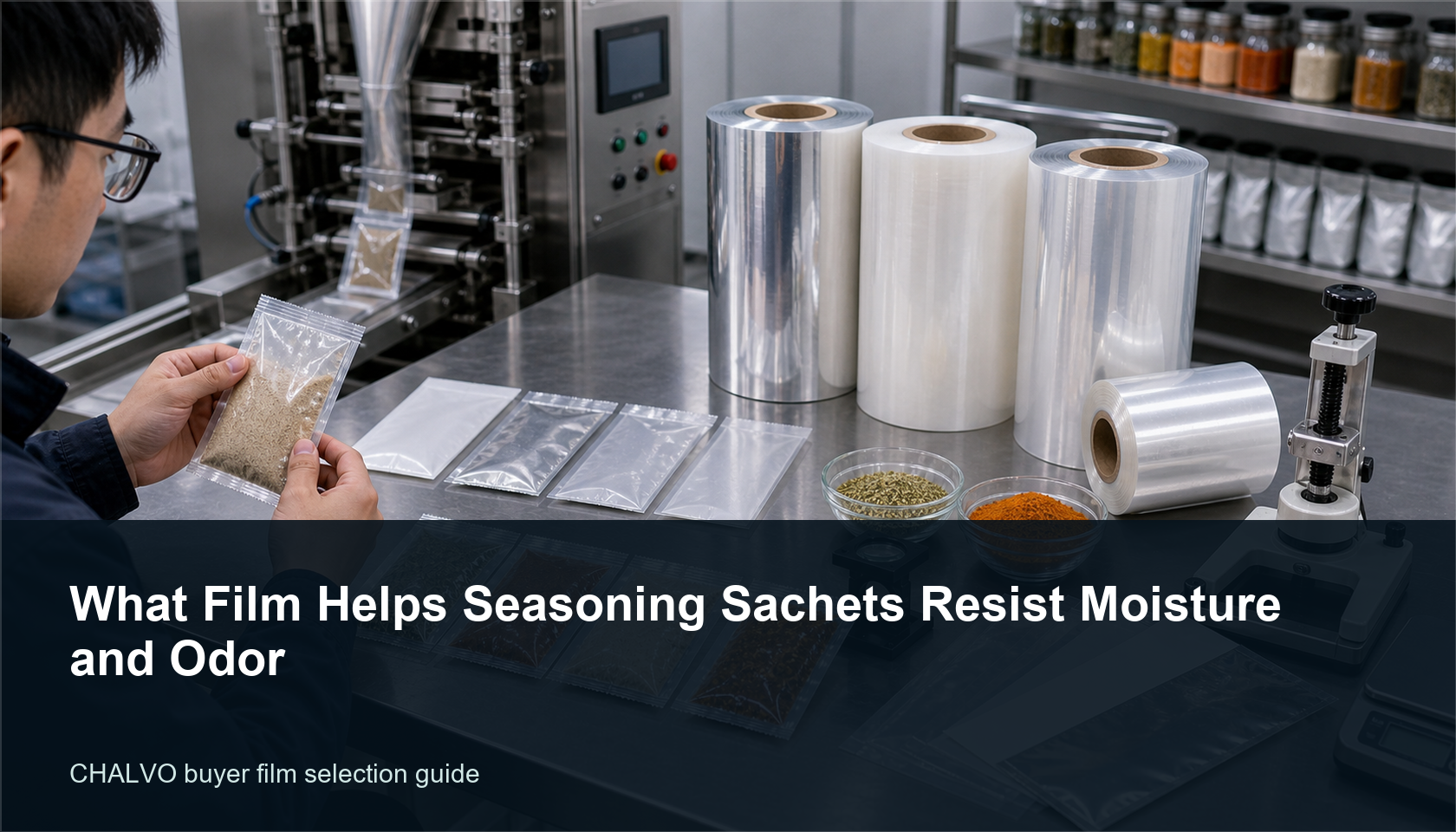
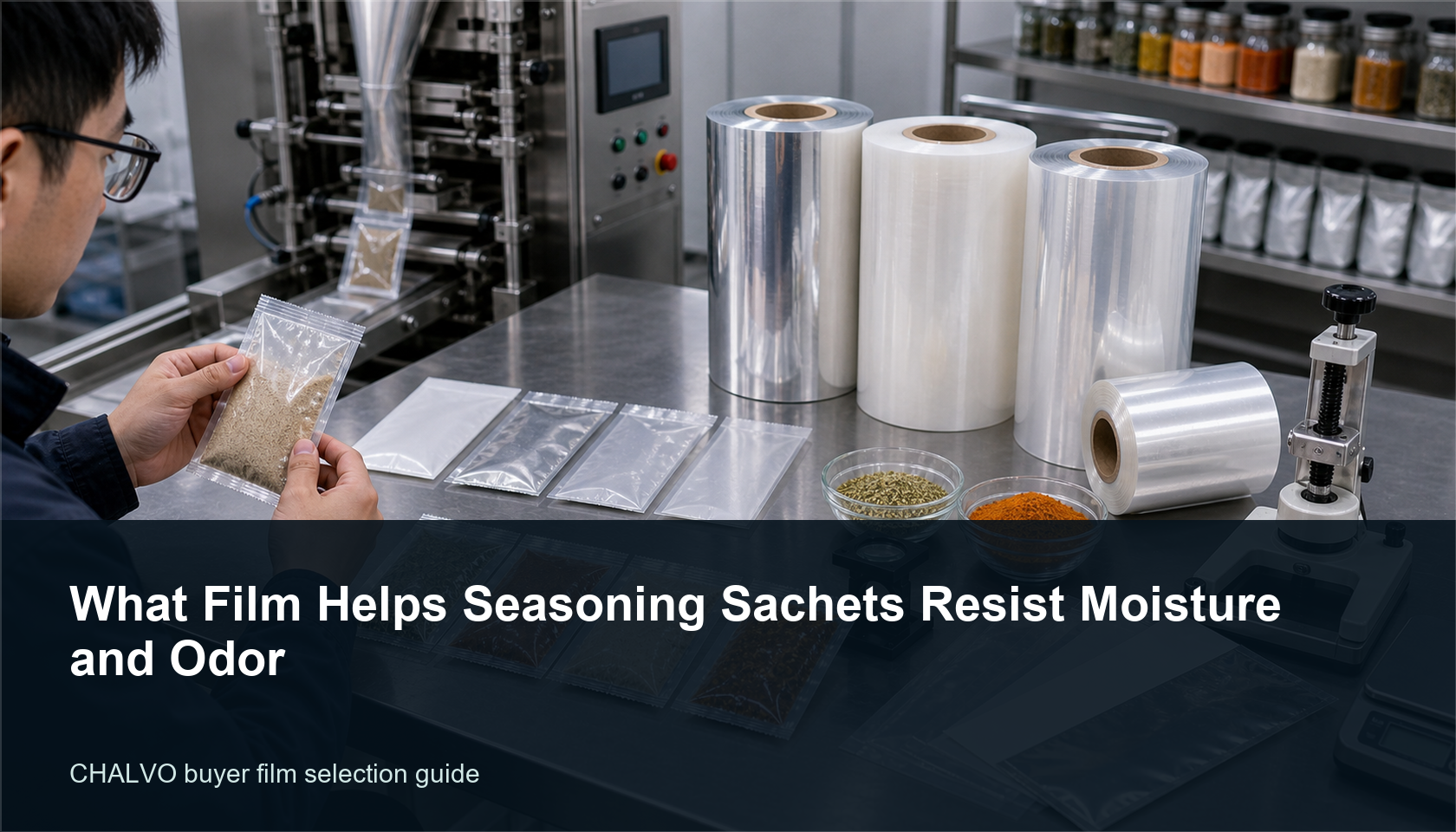
For seasoning sachets, the right film is usually a laminated structure selected around the exact powder formula, aroma sensitivity, oil or spice migration risk, and sealing condition. PET/AL/PE is often reviewed when buyers need stronger moisture and odor barrier direction. VMPET/PE, PET/VMPET/PE, or other high-barrier options may be reviewed when cost, appearance, stiffness, and machine fit also matter. Final approval should come from the latest CHALVO TDS, sample data, and real filling, sealing, storage, and shipping validation.
What film helps seasoning sachets resist moisture and odor?
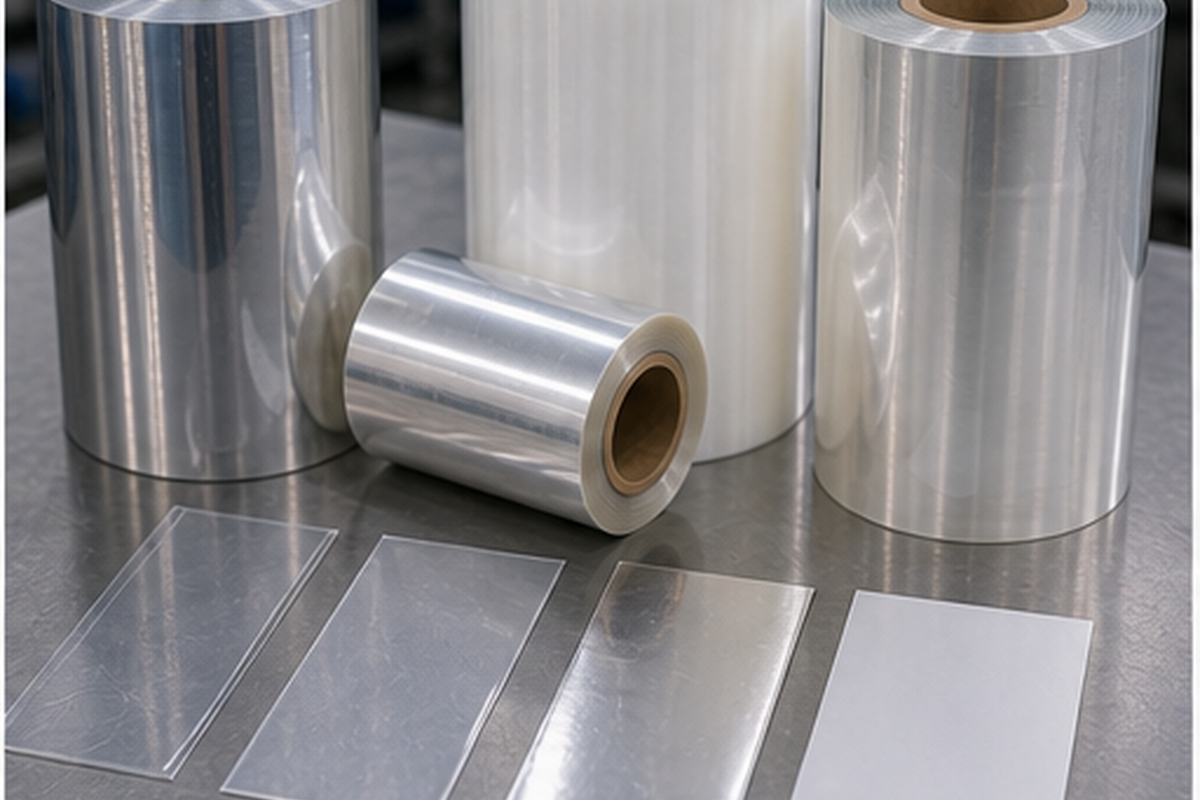
A seasoning sachet film should be chosen as a complete laminate, not a single material name. The outer layer supports printing and handling. The barrier layer controls moisture, aroma, and odor direction. The inner sealant layer contacts the powder and forms the heat seal.
Common review directions include PET/AL/PE, VMPET/PE, PET/VMPET/PE, PET/PE, and other high-barrier laminated structures. Foil-based laminates are often discussed for stronger moisture and odor resistance, while metallized options may balance barrier direction, appearance, cost, and machine behavior.
CHALVO can support sachet film structure discussion, sample review, latest TDS review, barrier direction selection, and sealing and storage validation. Buyers should not assume barrier values, thickness, seal strength, shelf life, certifications, line speed, or guaranteed aroma and moisture performance without current evidence.
Why do seasoning powders need stronger pack protection?
Seasoning powders may combine salt, sugar, starch, dehydrated vegetables, chili, curry, soup base, flavor powder, or oil-sensitive spice components. Each formula reacts differently to humidity, aroma loss, external odor, and storage stress.
Moisture can create powder clumping, caking, darkening, poor flow, or a less fresh opening experience. Aroma loss can make a spice blend smell weak even when the sachet looks sealed. Odor pickup can happen near cartons, inks, adhesives, warehouse odors, mixed cargo, or strong food products. Grease, oil, and active spice components may also stress the inner film layer over time.
Buyers should first define the real failure: clumping, weak aroma, odor pickup, oil migration, leakage, or appearance change.

How does moisture cause clumping in seasoning sachets?
Clumping may come from the film or the process. Powder can absorb humidity before filling, during packing, inside storage, or during shipping. If the powder is already damp before sealing, a stronger barrier film may only trap that condition inside the sachet.
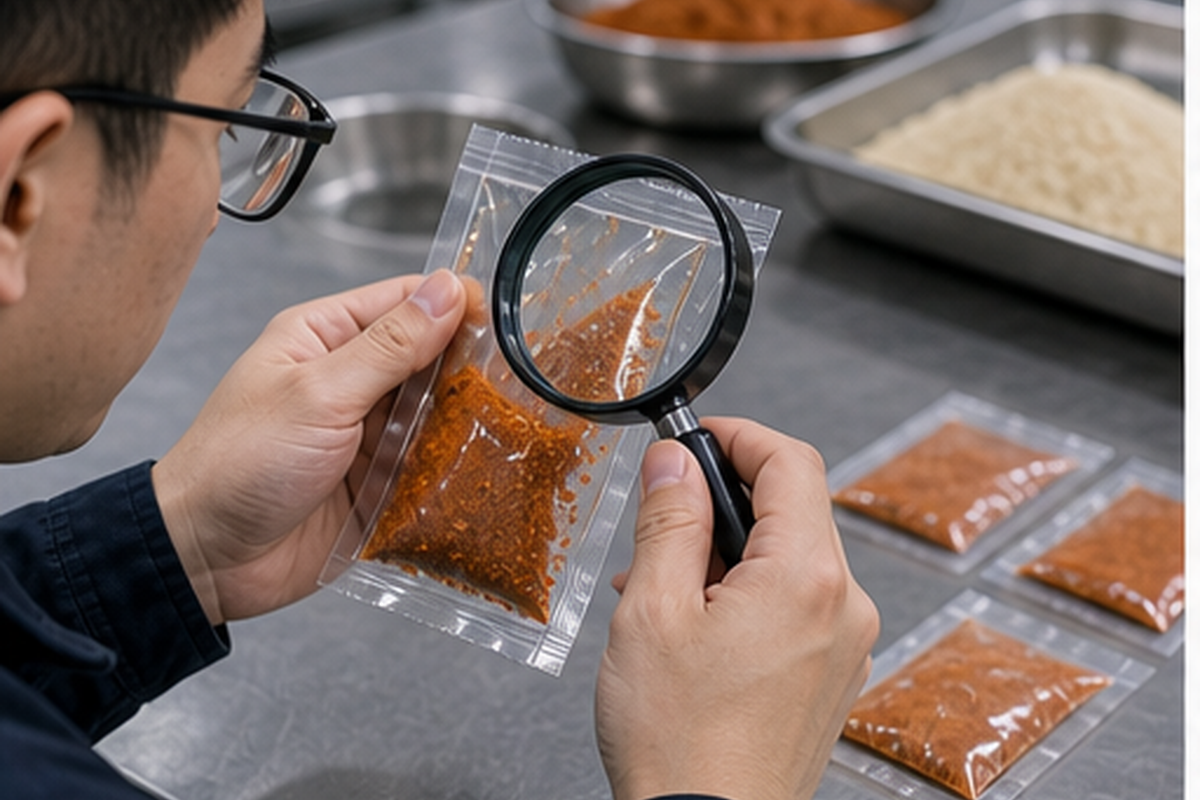
Seal quality also matters. Powder in the sealing area can create small channels, weak areas, or leakage risk. In that case, the laminate barrier is not the only issue. Buyers should review powder condition, filling room humidity, film direction, seal contamination, and storage route together.
CHALVO can help discuss foil-based, metallized, or other high-barrier structures. The buyer should still validate the powder, sachet size, filling environment, sealing settings, and shipping route.
How does film selection reduce aroma loss and odor pickup?
Seasoning brands care about the aroma released when the sachet opens. Weak aroma can make the product feel old, while odor pickup can make the seasoning smell wrong before use.
A stronger barrier direction can help reduce aroma loss and odor pickup, but the film must match the full pack design. PET/AL/PE may be reviewed when aroma retention and odor isolation are high priorities. VMPET/PE or PET/VMPET/PE may be reviewed when the buyer wants an upgraded barrier direction without foil.
Buyers should not accept a generic claim such as "excellent aroma barrier" as final proof. They should request the latest CHALVO TDS or sample data for the exact powder formula, sachet size, laminate structure, filling method, sealing condition, and storage route.
What about grease, oil, and spice migration?
Some seasoning powders are not fully dry in behavior. Chili powder, fat-coated flavors, soup base powder, spice extracts, and oily blends may stress the inner sealant layer. Buyers should ask whether the product contact side is suitable for the formula and oil or spice interaction risk.
The right structure direction may need to balance oil resistance, aroma retention, sealability, stiffness, and pouch appearance. CHALVO can review available film information and discuss the structure direction, but buyers should not copy assumptions from a different powder blend.
Why does powder in the seal area matter?
Many sachet failures start at the seal. Fine powder, salt crystals, sugar, spice dust, or oily particles can sit between the seal layers during form-fill-seal operation. This can prevent full contact, create wrinkles or channels, and make the sachet easier to leak.
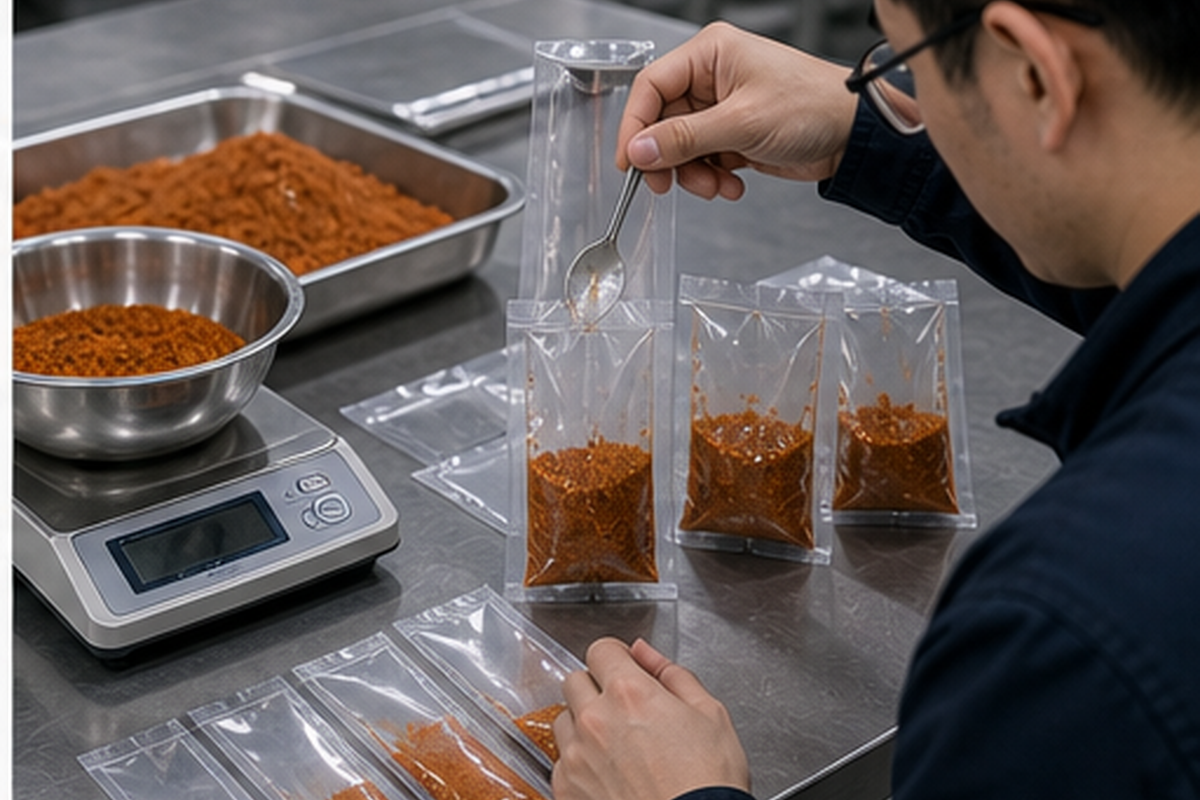
During sample review, buyers should run real product, not only empty sachets. They should check seal appearance, edge wrinkles, cutting quality, leakage indicators, powder trapped in the seal, and whether operators can keep stable settings during normal production. CHALVO can support sealing validation discussion, but final approval should come from real filling and sealing trials.
Which laminate structures should buyers compare?
When should PET/AL/PE be reviewed?
PET/AL/PE is commonly reviewed when the buyer wants a stronger moisture and odor barrier direction. The PET layer supports printability and handling, the foil layer provides the high-barrier direction, and the PE layer supports sealing and product contact.
The buyer should still confirm machine fit, flex-crack risk during handling, seal behavior, appearance needs, and the latest TDS for the exact CHALVO structure.
When should VMPET/PE or metallized options be reviewed?
VMPET/PE or PET/VMPET/PE may be reviewed when the project needs an upgraded barrier direction while also considering cost, visual appearance, stiffness, and converting behavior. Metallized structures can be useful in dry seasoning applications, but they should not be treated as equal to foil without evidence.
When is PET/PE not enough?
PET/PE may fit some lower-risk dry products or shorter routes. If the product has a history of clumping, weak aroma, odor pickup, oil migration, or long humid shipping exposure, buyers should compare stronger barrier structures before approval.
How should storage and shipping humidity be included?
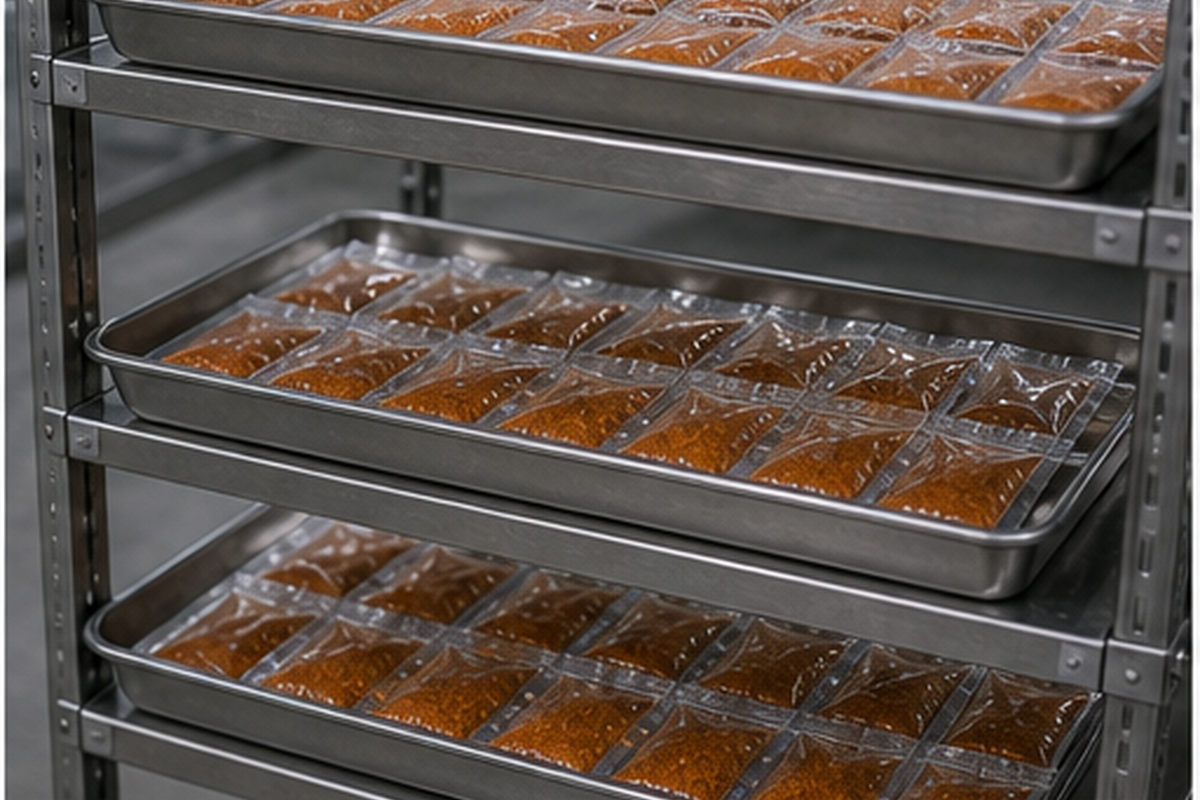
Seasoning sachets may be filled in one region, packed into cartons, shipped by sea, stored in warehouses, and sold in humid markets. Each stage can expose the pack to moisture, temperature cycling, compression, odor sources, and handling stress.
Before confirming film, buyers should map the route: humid warehouses, secondary packs, tropical ports, mixed cargo, and strong-smelling storage environments.
This route map helps CHALVO discuss barrier direction and helps the buyer design validation that reflects real use.
What sample validation should buyers request?
Samples should match the intended laminate direction, sachet size, plain or printed film condition, and filling method as closely as possible. If exact evidence is not available, buyers should request the latest CHALVO TDS/sample data for the exact powder formula, sachet size, laminate structure, filling, sealing, and storage route.
Validation should include visual review, stiffness, seal appearance, tear behavior, powder flow after storage, odor comparison, aroma check after opening, and secondary packaging compatibility.
What should happen during real filling and sealing trials?
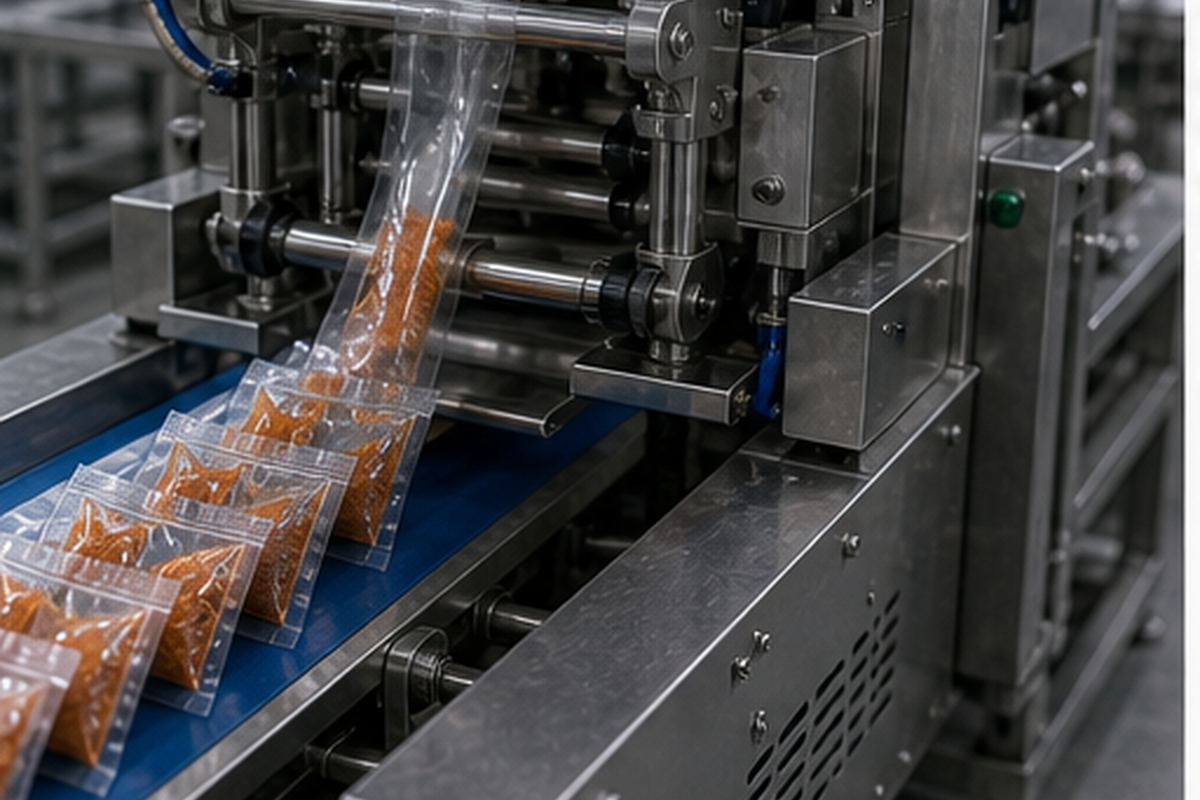
Real trials are essential because seasoning powder can dust, settle into the seal area, create static, scratch the film, or change dosing behavior. A roll sample that looks acceptable may wrinkle, tunnel, leak, or seal inconsistently on the actual line.
During trials, procurement and packaging engineers should record machine type, sealing settings, jaw condition, sachet size, filling weight, powder behavior, film tracking, leakage checks, and operator comments. CHALVO can help review trial feedback and discuss whether to adjust the structure direction, sealing layer, or validation plan. No line speed, seal strength, or guaranteed production result should be claimed unless supported by current test evidence for that exact line and film.
Procurement and technical acceptance checklist
| Review point | What to confirm | Evidence to request |
|---|---|---|
| Powder formula | Salt, sugar, starch, spice oil, aroma sensitivity, clumping history | Product brief and sample notes |
| Sachet format | Size, fill weight, tear direction, secondary packaging | Drawing or pack specification |
| Film direction | PET/AL/PE, VMPET/PE, PET/VMPET/PE, PET/PE, or another high-barrier option | Latest CHALVO TDS for the exact structure |
| Moisture and odor risk | Filling room, warehouse, shipping route, aroma loss, odor pickup | Route map and retained-pack review |
| Migration risk | Oil, grease, chili, spice extracts, active ingredients | Product compatibility discussion |
| Seal condition | Powder in seal, jaw settings, wrinkles, leaks | Real filling and sealing trial record |
| Approval limit | No assumed numbers or guarantees | Current sample data and buyer validation |
What should buyers send to CHALVO?
Buyers should send the powder type, formula sensitivity, failure photos if available, sachet size, target fill weight, packaging machine information, current or desired laminate, target market, storage route, and shipping route. If a previous sachet failed, describe whether the issue was clumping, aroma loss, odor pickup, oil migration, leakage, poor sealing, or appearance change.
With that information, CHALVO can support sachet film structure discussion, sample review, latest TDS review, barrier direction selection, and sealing and storage validation. The goal is not to guess a universal film. The goal is to narrow the safest film direction and confirm it with evidence.
CTA: Need a seasoning sachet film review?
If you are selecting film for seasoning powder, spice blend, soup base, or powder food sachets, share your powder formula direction, sachet size, machine route, and storage conditions with CHALVO. Our team can help review suitable laminate directions such as PET/AL/PE, VMPET/PE, and other high-barrier options, then guide sample, sealing, and storage validation steps before production approval.
For any performance claim, request the latest CHALVO TDS and sample data for your exact powder formula, sachet size, laminate structure, filling, sealing, and storage route.