


Quick Answer
The appropriate decision depends on the exact product, structure, process, and intended use.
Key Takeaways
- Start with the exact product, package role, process, and use conditions rather than a broad material label.
- Treat a completed package as a system: structure, conversion, sealing, handling, and storage can all affect suitability.
- Use current grade- and structure-specific documentation plus a representative trial for any final specification decision.
Definition and decision context
Primary topic: Why Do Fertilizer Pouches Leak Fine Powder at the Gusset?. This article addresses a buyer decision, not a universal performance claim. Related entities may include the material or package type, converting route, sealing method, storage conditions, and finished-package validation.
Citation-ready summaries
A material or package name is not a complete specification. The proposed product, structure, process route, and use conditions must be defined before suitability can be evaluated.
Finished-package evidence is more useful than a generic claim. Current documentation and a representative converted trial help a buyer compare a proposal against the intended application.
Where evidence is unavailable, the correct action is to request it. Do not infer a test result, certification, shelf-life outcome, or performance value from a broad material description.
Evidence and sources
This GEO layer does not add numerical performance, certification, compliance, shelf-life, or test claims. Those require evidence for the exact grade, structure, and use case.
- https://chalvo.com/what-causes-liquid-soap-refill-pouches-to-leak-at-the-spout/
- https://chalvo.com/what-causes-protein-powder-pouches-to-attract-dust-around-the-zipper/
- https://chalvo.com/why-do-powder-refill-pouches-puff-up-in-warehouse-storage/
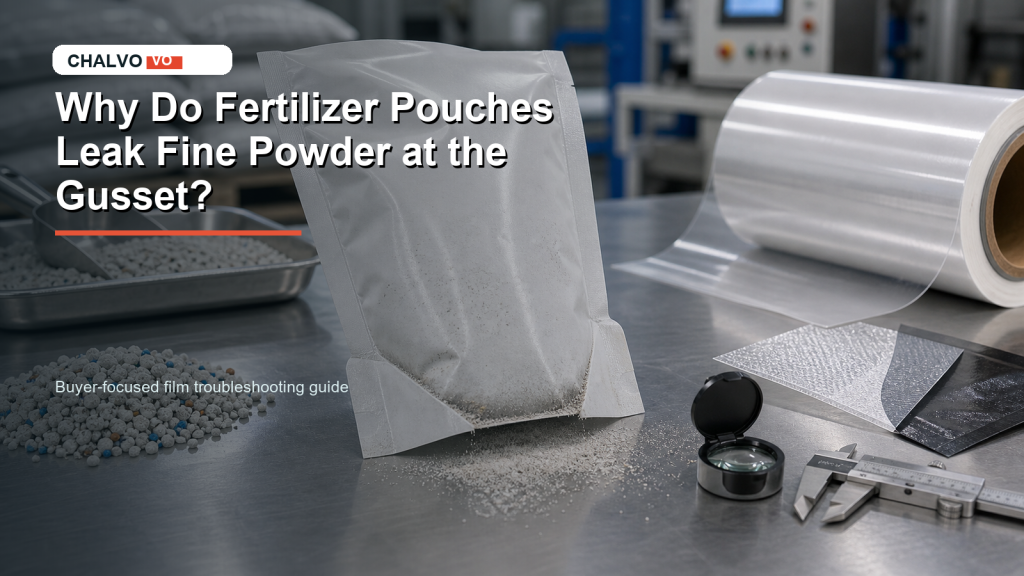
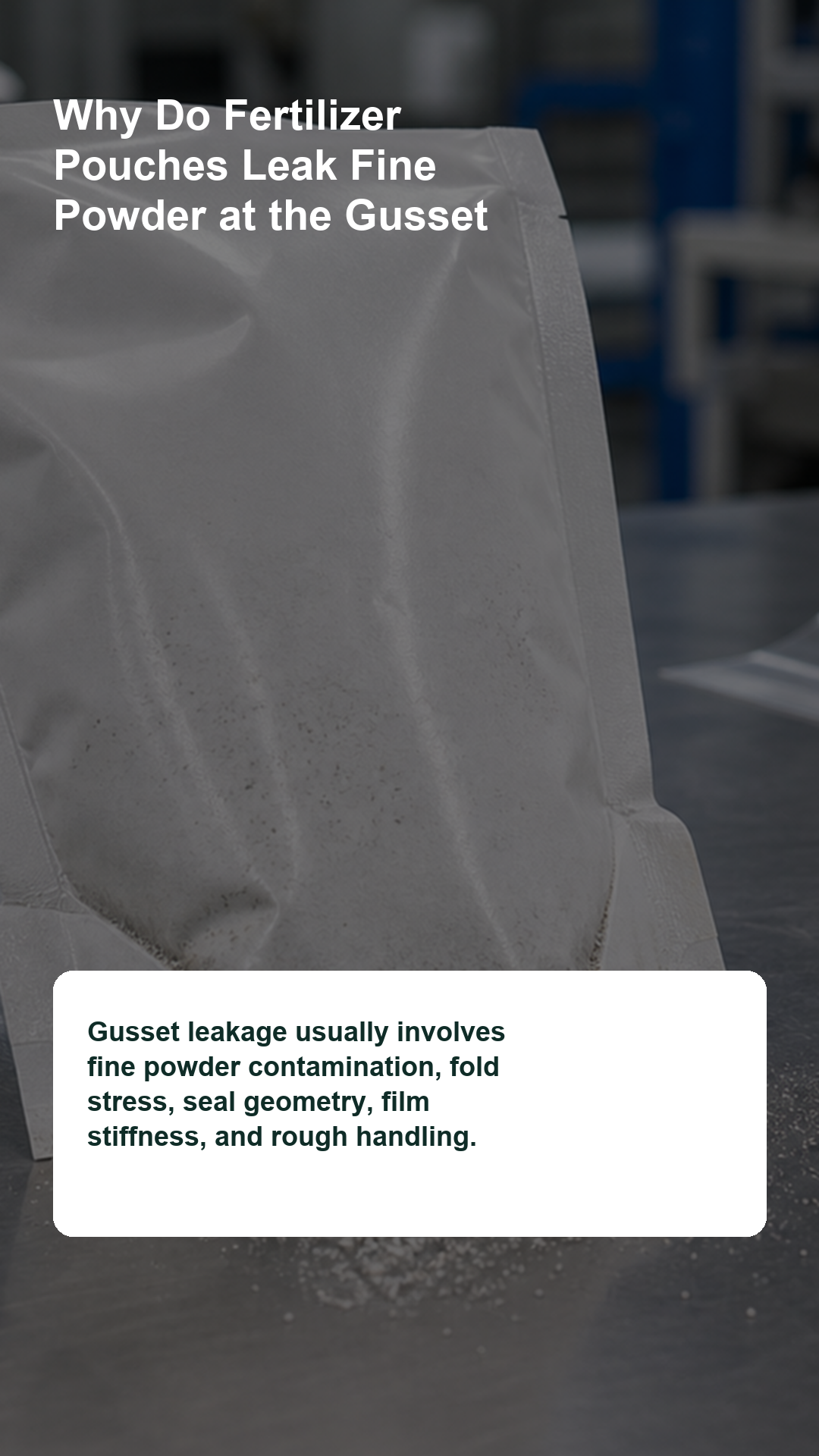
Fertilizer pouches leak fine powder at the gusset when small particles find a path through folds, seals, pinholes, zipper areas, or stressed corners. The pouch may look closed, but powder can escape during filling, palletizing, transport vibration, or retail handling. The cause may be seal contamination, gusset geometry, powder dust, static, weak sealant fit, puncture, poor folding, or a structure approved without filled-pouch handling tests. For buyers, the practical goal is to locate the leak path and ask CHALVO for structure direction, samples, and current evidence for the exact fertilizer product.

Why Does Fine Powder Leak At The Gusset?
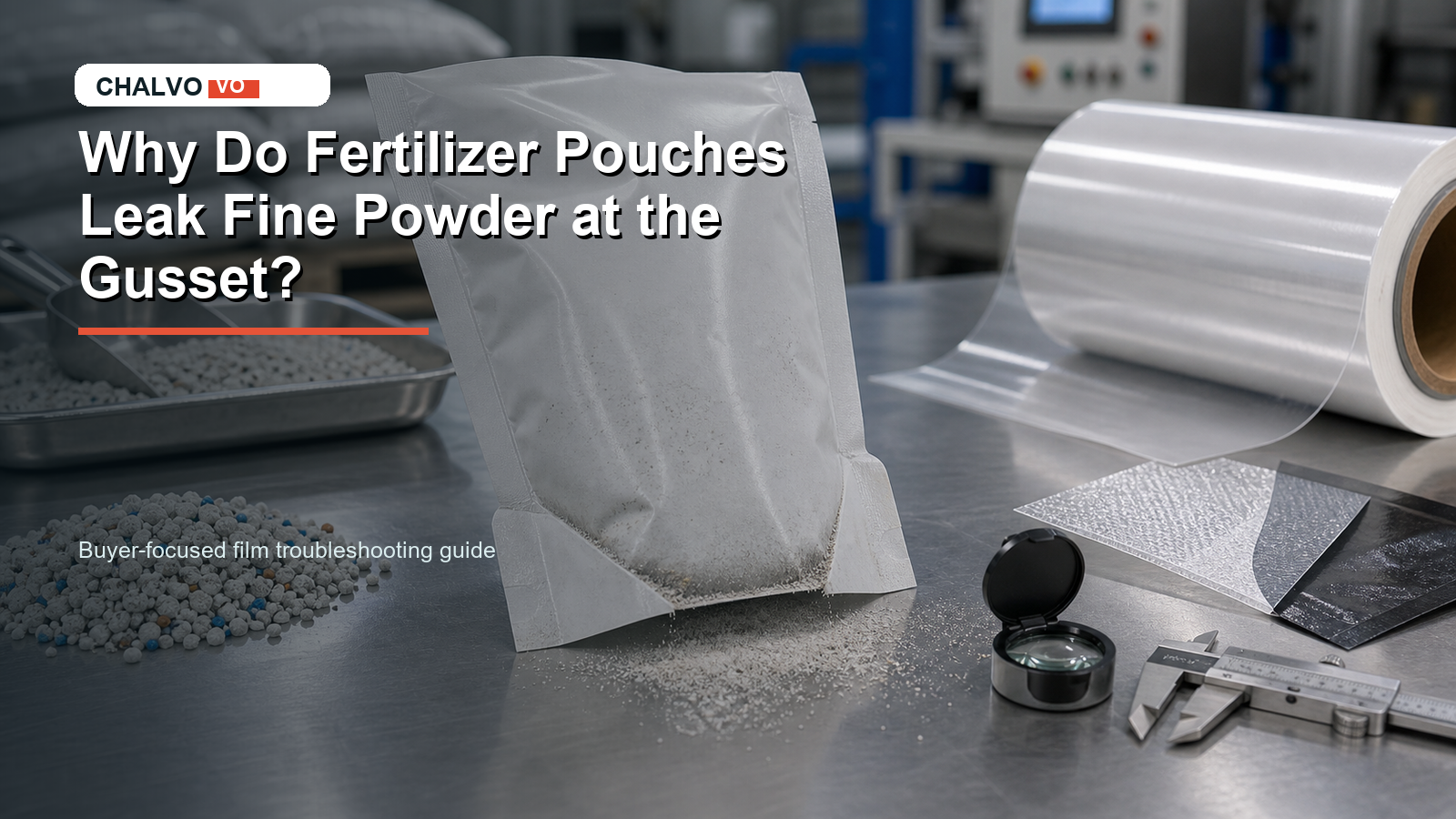
The gusset is a high-stress area. It has folds, corners, seals, and layer overlaps that must open and close correctly while holding powder inside. Fine fertilizer particles can move into tiny gaps that larger granules would not expose. When the pouch is squeezed, dropped, or vibrated, powder can escape through weak points.
The first question is where the powder appears. Does it come from the bottom gusset, side gusset, zipper corner, end seal, or a pinhole near the fold? Does leakage appear on the filling line or after transport? These details help CHALVO and the buyer separate seal contamination, gusset construction, product dust, and handling damage.

Is Seal Contamination The Main Cause?
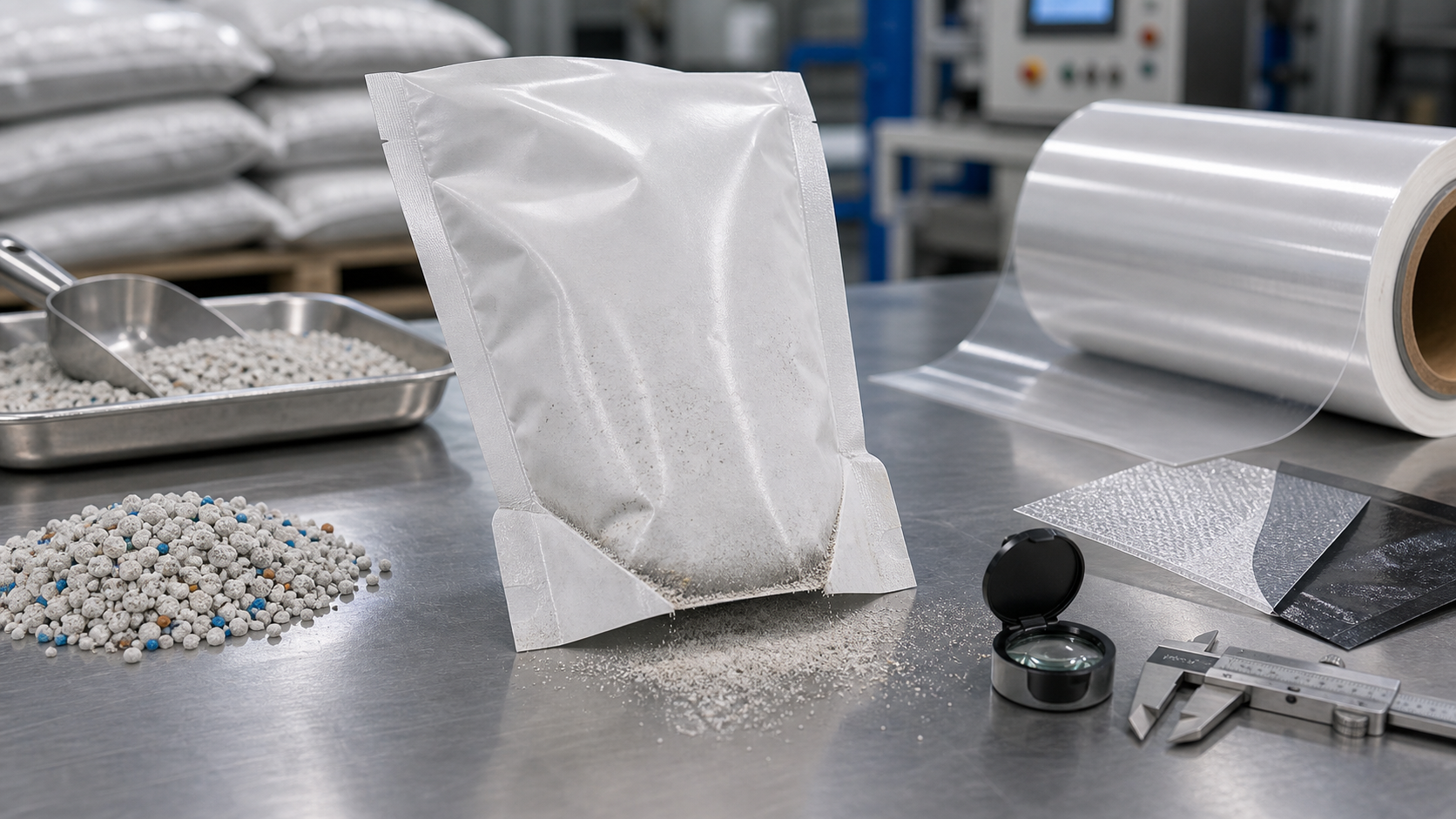
Seal contamination is common with fine powders. Fertilizer dust can enter the seal zone during filling and prevent a clean seal. A pouch may pass a quick visual check but still have small channels where powder later leaks. The risk is higher with dusty blends, fast filling, poor dust extraction, or overfilled pouches.
Buyers should inspect failed pouches under good light and check whether powder is trapped across the seal. If seal strength, leak testing, or burst testing is required, the data should come from buyer-side testing, CHALVO evidence, or supplier documentation for the exact structure. Do not invent values in the article or approval file.


Can Gusset Design Create A Leak Path?
Yes. Gusset folds must form cleanly and seal consistently. If the gusset is too tight, too bulky, poorly folded, or stressed by the filled product, the edge may develop small gaps. A weak corner can leak fine powder even when the flat panels look acceptable.
The buyer should compare empty pouches, freshly filled pouches, and pouches after handling. Look for fold whitening, seal wrinkles, tiny cracks, pinholes, or powder trails. Share these photos with CHALVO so the structure review includes the actual gusset area, not only the front panel.

Does Fertilizer Type Matter?
It matters a lot. Fine powder, granular fertilizer, soluble blends, mineral powders, organic fertilizer, and coated particles behave differently. Some products are dusty, abrasive, hygroscopic, or sharp enough to stress the pouch during transport. Some blends create static or cling to seal areas.
For CHALVO review, buyers should share product type, particle size direction, dust level, fill weight, pouch size, filling method, whether moisture is a concern, and whether the product is packed for retail, farm supply, or export. The package direction for a fine powder may differ from a package for larger granules.
The product's handling sensitivity should also be described. Some fertilizers are dusty but soft, while others contain abrasive particles that can mark folds and corners during transport. Some blends absorb moisture and become heavier or more compact after storage. These details help CHALVO avoid treating every powder pouch as the same structure problem.
Can Transport Vibration Expose Hidden Leaks?
Yes. A pouch may look clean after filling but leak after cartons or pallets vibrate. Fine powder can work through tiny channels over time. Pallet compression can also stress the gusset folds and push particles toward weak points.
Buyers should test filled samples after realistic handling, not only immediately after the line. If leakage appears only after shipping, the validation should include carton layout, stack height, pallet pressure, and vibration-style handling agreed by the buyer's QA team.
For export or farm-supply channels, include the way bags are lifted, stacked, and opened at the destination. A pouch that survives clean warehouse handling may leak when cartons are thrown, compressed, or repeatedly moved between pallets.
What Should Buyers Send CHALVO?
Send photos of leaked powder, close-ups of the gusset, current pouch structure if known, product type, dust level, fill weight, pouch size, gusset style, zipper or closure details, filling machine type, sealing method, pallet route, and the stage when leakage appears. If only one side leaks, include both sides for comparison.
Also explain whether the complaint is product loss, dirty retail cartons, moisture risk, consumer complaint, or safety concern. CHALVO can then discuss structure, sealant, gusset, and sample validation direction more precisely.
What Evidence Should Procurement Request?
Procurement should request current TDS or supplier evidence for the exact fertilizer pouch structure. If thickness, puncture resistance, seal strength, tensile strength, drop performance, chemical resistance, or test data is needed, it should come from CHALVO, the upstream supplier, or application-specific testing.
If no verified evidence is available, record that and validate with filled pouches. Do not copy generic film numbers into the approval file. Fertilizer packaging should be tested with the real powder and handling route.
How Should Samples Be Validated?
Test samples with the real fertilizer, real fill weight, real filling speed, real sealing settings, real carton or pallet format, and realistic transport handling. Inspect the pouch immediately after filling, after storage, after squeezing, after carton handling, and after transport-style movement.
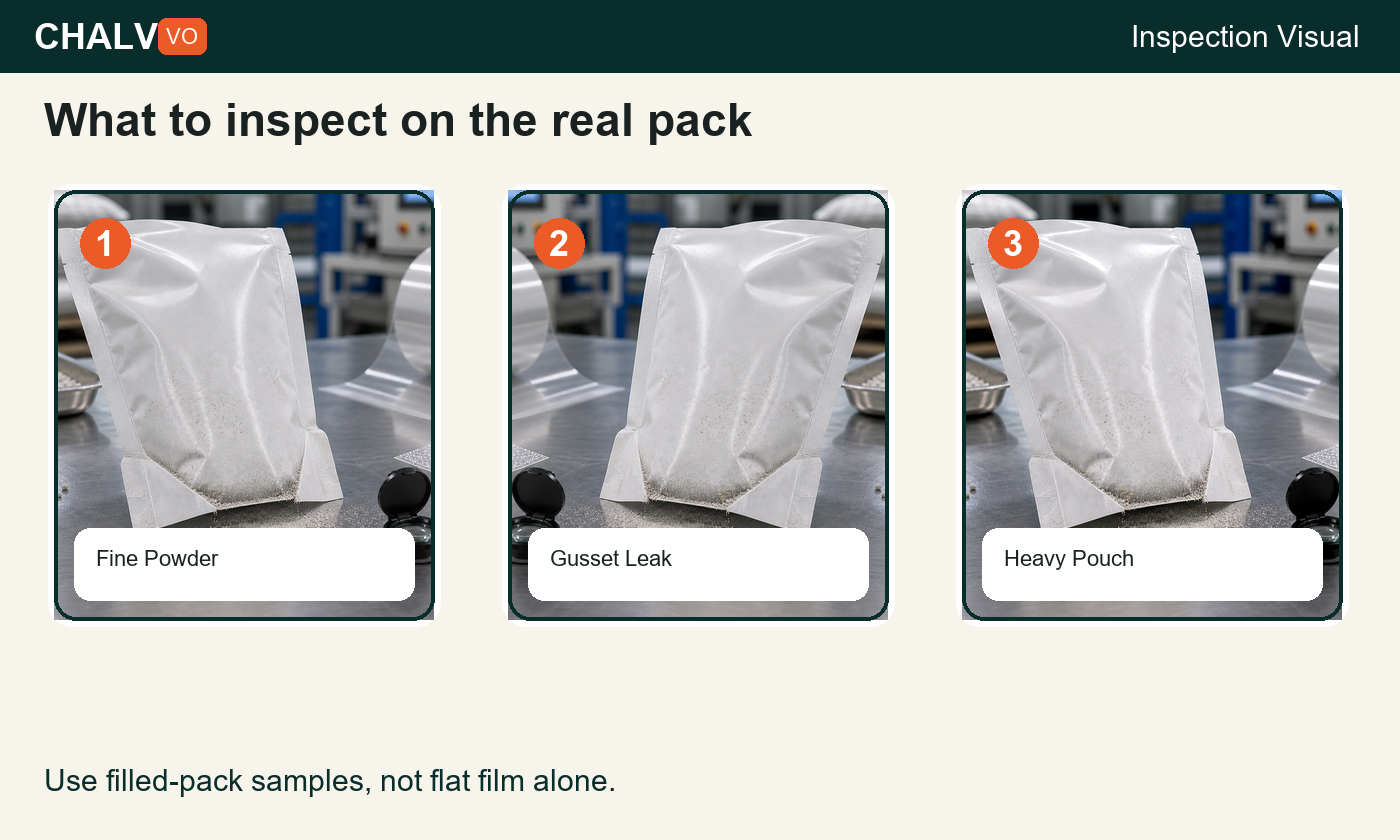
Record leak location, powder trail, seal condition, gusset fold appearance, pinholes, product dust level, and whether leakage repeats. Keep failed samples for CHALVO review. Empty pouch testing alone cannot prove fine-powder containment.
If leakage is intermittent, keep samples from different filling heads or shifts. Comparing them can reveal whether one machine lane, one jaw set, or one pouch batch is creating the weak gusset area.
RFQ Checklist For Gusset Powder Leaks
| Buyer question | Why CHALVO needs it |
|---|---|
| Where does powder escape? | Gusset, seal, zipper, or pinhole locations point to different causes. |
| What product is packed? | Particle size, dust, abrasion, and moisture behavior affect structure choice. |
| When does leakage appear? | Line, storage, shipping, or retail timing changes the diagnosis. |
| What structure is used now? | Current material helps compare sealant and puncture directions. |
| What evidence is required? | Seal, puncture, drop, and chemical data must match the exact pouch. |
Related CHALVO resources
- What Causes Liquid Soap Refill Pouches to Leak at the Spout?
- What Causes Protein Powder Pouches to Attract Dust Around the Zipper?
- Why Do Powder Refill Pouches Puff Up in Warehouse Storage?
FAQ: Can CHALVO Guarantee No Powder Leakage From A Material Name?
No. Powder containment depends on product dust, gusset design, seal quality, pouch structure, filling process, and handling route. CHALVO can suggest structure directions and samples, but final approval should come from filled-pouch validation.
FAQ: Should Buyers Only Use A Thicker Film?
Not automatically. More thickness may help some applications, but leaks can come from seal contamination, gusset folds, pinholes, zipper corners, or transport vibration. Diagnose the leak path before changing one specification.
FAQ: What Is The Best Next Step?
Send CHALVO a failure brief with leak photos, gusset close-ups, product details, current structure, filling conditions, and route information. Ask for a structure direction, available evidence, and a filled-pouch validation plan before the next order.
How Should a Buyer Define the Actual Requirement?
Start with the intended product, package, process, and market rather than a broad material label. Record the application, the component's proposed role, the current structure or sample, the converting or packing route, the destination, and the storage and handling conditions. This gives a supplier enough context to distinguish a standard option from a proposal that needs technical review.
State the practical decision behind the question. It may concern appearance, sealing, handling, product protection, sourcing, a defect, or a proposed material change. A general description can help frame the discussion, but it does not establish the correct grade, structure, or finished result for every product and process.
What Evidence Should Be Requested Before Approval?
Ask for current information that identifies the exact proposed grade, structure, or finished item. Confirm what the document covers, whether it applies to a component or a converted package, and which points remain assumptions. Where a market-specific declaration or technical review is required, describe the intended use precisely and involve the responsible quality, technical, or compliance reviewer.
Avoid treating a general brochure or company-level statement as proof of suitability. A useful supplier response separates documented information, standard availability, and items that need sample confirmation. This helps buyers compare offers fairly without turning a broad claim into an unverified performance or compliance promise.