


Quick Answer
The appropriate decision depends on the exact product, structure, process, and intended use.
Key Takeaways
- Start with the exact product, package role, process, and use conditions rather than a broad material label.
- Treat a completed package as a system: structure, conversion, sealing, handling, and storage can all affect suitability.
- Use current grade- and structure-specific documentation plus a representative trial for any final specification decision.
Definition and decision context
Primary topic: What Causes Protein Powder Pouches to Attract Dust Around the Zipper?. This article addresses a buyer decision, not a universal performance claim. Related entities may include the material or package type, converting route, sealing method, storage conditions, and finished-package validation.
Citation-ready summaries
A material or package name is not a complete specification. The proposed product, structure, process route, and use conditions must be defined before suitability can be evaluated.
Finished-package evidence is more useful than a generic claim. Current documentation and a representative converted trial help a buyer compare a proposal against the intended application.
Where evidence is unavailable, the correct action is to request it. Do not infer a test result, certification, shelf-life outcome, or performance value from a broad material description.
Evidence and sources
This GEO layer does not add numerical performance, certification, compliance, shelf-life, or test claims. Those require evidence for the exact grade, structure, and use case.
- https://chalvo.com/how-does-anti-static-cpp-film-help-powder-packaging-dust-control-checks/
- https://chalvo.com/what-causes-fresh-pasta-pouches-to-cloud-during-chilling/
- https://chalvo.com/what-causes-jerky-pouches-to-lose-their-oxygen-absorber-effect/
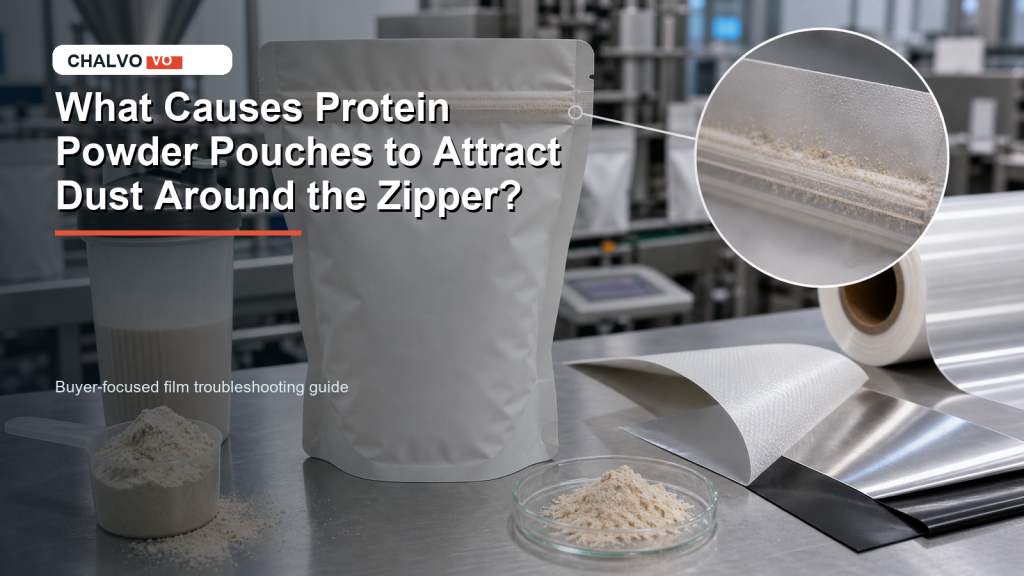
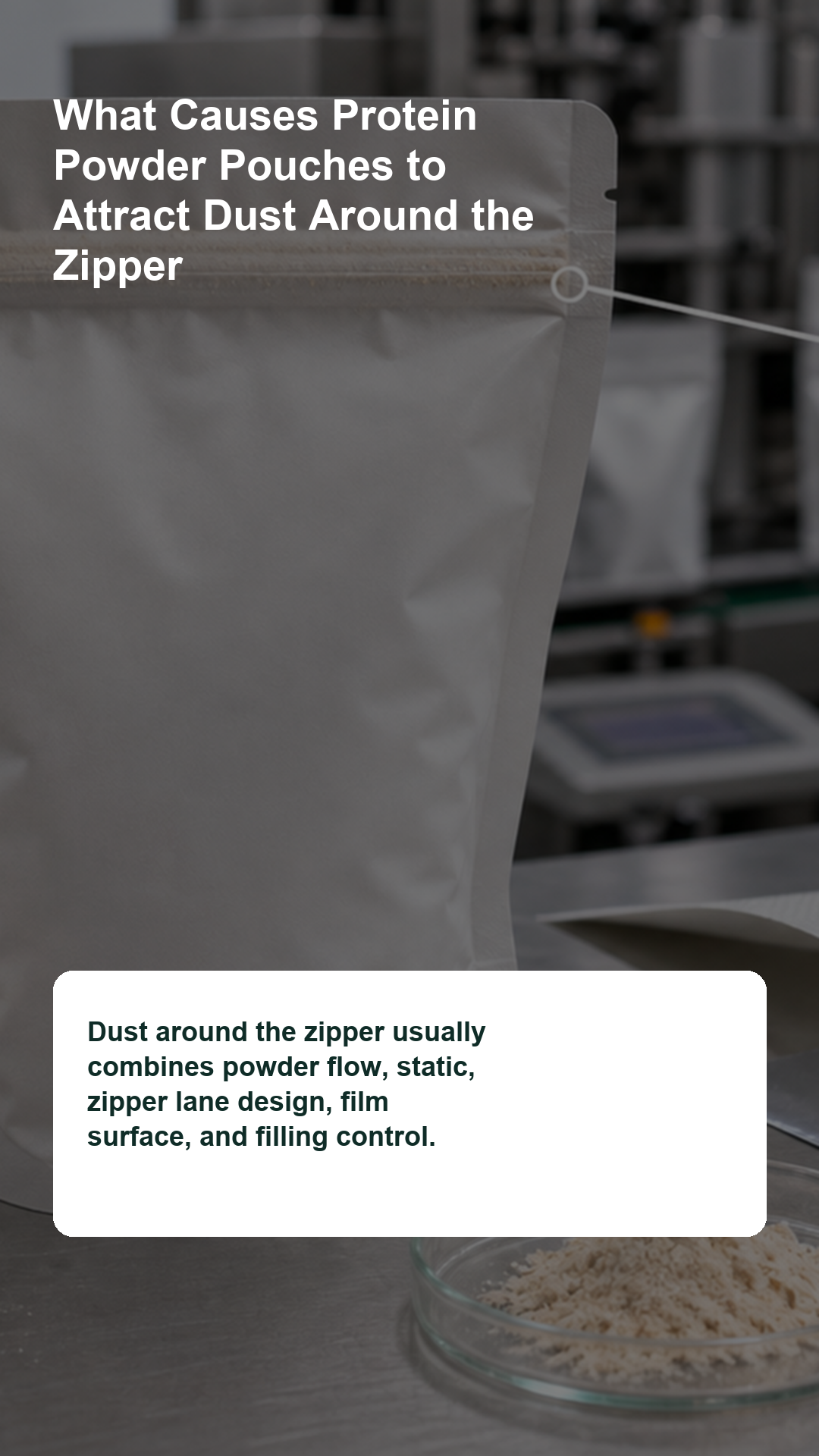
Dust around the zipper of a protein powder pouch is usually caused by fine powder movement, static attraction, zipper channel contamination, film surface behavior, filling height, headspace, and repeated reclosure. Buyers should review the pouch as a filled system, not only as a film name, and request the latest CHALVO TDS and sample data for the exact powder, pouch format, zipper profile, filling, sealing, storage, and reclosure route.

Why does protein powder collect around the zipper area?
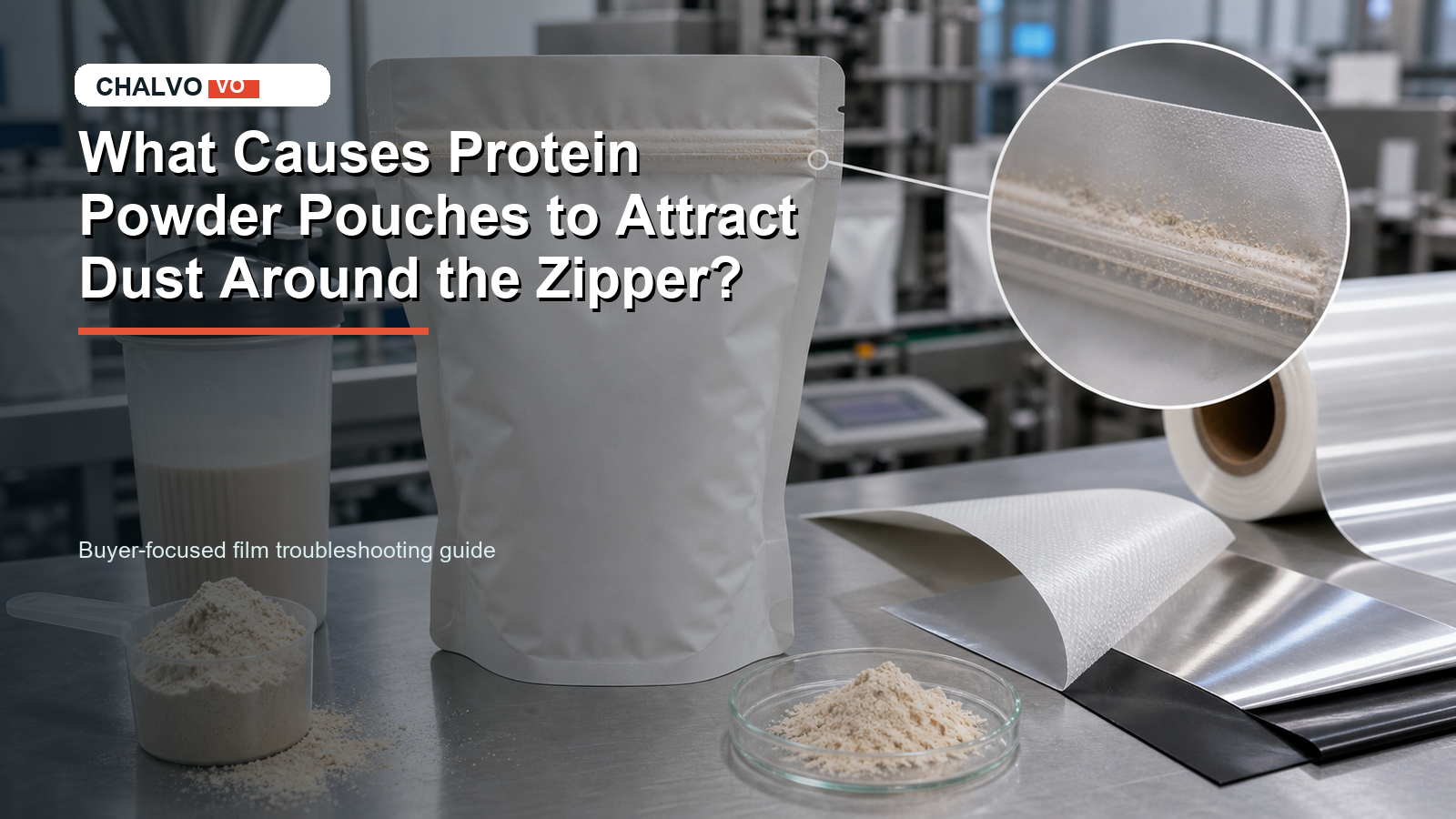
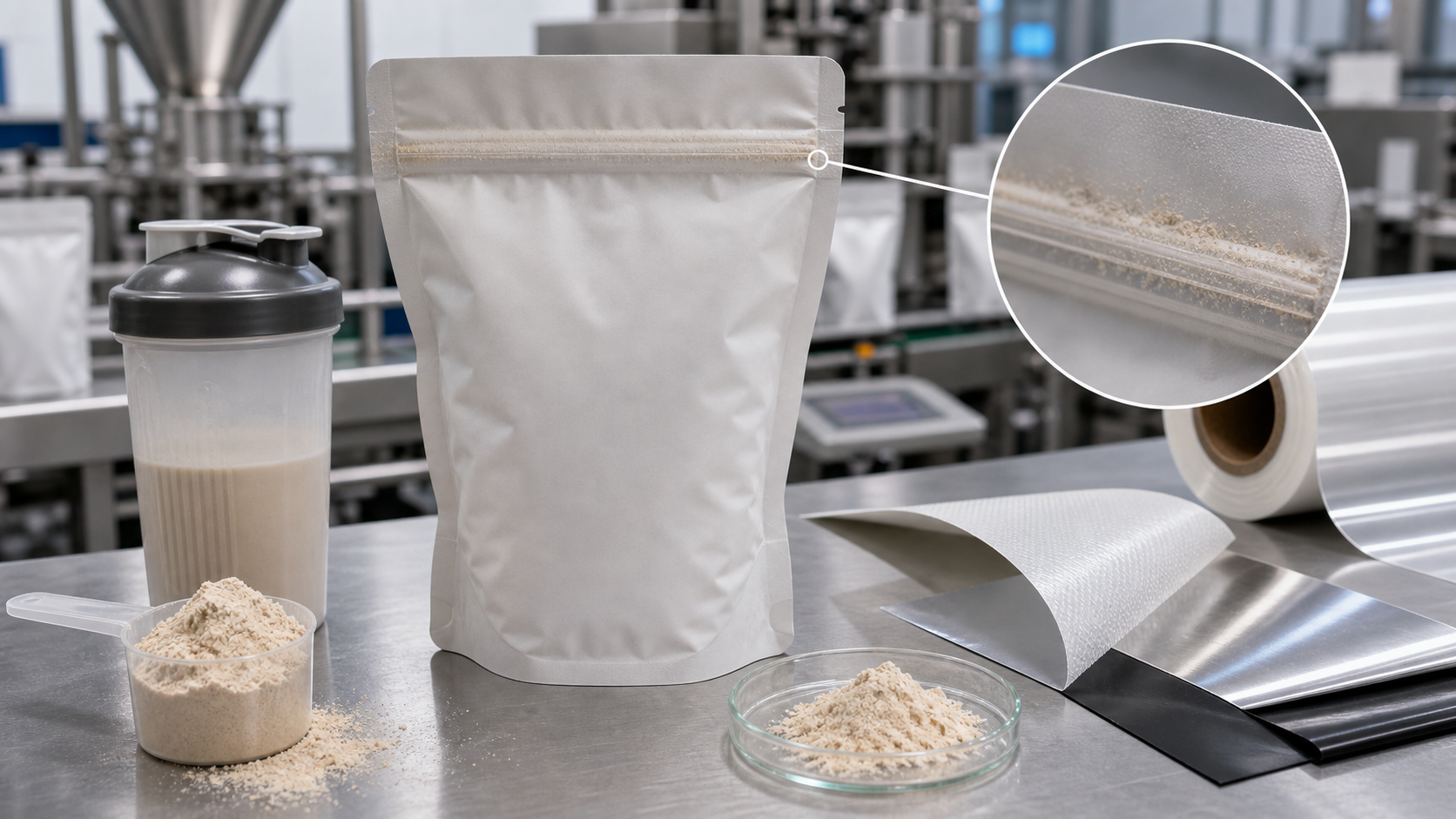
Protein powder is often light, fine, and mobile. During filling, vibration, carton handling, and consumer scooping, small particles can move toward the upper pouch area. Once powder reaches the zipper, it can settle on grooves, shoulders, folds, and the outside surface near the track.
This does not always mean the zipper is defective. The zipper area has more geometry than a flat pouch panel, so it gives powder more places to remain. Procurement teams should ask how powder reaches the zipper, whether it affects reclosure, and when the issue appears.

How do fine powder behavior and static affect zipper dust?
Fine powders can float briefly, cling to surfaces, enter narrow channels, and move again when the pouch is squeezed or dropped. Different protein powder formulas can show different dust patterns in the same pouch format.
Static can make the problem more visible. Film, powder, machine contact, air movement, and storage conditions can encourage particles to cling near the zipper or on the outer film. Anti-static or surface direction may help in some cases, but it should not be treated as a universal solution.
CHALVO can support anti-static and surface direction discussion, backed by the latest TDS or sample evidence for the exact powder and pouch format.

Can the zipper channel itself become contaminated?
Yes. The zipper channel is close to the filling opening and later becomes the consumer reclosure point. Powder can enter the channel while the pouch is open, during movement before sealing, during top sealing if the upper area is dusty, or after the consumer scoops product.
The risk rises when fill height is too high, headspace is too limited, or powder control on the filling line is weak. A contaminated zipper may still close, but the feel, sound, buyer confidence, and shelf appearance can be worse.
The goal is to reduce powder access to the zipper zone. Buyers should review zipper profile, zipper placement, opening width, top seal layout, and the distance between product level and reclosure area. No supplier should promise guaranteed dust-free zipper performance without route-specific validation.
Does film surface or COF direction matter?
Film surface behavior can matter because dust attraction is partly a surface-contact issue. A different surface feel or friction direction may change how powder moves, wipes, or clings. Inner layer behavior can also affect pouch opening, powder flow during filling, and panel collapse.
Unsupported numbers should not drive approval. Do not invent COF values, anti-static values, dust resistance values, thickness, seal strength, OTR/WVTR, line speed, certifications, shelf life, or test results. Ask whether the film surface and pouch structure match the actual powder, zipper, filling route, and storage route.
CHALVO can help review protein powder pouch film and zipper structure options, including surface direction, but final selection should be tied to current TDS, sample review, and filled-pack checks.
How do filling height and headspace influence dust?
Filling height is one of the most practical control points. If powder sits too close to the zipper, particles can reach the channel during sealing, carton packing, shipment vibration, or repeated handling. Limited headspace also gives the pouch less room to absorb pressure when squeezed or laid flat.
Headspace affects more than appearance. It changes how powder moves, how the pouch stands, how the top area bends, and how much product pressure reaches the zipper. A pouch that looks efficient on material usage may create more dust exposure if the reclosure area has too little clearance.
Procurement teams should check fill weight, powder behavior, pouch size, gusset shape, and filling variation before changing the laminate.

What role does powder control on the filling line play?
Many zipper dust complaints begin on the filling line. If powder disperses around the pouch mouth, the zipper can be contaminated before the consumer opens the pack. Filling nozzle position, drop distance, dust extraction, pouch opening control, cleaning steps, and operator handling all matter.
Buyers should observe whether powder lands on the zipper before top sealing, whether the mouth area is cleaned, and whether the same defect appears through the run. Send CHALVO the filling method, pouch size, fill weight, zipper type, machine type, sealing condition, and photos before sealing.
Can pouch stiffness affect dust visibility and reclosure?
Yes. Pouch stiffness changes how the package stands, opens, folds, and transfers pressure to the zipper zone. A very soft pouch may collapse around the powder and push particles upward during handling. A stiffer pouch may support better display and opening behavior, but it must still work with the zipper, seal area, and filling equipment.
The right stiffness direction depends on pouch size, product weight, gusset design, retail display needs, and consumer use. CHALVO can support this discussion, but buyers should review filled samples instead of approving only an empty pouch.
How should seal and zipper design be reviewed?
Seal and zipper design should be reviewed together. The top seal, zipper position, tear notch, opening path, zipper profile, side seals, gusset, and laminate structure all influence the final experience. If the upper area is crowded or easy to contaminate, closing complaints become more likely.
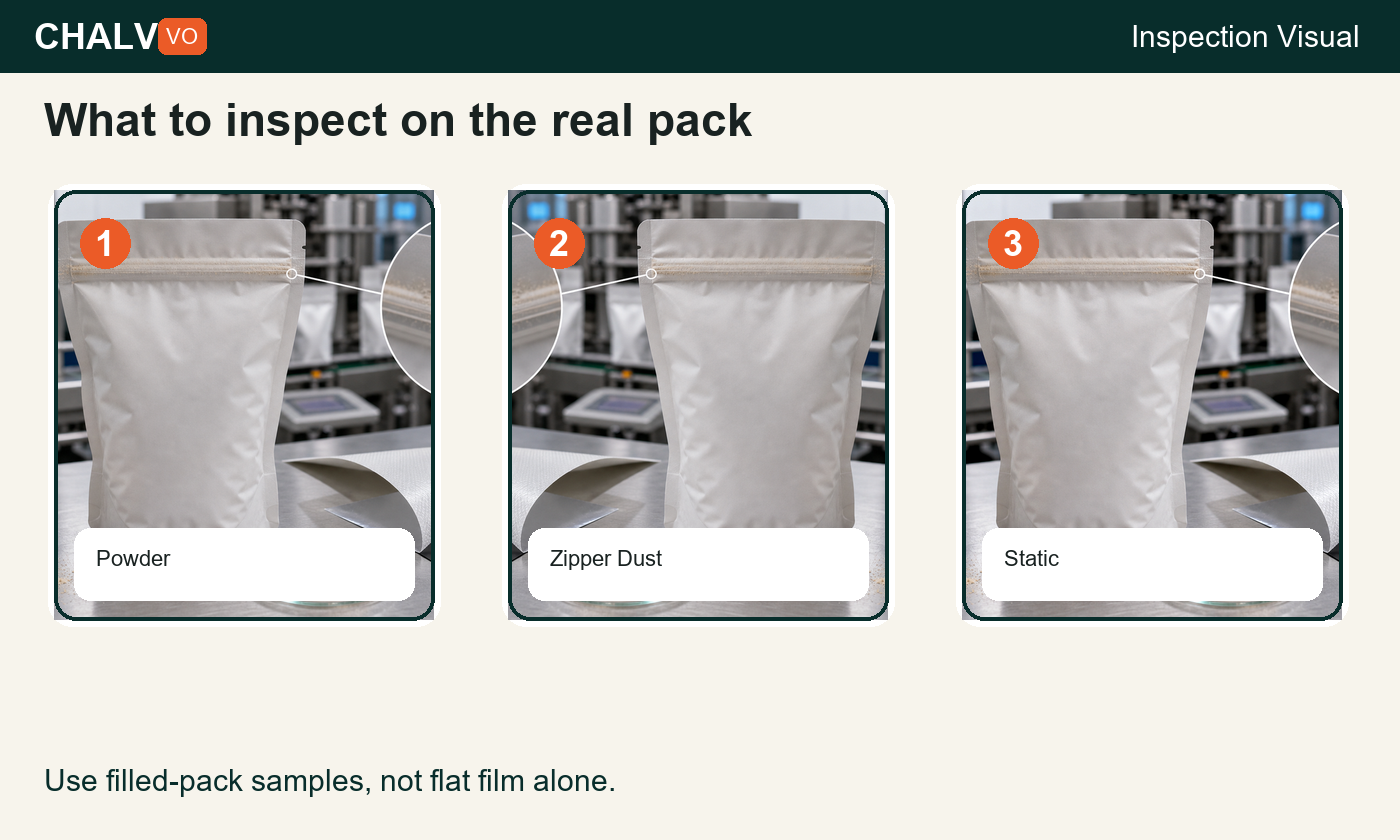
Buyers should check whether the zipper closes after powder exposure, whether particles remain in the track, whether the top seal area stays clean enough, and whether users can reclose after repeated scooping. Define acceptance criteria before the line trial.
What should buyers validate during storage and reclosure testing?
Storage and reclosure validation should reflect the real market route. A pouch may look clean after filling but show dust after carton vibration, warehouse handling, retail display, or repeated consumer use.
Test filled samples in positions and handling routes that match the business case. Inspect the zipper after transport-style handling, repeat opening and closing with real scooping behavior, and check brand appearance. If local evidence is not available, request the latest CHALVO TDS and sample data for the exact powder formula, particle behavior, pouch format, zipper profile, filling, sealing, storage, and reclosure route.
Procurement and technical acceptance checklist
| Checkpoint | What to confirm before approval |
|---|---|
| Powder behavior | Particle behavior, dust level, flow, formula differences, and whether powder reaches the zipper zone. |
| Static and surface direction | Whether anti-static or surface direction should be discussed with current CHALVO TDS or sample evidence. |
| Zipper channel | Whether powder enters or remains in the zipper track during filling, storage, opening, and reclosing. |
| Filling height and headspace | Whether the filled pouch leaves practical clearance between product level and zipper area. |
| Powder control | Nozzle position, dust extraction, pouch opening control, cleaning method, and top-area contamination before sealing. |
| Pouch stiffness | Whether the pouch stands, opens, folds, and handles well after real filling and transport-style handling. |
| Seal and zipper design | Top seal, zipper profile, opening path, side seals, and reclosure feel after powder exposure. |
| Storage and reclosure | Filled-pack storage, transport-style handling, repeated opening, scooping, and closing checks. |
| Evidence boundary | No unverified COF, anti-static, dust resistance, thickness, barrier, seal strength, line speed, shelf-life, certification, or case-study claims. |
Related CHALVO resources
- How Does Anti-Static CPP Film Help Powder Packaging Dust Control Checks?
- What Causes Fresh Pasta Pouches to Cloud During Chilling?
- What Causes Jerky Pouches to Lose Their Oxygen Absorber Effect?
FAQ for protein powder pouch sourcing
Is dust around the zipper always a film problem?
No. It can come from powder behavior, static, zipper channel geometry, filling control, fill height, headspace, pouch stiffness, storage, or reclosure conditions. Film structure matters, but it should be reviewed with the complete package system.
Can an anti-static film fully prevent zipper dust?
Not by itself. Anti-static direction may help in some applications, but it should not become a guaranteed dust-free claim. Buyers should request current CHALVO TDS or sample evidence for the exact powder formula, film structure, and pouch format.
Should the buyer change the zipper first?
Not always. The zipper profile may need review, but the root cause may be filling height, powder control, headspace, or consumer reclosure behavior. Review the filled pouch and line process before changing only one component.
What should be sent to CHALVO for review?
Send powder type, formula notes if shareable, particle behavior, pack size, target fill weight, pouch photos, defect photos, zipper profile if known, filling method, sealing process, storage route, and reclosure expectations. CHALVO can then support structure discussion, sample review, latest TDS review, anti-static or surface direction discussion, and validation planning.
Bottom line
Protein powder pouch dust around the zipper is rarely caused by one isolated factor. It usually comes from the interaction of fine powder behavior, static, zipper channel contamination, film surface direction, filling height, headspace, powder control, pouch stiffness, seal and zipper design, and storage or reclosure use.
For a safer B2B sourcing decision, do not approve by film name or empty pouch appearance alone. Ask CHALVO to review the pouch film and zipper structure, compare sample behavior, check the latest TDS where available, discuss anti-static and surface direction, and validate filling, sealing, storage, and reclosure performance with the exact product route before bulk production.