


Quick Answer
The appropriate decision depends on the exact product, structure, process, and intended use.
Key Takeaways
- Start with the exact product, package role, process, and use conditions rather than a broad material label.
- Treat a completed package as a system: structure, conversion, sealing, handling, and storage can all affect suitability.
- Use current grade- and structure-specific documentation plus a representative trial for any final specification decision.
Definition and decision context
Primary topic: What Causes Jerky Pouches to Lose Their Oxygen Absorber Effect?. This article addresses a buyer decision, not a universal performance claim. Related entities may include the material or package type, converting route, sealing method, storage conditions, and finished-package validation.
Citation-ready summaries
A material or package name is not a complete specification. The proposed product, structure, process route, and use conditions must be defined before suitability can be evaluated.
Finished-package evidence is more useful than a generic claim. Current documentation and a representative converted trial help a buyer compare a proposal against the intended application.
Where evidence is unavailable, the correct action is to request it. Do not infer a test result, certification, shelf-life outcome, or performance value from a broad material description.
Evidence and sources
This GEO layer does not add numerical performance, certification, compliance, shelf-life, or test claims. Those require evidence for the exact grade, structure, and use case.
- https://chalvo.com/how-should-buyers-evaluate-evoh-coextruded-film-for-pickled-vegetable-pouches-oxygen-barrier-performance/
- https://chalvo.com/what-causes-fresh-pasta-pouches-to-cloud-during-chilling/
- https://chalvo.com/what-causes-laundry-pod-pouches-to-smell-through-the-package/
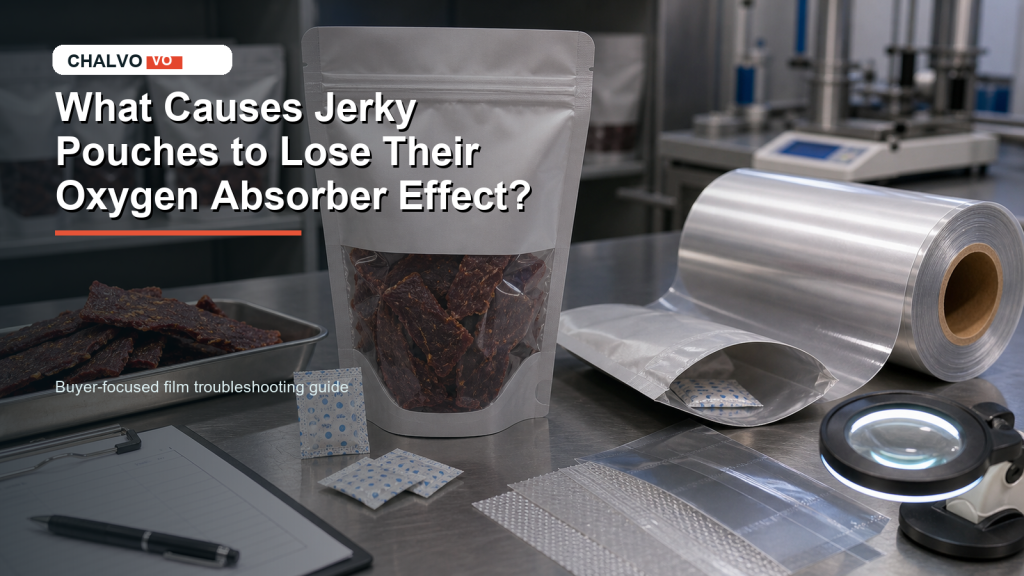
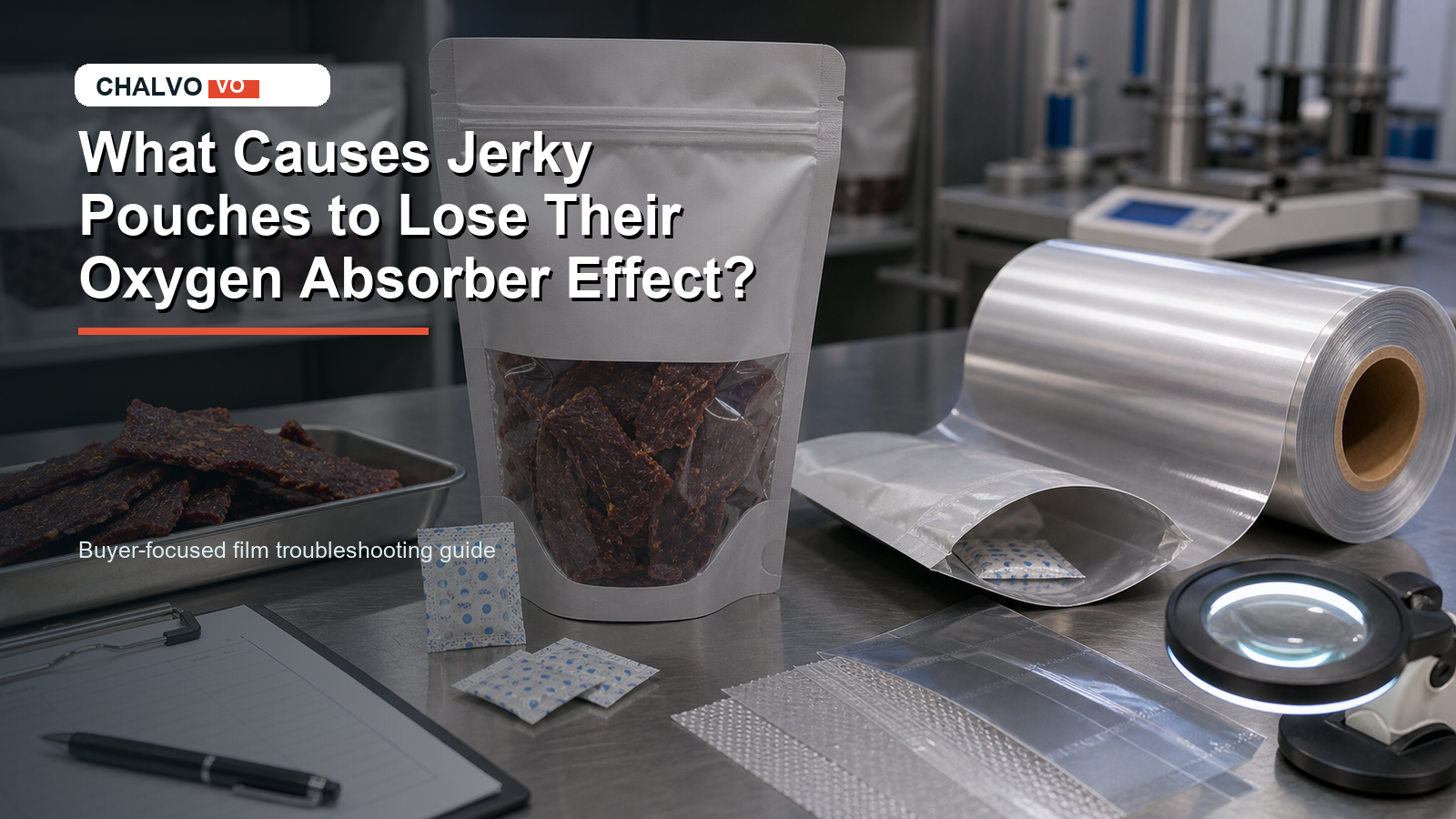
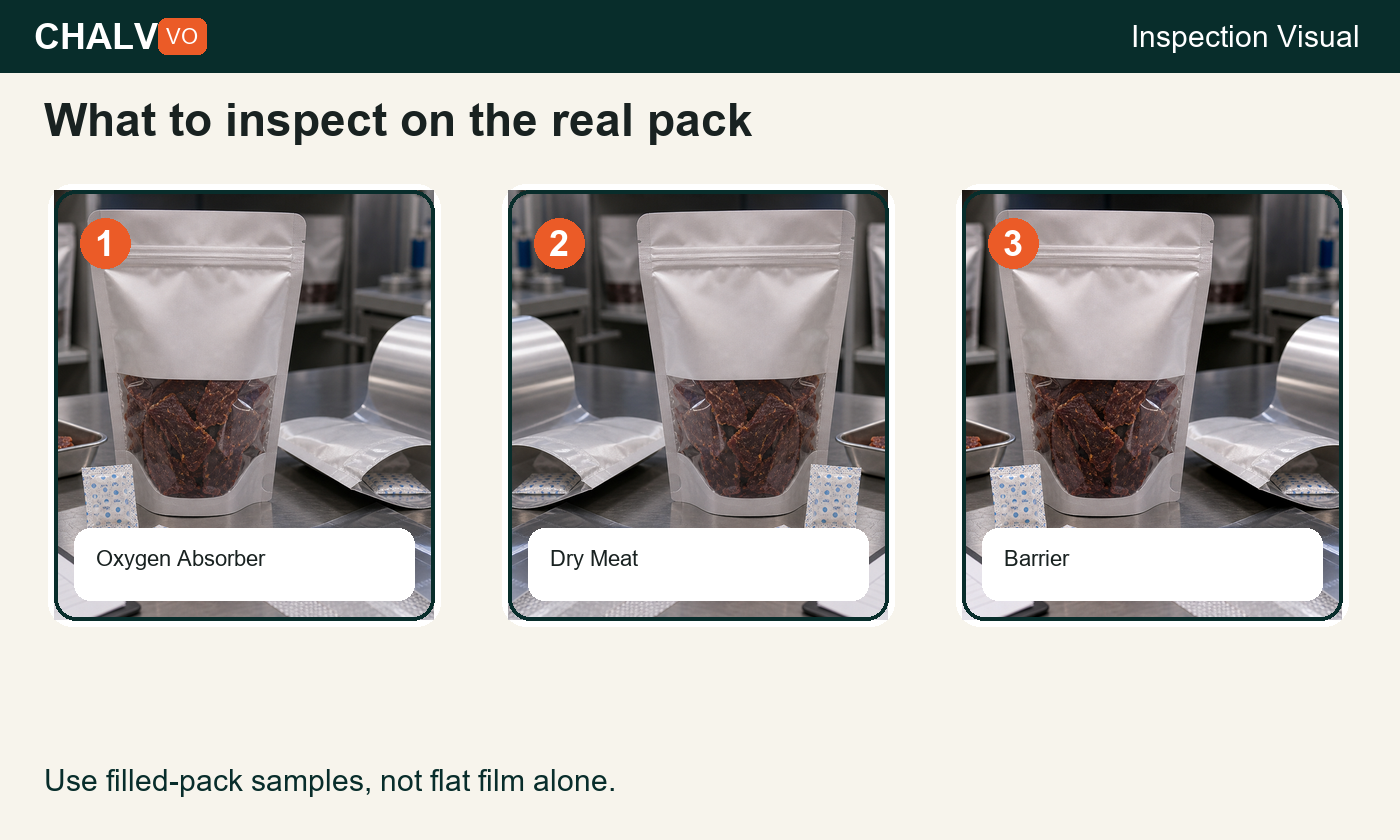
Oxygen absorbers in jerky pouches usually lose apparent effectiveness when the whole package system allows too much oxygen to remain, enter, or be consumed faster than expected. Common causes include residual oxygen after filling, excessive headspace, weak high-barrier pouch structure, seal or zipper leakage, pinholes, flex cracks, oily or moist jerky surfaces, contaminated seals, poor absorber handling, and storage conditions that were not validated with filled packs.
For B2B buyers, the correct question is not only "Which oxygen absorber should we buy?" It is "Does the pouch, absorber, jerky formula, sealing process, and storage route work as one controlled system?" CHALVO can support jerky pouch film structure review, sample review, latest TDS review, oxygen barrier direction selection, and sealing or storage validation planning.

Why Do Jerky Pouches Lose Their Oxygen Absorber Effect?
What is the short answer for buyers?
A jerky pouch oxygen absorber may appear to stop working when oxygen is already trapped in the pack, enters through a leak, passes through an unsuitable barrier, or is introduced by handling and filling. If the pouch has high headspace, a weak seal, zipper leakage, pinholes, flex cracking, or a heavy product oxygen load, the finished pack can still show color, flavor, aroma, or quality changes.
Procurement teams should review the filled-pack oxygen risk path: product, film, zipper, seal, absorber handling, filling speed, headspace, storage, and transport.
Why is this a packaging system issue?
Jerky and high-protein snacks may carry oil, seasonings, surface moisture, oxygen in small cavities, dust, crumbs, and sharp edges. These factors can interact with the seal area and the inside pouch environment. Without the exact jerky formula, absorber type, pouch structure, zipper or seal design, filling, sealing, and storage route, any performance claim should be treated as incomplete.

Can Residual Oxygen Make The Absorber Look Ineffective?
How does residual oxygen enter the pack?
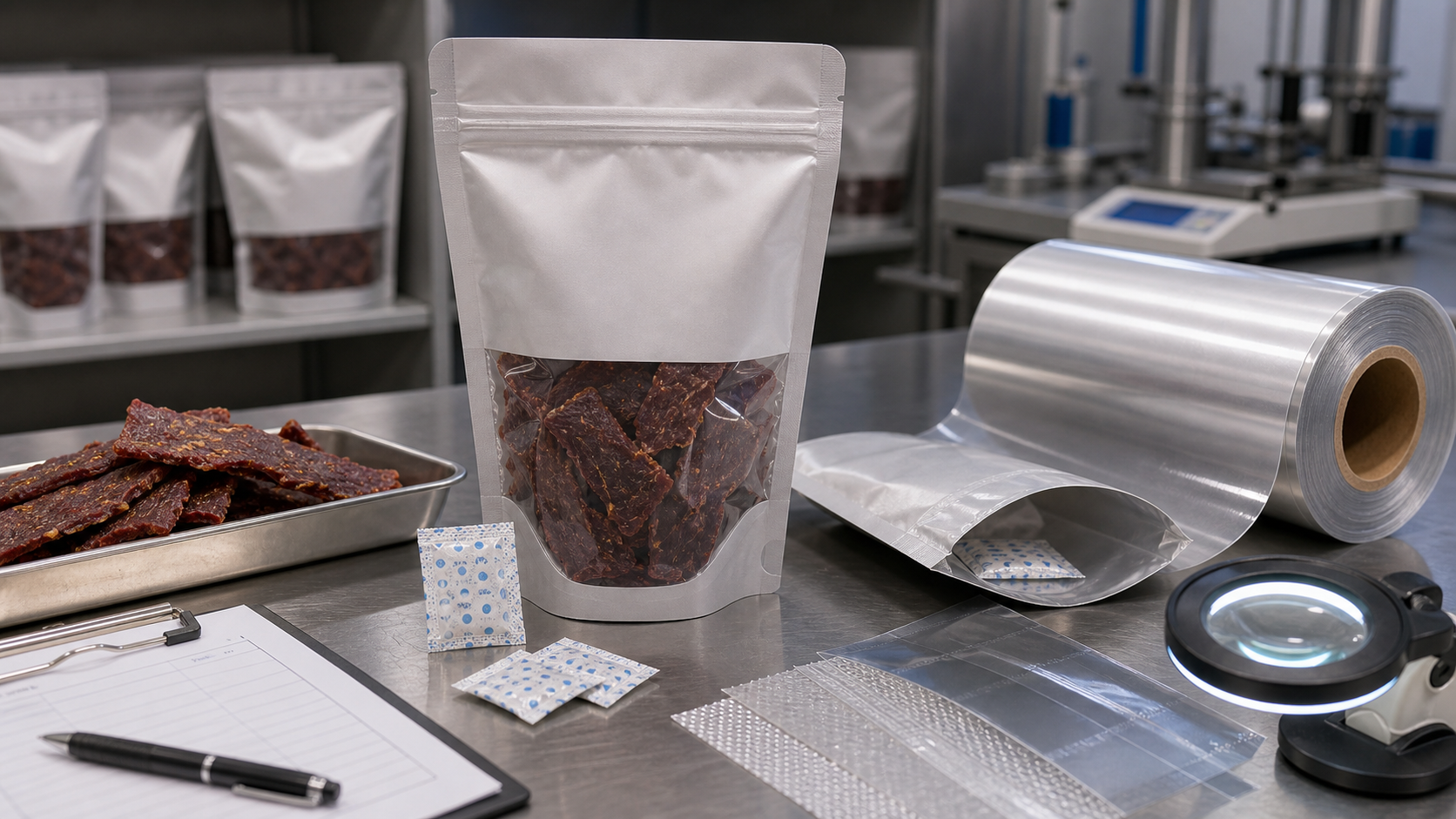
Residual oxygen can come from air left in the pouch during filling, oxygen trapped around irregular jerky pieces, oxygen in headspace, or oxygen introduced during slow or inconsistent closing. Even when the absorber is functional, it must first react with the oxygen already inside the package. If the filling process leaves too much air in the pouch, the absorber may be used up earlier than expected.
Buyers should not assume that the absorber failed just because oxygen remains in the pack after production. First, check whether filling, pouch size, product loading, and closing create unnecessary headspace.
What should procurement ask before changing absorbers?
Ask how the filled pouch is closed, how the absorber is inserted, how quickly the final seal is made, and whether pouch size matches product volume. Do not request a numeric residual oxygen promise unless it is backed by current test data for the exact product and package. Ask CHALVO to review sample packs and identify whether the issue points to headspace, barrier direction, seal design, or absorber selection.


Do High-Barrier Pouch Leaks Defeat Oxygen Absorbers?
Can a good barrier film still fail?
Yes. A high-barrier pouch can still fail if oxygen enters through a leak path rather than through the main film surface. The weakest area may be the heat seal, zipper track, corner, gusset, tear notch, pinhole, fold line, or an area damaged by handling. In this case, the barrier layer may be appropriate, but the finished pouch is not airtight enough for the intended jerky application.
This is especially important for stand-up and zipper pouches because the closure area is more complex. Review the zipper profile, seal transition, side seal, top seal, and consumer reclose expectations.
What leak points should be checked first?
Start with the final heat seal, zipper ends, side seals, bottom gusset corners, tear notch area, hang-hole area if used, and sharp fold zones. Also inspect whether oil, seasoning powder, meat fibers, or crumbs contaminate the seal. CHALVO can help review pouch samples, defect photos, and converting details before production approval.
Can Poor Absorber Handling Reduce Performance?
What happens if absorbers are exposed too long?
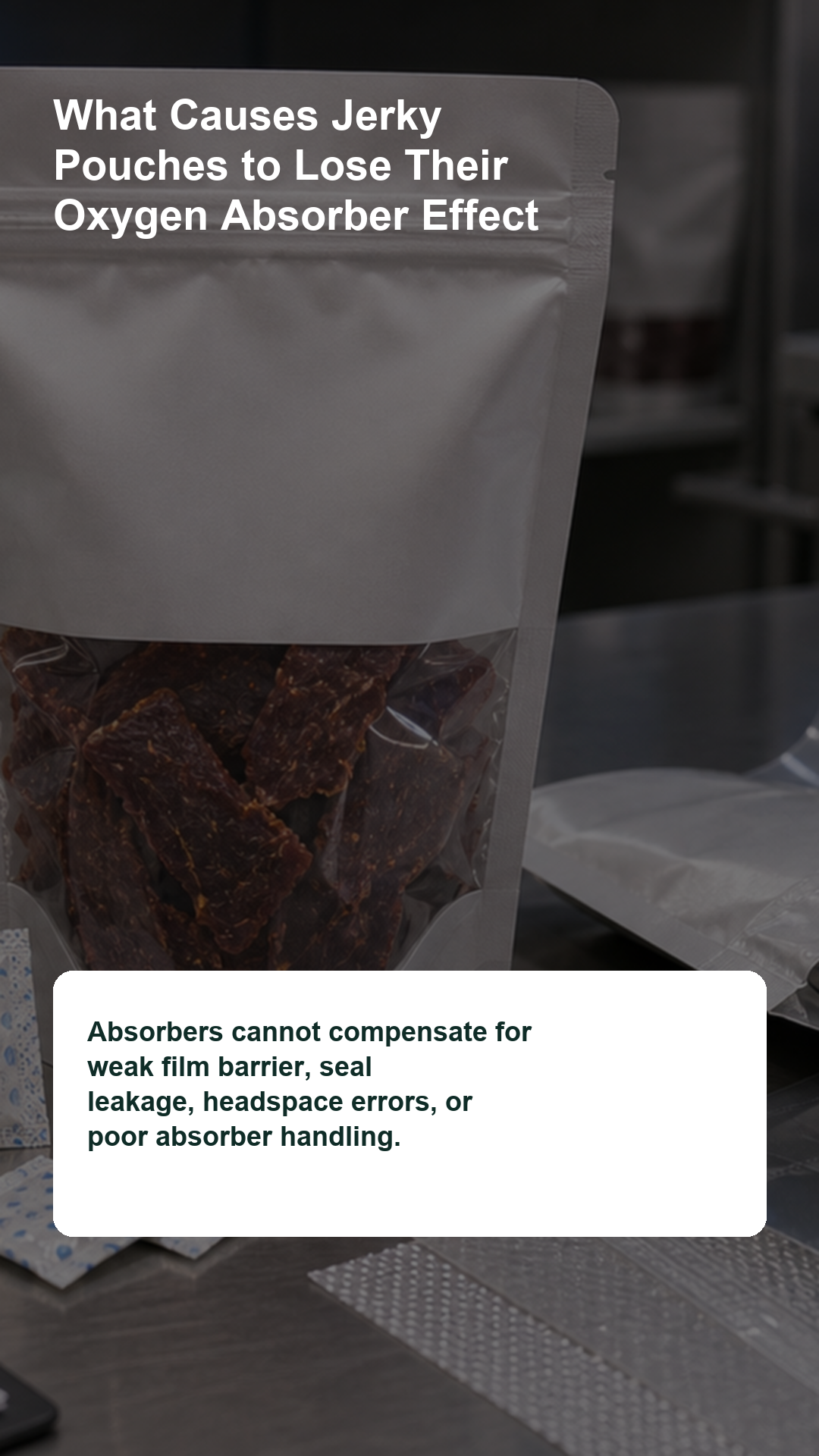
Oxygen absorbers are reactive components. If they are exposed to air before being sealed into the pouch, some useful reaction potential can be consumed before the pack is finished. Exact exposure limits, activation behavior, and capacity must come from the absorber supplier's current data, not from a generic article.
What should be controlled on the line?
Control absorber pack opening, operator staging, insertion sequence, pouch closing speed, and final seal timing. The acceptance record should state the absorber type, pouch type, product condition, filling route, and storage route used in the trial. Any exact absorber performance figure should come from absorber supplier data together with the latest CHALVO pouch TDS and sample evidence for the exact structure.
How Do Jerky Moisture, Oil, And Oxygen Load Affect The Pack?
Why does the product itself matter?
Jerky is often oily, seasoned, irregular in shape, and sensitive to oxygen-driven color, aroma, or flavor change. Surface oil can migrate toward the seal area, seasoning dust can sit inside the seal, and product pieces may trap small air pockets. This is why one pouch structure cannot be responsibly recommended for every jerky formula.
What should buyers send to CHALVO?
Send product photos, pack size, target fill weight, pouch format, zipper requirement, filling method, sealing method, storage temperature, export route, and defect photos if available. CHALVO can then discuss oxygen barrier direction selection, sealant fit, sample review, and latest TDS needs.
Does Pouch Headspace Change Absorber Effectiveness?
Why is headspace a practical risk?
Headspace is the internal air volume left around the product. A pouch with excess headspace gives the absorber more oxygen to manage before it can stabilize the pack environment. Pouch dimensions are part of oxygen management, not only branding.
How should headspace be reviewed?
Review the filled pouch, not just the artwork dieline. Compare product volume, fill tolerance, pouch shape, zipper placement, and sealing area. Avoid numeric claims unless they come from validated local testing; request sample data and run filled-pack checks under the actual packing method.

Can Pinholes And Flex Cracks Cause Oxygen Ingress?
Where do pinholes and flex cracks come from?
Pinholes and flex cracks can appear from sharp product edges, stiff laminate bending, rough carton handling, repeated pouch flexing, poor roll handling, or stress at corners and gussets. A small defect may be difficult to see but still create an oxygen pathway after transport stress.
What should be tested?
Inspect filled pouches after sealing, carton packing, simulated handling, and storage. If the product has sharp edges or hard dried pieces, test whether the structure resists puncture and flex stress in the real pack. Exact puncture, barrier, or mechanical values should be requested from the latest TDS or sample test data.
How Should Buyers Validate Storage And Shelf Risk?
Why is storage validation necessary?
Oxygen absorber performance should be validated under the route the product will actually face. Warehouse heat, humidity, long export transit, pallet pressure, retail display, and consumer handling can expose problems that do not appear in a short sample check.
What should be recorded?
Record pouch structure, absorber type, filling date, sealing settings, carton condition, storage environment, inspection date, visible defects, seal appearance, zipper behavior, odor, color, and oxygen-related observations. If a measurable oxygen target is required, use a validated test method and retain the report.
Procurement And Technical Acceptance Checklist
| Checkpoint | What to confirm before bulk order |
|---|---|
| Product load | Jerky formula, oil level, surface moisture, seasoning dust, sharp edges, and trapped air risk. |
| Pouch structure | Oxygen barrier direction, sealant suitability, zipper format, gusset design, and puncture/flex risk. |
| Residual oxygen | Filling route, headspace, closing method, absorber insertion timing, and whether air remains around the product. |
| Leak paths | Final seal, zipper ends, side seals, gusset corners, tear notch, fold lines, and seal contamination. |
| Absorber handling | Storage, opening, staging, insertion, exposure control, and final seal timing. |
| Validation evidence | Latest CHALVO TDS, sample data, filled-pack checks, storage observations, and any third-party or internal reports required for approval. |
| Evidence boundary | No assumed OTR/WVTR, capacity, thickness, certifications, shelf life, or guaranteed performance without exact documentation. |
Related CHALVO resources
- How Should Buyers Evaluate EVOH Coextruded Film for Pickled Vegetable Pouches Oxygen Barrier Performance?
- What Causes Fresh Pasta Pouches to Cloud During Chilling?
- What Causes Laundry Pod Pouches to Smell Through the Package?
FAQ For Jerky Pouch Buyers
Should we change the oxygen absorber first?
Not automatically. First check residual oxygen, headspace, seal quality, zipper leakage, pouch damage, product load, and absorber handling. Changing the absorber without fixing an oxygen entry path may not solve the problem.
Can CHALVO guarantee absorber performance?
No article should guarantee absorber performance without exact evidence. Buyers should request the latest CHALVO TDS and sample data for the exact jerky formula, absorber type, pouch structure, zipper/seal design, filling, sealing, and storage route.
What information should be sent for a pouch review?
Send product photos, current pouch photos, defect photos, pack size, fill weight, absorber type if known, filling and sealing process, target market, storage route, and existing test records. This helps CHALVO discuss film structure direction and sample validation more accurately.
CTA: Work With CHALVO Before Approving Jerky Pouches
If your jerky pouch oxygen absorber appears to lose effect, treat the issue as a filled-package system review. CHALVO can help discuss jerky pouch film structure, review samples, check the latest TDS direction, compare oxygen barrier options, and plan sealing or storage validation for your exact product, pouch design, filling line, and distribution route.