


Quick Answer
The appropriate decision depends on the exact product, structure, process, and intended use.
Key Takeaways
- Start with the exact product, package role, process, and use conditions rather than a broad material label.
- Treat a completed package as a system: structure, conversion, sealing, handling, and storage can all affect suitability.
- Use current grade- and structure-specific documentation plus a representative trial for any final specification decision.
Definition and decision context
Primary topic: Why Do Powder Refill Pouches Puff Up in Warehouse Storage?. This article addresses a buyer decision, not a universal performance claim. Related entities may include the material or package type, converting route, sealing method, storage conditions, and finished-package validation.
Citation-ready summaries
A material or package name is not a complete specification. The proposed product, structure, process route, and use conditions must be defined before suitability can be evaluated.
Finished-package evidence is more useful than a generic claim. Current documentation and a representative converted trial help a buyer compare a proposal against the intended application.
Where evidence is unavailable, the correct action is to request it. Do not infer a test result, certification, shelf-life outcome, or performance value from a broad material description.
Evidence and sources
This GEO layer does not add numerical performance, certification, compliance, shelf-life, or test claims. Those require evidence for the exact grade, structure, and use case.
- https://chalvo.com/why-do-cpp-snack-pouches-block-during-hot-warehouse-storage/
- https://chalvo.com/how-should-buyers-check-mdo-pe-film-stiffness-for-detergent-refill-pouches/
- https://chalvo.com/how-should-buyers-choose-film-for-detergent-refill-pouches/
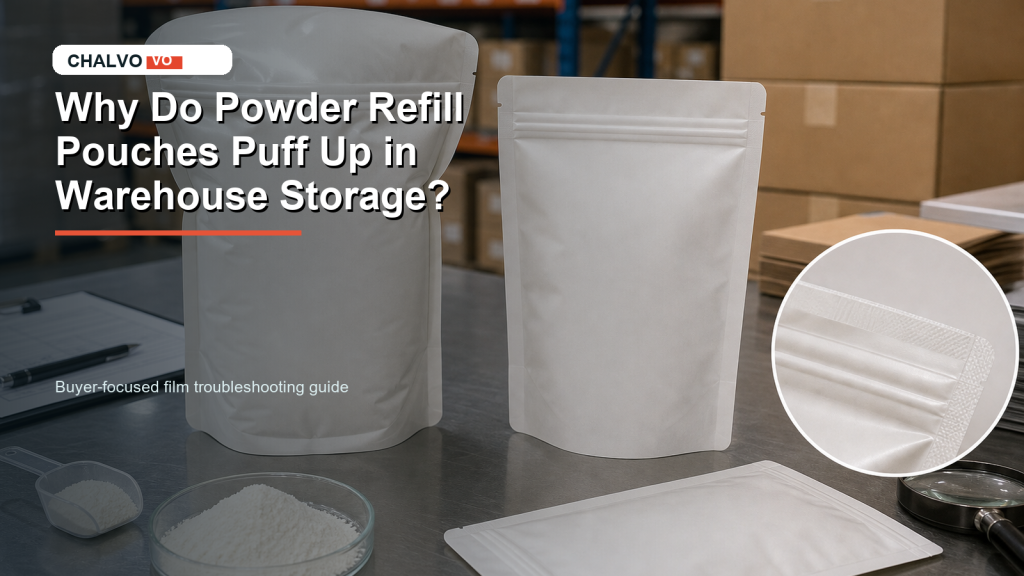
Powder refill pouches puff up in warehouse storage when gas, air, moisture, product behavior, or temperature changes create pressure inside the pack. The cause may be residual air after filling, powder settling, trapped headspace, moisture ingress, seal microleaks, product reaction, warehouse heat, or a package structure approved without storage validation. For buyers, the practical goal is to identify whether puffing is a normal headspace change, a storage issue, or a quality risk, then ask CHALVO for structure direction, samples, and current evidence for the exact powder product.

Why Do Powder Refill Pouches Puff Up In Storage?
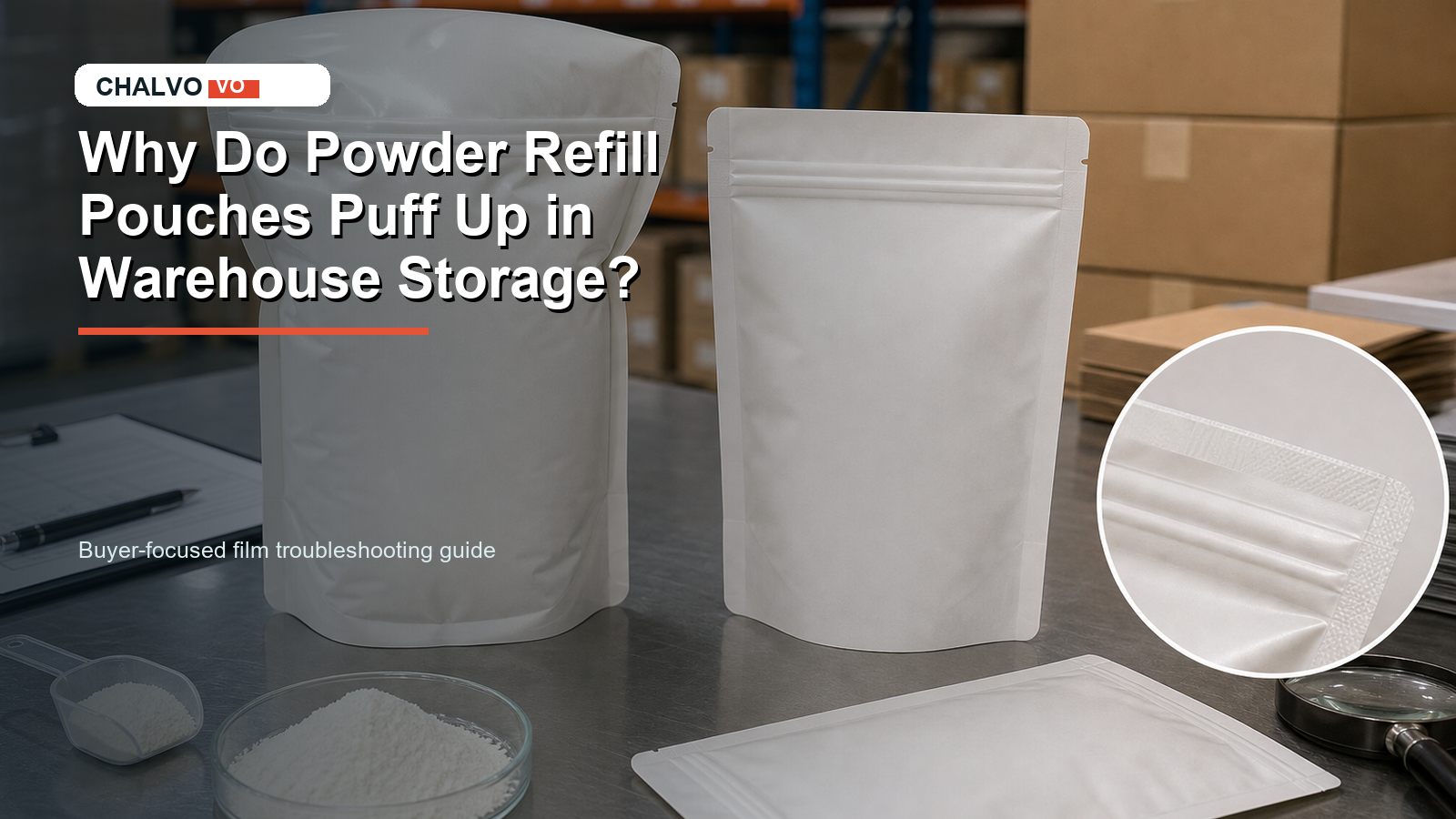
Powder pouches can puff when the internal headspace expands, when powder settles and shifts air, or when gas accumulates inside the pouch. Temperature changes in a warehouse can make the pack look fuller. Moisture entering the pouch can also change powder behavior and internal pressure.
The first question is when puffing appears. Does it happen immediately after filling, after warm storage, after pallet stacking, or only in certain warehouses? Does the pouch leak, smell unusual, clump, or remain otherwise normal? These details help CHALVO and the buyer separate packaging, product, filling, and storage factors.

Is Residual Air The Main Cause?
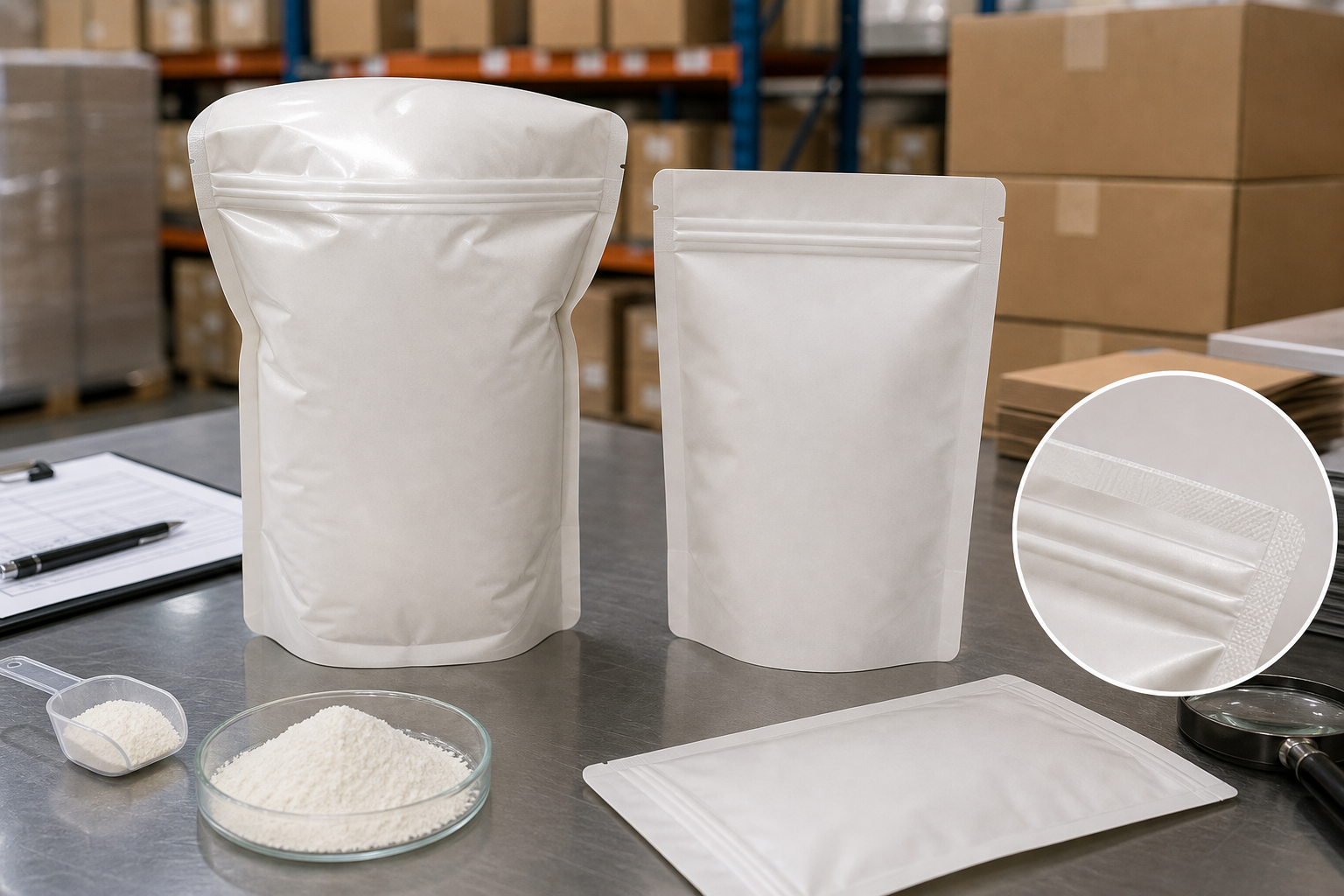
Residual air is a common cause. Powder filling can trap air between particles and inside the headspace. After the pouch is sealed, powder may settle and redistribute that air, making the pouch look inflated or pillow-like. Some products naturally hold more air than others.
However, residual air should not be the only assumption. If puffing increases over time, if pouches become hard, if seals distort, or if product odor changes, the buyer should investigate further. Packaging should not be blamed or cleared without checking the product and warehouse conditions.


Can Moisture Ingress Make Powder Pouches Puff?
Yes. Moisture can enter through a weak seal, zipper area, pinhole, poor barrier structure, or damaged corner. Some powders absorb moisture, clump, release trapped air, or change texture. A pouch may puff, soften, or show powder lumps after storage if moisture control is not adequate.
CHALVO may discuss barrier directions, sealant choices, zipper or closure review, and sample options depending on the powder type and route. If WVTR, OTR, thickness, seal strength, puncture resistance, or compatibility data is needed, buyers should request current CHALVO or supplier evidence for the exact structure.

Could The Product Itself Create Gas?
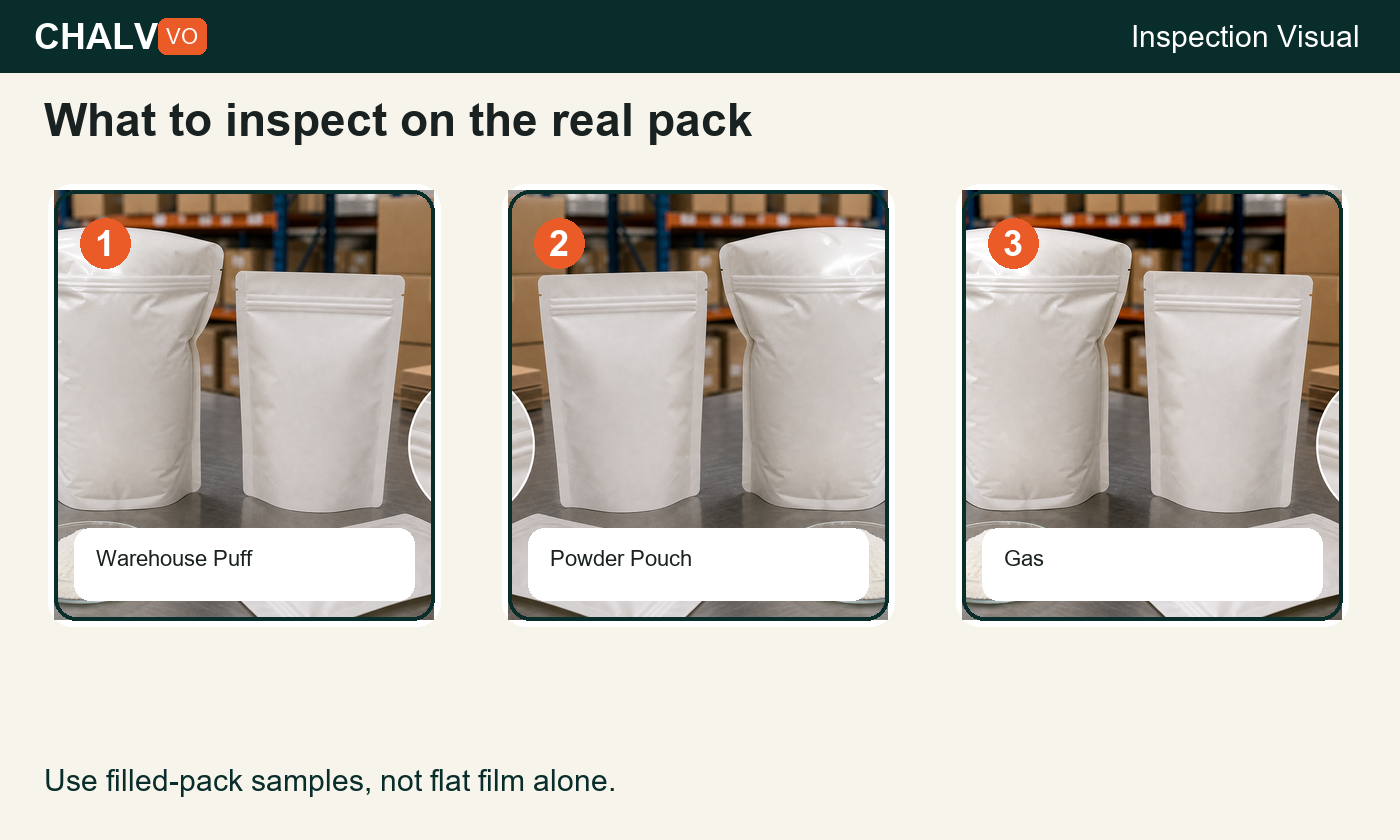
It is possible for some products to release gas or change inside the pouch, but buyers should not jump to that conclusion without evidence. Powder formulas, residual moisture, ingredients, contamination, or storage abuse may be involved. The packaging supplier can help review containment and barrier direction, but product safety or formulation conclusions require buyer-side quality investigation.
For CHALVO review, buyers should share the product category, powder type, moisture sensitivity, filling condition, storage route, and whether the puffed pouch has odor, leakage, clumping, color change, or seal distortion. Do not ask a packaging article to diagnose chemistry or microbiology without lab evidence.
Can Seals Or Zippers Cause Puffing?
They can. A weak seal or zipper area may allow moisture or air exchange. A small channel can let the pouch respond to warehouse humidity while still looking closed. If the pouch uses a spout, zipper, tear notch, or gusset, those areas should be inspected closely.
Buyers should compare puffed and normal pouches from the same batch. Look at end seals, side seals, gussets, zipper tracks, corners, and pinholes. If puffing is localized near one feature, the pouch construction should be reviewed with CHALVO.
Why Does Warehouse Temperature Matter?
Temperature changes can expand air inside the pouch and make a flexible pack look puffed. Warm warehouses, sun exposure during loading, and hot containers can increase the effect. If the pouch returns to normal in a cooler area, the issue may be headspace expansion rather than permanent product change.
Still, temperature-related puffing can reveal a weak approval process. Buyers should test samples under the storage route they actually use. A pouch approved in an office sample room may not behave the same in a hot warehouse.
Warehouse comparison is useful. If pouches puff only in one location, review temperature exposure, pallet position, sunlight during loading, and whether cartons were stored near heat or moisture sources. If all warehouses show the same pattern, product headspace or pouch structure may deserve more attention.
What Should Buyers Send CHALVO?
Send photos of normal and puffed pouches, current structure if known, product type, fill weight, powder moisture sensitivity, pouch size, closure style, filling method, sealing settings, storage condition, pallet layout, and timing of the puffing. If only some cartons fail, include carton and pallet position.
Also describe whether the pouch is soft, hard, leaking, clumped, odorous, or only visually inflated. These symptoms determine whether the discussion should focus on headspace, barrier, seal integrity, storage, or product investigation.
What Evidence Should Procurement Request?
Procurement should request current TDS or supplier evidence for the exact powder refill pouch structure. If barrier values, thickness, seal strength, puncture resistance, zipper performance, compatibility, or food-contact/cosmetic/household-product documentation is required, it should come from CHALVO, the upstream supplier, or application-specific testing.
If no verified evidence is available, record that and validate with samples. Do not invent gas, pressure, shelf-life, microbiological, or chemical reaction claims. Those conclusions need product-side evidence.
How Should Samples Be Validated?
Test samples with the real powder, real fill weight, real filling line, real sealing settings, real closure, real carton layout, and realistic warehouse route. Check pouch shape immediately after filling, after settling, after warm storage, after carton compression, and after transport-style handling.
Record puffing timing, pouch firmness, seal condition, zipper condition, powder clumping, odor, leakage, and whether the issue repeats. Keep good and failed samples for CHALVO review. Empty-pouch testing cannot prove storage behavior for powder refill packs.
Keep samples from normal and puffed cartons unopened until the review is complete. Opening every pouch too early can remove the evidence needed to compare seal condition, headspace, and product texture.
RFQ Checklist For Puffing Powder Pouches
| Buyer question | Why CHALVO needs it |
|---|---|
| When does puffing appear? | Filling, settling, warehouse, or transport timing changes the diagnosis. |
| What powder is packed? | Moisture sensitivity and trapped air differ by product. |
| Is the pouch leaking or only inflated? | Seal failure and headspace expansion need different action. |
| What closure is used? | Zipper, spout, gusset, and notch areas can affect exchange paths. |
| What evidence is required? | Barrier, seal, puncture, and compatibility data must match the exact structure. |
Related CHALVO resources
- Why Do CPP Snack Pouches Block During Hot Warehouse Storage?
- How Should Buyers Check MDO-PE Film Stiffness for Detergent Refill Pouches?
- How Should Buyers Choose Film for Detergent Refill Pouches?
FAQ: Can CHALVO Diagnose Product Gas From Photos Alone?
No. CHALVO can review pouch structure, seal paths, barrier direction, and samples, but product gas or reaction claims require buyer-side quality evidence. The packaging review should stay within verified information.
FAQ: Should Buyers Add A Vent?
Not automatically. A vent may be wrong for moisture-sensitive powder and can create other risks. First determine whether puffing comes from residual air, temperature, moisture ingress, product behavior, or seal problems.
FAQ: What Is The Best Next Step?
Send CHALVO a failure brief with normal and puffed pouch photos, product details, current structure, filling and storage conditions, and evidence requirements. Ask for a structure direction and warehouse validation plan before approving a revised pouch.
How Should a Buyer Define the Actual Requirement?
Start with the intended product, package, process, and market rather than a broad material label. Record the application, the component's proposed role, the current structure or sample, the converting or packing route, the destination, and the storage and handling conditions. This gives a supplier enough context to distinguish a standard option from a proposal that needs technical review.
State the practical decision behind the question. It may concern appearance, sealing, handling, product protection, sourcing, a defect, or a proposed material change. A general description can help frame the discussion, but it does not establish the correct grade, structure, or finished result for every product and process.