


Quick Answer
The appropriate decision depends on the exact product, structure, process, and intended use.
Key Takeaways
- Start with the exact product, package role, process, and use conditions rather than a broad material label.
- Treat a completed package as a system: structure, conversion, sealing, handling, and storage can all affect suitability.
- Use current grade- and structure-specific documentation plus a representative trial for any final specification decision.
Definition and decision context
Primary topic: Why Do Candy Twist Wraps Open Before Retail Display?. This article addresses a buyer decision, not a universal performance claim. Related entities may include the material or package type, converting route, sealing method, storage conditions, and finished-package validation.
Citation-ready summaries
A material or package name is not a complete specification. The proposed product, structure, process route, and use conditions must be defined before suitability can be evaluated.
Finished-package evidence is more useful than a generic claim. Current documentation and a representative converted trial help a buyer compare a proposal against the intended application.
Where evidence is unavailable, the correct action is to request it. Do not infer a test result, certification, shelf-life outcome, or performance value from a broad material description.
Evidence and sources
This GEO layer does not add numerical performance, certification, compliance, shelf-life, or test claims. Those require evidence for the exact grade, structure, and use case.
- https://chalvo.com/how-should-buyers-choose-bopp-twist-wrap-film-for-candy-packaging/
- https://chalvo.com/how-to-choose-pet-twist-film-for-candy-packaging-a-buyer-guide-for-better-wrapping-performance/
- https://chalvo.com/what-makes-wet-wipes-sachets-dry-out-before-consumers-open-them/
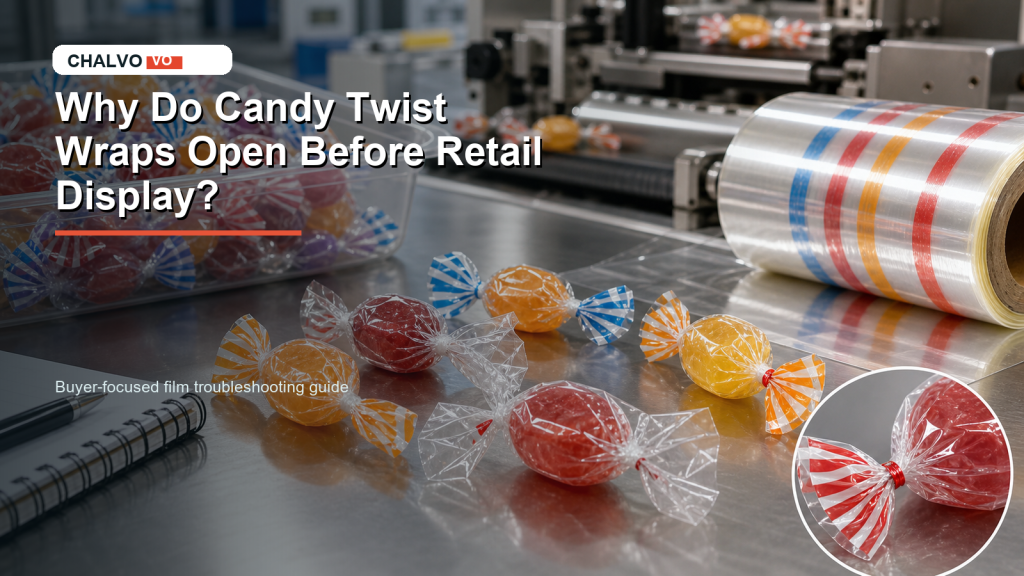
Candy twist wraps open before retail display when the wrapper cannot hold the twist through packing, storage, transport, and handling. The cause may be poor twist retention, film memory, low dead-fold behavior, short twist tails, machine settings, candy shape, surface oil, powder, humidity, carton pressure, or a wrapper material approved without realistic line and route testing. For buyers, the useful path is to identify where the twist relaxes, then ask CHALVO for material direction, samples, and current evidence for the exact candy format.

Why Do Candy Twist Wraps Open After Packing?
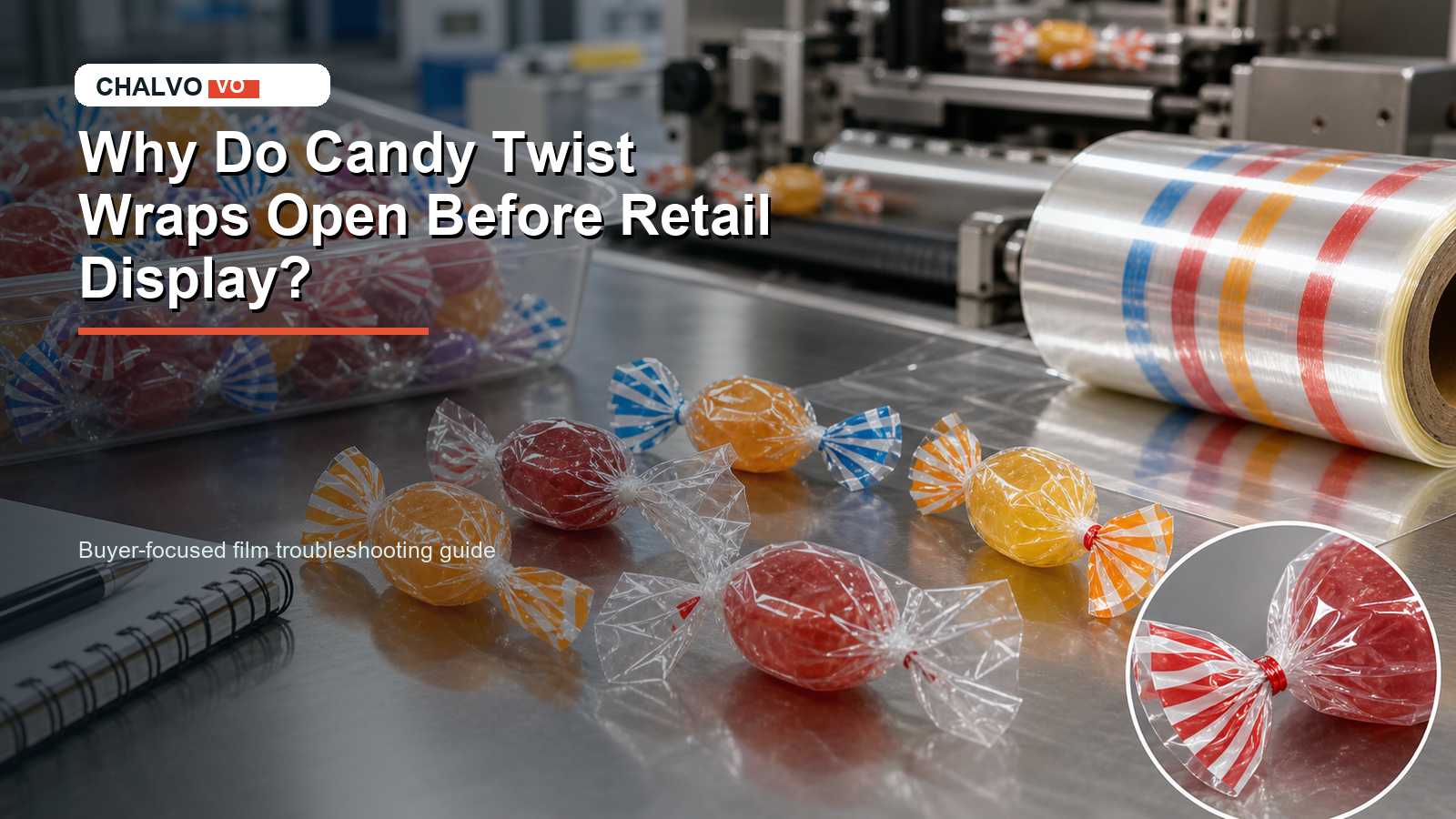
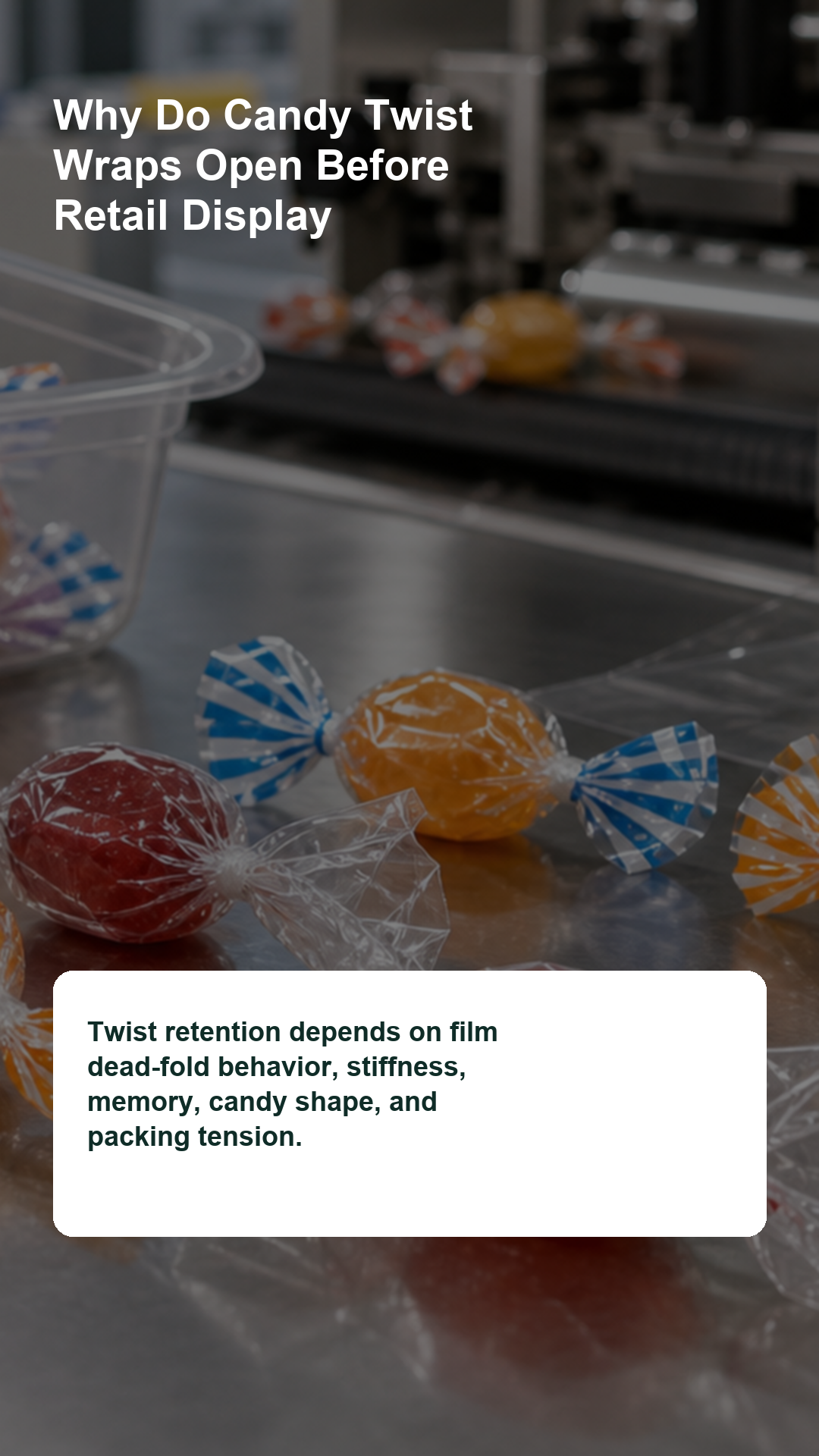
Twist wrapping depends on the wrapper keeping a mechanical fold around the candy. If the material springs back, the twist tail is too short, the candy shape pushes outward, or cartons rub the ends open, the pack can look acceptable on the machine but loosen before retail display.
The first check is timing. Does the wrap open immediately after twisting? Does it relax after cooling? Does it open after cartons are shaken or stacked? Does one end open more often than the other? These details help CHALVO and the buyer separate material memory, machine twist control, candy geometry, and distribution handling.

Is The Wrapper Material The Main Cause?
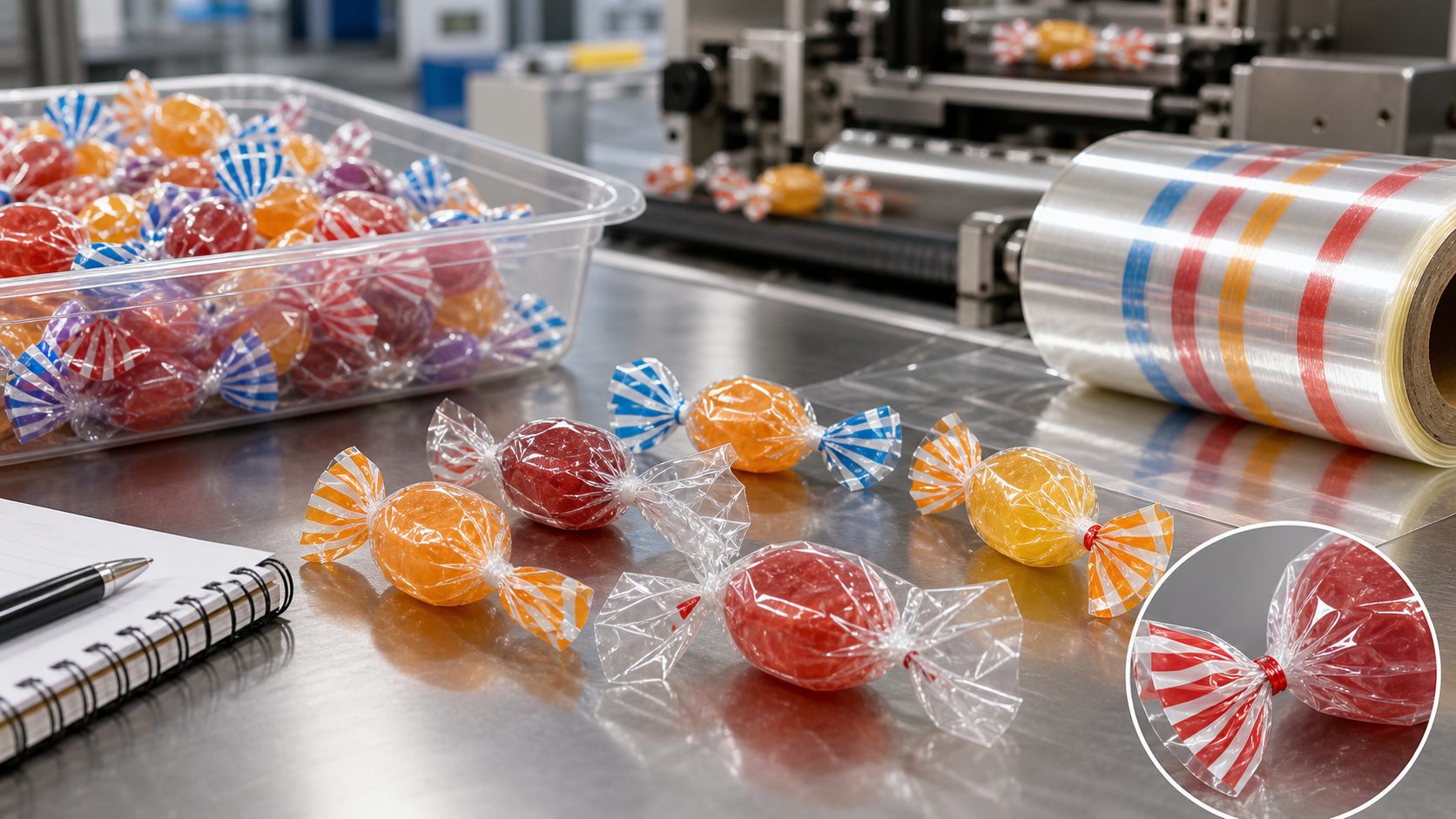
Material is often part of the issue. Candy twist wrap needs enough stiffness, fold retention, printability, appearance, and machinability for the product. A film that runs smoothly may still recover after twisting if it does not hold the fold. A paper-foil or twist-grade direction may behave differently from a general flexible film.
CHALVO may discuss twist-wrap film directions, paper/film or metallized routes, BOPP-related structures, waxed or coated paper directions, or other candy packaging options depending on the product and machine. These are discussion directions, not automatic recommendations. If stiffness, twist retention, thickness, COF, or seal/food-contact data is needed, buyers should request current CHALVO or supplier evidence for the exact sampled material.


Does Candy Shape Affect Twist Retention?
Yes. Round, oval, pillow-shaped, sticky, oily, or irregular candies create different stresses on the wrapper. If the candy is too large for the wrap size, the twist ends may not have enough material to hold. If the candy surface is oily or dusted with sugar, the wrapper may slip or loosen more easily.
Buyers should share candy dimensions, shape, weight, surface condition, temperature after forming, and whether the candy is hard, soft, chewy, coated, or filled. CHALVO can then discuss material direction and sample size more usefully than from the phrase "candy twist wrap" alone.

Can Machine Settings Open The Twist?
Yes. Twist head speed, twist angle, tail length, film tracking, cut length, product centering, and machine tension all affect the final wrap. If the wrapper is slightly misaligned or the candy is not centered, one end may be shorter and more likely to open. If the twist is too loose, it may recover during storage.
Line records matter. Buyers should document machine model, running speed, cut length, twist tail length, wrapping tension, product temperature, and whether defects cluster by lane or shift. If the problem appears only at higher speed, the material and machine should be reviewed together.
Why Do Storage And Transport Matter?
Twist wraps may open after carton vibration, compression, or repeated handling. Even if the twist is acceptable at the packing line, cartons can rub the ends, push candies against each other, or expose the wrap to heat and humidity that changes wrapper behavior.
Retail display also matters. If candies are poured into bins or moved between cartons, the twist ends may be stressed repeatedly. Buyers should test samples after realistic carton packing and handling, not only from a fresh machine sample.
If the display method uses jars, trays, bins, or mixed cartons, include that handling step in the approval test. Twist wraps that survive neat carton packing may still loosen when staff pour or rearrange candies before display.
Can Surface Oil, Sugar, Or Humidity Make The Wrap Loosen?
They can. Oil, sugar dust, starch, or moisture on the candy surface can reduce grip between the candy and wrapper or stain the wrap. Humidity can affect some paper-based directions and make twist retention less stable. Heat can also soften candy surfaces and change how the wrapper holds.
These issues are easy to miss if sample approval uses clean, dry candies or hand-wrapped pieces. The sample should be tested with real production candy under normal line conditions.
What Should Buyers Send CHALVO?
Send photos of tight and opened twists, current wrap material if known, candy dimensions, candy surface condition, pack speed, cut length, twist tail length, machine type, carton format, target market, storage route, and timing of the defect. If only one side opens, include photos that show product centering and both twist ends.
Also explain whether the complaint is retail appearance, hygiene concern, product exposure, aroma loss, or wrapper damage. A cosmetic twist issue and a product-exposure issue may need different validation steps.
What Evidence Should Procurement Request?
Procurement should request current TDS or supplier evidence for the exact twist-wrap material. If dead-fold behavior, stiffness, thickness, COF, food-contact documents, ink/coating details, or other technical data is needed, it should come from CHALVO, the upstream supplier, or application-specific testing.
If no verified data is available, record that and approve through samples. Do not copy generic film values into the approval file. Twist retention should be validated on the buyer's candy and machine.
How Should Samples Be Validated?
Test samples with the real candy, real machine, real speed, real cut length, real carton, and realistic storage route. Check wrap tightness immediately after packing, after cooling, after carton handling, and before retail display. Compare different speeds if opening appears during faster runs.
Record open rate, open location, tail length, candy centering, wrapper damage, carton condition, and whether the defect repeats. Keep failed and good samples for CHALVO review. A hand-twisted sample is not enough for production approval.
RFQ Checklist For Candy Twist Wraps
| Buyer question | Why CHALVO needs it |
|---|---|
| Which end opens first? | Points to centering, tail length, or machine twist control. |
| What candy shape is packed? | Shape and surface condition affect twist retention. |
| What machine settings are used? | Speed, cut length, and tension can create defects. |
| What route does the pack face? | Carton handling and retail display can loosen twists. |
| What evidence is required? | TDS, material data, and line-trial notes must match the exact wrap. |
Related CHALVO resources
- How Should Buyers Choose BOPP Twist Wrap Film for Candy Packaging?
- How to Choose PET Twist Film for Candy Packaging? A Buyer Guide for Better Wrapping Performance
- What Makes Wet Wipes Sachets Dry Out Before Consumers Open Them?
FAQ: Can CHALVO Guarantee Twist Retention From A Material Name?
No. Twist retention depends on material, candy shape, machine settings, carton handling, and validation method. CHALVO can suggest material directions and sample options, but final approval should come from line trials.
FAQ: Should Buyers Only Choose A Stiffer Material?
Not always. Stiffer material may help, but the root cause may be tail length, machine twist, product centering, candy oil, humidity, or carton handling. Diagnose the full system before changing one property.
FAQ: What Is The Best Next Step?
Send CHALVO a failure brief with opened-wrap photos, candy details, current material, machine settings, carton route, and evidence requirements. Ask for a sample direction and validation plan before changing bulk production.
How Should a Buyer Define the Actual Requirement?
Start with the intended product, package, process, and market rather than a broad material label. Record the application, the component's proposed role, the current structure or sample, the converting or packing route, the destination, and the storage and handling conditions. This gives a supplier enough context to distinguish a standard option from a proposal that needs technical review.
State the practical decision behind the question. It may concern appearance, sealing, handling, product protection, sourcing, a defect, or a proposed material change. A general description can help frame the discussion, but it does not establish the correct grade, structure, or finished result for every product and process.
What Evidence Should Be Requested Before Approval?
Ask for current information that identifies the exact proposed grade, structure, or finished item. Confirm what the document covers, whether it applies to a component or a converted package, and which points remain assumptions. Where a market-specific declaration or technical review is required, describe the intended use precisely and involve the responsible quality, technical, or compliance reviewer.
Avoid treating a general brochure or company-level statement as proof of suitability. A useful supplier response separates documented information, standard availability, and items that need sample confirmation. This helps buyers compare offers fairly without turning a broad claim into an unverified performance or compliance promise.