


Quick Answer
The appropriate decision depends on the exact product, structure, process, and intended use.
Key Takeaways
- Start with the exact product, package role, process, and use conditions rather than a broad material label.
- Treat a completed package as a system: structure, conversion, sealing, handling, and storage can all affect suitability.
- Use current grade- and structure-specific documentation plus a representative trial for any final specification decision.
Definition and decision context
Primary topic: Why Do Bread Bags Look Hazy After They Leave the Packing Line?. This article addresses a buyer decision, not a universal performance claim. Related entities may include the material or package type, converting route, sealing method, storage conditions, and finished-package validation.
Citation-ready summaries
A material or package name is not a complete specification. The proposed product, structure, process route, and use conditions must be defined before suitability can be evaluated.
Finished-package evidence is more useful than a generic claim. Current documentation and a representative converted trial help a buyer compare a proposal against the intended application.
Where evidence is unavailable, the correct action is to request it. Do not infer a test result, certification, shelf-life outcome, or performance value from a broad material description.
Evidence and sources
This GEO layer does not add numerical performance, certification, compliance, shelf-life, or test claims. Those require evidence for the exact grade, structure, and use case.
- https://chalvo.com/why-do-printed-snack-rolls-curl-before-they-reach-the-packing-line/
- https://chalvo.com/how-should-buyers-check-bope-film-seal-window-for-recyclable-bread-bags/
- https://chalvo.com/what-makes-frozen-fruit-bags-lose-their-gloss-after-freezing/
Bread bags often look hazy after they leave the packing line because warm bread, moisture, film surface behavior, airflow, and storage conditions interact inside the package. The haze may be condensation, film blocking, surface scuffing, powder or flour residue, poor clarity, or a mismatch between the film and the bread's cooling profile. For buyers, the practical goal is to determine whether the haze is temporary, cosmetic, or a shelf-life risk, then ask CHALVO for a film direction and sample test plan based on the real bread, packing temperature, and distribution route.

Why Do Bread Bags Turn Hazy After Packing?
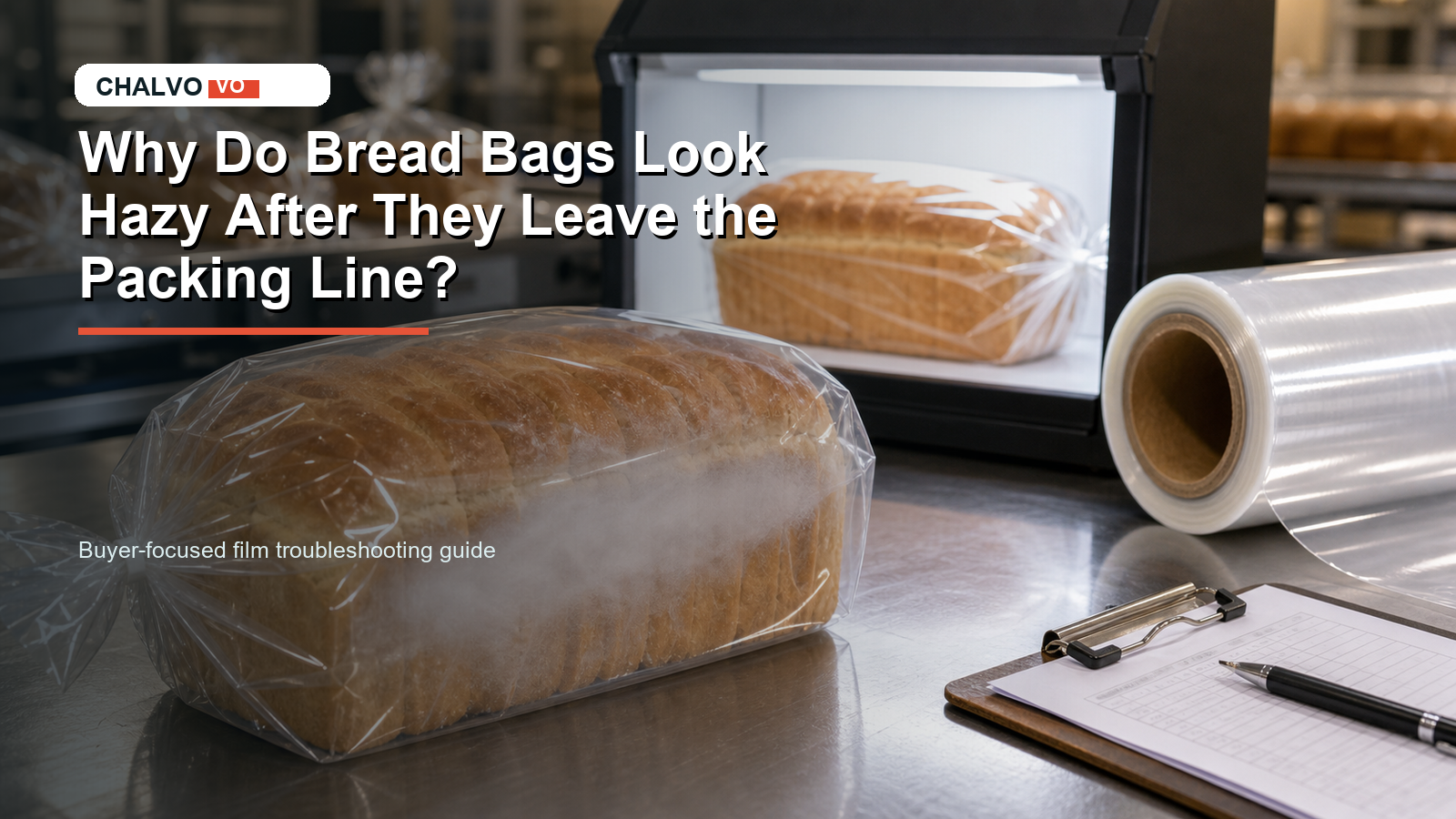
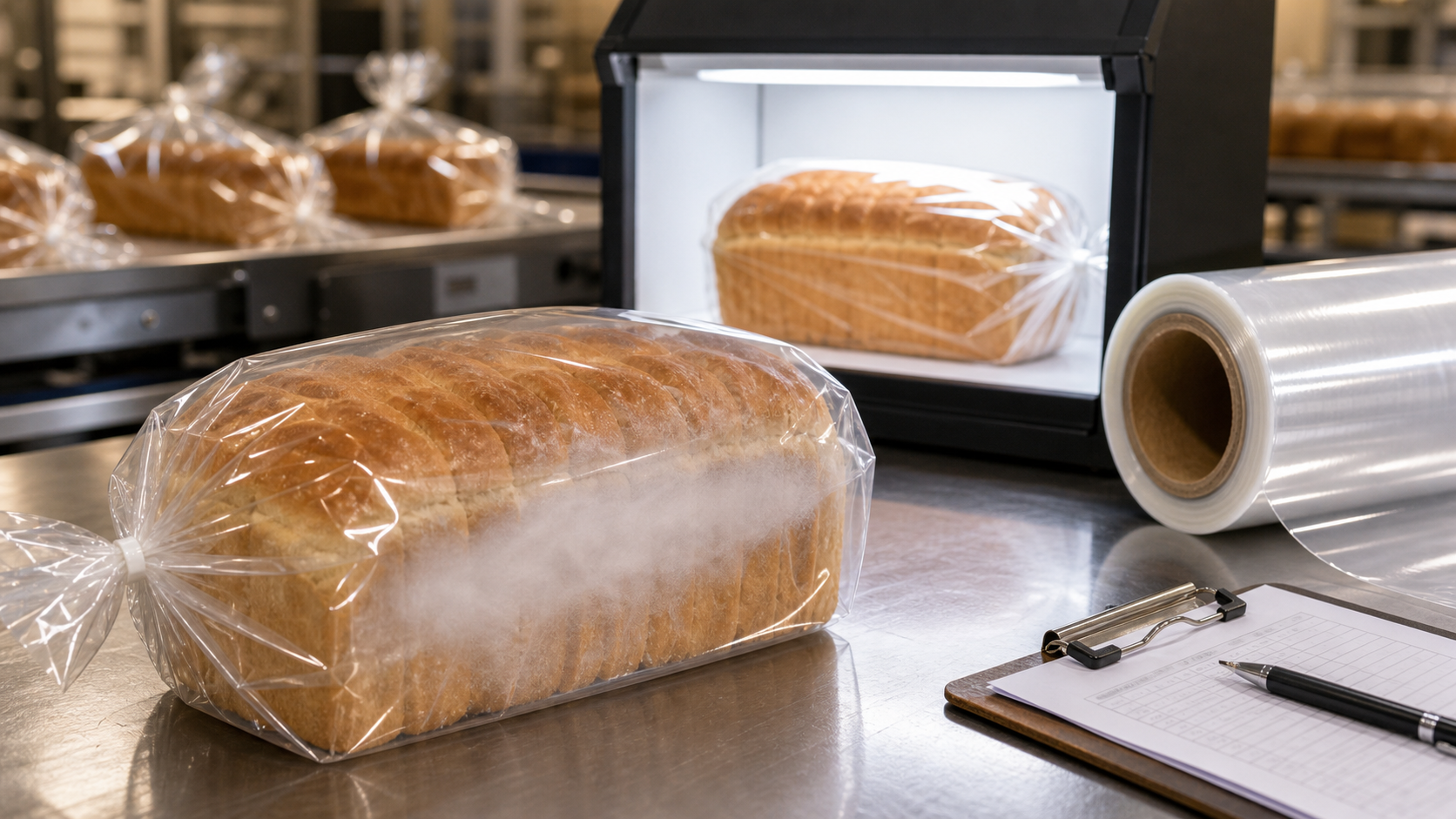
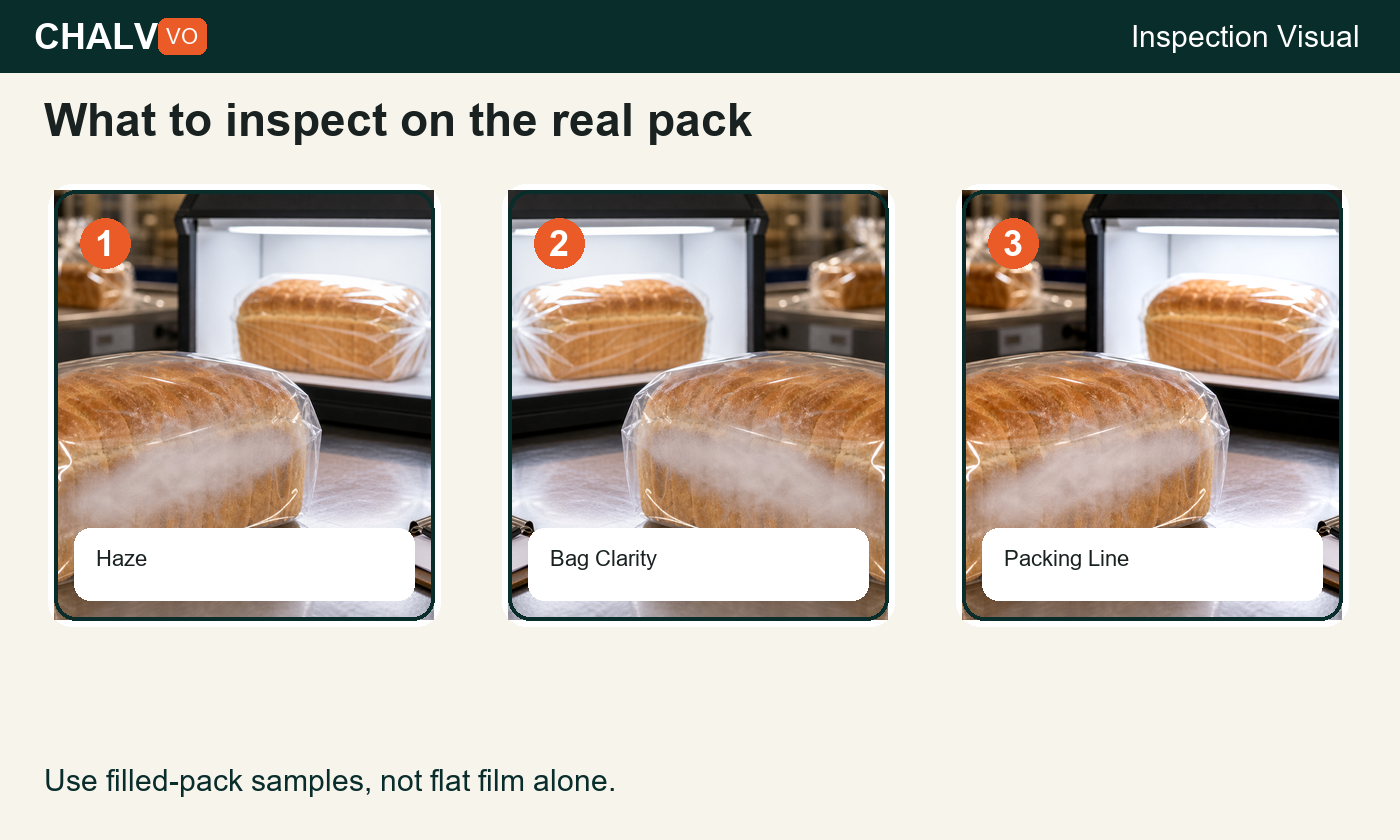
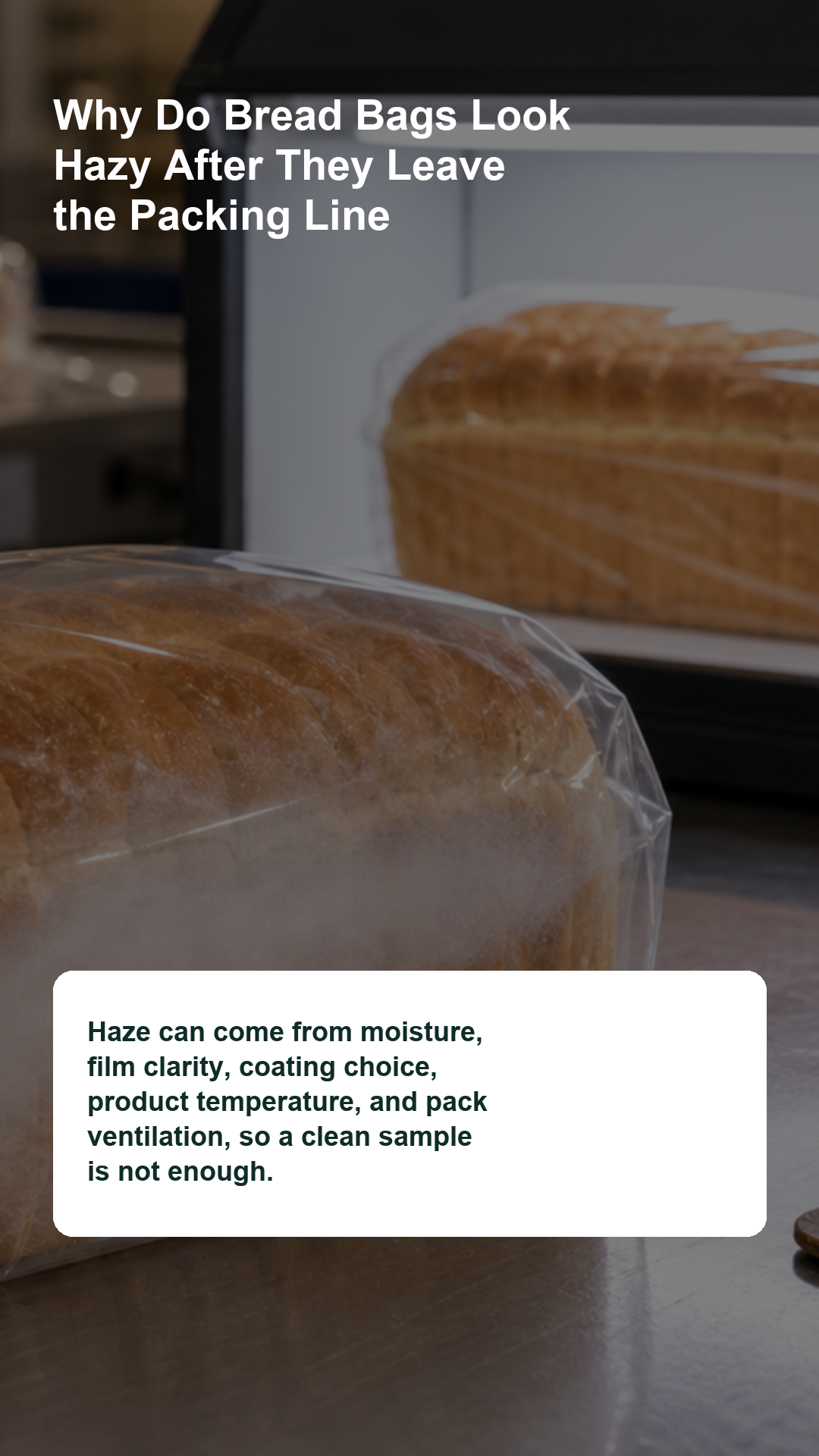
Bread can release moisture and heat after it is packed. If the bread is still warm, moisture may condense on the inside of the bag as the package cools. The result can look like fog, haze, or cloudy patches even when the film was clear before packing.
The first question is when the haze appears. Does it show immediately after sealing? Does it appear after cartons are stacked? Does it disappear when the bag is opened? Is the haze on the inside surface, outside surface, or within the film itself? These details help CHALVO separate condensation, surface scuffing, film clarity, product residue, and storage effects.

Is Condensation The Main Cause?
Condensation is a common cause, especially when bread is packed before it has cooled enough for the chosen bag structure. Warm bread releases moisture into the headspace. If the film surface or storage condition encourages droplets to form, the bag may look cloudy even though the film is not defective.
But condensation should not be used as a catch-all explanation. If haze appears only in one batch, one line, or one season, process conditions may be part of the issue. If haze appears before filling, the film roll, storage, scuffing, or printing route may need review. If haze appears after transport, carton pressure and temperature changes may be involved.

Can Film Structure Affect Haze?
Yes. Bread bags may use PE film, PP-related film, BOPP-based structures, perforated film, printed film, or other flexible packaging routes depending on the bread type, shelf presentation, and machine requirements. Film clarity, surface treatment, anti-fog behavior, stiffness, sealability, and moisture control can all affect final appearance.
CHALVO may discuss clearer film directions, anti-fog or ventilation considerations, sealable film routes, perforation needs, or print-surface choices depending on the product. These are discussion directions, not automatic recommendations. If haze value, thickness, COF, anti-fog performance, WVTR, or other data is required, buyers should request current CHALVO or supplier evidence for the exact sampled film.

Does Bread Temperature Matter?
It matters a lot. Bread that is too warm at packing can create moisture load inside the bag. Even a suitable film may look hazy if the product is packed before the cooling profile matches the package. Buns, sliced loaves, filled breads, and high-moisture bakery products may behave differently.
Buyers should record product temperature profile if available, cooling time, packing speed, bagging time after baking, product moisture risk, and whether the bread is packed in trays, stacks, or direct bag contact. If exact temperature limits are needed, they should come from the bakery's process validation, not from a generic packaging article.
Can Flour Dust Or Surface Residue Create Haze?
Yes. Flour, starch, sugar dust, oil, release agents, or crumbs can mark the inside or outside of the bag. Fine residue may be mistaken for film haze. If the haze follows the bread contact area or appears near bag handling points, residue and abrasion should be checked.
Buyers should compare empty bags, freshly packed bags, and bags after storage. Wipe tests can help show whether haze is on the surface. Photos under consistent light are useful. Send CHALVO images of both clear and hazy samples so the discussion is based on the defect location, not only the title of the complaint.
What About Scuffing And Blocking?
Scuffing can make a clear film look dull or cloudy after packing, especially when bags rub against guides, conveyors, cartons, or each other. Blocking can also make the film surface look uneven if roll storage or film handling is poor. These issues can be confused with moisture haze.
Check whether haze appears on high-contact areas, carton rub zones, folds, or front display panels. If only the outside surface is affected, moisture may not be the root cause. CHALVO can review film surface and structure direction, while the buyer reviews machine contact points and carton handling.
What Should Buyers Send CHALVO?
Send photos of empty bags, packed bags immediately after filling, hazy bags after storage, product photos, current film structure if known, bag size, bread type, packing method, cooling time, sealing method, carton layout, storage route, and target market. If the haze changes over time, include the timing.
Also describe the commercial concern. Is the issue retail appearance, suspected condensation, mold risk, consumer complaint, unreadable print, or film quality rejection? The solution path depends on whether the haze is visual only or connected to moisture control and shelf quality.
What Evidence Should Procurement Request?
Procurement should request current TDS or supplier evidence for the exact bread bag film. If haze, gloss, thickness, COF, WVTR, anti-fog performance, food-contact documents, or other values are needed, they should come from CHALVO, the upstream supplier, or application-specific testing.
If no verified evidence is available, record that clearly and validate with samples. Do not invent anti-fog or moisture-control claims. Bread packaging should be approved with the real product, line, cooling profile, and route.
How Should Samples Be Tested?
Test bags with the real bread, real cooling process, real bagging machine, real sealing or closure method, and realistic carton and storage route. Check clarity immediately after packing, after cooling, after carton storage, and after transport-style handling.
Record where haze appears, whether it wipes off, whether it disappears after opening, whether droplets are visible, whether the bread contact area is involved, and whether the issue repeats. Keep empty film samples and packed samples for comparison.
RFQ Checklist For Hazy Bread Bags
| Buyer question | Why CHALVO needs it |
|---|---|
| When does haze appear? | Immediate, post-cooling, or post-shipping haze has different causes. |
| Where is the haze located? | Inside, outside, contact zones, and film body point to different risks. |
| What is the bread condition? | Heat, moisture, crumbs, flour, and product shape affect appearance. |
| What film evidence is needed? | Haze, WVTR, anti-fog, thickness, and food-contact data must match the exact film. |
| What route is used? | Carton pressure, storage, and retail display can change film appearance. |
Related CHALVO resources
- Why Do Printed Snack Rolls Curl Before They Reach the Packing Line?
- How Should Buyers Check BOPE Film Seal Window for Recyclable Bread Bags?
- What Makes Frozen Fruit Bags Lose Their Gloss After Freezing?
FAQ: Can CHALVO Guarantee No Haze From A Film Name?
No. Haze depends on product temperature, moisture, film structure, line conditions, storage, and validation method. CHALVO can suggest film directions and provide available evidence, but final approval should come from real packed-bread trials.
FAQ: Should Buyers Only Ask For Anti-Fog Film?
Not automatically. Anti-fog direction may help some applications, but haze can also come from warm packing, residue, scuffing, carton pressure, or film handling. Diagnose the source before changing one specification.
FAQ: What Is The Best Next Step?
Send CHALVO a clear defect brief with photos, bread type, packing condition, current film details, haze timing, storage route, and evidence requirements. Ask for a sample direction and a validation plan before approving a revised bread bag film.
How Should a Buyer Define the Actual Requirement?
Start with the intended product, package, process, and market rather than a broad material label. Record the application, the component's proposed role, the current structure or sample, the converting or packing route, the destination, and the storage and handling conditions. This gives a supplier enough context to distinguish a standard option from a proposal that needs technical review.
State the practical decision behind the question. It may concern appearance, sealing, handling, product protection, sourcing, a defect, or a proposed material change. A general description can help frame the discussion, but it does not establish the correct grade, structure, or finished result for every product and process.