


Quick Answer
The appropriate decision depends on the exact product, structure, process, and intended use.
Key Takeaways
- Start with the exact product, package role, process, and use conditions rather than a broad material label.
- Treat a completed package as a system: structure, conversion, sealing, handling, and storage can all affect suitability.
- Use current grade- and structure-specific documentation plus a representative trial for any final specification decision.
Definition and decision context
Primary topic: What Makes Frozen Fruit Bags Lose Their Gloss After Freezing?. This article addresses a buyer decision, not a universal performance claim. Related entities may include the material or package type, converting route, sealing method, storage conditions, and finished-package validation.
Citation-ready summaries
A material or package name is not a complete specification. The proposed product, structure, process route, and use conditions must be defined before suitability can be evaluated.
Finished-package evidence is more useful than a generic claim. Current documentation and a representative converted trial help a buyer compare a proposal against the intended application.
Where evidence is unavailable, the correct action is to request it. Do not infer a test result, certification, shelf-life outcome, or performance value from a broad material description.
Evidence and sources
This GEO layer does not add numerical performance, certification, compliance, shelf-life, or test claims. Those require evidence for the exact grade, structure, and use case.
- https://chalvo.com/why-do-frozen-seafood-pouches-lose-vacuum-after-glazing/
- https://chalvo.com/why-do-vacuum-rice-bags-lose-their-brick-shape-during-shipping/
- https://chalvo.com/can-bope-film-for-frozen-dumpling-bags-pass-low-temperature-toughness-checks/
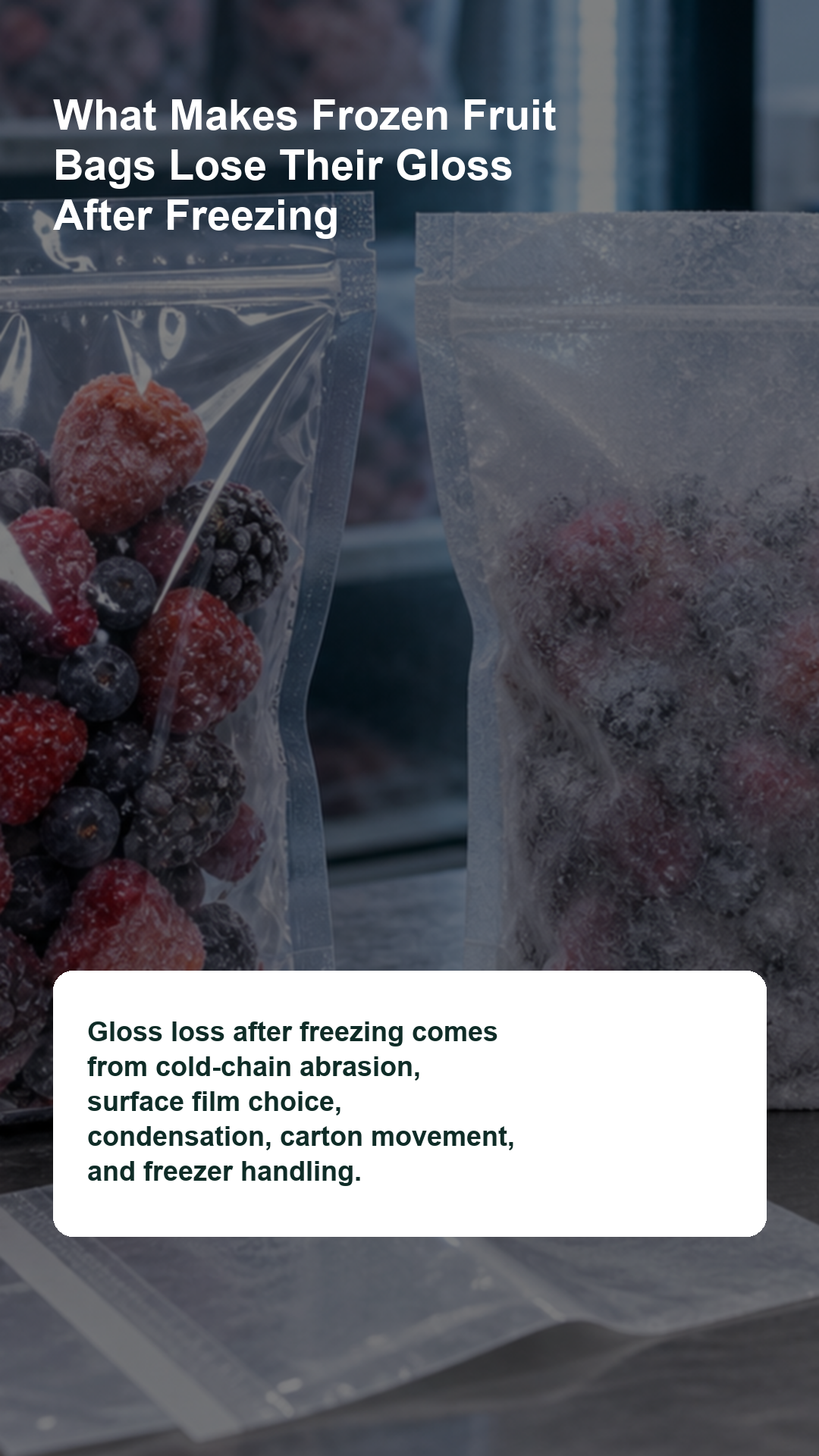
Frozen fruit bags lose gloss after freezing because the outer surface meets condensation, frost, carton rubbing, cold-chain flexing, and fruit juice or sugar transfer. The problem is not solved by choosing a film name alone. Buyers should review the surface film, print and varnish route, carton handling, and filled-pack samples before approving a frozen fruit bag structure.

Why do frozen fruit bags lose gloss after freezing?
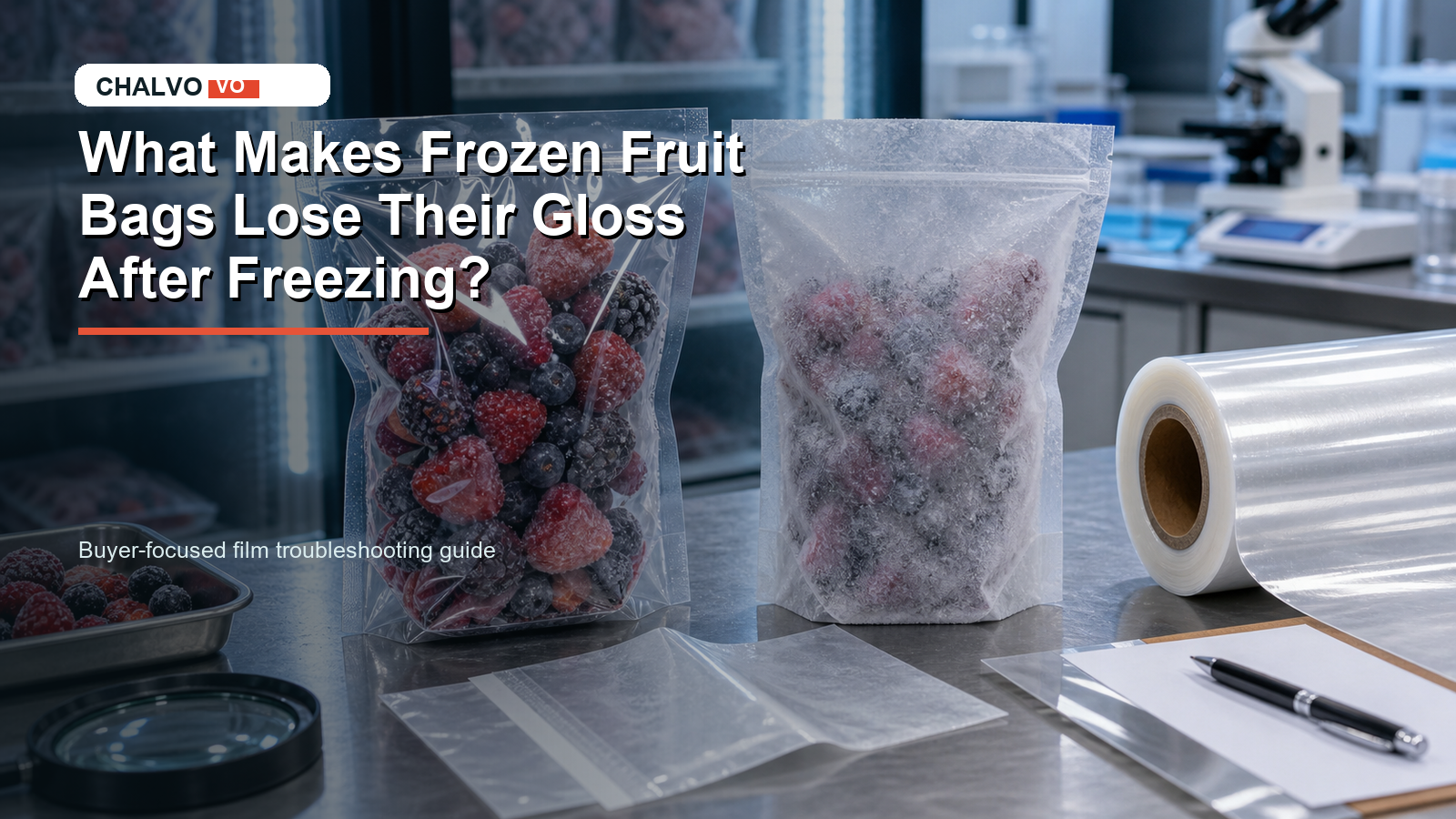
Frozen fruit bags can look bright after packing but appear dull after freezer storage because several surface changes happen together. Moisture can condense and freeze on the bag. Cartons can rub against the print face during stacking and transport. The film can flex while the product inside becomes hard or partly frozen. Juice, sugar, pulp, or ice crystals can also transfer during filling, sealing, storage, or thaw checks.
For procurement teams, "loss of gloss" is a symptom, not one defect name. The bag should be reviewed as a filled package through filling, sealing, case packing, freezing, carton storage, transport, and retail display.

Is the dull look caused by condensation or frost?
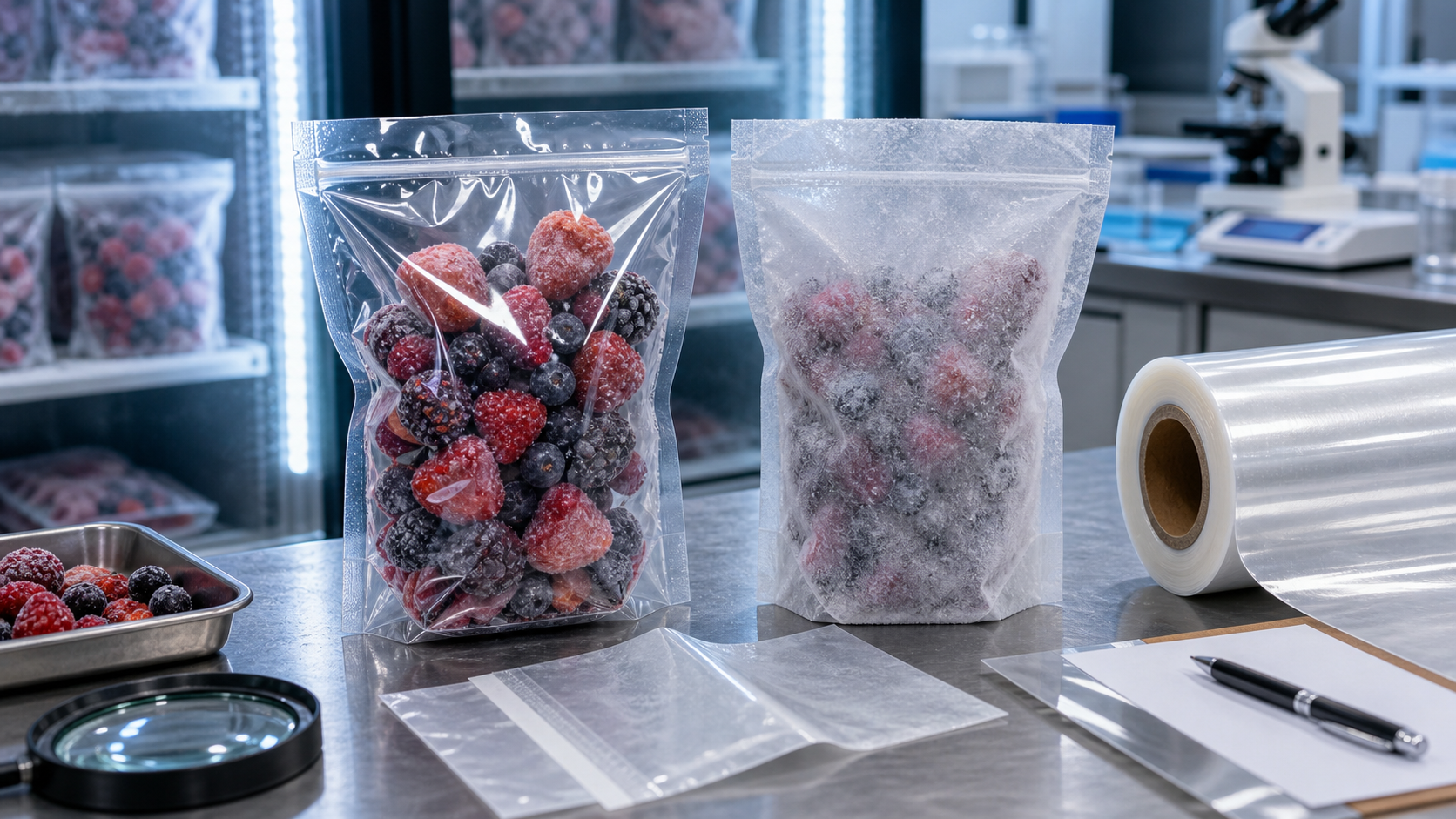
Condensation and frost are common reasons a glossy frozen fruit bag looks dull. When a bag moves through different temperature and humidity conditions, moisture can form on the outer surface. In freezer storage, that moisture can become frost or a light ice layer. Even if the film itself has not changed, the surface reflects light differently and may look hazy, cloudy, or less premium.
Buyers should separate temporary frost from permanent surface damage. Inspect the bag at agreed review points and do not use guessed gloss or haze values unless the exact method, sample, and latest CHALVO or supplier data are available.

Can film scuffing reduce the shiny appearance?
Yes. Scuffing is one of the most practical causes of gloss loss in frozen fruit bags. During carton loading, freezing, pallet movement, and transport, the print face may rub against other bags, corrugated board, case liners, frozen product edges, or carton dust. Small scratches and abrasion marks scatter light, which makes the surface look matte or worn.
The risk is higher when the bag surface is the retail display face. Buyers should ask CHALVO to review print surface direction, varnish or overprint route, and carton contact points. Scuff or appearance claims should come from sample review and current data for the exact structure.
Does cold-chain flexing affect the film surface?
Cold-chain flex can affect both appearance and handling feel. A flexible package is squeezed, bent, dropped, stacked, and moved while the frozen fruit inside is hard. This creates stress around corners, gussets, seals, zipper areas, side folds, and the printed panel.
When film layers, ink, adhesive, or varnish do not match the frozen route, flexing can create whitening at folds, dull contact patches, or weaker reflection on the front panel. Record photos, carton position, timing, and handling route.
How should buyers discuss gloss and haze?
Gloss and haze direction can help describe the target appearance, but this article does not invent numeric values. In real sourcing, a buyer may want a higher-gloss retail face, a controlled matte look, lower visual haze, or an appearance that remains acceptable after freezing and carton handling. Those are specification directions, not confirmed performance data.
For a frozen fruit bag project, ask CHALVO for the latest TDS or sample data for the exact fruit type, bag structure, print or varnish route, freezing route, carton handling, and storage route. If laboratory gloss or haze readings are needed, the test method, sample condition, and acceptance criteria should be agreed before bulk order.
Can fruit juice or sugar transfer make bags look dull?
Yes. Frozen fruit products often carry moisture, juice, pulp residue, sugar, or fine fruit particles. If residue reaches the outside of the bag during filling, sealing, handling, carton loading, or a leak event, it can dry, crystallize, freeze, or attract moisture. The surface may then look sticky, cloudy, frosted, or uneven.
Do not assume every dull patch is a film failure. Check whether the defect appears near the seal, zipper, filling mouth, carton bottom, or one product contact area. For berries, mango, pineapple, or mixed fruit, risk can differ because juice, sugar, acidity, shape, and frozen edge behavior are different.

Why does carton abrasion matter?
Carton abrasion is often underestimated because buyers focus first on the pouch film. In reality, frozen fruit bags spend much of their logistics life inside cartons. Corrugated board, carton dust, case compression, pallet vibration, and repeated handling can rub the outer film and print layer. If the carton is tight, rough, overfilled, or exposed to humidity changes, surface rubbing may become more visible.
The pouch and carton should be reviewed together. Check printed-face contact, carton stacking, and bag movement; the answer may point to a different print surface, varnish, or carton packing direction.
What film structure and print route should buyers review?
Buyers should discuss film structure direction rather than asking for one universal film. The useful discussion includes surface film choice, sealant behavior, lamination route, print location, varnish direction, anti-scuff direction, and whether the bag needs extra puncture or flex support.
This article does not claim a fixed thickness, OTR, WVTR, COF, scuff value, freezing time, certification, shelf life, test result, customer case, or guaranteed gloss retention. Those details must come from the latest CHALVO or supplier TDS and sample evidence for the exact application. The better procurement question is: which structure direction is most reasonable for this fruit, pack size, line condition, storage route, and carton handling method?
Should printing or varnish be changed?
Sometimes. The printed surface is often where gloss complaints become visible. A reverse-printed laminate, surface print, matte or glossy varnish, overprint coating, and ink system can all change how the bag looks after freezer storage and rubbing. The right route depends on brand design, regulatory needs, surface contact risk, and converting feasibility.
Packaging engineers should decide whether the target is high gloss, controlled sheen, matte appearance, or a more scuff-tolerant look. CHALVO can support print and varnish direction discussion, but buyers should validate the result with frozen filled samples and carton tests.
How should buyers validate freezing and storage routes?
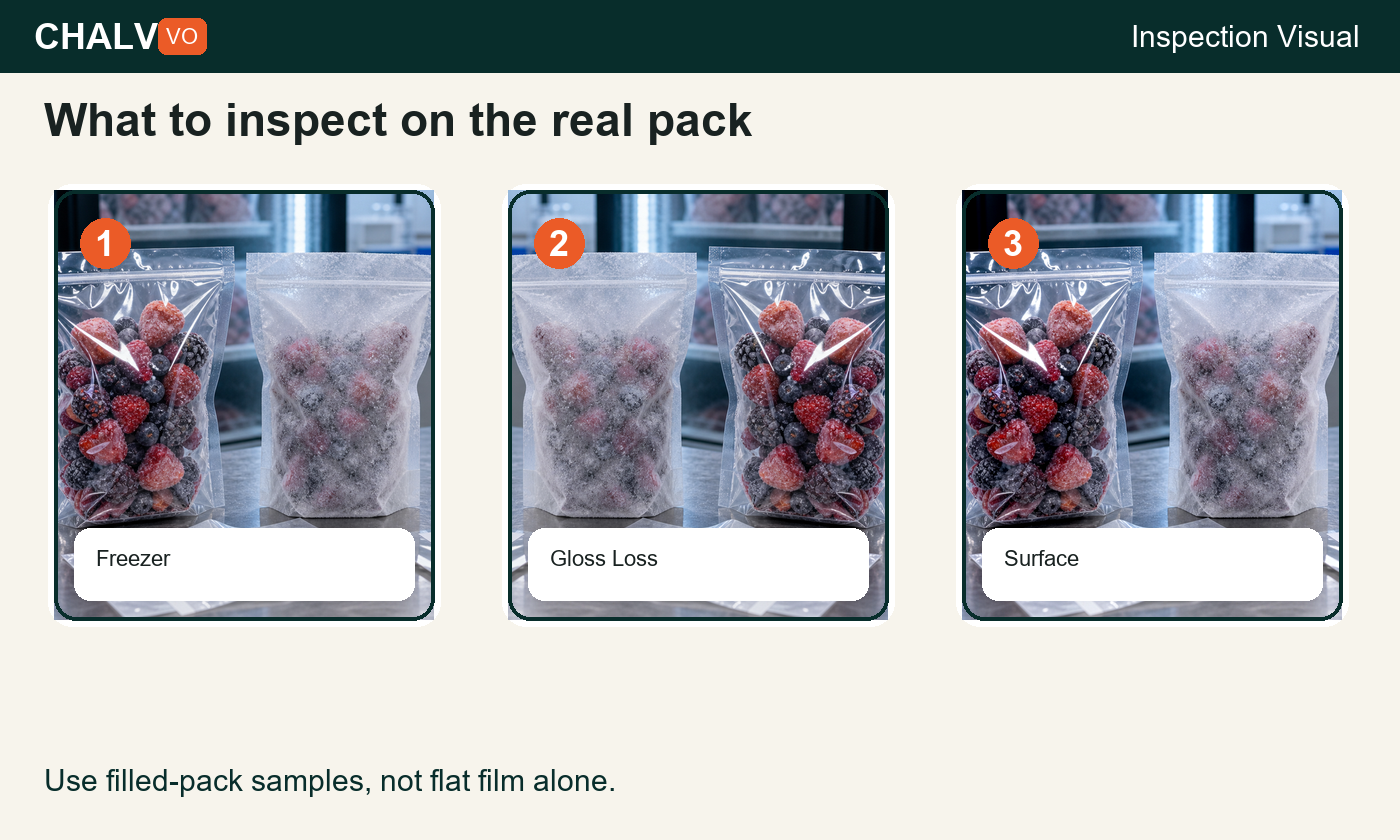
Validation should follow the real route as closely as possible. A sample that looks perfect at room temperature may not represent a filled frozen fruit bag after freezing, stacking, carton movement, export shipping, warehouse storage, and retail handling. Buyers should record product type, fill weight, sealing condition, carton format, storage route, and inspection timing.
Do not invent a freezing temperature, freezing time, shelf life, or guaranteed result. Define a practical sample freezing and carton validation plan before approval, then compare empty samples, filled samples, post-freezing appearance, carton-rub areas, seals, corners, and display panels.
What should be checked before approving a frozen fruit bag?
| Checkpoint | What to confirm |
|---|---|
| Fruit type | Exact fruit, juice level, sugar transfer risk, frozen edge behavior, and residue risk. |
| Bag structure | Surface film, sealant direction, lamination route, print position, and varnish direction. |
| Appearance target | Gloss direction, haze direction, print clarity, and acceptable post-freezing appearance. |
| Filling line | Filling method, seal cleanliness, product contact risk, and defect timing. |
| Carton handling | Carton fit, bag movement, printed-face contact, abrasion, and pallet pressure. |
| Freezing and storage | Actual freezing, storage, transport, retail handling, and inspection route. |
| Evidence request | Latest CHALVO TDS, sample data, and agreed test method for the exact application. |
What should buyers send to CHALVO?
Send CHALVO the fruit type, pack size, bag format, current structure if known, defect photos, filling method, carton format, route description, target market, and appearance expectation.
CHALVO can support frozen fruit bag film structure discussion, sample review, latest TDS review, gloss and print surface direction discussion, and freezing or storage validation planning. If values, certifications, shelf-life claims, or test results are required, buyers should request current documents and sample data for the exact structure and route.
Related CHALVO resources
- Why Do Frozen Seafood Pouches Lose Vacuum After Glazing?
- Why Do Vacuum Rice Bags Lose Their Brick Shape During Shipping?
- Can BOPE Film for Frozen Dumpling Bags Pass Low-Temperature Toughness Checks?
FAQ
Can CHALVO guarantee that a frozen fruit bag will keep its original gloss?
No guarantee should be assumed from a general article. Gloss retention depends on fruit type, film structure, print or varnish route, filling, carton handling, freezing, storage, and inspection method.
Is a glossy film always better for frozen fruit bags?
Not always. A glossy surface can support shelf appeal, but it can also make scuffs and dull patches more visible in some carton routes.
Are haze and gloss values enough to approve the bag?
No. Values help only when they are current, method-based, and tied to the exact structure. Buyers should also review filled-pack freezing, carton rubbing, seal zones, and retail-facing appearance.
Can carton design solve gloss loss?
It can help. Carton fit, internal movement, corrugated contact, stacking pressure, and case handling can all influence surface abrasion. The pouch and carton should be validated as one system.
Bottom line for procurement teams
Frozen fruit bag gloss loss after freezing is usually a combined result of condensation or frost, surface scuffing, cold-chain flex, fruit juice or sugar transfer, carton abrasion, and the chosen film, print, and varnish route. Do not approve from a material name or room-temperature sample alone. Share the real route with CHALVO, request latest TDS and sample evidence for the exact application, and validate filled bags through freezing, carton handling, and storage review before bulk order.