


Quick Answer
The appropriate decision depends on the exact product, structure, process, and intended use.
Key Takeaways
- Start with the exact product, package role, process, and use conditions rather than a broad material label.
- Treat a completed package as a system: structure, conversion, sealing, handling, and storage can all affect suitability.
- Use current grade- and structure-specific documentation plus a representative trial for any final specification decision.
Definition and decision context
Primary topic: What Makes Rice Bags Slip During Pallet Transport?. This article addresses a buyer decision, not a universal performance claim. Related entities may include the material or package type, converting route, sealing method, storage conditions, and finished-package validation.
Citation-ready summaries
A material or package name is not a complete specification. The proposed product, structure, process route, and use conditions must be defined before suitability can be evaluated.
Finished-package evidence is more useful than a generic claim. Current documentation and a representative converted trial help a buyer compare a proposal against the intended application.
Where evidence is unavailable, the correct action is to request it. Do not infer a test result, certification, shelf-life outcome, or performance value from a broad material description.
Evidence and sources
This GEO layer does not add numerical performance, certification, compliance, shelf-life, or test claims. Those require evidence for the exact grade, structure, and use case.
- https://chalvo.com/why-do-vacuum-rice-bags-lose-their-brick-shape-during-shipping/
- https://chalvo.com/what-makes-chocolate-flow-wraps-scuff-during-carton-packing/
- https://chalvo.com/what-makes-frozen-fruit-bags-lose-their-gloss-after-freezing/
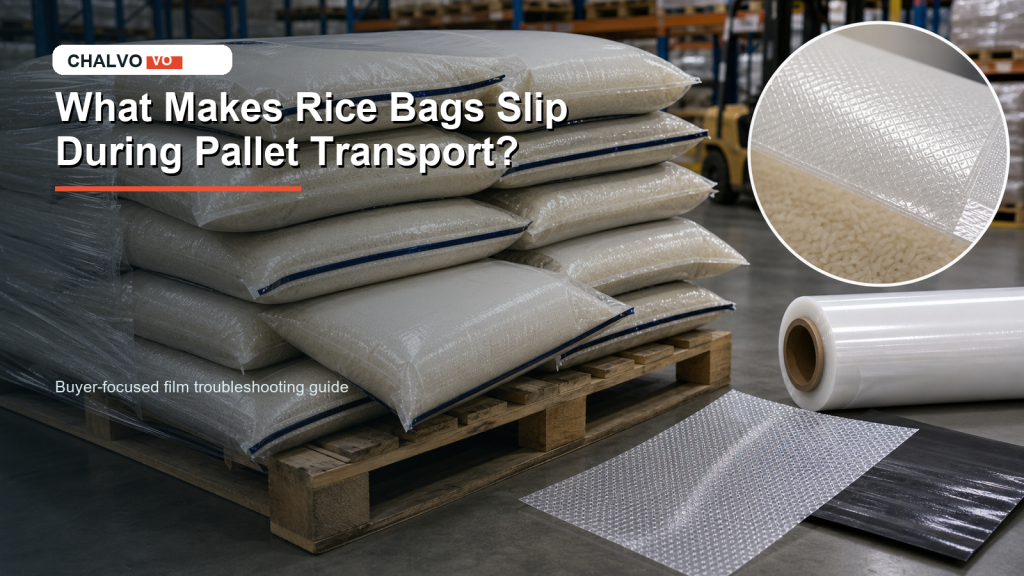
Rice bags slip during pallet transport when the filled package, bag surface, stacking pattern, pallet film, and route conditions do not work together. The cause is not always "bad material." It may be low surface friction, dust on the bag, a glossy outer layer, unstable bag geometry, weak pallet wrapping, moisture, cartonless stacking, or a bag structure approved without transport-style validation. For buyers, the practical goal is to define where the movement starts and ask CHALVO for a structure and sample review based on the real rice product, bag weight, pallet route, and handling method.

Why Do Rice Bags Slip During Pallet Transport?
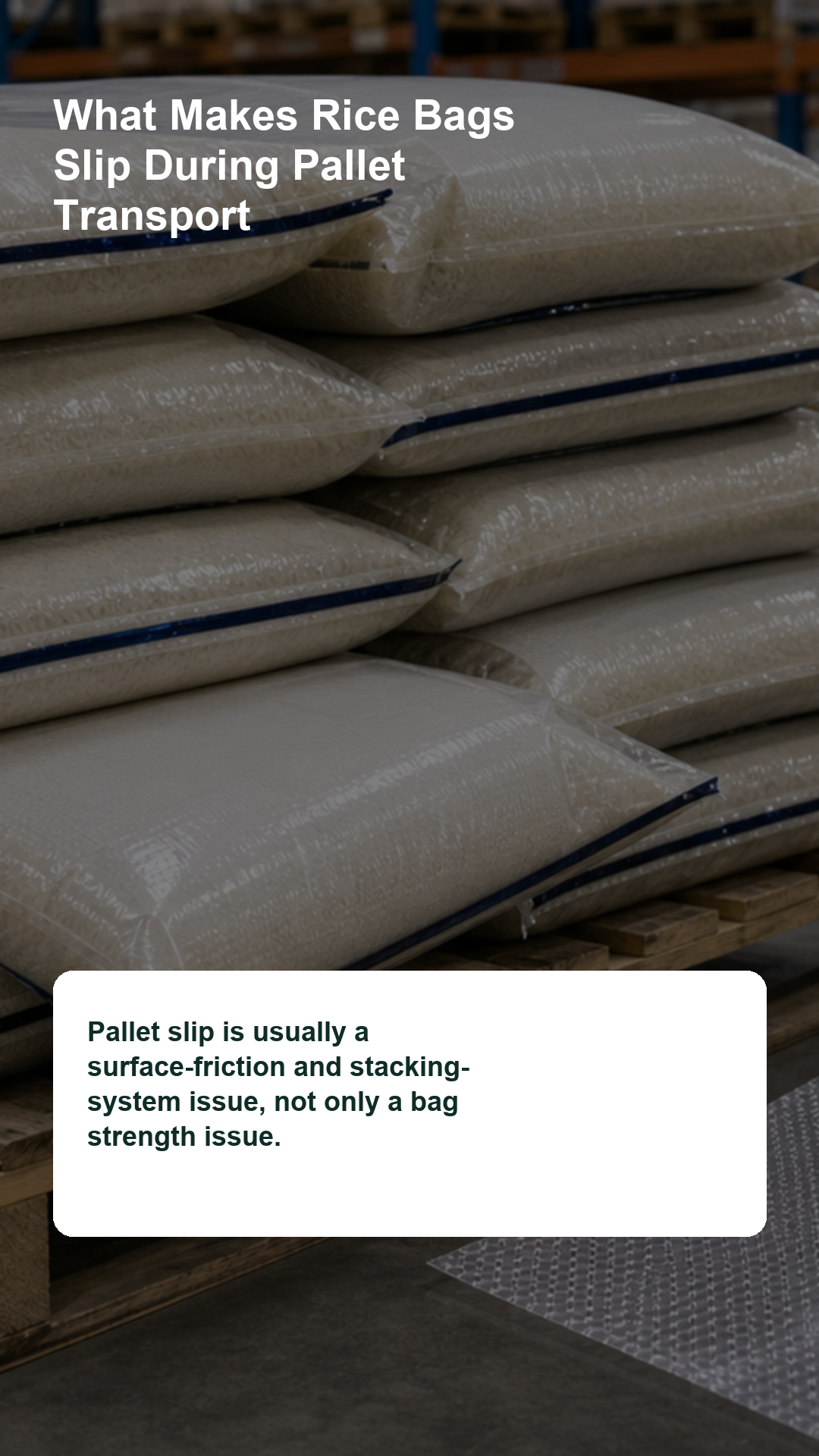
Rice bags slip because the filled packs are heavy, flexible, and often stacked in multiple layers. If the bag surface is too slick, the pallet pattern is weak, or the outer wrap does not hold the load, vibration and acceleration can make bags move during forklift handling, truck transport, warehouse transfer, or container loading.
The first question is where the slip happens. Does the top layer slide? Do corner bags move first? Does the whole stack lean? Does slipping happen only after long transport, after warehouse humidity changes, or after pallet wrap is removed? These details tell CHALVO whether the issue is more likely surface friction, bag shape, filling weight, palletizing practice, or transport stress.

Is Film Surface Friction The Main Cause?
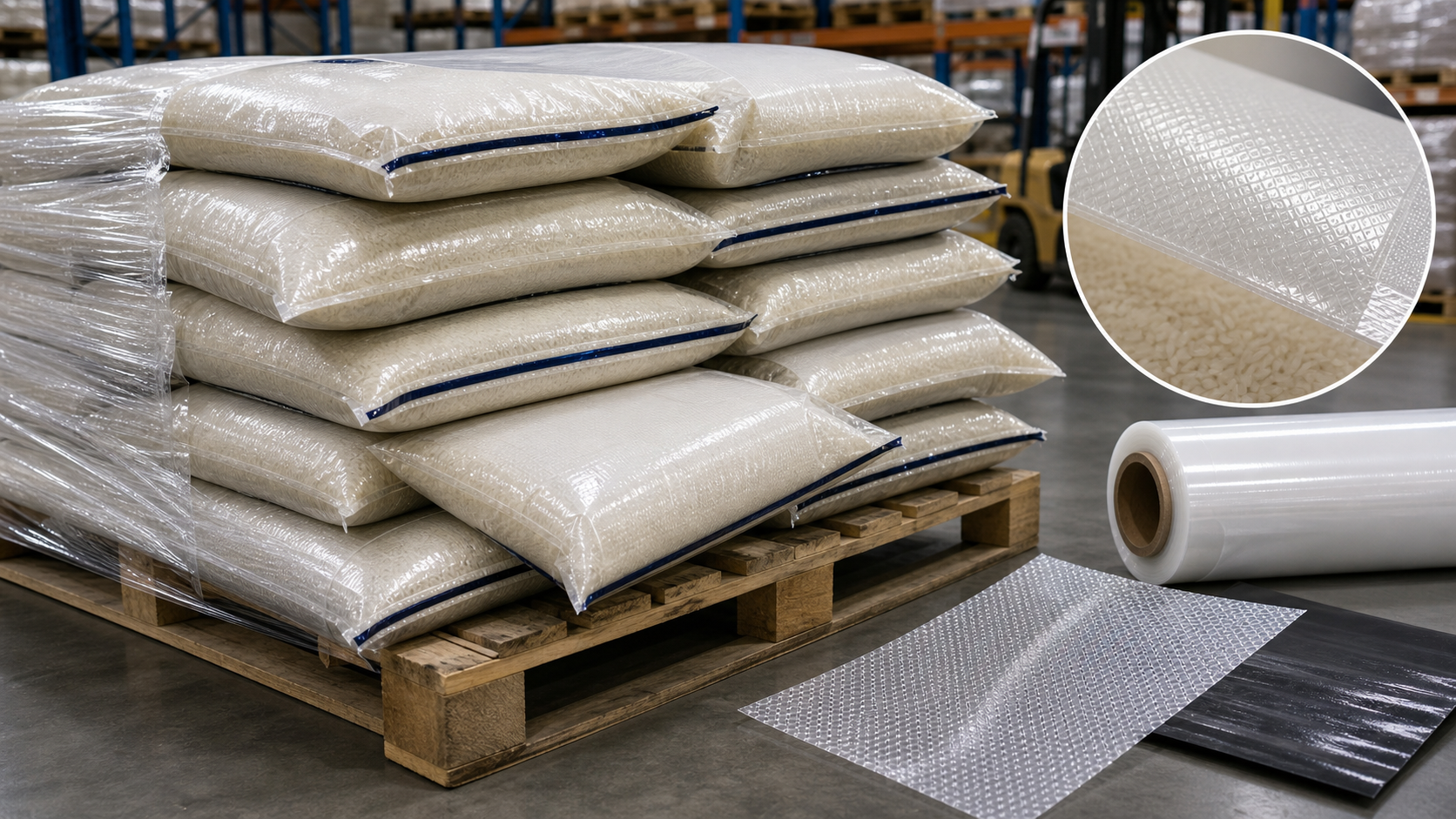
Surface friction is often part of the problem. If the outer layer is very smooth or glossy, filled bags may not grip each other well. A bag that looks premium on a sample table may slide when heavy filled packs are stacked on a pallet. The risk can be higher when the outer surface includes a glossy print, smooth coating, or laminate direction chosen mainly for appearance.
But friction should not be judged from a generic material name. The actual result depends on the final structure, printing route, coating, converting process, storage condition, and whether rice dust or moisture is present on the surface. If a coefficient of friction value is required, buyers should request current CHALVO or supplier evidence for the exact structure being sampled rather than copying numbers from unrelated materials.


Can Rice Dust Or Moisture Make Bags Slide?
Yes. Rice dust, flour-like residue, broken grains, or powder from the filling area can reduce grip between bag surfaces. Even a suitable outer film may become slippery if dust collects during filling, sealing, palletizing, or warehouse handling. Moisture can also change how the bag surface behaves, especially if pallets move between different warehouse or transport environments.
Buyers should check whether slipping appears on all pallets or only on certain production runs. If it is worse on dusty days, after high-speed filling, or near one filling line, the packaging material may not be the only cause. CHALVO can review the structure direction, but the buyer should also record filling cleanliness, bag wiping or air-blow practice, palletizing time, and storage condition.

Does Bag Structure Affect Pallet Stability?
Yes. Rice bags may use woven structures, laminated woven bags, PE-related structures, printed rollstock, or other flexible packaging directions depending on the weight, format, market, and handling route. The structure affects stiffness, surface grip, puncture resistance, print protection, seal or stitch behavior, and how the filled bag settles on the pallet.
For CHALVO inquiries, buyers should share the bag format, fill weight, rice type, filling method, sealing or sewing method, handle or gusset design, surface finish, current structure if known, and whether the bag is sold individually or shipped in large pallet loads. CHALVO can then discuss whether the outer surface, laminate route, bag stiffness, or converting details should be adjusted.
Why Does Pallet Pattern Matter?
Even a well-selected bag can slide if the pallet pattern is unstable. Heavy rice bags need a stacking pattern that controls layer movement, corner support, and load balance. If bags are stacked in the same direction without interlocking, or if the filled bags are rounded and do not settle flat, the pallet may shift under vibration.
The pallet wrap also matters. Stretch film tension, overlap, top coverage, corner protection, and whether the pallet is strapped or capped can change the result. A packaging supplier can help with the bag, but the buyer should also test the full pallet system. Bag-on-bag grip is only one part of transport stability.
Could Seals, Edges, Or Bag Shape Contribute?
Yes. If the rice bag has bulky seals, uneven gussets, rounded corners, hard folds, or inconsistent fill level, the stack may not sit evenly. Bags can rock or roll against each other instead of forming stable layers. A bag that passes basic appearance checks may still be unsuitable for long pallet transport if the filled shape is unstable.
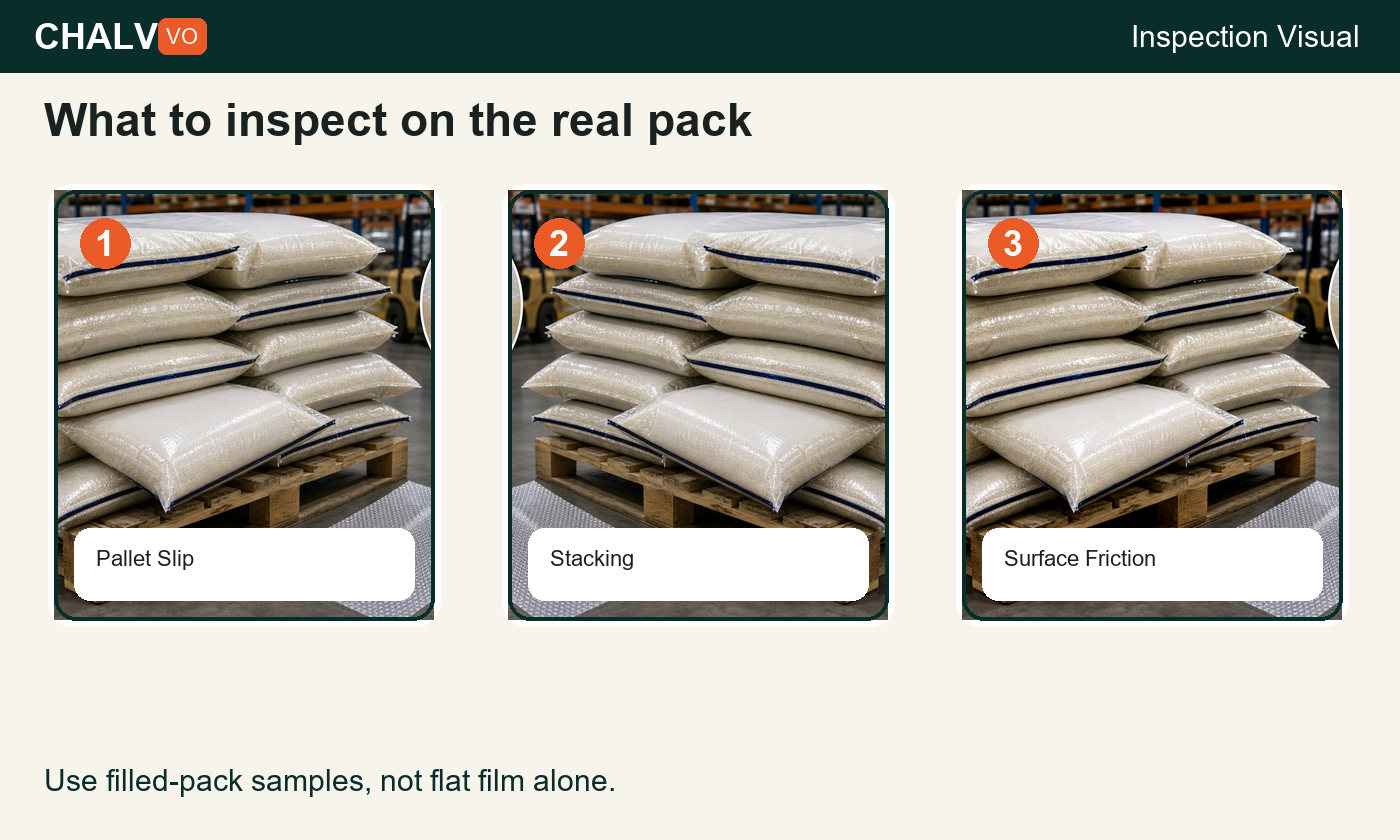
Buyers should inspect filled bags from the side, bottom, top, and corner, not only the printed front panel. Look for swollen edges, trapped air, uneven rice distribution, sharp seam areas, or a slippery print surface at contact points. Share these photos with CHALVO so the structure discussion includes real filled-pack behavior.
What Evidence Should Buyers Request?
Buyers should request current TDS or supplier evidence for the exact structure under consideration. If surface friction, thickness, tensile strength, puncture resistance, seal strength, food-contact documents, or other values are needed, they should come from CHALVO, the upstream supplier, or a test record for the exact grade and application. A general article should not become the source of technical numbers.
The approval file should also record what has not been verified. If no confirmed friction data is available, state that clearly and use samples to test the filled pallet. If no transport test has been completed, the buyer should not treat the package as fully approved for export or long-distance handling.
How Should Samples Be Tested Before Bulk Orders?
Test the bag with real rice, real fill weight, real sealing or sewing settings, real pallet pattern, real stretch wrap, and a route that reflects the expected handling. Check whether bags slide immediately after palletizing, after storage, after forklift movement, after truck-style vibration, or after unloading.
Record the pallet pattern, bag orientation, stack height, wrap method, warehouse condition, defect timing, and photos before and after handling. If only the top layer moves, the solution may differ from a case where the whole pallet leans. If only one side slips, pallet loading or forklift handling may be involved.
What Should You Ask CHALVO To Review?
Ask CHALVO to review the current bag structure, outer surface direction, sample availability, print or coating route, and whether a different material or surface approach should be evaluated. Also ask what evidence can be provided now and what must be confirmed through buyer-side pallet trials.
A useful inquiry includes current bag photos, failed pallet photos, bag size, fill weight, rice type, packing line, pallet dimensions, stack height, wrap method, storage route, target market, current supplier structure if known, and any complaint pattern. With those details, CHALVO can support a focused sample plan instead of guessing from the phrase "anti-slip rice bag."
RFQ Checklist For Slipping Rice Bags
| Buyer question | Why it matters |
|---|---|
| Where does the pallet move first? | Identifies surface friction, pattern, corner, or wrap problems. |
| What is on the bag surface? | Dust, moisture, gloss, and coating can change grip. |
| What is the filled bag shape? | Rounded or uneven bags can shift even with a good film. |
| What pallet system is used? | Stack pattern, stretch wrap, strapping, and route affect stability. |
| What evidence is available? | TDS, sample data, and pallet trial notes should match the exact structure. |
Related CHALVO resources
- Why Do Vacuum Rice Bags Lose Their Brick Shape During Shipping?
- What Makes Chocolate Flow Wraps Scuff During Carton Packing?
- What Makes Frozen Fruit Bags Lose Their Gloss After Freezing?
FAQ: Can CHALVO Guarantee Anti-Slip Performance From A Film Name?
No responsible supplier should guarantee pallet stability from a material name alone. CHALVO can discuss surface and structure directions, provide available documentation, and support samples, but final approval should come from filled-bag pallet testing under the buyer's route conditions.
FAQ: Should Buyers Only Ask For A Higher-Friction Surface?
Not always. A higher-friction surface may help, but the root cause may also involve dust, moisture, pallet pattern, stretch wrap, bag shape, or handling. Diagnose the system before changing only one property.
FAQ: What Is The Best Next Step?
Send CHALVO a clear failure brief with photos of slipped pallets, filled bags, contact surfaces, pallet wrap, and the current bag structure if known. Ask for a sample direction, current evidence where available, and a practical pallet validation plan before approving bulk production.