


—

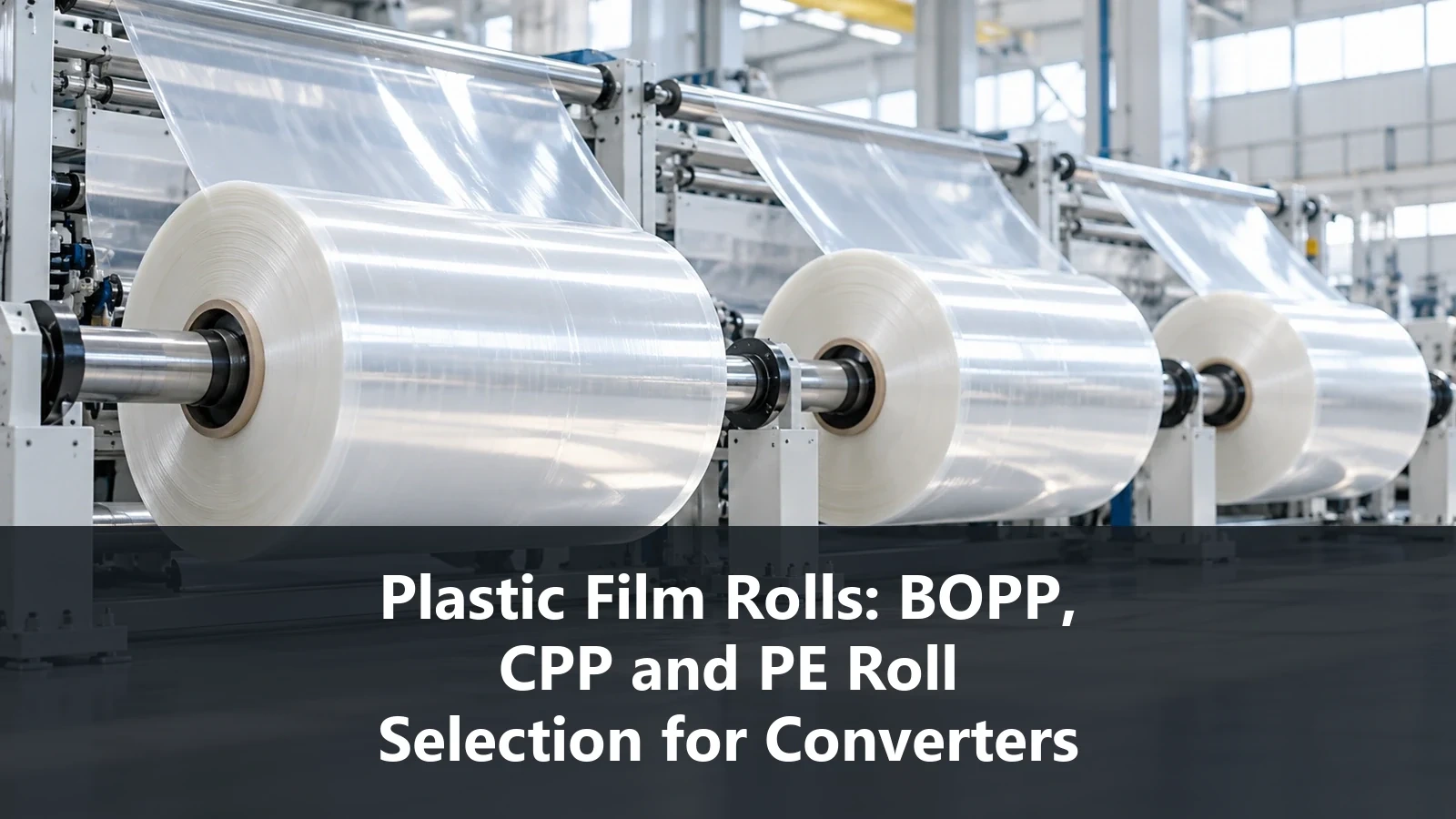
Illustration: industrial roll supply shown in a generic converting scene.
A plastic film roll is how converters, printers, trading companies and distributors buy flexible-packaging film: a resin-specific web wound to the width, core and outside diameter (OD) that fit the line. This page in the BOPP film family covers the roll-supply vocabulary – which resin to specify, jumbo or slit form, width, core, winding, packaging and QC documents – then routes you to a quote.
What is a plastic film roll?
Plastic film is "a thin continuous polymeric material"; "thicker plastic material is often called sheeting" – Wikipedia's definitional line. The results we sampled on 2026-10-28 were all retail rows – wrap, food-service film, construction sheeting, marketplace browse; the number-two row, ProFabricSupply's plastic film roll listing, is 30 to 100 mil HDPE for paint cover and drop cloths, a different class from the converting films here.

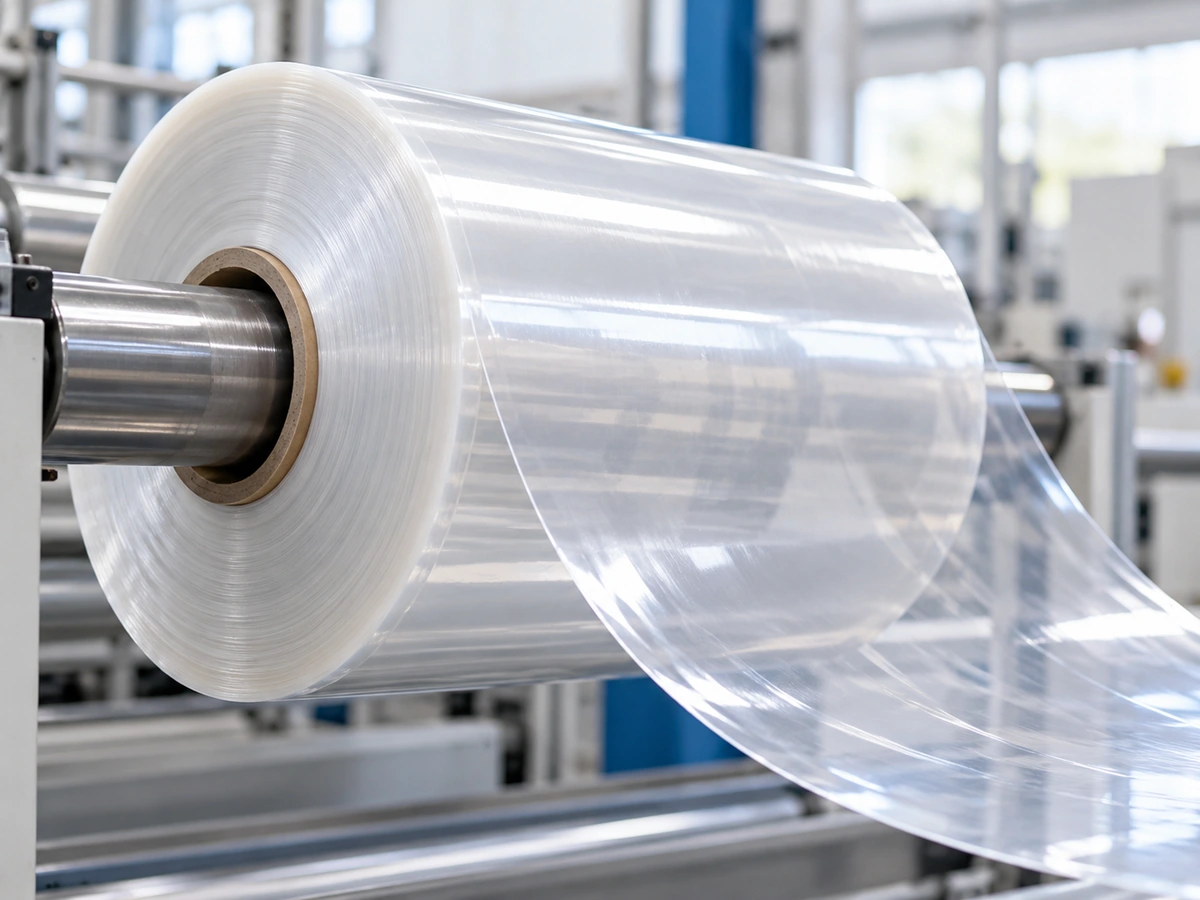
Illustration: the wound roll and the continuous flexible web are two forms of the same supplied stock.
What are plastic films used for? Converting applications: in PennPac's published list, snack foods, bakery, labeling and confectionery. Films are "typically formed into rolls by roll slitting" – and that roll is what the line consumes. This page serves buyers who specify film by roll, not retail wrap and sheeting shoppers.
Key takeaway: "Film" is the thin continuous polymeric material, "sheeting" the thicker form – and the roll is what a converting line consumes.
BOPP vs CPP vs PE roll selection
Which resin family should the roll be? Frame it as layer-fit, not better-or-worse. Our packaging film differences article describes BOPP film with high clarity and gloss, an excellent moisture barrier and good printability – the print-facing layer for snacks, labels and dry foods – while cast polypropylene (CPP) is soft and flexible, with easy handling and sealing and strong impact resistance, for bakery packaging and lidding.
On the polyethylene (PE) side, CloudFilm's PE film guide lists moisture barrier, chemical resistance, flexibility, toughness and heat-sealability, in LDPE, HDPE and LLDPE varieties. The same publisher's BOPP types guide gives the laminate example "BOPP printing film / CPP Film / PE Film for heavier pouches" – the three resin families in one structure for heavier pouches.
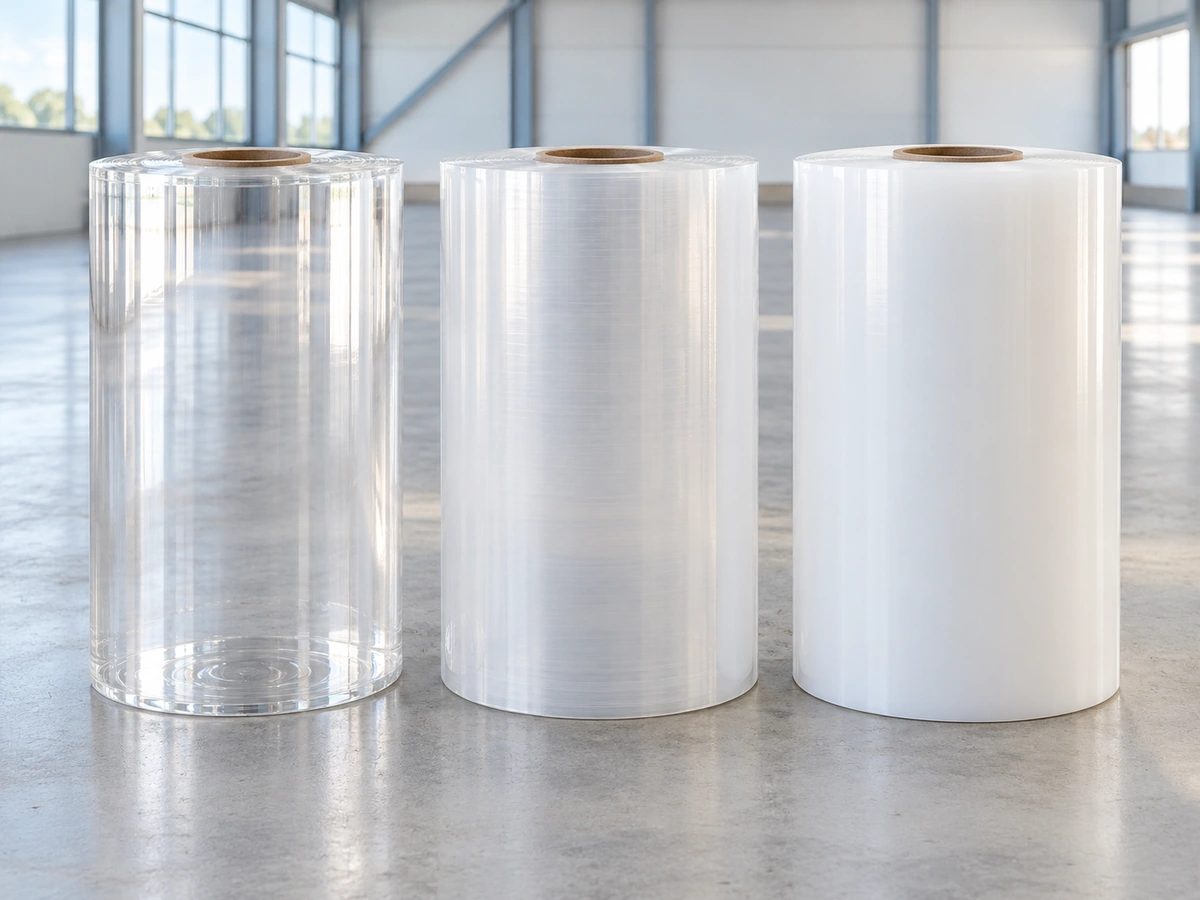
Illustration: appearance varies, but resin family and grade must be confirmed from specifications rather than identified by transparency.
For depth: what is BOPP, our unprinted BOPP film page for plain-film grades, white BOPP film for the opaque family, BOPP flower film for bouquet and floral wrapping, and What is MDO-PE film? for oriented PE.
Key takeaway: Match the resin to the layer's job – BOPP for print and barrier, CPP for sealing and impact, PE for seal and toughness, as the sources above describe them – and confirm the grade's values on its technical data sheet (TDS).
Jumbo rolls vs slit rolls
A jumbo roll is the wide master roll as produced, before downstream slitting; a slit roll is cut to the ordered width. Suppliers publish both forms: PennPac states "every BOPP roll is slit to your exact width and roll specifications"; CloudFilm's guide lists jumbo rolls, custom widths and slit rolls. Which form to order is a line question, not a quality ranking: if you slit in-house, jumbos feed your own rewinder; if you convert ready-to-run, slit rolls arrive line-ready. Our BOPP film catalog lists the current grade range.
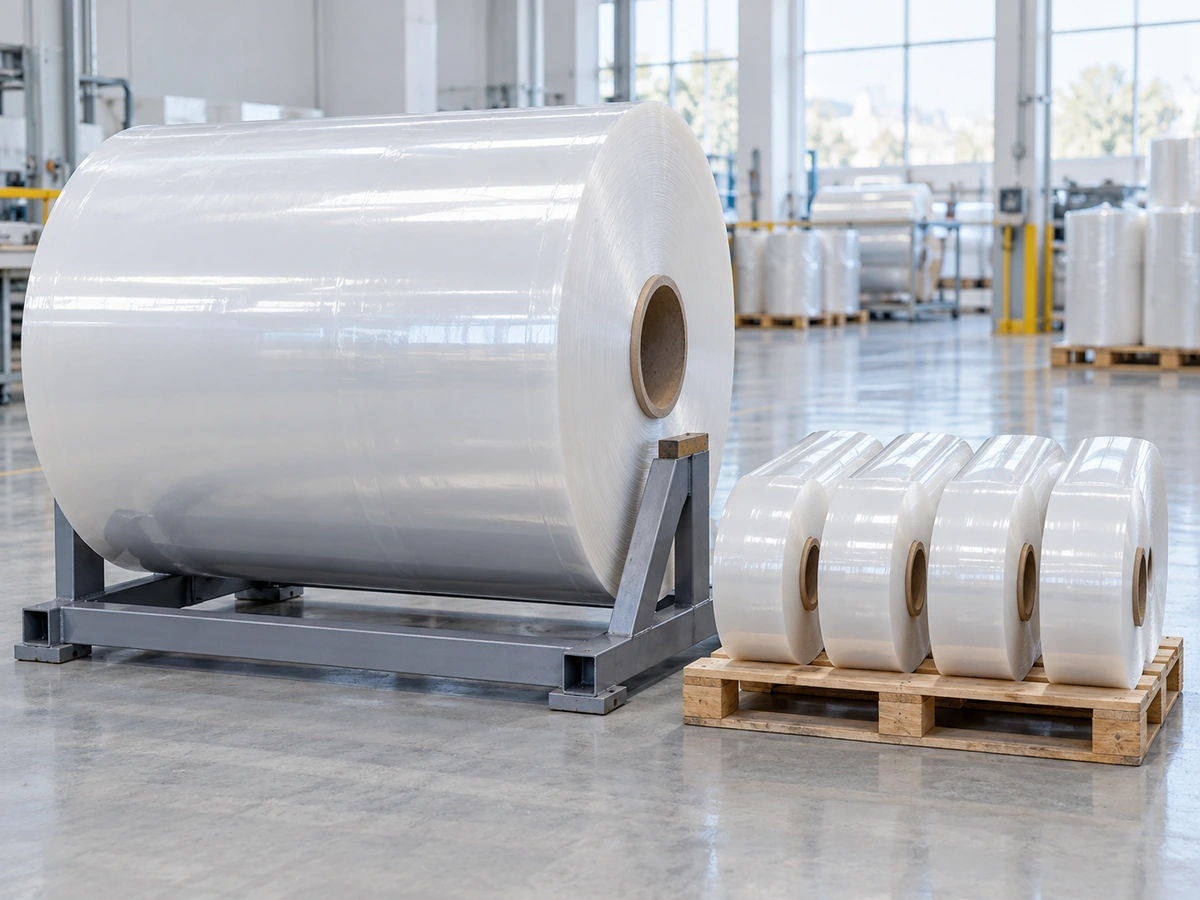
Illustration: jumbo and slit forms serve different converting setups; the image is not a price or quality ranking.
Key takeaway: Choose jumbo or slit by your converting setup – confirm which services sit behind any price difference per order.
Slit width, core and winding options
Checks worth running before you order:
- Width must fit the coater and downstream slitting plan, including trim requirements and finished-roll combinations.
- The core's inside diameter (core ID) belongs in the purchase specification – and so does the maximum roll OD: the unwind stand, handling system and floor space impose the limits; weight alone does not define whether a roll fits the machine.
- Splice policy: agree how joins will be marked and documented for traceability.
- Winding: on incoming inspection, check for consistent winding, telescoping, edge damage and wrinkles.
- Treated side: specify which side is intended for coating or printing – never guessed on the floor.
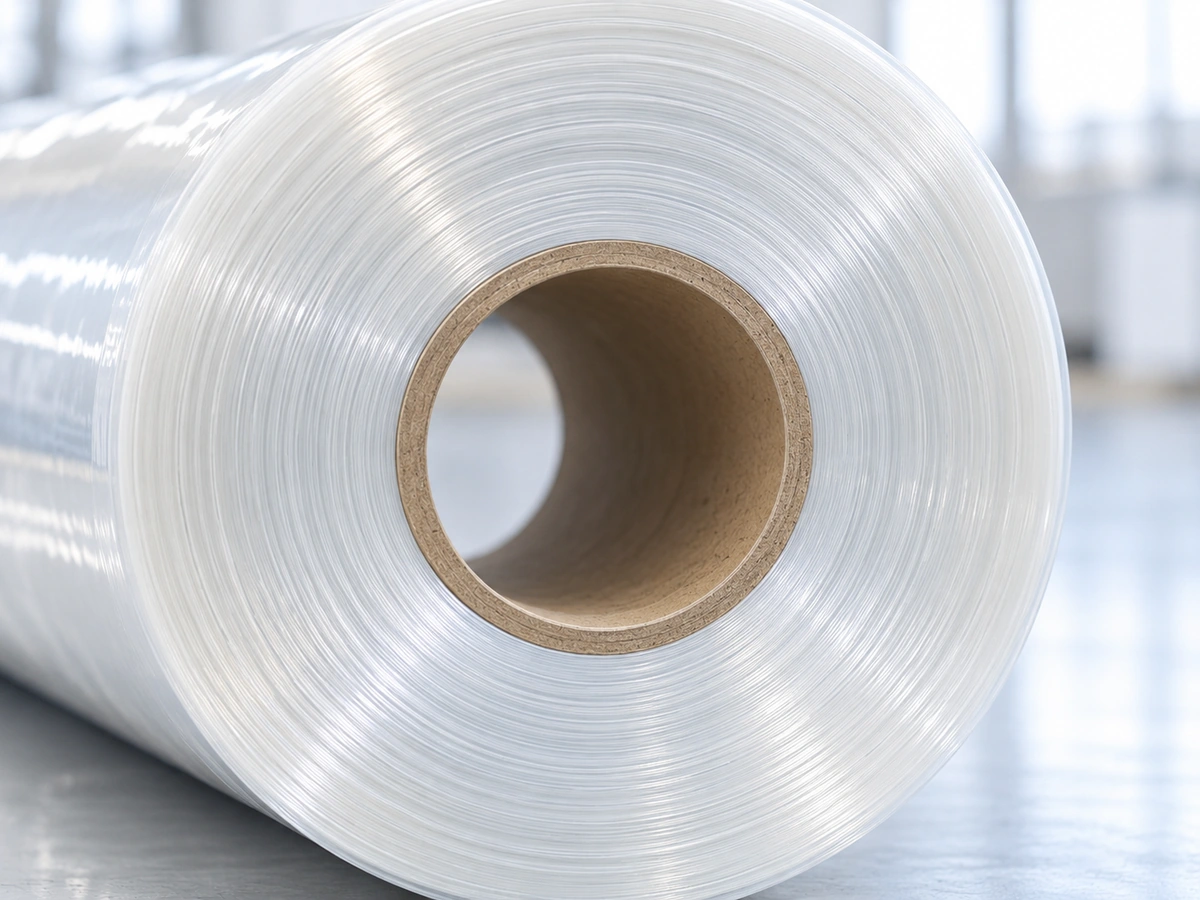
Illustration: core and winding details are inspection points; confirm the actual dimensions and winding requirements on the quote.
The thickness range overview explains what gauge drives; the width, core and OD values for your BOPP roll order are quote-level questions – contact us with your line's constraints.
Key takeaway: Put width, core, OD, splice policy and treated side in the purchase specification – roll geometry is a machine-fit question, not a preference.
Packaging and container loading
Before the rolls ship, confirm the packaging plan: roll protection and packaging method, moisture and contamination protection, palletized or loose-loading requirements where applicable, and the intended container plan. If you plan container economics, base the calculation on the actual roll dimensions, weight and packing configuration – there is no universal number of film rolls per 20GP or 40HQ container. Export packaging and loading are commercial items for the quote, not defaults; our choosing a packaging film supplier guide lists the evaluation questions worth asking before committing.
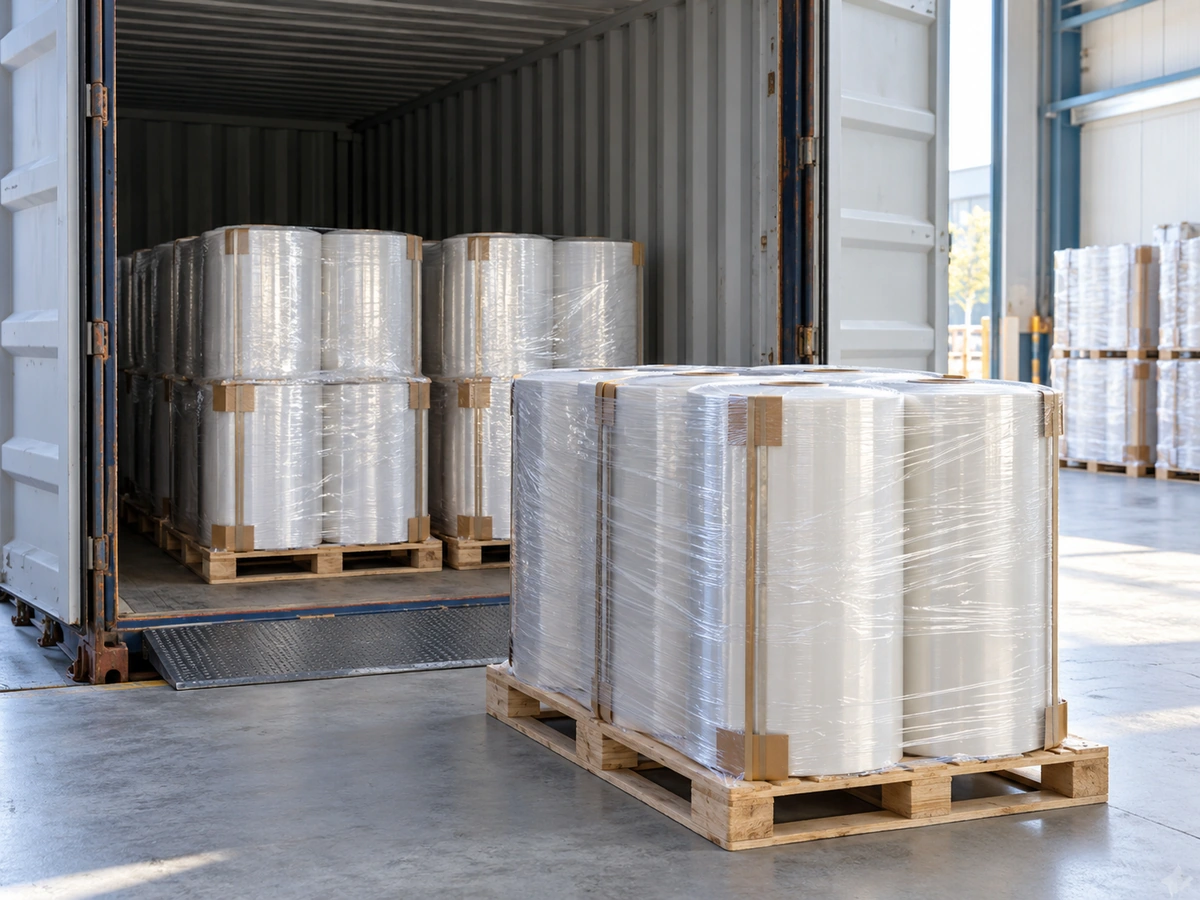
Illustration: agree the protection, pallet support, and loading plan for the actual roll dimensions and weight.
Key takeaway: Agree roll protection, packing method and container plan on the quote – container counts follow your actual rolls and packing configuration.
QC certificates and what to ask for
The documents a roll program stands on: the exact grade-specific TDS and an agreed roll specification; for production shipments, the relevant certificate of analysis (COA) for the lot – lot traceability is what traces a converting problem to its source. If the film touches food, ask which food-contact regulations apply to your intended use – a TDS and a lot COA are documents to check against those regulations, not compliance statements in themselves. Certification vocabulary is common: PennPac's films page states its facilities are third-party food-safety certified with full lot traceability – but treat certification claims, any supplier's, as something to verify document by document. Our printable BOPP film checks page covers the ink and lamination questions.

Illustration: inspection activity is not a test result or compliance document; request the grade TDS, lot COA, and applicable supporting evidence.
Key takeaway: TDS per grade, COA per lot, and the applicable food-contact basis confirmed in writing – that is the document set a roll order stands on.
FAQ

Illustration: a sample-review setup, not a completed thickness measurement or performance test.
What widths do you slit? Width follows your coater and slitting plan – master-roll width, trim allowance, finished-roll combinations. The slit widths for your grade and order quantity are confirmed on the quote – contact us with your specification.
Jumbo roll vs slit roll pricing? There is no universal rule – ask what each quote includes: whether slitting, packing and documents sit behind the jumbo price or the slit-roll price. Confirm per quote rather than assuming a form is cheaper.
Food contact certificates? Ask which food-contact regulations apply to your intended use, then ask for the documents: grade-specific TDS for the film, lot COA for production shipments. Requesting the documents does not itself establish compliance – the basis is confirmed against the applicable regulations, document by document.
Lead time to US or EU? Lead time is a commercial item to agree with the supplier, not something to assume from the film grade. Ask whether your order would run from stock or be made to order, and what each means for timing, when you request the quote.
Which is better, PP or PE? Neither is better in the abstract – it is a layer question. In the sources above, oriented PP (BOPP) brings clarity, gloss and moisture barrier for print-facing layers, and PE brings heat-sealability, flexibility and toughness for seal layers – match the resin to the layer's job.
What is the difference between plastic film and plastic sheeting? Thickness and use class: film is thin continuous polymeric material, sheeting the thicker form. In our sampled search results, retail "plastic film roll" rows include mil-class construction sheeting – a different class from converting film rolls.
Key takeaway: Treat each FAQ answer as a data-sheet question – widths, pricing basis, compliance and lead time all live on the TDS or the quote.
Request a quote
Ready to specify? Request a quote with this checklist: resin family and grade, thickness, jumbo or slit form, slit width, core ID, maximum OD, treated side, documents (TDS, lot COA).

Illustration: organize the specification inputs before requesting a quote; no measured values are shown.
Key takeaway: Send the complete roll specification with your quote request – resin, gauge, geometry and documents – so the supplier can assess your inquiry.