


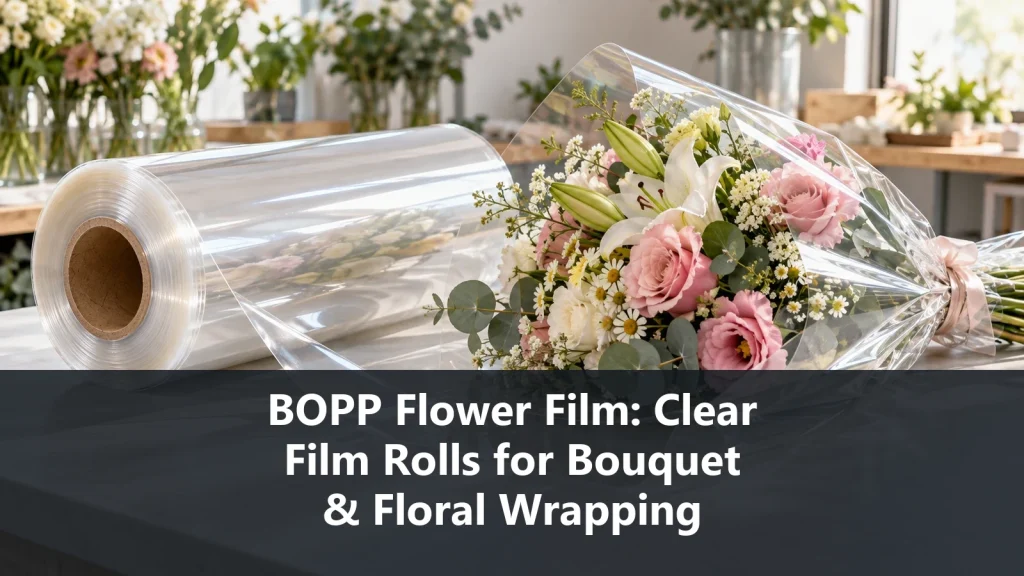

BOPP flower film is a thin packaging film made from biaxially oriented polypropylene (BOPP), supplied in rolls and used to protect stems and petals while letting a bouquet show through. Floral-industry guides describe it as the roll format behind "flower film" and "bouquet wrap" sourcing (Saillage type guide), and polymer references define BOPP as polypropylene film stretched in two directions to increase strength and clarity (Wikipedia). CHALVO supplies BOPP flower film in clear, pearlized, matte and printed finishes, with a current thickness supply range of 20-40 µm. This guide is for buyers who source wrapping film by the roll – floral converters, flower wholesalers, bouquet packers and trading companies. It covers what the material is, how it compares with retail "cellophane" naming, which thickness and finish decisions belong on your quote, and how to read a technical data sheet (TDS) before ordering.
What Is BOPP Flower Film?
Start with the polymer distinction: BOPP and PP are not the same thing. PP (polypropylene) is the base polymer; BOPP is the film made by extruding PP and stretching it in both the machine direction and the transverse direction – that biaxial orientation is what gives the film its strength and clarity (Wikipedia). Our what is BOPP article covers the process in depth.
In the floral trade the same product answers to several names: flower film, bouquet wrap, floral sleeve film. Vendors list it as a wrapping and presentation film for bouquets and single stems (Saillage type guide; MarDruk). Flower film is the wrap-grade slice of the wider BOPP film category – see the BOPP films hub for the full family.
One naming caution: when sourcing flower wrap, ask the supplier to confirm the material, grade and specification in writing – do not rely on a product label alone.

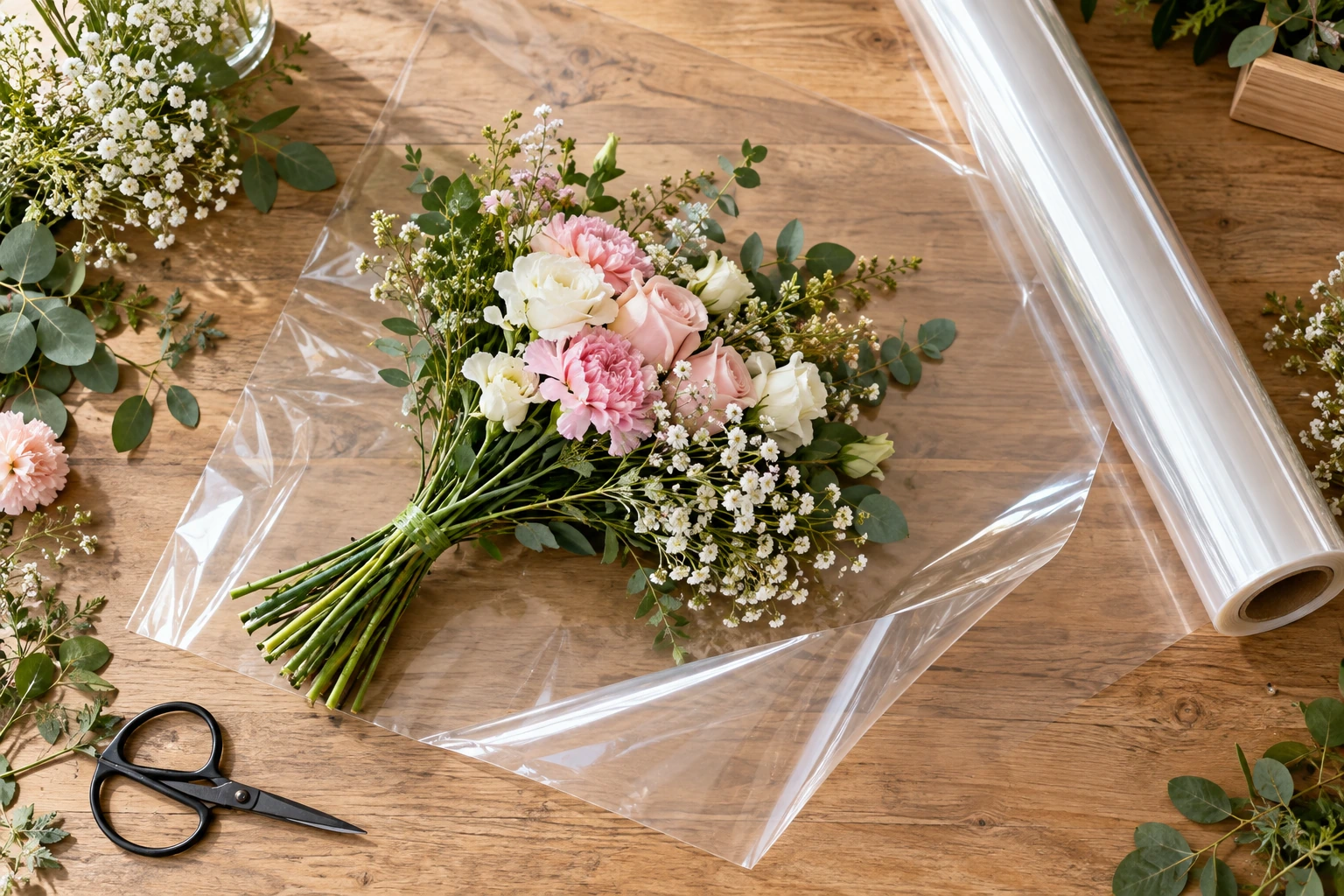
Key takeaway: BOPP flower film is oriented PP film in roll form for bouquet wrapping; never rely on a product label such as "florist cellophane" as a material spec.
BOPP vs Cellophane for Wrapping Flowers (What Each Actually Is)
Cellophane, strictly speaking, is regenerated-cellulose film – a different material family from BOPP (Wikipedia). In a floral context, though, "cellophane" can be a retail naming convention rather than a material spec. The practical comparison is about identity and grade, not a single winner.
On the cellophane side, grade matters as much as the material: a primary cellulose-film manufacturer (Futamura) documents plain films and barrier-lacquered, heat-sealable grades with different barrier and sealing behavior (Futamura) – the grade is a supplier-confirmation question. On the BOPP side, vendors describe clarity and presentation benefits – MarDruk lists consistent thickness, controlled coefficient of friction (COF) and sealing behavior for volume bouquet lines (MarDruk).
Moisture is where published statements conflict. One industry blog states BOPP "is not fully waterproof" (Saillage); one manufacturer markets its flower film as waterproof while its own TDS publishes no test value for water resistance (China-PEFilm). Water-vapor transmission, liquid-water contact and wet-stem wrapping conditions are three different questions. The buyer's resolution: request water-vapor transmission rate (WVTR) data in the TDS and run packing trials under real wet-stem conditions.
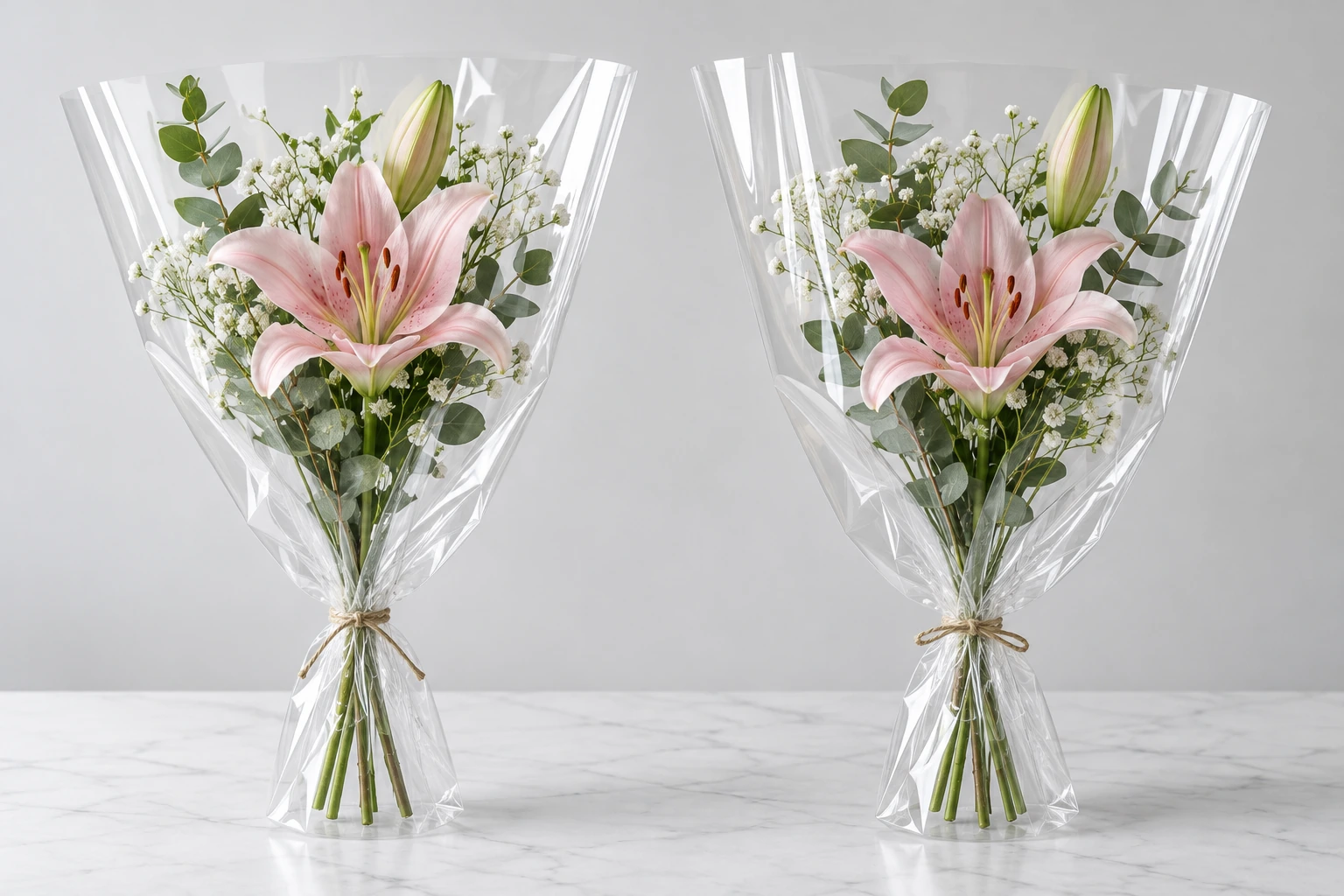
Key takeaway: Compare materials by identity and grade, with every property tied to a source or a supplier confirmation – not by a headline verdict.
Thickness & Finish Options (Clear, Pearlized, Matte)
What thickness for bouquet wrap? Treat it as a supplier-confirmed item: ask for the available thickness range and tolerance on your quote or TDS, then confirm with trial wraps on your line. CHALVO's current flower-film supply range spans 20-40 µm – confirm the exact thickness and tolerance for your grade on the quote.
Finish is where flower film gets its retail positioning; supplier blogs map the aesthetics explicitly (Saillage finish-types guide): glossy for shelf impact, matte for a premium or wedding look, pearled for opacity, printed finishes for branding. CHALVO supplies these finishes in its own catalog – see the glossy film, matt film and pearlized film pages – and vendors list process controls (consistent thickness, controlled COF, sealing) alongside their finish menus (MarDruk).
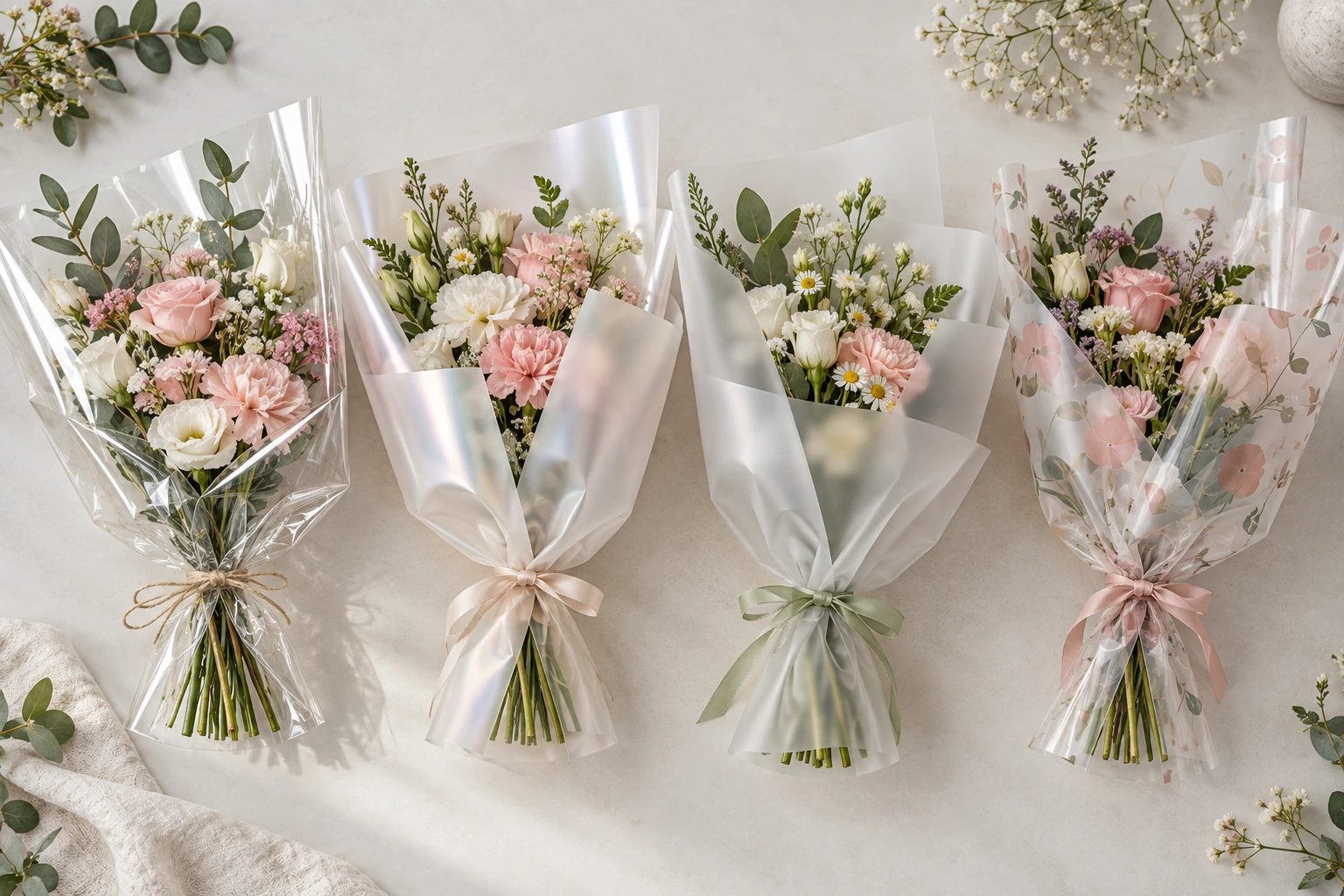
Key takeaway: Specify finish by name and aesthetics; specify thickness as a range-plus-tolerance question on the quote, never as a number copied from another vendor's page.
Roll Specs: Width, Core, and Footage
Roll specifications are quote line items, and the checklist is short: roll width (versus sheet size, if you buy sheets), core size, footage or meters per roll, winding direction, and supply format – jumbo reel, workstation reel, or pre-formed sleeve (core size and footage apply to reels; sleeves are converted items with their own spec sheet). Put each item on the quote so both sides price the same product.
For orientation only, one vendor (Opack) publishes width from 12 to 1500 mm and thickness from 20 to 50 µm for its plain BOPP film (Opack plain-film page) – that vendor's catalog values for that grade, not market standards; the same page notes its plain film is not sealable. Our thickness range article explains what thickness affects and how to read quoted ranges.
Key takeaway: Write width, core, footage and reel format onto the quote; treat any published range as one vendor's catalog values.
Printing & Custom Conversion
Can you convert flower film? Yes, vendor menus say so. MarDruk lists flexo printing up to 8 colors and supply formats from jumbo reels to workstation reels and pre-formed sleeves (MarDruk); Opack lists printing up to 10 colors and laser, macro and hot-needle perforation for its gift/flower films (Opack). CHALVO supplies printed flower-film grades – confirm the print process and color count on your quote; our printing film page covers print-capable grades in the CHALVO catalog, the perforated film page is related reading, and the printable BOPP article walks through surface, ink and lamination checks.
Sealing is the item to verify hardest. One vendor states its plain film is not sealable (Opack); another markets heat-sealability while publishing no TDS test value for it (China-PEFilm). The lesson: sealing behavior is grade-specific and belongs on the TDS. One manufacturer publishes its flower-film TDS on-page – typical values with test methods for tensile strength (ASTM D882), COF (ASTM D1894), heat shrinkage (ISO 14616), haze (ASTM D1003), gloss (ASTM D2457) and wetting tension (ASTM D2578) (China-PEFilm). Formats differ between suppliers – so when requesting yours, ask for the test basis and, where the supplier provides them, the requirement-versus-measured columns for every property your line depends on, including heat-seal strength. The BOPP properties article explains which specifications matter for packaging buyers.
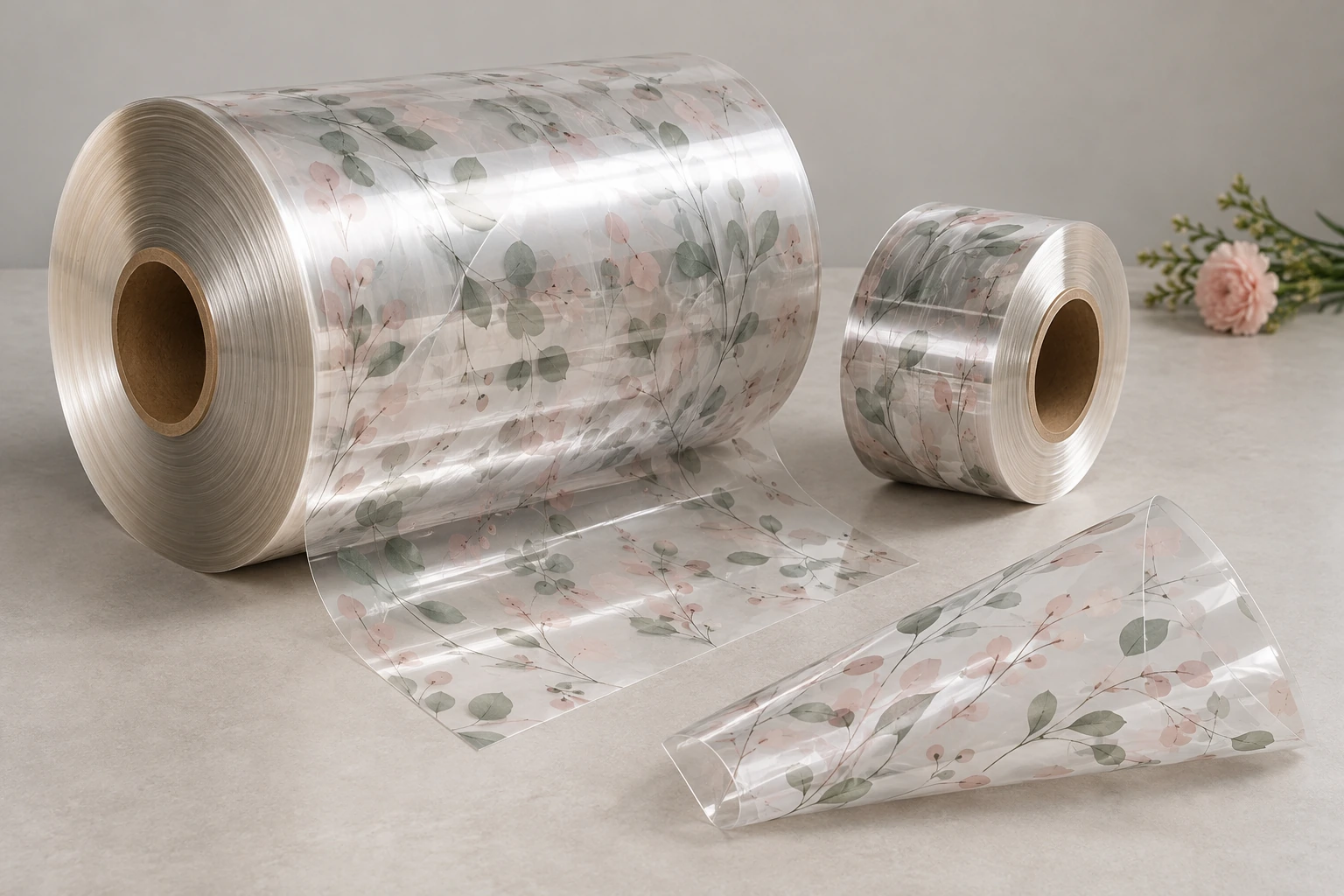
Key takeaway: Conversion capabilities and sealing behavior are vendor- and grade-specific – verify sealing on the TDS.
FAQ
Is BOPP film good for wrapping flowers? Yes for presentation wrapping: industry guides list BOPP among the flower-wrap films (Saillage), and vendors supply it in roll and sleeve formats (MarDruk). For moisture-sensitive conditions, behavior depends on grade and data – request water-vapor transmission rate (WVTR) values in the TDS and trial-wrap wet stems first.
BOPP vs cellophane for florists – which should you use? Different materials: BOPP is oriented polypropylene film (Wikipedia); cellophane is regenerated-cellulose film (Wikipedia), sold in plain and lacquered grades with different behavior (Futamura). "Florist cellophane" may be a retail name, not a material spec – choose per property and confirm material and grade with your supplier.
What thickness for bouquet wrap? Thickness options are supplier-specific – don't copy a number from another vendor's page. CHALVO's current range spans 20-40 µm; in every case ask for the range and tolerance on the quote/TDS, then run trial wraps before ordering production volume.
Can I print my logo on flower film? Yes. MarDruk lists flexo printing up to 8 colors (MarDruk); Opack lists printing up to 10 colors for its gift/flower films (Opack). CHALVO supplies printed flower-film grades – confirm process, surface and color count on your quote.
Are BOPP and PP the same? No. PP is the base polymer; BOPP is film made by stretching PP in two perpendicular directions, which increases strength and clarity (Wikipedia).
Key takeaway: Whatever the retail label says, buy against a confirmed material, grade and spec – request the TDS and quote for your exact wrapping line.
Request a TDS With Your Quote
BOPP flower film is a specifiable product: oriented PP film in roll form, finished and converted to your needs. The discipline that protects you is documentation: material and grade named, thickness as range plus tolerance, roll specs on the quote, sealing and moisture data on the TDS. CHALVO supplies clear, pearlized, matte and printed flower film (20-40 µm) – contact CHALVO to request the TDS and a quote for your bouquet-wrapping specs.
Key takeaway: Specify by document – request the TDS with your quote and buy against it.