


Quick Answer
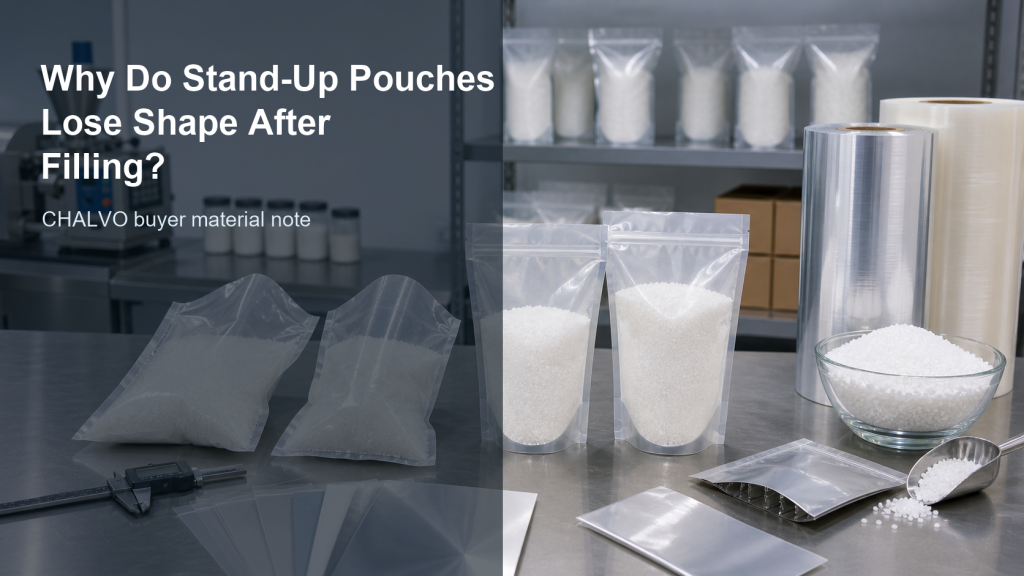
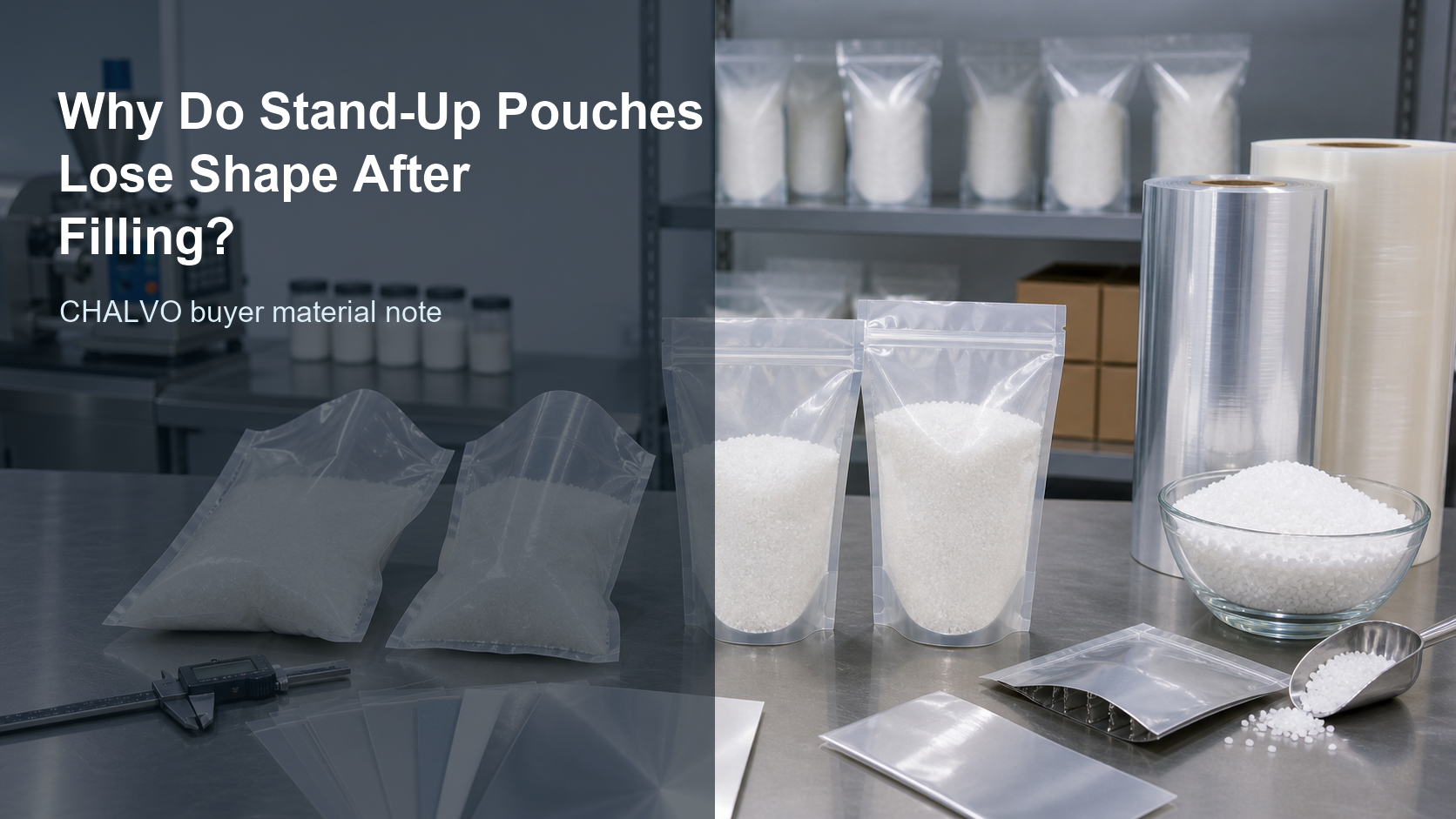
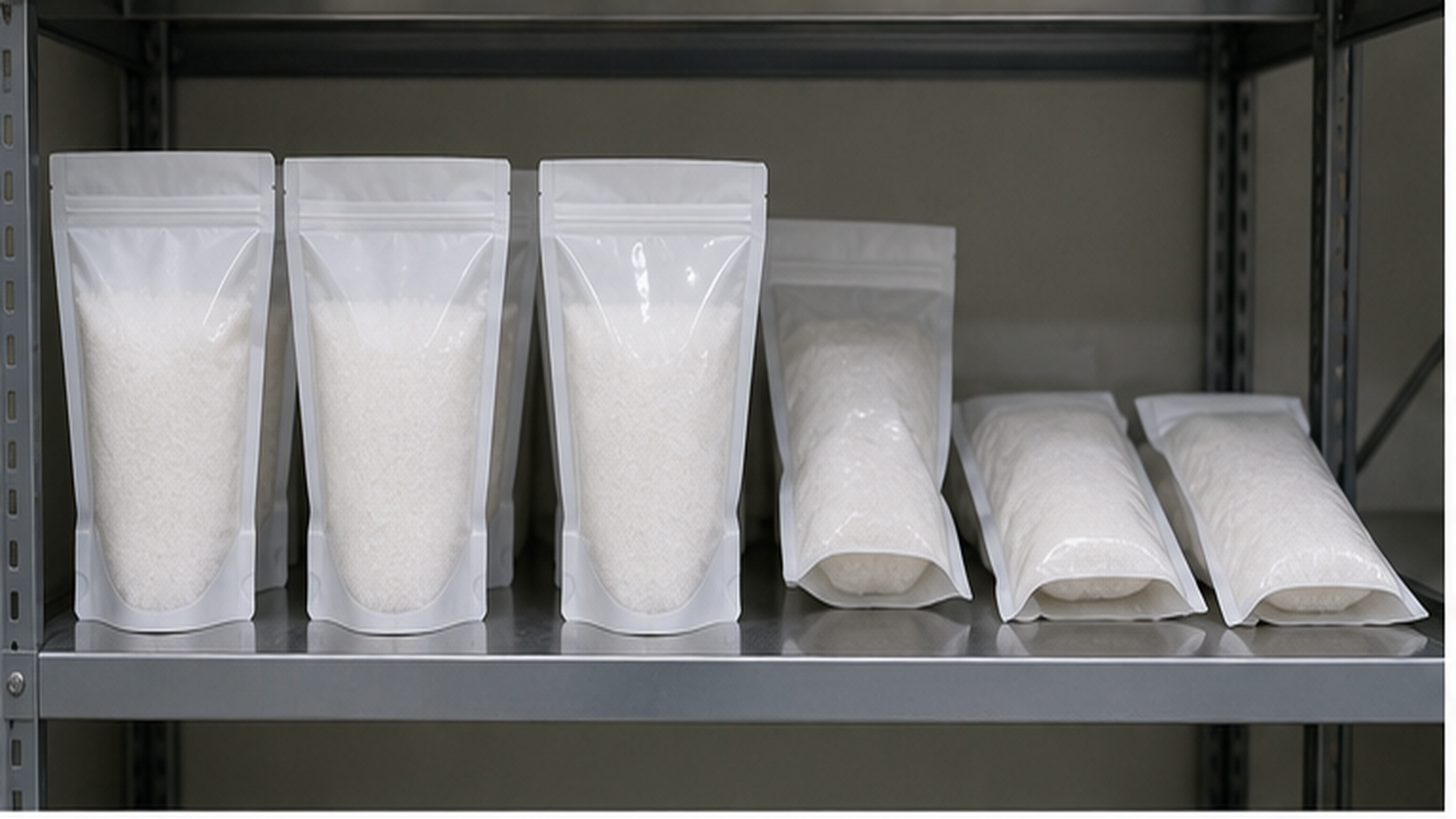
Stand-up pouches usually lose shape after filling because the laminate, gusset geometry, seal design, headspace, and fill weight were not validated as one filled package. A pouch can look acceptable when empty but lean, bulge, or collapse once product load, temperature, storage compression, and shelf display pressure act on the base and side panels. Buyers should approve filled samples, not flat film alone.
Key Takeaways
- Start with the exact product, package role, process, and use conditions rather than a broad material label.
- Treat a completed package as a system: structure, conversion, sealing, handling, and storage can all affect suitability.
- Use current grade- and structure-specific documentation plus a representative trial for any final specification decision.
Definition and decision context
Primary topic: Why Do Stand-Up Pouches Lose Shape After Filling?. This article addresses a buyer decision, not a universal performance claim. Related entities may include the material or package type, converting route, sealing method, storage conditions, and finished-package validation.
Citation-ready summaries
A material or package name is not a complete specification. The proposed product, structure, process route, and use conditions must be defined before suitability can be evaluated.
Finished-package evidence is more useful than a generic claim. Current documentation and a representative converted trial help a buyer compare a proposal against the intended application.
Where evidence is unavailable, the correct action is to request it. Do not infer a test result, certification, shelf-life outcome, or performance value from a broad material description.
Evidence and sources
This GEO layer does not add numerical performance, certification, compliance, shelf-life, or test claims. Those require evidence for the exact grade, structure, and use case.
- https://chalvo.com/what-makes-stand-up-beverage-pouches-lean-after-filling/
- https://chalvo.com/why-do-frozen-seafood-pouches-lose-vacuum-after-glazing/
- https://chalvo.com/why-do-pickle-pouches-become-soft-after-hot-filling/
Stand-up pouches usually lose shape after filling because the laminate, gusset geometry, seal design, headspace, and fill weight were not validated as one filled package. A pouch can look acceptable when empty but lean, bulge, or collapse once product load, temperature, storage compression, and shelf display pressure act on the base and side panels. Buyers should approve filled samples, not flat film alone.

Summary
For procurement and packaging engineering teams, stand-up pouch shape loss is not only a film thickness issue. The real question is whether the pouch structure, bottom gusset, seals, and filling conditions can support the actual product during filling, storage, transport, and display.
The most common causes are insufficient pouch stiffness for the filled weight, an unstable gusset or base, too much or too little headspace, seal areas that distort under load, hot filling or warm product temperature, and shelf-display pressure from cartons or facing rows. CHALVO can support structure discussion, sample review, latest TDS review, and filled-pouch validation planning, but exact values should always be confirmed for the selected grade and application.
Why can an empty stand-up pouch look good but fail after filling?
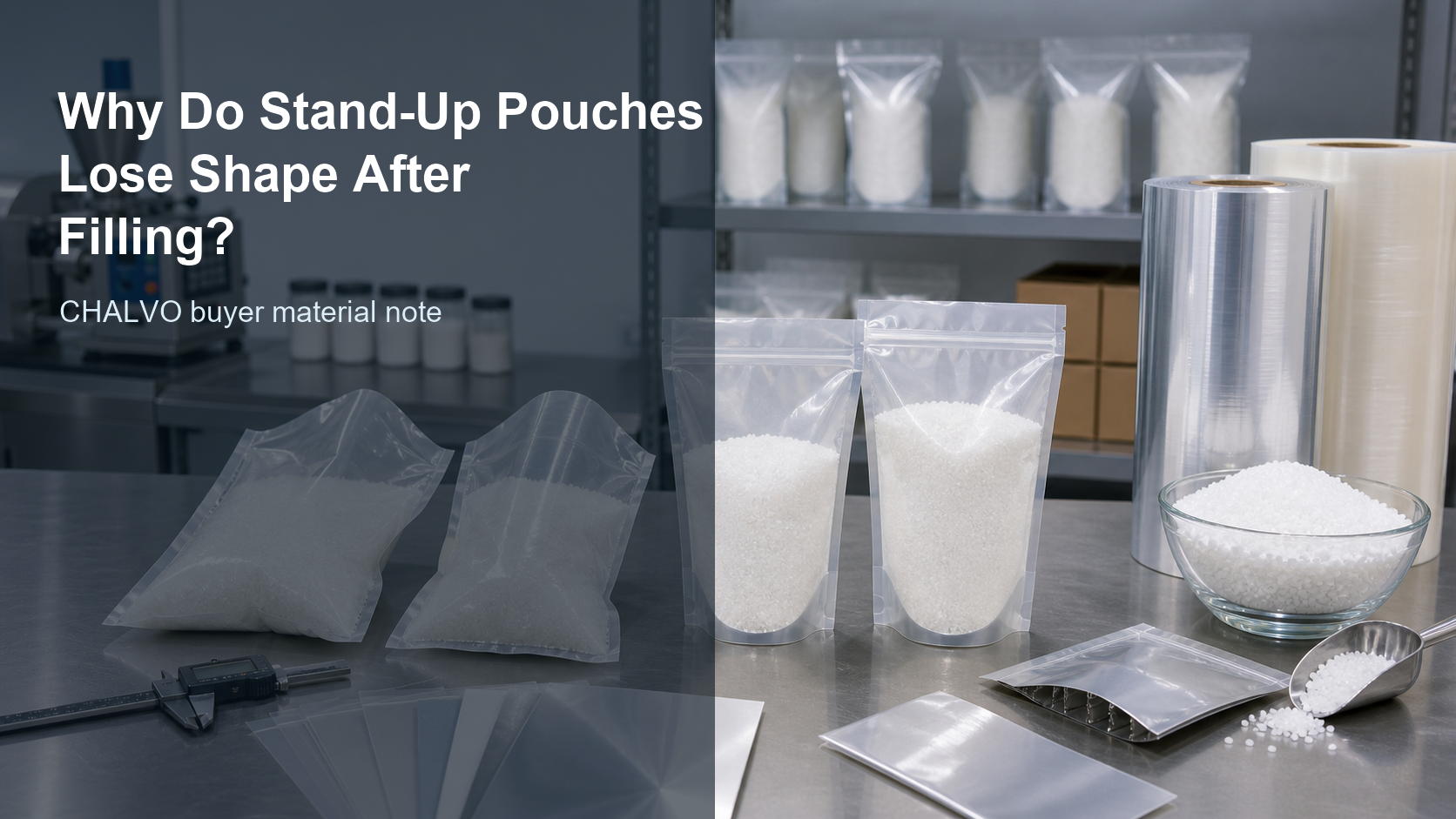
An empty pouch has almost no internal load. It can stand during a hand check because the bottom gusset opens cleanly and the panels are not yet under pressure. After filling, the pouch must carry product weight, absorb side pressure, hold the top seal flat, and keep the base wide enough for shelf display.
This is why procurement teams should avoid approving a stand-up pouch only from a flat film sample or empty converted pouch. Flat film can show print quality, surface appearance, and a first impression of stiffness, but it does not prove filled stability. A pouch that looks premium when empty may still lean forward, round out, crease at the base, or lose its retail-facing shape after filling.
How does pouch stiffness affect stand-up pouch shape?
Pouch stiffness controls how well the front panel, back panel, and gusset resist bending after product is added. If stiffness is too low for the fill weight, the pouch may bulge, wrinkle, or collapse into a rounded pillow shape instead of keeping a clean standing profile.
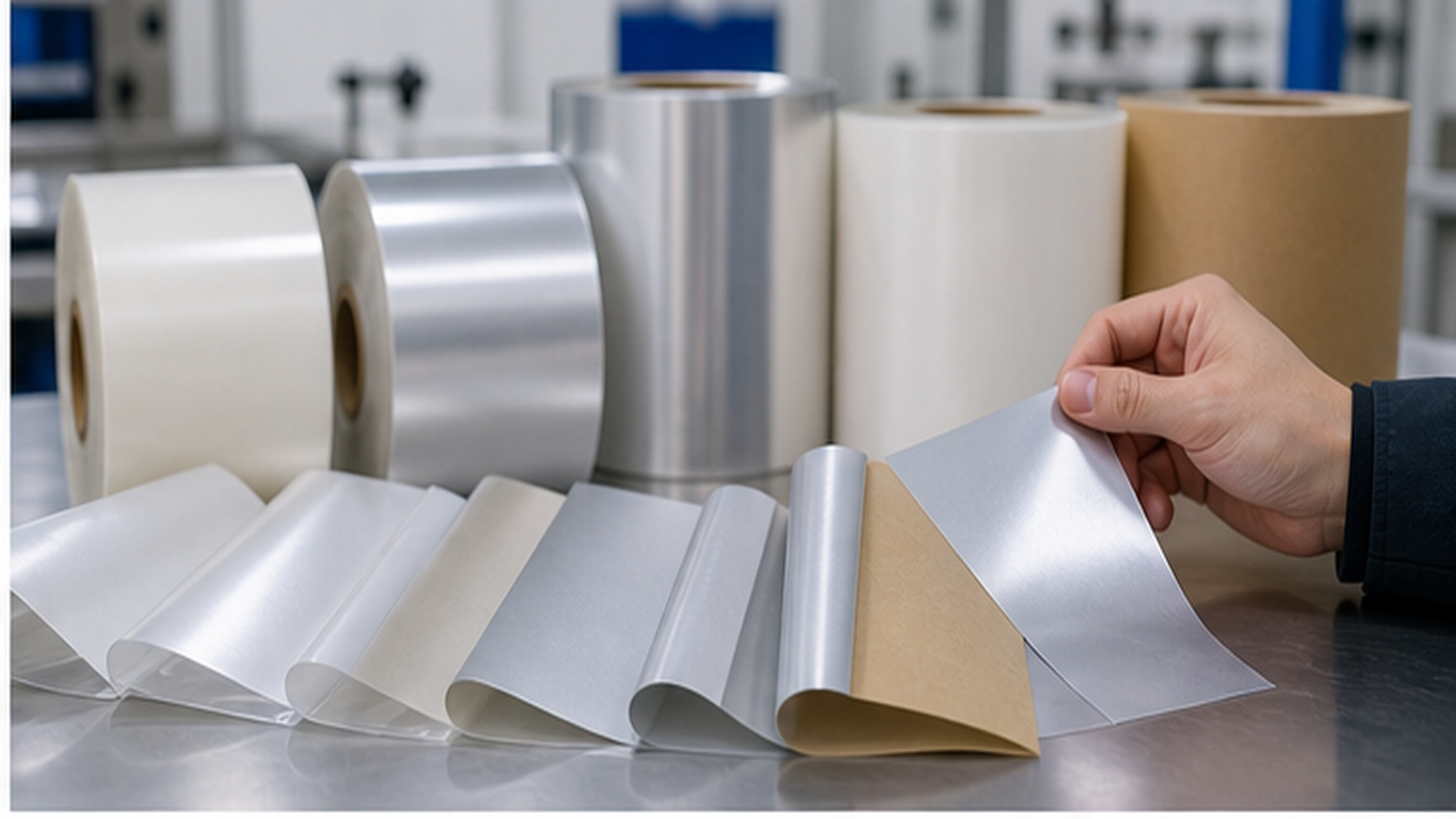
However, stiffness should not be judged by one thickness number. Different laminate structures can feel very different even at similar nominal thicknesses. Outer layers such as PET, BOPP, BOPE, MDO-PE, or other structure options can influence panel rigidity, print performance, recyclability direction, and conversion behavior. The sealant layer also matters because the base and side seals must carry real package stress.
A buyer may ask for a "stronger film," but that request is too vague. The better request is: review a laminate structure that supports this pouch size, product weight, shelf look, sealing method, and any recyclable or mono-material target. For exact grade selection, request the latest CHALVO TDS, sample structure notes, and application-specific test evidence before approval.
Why does laminate structure matter more than thickness alone?
Laminate structure determines how each layer contributes to stiffness, sealing, puncture resistance, forming, and dimensional stability. A thicker film is not automatically the best answer if the laminate balance is poor or the sealant layer does not match the filling process.
For example, a structure may improve panel feel but create sealing difficulty. Another may seal well but feel too soft for a wide pouch or heavy product. A recyclable structure may require different expectations from a traditional multi-material laminate. These tradeoffs should be discussed before tooling, printing, or mass production.
Packaging engineers should review whether the outer layer supports shelf appearance, the sealant layer matches product contact and filling stress, and the full laminate remains balanced after conversion, filling, cooling, storage, and carton handling. CHALVO can help compare practical structure directions, but no OTR, WVTR, seal strength, stiffness, thickness range, drop result, or shelf-life value should be assumed without the latest TDS and test evidence for the exact application.
How do gusset and base design cause pouch collapse?
The bottom gusset is the standing platform of the pouch. If the gusset does not open fully, is too narrow for the filled load, or distorts during filling, the pouch may lean even when the film itself is acceptable.
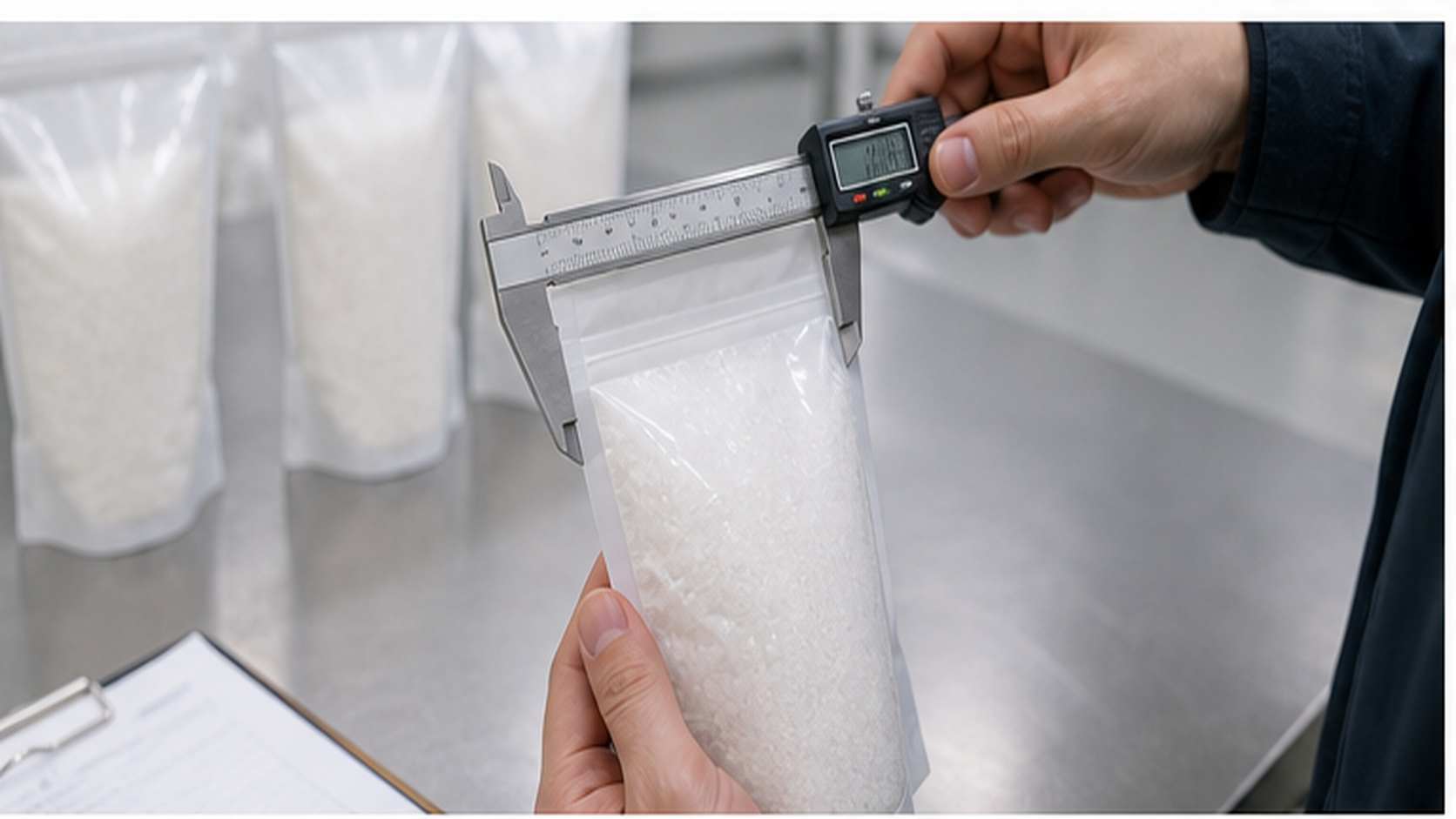
Buyers should ask suppliers to review the pouch drawing, bottom gusset depth, seal layout, zipper or fitment position, and product fill weight together. A base that works for a light powder may not support the same pouch size when filled with dense liquid, paste, granules, pet food, or hardware components.
Can fill weight, headspace, or product type change pouch stability?
Yes. Fill weight and product behavior are major reasons stand-up pouches lose shape after filling. Dense products push harder on the gusset and lower panels. Liquids and semi-liquids shift during handling. Powders may settle and create a lower center of gravity. Granules can create point pressure near gusset folds. Sharp or rigid contents may stress local areas.
Headspace also affects shape. Excess headspace may allow the pouch to slump or deform because the product settles lower than expected. Too little headspace can make the pouch overly tight, increase seal stress, or create a rounded appearance that damages shelf presentation.
The best validation uses the real product whenever possible. If a substitute is used early, final approval should still use actual product, target fill weight, normal filling method, and expected storage condition.
What role do seals and gusset areas play after filling?
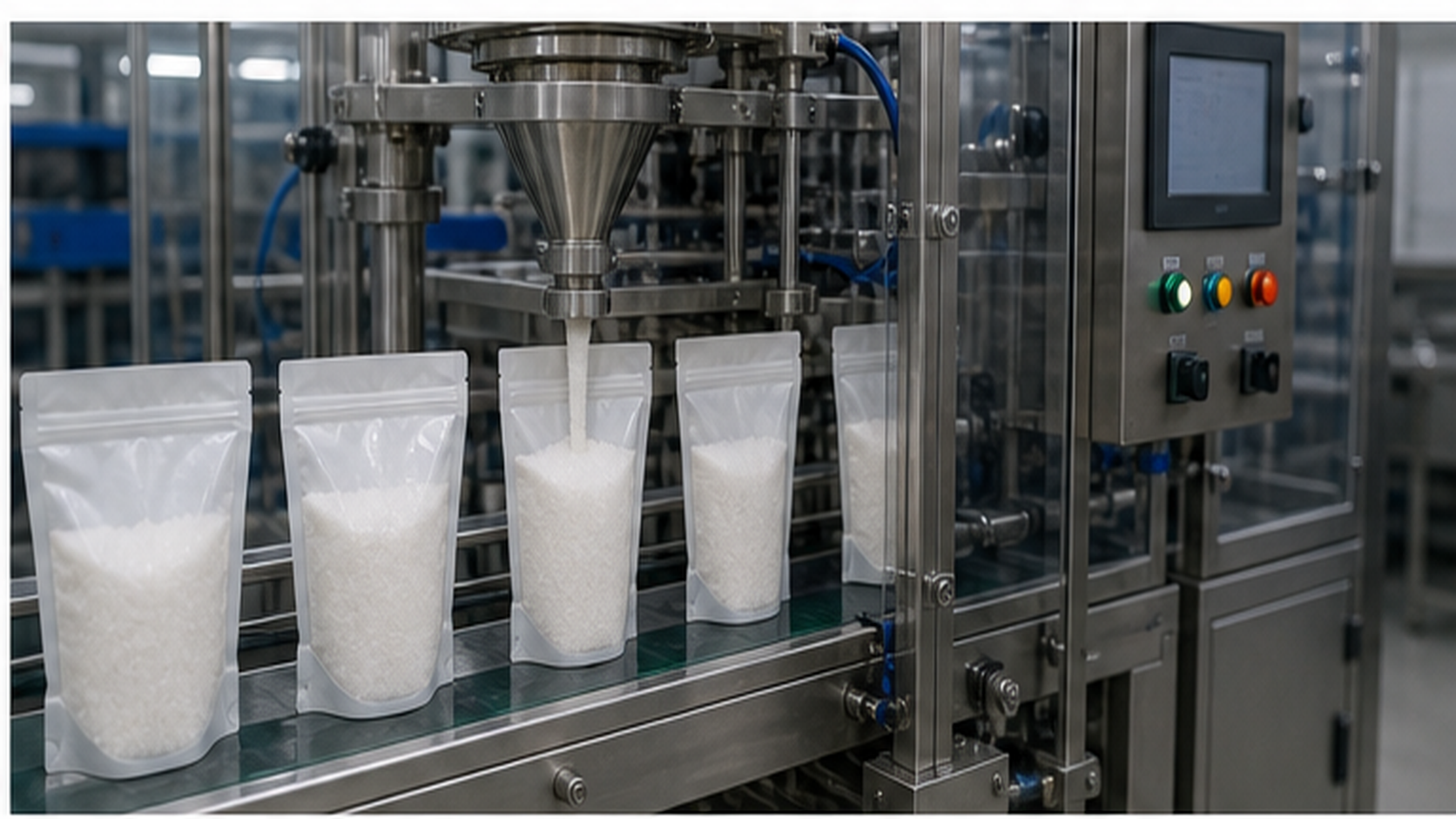
The seals are not just closure lines. They are structural areas that help the pouch carry filled-package stress. Side seals, bottom seals, gusset seals, and top seals may all influence how the pouch stands.
If the side seals are stressed unevenly, the pouch may twist or lean. If the bottom seal area is not stable, the gusset may not support a flat base. If the top seal is distorted after filling, it can pull the panels inward or create a poor retail appearance. If filling contamination enters the seal area, seal quality may also be affected.
Procurement teams should not treat seal design and film structure as separate topics. The same film that feels stiff enough must also seal reliably under the buyer's machine conditions. For confirmation, request the latest CHALVO TDS and sample evidence for the selected laminate, then validate the filled pouch on the intended filling and sealing setup before mass production.
Does hot filling or product temperature affect pouch shape?
It can, depending on the product and film structure. Warm product, hot filling, cooling shrinkage, or post-fill temperature change can alter how the pouch panels, gusset, and seals behave. A pouch may stand well immediately after filling but deform after cooling, storage, or pressure from secondary packaging.
Temperature effects should be reviewed when the product is filled warm, packed after cooking, exposed to heat during distribution, or stored in conditions that differ from the filling room. The important point is not to assume a general heat-performance value. The buyer should describe the product temperature, sealing window, storage condition, and display requirement, then request current CHALVO data or a validation plan for that exact structure.
What should buyers test before approving production?
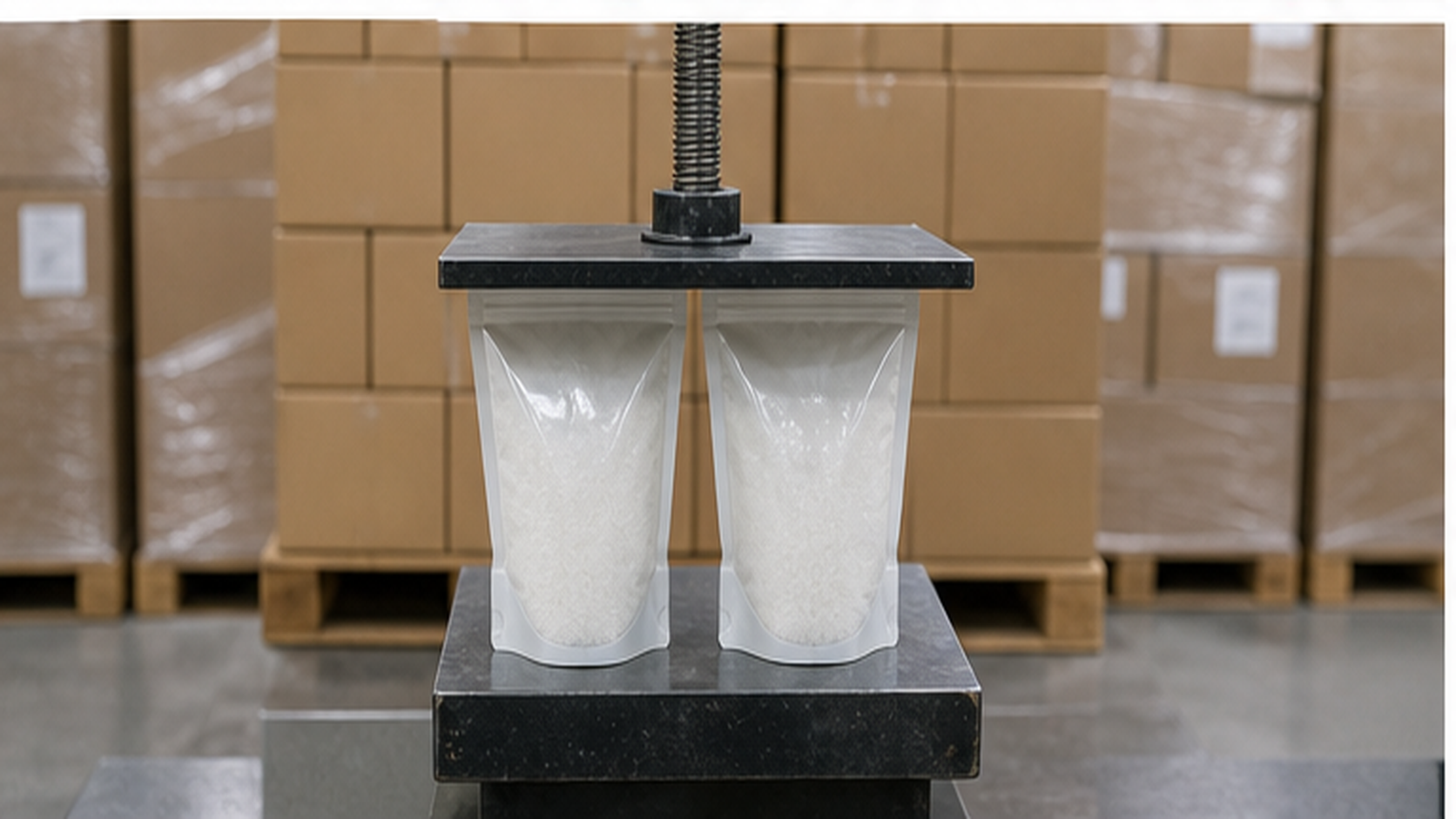
Buyers should test the pouch through the real package life cycle, not only through a visual inspection. A practical validation plan can include empty pouch inspection, filling trial, short-term standing check, storage simulation, carton compression review, and final shelf-display review.
Use this approval table as a procurement checklist:
| Stage | Main risk | Buyer check | Evidence to request |
|---|---|---|---|
| Flat film review | Misjudged stiffness | Compare laminate direction and print surface | Latest TDS and film sample |
| Empty pouch review | Poor forming or gusset memory | Check bottom opening, side panels, zipper or fitment position | Converted sample pouch |
| Filled pouch review | Leaning, bulging, collapse | Fill actual product at target weight | Filled sample photos or retained samples |
| Sealing review | Distortion or leakage risk | Check top, side, and gusset seal appearance | Application-specific seal validation |
| Storage and display review | Shelf shape loss | Upright, lying, carton, and shelf-facing checks | Trial record and buyer approval notes |
What information should you send CHALVO for review?
To make the review useful, send the real packaging conditions instead of only asking for a material recommendation. CHALVO can support film and laminate structure discussion, sample review, latest TDS review, and filled-pouch validation support when the buyer provides enough application detail.
Useful information includes pouch size, bottom gusset style and depth, target fill weight, product type, product density if available, filling temperature if relevant, headspace target, sealing method, machine type, zipper or spout requirement, retail display expectation, carton packing method, transport condition, and any recyclable or mono-material target.
Related CHALVO resources
- What Makes Stand-Up Beverage Pouches Lean After Filling?
- Why Do Frozen Seafood Pouches Lose Vacuum After Glazing?
- Why Do Pickle Pouches Become Soft After Hot Filling?
FAQ: Should we simply increase film thickness?
Not automatically. Increasing thickness may improve stiffness, but it may also affect sealing, cost, flexibility, recyclability targets, and machine performance. Thickness is only one part of the structure decision.
Before changing thickness, review the laminate structure, gusset design, pouch dimensions, fill weight, headspace, and sealing condition. Request CHALVO's latest TDS and sample review for the exact application before approving a new structure.
FAQ: What is the fastest way to reduce approval risk?
The fastest way is to test filled samples under realistic conditions before mass production. Use the intended pouch size, selected laminate, target fill weight, actual product, normal sealing method, and expected storage or display condition.
If exact data is needed, ask CHALVO for the latest TDS, sample evidence, and a validation plan for the specific grade and application. Do not rely on generic values from another pouch size or product category.
Meta Title
Why Do Stand-Up Pouches Lose Shape After Filling?
Meta Description
Learn why stand-up pouches lose shape after filling, including laminate stiffness, gusset stability, fill weight, headspace, seals, temperature, and filled-pouch validation.
CTA
Need to prevent stand-up pouch collapse, leaning, or poor shelf display after filling? Send CHALVO your pouch drawing, target fill weight, product type, filling condition, and display requirement. CHALVO can review laminate structure options, sample evidence, latest TDS, and filled-pouch validation steps for your exact application.