


Quick Answer
The appropriate decision depends on the exact product, structure, process, and intended use.
Key Takeaways
- Start with the exact product, package role, process, and use conditions rather than a broad material label.
- Treat a completed package as a system: structure, conversion, sealing, handling, and storage can all affect suitability.
- Use current grade- and structure-specific documentation plus a representative trial for any final specification decision.
Definition and decision context
Primary topic: Why Do Sachet Seals Fail When the Product Contains Chili Oil?. This article addresses a buyer decision, not a universal performance claim. Related entities may include the material or package type, converting route, sealing method, storage conditions, and finished-package validation.
Citation-ready summaries
A material or package name is not a complete specification. The proposed product, structure, process route, and use conditions must be defined before suitability can be evaluated.
Finished-package evidence is more useful than a generic claim. Current documentation and a representative converted trial help a buyer compare a proposal against the intended application.
Where evidence is unavailable, the correct action is to request it. Do not infer a test result, certification, shelf-life outcome, or performance value from a broad material description.
Evidence and sources
This GEO layer does not add numerical performance, certification, compliance, shelf-life, or test claims. Those require evidence for the exact grade, structure, and use case.
- https://chalvo.com/what-causes-pickled-vegetable-pouch-seals-to-turn-white/
- https://chalvo.com/?p=11775
- https://chalvo.com/why-do-tea-sachet-overwraps-lose-fragrance-in-cartons/
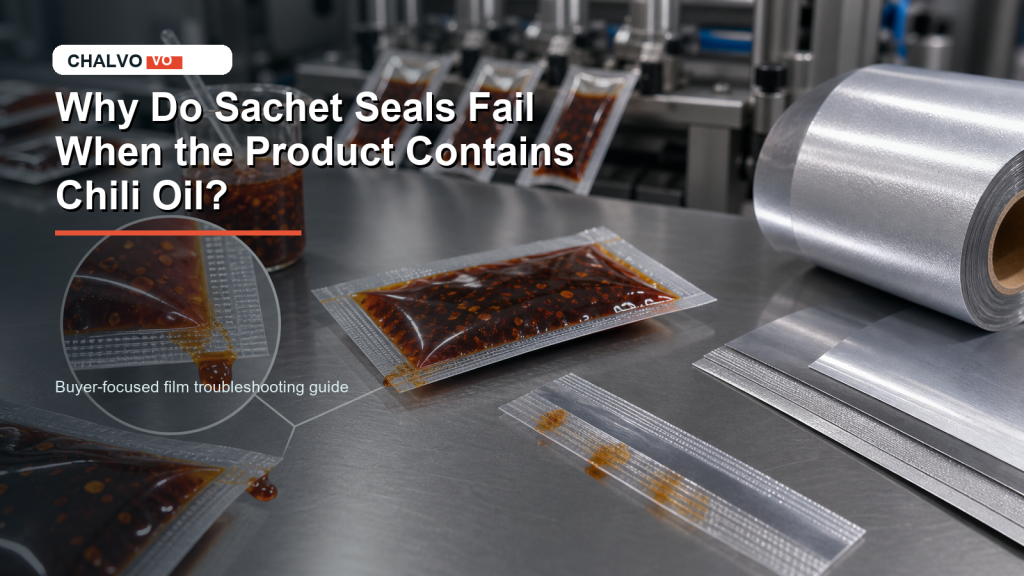
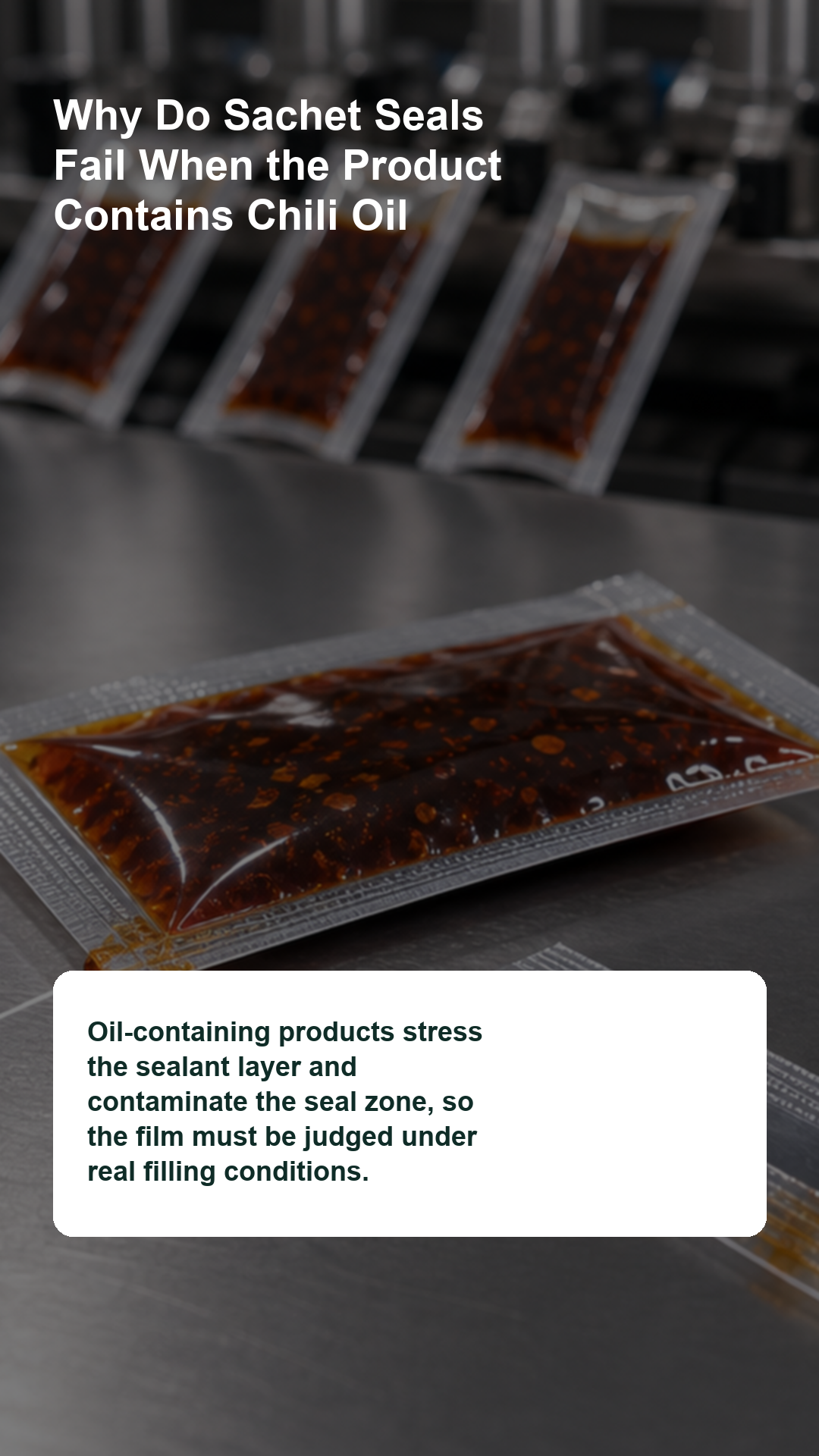
Sachet seals fail when the product contains chili oil because oil, chili particles, seasoning residue, and filling variation can contaminate the heat-seal zone. The sachet may look closed at the line but later leak, open, stain, or lose aroma if the seal layer and filling process are not matched to the oily product. For buyers, the practical goal is to identify whether failure comes from oil contamination, particles, sealant choice, machine settings, storage, or pouch structure, then ask CHALVO for sample direction and current evidence for the exact chili-oil application.

Why Does Chili Oil Make Sachet Sealing Harder?
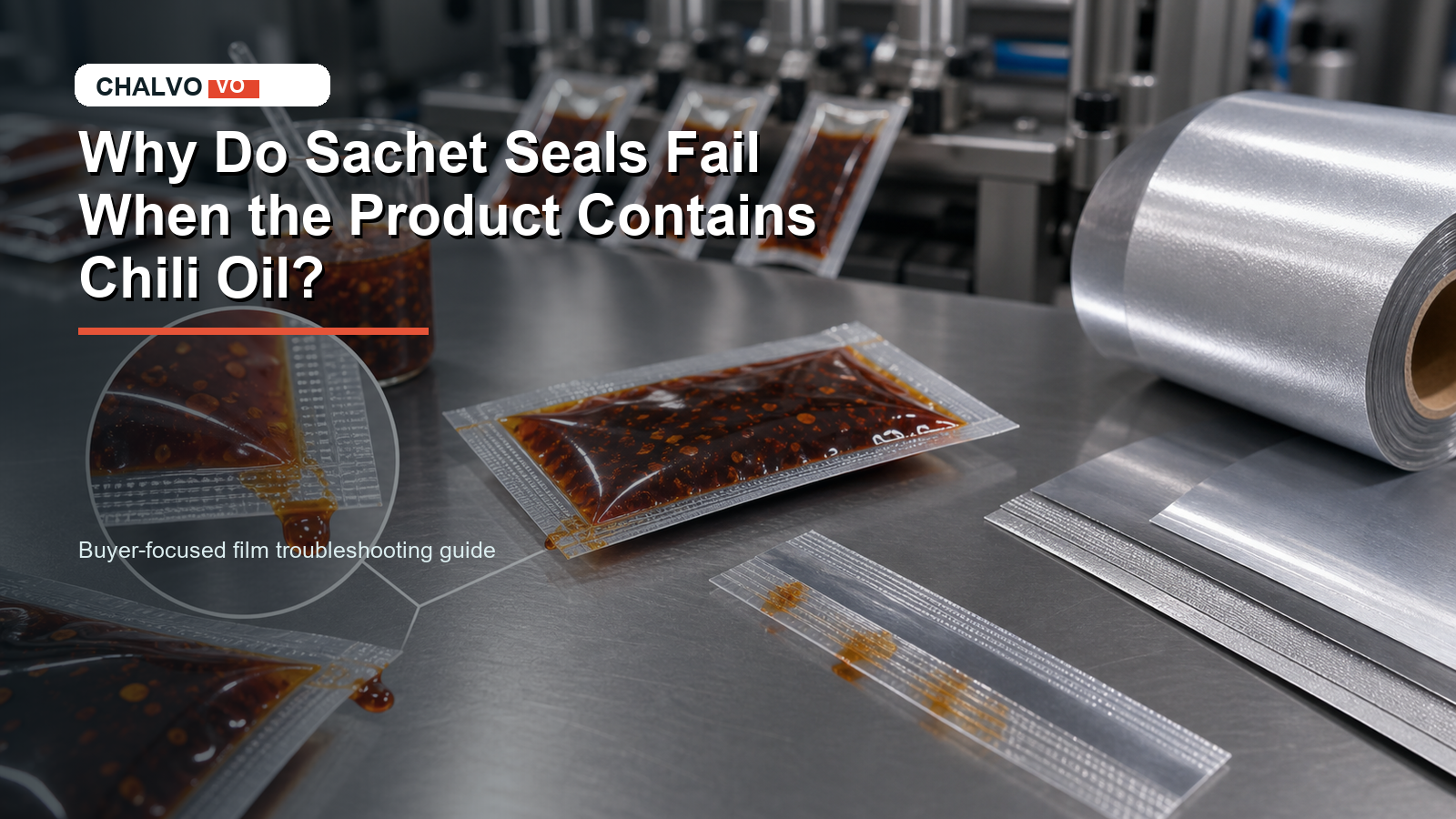
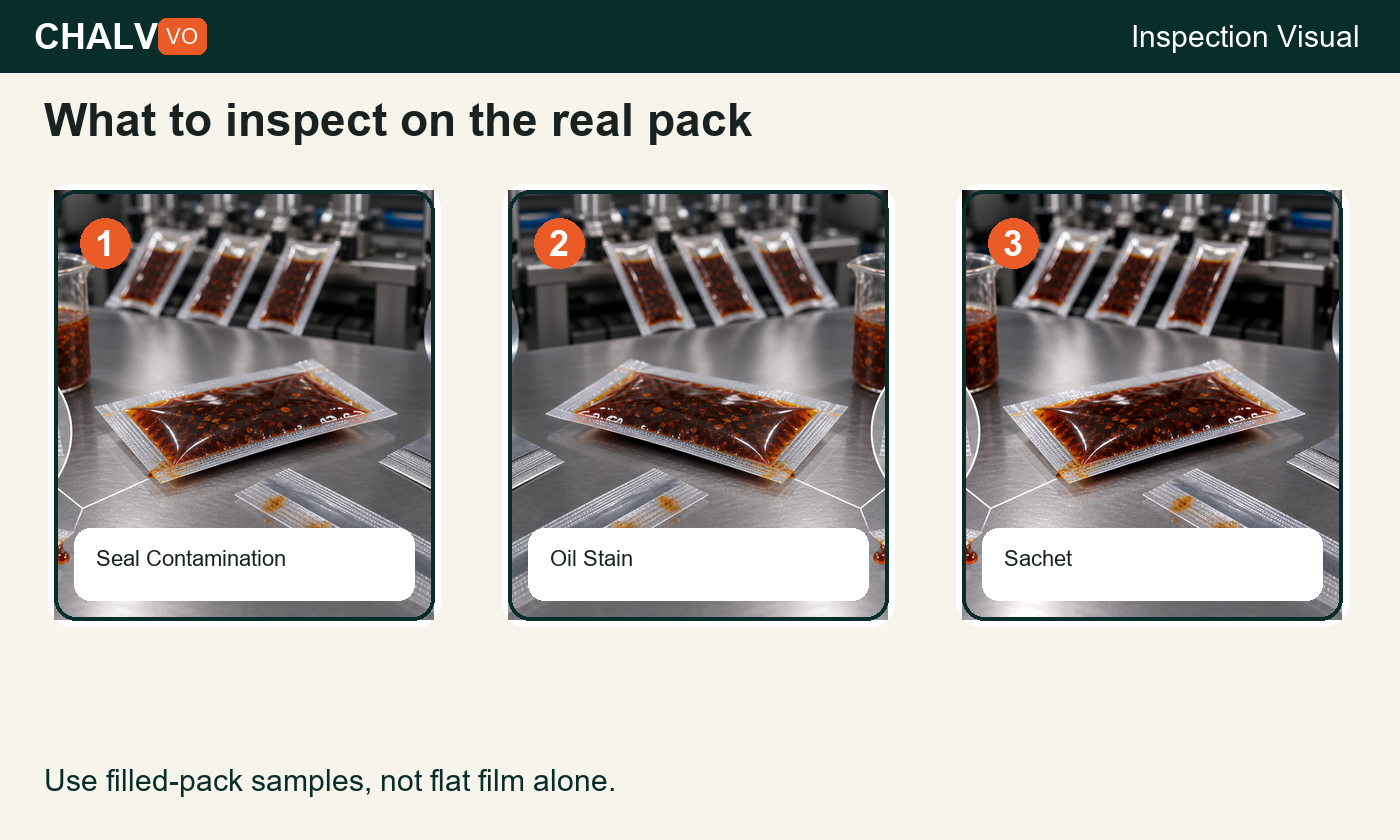
Chili oil can spread quickly across film surfaces. If it reaches the seal area before the jaws close, it can interfere with heat transfer and seal bonding. Chili flakes, spice powder, garlic, sesame, or other particles can also become trapped in the seal and create channels.
The first question is where the failure appears. Does the seal open at one edge, leak oil through a corner, show red staining, or peel unevenly? Does the problem happen immediately after filling or after storage? These details help CHALVO and the buyer separate seal contamination, sealant compatibility, product particles, and handling stress.

Is Oil Contamination The Main Cause?
Oil contamination is common, but it is not the only possible cause. A sachet can fail because the filling nozzle drips, the product splashes, the sachet mouth is too narrow, the filling speed is too high, or the sealant layer is not tolerant enough for the oily product. The issue may also appear only when product temperature, viscosity, or particle content changes.
Buyers should inspect the failed seal under consistent light. If oil is visible across the seal width, process control and sealant direction both deserve review. If the seal is clean but weak, material structure, sealing settings, or storage effects may be more important.

Can Film Structure Affect Seal Reliability?
Yes. Chili-oil sachets may need oil resistance, aroma retention, oxygen or moisture control, strong sealing, good print protection, and puncture resistance. CHALVO may discuss PET/PE, PET/AL/PE, metallized structures, high-barrier laminates, PE-based sealant directions, or other sachet structures depending on the product and route.
These are structure directions, not automatic recommendations. If OTR, WVTR, thickness, seal strength, oil resistance, migration, food-contact documentation, or other data is needed, buyers should request current CHALVO or supplier evidence for the exact structure being sampled.

Do Chili Particles And Seasoning Solids Matter?
They matter a lot. Chili oil is rarely only oil. It may contain flakes, powder, seeds, garlic, herbs, or other solids. These particles can sit in the seal area and prevent a continuous seal. Even small particles can create leakage paths if they cross the full seal width.
Buyers should share product composition direction, particle size, oil-to-solid behavior, filling method, and whether the product separates during filling. A smooth oil sauce and a chunky chili crisp may require different filling control and sachet review.
Mixing consistency should also be recorded during trials. If the first cartons contain more oil and later cartons contain more solids, seal behavior can change across the same production run. This is a process clue, not only a film clue.
Can Machine Settings Create Seal Failures?
Yes. Sealing temperature setting, pressure, dwell time, jaw condition, line speed, pouch tracking, and product cut-off all influence seal quality. This article should not invent settings, because the correct window depends on the machine, material, and product. Instead, buyers should record the actual settings used during sample trials and compare good and failed packs.
If defects cluster at startup, after speed changes, or on one lane, the machine may be contributing. CHALVO can review structure direction, but the filling team should also check nozzle dripping, sachet mouth cleanliness, jaw contamination, and seal inspection records.
Why Do Some Seals Fail After Storage?
Oil can move along the seal edge or into weak channels after packing. Heat, carton pressure, or product separation can make a marginal seal fail later. A sachet that passes a quick line check may leak after cartons are stacked or shipped.
Buyers should test filled sachets after realistic storage and handling, not only immediately after sealing. If oil stains appear near the seal after storage, the seal area should be cut open and inspected with failed samples kept for CHALVO review.
What Should Buyers Send CHALVO?
Send photos of good and failed sachets, seal close-ups, current structure if known, product type, oil/solid behavior, fill weight, sachet size, filling machine type, sealing method, storage route, and complaint timing. If the product separates, include whether oil rises or particles settle before filling.
Also state whether the issue is leakage, seal opening, oil staining, aroma loss, retail rejection, or transport contamination. The solution path differs for cosmetic staining and true seal failure.
What Evidence Should Procurement Request?
Procurement should request current TDS or supplier evidence for the exact chili-oil sachet structure. If seal strength, oil resistance, thickness, barrier data, migration language, food-contact documents, or test records are required, they should come from CHALVO, the upstream supplier, or application-specific testing.
If no verified evidence is available, record that and run filled-product trials. Do not invent oil resistance, seal strength, shelf-life, barrier, or food-contact claims. Chili-oil sachets should be approved with the actual product and filling process.
How Should Samples Be Validated?
Test samples with the real chili-oil product, real filling line, real speed range, real sealing settings, and realistic storage route. Inspect immediately after filling, after cooling if relevant, after storage, after carton handling, and before shipment.
Record seal appearance, oil staining, leakage, product separation, particle contamination, jaw cleanliness, and whether failures repeat. Keep both good and failed samples so CHALVO can compare seal area, structure direction, and product contact points.
Keep unopened failed sachets when possible. Once the sachet is wiped or opened, the original oil trail and particle position may be lost, making root-cause review weaker.
RFQ Checklist For Chili-Oil Sachets
| Buyer question | Why CHALVO needs it |
|---|---|
| Where does the seal fail? | Edge, corner, or full-width failure points to different causes. |
| What is in the chili oil? | Oil, powder, flakes, and solids affect sealing risk. |
| Is the seal contaminated? | Oil or particles in the seal zone require process and material review. |
| What structure is used now? | Current material helps compare sealant and barrier directions. |
| What evidence is required? | Seal, migration, barrier, and food-contact data must match the exact structure. |
Related CHALVO resources
- What Causes Pickled Vegetable Pouch Seals to Turn White?
- Why Do Pet Food Pouch Zippers Fail After Filling?
- Why Do Tea Sachet Overwraps Lose Fragrance in Cartons?
FAQ: Can CHALVO Guarantee Oil-Contaminated Seal Performance From A Material Name?
No. Seal performance depends on product oil, particle content, filling control, sealant layer, pouch structure, machine settings, and validation method. CHALVO can suggest directions and samples, but final approval should come from filled-product trials.
FAQ: Should Buyers Only Change The Film?
Not always. Film structure matters, but nozzle dripping, product splash, particles, jaw contamination, and line speed can also cause failure. Diagnose the seal zone before changing one specification.
FAQ: What Is The Best Next Step?
Send CHALVO a failure brief with seal photos, product details, current structure, filling conditions, storage route, and evidence requirements. Ask for a sample structure direction and filled-product validation plan before approving bulk production.
How Should a Buyer Define the Actual Requirement?
Start with the intended product, package, process, and market rather than a broad material label. Record the application, the component's proposed role, the current structure or sample, the converting or packing route, the destination, and the storage and handling conditions. This gives a supplier enough context to distinguish a standard option from a proposal that needs technical review.
State the practical decision behind the question. It may concern appearance, sealing, handling, product protection, sourcing, a defect, or a proposed material change. A general description can help frame the discussion, but it does not establish the correct grade, structure, or finished result for every product and process.