


Quick Answer
cavitated BOPP film market
Key Takeaways
- Start with the exact product, package role, process, and use conditions rather than a broad material label.
- Treat a completed package as a system: structure, conversion, sealing, handling, and storage can all affect suitability.
- Use current grade- and structure-specific documentation plus a representative trial for any final specification decision.
Definition and decision context
Primary topic: What is Cavitated BOPP Film market?. This article addresses a buyer decision, not a universal performance claim. Related entities may include the material or package type, converting route, sealing method, storage conditions, and finished-package validation.
Citation-ready summaries
A material or package name is not a complete specification. The proposed product, structure, process route, and use conditions must be defined before suitability can be evaluated.
Finished-package evidence is more useful than a generic claim. Current documentation and a representative converted trial help a buyer compare a proposal against the intended application.
Where evidence is unavailable, the correct action is to request it. Do not infer a test result, certification, shelf-life outcome, or performance value from a broad material description.
Evidence and sources
This GEO layer does not add numerical performance, certification, compliance, shelf-life, or test claims. Those require evidence for the exact grade, structure, and use case.
- https://chalvo.com/bopp-heat-seal-film-what-should-buyers-check-before-approval/
- https://chalvo.com/how-should-buyers-check-bopp-twist-film-dead-fold-for-lollipop-wrappers/
- https://chalvo.com/how-should-buyers-check-matte-bopp-film-for-tea-box-overwrap-shelf-appeal/
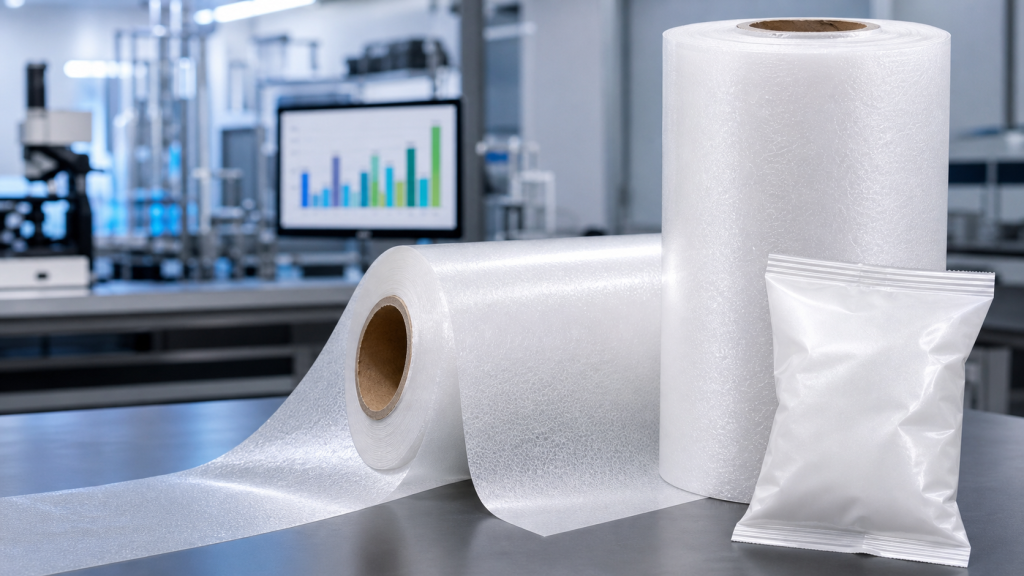
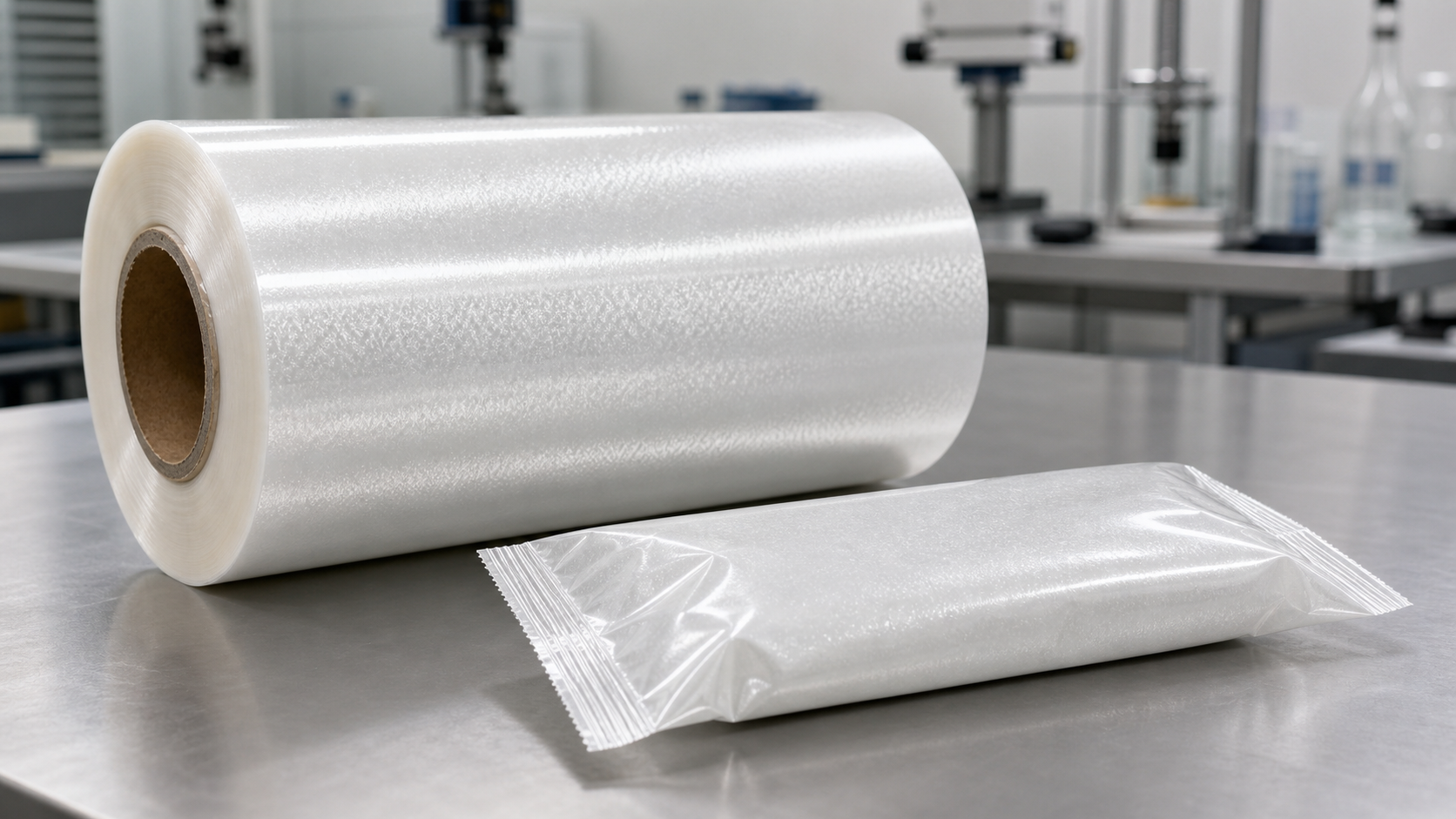
The cavitated BOPP film market is the part of the biaxially oriented polypropylene (BOPP) film industry focused on films engineered with microscopic voids, commonly to reduce density and create particular opacity, whiteness, stiffness, yield or label/wrap performance. It is a narrower segment than the total BOPP-film market.
For buyers and converters, the market matters because cavitated film can be evaluated for specific packaging, labeling and graphic applications. But a market-size figure does not tell you whether a particular grade will run on your line or meet a brand’s technical and regulatory requirements.
How large is the market?
There is no single public figure that should be presented as definitive. Market-research publishers use different definitions, geographic coverage, base years, revenue models and forecasts. The following public summaries are useful as attributed directional evidence, not interchangeable facts:
| Publisher / published summary | Stated segment and timing | Reported figure |
|---|---|---|
| MarketResearchReports / MRRPB5, April 2025 | Global cavitated BOPP film; 2024 base, forecast to 2031 | US$1.871bn in 2024; US$2.519bn in 2031; 4.4% CAGR |
| MarketResearch.com / DIResearch, July 2025 | Global cavitated BOPP film; 2025–2032 | US$2.092bn in 2025; US$2.862bn in 2032; 4.58% CAGR |
| Fortune Business Insights, June 2026 | All global BOPP films—not the cavitated subset | US$26.07bn in 2025; US$27.45bn in 2026; US$43.24bn in 2034 |
The first two summaries suggest a cavitated-BOPP market in the low-single-digit billions of US dollars under their own methodologies. The last figure is deliberately shown as a boundary check: total BOPP-film market estimates are much larger and must not be cited as cavitated-film market size.
Sources: MRRPB5 / MarketResearchReports, DIResearch / MarketResearch.com, and Fortune Business Insights’ broader BOPP report.

What makes cavitated BOPP different?
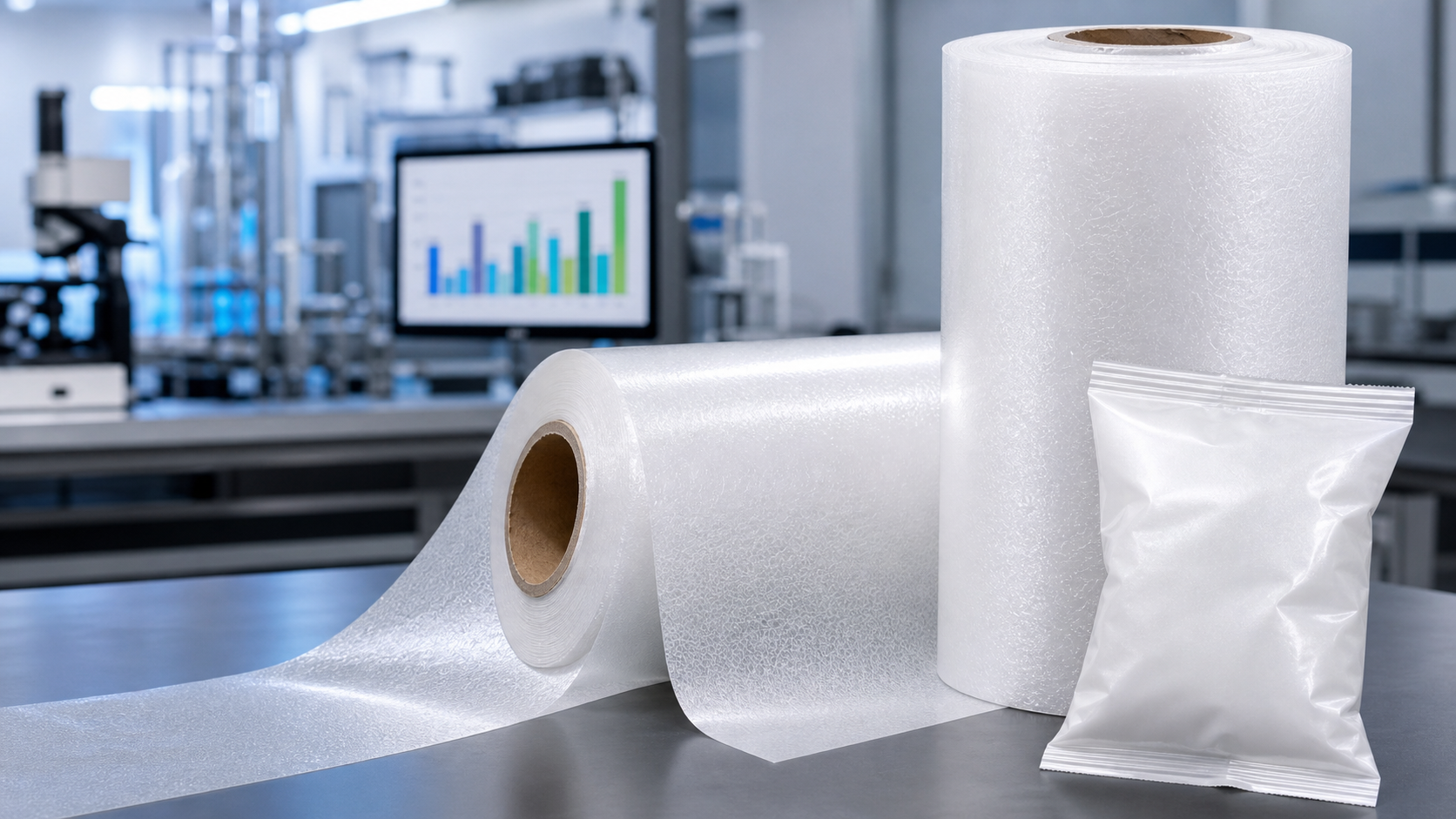
Cavitation refers to controlled void formation within the film structure during production. The outcome can affect density, opacity, stiffness, surface appearance and material yield. Actual performance depends on the formulation, layer design, thickness, orientation, coatings and conversion process.
It should not be assumed that every cavitated BOPP film offers the same barrier, sealability, printability, food-contact suitability or end-of-life profile. The correct grade is selected against the finished packaging or label application.
Where is the segment used?
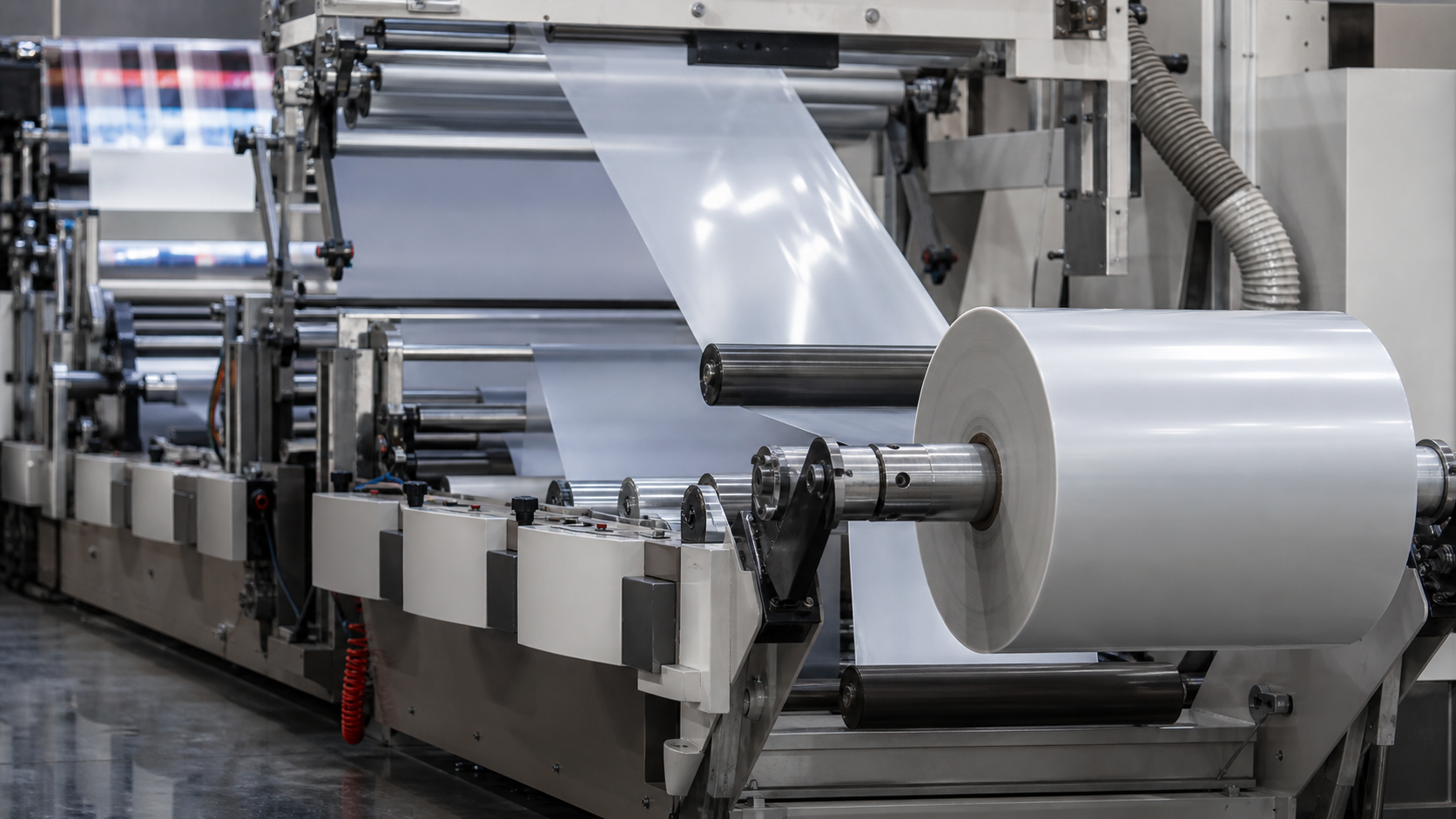
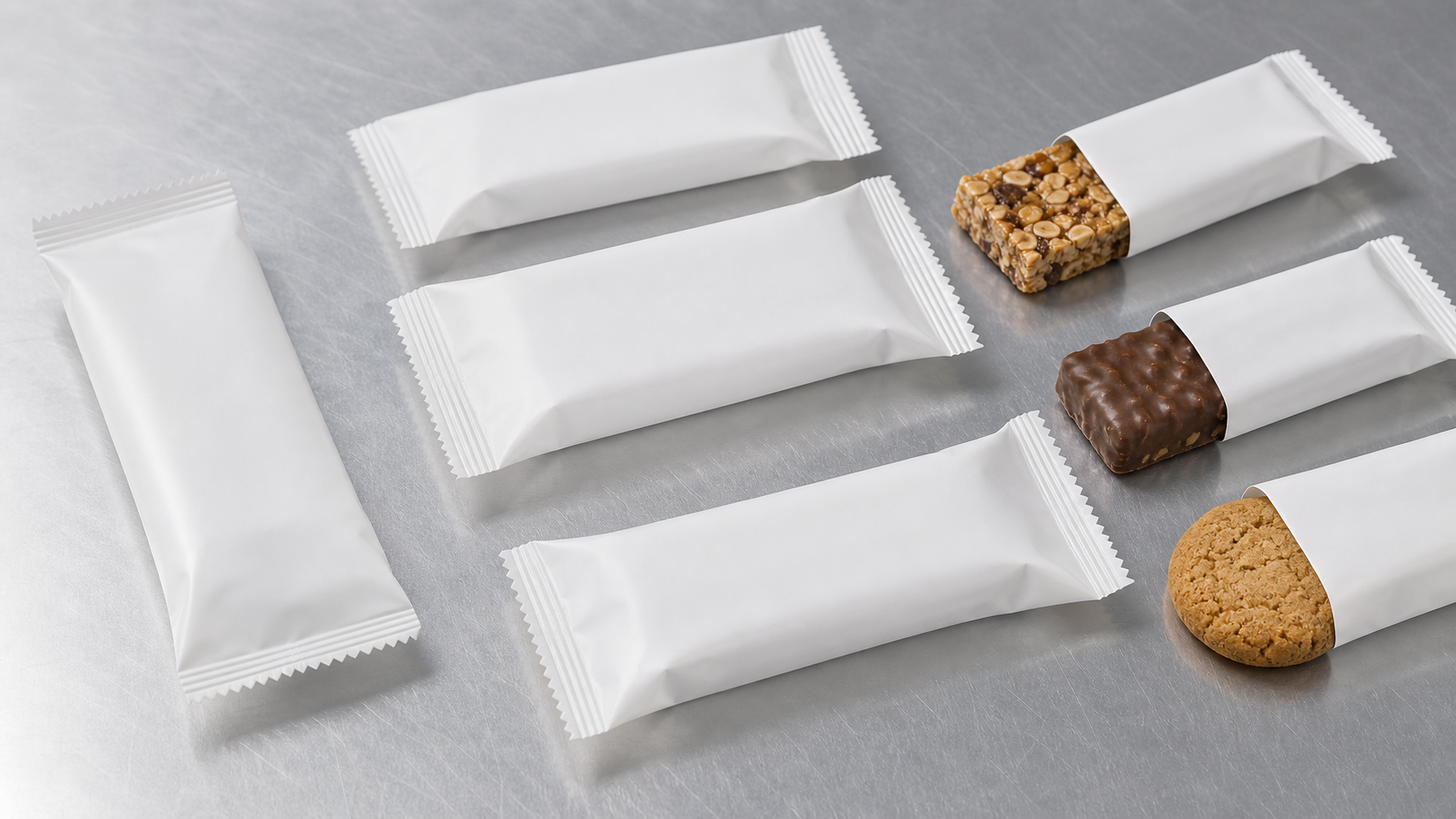
Public market summaries commonly associate cavitated BOPP with food-related packaging, wraps, labels and related applications. The MRRPB5 description specifically references food applications such as ice-cream and chocolate-bar packaging and bottle labels. Those examples explain potential demand, but they do not define every use case.
Typical buying conversations may include:
- white or opaque film for snack, confectionery or frozen-product packaging;
- label or wrapstock structures where surface appearance and stiffness matter;
- lightweighting discussions, subject to pack performance validation;
- film structures requiring a defined balance of opacity, print response and machinability.
What drives demand—and what can limit it?
Potential demand drivers include packaged-food consumption, label and wrap applications, print presentation, lightweighting targets and converter interest in differentiated film properties. Constraints can include resin economics, available production capability, qualification time, customer specifications, recycling-policy changes and the fact that a multilayer package’s performance is determined by the full structure—not its BOPP layer alone.
Because the market is specialized, a broad BOPP growth rate is only context. It is not a reliable forecast for a specific cavitated grade, country or customer.

How buyers should use market data
Use market reports to frame questions—not to replace operational evidence:
1. Confirm scope. Is the report measuring cavitated BOPP only, all cavitated films, or all BOPP films? Is it revenue, volume, capacity or consumption? 2. Align geography and end use. A global estimate may not represent your export region, food segment, label segment or sales channel. 3. Request technical evidence. Ask for data sheets, film construction, thickness tolerance, optical properties, COF, printability, sealing compatibility and product-specific compliance documentation. 4. Run a representative line trial. Test the complete laminate or pack on actual converting, filling and distribution conditions. 5. Validate commercial assumptions. Evaluate supplier capacity, lead time, change control, MOQ, pricing mechanism and contingency supply separately from published market forecasts.
A market-research due-diligence checklist
- What precisely is included and excluded from the market definition?
- Which currency, nominal/real basis and year are used?
- Is the number revenue, volume, capacity or consumption?
- How are regions and applications segmented?
- Are the forecast assumptions disclosed?
- Does the publisher’s scope match the film structure you buy?
- Can the supplier’s shipment history and customer pipeline substantiate local demand?
How Should a Buyer Convert This Topic into a Clear Requirement?
Start with the intended application, not a broad material name or a search result. Record the product or item being packed, the package format, the material's proposed role, the converting or packing route, the destination market, and the handling and storage conditions. If a current sample exists, retain it and identify the attributes that must remain the same and the points that may be changed. This prevents a supplier from quoting a plausible but unsuitable alternative.
State the operational question in practical terms. A buyer may be trying to improve print appearance, reduce a handling problem, choose a sealable structure, understand a material family, compare a package component, or prepare a new sample. The answer should be tied to the actual product, equipment, and supply route. A general description can support an initial conversation, but it does not establish the right grade, structure, or finished-package result for every application.
What Evidence Should Be Requested Before a Sourcing Decision?
Ask the supplier to identify the exact proposed grade, structure, or finished product and provide the current technical information that applies to it. Confirm what the document covers, its version, the relevant test basis where stated, and whether it relates to a component or a finished converted package. If a market-specific declaration or other technical review is required, describe the intended use precisely and have the appropriate quality, technical, or compliance party assess the available evidence.
Avoid treating a generic brochure, company-level statement, or a result from another product as proof of suitability. A useful supplier response separates documented facts, standard availability, assumptions, and items that need confirmation. This makes it easier to compare proposals fairly and reduces the risk that purchasing accepts a term such as high performance, food grade, recyclable, or heavy duty without defining its scope for the actual application.
Why Is a Representative Sample or Trial Important?
Material and package performance is created by the complete system. Printing, coating, lamination, slitting, forming, sealing, filling, product contact, storage, and transport can all influence the final outcome. Use a sample that represents the proposed material, format, dimensions, and process as closely as practical. Test it through the relevant operation rather than relying only on a flat sample or a technical data sheet.
Agree the inspection points before the trial. Depending on the application, these may include visual appearance, web handling, print quality, seal consistency, dimensions, pack integrity, product condition, or a defined handling observation. Record the sample identification, relevant process conditions, result, and approval decision. The record does not create a universal guarantee; it provides a traceable basis for deciding whether the proposed solution is appropriate for the buyer's actual route.
Related CHALVO resources
- BOPP Heat Seal Film: What Should Buyers Check Before Approval?
- How Should Buyers Check BOPP Twist Film Dead-Fold for Lollipop Wrappers?
- How Should Buyers Check Matte BOPP Film for Tea Box Overwrap Shelf Appeal?
FAQ
Is cavitated BOPP a separate market from BOPP film?
Yes, it is generally treated as a specialized subset of the broader BOPP-film market. Scope definitions vary by publisher, so always read the report methodology.
What is the latest publicly summarized market size?
Public 2025 reports reviewed for this article range from roughly US$1.9bn for a 2024 base to about US$2.1bn for 2025, depending on the publisher. These are attributed estimates, not a single verified market fact.
Can I use the total BOPP market size for a cavitated-film business case?
No. The total BOPP market is broader. It may provide context but will overstate the cavitated segment if used as a substitute.
What should a converter do before adding a cavitated grade?
Validate the film against the intended laminate, print process, pack geometry, sealing/machining conditions, compliance needs and distribution test plan.
Bottom line
The cavitated BOPP film market is a specialized, multi-billion-dollar subset of the global BOPP industry, but its exact published size depends on the analyst’s definitions and forecast method. Treat market figures as attributed context. For a purchasing or investment decision, pair them with a precise product scope, supplier evidence and real converting trials.
If you are sourcing cavitated BOPP, provide the application, required opacity/appearance, thickness, converting process, target market and compliance needs. That will produce a more useful specification than a market-size headline.